Key takeaways
- Destination matters more than layout: narrow roads demand a compact vehicle.
- A converted van is agile and economical but often lacks standing height and a private toilet.
- A panel van conversion with fixed amenities is the most popular compromise for two people.
- Overcab and A-class models offer the most beds but are tall, wide, and more affected by crosswinds.
- Allow at least four days for a first motorhome trip to get into the rhythm.
Most people choose a motorhome based on interior photos. That's understandable. But the real question is: does this vehicle suit my destination?
The Types, in Brief
The converted van. Agile, fuel-efficient, and fits in a standard parking space. Often lacks standing height and a private toilet or shower. Ideal for two people using campsite facilities, and a blessing on narrow roads.
The panel van conversion (campervan). Built within a van's shell but with fixed amenities: toilet, shower, kitchen, and heating. The most common compromise between self-sufficiency and size for two people.
The low-profile coachbuilt. A custom body on the original chassis and cab. It offers more space and light but is wider and taller than a campervan.
The overcab coachbuilt. Features a bed in a compartment over the cab. This classic family model sleeps four to six without converting the seating area. It's tall and wide.
The A-class. The cab is fully integrated into the living space. It offers the most comfort and the best panoramic view, but is usually the largest and most expensive type.
The Question to Ask First
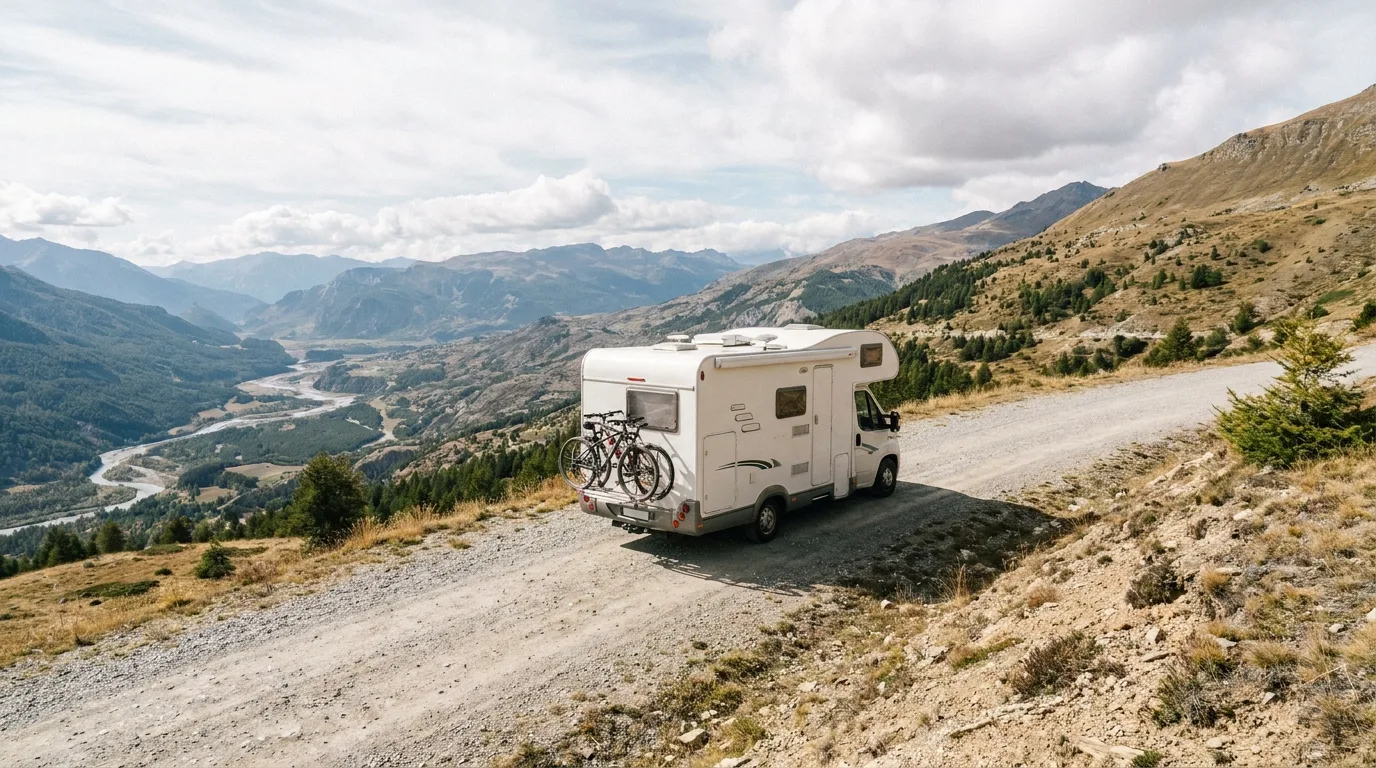
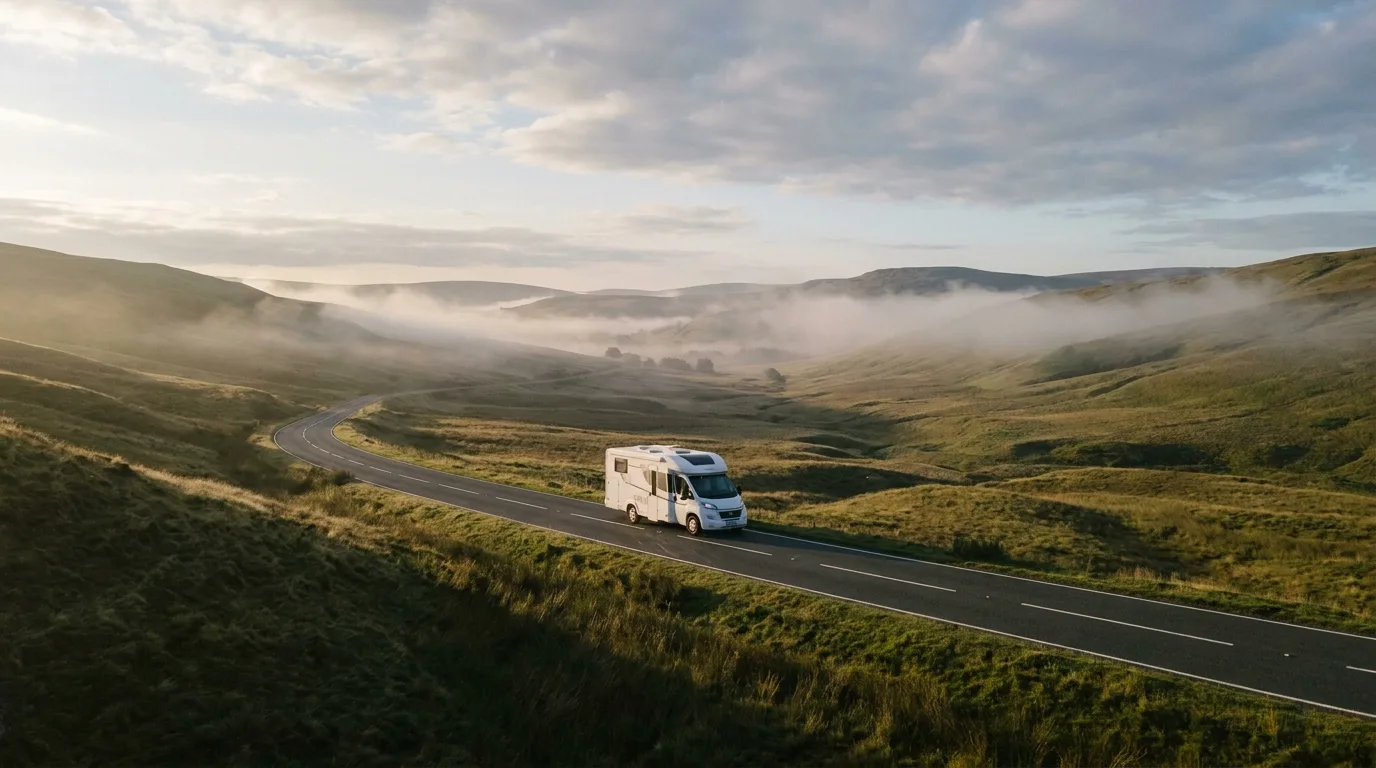
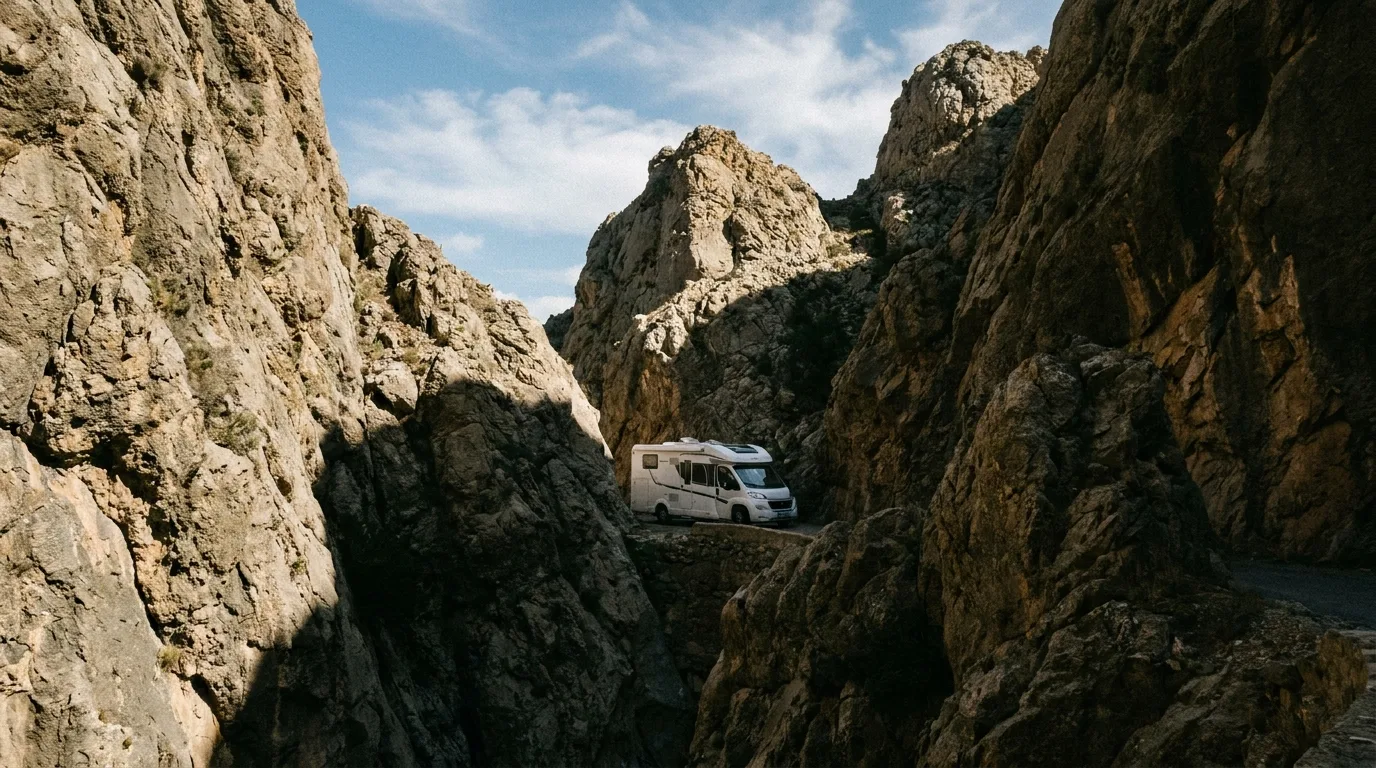
Before choosing a type, consider your route. On narrow lanes in Ireland and the UK, or on mountain roads in Corsica and Norway, vehicle width is a daily issue. Every oncoming car becomes a negotiation. If you're heading to places with wider roads, like much of Germany or Denmark, size is less of a concern.
There's also a cost to size. On many ferries and Scandinavian toll bridges, you pay by length, not weight. A motorhome over six metres (20 ft) can be significantly more expensive than one under. For a trip to Scandinavia, this can add up. (Note that Norway, Sweden, and Denmark use their own currencies, not the Euro.)
The rule is simple: adapt your destination to your motorhome, or your motorhome to your destination. Just don't ignore both.
Your Travel Party Size
Two people rarely need more than a panel van conversion. The extra comfort of a larger coachbuilt is most noticeable in bad weather when you're stuck inside.
With children, the priority shifts. It's about everyone having a bed without converting the dinette nightly—after two weeks, that's the difference between relaxation and hassle. An overcab model or one with a pop-top roof solves this.
Pay close attention to the payload capacity. With four people and their gear, the 3,500 kg (approx. 7,700 lbs) weight limit is reached quickly.
Driving Experience Matters More Than People Admit
Drivers new to large vehicles often underestimate manoeuvring—reversing into a pitch, navigating tight campsites, or turning in a village street. For a first trip, compact is often wiser than spacious. You'll adapt, but the first few days are easier in a vehicle you can handle.
Allow at least four days for your trip. A shorter journey is mostly just acclimatising as you find your rhythm.
What Really Matters
A motorhome isn't a holiday home that happens to have wheels. It's a vehicle you sleep in, and that order of priority is key.
The question isn't which one has the best kitchen, but which one you'll confidently drive down that narrow road to reach the viewpoint you came for.
This means you can only really choose your motorhome once you have a good idea of your route.
Frequently asked questions
About the author

Co-founder of Camproads
Bas is co-founder of Camproads. He previously worked in the travel industry on rail and package holidays, and started Camproads on the conviction that a campervan trip deserves better planning than a list of sights. At Camproads he handles route research and the data behind it: which stages are actually drivable, where you may legally spend the night, and what a trip really costs. He prefers writing about what other articles skip.
Co-founder of Camproads · background in the travel industry · route planning and trip costs