Motorhome routes in England: national parks, coast & countryside
Planning a motorhome road trip through England? Explore routes from the Lake District to Cornwall, through the Cotswolds and along the Jurassic Coast — from 1 to 3 weeks. Browse our itineraries or create your own with the AI route planner. Read more ↓
Motorhome routes in England: national parks, coast & countryside
England is one of Europe's most underrated motorhome destinations. Distances are compact, the campsite network is excellent, and the scenery changes fast: chalk cliffs along the south coast, green valleys in the Lake District, honey-coloured villages in the Cotswolds, and historic cities like Bath and York. A motorhome road trip through England lets you set your own pace — from a week along the south coast to a full three-week tour. Getting there is quick: the Eurotunnel puts you in Folkestone in 35 minutes, or you can take the overnight ferry to Newcastle.
This page has everything you need to plan your England motorhome trip: routes for 1 week, 2 weeks and 3 weeks, a crossing comparison, practical tips for left-hand driving, and a cost breakdown. We draw on 104 destinations across England, with 3 curated motorhome routes you can adapt to your plans. Or build your own with the AI route planner.
Why England is perfect for a motorhome trip
England is often overlooked as a motorhome destination, but it has a great deal to offer:
- Close and easy to reach: via the Eurotunnel you're in Folkestone in 35 minutes. No long transfer days needed — after half a day's travel you could be in Kent, Sussex or the Cotswolds.
- Compact distances: England is small enough to see a lot in 1–2 weeks, yet large enough to keep things interesting for weeks on end.
- Varied national parks: from the Lake District and Peak District to Dartmoor and the Yorkshire Dales. Each park has its own character, from wild moorlands to lakes and mountains.
- Rich culture and history: Roman baths in Bath, medieval cathedrals in York and Canterbury, Stonehenge, Harry Potter locations — there's something to discover everywhere.
- Excellent campsite network: plenty of campsites across the country.
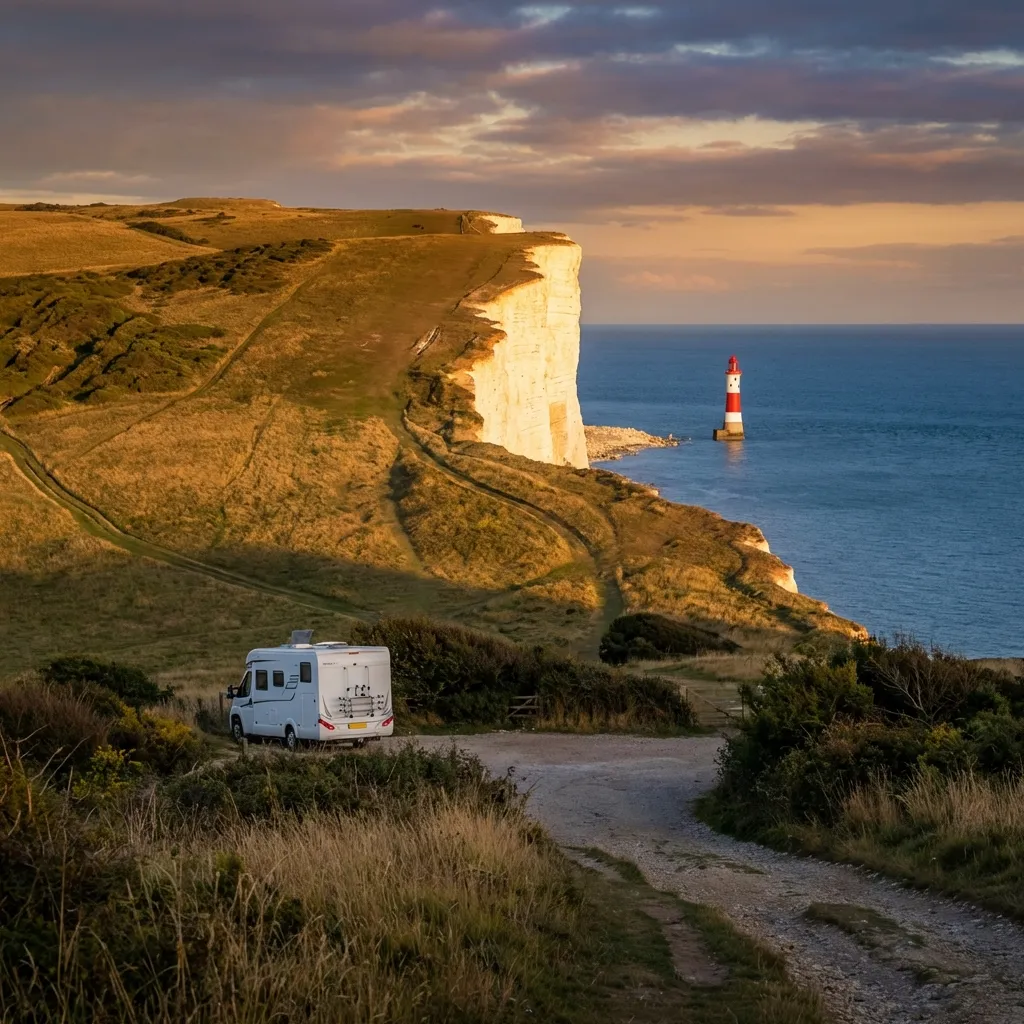
- English coastline: the Jurassic Coast, Cornwall, the Seven Sisters and the Norfolk coast — England has surprisingly beautiful coastal landscapes.
England motorhome routes: 1 week, 2 weeks or longer
Whether you have a week or three, England has a motorhome route to match. Below you'll find recommendations by trip length, with links to ready-made itineraries and the option to build your own.
-
1 week — the south coast
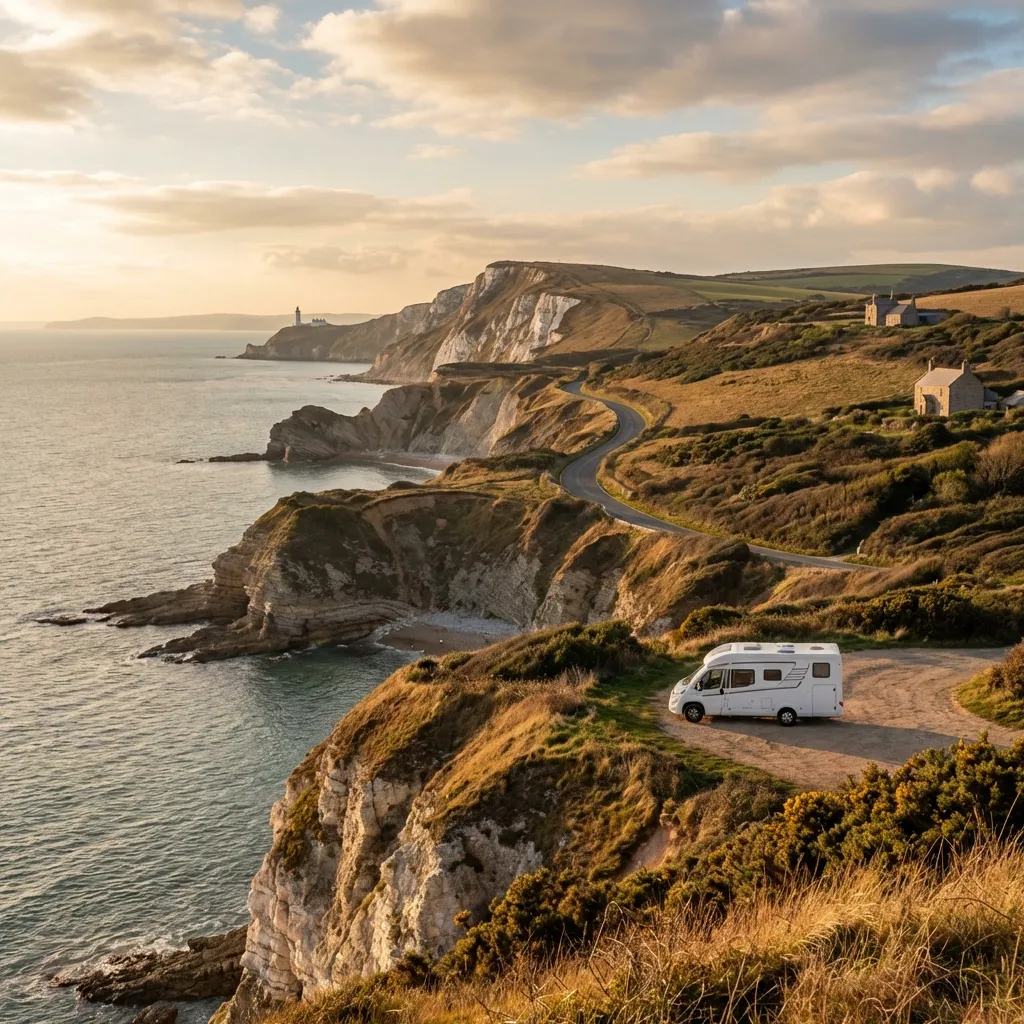
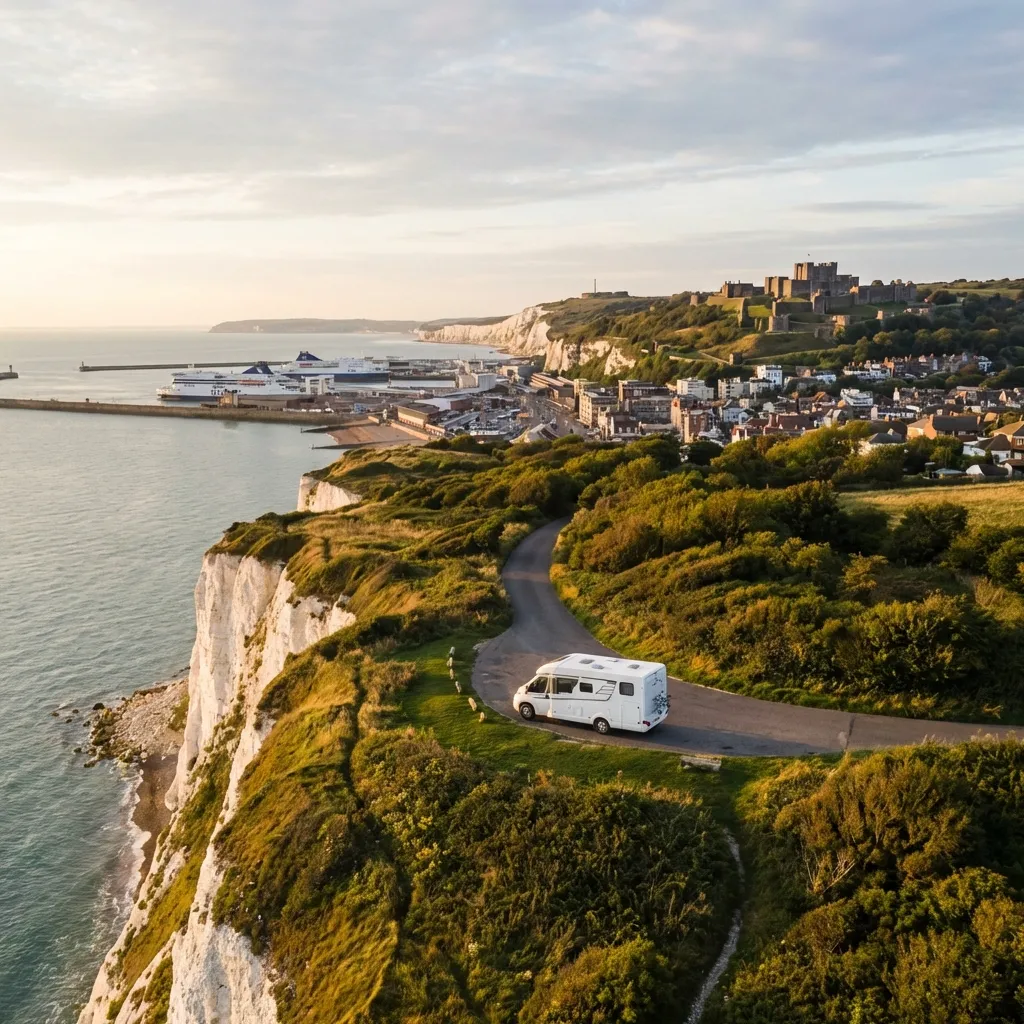
The English south coast by motorhome is the perfect introduction: in 7 days you drive from the White Cliffs of Dover via the New Forest and the Jurassic Coast to Cornwall, finishing in the historic city of Bath. Chalk cliffs, wild ponies, coastal villages and Roman architecture in one compact route.
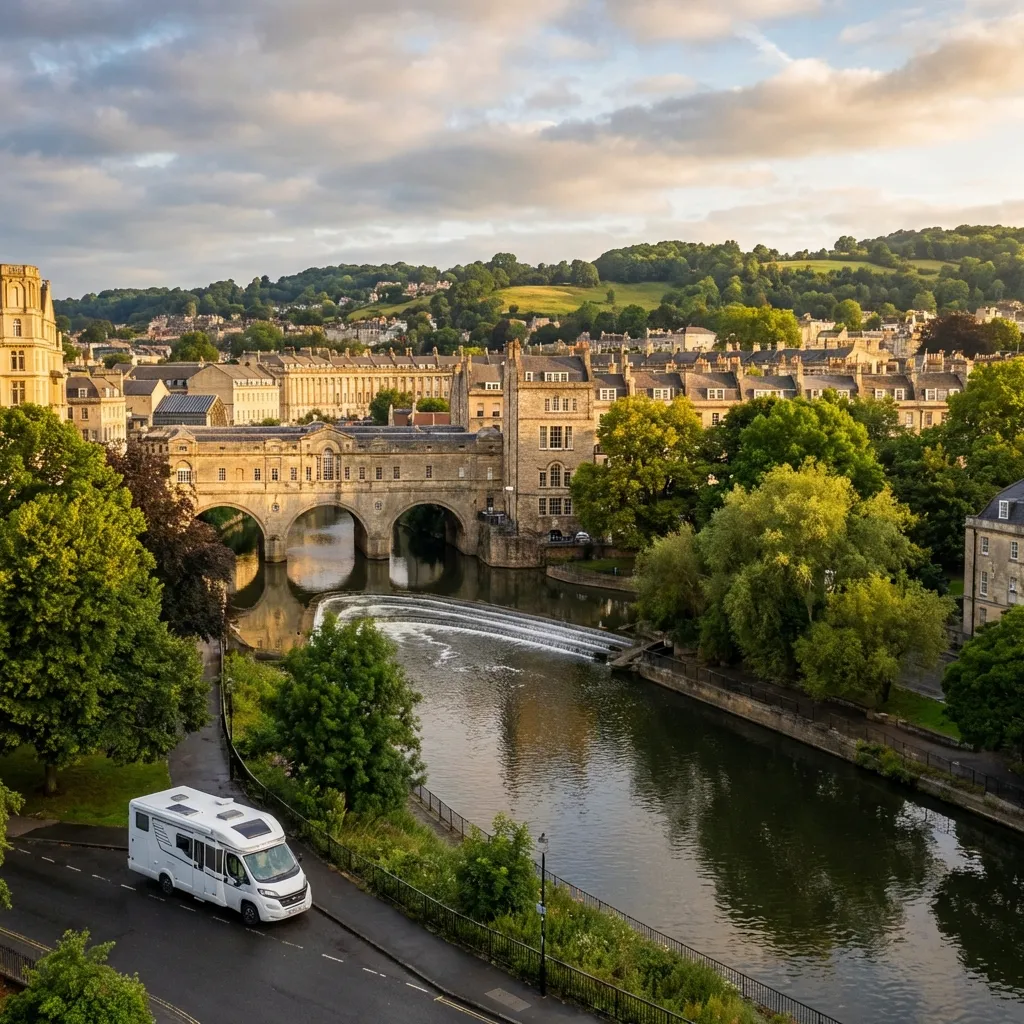
Chalk Cliffs & Coastal Villages - Motorhome Trip Along England’s South Coast(8 days · 775 km · 5 stops)The south coast of England combines chalk cliffs and coastal towns with a hilly inland. The coastline is dominated by the White Cliffs of Dover, which rise up to 110 meters above sea level. Inland, you'll find a completely different landscape of vast moorlands in Dartmoor National Park. Here you can hike among granite tors and wild ponies. You often drive on narrow roads here, where you naturally take your time to stop for coffee with views of the moorland. The area also has a refined side, which you can see in the city of Bath. The entire city center is built from the same honey-colored stone. You'll find the Roman Baths there, still fed by a 46-degree hot spring. You often end the day in a green spot, with the motorhome doors open to the hills and the evening air. The best time to travel is from May to September, when the landscape is at its greenest and the evenings are long and mild.
This route is fully customisable — adjust the duration, stops and order to suit your plans.
-
2 weeks — south coast + Cotswolds + Lake District
Got two weeks? Combine the south coast with the Cotswolds and the Lake District. Start in Dover or Folkestone, drive via the Jurassic Coast and Cornwall to the honey-coloured villages of the Cotswolds, and finish in the Lake District — England's most famous national park. A route that blends coast, culture and nature at a comfortable pace of around 150 km per day.
Build a custom 2-week England itinerary →The AI route planner selects the best stops from 104 English destinations and builds a day-by-day route of 14 days.
-
3 weeks — the full England tour
Three weeks gives you time to see all of England: the south coast, the Cotswolds, Peak District, Yorkshire Dales and the Lake District. Drive from south to north (or the other way round) and see the best of every region — from fossil hunting on the Jurassic Coast to walking along Hadrian's Wall. Our 18-day National Parks route is a solid base. Extend it easily to 21 days with extra stops in Norfolk, Bath, York or Cornwall.
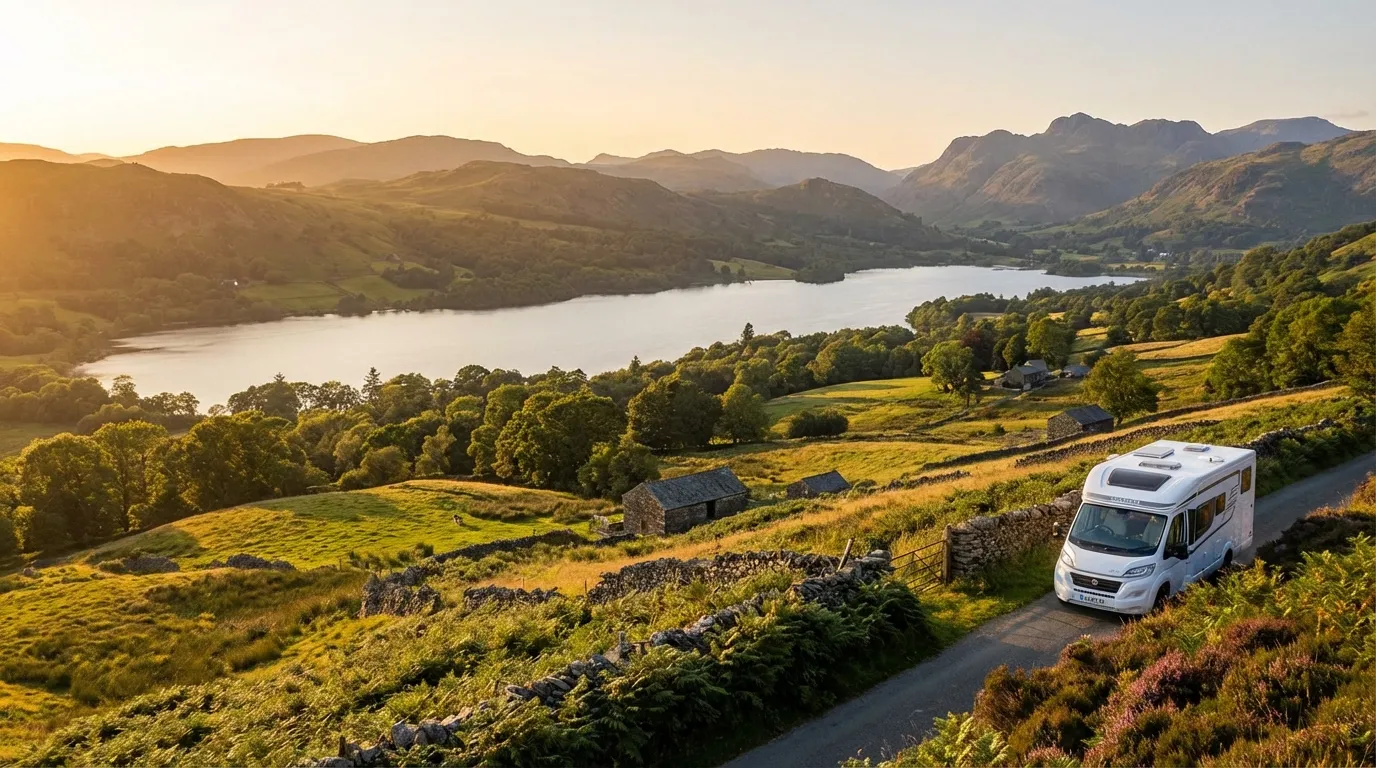
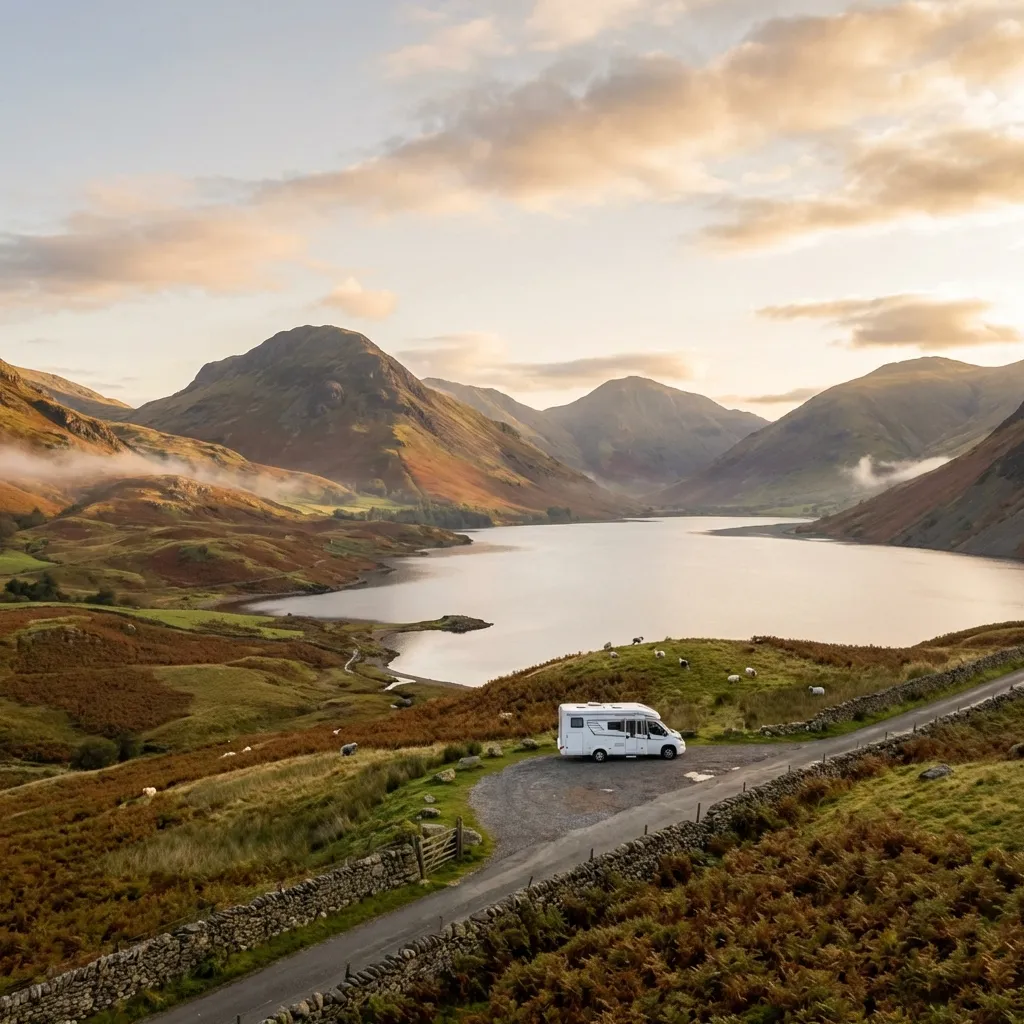
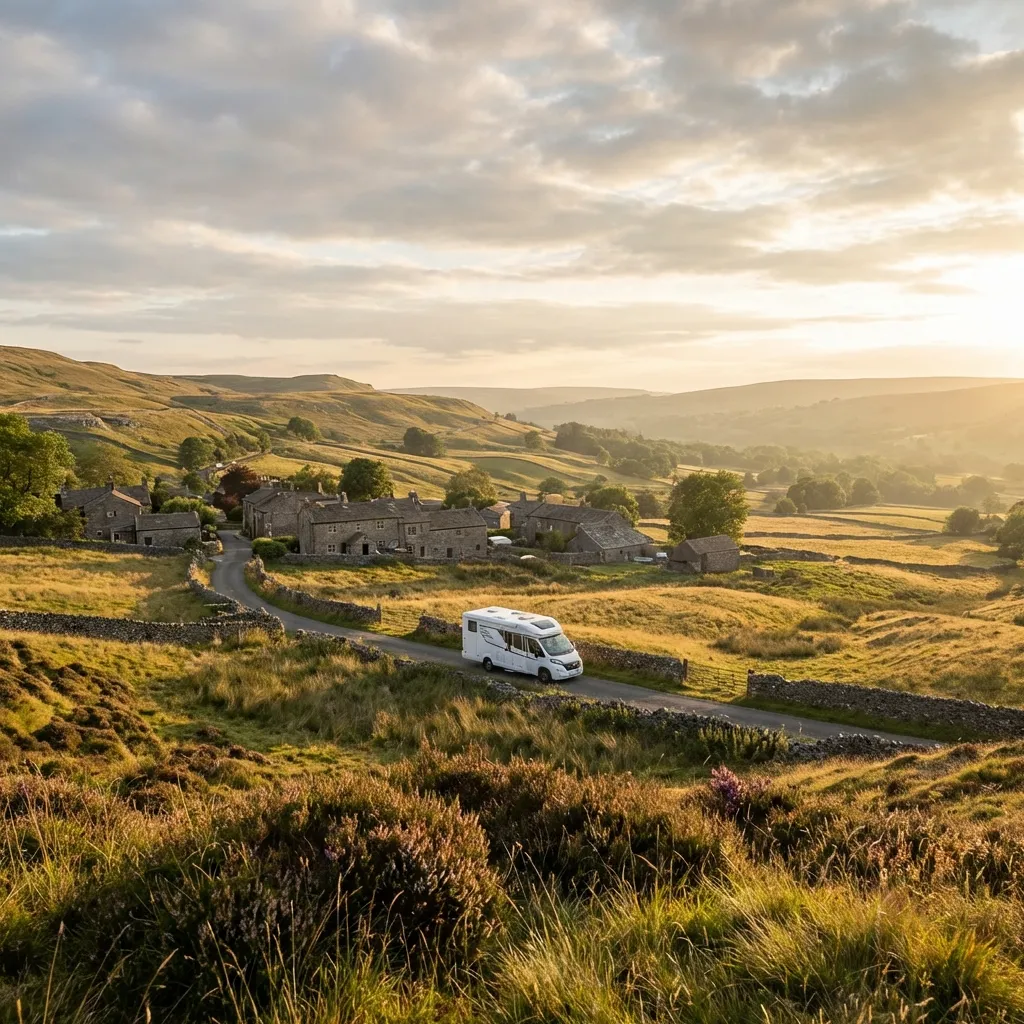
National Parks of England - Motorhome trip through Peaks, Dales & Lakes(19 days · 903 km · 11 stops)Northern England consists of a series of national parks with rugged hills and deep valleys. The landscape of the Yorkshire Dales is defined by limestone plateaus and a network of dry stone walls. Further north, Hadrian's Wall follows the hill ridges like a robust ribbon of stone. Many roads are narrow and winding through the landscape, naturally encouraging a leisurely pace. In the Lake District, villages of dark slate lie at the foot of England's highest mountains. On lakes like Windermere, old steamboats sail between the jetties. With a motorhome, you drive over the hill ridges and through the deep valleys that characterise the region. The best travel time is from May to September, when the valleys are at their greenest and the heather fields turn purple.
This route is fully customisable — adjust the duration, stops and order to suit your plans.
-
3+ weeks — England + Scotland
With more than three weeks, combine England with Scotland in one epic road trip. The Grand Tour UK route covers the best of both countries in 27 days — from Cornwall and the Cotswolds via the Lake District to the Scottish Highlands and Edinburgh. Note: this is a multi-country route, not an England-only itinerary.
Grand Tour UK - Ultimate British motorhome adventure(27 days · 3,633 km · 21 stops)⚠️ Multi-country route through ENG + SCO — not England only
This trip crosses Great Britain from the south coast of England to the northern Scottish Highlands. In Scotland, the mountains of Cairngorms National Park define the horizon of a vast wilderness. The medieval atmosphere is palpable in the narrow cobblestone streets of Edinburgh, where the castle stands high above the city. You can drive your motorhome directly from the quiet Scottish nature to the lively streets of the cities. Further south, the coast takes on a rugged appearance with the granite cliffs of Cornwall falling into the Atlantic Ocean. Inland, the dark slate villages of the Lake District lie between the lakes and England's highest mountains. Around the lakes, it's often lively, but just one valley further, you might find yourself alone. The motorhome takes you to both remote coastal paths and places deep within the national parks. The period from May to September is the best season, when the days are long and nature and cities are full of life.
This is a multi-country route through England and Scotland — ideal for a longer trip.
This route is fully customisable — adjust the duration, stops and order to suit your plans.
Build your own UK itinerary →Enter your trip length, starting point and preferences — the planner creates a day-by-day itinerary from 104 English destinations.
Which route suits you?
- Chalk Cliffs & Coastal Villages - Motorhome Trip Along England’s South Coast →8 days · 775 km — fully customisable
- National Parks of England - Motorhome trip through Peaks, Dales & Lakes →19 days · 903 km — fully customisable
- Grand Tour UK - Ultimate British motorhome adventure →27 days · 3,633 km · multi-country route — fully customisable
Every route can be adjusted in duration and stops via the route page or AI route planner.
Regions of England: where to go by motorhome
England is surprisingly diverse — from the rugged coast of Cornwall to the green valleys of the north. Each region has its own character. Here's an overview of the key areas for a motorhome trip through England.
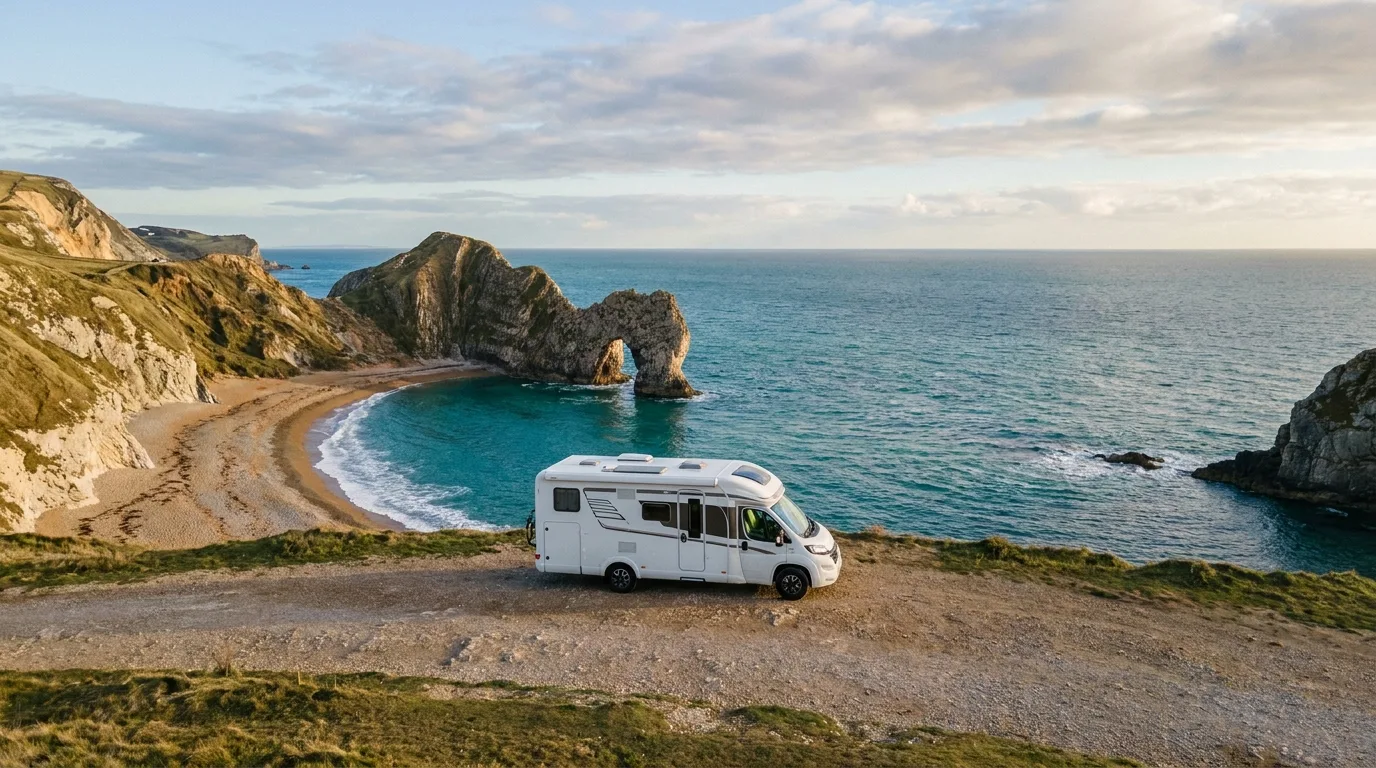
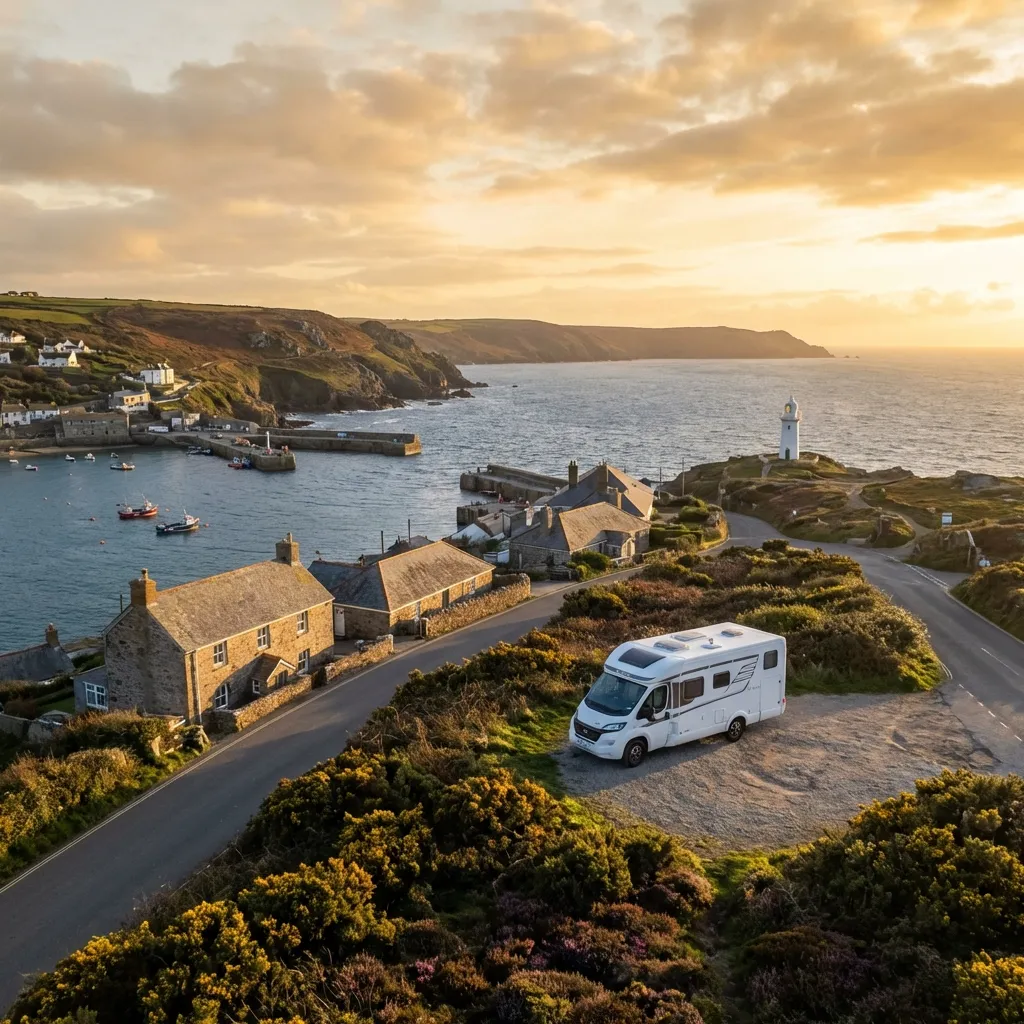
South coast & Kent — the most accessible region if you arrive via Dover. The Seven Sisters and Beachy Head offer spectacular chalk cliffs. The Jurassic Coast (Dorset) is a UNESCO World Heritage Site with fossils and natural arches like Durdle Door. Cornwall is England's westernmost point, with St Ives, Land's End and a surprisingly subtropical climate. The New Forest is an ancient royal hunting ground where wild ponies roam freely.
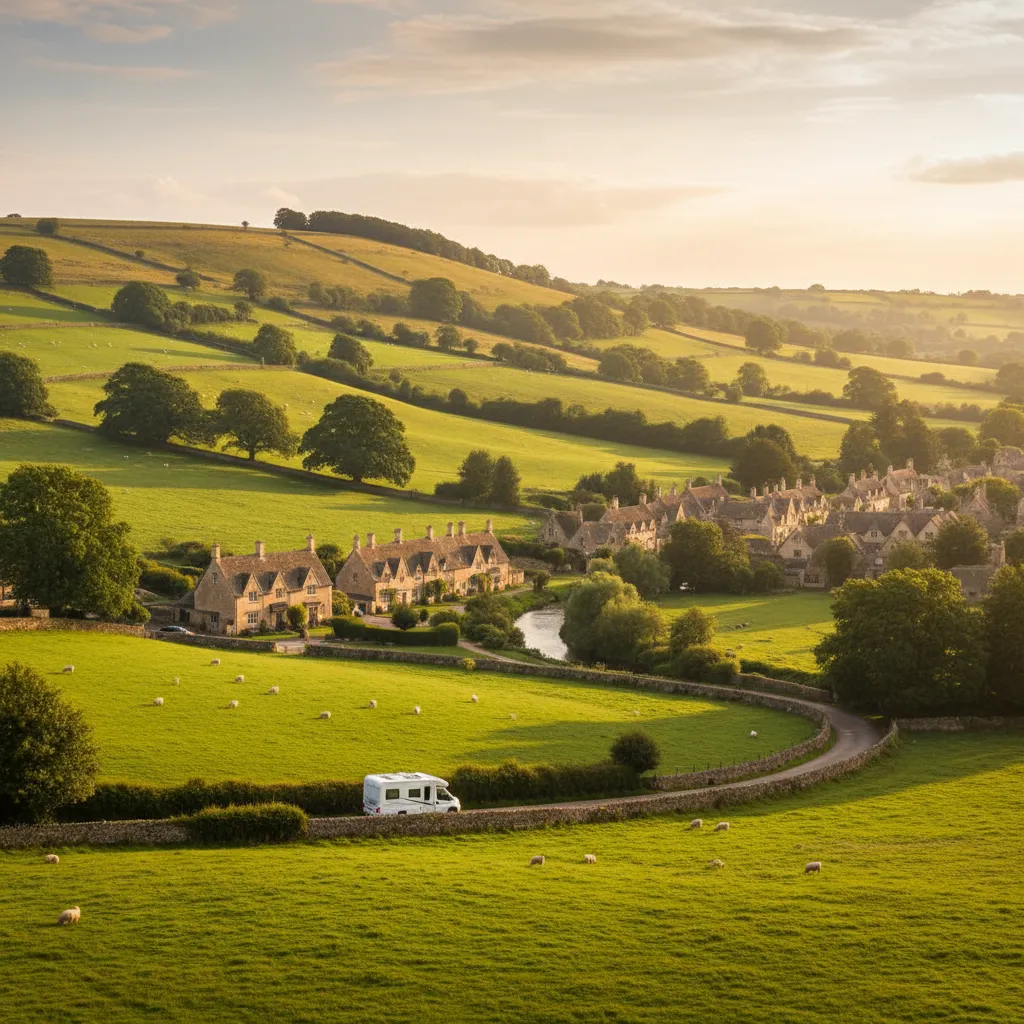
Cotswolds & central England — the Cotswolds are the postcard image of England, and for good reason: honey-coloured villages (Bourton-on-the-Water, Castle Combe), rolling hills and grand estates. Bath sits on the edge, with Roman baths and Georgian architecture. Stratford-upon-Avon (Shakespeare) and Oxford are excellent stopping points.
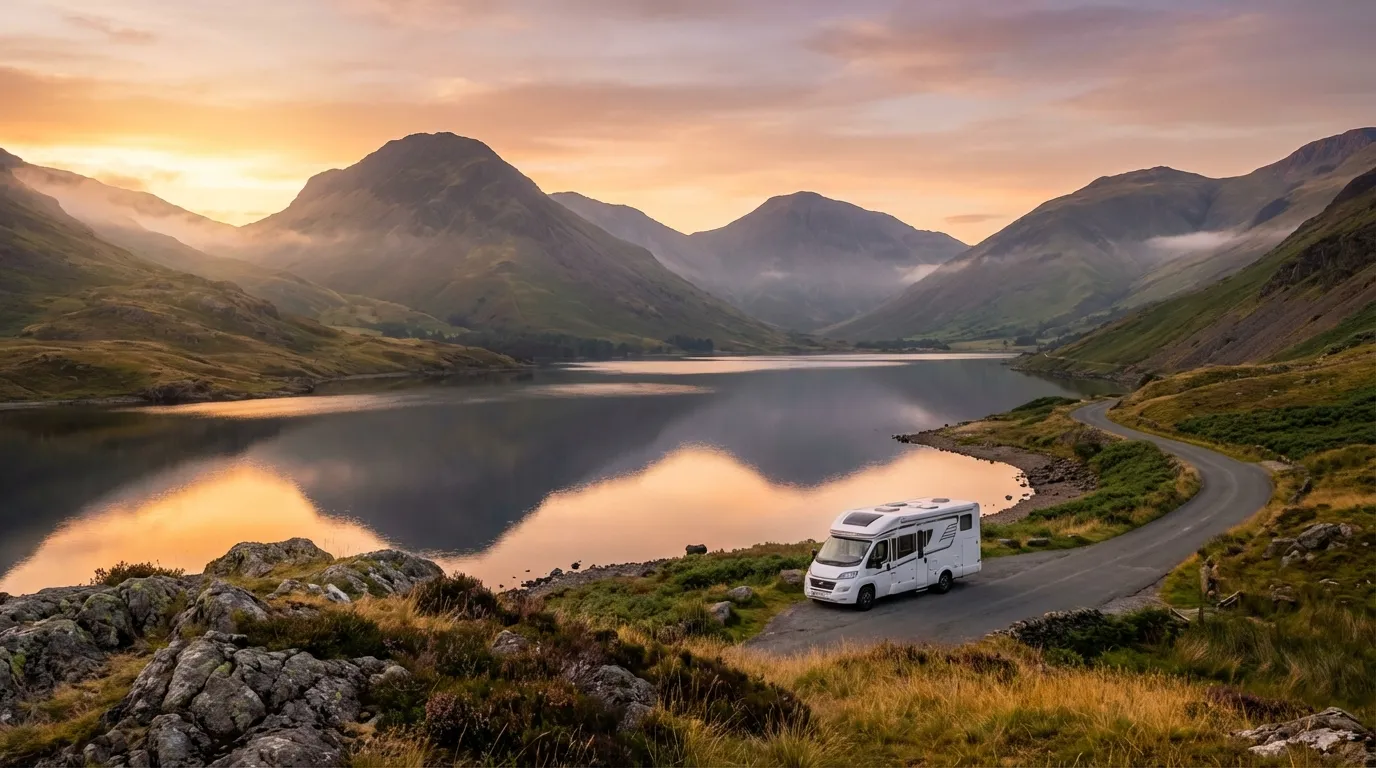
Northern England — home to England's finest national parks. The Lake District (lakes, mountains, Beatrix Potter country) is the most famous. The Yorkshire Dales offer limestone formations, waterfalls and remote farmsteads. The Peak District is the UK's oldest national park, with hills, caves and the famous Chatsworth House. Hadrian's Wall runs through the north — the northern frontier of the Roman Empire.
East England — less touristy but beautifully rewarding. The Norfolk Broads (a network of navigable lakes), the Suffolk coast (Aldeburgh, Southwold) and historic Cambridge offer a quieter alternative to the busier western regions.
Our recommendation: for a first motorhome trip through England, combine the south coast (Dover to Cornwall) with the Cotswolds and possibly Bath — that gives a solid picture of England in 1–2 weeks. With more time, add the Lake District and Yorkshire Dales.
What is the best motorhome route through England?
The best motorhome route through England depends on what you're after. Three profiles:
- South coast — for coast and history. The route from Dover via the Jurassic Coast to Cornwall combines England's most spectacular coastal landscapes with historic cities like Bath. Ideal as a first introduction to England, doable in 7 days.
- National parks — for nature and walking. Peak District, Yorkshire Dales and Lake District over 2–3 weeks. Less coast, more green valleys, mountain lakes and villages. Combine with York and Hadrian's Wall for culture and history.
- Grand Tour UK — the complete picture. From Cornwall to the Scottish Highlands in 3–4 weeks. The most complete introduction to Britain, but also the most ambitious route. Ideal if you've got plenty of time and want to see it all.
Not sure which route suits you? The AI route planner builds an itinerary based on your trip length, starting point and interests — from coastal routes to national park loops.
Route picker: which England itinerary fits you?
Which route for a first motorhome trip?
The south coast (7 days) is the best choice for your first time in England. The route starts in Dover — straight after the Eurotunnel or ferry — and runs along the most scenic coastal spots to Cornwall and Bath. No long transfer days, manageable distances, and a different location every day. Good campsite network along the way.
South coast or national parks?
The south coast is the easier option: wider roads, warmer weather, more villages and beaches along the way. The national parks (Peak District, Yorkshire Dales, Lake District) offer wilder landscapes, better walking and more tranquillity — but narrower roads and more changeable weather. Travelling with kids or in a larger motorhome? The south coast is more comfortable. If walking and nature are your priority, pick the national parks.
Newcastle or Dover as arrival point?
Choose Dover (via Eurotunnel or Calais–Dover ferry) if you want the south coast, Cotswolds or Cornwall — you'll be at your first destination the same day. Choose the DFDS overnight ferry to Newcastle if you're heading for the Lake District, Yorkshire or northern England. You save 5–6 hours of driving through England and start your trip directly in the north.
Travelling with kids: which route?
For families, two routes stand out. The south coast scores with beaches (Cornwall, Fistral Beach), fossil hunting on the Jurassic Coast, and Legoland Windsor for younger children. The Lake District is ideal for active families: swimming in lakes, the world of Beatrix Potter at Hawkshead, and child-friendly walks like Catbells. Keep daily driving under 2 hours — the AI route planner factors this in.
Getting to England with a motorhome: Eurotunnel, ferry or overnight boat?
How do you get to England with a motorhome? Three realistic options, each with different pros and cons. The best choice depends on your destination in England, your budget and how much driving you want to do.
| Option | Route | Travel time | Cost (return) | Ideal for |
|---|---|---|---|---|
| Eurotunnel | Calais → Folkestone | 35 min + 3h drive to Calais | €100–250 | Southern England, fastest |
| Ferry Calais–Dover | Calais → Dover | 90 min crossing + 3h drive | €80–200 | Budget, southern England |
| DFDS overnight ferry | IJmuiden → Newcastle | 16h crossing (overnight) | €200–500 | Northern England, Lake District |
| Fly + rent | Fly to London / Manchester | 1–1.5h flight | Varies | No own motorhome |
Our recommendation: for southern England (Cornwall, Cotswolds, Jurassic Coast), the Eurotunnel or ferry via Calais/Dover is fastest and cheapest. Drive 3 hours to Calais, cross in 35–90 minutes, and you can be in Kent or Sussex the same day. For northern England (Lake District, Yorkshire, Peak District), the DFDS overnight ferry from IJmuiden to Newcastle is ideal. You depart in the evening, sleep on board and arrive the next morning — two hours from the Lake District. No long day of driving through the whole of England.
Driving in England with a motorhome
As in Scotland, you drive on the left in England. You'll get used to it faster than you'd think — after a day it feels natural. Key points:
- Roundabouts: in England, roundabouts go clockwise (the opposite of what you may be used to). Give way to traffic from the right.
- Speed limits: 30 mph (48 km/h) in villages, 60 mph (96 km/h) on country roads, 70 mph (112 km/h) on motorways. Note: speed is shown in mph, not km/h.
- Motorways: the M-roads (M1, M5, M6) are comparable to continental motorways. With a larger motorhome, cruise comfortably in the left lane.
- London Congestion Charge: driving through central London costs £18 per day (from January 2026; £21 if you pay late). With a motorhome it's not practical to drive into London — park outside the city and take the train.
- Narrow country lanes: in the Cotswolds, Cornwall and the Lake District many roads are narrow with passing places. Same principle as Scotland: pull to the left and let oncoming traffic through.
Best time for a motorhome trip through England
The best period for a motorhome trip through England is May through September. The climate is mild — expect 15–22°C in summer, with peaks of 30°C on warm days. Rain is always possible, but showers are often short.
May and June are the most pleasant: long days, blooming gardens and not yet too busy. July and August are the warmest but busiest — Cornwall and the Lake District are extremely popular then, and campsites can fill up. September is an excellent choice: fewer tourists, lovely autumn colours and usually pleasant weather.
Note: English school holidays (mid-July to early September) coincide with peak season. Popular campsites in Cornwall and the Lake District book up fast — reserve ahead or choose less-known areas like the Yorkshire Dales or Norfolk.
Travelling with kids in England by motorhome
A motorhome trip through England with children is a solid choice. The country is compact, driving distances are short and there's plenty to keep families entertained:
- Harry Potter locations: Warner Bros. Studio Tour (near London), Platform 9¾ at King's Cross, Gloucester Cathedral (Hogwarts corridors) and Lavenham village in Suffolk (inspiration for Godric's Hollow).
- Cornwall beaches: St Ives, Porthcurno and Fistral Beach (Newquay) — sandy, child-friendly and with surfing for teenagers.
- Lake District: boat trips on Lake Windermere, the world of Beatrix Potter in Hawkshead, and child-friendly walks (Catbells, Tarn Hows).
- Zoos and wildlife: Chester Zoo (one of Europe's best), Longleat Safari Park and the New Forest with its wild ponies.
- Castles: Warwick Castle (medieval shows), Alnwick Castle (Hogwarts in the Harry Potter films) and Dover Castle with its tunnels.
- Legoland Windsor: a guaranteed hit for younger children, and easy to combine with a south-England route.
Tip: choose a route with short driving times (maximum 2 hours per day) and alternate sightseeing with beach days and campsite rest days. The AI route planner factors in your pace and builds a family-friendly itinerary.
Practical tips for your motorhome trip through England
- Wild camping is not permitted: unlike Scotland, you cannot simply park overnight along roads or in car parks in England. Use official campsites — there are plenty across the country. Farm campsites (often via Pitchup or Brit Stops) are quiet and affordable.
- Fuel stations: no problem in towns and along motorways. In rural areas (Dartmoor, Yorkshire Dales) stations are sparser. Fill up when you're below half.
- Pounds: England uses the British pound (£). Card payments work almost everywhere, but small campsites and village shops sometimes accept cash only.
- Groceries: Tesco, Sainsbury's, Aldi and Lidl are everywhere. Prices are comparable to the Netherlands. In the Lake District and Cornwall you'll also find farm shops with local produce.
- Weather: always pack waterproofs, even in summer. English showers come fast but pass just as quickly. Layering is your best friend.
- Booking campsites: in peak season (July–August) booking is essential for popular sites in Cornwall and the Lake District. Outside the season you can usually turn up and find a pitch.
How much does a motorhome trip through England cost?
England is comparable to the Netherlands in terms of cost — and considerably cheaper than Iceland or Norway. The main expenses:
- Campsites: £15–35 per night (€18–40) for a pitch with facilities. Farm campsites and Brit Stops are often cheaper (£10–20).
- Fuel: diesel costs around £1.50 per litre (€1.75). England is compact — even the south-coast route (1,077 km) costs roughly £100–130 in fuel.
- Crossing: Eurotunnel/ferry via Dover: €100–250 return. DFDS IJmuiden–Newcastle: €200–500 return. Depends on season and motorhome length.
- Groceries: comparable to the Netherlands. Supermarkets are well represented, even in rural areas.
- Activities: many national parks and walks are free. A National Trust membership (£75 per person/year) pays for itself if you visit several gardens, stately homes and castles. English Heritage (£65 per person/year) covers historic sites like Stonehenge and Dover Castle.
Rule of thumb: a two-week motorhome trip through England costs on average €1,500–2,500 for two people with your own vehicle, including crossing, campsites, fuel and groceries. Comparable to Denmark and cheaper than Norway or Iceland.
Why Camproads for your England motorhome route?
We've selected and rated 104 destinations across England — from well-known spots like Cornwall and the Lake District to gems such as Aysgarth Falls, Clovelly and the Norfolk coast.
Our 3 curated routes through England are structured day by day, with driving times, distances and campsite suggestions at each stop. No vague lists — concrete itineraries you can follow straight away. Every route is a starting point you can fully customise.
Want something different? The AI route planner builds an itinerary based on your trip length, starting point and preferences. The planner draws from our full database of English destinations and creates a realistic day-by-day programme — including driving times and overnight stops.
Frequently asked questions about motorhome trips through England
All destinations
Scandinavia
Iceland
British Isles
France & Corsica
Alps & Germany
Spain & Portugal
Italy & its islands
Adriatic coast
Poland & the Baltics
Netherlands & Belgium
Ready for your adventure?
Choose a ready-made route or create your own trip with our AI generator
Create your own routeOr rent your motorhome directly