Motorhome routes in Iceland: Ring Road, Golden Circle & Westfjords
Planning a motorhome trip to Iceland? Drive the Ring Road, explore the Golden Circle and venture into the Westfjords — from 7 to 19 days. Browse our routes or build your own with the AI route planner. Read more ↓
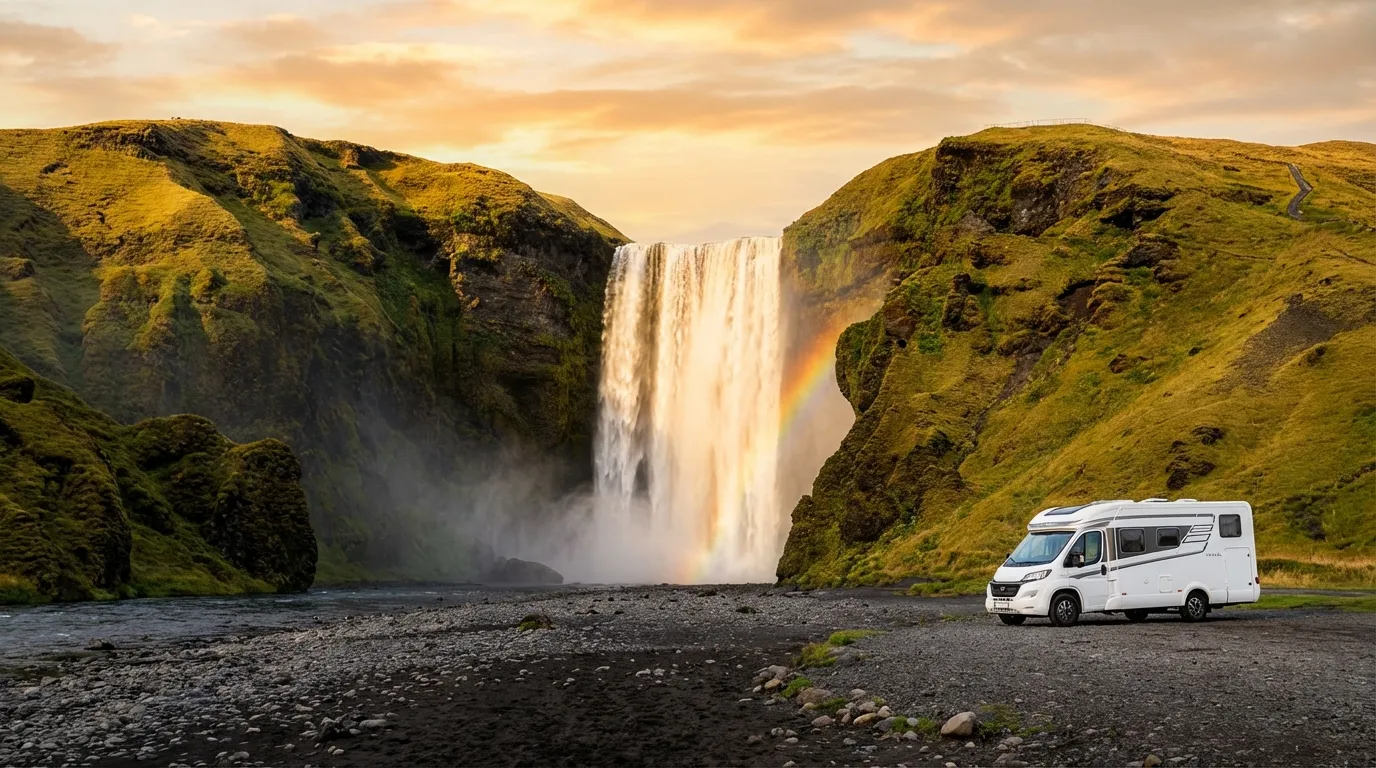
Motorhome routes in Iceland: Ring Road, Golden Circle & Westfjords
Planning a motorhome trip to Iceland? This page has everything you need: curated itineraries from 1 week to 3 weeks, practical tips on 4x4 requirements, and an honest breakdown of what it costs. Iceland is the ultimate motorhome destination — a raw volcanic island where waterfalls, glaciers, geysers and hot springs appear around every bend. Or build your own route with the AI route planner.
With a motorhome you have the freedom to stop at a waterfall by the road, soak in a hot pot and sleep on a campsite surrounded by nothing but nature. On this page we compare trip lengths and regions, and help you choose from 2 curated motorhome routes, drawn from 77 destinations and more than 126 campsites across Iceland.
Iceland motorhome routes: 1 week, 10 days or 2–3 weeks
However much time you have, Iceland has a motorhome route to match. A week is enough for the south coast and Golden Circle. Ten days lets you drive the full Ring Road. And with 2–3 weeks you can explore the side roads and the Westfjords. Below you'll find advice by trip length, with links to our ready-made itineraries.
-
1 week — south coast, Golden Circle or Westfjords
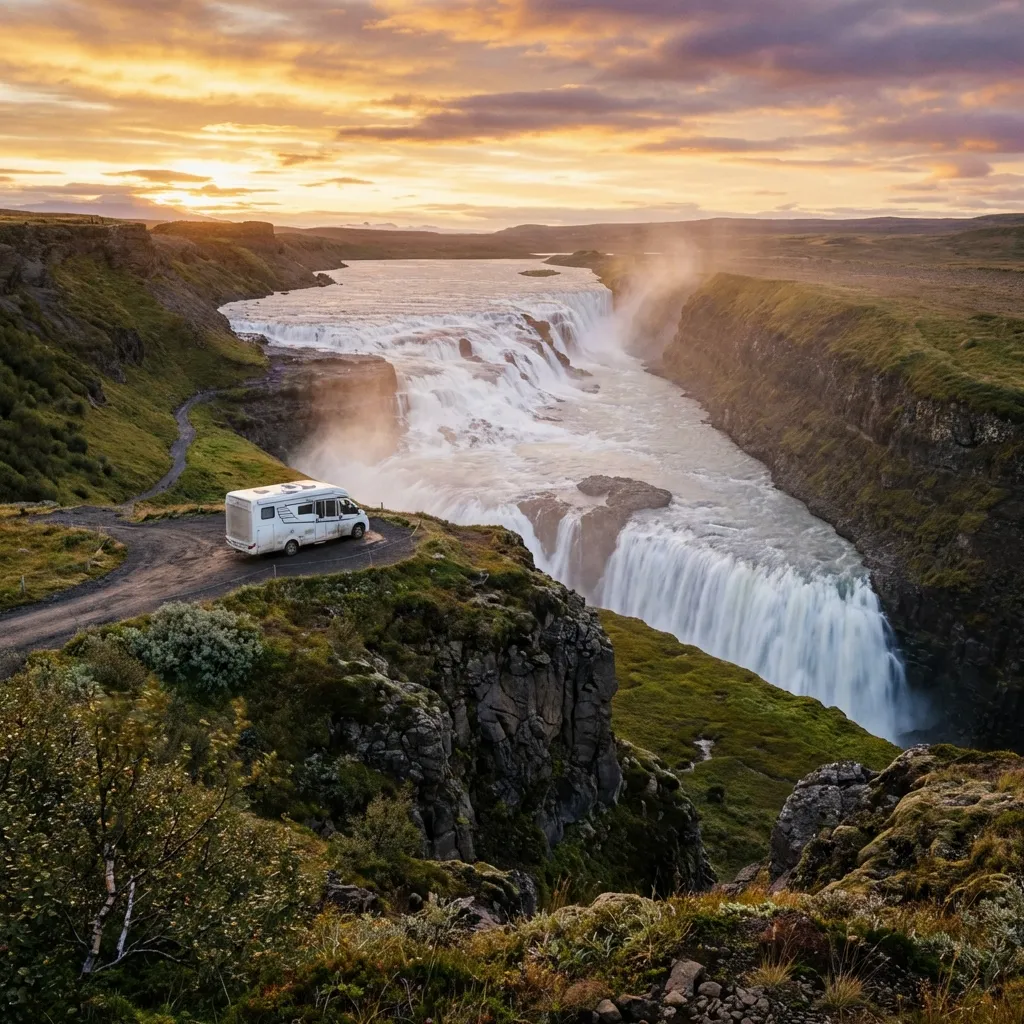
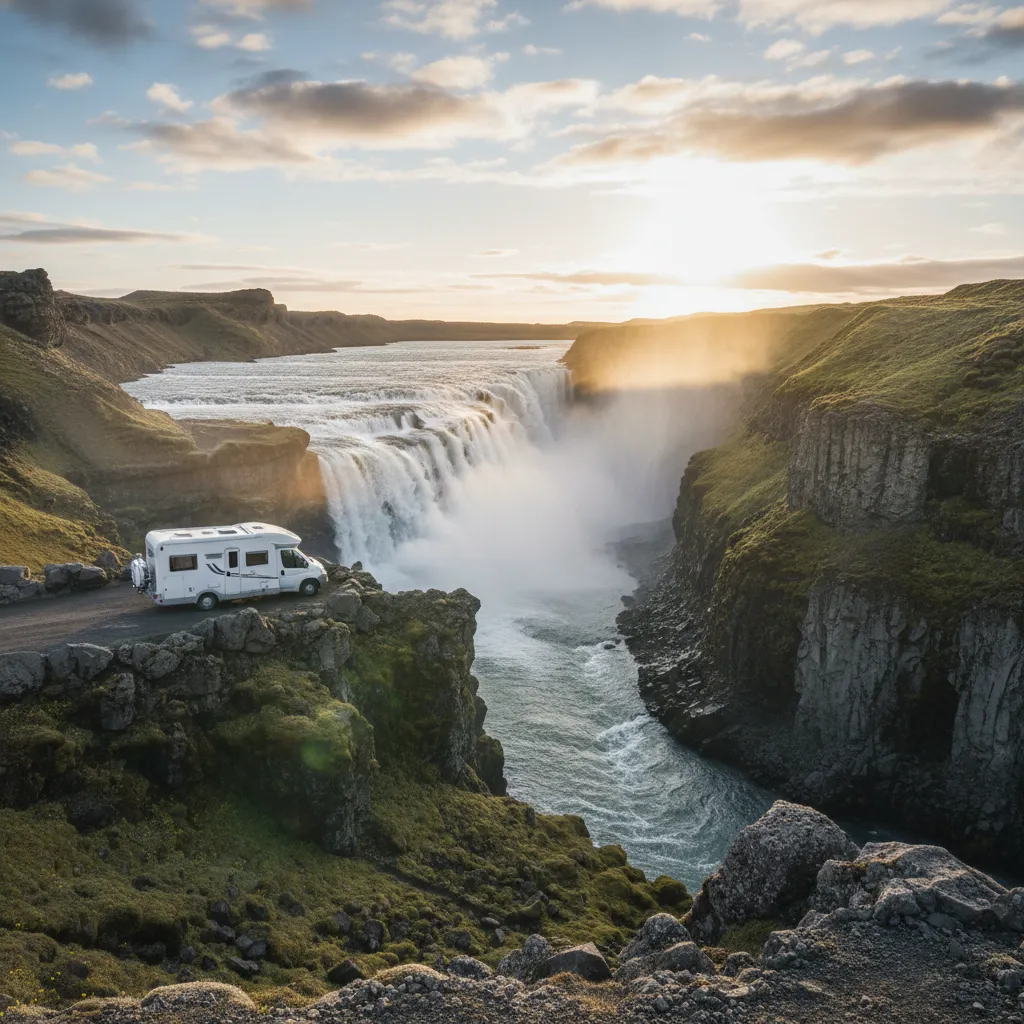
A week-long Iceland motorhome itinerary gives you enough time for the highlights of the south: the Golden Circle (Gullfoss, Geysir, Þingvellir), the waterfalls Seljalandsfoss and Skógafoss, the black sand beach Reynisfjara near Vík, and the glacier lagoon Jökulsárlón. Or choose the Westfjords instead — less touristy, wilder and with a completely different feel. Note: a 7-day "Ring Road" route picks the best highlights along part of the road, but isn't a complete loop — you need at least 10 days for that.
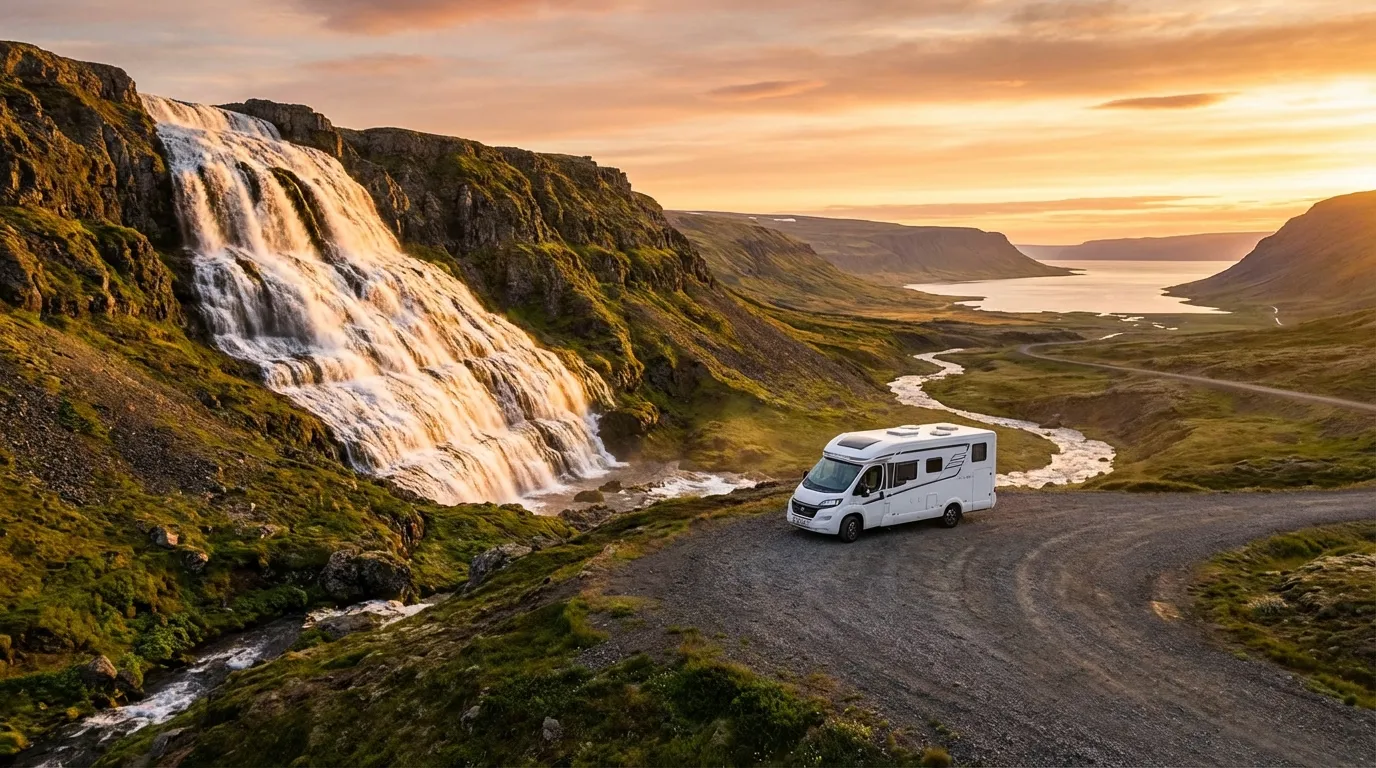
Fire, Ice & Waterfalls - Off the beaten track in Iceland(7 days · 1,241 km · 7 stops)Iceland combines the creative capital Reykjavík with the remote and rugged Westfjords. Here, deep fjords and steep mountains define the landscape, with fishing villages like Patreksfjörður deeply cut into the coast. Along the coast, the bird cliffs of Látrabjarg rise hundreds of meters, and the Dynjandi waterfall plunges downwards. The roads through the fjords are often narrow and unpaved, which naturally encourages you to drive slowly and take time for the views. It's a stark contrast to the lively capital Reykjavík, where street art colors the streets. There, the tall Hallgrímskirkja offers a panoramic view over the colorful roofs and the glass concert hall Harpa. With your motorhome, you'll find a spot with a view of the sea or mountains and stay outside as long as it's light. The best travel time is from May to September, when the days seem endless and the landscape is bathed in full daylight.
This route is fully customisable — adjust the duration, stops and order to suit your plans.
-
10 days — the full Ring Road
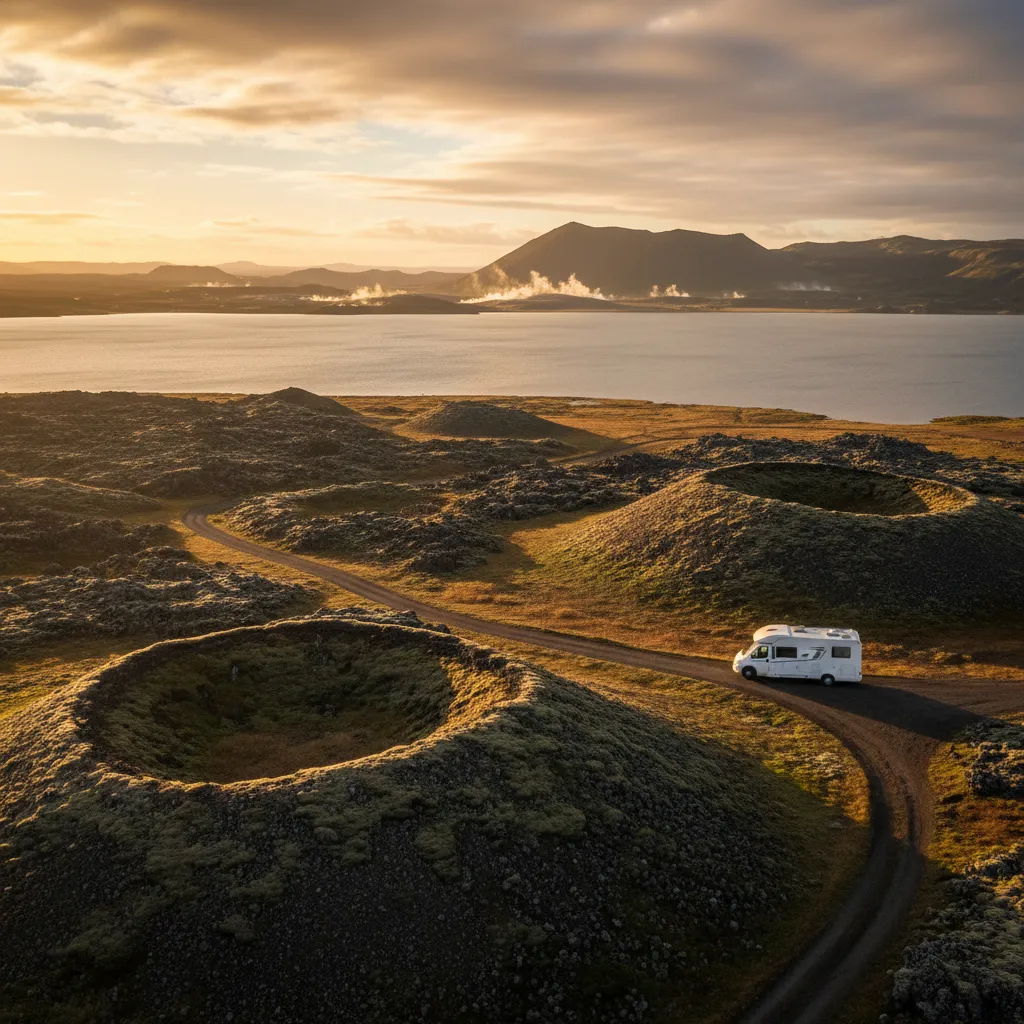
With ten days you can drive the complete Ring Road (Route 1, roughly 1,322 km) — the classic circuit that follows Iceland's entire coastline. You'll combine the south coast with whale watching in Húsavík, the volcanic landscape of Mývatn, the East Fjords and the Snæfellsnes peninsula. Ten days is the minimum for this route if you actually want to stop and walk.
Plan a custom 10-day Ring Road route →The AI route planner selects the best stops from 77 Icelandic destinations for a 10-day Ring Road trip.
-
2–3 weeks — the Ring Road with detours and rest days
A 2 to 3-week motorhome trip through Iceland is the way to properly get to know the island. You'll have time for the Westfjords, the Highlands (with a 4x4), the Snæfellsnes peninsula, and rest days at special places like Seyðisfjörður and Mývatn. This is the unhurried variant, where you can fully experience every stop.
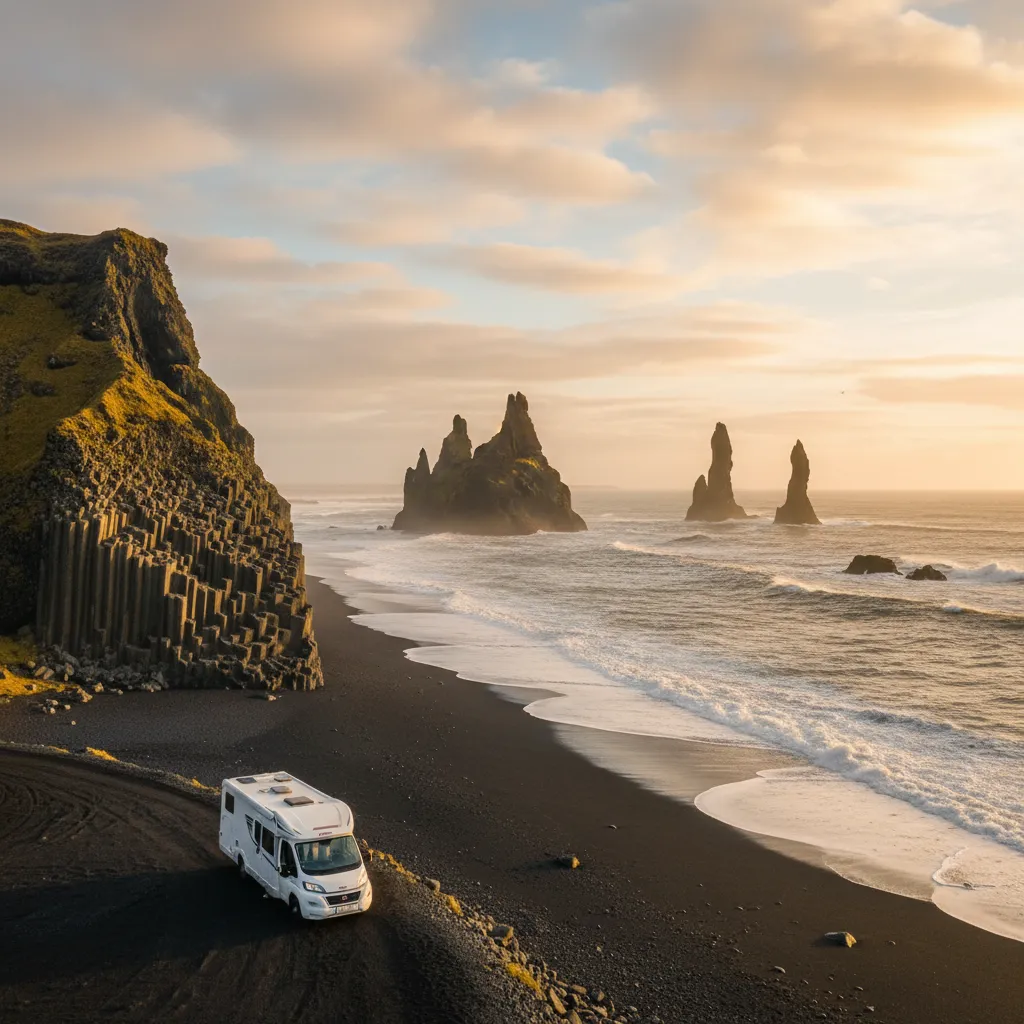
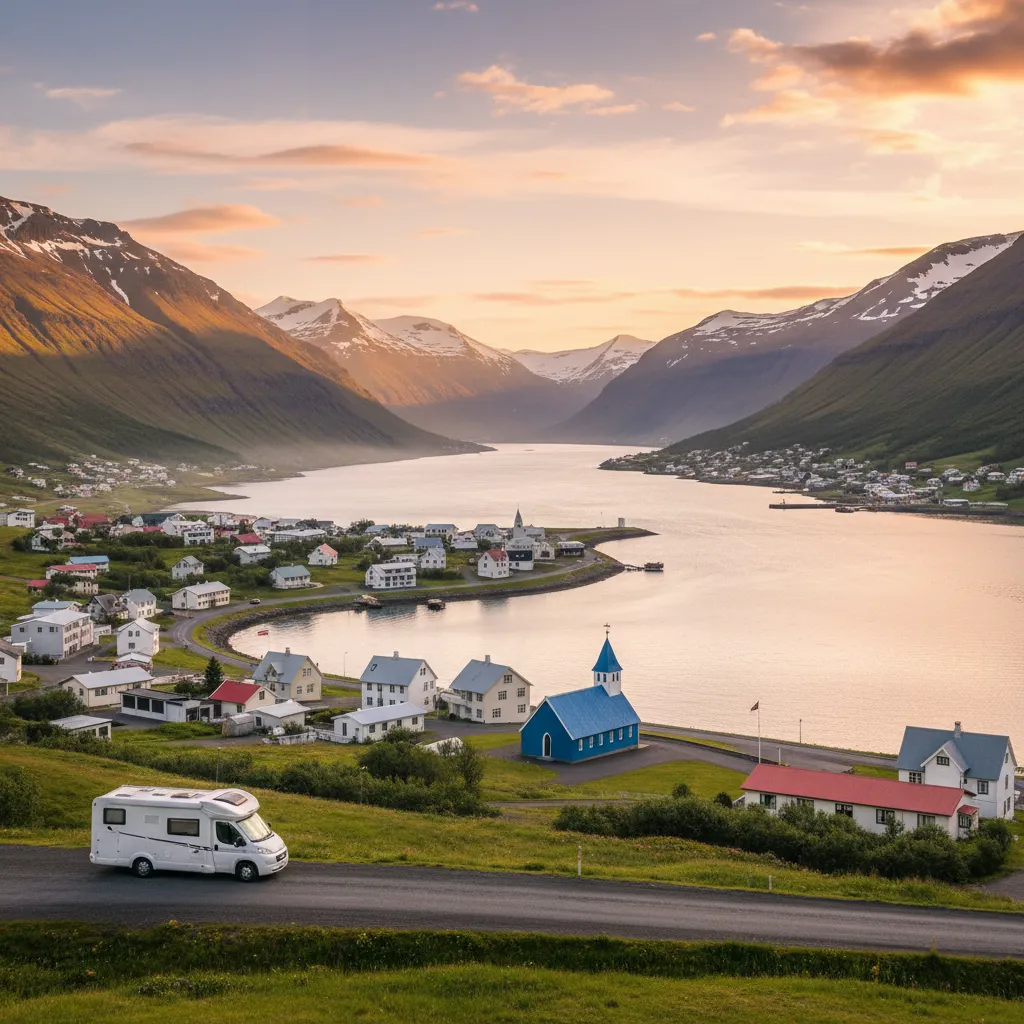
Ring Road & Golden Circle - The ultimate Iceland trip(19 days · 1,512 km · 14 stops)Iceland is a volcanic island where the forces of nature shape the landscape. On the south coast, waves crash onto the jet-black beaches near Vík, and the basalt columns of Reynisdrangar rise from the sea. In the deep Eastfjords, you'll find sheltered villages with colorful wooden houses, like those in Seyðisfjörður. The campsites and motorhome pitches are often located amidst this rugged nature, sometimes directly at the foot of a waterfall. In the north, you can hike through the bizarre rock formations of the Dimmuborgir lava field near Mývatn. Closer to the capital, you'll witness the earth at work at the spouting geyser Strokkur and the Gullfoss waterfall. In other places, you can stay overnight with your motorhome on the outskirts of a village or with a view of a calm bay. The best travel time is from June to September, when the sun barely sets and bathes the landscape in a soft light.
This route is fully customisable — adjust the duration, stops and order to suit your plans.
Build your own 2-week itinerary →Enter your trip length, starting point and preferences — the planner builds a day-by-day route from 77 Icelandic destinations.
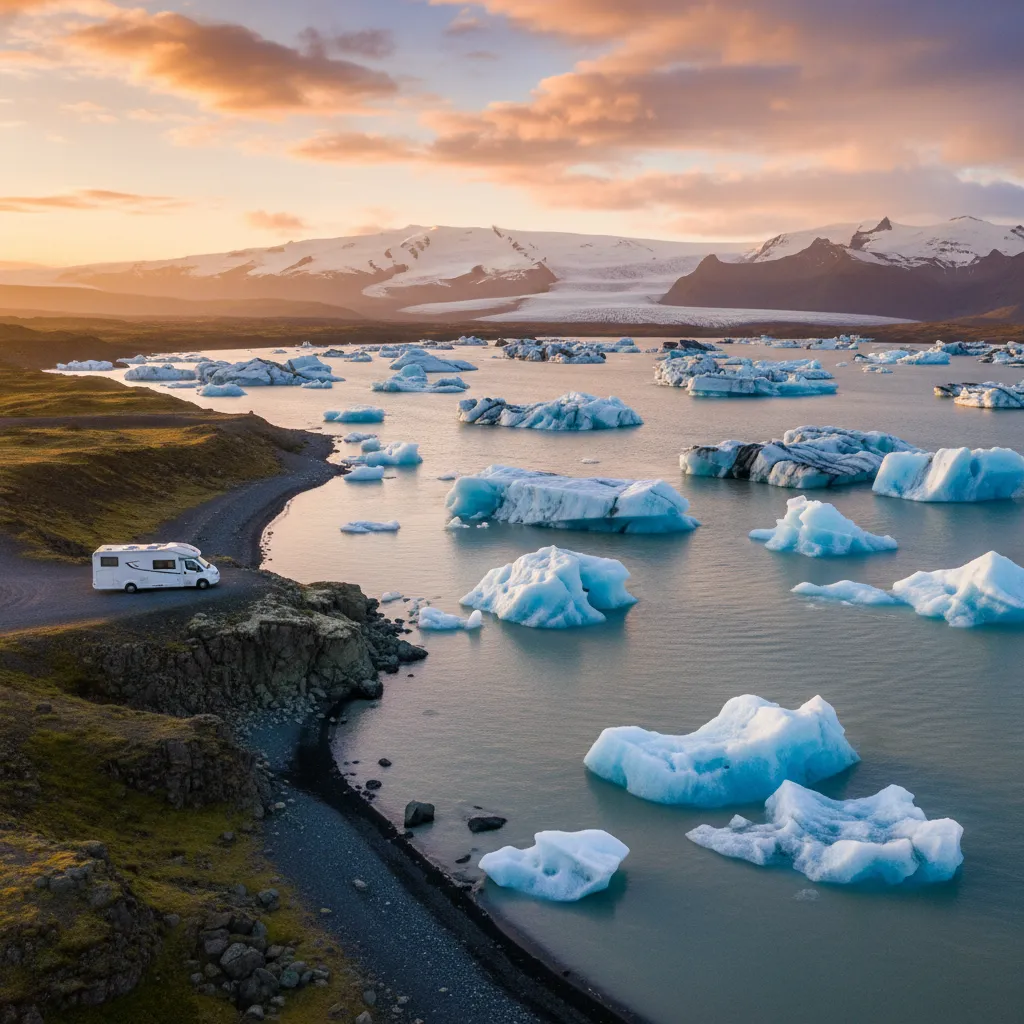
Jökulsárlón — floating icebergs on the glacier lagoon
Popular route shapes through Iceland
🛣️ Ring Road (Route 1)
The classic circuit along the entire coast. 1,322 km, minimum 10 days recommended.
🌋 Golden Circle + south coast
Gullfoss, Geysir, Þingvellir + waterfalls and Vík. Perfect for 1 week.
🏔️ Westfjords
Iceland's most remote region. Fewer tourists, raw nature. 7–10 days.
⛰️ Snæfellsnes + North
Kirkjufell, Mývatn, Húsavík and Dettifoss. The "half Ring Road" in 7–10 days.
Which route suits you?
- Fire, Ice & Waterfalls - Off the beaten track in Iceland →7 days · 1,241 km — fully customisable to your trip length
- Ring Road & Golden Circle - The ultimate Iceland trip →19 days · 1,512 km — fully customisable to your trip length
All routes are adjustable in duration and stops via the route page or the AI route planner.
Regions of Iceland: where to go by motorhome
Iceland is surprisingly diverse. Each region has its own character and landscape. Here's an overview of the key areas for a motorhome trip through Iceland.
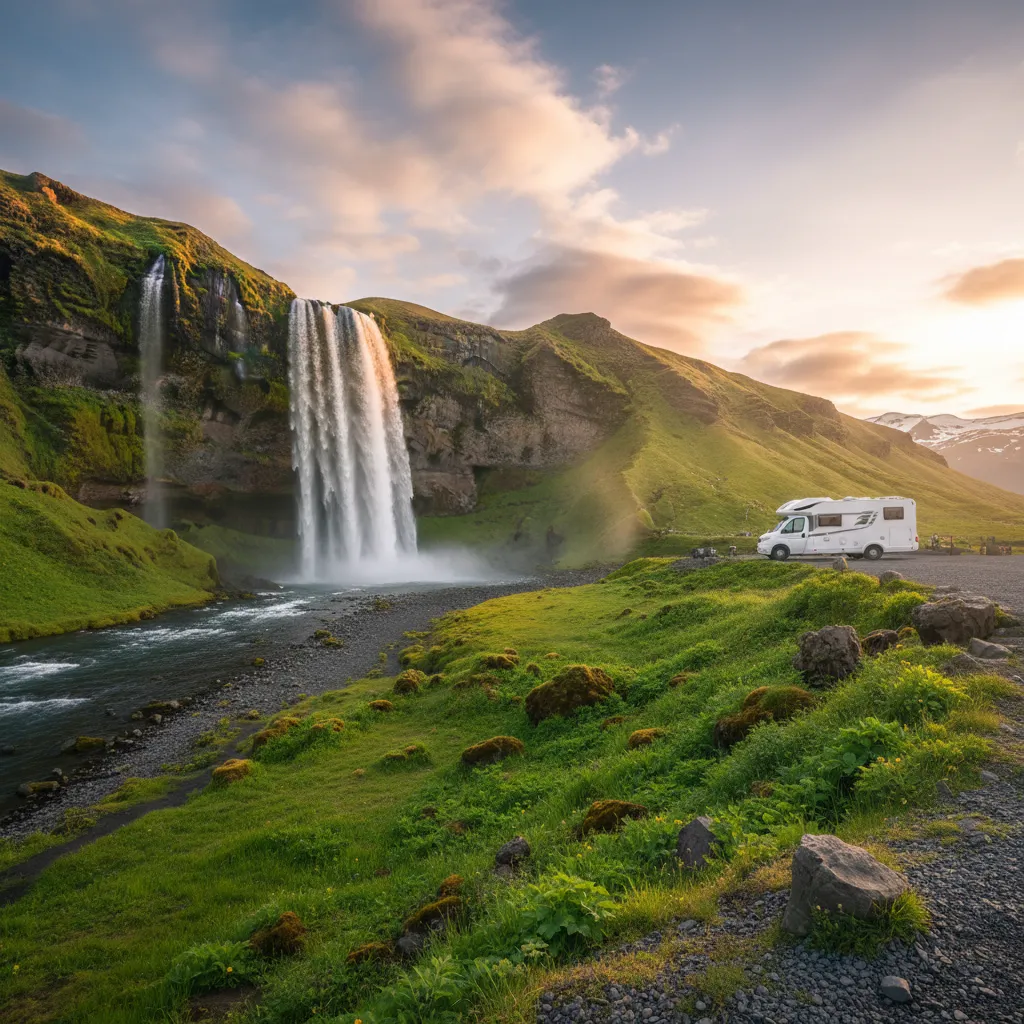
South coast & Golden Circle — the most popular part of Iceland, and deservedly so. The Golden Circle (Gullfoss, Geysir, Þingvellir) is doable in a day from Reykjavík. The south coast then delivers a string of waterfalls (Seljalandsfoss, Skógafoss), the black sand beach Reynisfjara, the village of Vík and the glacier lagoon Jökulsárlón. This is where most motorhome travellers start, and a week covers the highlights well.
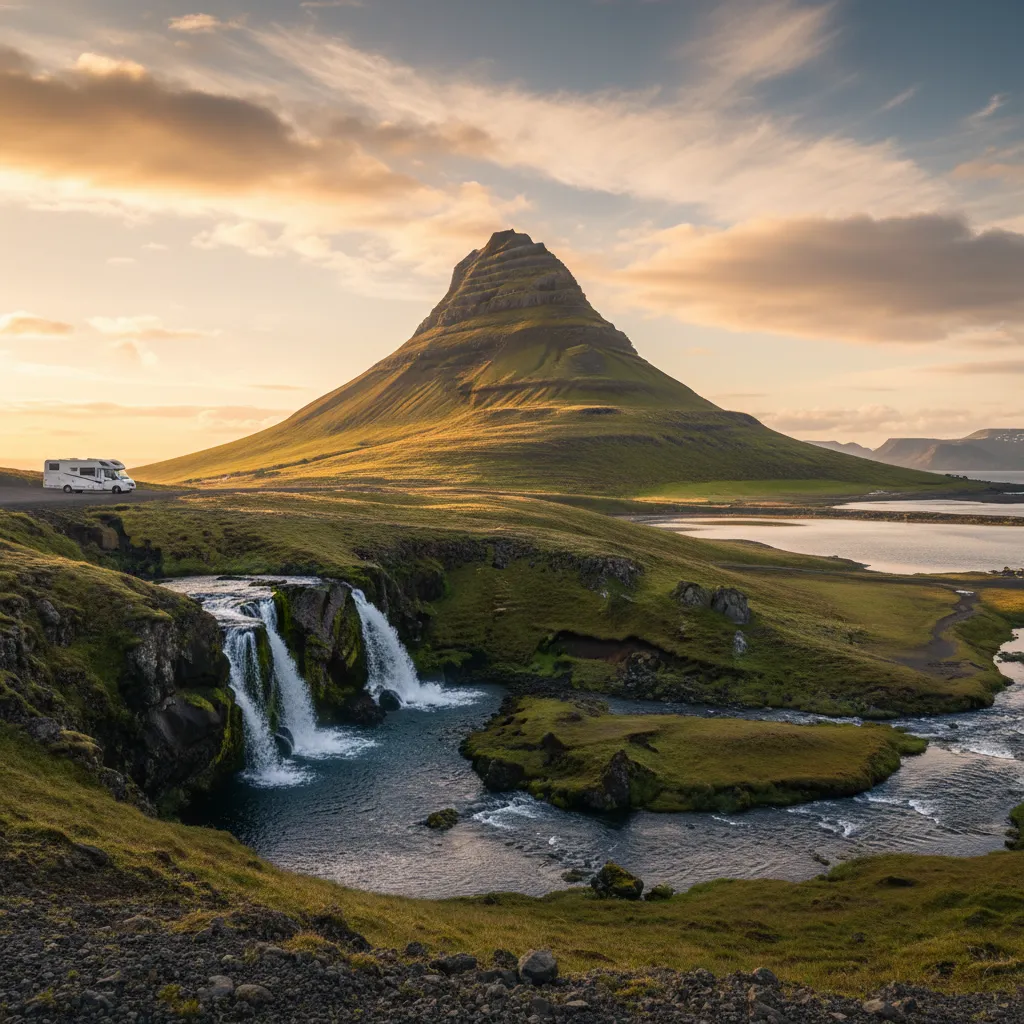
Snæfellsnes peninsula — "Iceland in miniature". On this peninsula north of Reykjavík you'll find the iconic Kirkjufell mountain, the Snæfellsjökull glacier (from the Jules Verne novel), lava fields, beaches and fishing villages. Snæfellsnes takes 2–3 days to explore and combines well with the Ring Road.
North Iceland — whale watching in Húsavík, the volcanic Mývatn area (with the Mývatn Nature Baths), the powerful Dettifoss and Goðafoss waterfalls, and Akureyri as the "capital of the north". The north is quieter than the south and has an entirely different atmosphere — rawer, wider and with spectacular volcanic landscapes. Mývatn alone is worth the trip.
Westfjords — Iceland's most remote and least visited region. Narrow winding roads along steep fjords, the impressive Dynjandi waterfall, puffins on the Látrabjarg cliffs and the town of Ísafjörður as a base. The Westfjords demand more time and patience (many gravel roads) but reward you with an authentic Iceland experience. Plan at least 5–7 days.
East Fjords — the quietest part of the Ring Road. Deep fjords, small fishing villages (Seyðisfjörður, Djúpivogur) and hardly any tourism. The East Fjords are ideal if you're seeking solitude and untouched nature.
Our recommendation: for a first motorhome trip to Iceland, the south coast with the Golden Circle is the logical choice — the most highlights, the best roads and campsites close together. With more time, add the north (Mývatn, Húsavík) via the Ring Road, or choose the Westfjords if you want the undiscovered Iceland.
Ring Road Iceland: should you drive it?
The Ring Road (Route 1) is Iceland's classic motorhome route: a 1,322 km paved circuit around the entire island along the coast. But is it right for you? That depends on your available time.
-
7 days — too short for the full Ring Road
You could technically drive it in a week, but you'd mostly be driving and miss the best side roads. Better: focus on the south coast + Golden Circle, or choose the Westfjords.
-
10 days — the Ring Road without major detours
Ten days is the minimum for a comfortable Ring Road trip. You can stop at all the major highlights, but have little room for side trips to Snæfellsnes or the Westfjords.
-
14+ days — Ring Road with detours and rest days
The ideal trip length. You drive the Ring Road and have time for the Snæfellsnes peninsula, an extra day at Mývatn, a walk at Skaftafell and possibly the Westfjords. Two weeks gives you the freedom an Iceland motorhome trip deserves.
The Ring Road itself is fully paved and drivable in a standard motorhome. Side roads to places like Dynjandi, the north side of Dettifoss or the interior are often gravel — you may need a 4x4 for those.
4x4 motorhome in Iceland: do you need one?
A common question when planning a motorhome trip to Iceland: do you need a 4x4? The short answer: it depends on your route.
No 4x4 needed for: the Ring Road, the Golden Circle, the south coast, Snæfellsnes, Akureyri and most coastal towns. All major highlights are accessible via paved roads in a standard motorhome.
4x4 legally required for: the F-roads (Fjallvegar/mountain roads). These are unpaved roads through the Highlands with river crossings — it's illegal to drive them without a 4x4. The best-known F-roads are the F35 (Kjölur), F26 (Sprengisandur) and the road to Landmannalaugar.
Our recommendation: staying on the Ring Road and coastal areas? A standard motorhome is fine. Want to explore the Highlands or remote areas? A 4x4 motorhome is essential. Most rental companies in Reykjavík offer both options.
Getting to Iceland by motorhome
Most motorhome travellers choose fly & drive: fly into Keflavík International Airport (about 3.5 hours from the UK) and pick up a motorhome on arrival. The airport is 45 minutes from Reykjavík, and most rental companies offer free transfers or pick-up points near the airport.
Want to bring your own motorhome to Iceland? That's possible via the Smyril Line ferry from Hirtshals (Denmark) to Seyðisfjörður in the East Fjords. The crossing takes about 47 hours and runs weekly in summer. It's an adventure in itself — you sail past the Faroe Islands — but it's expensive (budget €1,500–3,000+ return for motorhome + 2 people) and you lose two travel days.
Renting a motorhome in Reykjavík is the most popular option: you choose the type (small van, 4x4 camper or larger motorhome) and the rental period. In peak season (June–August) booking early is essential — popular models sell out fast.
Best time for a motorhome trip to Iceland
The best period for a motorhome holiday in Iceland runs from June through August. The climate is subarctic — expect average temperatures of 10–15°C in summer, with occasional peaks to 20°C. Wind and rain are part of the deal, even in summer.
June offers the longest days and midnight sun — it doesn't get dark, which gives extra flexibility. Many mountain roads (F-roads) don't open until mid-June. July is the warmest and busiest, with the best chance of good weather. Campsites fill up, so arrive early. August is still warm; crowds thin after mid-month.
September is possible but days shorten rapidly, weather becomes more unpredictable and some campsites close. However, you may see the northern lights. May is risky: many mountain roads are still closed and the weather is changeable, but it's quiet and nature is awakening.
Practical tips for your Iceland motorhome trip
- No wild camping: since 2015 you must stay at designated campsites with a motorhome in Iceland. Fortunately there are more than 126 campsites spread across the country, including in remote areas.
- Wind is your biggest challenge: Iceland is known for sudden gusts. Check the weather forecast (vedur.is), park your motorhome nose into the wind and be careful opening doors — they can be ripped from your hands.
- Fuel stations: along the Ring Road, fuel stations are at regular intervals, but in the Westfjords and remote areas there can be gaps of 100+ km. Always fill up when you drop below half a tank.
- Single-lane bridges: on the Ring Road you'll encounter one-lane bridges (signed "Einbreið brú"). The vehicle closest to the bridge has right of way. Drive carefully and be prepared.
- F-roads: not all roads in Iceland are suitable for standard motorhomes. F-roads (mountain roads) are unpaved and require a 4x4. Check road conditions on road.is before you set off.
- Camping Card: consider the Icelandic Camping Card (around €170 for 28 nights at 40+ campsites). Worth it if you're staying 5+ nights.
- Hot springs: Iceland has hot springs and hot pots everywhere. Many are free to access — always keep a swimsuit in the motorhome.
How much does a motorhome trip through Iceland cost?
Iceland is one of Europe's most expensive destinations. With a motorhome you save on hotels and restaurants, but costs still add up. The main items:
- Campsites: expect €20–40 per night for a pitch with facilities. The Camping Card (€170 for 28 nights) saves money if you stay longer than a week.
- Fuel: diesel costs around €2.20–2.50 per litre. The Ring Road is roughly 1,322 km — budget €200–350 for a full circuit, depending on your consumption and detours.
- Groceries: supermarket prices are 40–60% higher than in the UK. The cheapest supermarket is Bónus (with the pig logo). Bring non-perishable basics from home to save.
- Rental motorhome: expect €120–180 per day in peak season for a standard motorhome. A 4x4 motorhome is pricier: €180–300 per day. Early booking makes a big difference.
- Activities: glacier walks (€80–150 pp), whale watching (€70–100 pp) and snorkelling in Silfra (€150+ pp) are popular but not cheap. Many natural highlights (waterfalls, hot springs) are free.
Rule of thumb: a two-week motorhome trip through Iceland costs on average €3,500–5,500 for two people, depending on whether you rent or bring your own. That includes campsites, fuel, groceries and a few activities — significantly more expensive than mainland Scandinavia.
Why Camproads for your Iceland motorhome route?
We've selected and reviewed 77 destinations across Iceland — from well-known spots like Gullfoss and Jökulsárlón to hot springs and remote fjords you won't find in most guidebooks. For each destination we've mapped more than 126 campsites, so you always know where to stay.
Our 2 curated routes through Iceland are built day by day, with driving times, distances and campsite suggestions at every stop. No vague lists — concrete itineraries you can follow straight away. Every route is a starting point you can fully customise.
Want something different from a standard route? The AI route planner builds an itinerary based on your trip length, starting point and preferences. The planner selects from our full database of Icelandic destinations and creates a realistic day-by-day programme — including driving times and campsites.
Frequently asked questions about a motorhome trip to Iceland
All destinations
Scandinavia
Iceland
British Isles
France & Corsica
Alps & Germany
Spain & Portugal
Italy & its islands
Adriatic coast
Poland & the Baltics
Netherlands & Belgium
Ready for your adventure?
Choose a ready-made route or create your own trip with our AI generator
Create your own routeOr rent your motorhome directly