Key takeaways
- The 'right to roam' (allemannsretten) dates to 1957 but was written for non-motorised recreation.
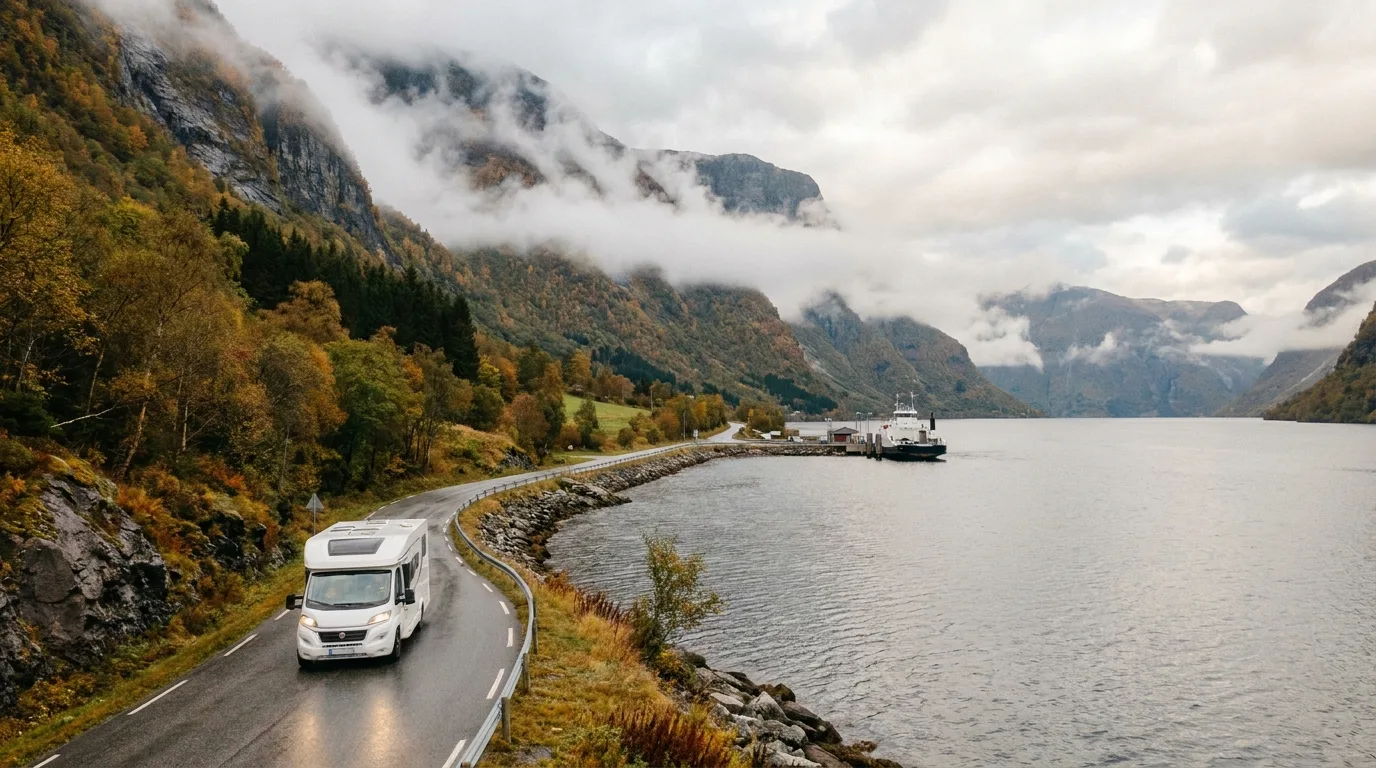
- With a motorhome or campervan, you are restricted to roads and car parks; driving off-road is generally prohibited.
- Plan for one night per spot, stay at least 150 metres from houses, and don't set up awnings or chairs outside.
- In the Lofoten Islands and other busy areas, additional restrictions now apply.
- If you act like a discreet guest rather than a camper, you will rarely be bothered in Norway.
- A fire ban is in effect from 15 April to 15 September in or near forests and uncultivated land.
There's one sentence missing from most articles about motorhoming in Norway, and it's the one that matters: the 'right to roam' was not written for your campervan or motorhome.
This isn't a minor detail. It's the difference between thinking you can park anywhere and understanding why you might still be asked to leave certain spots.
What the Right to Roam actually is
The allemannsretten, or 'the right to roam', has been part of Norway's Outdoor Recreation Act since 1957. This legislation gives everyone—Norwegian or visitor—the right to move freely through nature and stay overnight, regardless of land ownership.
This right applies to utmark: unfenced, uncultivated land like forests, mountains, marshes, and the coast. It does not apply to innmark, which is cultivated or developed land: fields, pastures, private yards, and gardens. Note that 'fenced' is a legal concept, not just a physical barrier—a pasture without a fence is still innmark.
The classic rules are: stay at least 150 metres (approx. 500 feet) from the nearest inhabited house, stay for a maximum of two nights in the same spot, and leave nothing behind.
Why it's different for a motorhome
The right to roam was written for people moving under their own power: hikers, canoeists, cyclists, and skiers. Motorised traffic in nature is covered by separate Norwegian legislation, which is actually restrictive. Driving a vehicle off-road is generally not permitted without a specific permit.
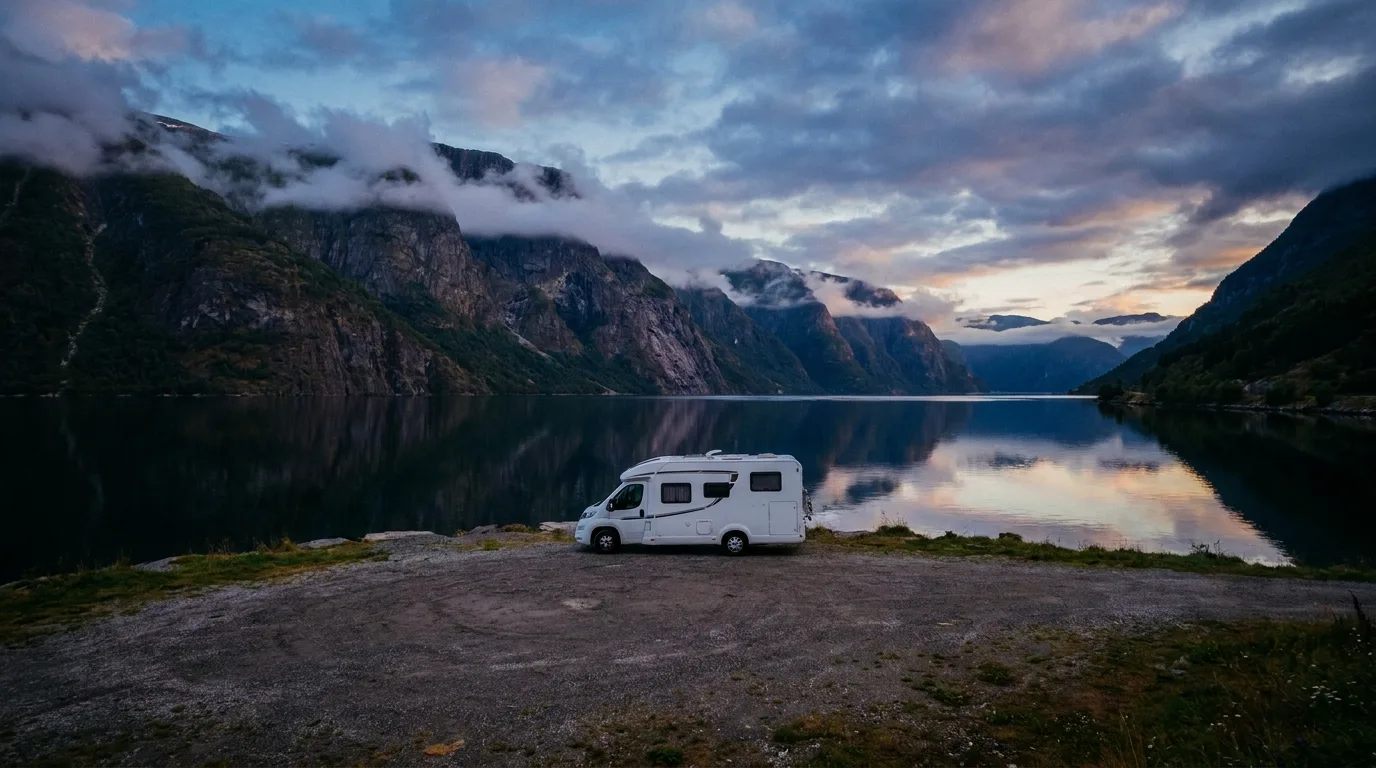
This completely undermines the common assumption about wild camping. You can't just drive your motorhome to that beautiful spot by the lake to spend the night, even if you would be allowed to pitch a tent there. You are restricted to roads, car parks, and designated areas.
What remains is still a lot of freedom in practice: staying overnight in public car parks where no prohibition signs are posted, at trailheads, and along the national scenic routes. However, this is not a right you can claim. It's a tolerated practice, allowed as long as you don't cause a nuisance.
The distinction that matters in practice
In reality, Norwegian landowners and authorities often make a distinction that isn't legal but visual: are you parking as part of a journey, or have you set up camp?
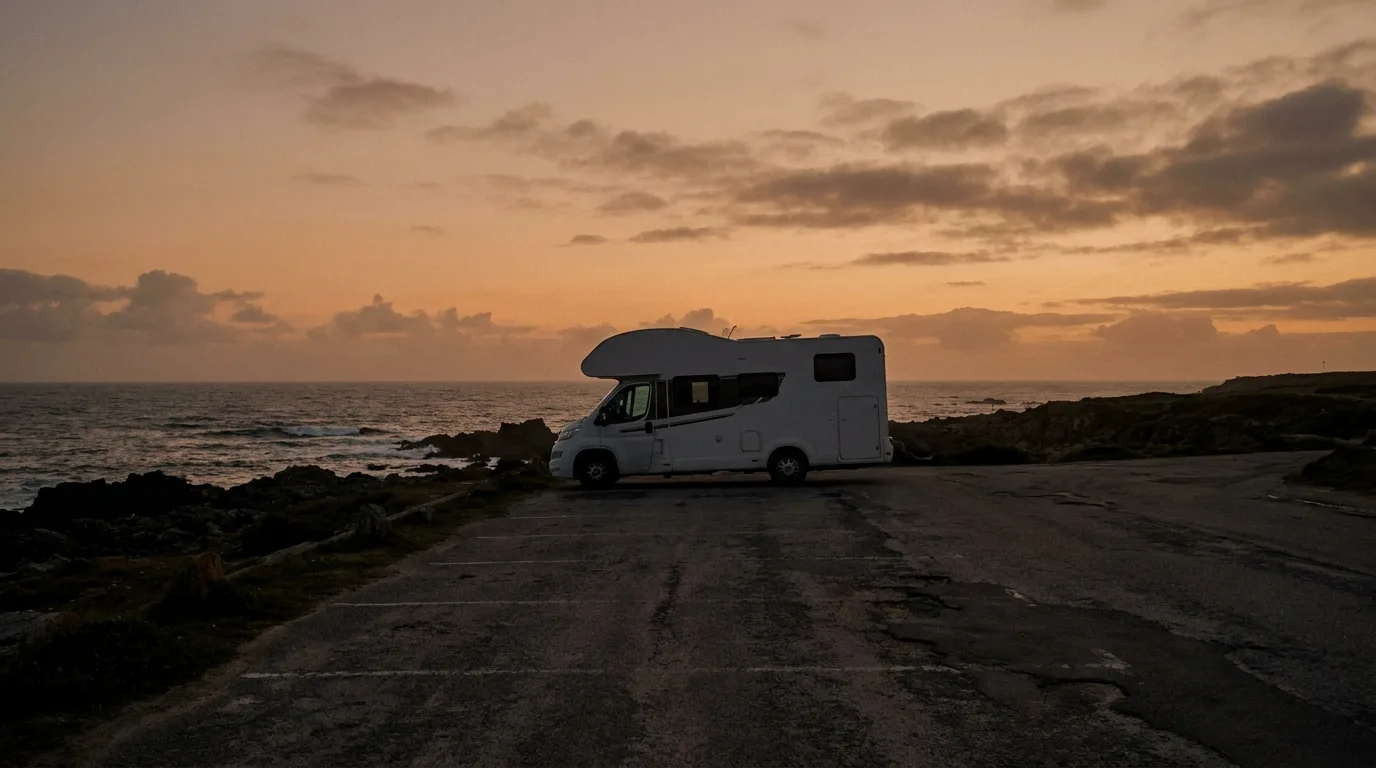
A motorhome parked for the night with the blinds drawn, ready to leave in the morning, falls into the first category. The same vehicle with the awning out, two folding chairs, a table, and a clothesline falls into the second. This visual difference often carries more weight than your exact location.
So, the key is discretion: don't use levelling jacks or awnings, keep furniture inside, no barbecues, and don't dump any water. Arrive in the evening, leave in the morning. If you follow these unwritten rules, you'll rarely be bothered in Norway.
Where things have become stricter
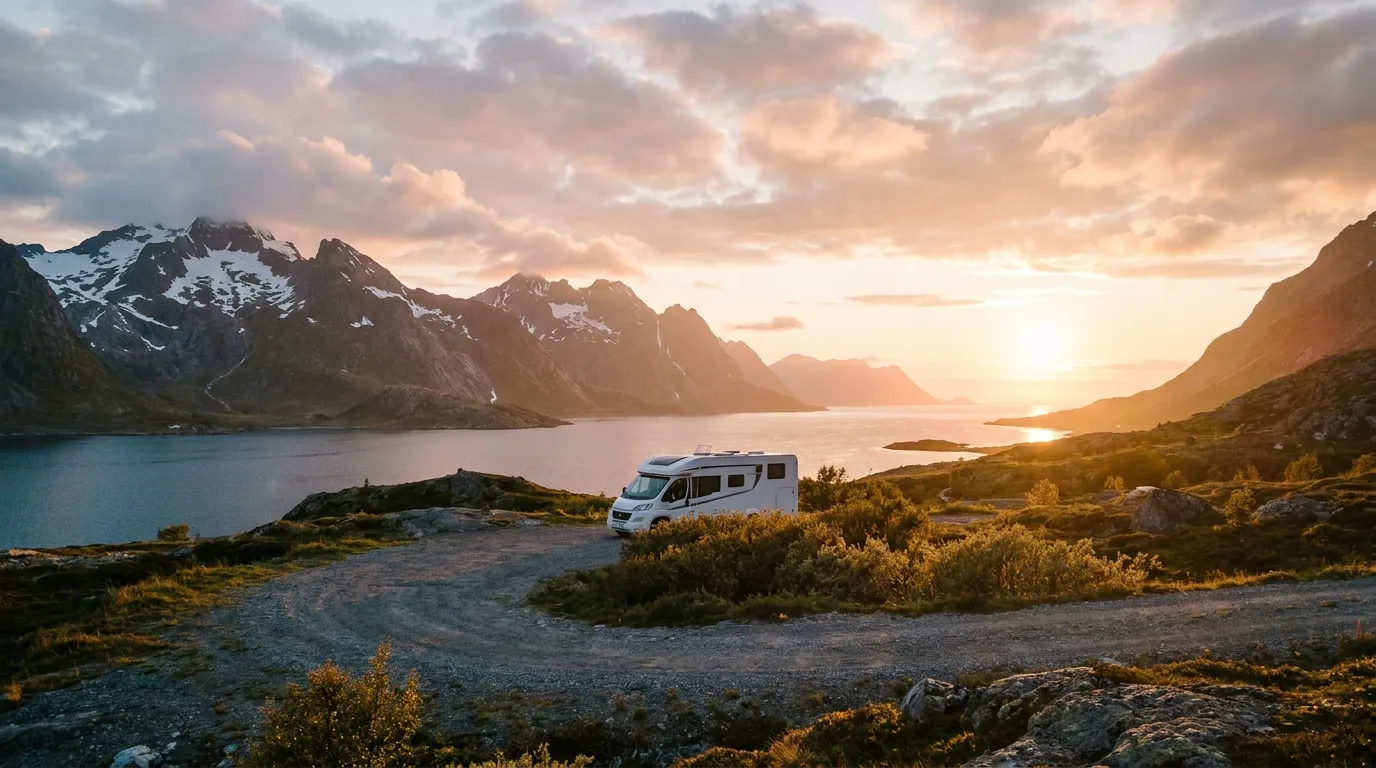
This freedom is under pressure, and it's no coincidence. In areas where tourism has boomed, restrictions have been introduced. The Lofoten Islands are the most famous example; designated overnight spots have been created precisely because informal camping got out of hand. These spots are often full during the high season.
You'll see the same pattern around popular trailheads and viewpoints. The more famous the location, the more likely you are to find a prohibition sign, a barrier, or a parking fee.
Ironically, the spirit of the allemannsretten survives best in the places nobody photographs. Drive into a valley without a major tourist attraction, and you might find the space you were looking for on the Lofoten.
Two rules many visitors don't know
There are two seasonal rules in Norway that directly affect motorhome travellers.
Campfire ban from 15 April to 15 September. During this period, you are not allowed to light an open fire in or near forests and uncultivated land. This includes barbecues. During periods of drought, municipalities may extend this ban to all types of fire, including an outdoor gas stove. That romantic campfire by the water is therefore forbidden for most of the season you're likely to be there.
Dogs on a leash from 1 April to 20 August. In these months, dogs must be kept on a leash to protect young livestock and nesting birds. This rule is taken more seriously than many visitors expect.
Leave no trace is not a slogan here
In Norway, friluftsliv—the outdoor life—isn't a hobby; it's a cultural cornerstone. The right to roam exists because people have respected it for centuries. It will disappear the moment that respect is lost.
In practical terms, this means: no soap in streams or lakes, not even biodegradable types. Grey water and chemical toilets must only be emptied at designated service points. Take all your rubbish with you. When you leave a spot, no one should be able to tell you were ever there.
The shortest summary of the right to roam we know is: you are welcome to be here, but you are not entitled to claim anything.
And then there's the real problem
Knowing the rules is the easy part. The challenge begins when you're planning a multi-week trip and need to find a spot every single evening that is legal, beautiful, and within a reasonable driving distance from your last stop.
Because that's where things can go wrong: not on the first night, but on the fourteenth, when it's 7:30 PM, you're still searching, and the designated spot you were counting on is already full.
Frequently asked questions
About the author

Co-founder of Camproads
Bas is co-founder of Camproads. He previously worked in the travel industry on rail and package holidays, and started Camproads on the conviction that a campervan trip deserves better planning than a list of sights. At Camproads he handles route research and the data behind it: which stages are actually drivable, where you may legally spend the night, and what a trip really costs. He prefers writing about what other articles skip.
Co-founder of Camproads · background in the travel industry · route planning and trip costs