Key takeaways
- Published daily budgets range from around €37 to €120 for two people—the difference is mainly down to accommodation choices and driving distance.
- For most motorhome travellers in Norway, transport—not accommodation—is the biggest expense.
- Fuel prices in Norway can vary significantly by location and even by the time of day.
- On ferries and toll roads, motorhomes often fall into a more expensive category than cars.
- Nature, the main reason for visiting, is almost entirely free to access.
- An AutoPASS tag allows motorhomes over 3.5 tonnes to pay the cheaper Class 1 toll tariff.
Look up the cost of a motorhome trip to Norway, and within ten minutes you'll find figures that are a factor of three apart. One travelogue calculates about €37 per day for transport for two people. A motorhome rental company estimates €80 to €120 per day for accommodation, groceries, and fuel combined, on top of the rental fee. And those renting a vehicle locally will see prices approaching €250 per day for the vehicle alone.
The frustrating part is: all these figures are correct. They just describe different kinds of trips.
Why the costs vary so much
Four choices explain almost the entire difference in budget.
Where you sleep. Staying at a campsite every night can quickly add up to several hundred euros over two weeks. Alternating with free camping in designated public areas can halve that cost. This is the single biggest dial you can turn.
How much you drive. This is the cost people consistently underestimate. Norway is a long country, the roads are winding, and a motorhome or campervan is thirsty. One traveller who drove 3,600 kilometres (approx. 2,237 miles) in three and a half weeks spent over €300 on fuel—in a passenger car. For a motorhome, the cost is substantially higher.
Where you eat. Groceries, and especially eating out, are expensive in Norway. Cooking in your motorhome is the best way to avoid the country's biggest price shock.
When you go. Rental prices and campsite fees peak in July and August. May, June, and September are noticeably cheaper—and quieter.
A breakdown of the costs
Fuel. Norwegian fuel prices fluctuate wildly, not just by region but even at the same pump within a single day. Travellers report price differences of tens of percent between morning and afternoon. The practical rule Norwegians use: if you see a low price, fill the tank immediately.
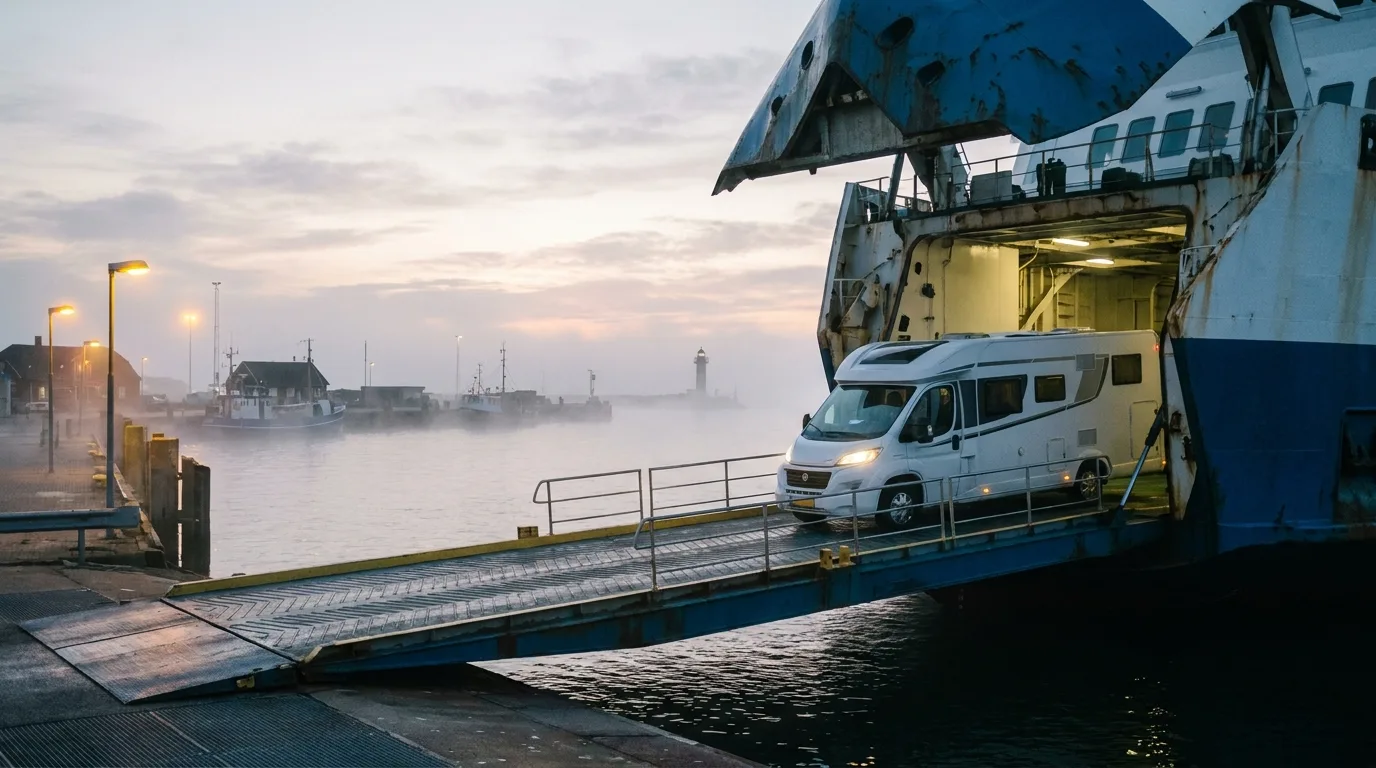
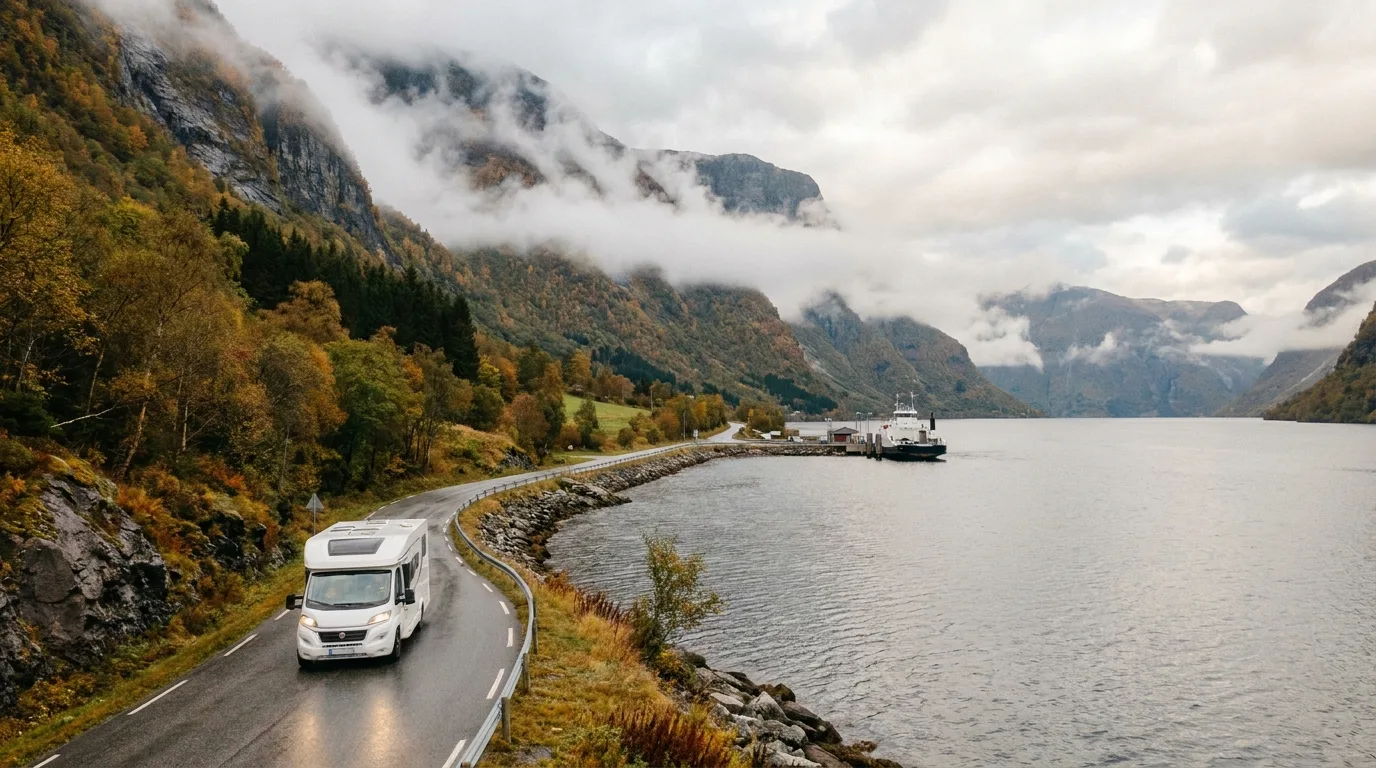
Tolls and ferries. Norway is full of toll roads and fjord ferries, and they are not a minor expense. For a two-week round trip, travellers report toll costs from €50 to €150. Ferries are an additional cost on top of that. We'll cover this more below, as this is where motorhome users often leave money on the table.
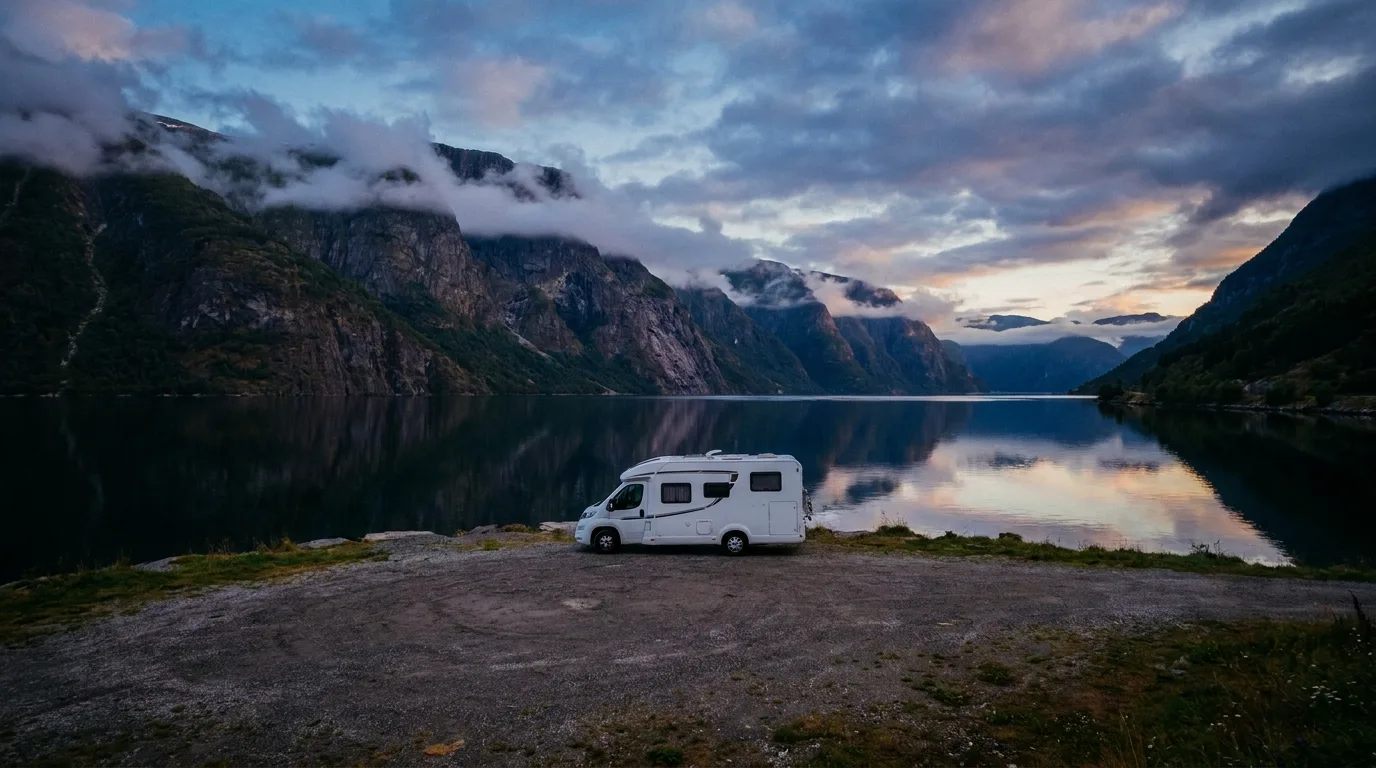
Accommodation. Travellers typically report around €25 to €35 per night for a campsite pitch for two people, often including electricity. Free camping is possible under Norway's allemannsretten (the 'right to roam'), but this right comes with rules and is more restricted than many assume.
Groceries. This is where you'll feel the cost of Norway most. Alcohol is in a category of its own, with restricted sales and very high taxes. Note that while we use Euro for comparison, Norway has its own currency, the Norwegian Krone (NOK).
The vehicle itself. This is the biggest variable. Driving your own motorhome from the UK or mainland Europe is very different from renting locally. Owners also tend to exclude fixed costs like insurance and depreciation from their holiday budget, which skews comparisons with renters.
The toll bill: where you're losing money
Norwegian toll booths use automatic number plate recognition (ANPR). You simply drive through without stopping; there are no barriers. The bill arrives by post or email weeks later.
This convenience hides two things that cost you money.
Motorhomes over 3.5 tonnes fall into Tariff Class 2. This is the heavy vehicle category, which pays significantly more per toll point than a car. On a round trip with dozens of toll points, this adds up.
This 3.5-tonne (3,500 kg) limit is a key detail. In the EU, a standard Category B licence covers vehicles up to this weight. For UK drivers who passed their test after 1 January 1997, the same limit applies. However, those with a pre-1997 licence may be entitled to drive heavier vehicles. Always check your own licence and your vehicle's authorised weight.
With an AutoPASS tag, a motorhome over 3.5 tonnes still pays the cheaper Class 1 tariff. This is the detail most travel stories miss, and it makes a huge difference. The tag also provides discounts on many toll roads and on ferries that are part of the AutoPASS for ferry scheme.
You must order the tag in advance, affix it to your windscreen, and register your vehicle details. It takes some effort before you leave. But if you're travelling for two weeks or more and heading to the fjords, it will almost certainly pay for itself. For a short stay in one region, simply driving through and paying the invoice later is easier.
Be sure to terminate the registration when you're done; it's an ongoing contract, not a one-time purchase.
What costs next to nothing
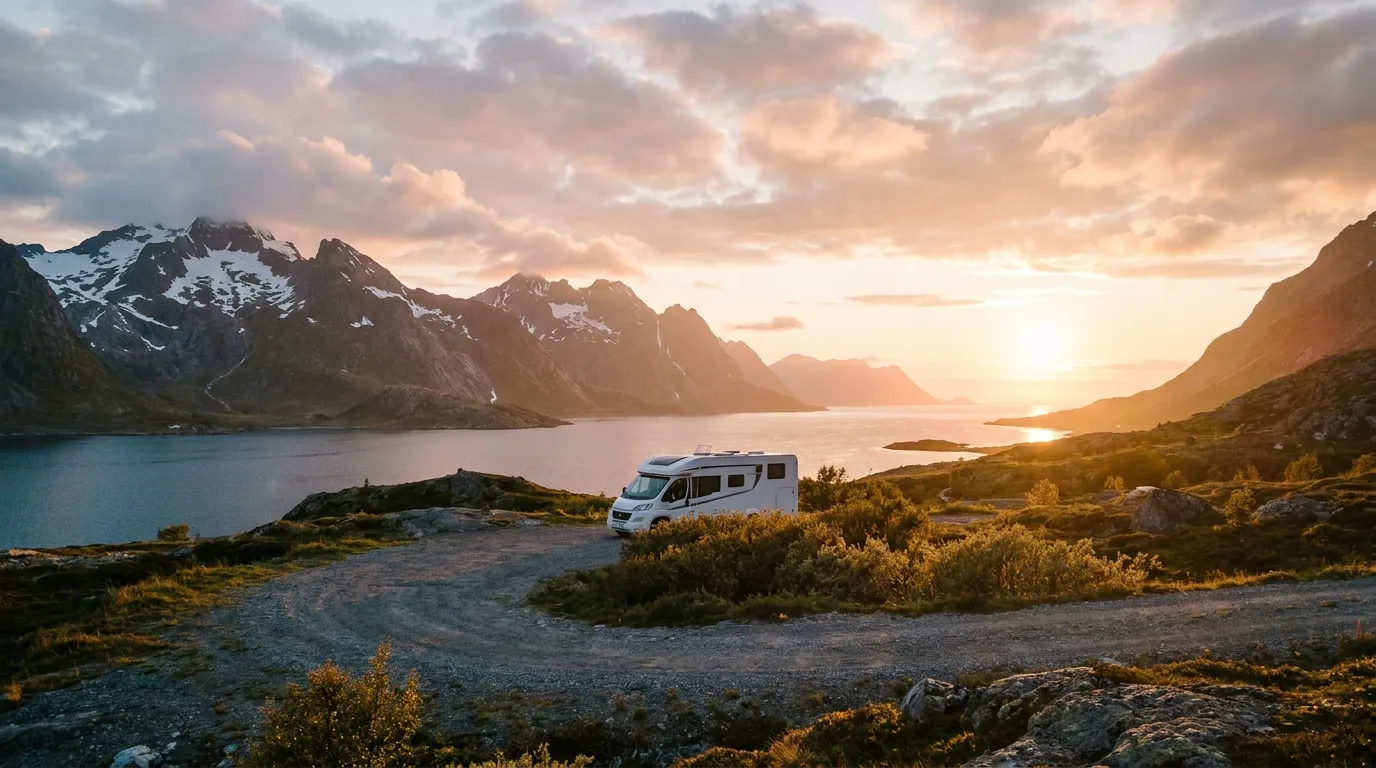
Here lies the nuance that most cost breakdowns miss: the main reason for going to Norway is free.
Fjords, mountain passes, roadside waterfalls, viewpoints, hiking trails, beaches. The vast majority of what you come to see has no entrance fee. This is the exact opposite of a city break, where transport might be cheap but the attractions are expensive.
As a result, a traveller who spends most of their time outdoors and self-caters can end up with a daily budget comparable to a trip in Italy or Slovenia. That’s not a sales pitch; it's what multiple travellers calculate after their trip.
A realistic rule of thumb
If you want a single number to start with, budget €80 to €120 per day for two people, covering accommodation, groceries, and fuel, on top of the vehicle cost. If you primarily cook for yourself and alternate campsites with free camping, you'll be at the lower end of that range, or even below it.
But recognise what that number is: an average across routes that have nothing in common. A trip along the western fjords with many ferry crossings is a different calculation than a loop through the interior. Two weeks in June is not the same as two weeks in August.
Where the budget is really decided
The common money-saving tips—cooking your own meals, filling up at the lowest price, buying duty-free on the ferry—collectively save you less than the one choice you make before you even leave: your route.
Every fjord you cross instead of driving around costs money. Every extra hundred kilometres costs fuel and time. Every night in a campsite instead of a free parking spot costs thirty euros. If you know your route, you know your budget—without it, any calculation is just a guess.
Frequently asked questions
About the author

Co-founder of Camproads
Ard-Jan is co-founder of Camproads. He works on the substance of the routes: which stops are worth the detour, what order makes a trip flow, and how to divide a stage so there is time left to actually stay somewhere. He writes about trip preparation, vehicle types and the choices you make before you leave.
Co-founder of Camproads · route composition and trip preparation