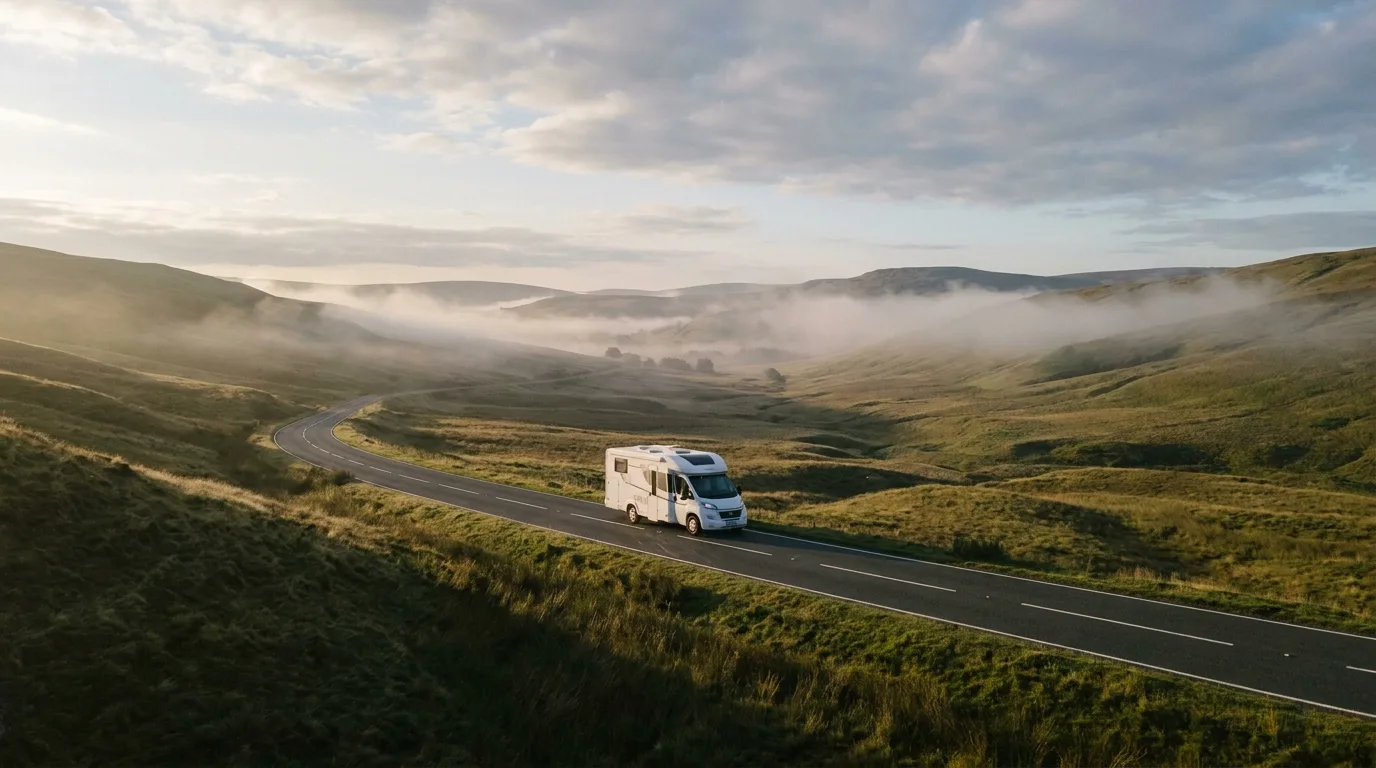
Key takeaways
- A motorhome is not a green vehicle; its fuel consumption per mile is high.
- However, a motorhome replaces transport, accommodation, and often dining out.
- The number of miles you drive has a greater impact than your choice of vehicle.
- Travelling outside the high season reduces the strain on the places you visit.
- Waste water and chemical toilets must only be emptied at official disposal points.
We sell motorhome trips, which doesn't make us the most impartial source for this question, so let's start with the uncomfortable part.
A motorhome is not a green vehicle. It's heavy, tall, and not aerodynamic, and its fuel consumption per mile is significantly higher than a passenger car's. Anyone telling themselves that driving a house on wheels is good for the planet is mistaken.
With that said, let's add some nuance.
Why the comparison is trickier than it seems
A motorhome or campervan isn't just transport you use on holiday. It is the holiday. It replaces the plane or car, the hotel room or holiday home, and often a good portion of dining out.
This makes a fair comparison difficult. You're not pitting a motorhome against a car, but a motorhome against a flight plus accommodation plus local transport. A hotel room is heated, cleaned, supplied with linen, and cooled—all of which has an environmental cost, even if you don't see it.
What this doesn't excuse is distance. Driving thousands of miles for a week away is a poor choice, no matter how you calculate it. And one person in a 3,500 kg (approx. 3.4 long tons) motorhome has a worse footprint than four people. This weight is a key limit for many drivers, as it's the maximum for a standard Category B driving licence in the EU and for UK drivers who passed their test after 1997. It's always wise to check your licence's specific entitlements.
The factor that really matters
If you want to change one thing: drive less.
This isn't a moral appeal but simple arithmetic. The number of miles you cover has a greater impact than which motorhome you choose, what tyres it has, or how you drive. A trip where you get to know three regions well consumes significantly less fuel than one where you tick off eight destinations.
The nice thing is that this aligns perfectly with what makes a better holiday. The classic beginner's mistake—trying to see too much—is also the classic environmental mistake. Less driving means a more relaxed holiday and lower fuel consumption. It's one of the few choices where nobody loses out.
What else counts
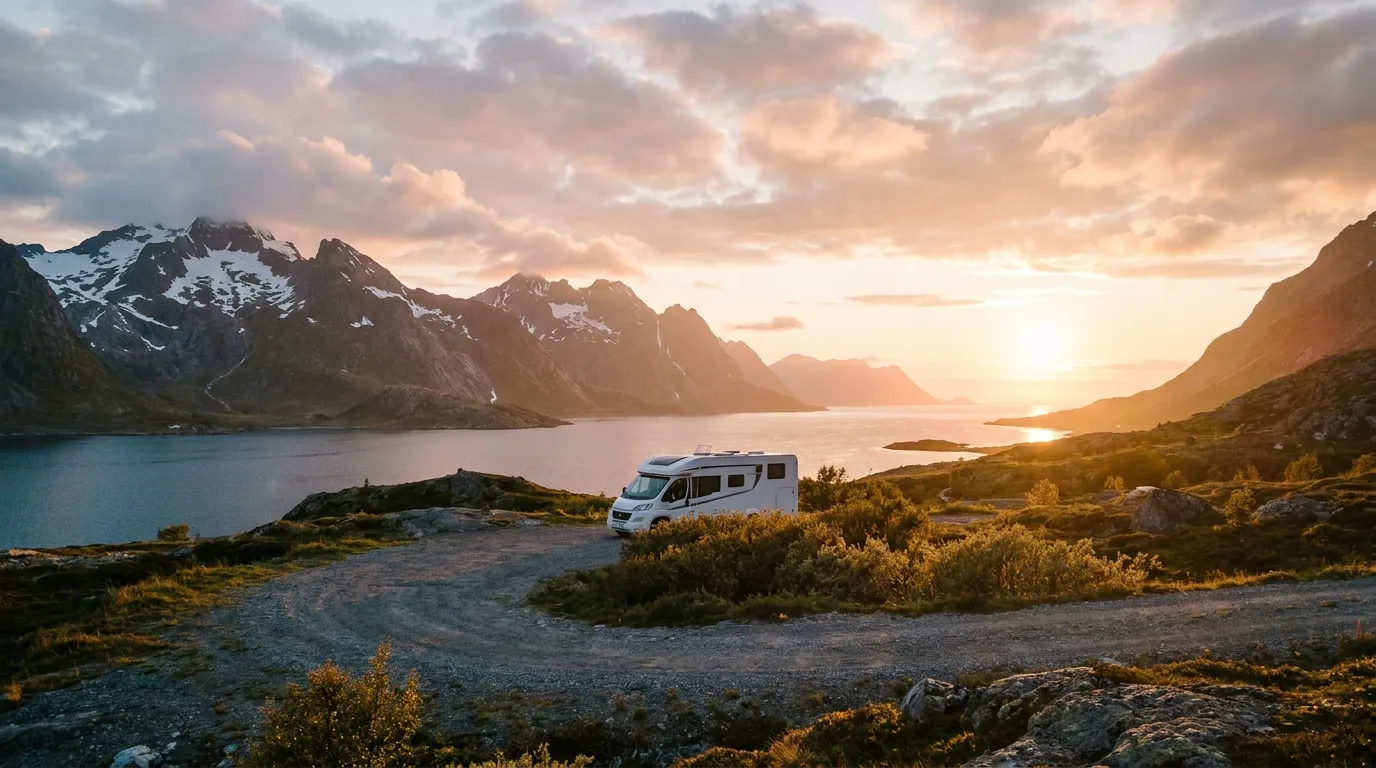
Travelling off-season. This eases the pressure on precisely those places that are most vulnerable. The Lofoten Islands in July and the Lofoten Islands in September are two different worlds in terms of environmental load. You'll also find it's cheaper and quieter.
Buying local. Travelling with a full pantry from a supermarket back home means the local villages you visit gain nothing from your stay. This has, not without reason, made motorhome users unpopular in some regions. Buying groceries where you are is one of the easiest things you can do.
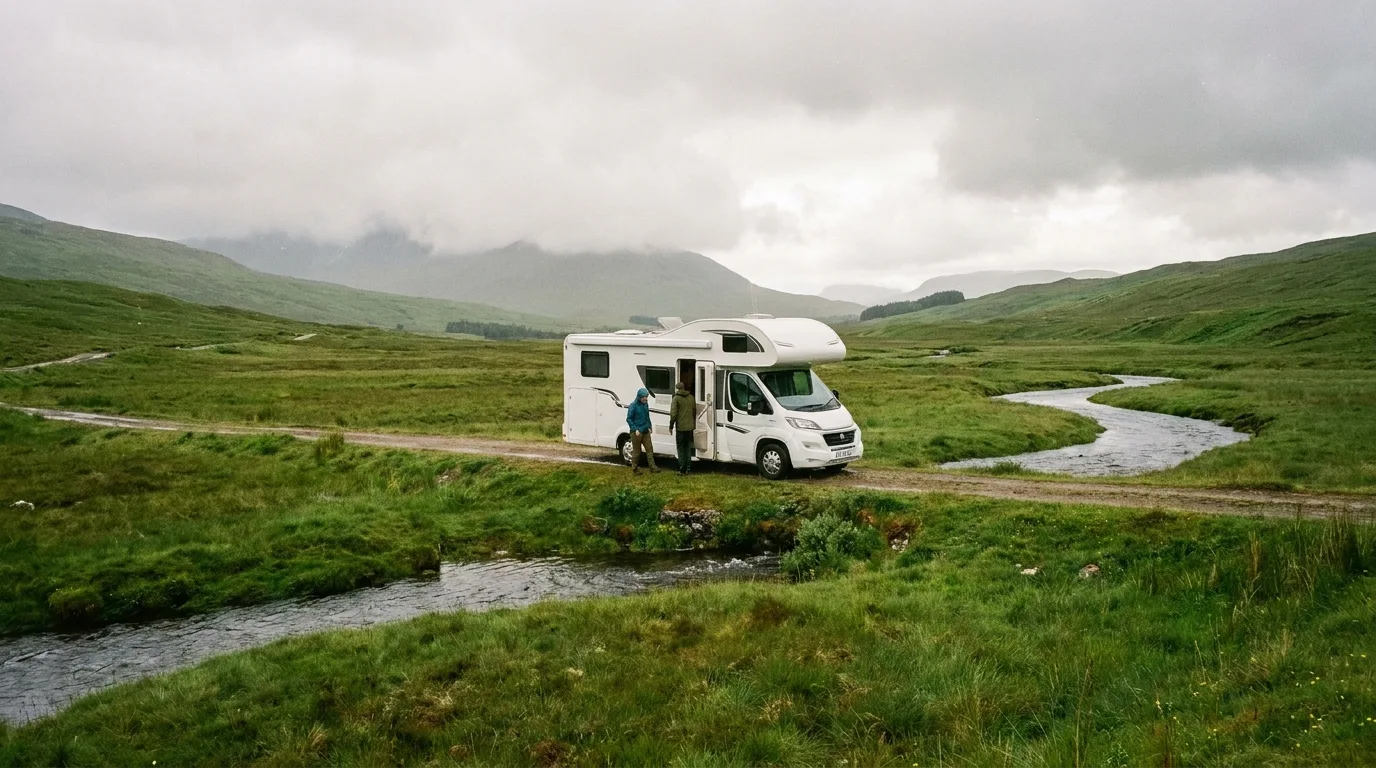
Water and waste. Grey water and chemical toilets belong in official disposal points. No soap in streams or lakes, not even biodegradable kinds—they still pollute the water. Pack your rubbish out. This isn't about saving tonnes of CO2, but about the difference between being a welcome visitor and an unwelcome one.
Staying longer in one place. A stationary motorhome consumes next to nothing.
Where we draw the line ourselves
We don't include flights or cruises in our offerings. Not because we believe no one should fly, but because we don't want to sell trips where transport accounts for the largest part of the impact and the smallest part of the experience.
Overland travel is slower. That's not a drawback we try to explain away—it's what makes it appealing. You watch the landscape change, pass through places that aren't destinations, and understand where you are because you drove there.
What this means in practice
Sustainable motorhome travel isn't about solar panels or a composting toilet. It's about the itinerary.
A more compact route with longer stops, travelling off-season, and buying local produce—that's the entire list. And it happens to be the kind of trip people talk about most fondly afterwards.
The only question is what such a route looks like for your destination and your number of days. Because 'drive less' is easy to say until you have to calculate what gets cut.
Frequently asked questions
About the author

Co-founder of Camproads
Ard-Jan is co-founder of Camproads. He works on the substance of the routes: which stops are worth the detour, what order makes a trip flow, and how to divide a stage so there is time left to actually stay somewhere. He writes about trip preparation, vehicle types and the choices you make before you leave.
Co-founder of Camproads · route composition and trip preparation