Key takeaways
- The rule exists for road safety, not to provide free overnight stays.
- One night only, while in transit, for about ten hours in practice.
- No awnings, chairs, tables, or levelling jacks.
- Local municipalities can prohibit it – signs always take precedence.
- The Stellplatz network makes Germany one of Europe's most convenient motorhome countries.
Germany is one of Europe's most motorhome-friendly countries, yet also one of the most misunderstood. You can legally stay overnight in a public car park, but not for the reason most people think.
The rule behind the rule
German law refers to Wiederherstellung der Fahrtüchtigkeit: restoring your fitness to drive. This is the entire basis for the rule. The goal is road safety; the law aims to prevent tired drivers from continuing their journey. The fact that this provides a free overnight stay is a byproduct, not an entitlement.
This means one night only, while in transit, and it must be clear you haven't arrived at a destination. In practice, a period of about ten hours is generally accepted.
Where the line is drawn
The distinction is not where you park, but how. Curtains closed, everything inside the vehicle, and leaving in the morning falls under the exception. An awning, chairs, a table, or levelling jacks mean you are camping, which is not permitted outside designated sites.
This isn't a theoretical difference; it's exactly what enforcement officers look for and is immediately visible. Practically: keep everything inside, don't discharge wastewater, and avoid noise. Crucially, pay attention to signs. Local authorities can ban overnight parking, and their signs always override the national rule.
What still makes Germany exceptional
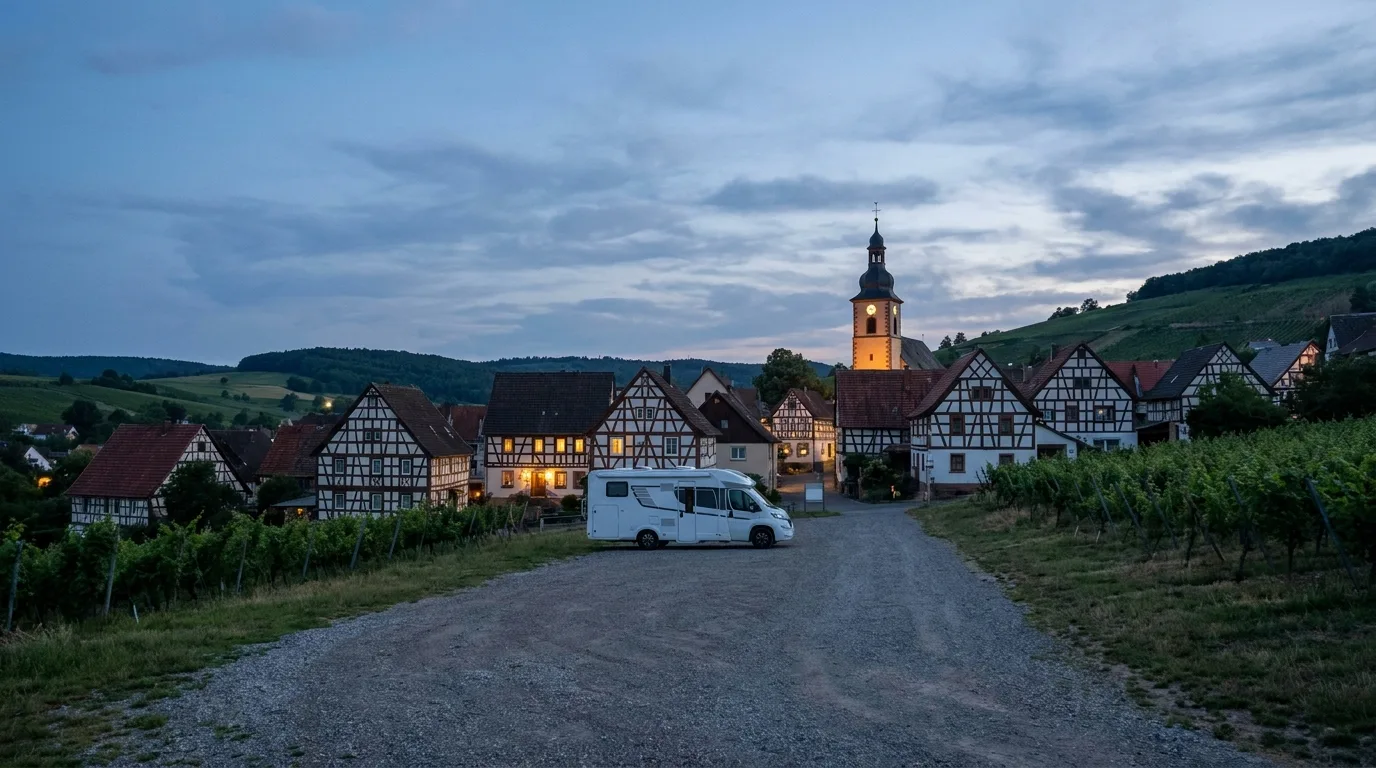
The 10-hour rule isn't even the best part of touring Germany. That would be its Stellplatz network. A Stellplatz is a designated overnight stop for motorhomes, often with services like water and electricity for a small fee. Germany has thousands, located near villages, marinas, vineyards, and town centres.
For many, this is the standard way to travel. You can park within walking distance of a historic centre for a few euros with no debate about the rules. Anyone crossing Germany en route to Scandinavia or Southern Europe is missing out if they only use motorway service areas.
The practical distinction
Here’s how it works best in practice: use the 10-hour rule for transit nights where you only sleep and drive on. Use a Stellplatz as soon as you want to explore a village, stay for a day, or sit outside. This way, you use both facilities as intended and avoid trouble.
Why this matters beyond Germany
For many motorhome owners, Germany is a major transit country for trips to Scandinavia, Austria, Italy, or Spain. The journey often involves one or two overnight stops in Germany.
These stops are often unplanned, which is a missed opportunity. A well-chosen Stellplatz can turn a travel day into a memorable evening, unlike a noisy service station. Ultimately, that's what route planning is about: not just the destination, but also what the journey there looks like.
Frequently asked questions
About the author

Co-founder of Camproads
Bas is co-founder of Camproads. He previously worked in the travel industry on rail and package holidays, and started Camproads on the conviction that a campervan trip deserves better planning than a list of sights. At Camproads he handles route research and the data behind it: which stages are actually drivable, where you may legally spend the night, and what a trip really costs. He prefers writing about what other articles skip.
Co-founder of Camproads · background in the travel industry · route planning and trip costs