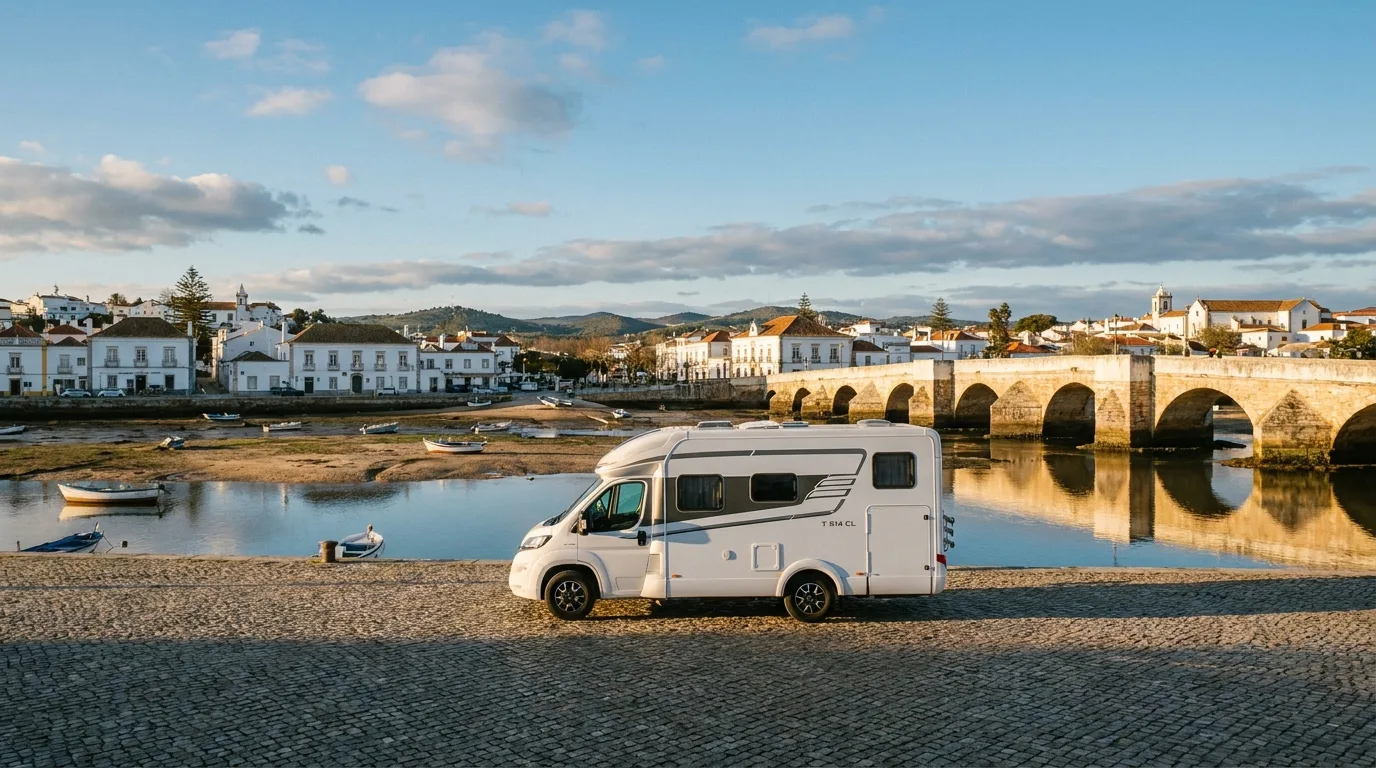
This route is ready and waiting — planned out day by day
Inside the Camproads Portugal guide: every stage, campsites and our honest tips. Instant PDF download.
€14.95
Instant download · NL, EN & DE
€14.95
Instant download · NL, EN & DE
Duration
x daysDistance
842 km
stops
12
Choose a date and duration that fits your preferences
About this route
Highlights
- ✦Tavira as a base for the Ria Formosa, Olhão and the white Cacela Velha
- ✦The Guadiana near Alcoutim and Moorish Mértola
- ✦Évora: the Roman temple and the Capela dos Ossos
- ✦Monsaraz high above the Alqueva reservoir
- ✦Vila Nova de Milfontes and the wild coast of Zambujeira and Odeceixe
- ✦Sagres: the fortress and Cabo de São Vicente on the southwestern tip
- ✦Lagos and the limestone cliffs of Ponta da Piedade
- ✦Monchique: thermal baths and the view from Fóia
The route
Stop 1
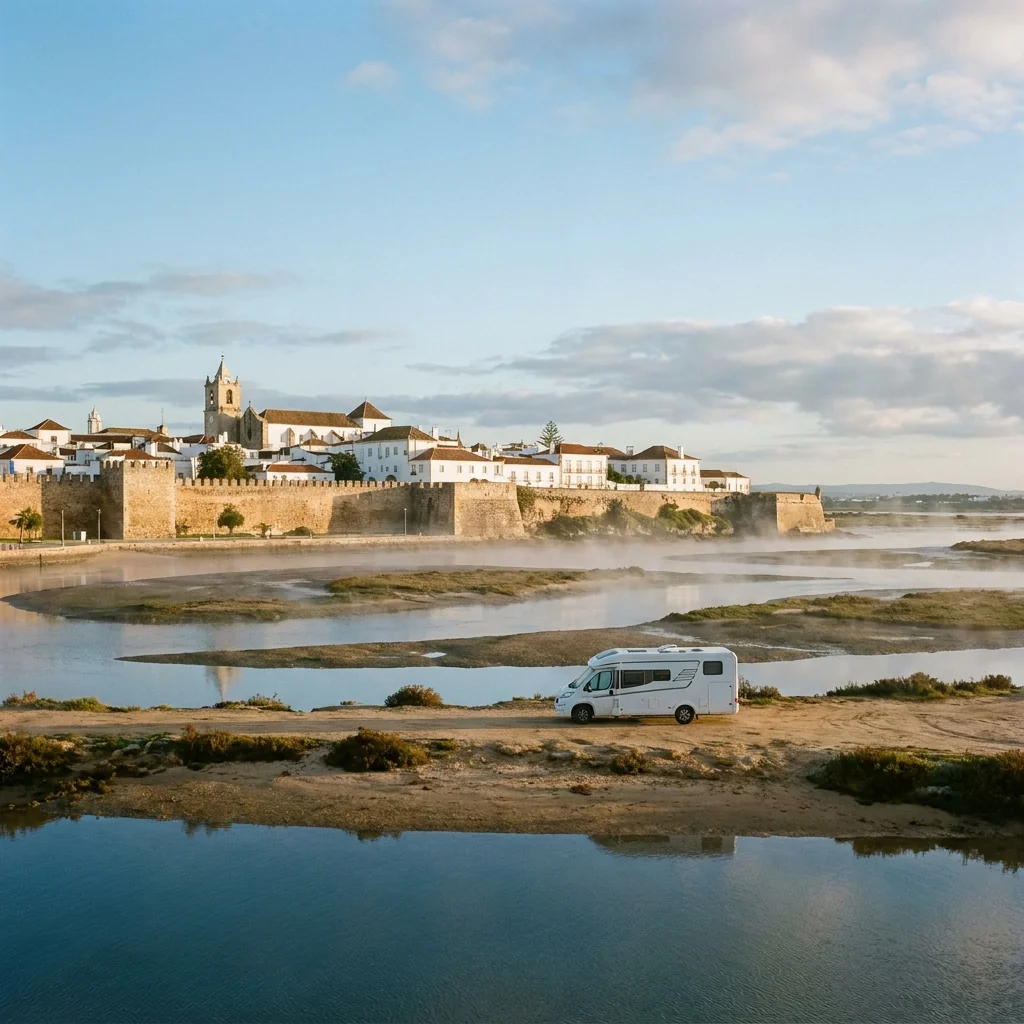
Faro
Faro is the capital of the Algarve and borders the Ria Formosa Natural Park, a lagoon system spanning 170 square kilometers. Within the city walls stands the thirteenth-century Sé de Faro, whose bell tower offers views over the salt pans and the Arco da Vila from 1812. You can reach the sandy beaches of Ilha Deserta by ferry through a maze of channels where numerous bird species live in the tidal area.
Stop 2
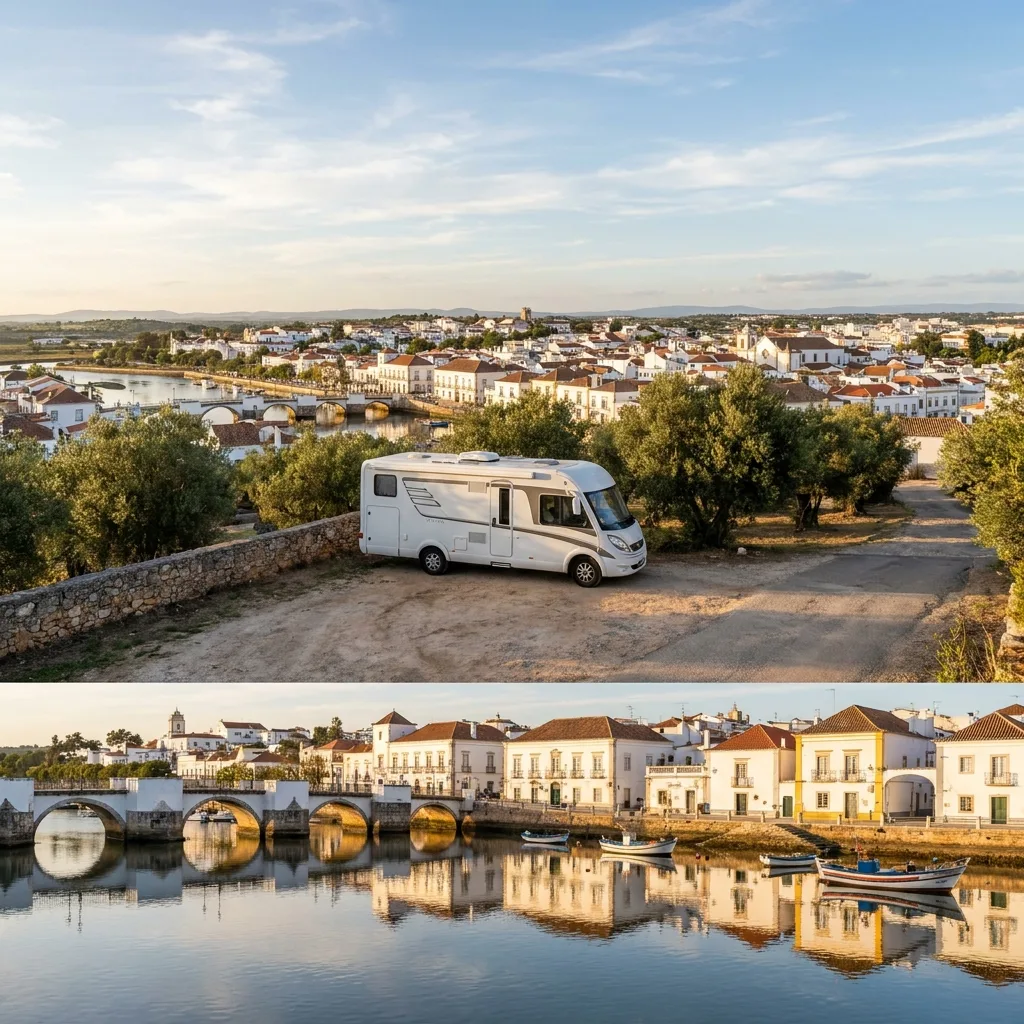
Tavira
Tavira's character is defined by the Ponte Romana and the houses with tesoura roofs. From the walls of the thirteenth-century Castelo de Tavira, you can overlook the city with its many church towers. The Gilão River is spanned by the Ponte Romana, an elegant bridge that adorns the cityscape. For a day at the sea, you can reach the sandy beaches of Ilha de Tavira by boat. The boat trip takes you through the vast salt pans of the 18,000-hectare Ria Formosa Natural Park, a soothing experience.
Stop 3
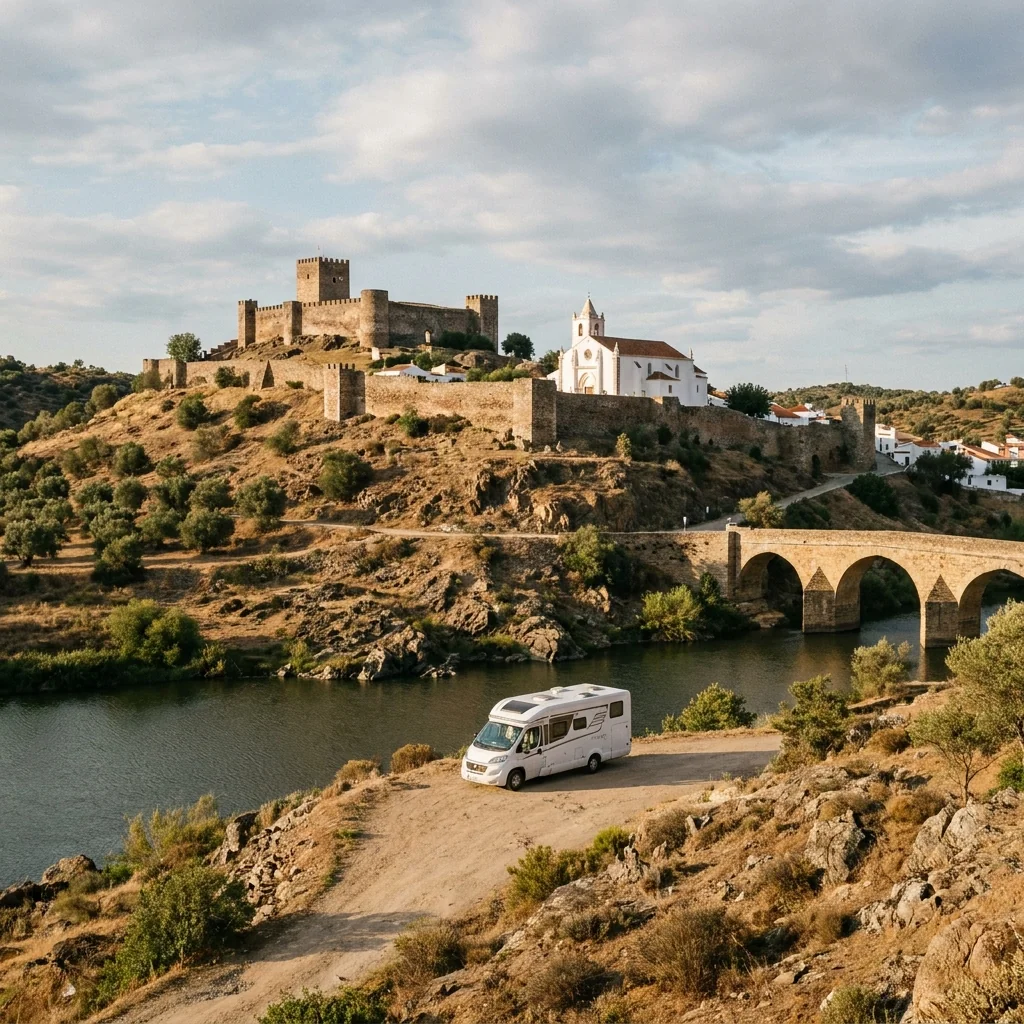
Mértola
Mértola reveals a rich Moorish past in its charming white fortified town. The Igreja Matriz, a twelfth-century former mosque, still displays horseshoe arches and a preserved mihrab. Above the town stands the thirteenth-century Castelo de Mértola, from where you have a panoramic view over the Guadiana river. You can particularly feel the peaceful ambiance of Mértola during a walk along the quay, with a view of the calm flow of the Guadiana.
Stop 4
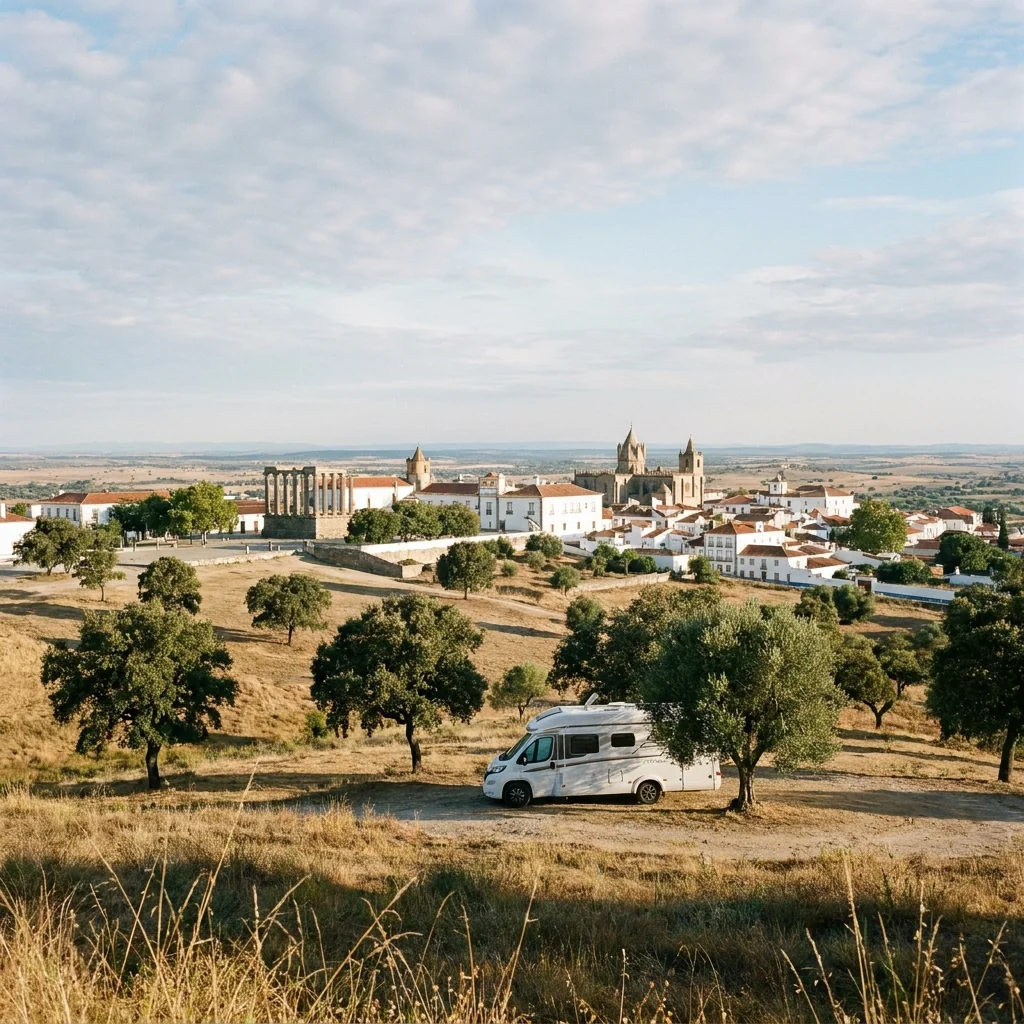
Évora
Whitewashed houses with ochre-yellow accents define the charming image of Évora, the walled capital of Alentejo. Here you will discover the Roman Templo de Diana from the first century, a well-preserved temple. Nearby stands the thirteenth-century Sé de Évora, an imposing cathedral. In the Igreja de São Francisco, you can visit the Capela dos Ossos, a chapel adorned with human bones. In the lively streets, you will find local shops with cork products from the surrounding cork oak forests.
Stop 5
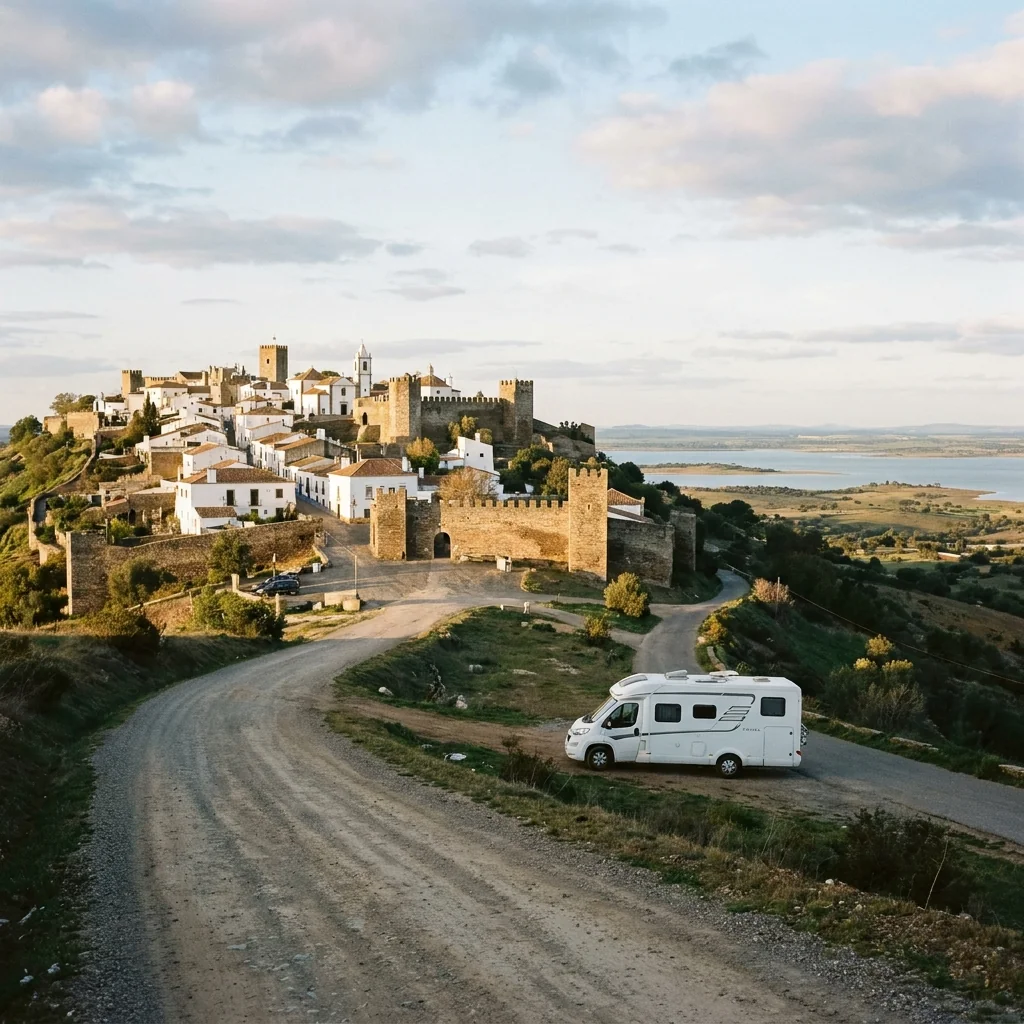
Monsaraz
Monsaraz is a medieval fortified village in the Alentejo with whitewashed houses and streets made of local slate. The 14th-century Castelo de Monsaraz overlooks the Grande Lago Alqueva, a 250 square kilometer reservoir on the border with Spain. Near the village, you will find the Menir do Outeiro, a prehistoric megalith 5.6 meters high. The surroundings are an official Dark Sky Reserve due to the low light pollution.
Stop 6
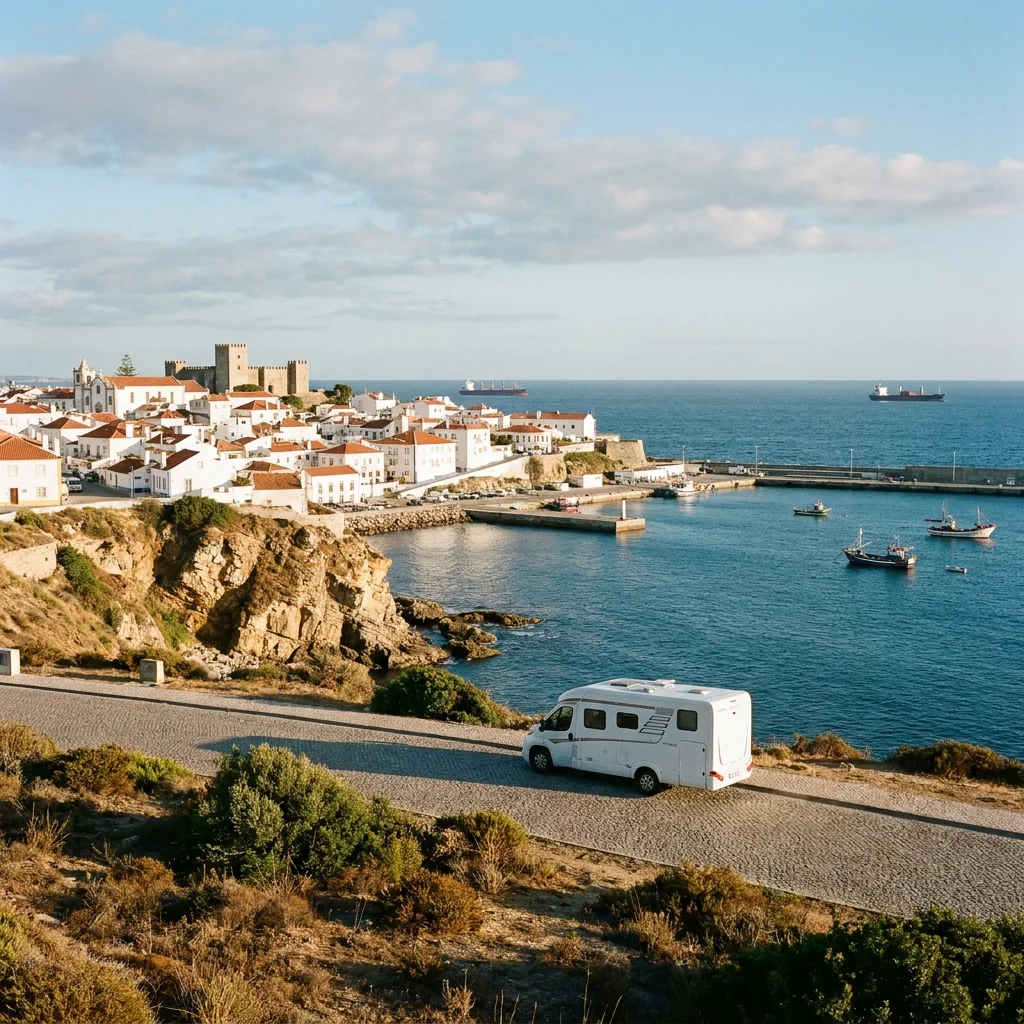
Sines
Sines is a port city on a rocky plateau in the Alentejo Litoral where explorer Vasco da Gama was born in 1469 in the Castelo de Sines. The medieval castle walls and the seventeenth-century Forte de Revelim stand above the deep-sea port. From the sandy Praia Vasco da Gama beach, you can walk along cliff paths to the coastline in the south. The local fishing culture is visible in the restaurants near the quay.
Want to actually take this trip?
We put together the complete package for you — motorhome, ferry, campsites — in one personal email.
Stop 7
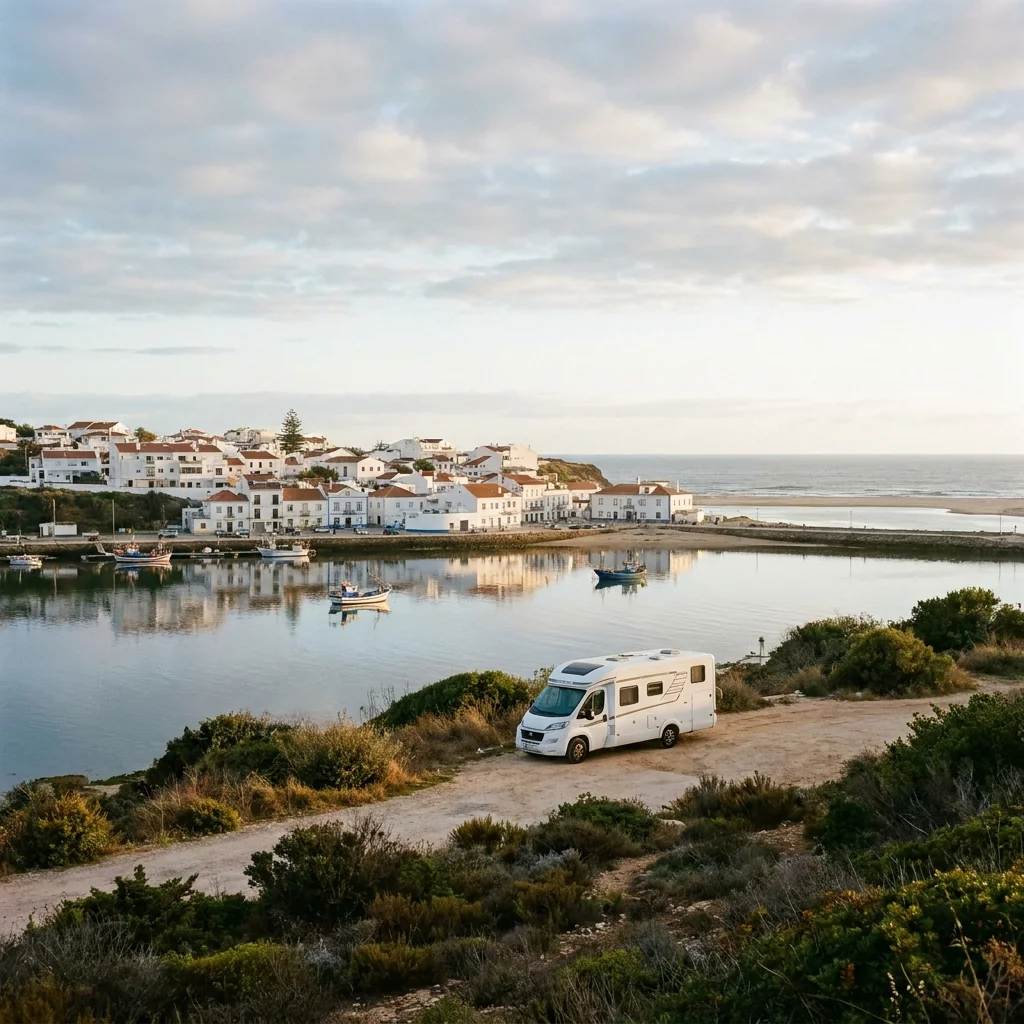
Vila Nova de Milfontes
At the mouth of the Rio Mira, where the river meets the Atlantic Ocean, lies Vila Nova de Milfontes with its varied coastline. At Praia da Franquia, you can swim in the calm river water, while the beaches on the other side of the river directly border the open sea. The sixteenth-century Forte de Milfontes stands at the river mouth, surrounded by white houses with blue accents. This mix of river and sea landscape gives the village a lively atmosphere, visible from the quays along the Mira.
Stop 8
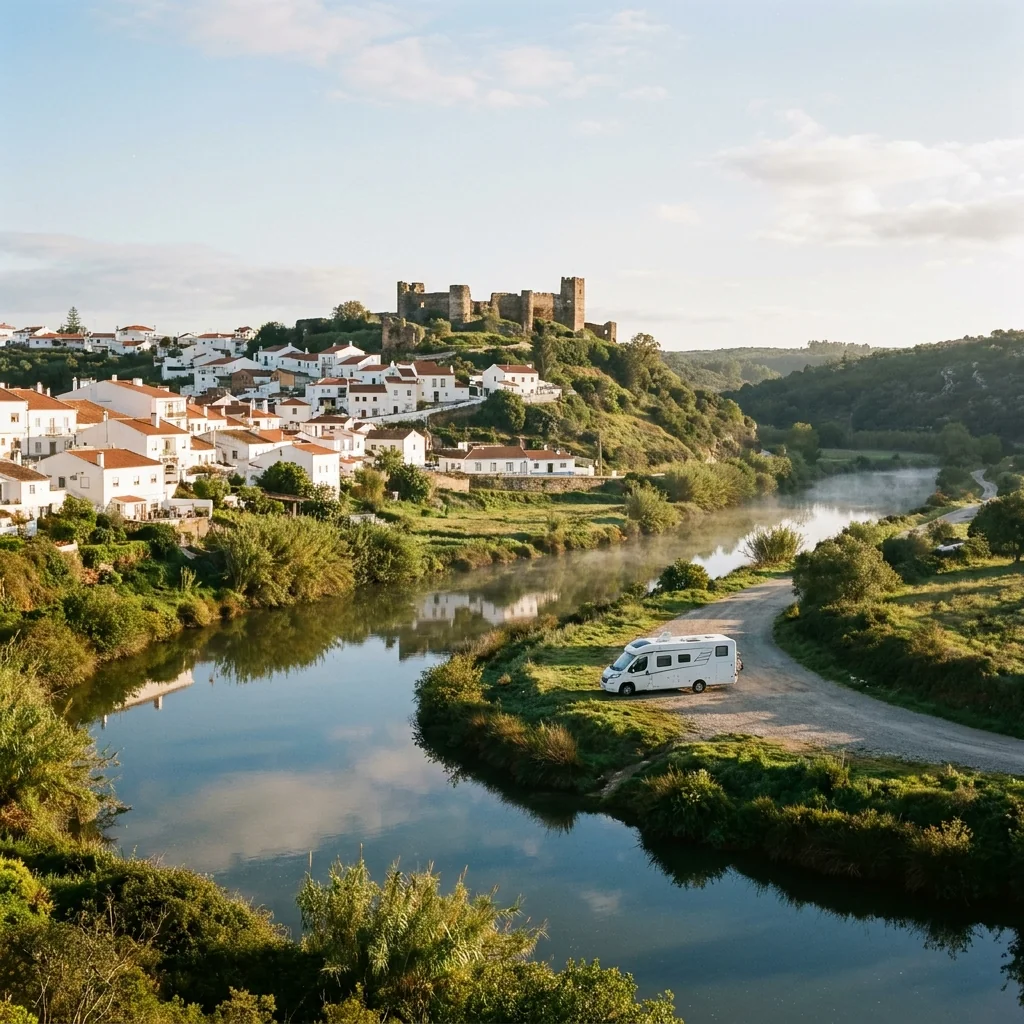
Aljezur
Aljezur is a white village in the Costa Vicentina, dominated by the tenth-century Moorish ruins of Castelo de Aljezur. You can visit the Museu Municipal for local history or the sixteenth-century Igreja da Misericórdia in the old quarter. The local market sells regional products such as sweet potatoes and fresh fish, while the surrounding rolling landscape connects the Atlantic Ocean and the inland.
Stop 9
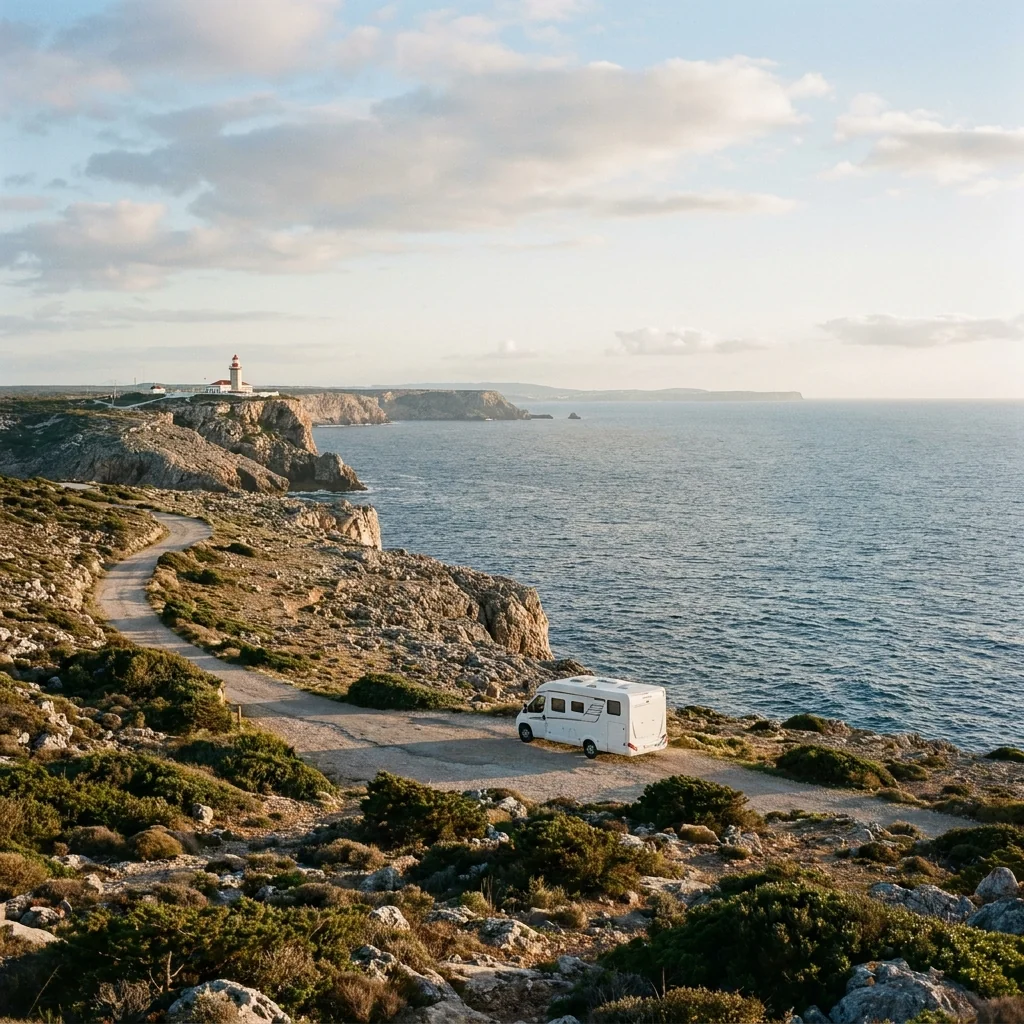
Sagres
Sagres marks the southwesternmost point of Europe and, with its rugged coastline, attracts visitors to Ponta de Sagres. Here stands the fifteenth-century Fortaleza de Sagres, an impressive fort with a stone wind rose 43 meters in diameter. Surfers find perfect waves at Praia do Tonel, while at the sheltered Praia da Mareta you can quietly enjoy the ocean. The powerful wind and the expansive views over the Atlantic Ocean give this place a raw, untamed atmosphere.
Stop 10
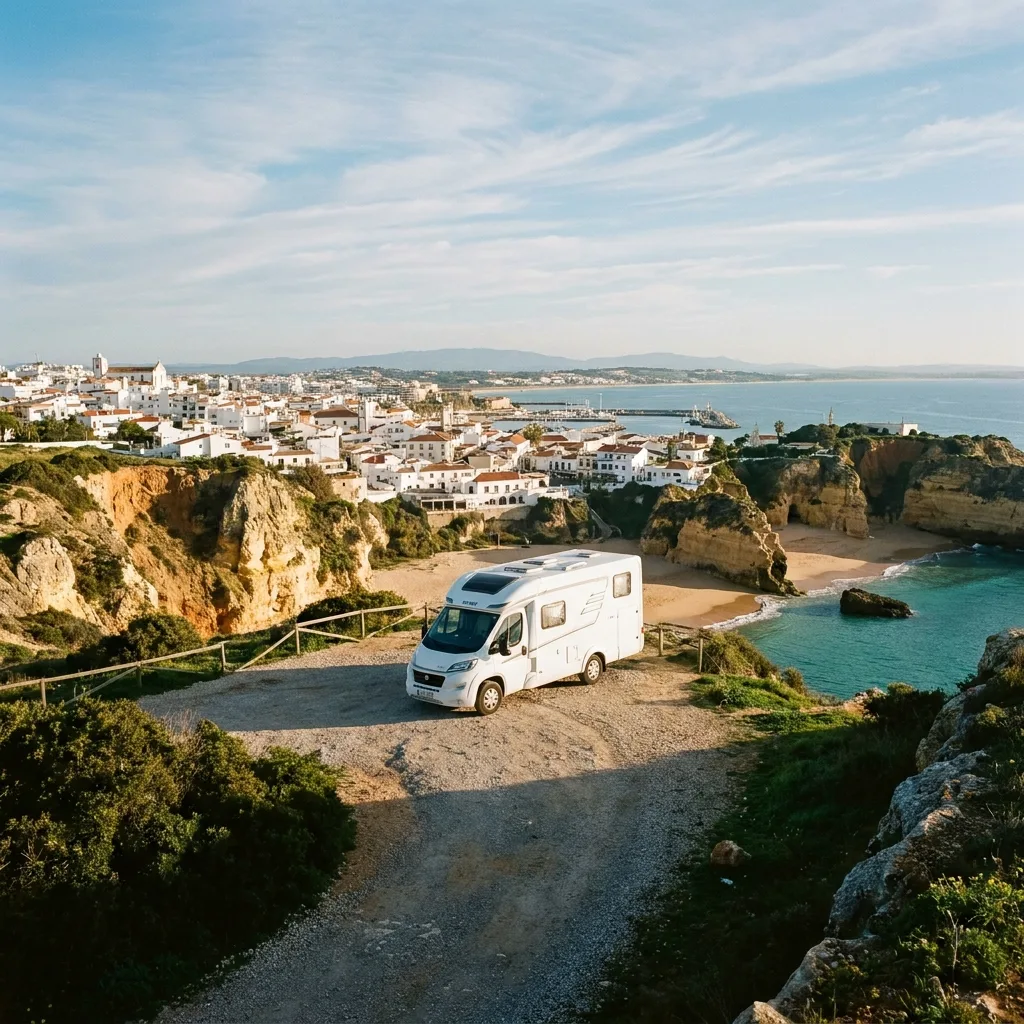
Lagos
Lagos is a port city in the western Algarve with sixteenth-century city walls and the seventeenth-century Forte da Ponta da Bandeira at the harbour entrance. In the historic centre stands the Igreja de Santo António, known for its gilded wood carvings, and the Mercado Municipal from 1924 for fresh fish. You can walk along the cliff edges to the rock formations of Ponta da Piedade or visit the sandy beach Meia Praia.
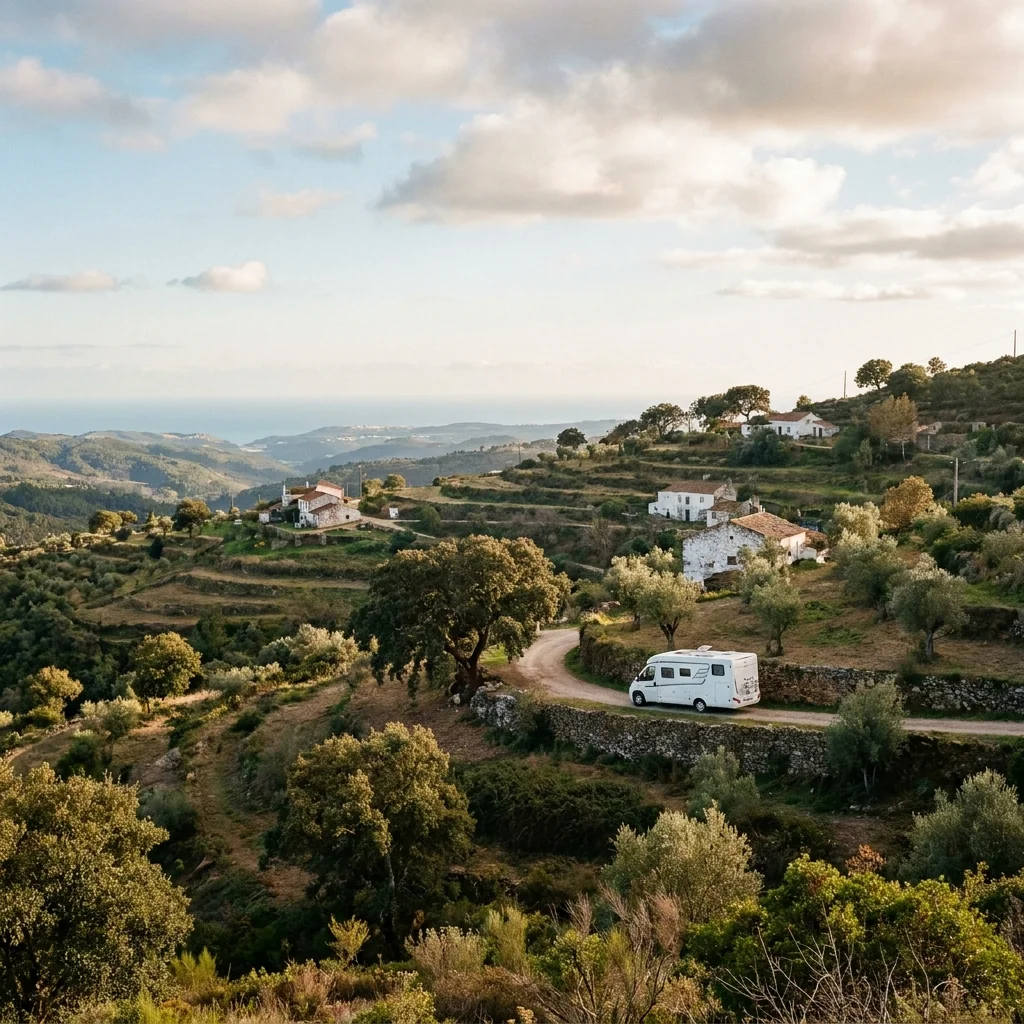
Stop 11
Monchique
Monchique is located in the mountain range of the same name and is known for Fóia, at 902 meters the highest peak in the Algarve. Here you can visit the spa town of Caldas de Monchique, where the natural springs have been used since Roman times. In the village stands the sixteenth-century Igreja Matriz with a Manueline portal amidst whitewashed houses featuring the region's typical chimneys. The roads lead you through forests of cork oak and eucalyptus to viewpoints over the Atlantic Ocean.
Stop 12
Faro
Faro is the capital of the Algarve and borders the Ria Formosa Natural Park, a lagoon system spanning 170 square kilometers. Within the city walls stands the thirteenth-century Sé de Faro, whose bell tower offers views over the salt pans and the Arco da Vila from 1812. You can reach the sandy beaches of Ilha Deserta by ferry through a maze of channels where numerous bird species live in the tidal area.
Ready to hit the road?
We'll email you a personal travel proposal within 24 hours — motorhome, route and full cost overview included. Save €400–€800 on average vs. a travel agency.
No packages, no middlemen. Learn how it works
Camproads gave me a lot of inspiration for our campervan trip. The routes are beautiful, with a good balance of nature and city life, and the route generator made planning super easy. It's also really handy that there are so many good camping options at the locations, and that you can easily find the campervan that suits your needs and compare prices. This way, we can plan everything ourselves and book the campervan directly with the rental company. That's much cheaper than an organized trip!
Michiel van de Bunt
February 2026
What a difference from how I used to plan trips. Through Camproads, I put together a complete campervan trip in just a few minutes. It's so easy to use, and you can customize everything to your liking. The ability to choose your travel pace makes it even more enjoyable, especially now that we're traveling with a baby for the first time.
Alieke Zelhorst
February 2026