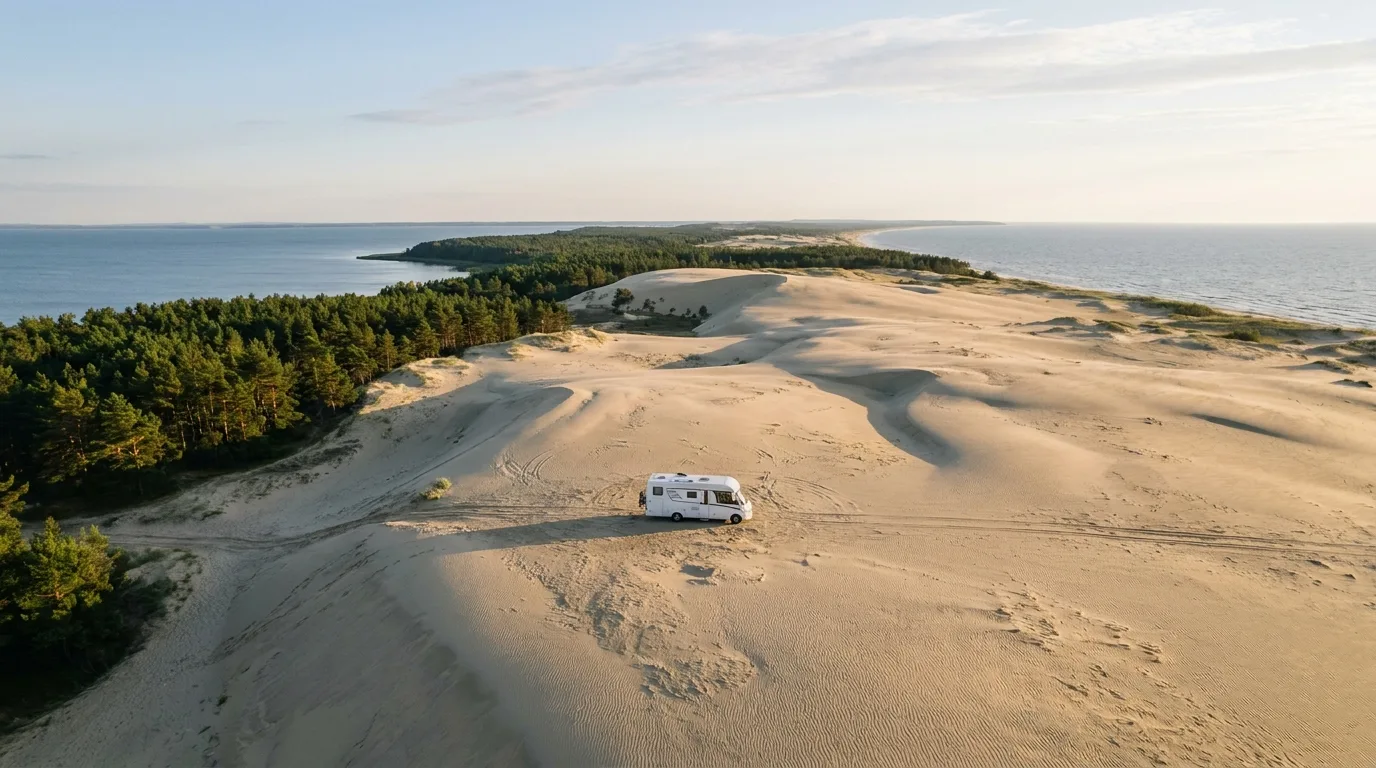
Via Baltica - from the Curonian Spit to Tallinn by Motorhomefrom the Curonian Spit to Tallinn by Motorhome
Take this trip by motorhome
Save €400–€800 on average vs. a travel agency
Duration
x daysDistance
1353 km
stops
13
Choose a date and duration that fits your preferences
About this route
Highlights
- ✦Two nights in Nida on the Curonian Spit, with the Parnidis dune
- ✦Liepāja and the ghost port of Karosta
- ✦Kuldīga and the widest waterfall in Europe
- ✦Cape Kolka, where the Baltic Sea and the Gulf of Riga meet
- ✦Two nights in Riga: Art Nouveau, market halls and the old town
- ✦Rundāle Palace and the Gauja valley at Sigulda
- ✦Two nights on Saaremaa: Kuressaare, Angla and the Panga cliff
- ✦Tallinn and the captains' villages of Lahemaa
The route
Stop 1
Klaipėda
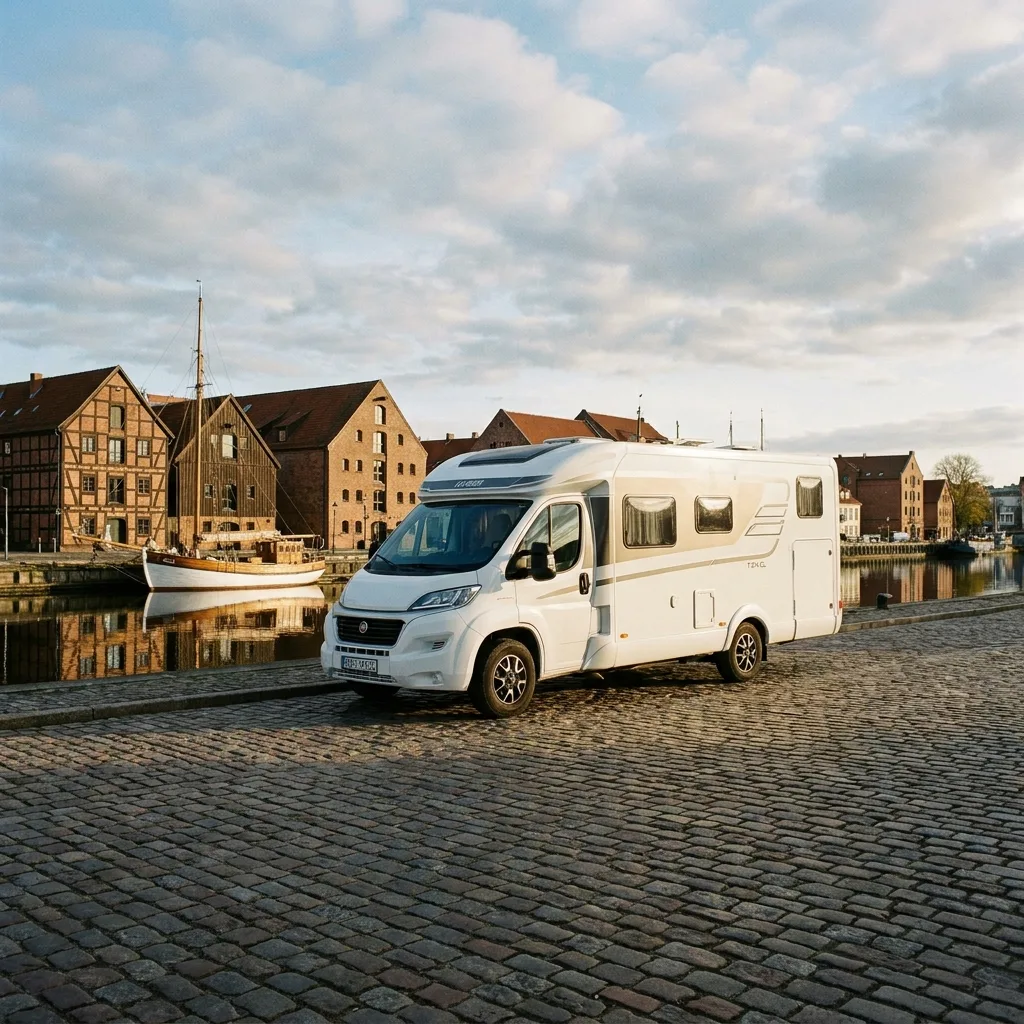
Klaipėda is the port city where the ferry from Kiel arrives: an old Prussian city with half-timbered houses, a theatre square, and a quay on the Danė. It's the place to fill up your motorhome and do groceries, as everything is more expensive on the spit. The campsites are located on the coast near Giruliai and Melnragė, north of the city; the ferry to the spit departs from the New Ferry Terminal on the south side.
Stop 2
Nida
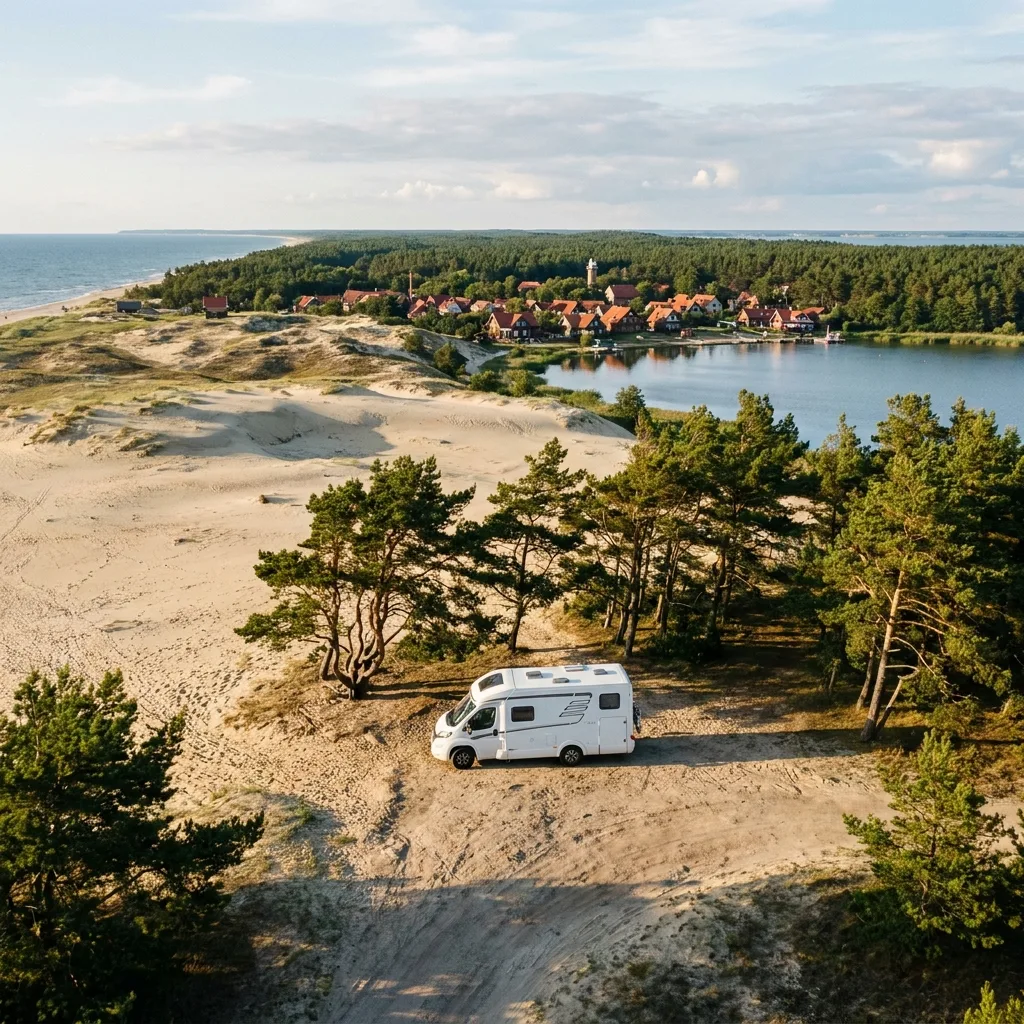
Nida is the village at the end of the Lithuanian half of the Curonian Spit, with blue-brown fishing houses, Thomas Mann's summer house, and the Parnidis Dune, a fifty-meter sand mountain with a sundial at the top and views extending into Russia. The dune is at its most beautiful at sunset; cycling paths run along the lagoon and to the beach on the sea side. The campsite is on the edge of the village in the forest. For the spit, you pay an entrance fee for the national park at the barrier.
Stop 3
Liepāja
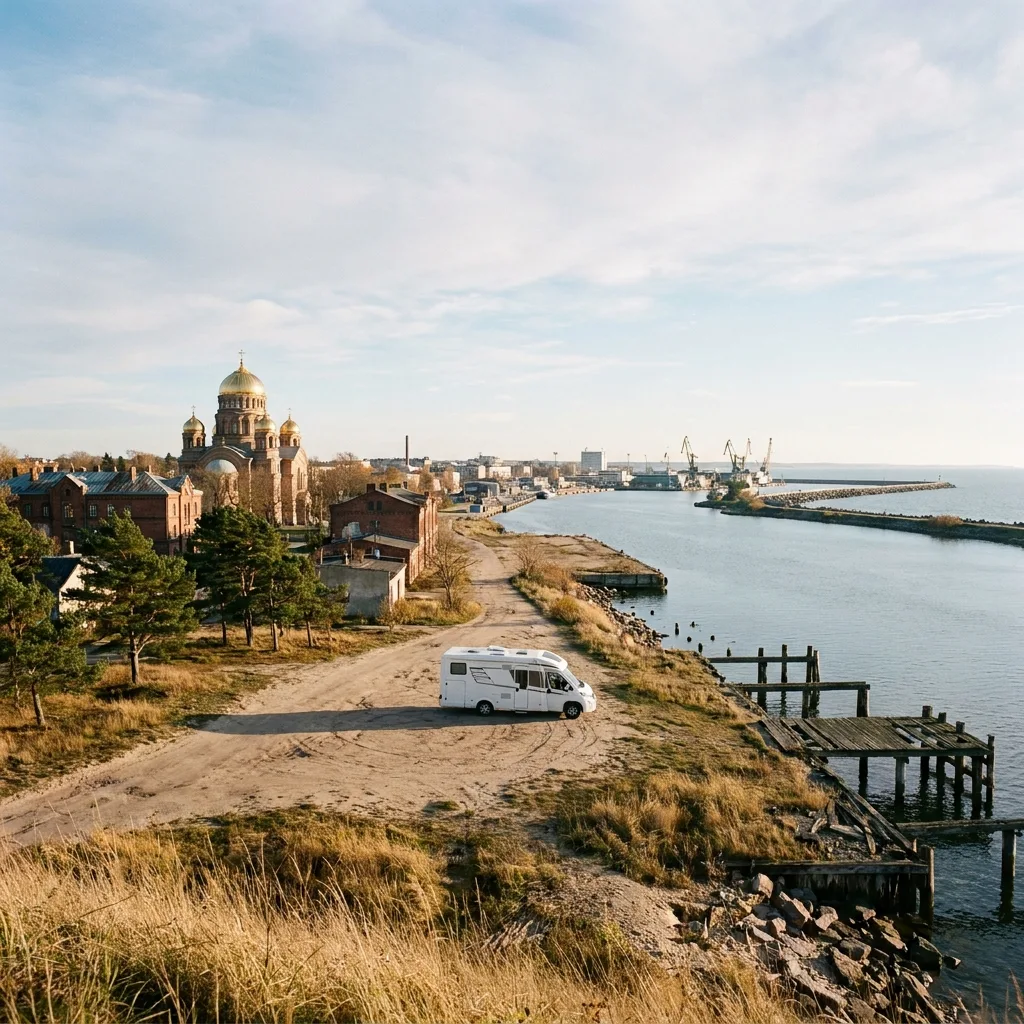
Liepāja is the city of wind, known for its unique Karosta, a former tsarist naval port. Here you'll discover the imposing St. Nicholas Cathedral and the Karosta Prison, where you can even experience a night as a prisoner. Along the coast are forts swallowed by the sea. The city itself boasts a beach of fine white sand and charming wooden streets. A vibrant music scene fills the evenings with sounds throughout the city.
Stop 4
Kuldīga
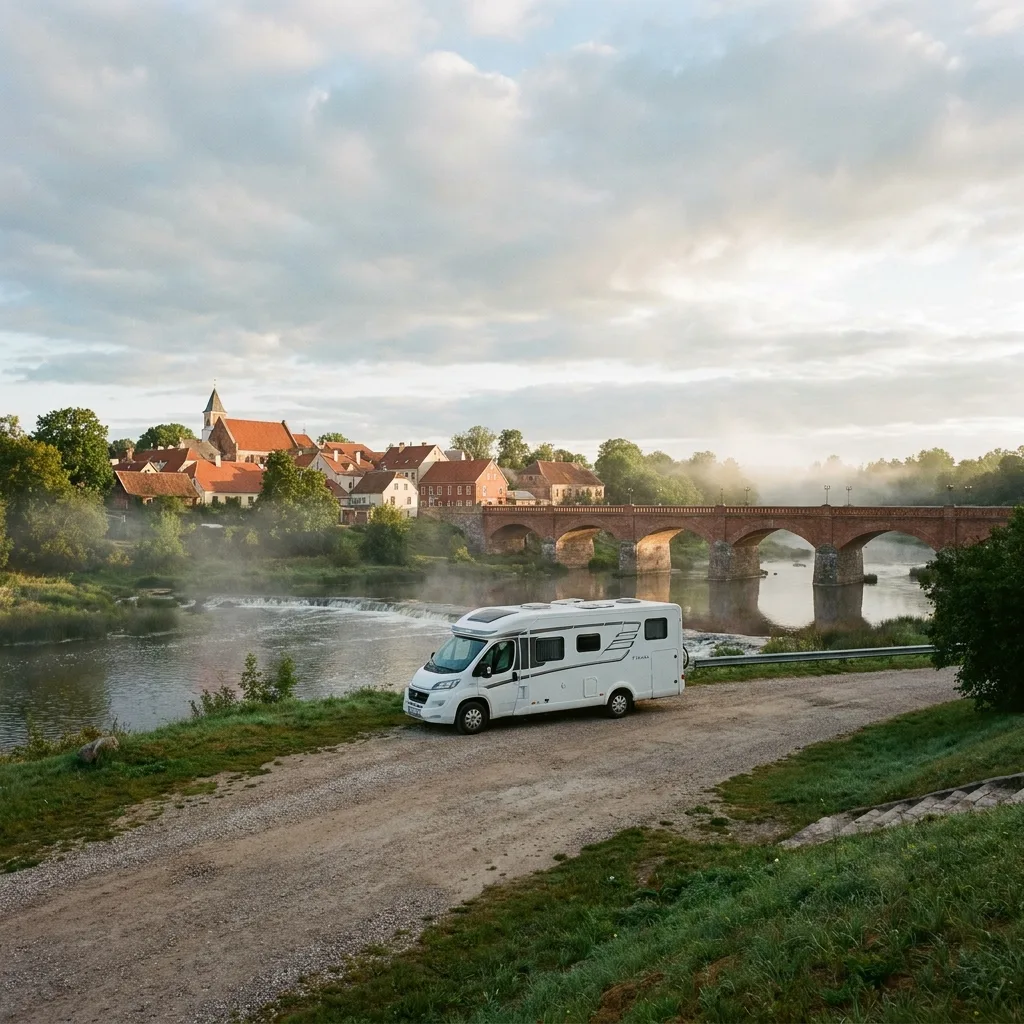
Kuldīga is the most beautiful town in Courland, where seventeenth-century wooden houses adorn the streets. A walk leads you to the historic Kuldīgas ķieģeļu tilts, a brick bridge spanning the Venta River. Nearby is the Ventas rumba, a wide waterfall where fish jump over in spring. The town, recently recognized as a UNESCO heritage site, has a tranquil atmosphere. You can watch the evening fall over the rippling Alekšupīte, which winds through the center.
Stop 5
Cape Kolka
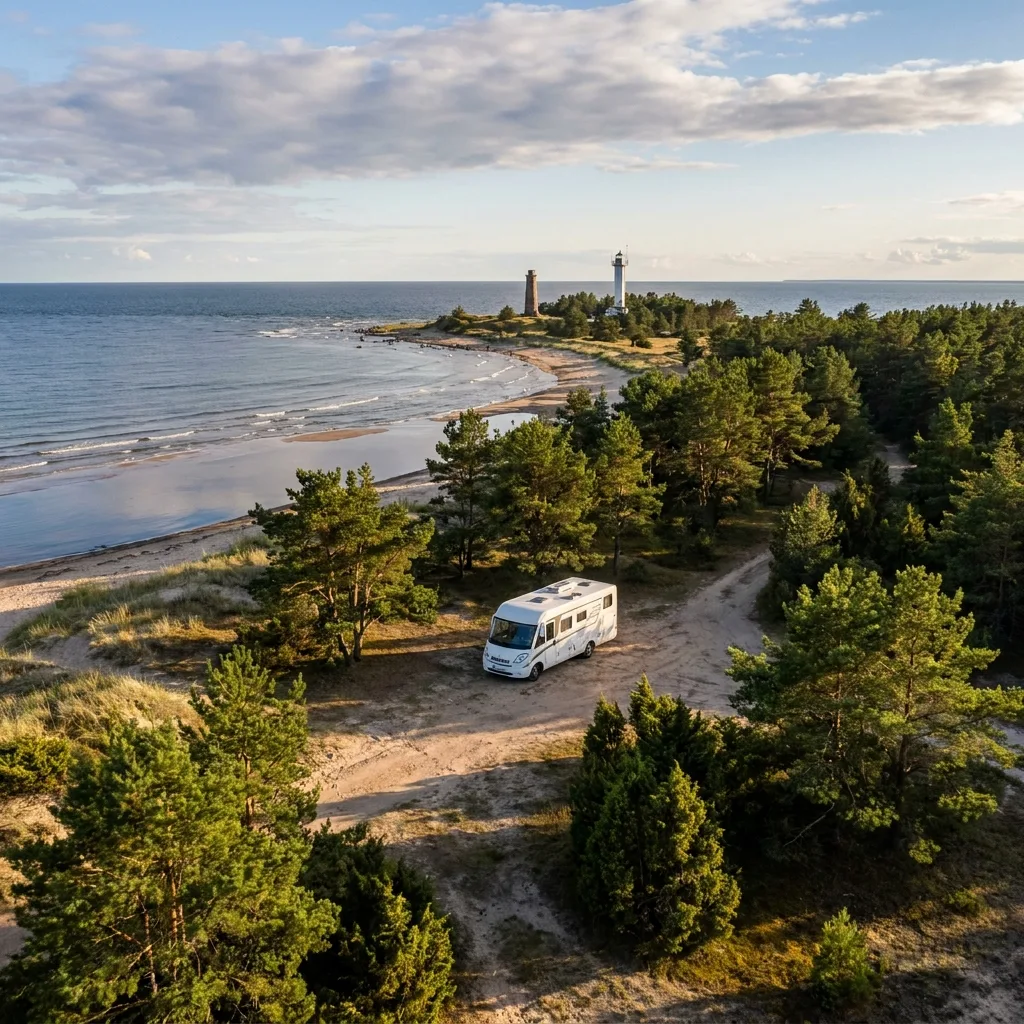
Cape Kolka is the point where the Baltic Sea and the Gulf of Riga meet: two waves colliding at the end of a sand spit, with a beach full of fallen pines. Slītere National Park behind it features the Livonian Coast, a row of fishing villages of Europe's smallest people, and a lighthouse with views over the forest. The campsite is located on the cape itself; it is one of the quietest places on the trip.
Stop 6
Riga
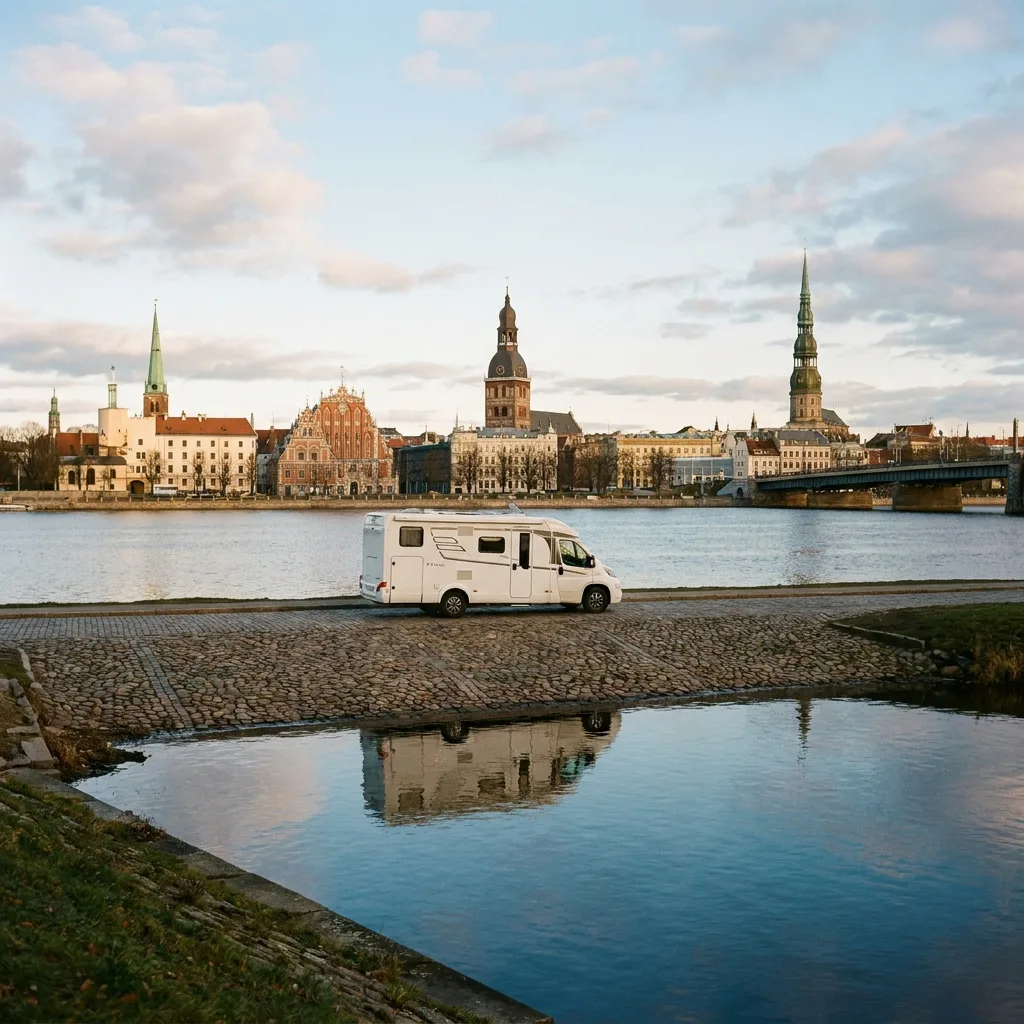
Riga is Europe's most beautiful Art Nouveau city and the largest city in the Baltic States. Stroll through Alberta iela, full of facades with faces and sphinxes. Around the impressive Dome, explore the medieval old town, or admire the elegant House of the Blackheads. The Rīgas Centrāltirgus, a lively market in five Zeppelin hangars, offers a unique insight into local life. The charming old town breathes a mix of rich history and modern energy, which you experience among the Art Nouveau buildings.
Want to actually take this trip?
We put together the complete package for you — motorhome, ferry, campsites — in one personal email.
Stop 7
Gauja National Park
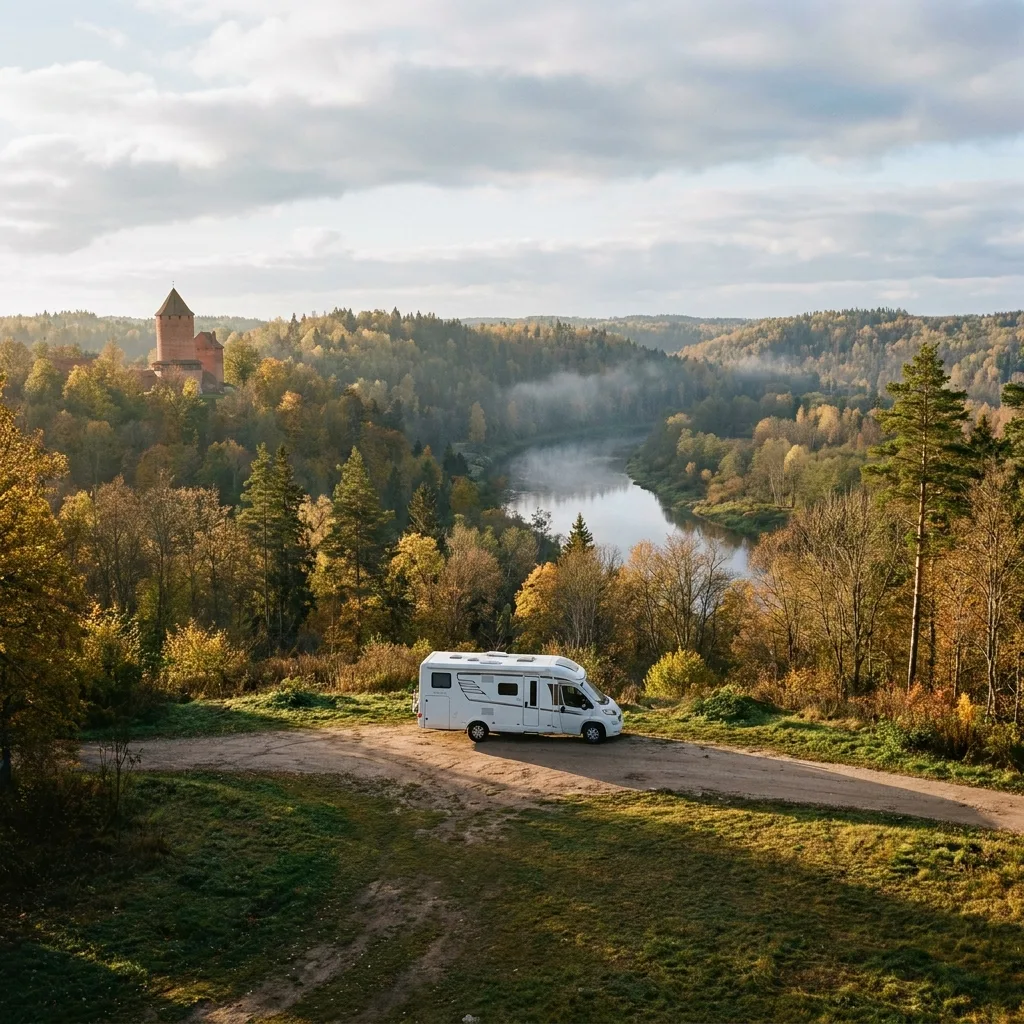
The deep river valley of Gauja National Park owes its nickname, the Switzerland of Latvia, to its many sandstone cliffs. Above the valley, Turaida Castle towers with a striking red tower. At Gūtmaņa Cave, you can see centuries-old inscriptions on the walls of the region's largest cave. A cable car glides over the Gauja River, overlooking canoeists between its banks. Around the Sigulda bobsleigh track, a lively atmosphere prevails as the sleds whiz by at high speed.
Stop 8
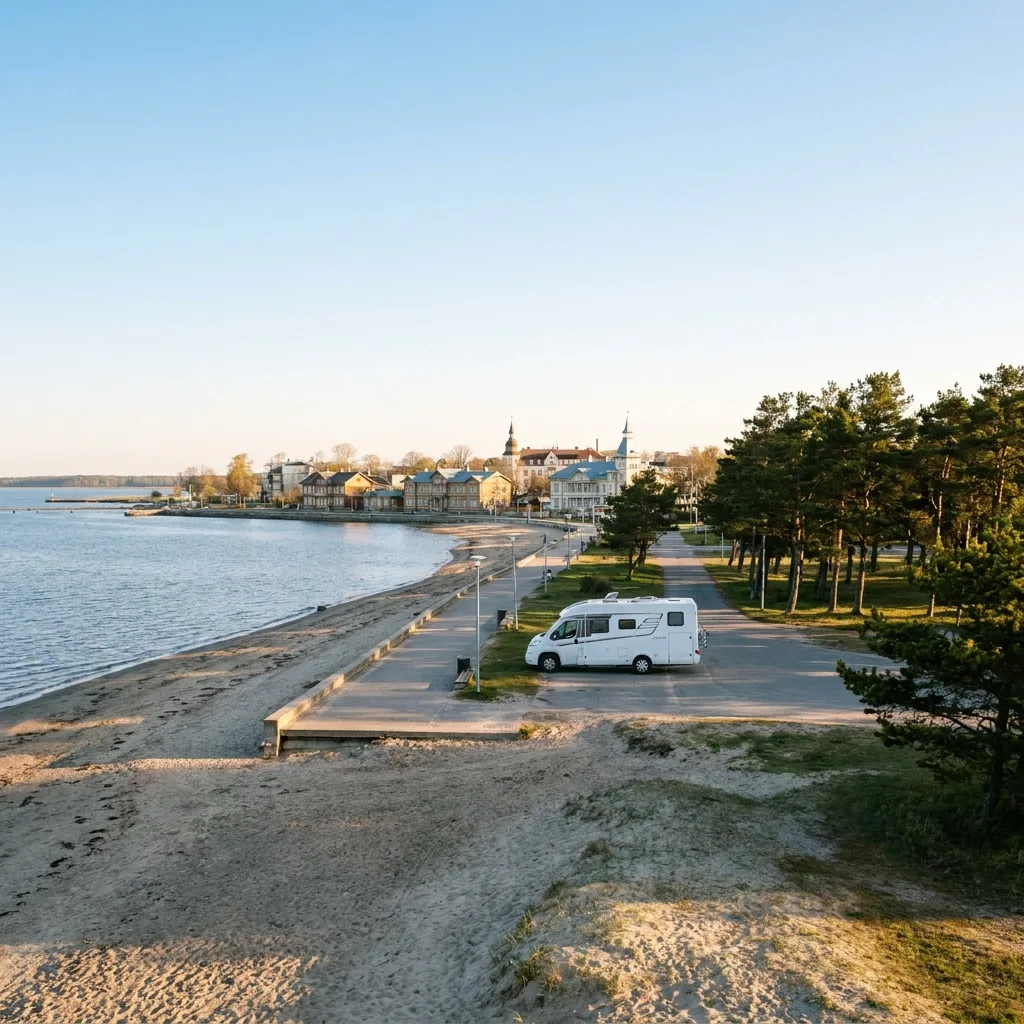
Pärnu
Pärnu is the summer capital of Estonia, known for its wide sandy beach and charming wooden villa district. On a shallow bay lies the long Pärnu beach, an expansive sandy beach for relaxing days. You can explore the old town with its historic city gate and cozy cafés. The green Pärnu rannapark and the Vallikäär along the old city walls are places for a peaceful stroll. The city has a relaxed, lively atmosphere that you can experience along the boulevard or in the shade of the old trees.
Stop 9
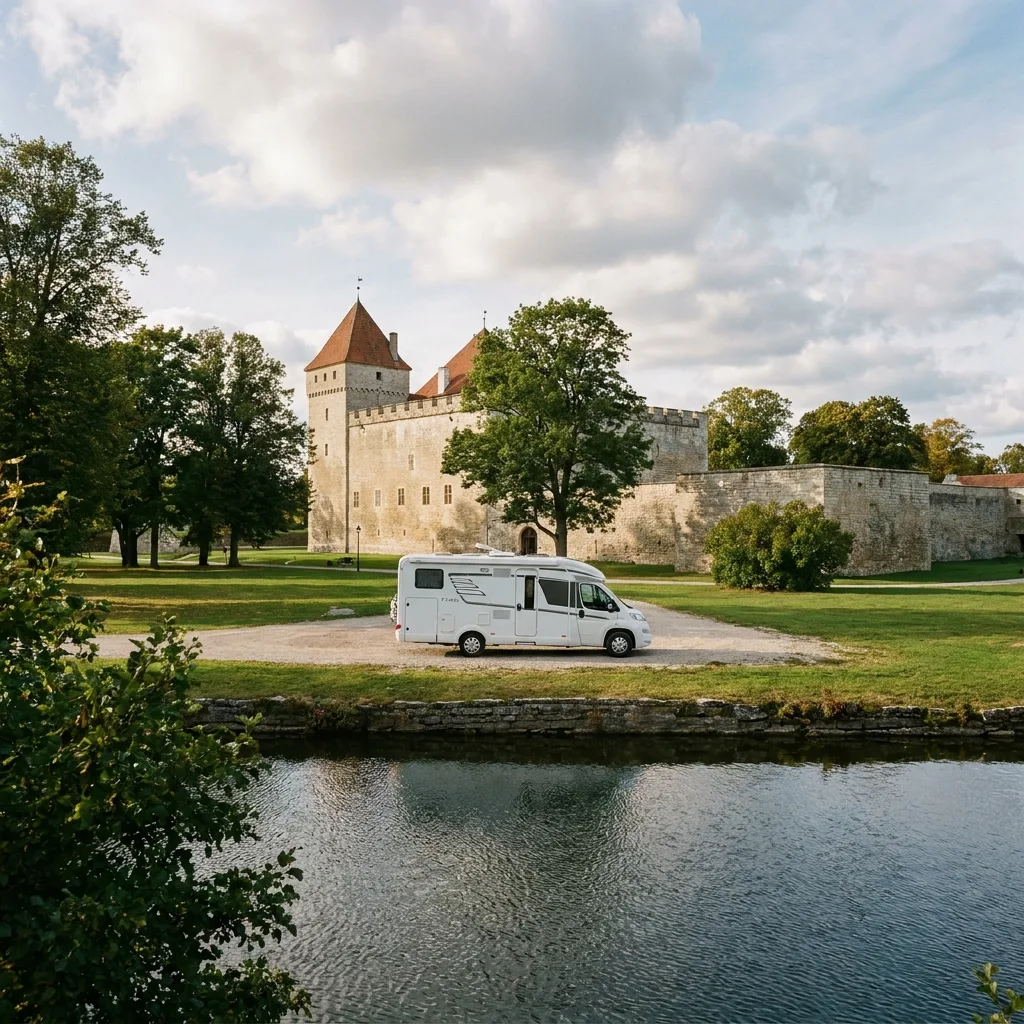
Kuressaare
Kuressaare is the town of Saaremaa, with the best-preserved bishop's castle in the Baltic States in a seaside park, a spa tradition, and a market square with wooden houses. Saaremaa also features the Kaali meteorite crater, the five windmills of Angla, the Panga cliff, Vilsandi National Park on the west coast, and the Sõrve peninsula with its lighthouse. The campsites are located on the coast near the town; Saaremaa also has free RMK camping spots in the forest.
Stop 10
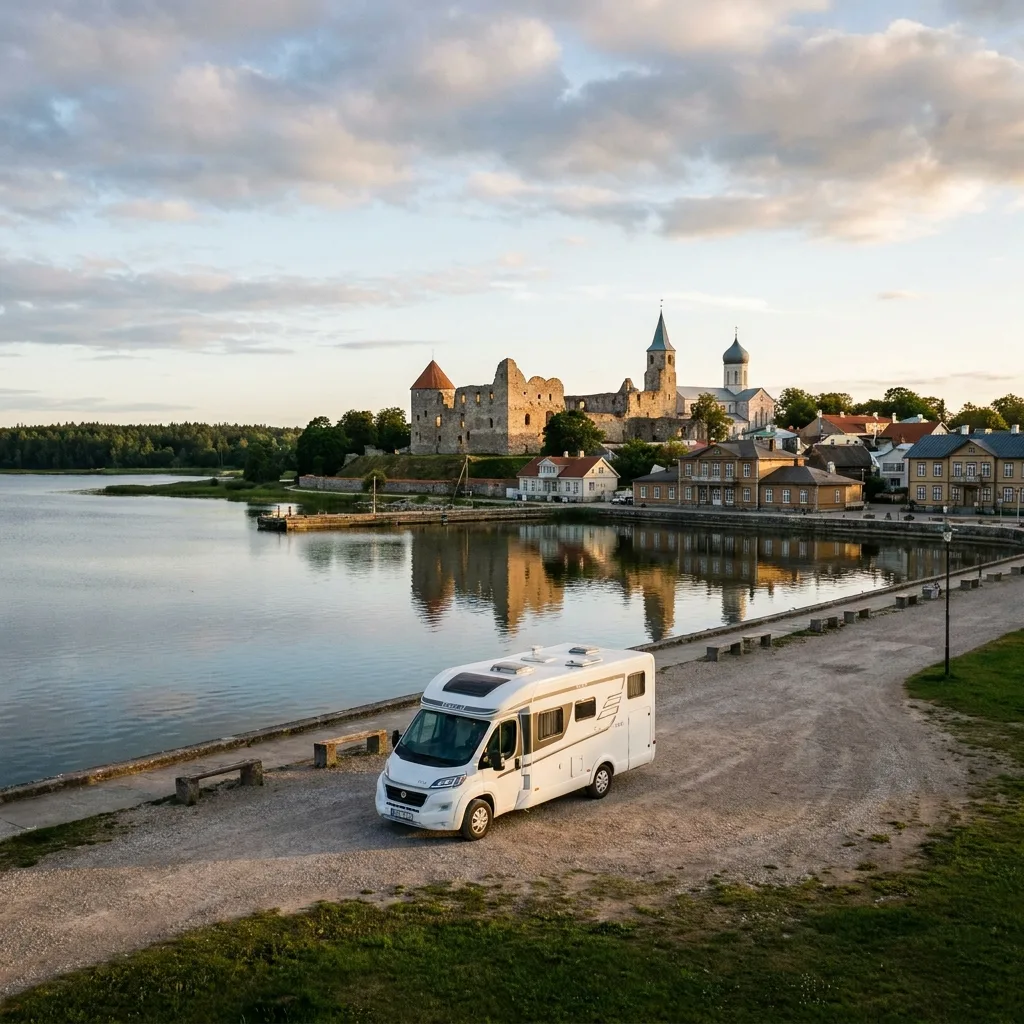
Haapsalu
Haapsalu is a tranquil spa town with a rich history, visible in its many wooden villas. The Haapsalu piiskopilinnus, a bishop's castle, tells the legend of the White Lady who wanders here. On the waterfront stands the elegant Kuursaal, a spa hall from 1898 with ornate details. The nearby Paralepa beach offers an inviting sandy beach for a refreshing swim. Along the beach promenade, where Tchaikovsky once composed, you'll experience a relaxed atmosphere.
Stop 11
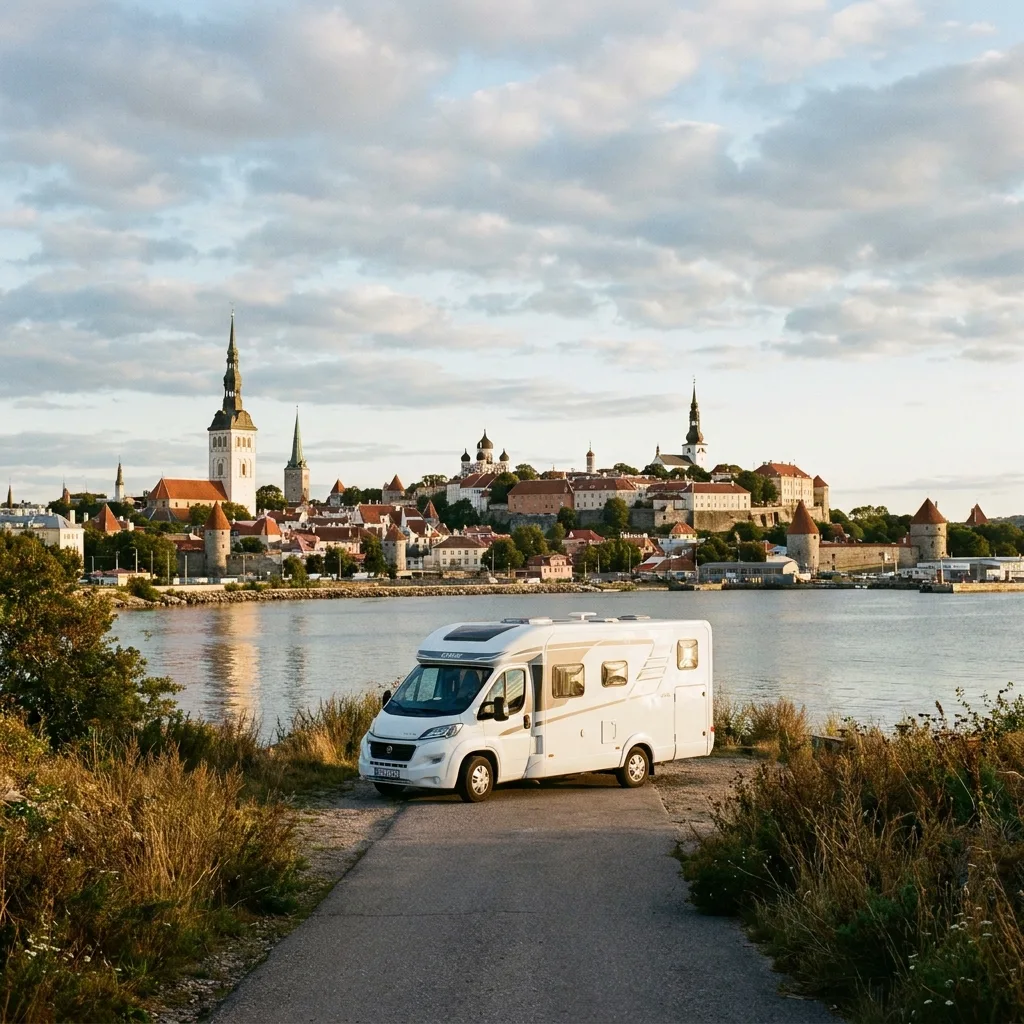
Tallinn
Tallinn has the best-preserved medieval city in Northern Europe: city walls with towers, Toompea Hill with a cathedral and viewpoints, Town Hall Square and the Kalamaja harbour district with wooden houses and the Seaplane Harbour Museum in the seaplane hangars. Further from the centre are the Rocca al Mare Open Air Museum and the Telliskivi Creative City. The campsite is located near Pirita on the coast, with a bus to the centre; those arriving by ferry from Helsinki will be at the campsite within fifteen minutes. Rental motorhomes are picked up on the outskirts of the city.
Stop 12
Lahemaa National Park
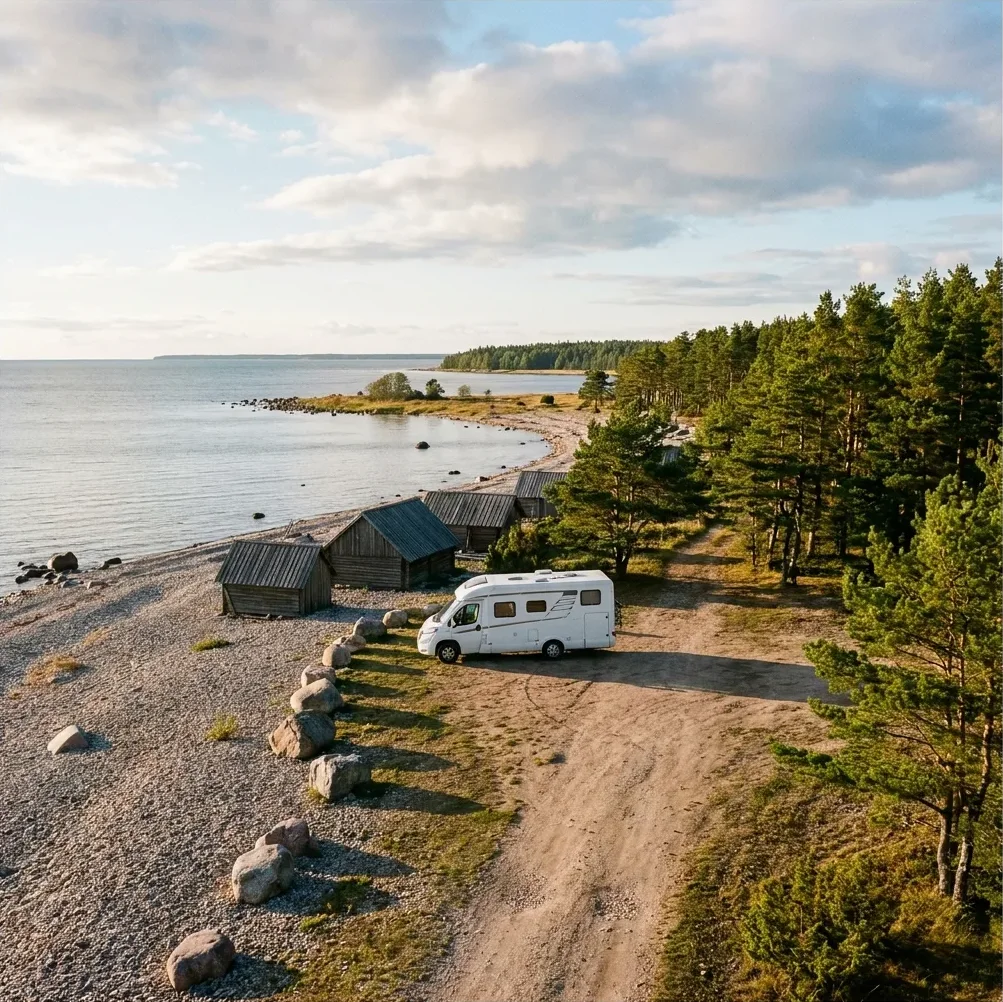
Lahemaa is the oldest national park of the former Soviet Union and the most beautiful stretch of Estonia's north coast: captain's villages like Käsmu and Altja with wooden houses and nets on the quay, the manors of Palmse and Sagadi, the Viru bog with a boardwalk and an observation tower, and forests full of boulders. Overnight stays are possible at the free RMK campsites in the park, with fire pits and dry toilets, or at the campsite near Käsmu.
Stop 13
Tallinn
Tallinn has the best-preserved medieval city in Northern Europe: city walls with towers, Toompea Hill with a cathedral and viewpoints, Town Hall Square and the Kalamaja harbour district with wooden houses and the Seaplane Harbour Museum in the seaplane hangars. Further from the centre are the Rocca al Mare Open Air Museum and the Telliskivi Creative City. The campsite is located near Pirita on the coast, with a bus to the centre; those arriving by ferry from Helsinki will be at the campsite within fifteen minutes. Rental motorhomes are picked up on the outskirts of the city.
Ready to hit the road?
We'll email you a personal travel proposal within 24 hours — motorhome, route and full cost overview included. Save €400–€800 on average vs. a travel agency.
No packages, no middlemen. Learn how it works
Camproads gave me a lot of inspiration for our campervan trip. The routes are beautiful, with a good balance of nature and city life, and the route generator made planning super easy. It's also really handy that there are so many good camping options at the locations, and that you can easily find the campervan that suits your needs and compare prices. This way, we can plan everything ourselves and book the campervan directly with the rental company. That's much cheaper than an organized trip!
Michiel van de Bunt
February 2026
What a difference from how I used to plan trips. Through Camproads, I put together a complete campervan trip in just a few minutes. It's so easy to use, and you can customize everything to your liking. The ability to choose your travel pace makes it even more enjoyable, especially now that we're traveling with a baby for the first time.
Alieke Zelhorst
February 2026