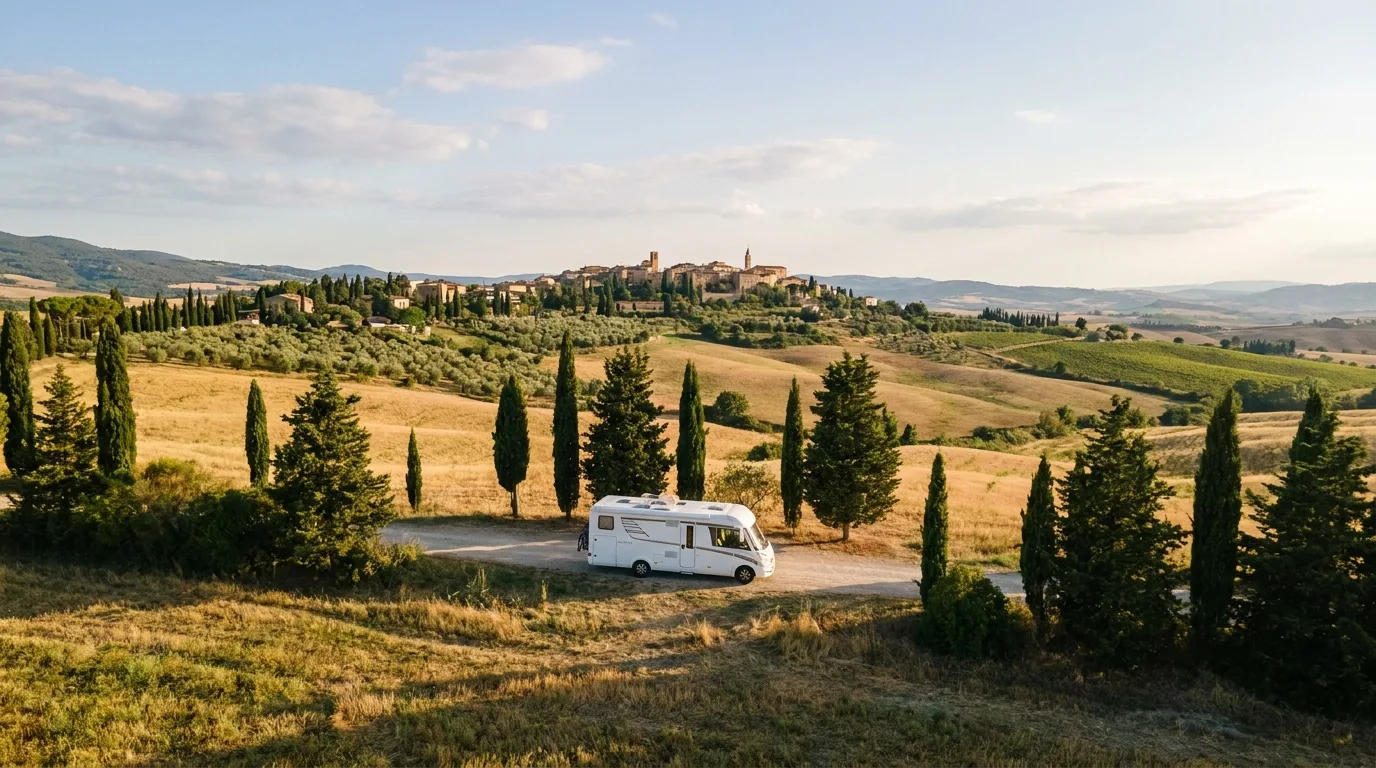
Take this trip by motorhome
Save €400–€800 on average vs. a travel agency
Duration
x daysDistance
599 km
stops
12
Choose a date and duration that fits your preferences
About this route
Highlights
- ✦Walk the sixteenth-century city walls of Lucca
- ✦Admire the iconic Leaning Tower of Pisa at Piazza dei Miracoli
- ✦Explore Florence's impressive Duomo and the historic Ponte Vecchio
- ✦Drive through the rolling Chianti region and taste local wines
- ✦Visit Siena's shell-shaped Piazza del Campo
- ✦Discover the spectacular Duomo di Orvieto on its volcanic rock
- ✦Explore the picturesque landscapes of Val d'Orcia and Pienza
The route
Stop 1
Lucca
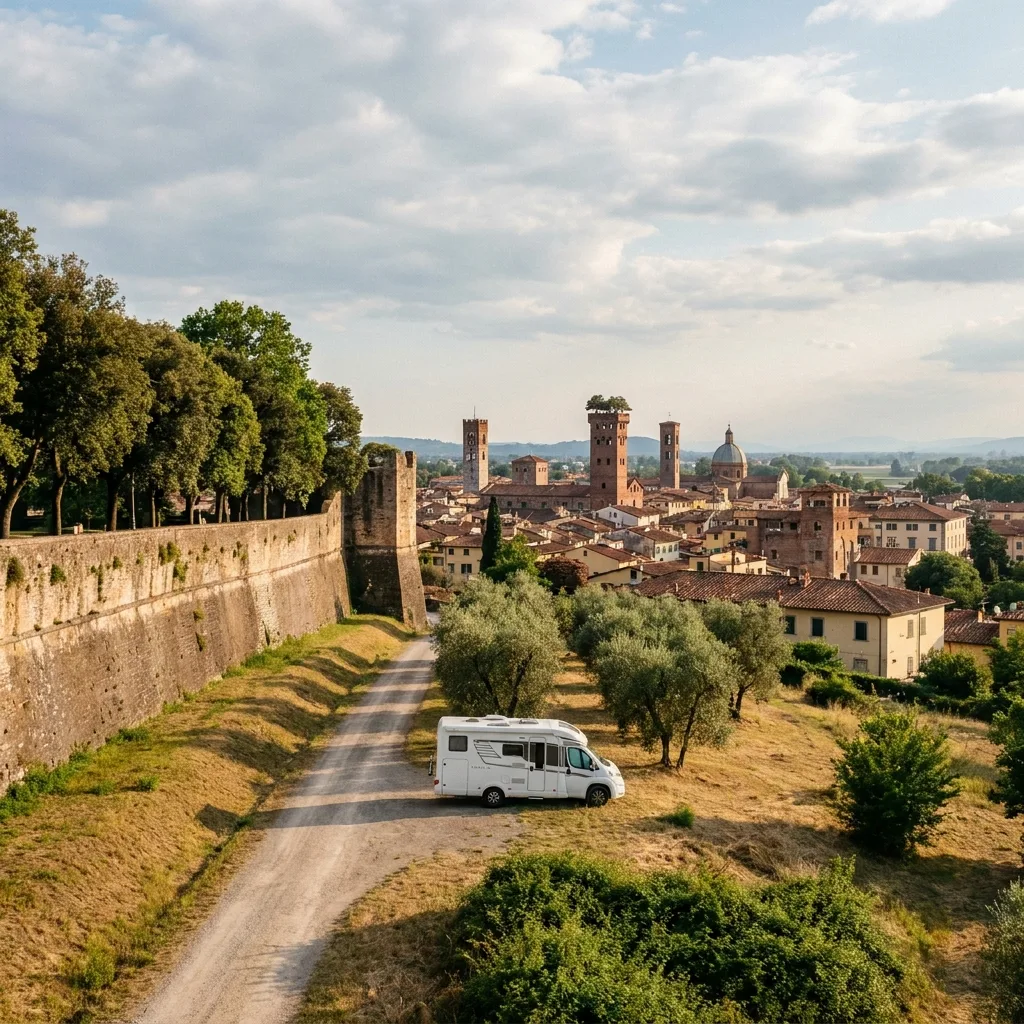
Lucca is enclosed by the Mura di Lucca, an intact sixteenth-century city wall that is now an elevated city park. You can walk along these wide ramparts or climb the Torre delle Ore for a view over the red rooftops and the Duomo di San Martino. The oval Piazza dell'Anfiteatro follows the contours of a Roman amphitheatre. This atmospheric square forms the lively heart of the car-free city centre, where you can wonderfully wander among the historic buildings.
Stop 2
Pisa
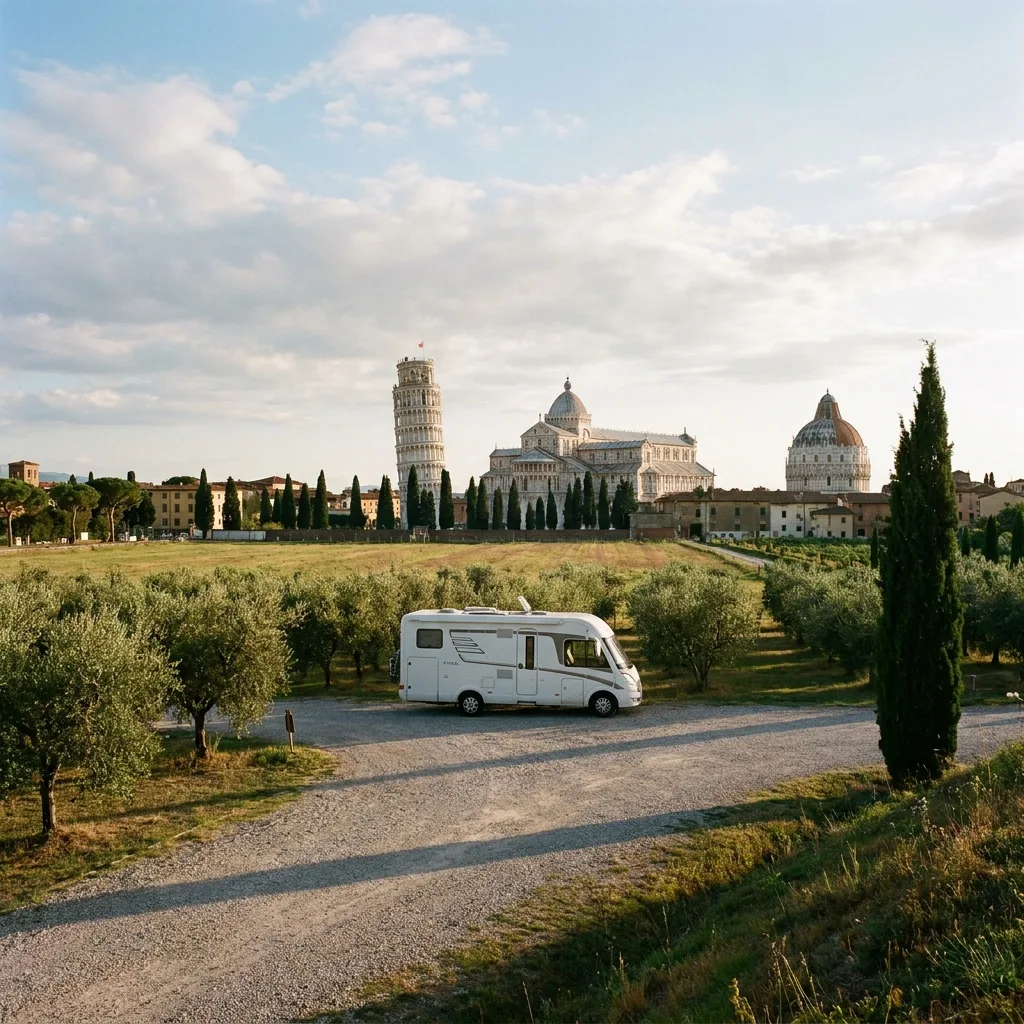
Pisa is famous for the Torre di Pisa, a 56-meter-high tower that has shown a striking lean for centuries. At Piazza dei Miracoli, you can admire this structure, the marble Duomo di Pisa, and the Battistero di San Giovanni, Italy's largest baptistery. Along the Arno river, the city displays historic palaces. The Santa Maria district offers lively markets. The vibrant atmosphere around the square contrasts with the tranquility along the Arno, where you experience the city from a different perspective.
Stop 3
Florence
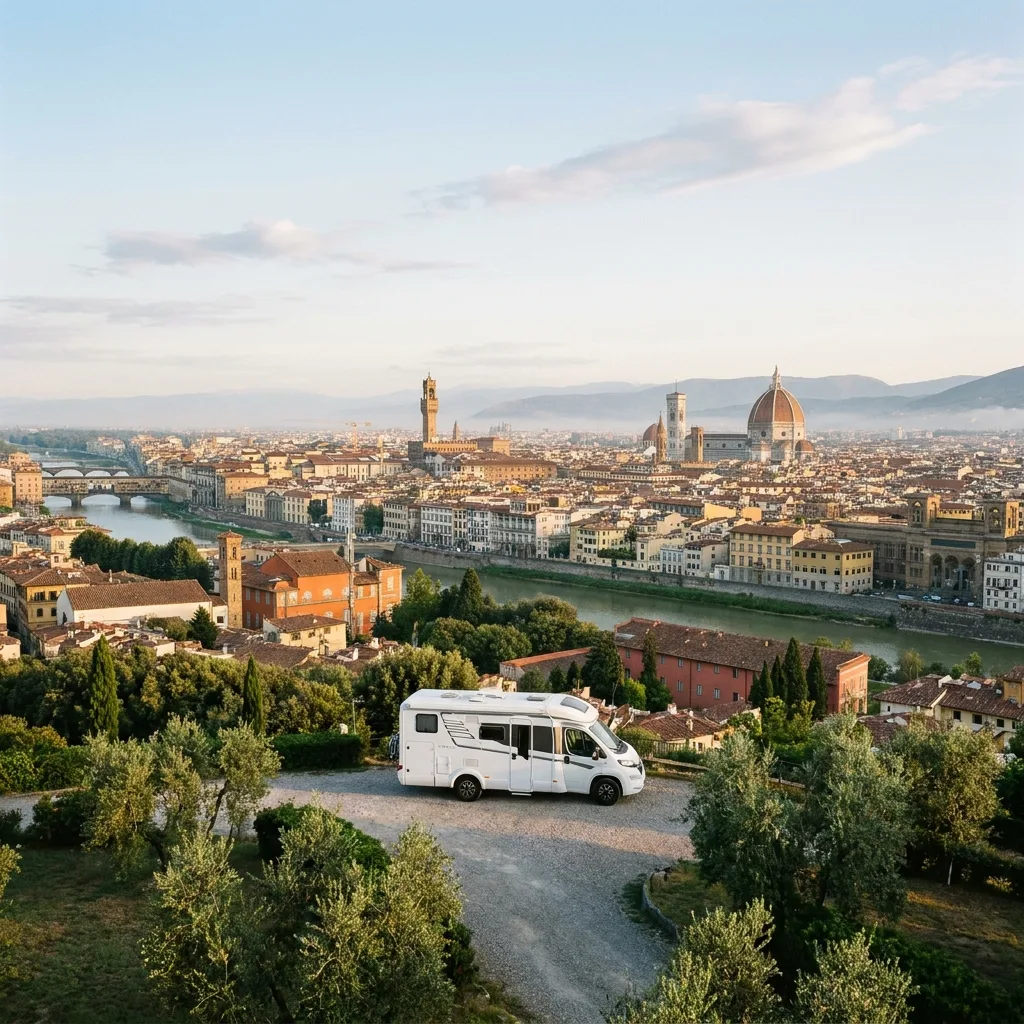
Florence breathes the grandeur of the Renaissance, which you experience in every street and every building. The Duomo di Firenze impresses with its fifteenth-century dome. Over the Arno river, the fourteenth-century Ponte Vecchio stretches, full of shops. In the Galleria degli Uffizi, you can admire art by Botticelli and Da Vinci. From Piazzale Michelangelo, you can enjoy a panoramic view of this vibrant and historic city.
Stop 4
Chianti
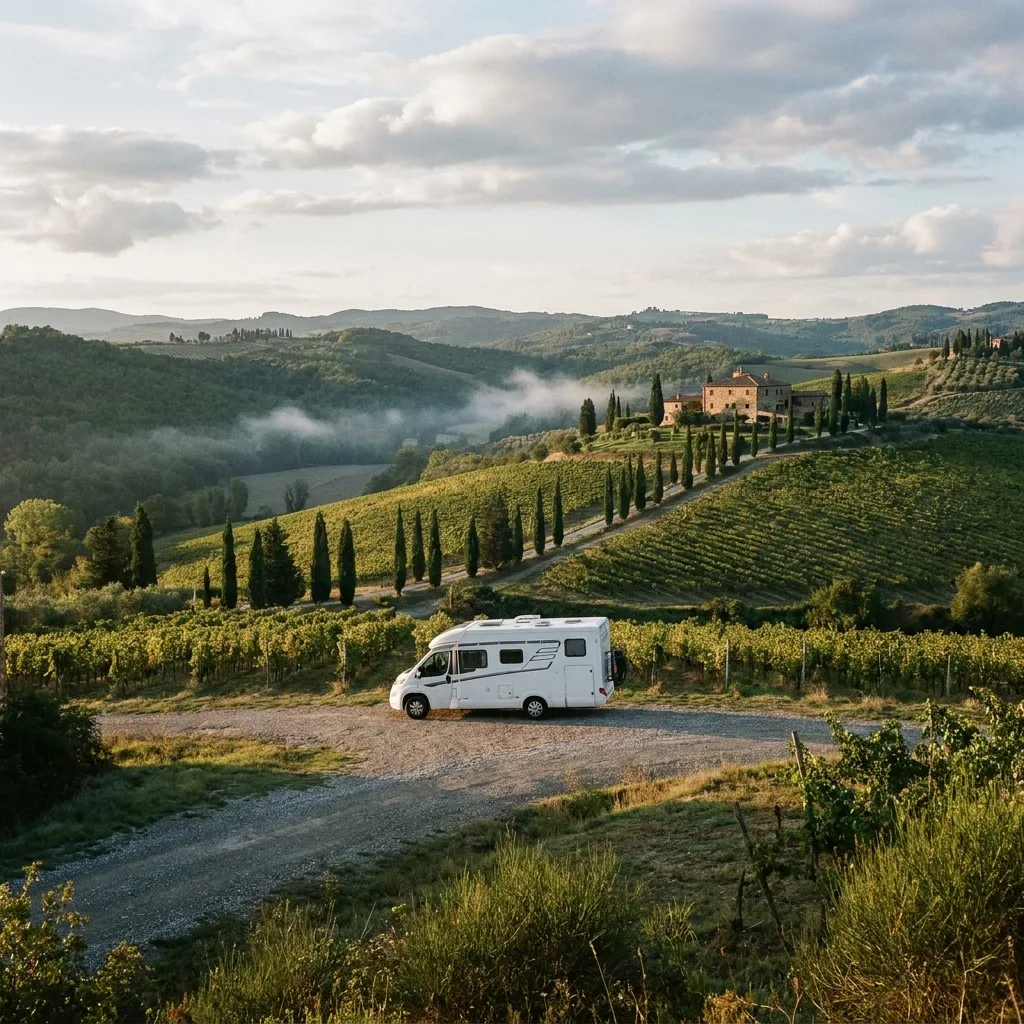
The Tuscan region of Chianti is located between Florence and Siena and is known for the production of Chianti Classico wines. In Greve in Chianti, you can visit Piazza Matteotti, a triangular market square surrounded by arcades. The 11th-century Castello di Brolio has been owned by the Ricasoli family since 1141 and towers above the vineyards. Cypresses and dense oak forests characterize the rolling landscape around the historic wine estates.
Stop 5
San Gimignano
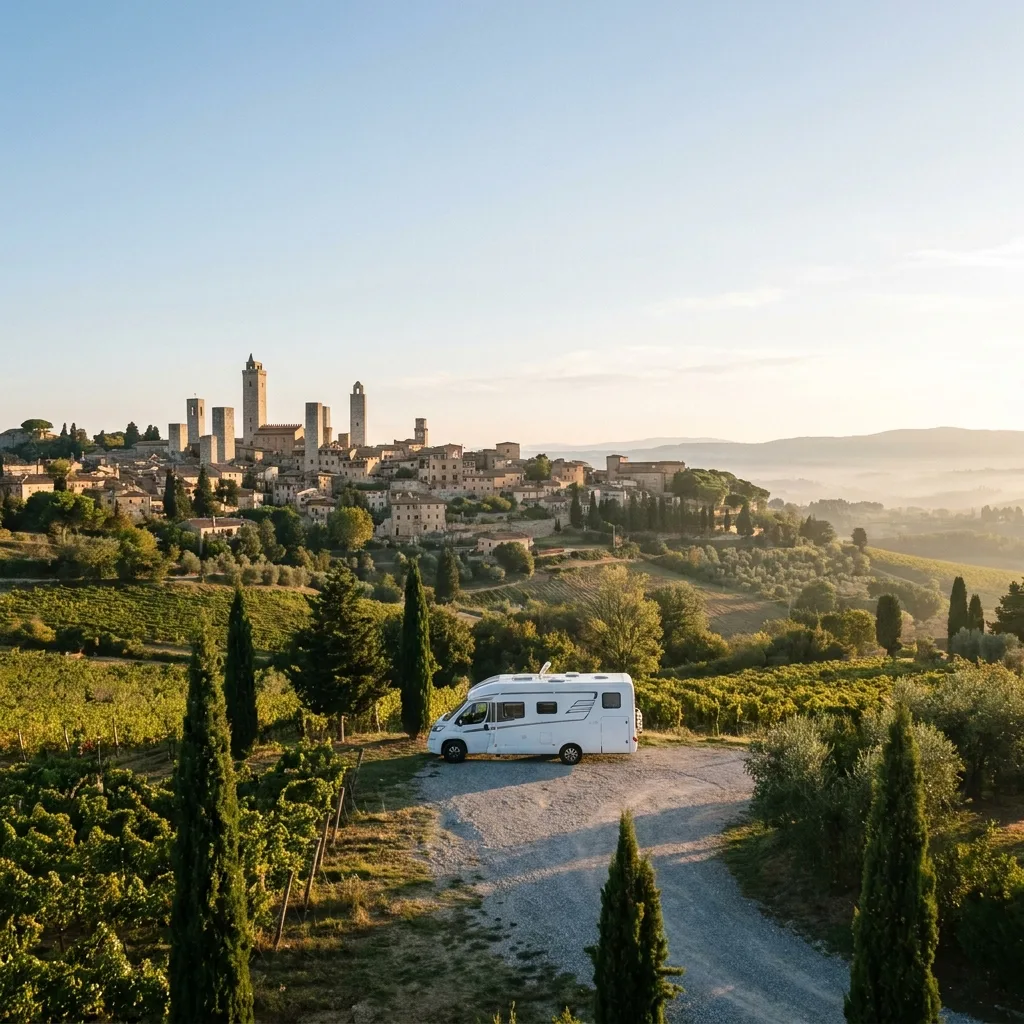
San Gimignano boasts its thirteen medieval residential towers dominating the Tuscan skyline. Climb the 54-meter-high Torre Grossa for panoramic views of the surrounding vineyards, the source of the white Vernaccia wine. The lively Piazza della Cisterna is centrally located in the town. Admire detailed frescoes in the Collegiata Santa Maria. Narrow streets lead to paths along the old city walls, overlooking the rolling Tuscan valley.
Stop 6
Volterra
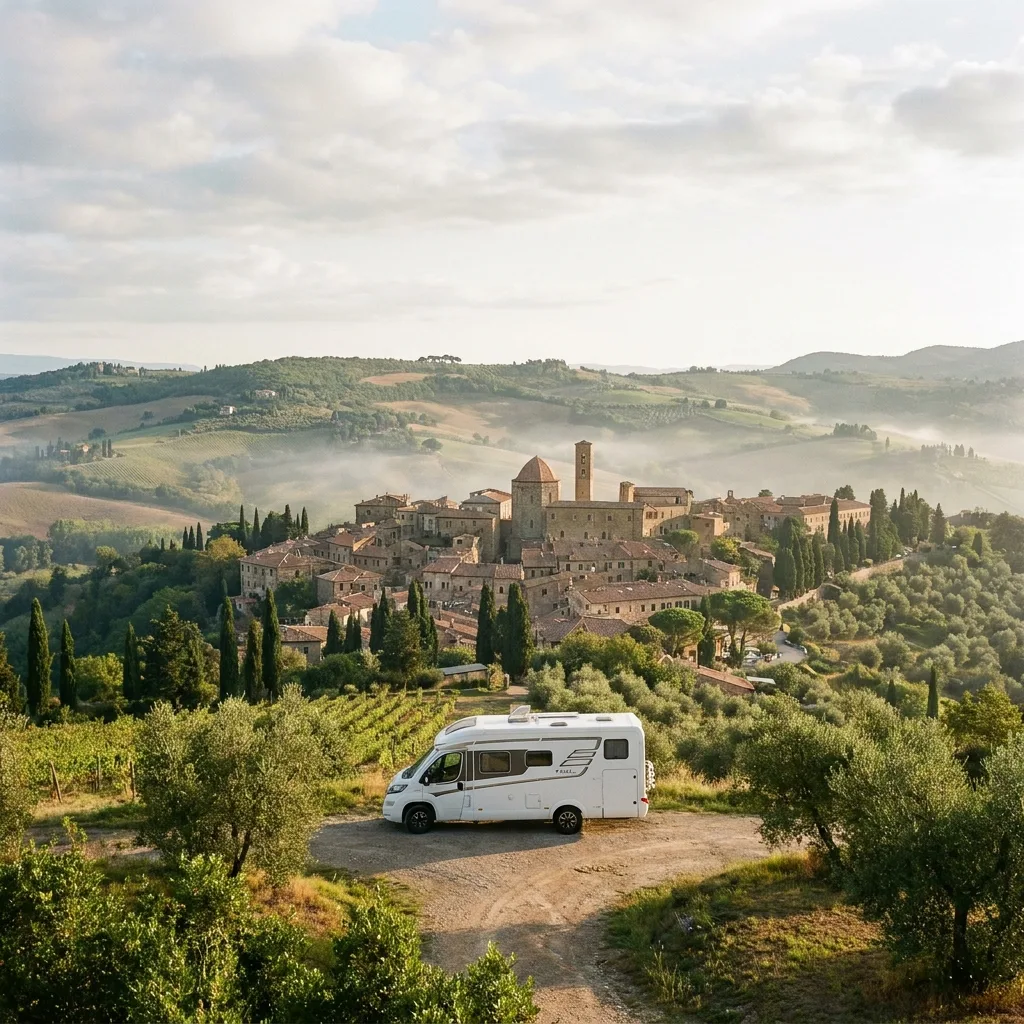
Volterra is a Tuscan hill town known for its ancient alabaster craftsmanship. Here you can discover the Etruscan Porta all'Arco and the Teatro Romano, remnants of a rich past. In the central square stands the Palazzo dei Priori from 1208, the oldest town hall in the region. From the medieval walls, you can enjoy panoramic views of the surrounding valleys. The city's tranquil atmosphere is best experienced during a stroll through its historic alleys and charming squares.
Want to actually take this trip?
We put together the complete package for you — motorhome, ferry, campsites — in one personal email.
Stop 7
Siena
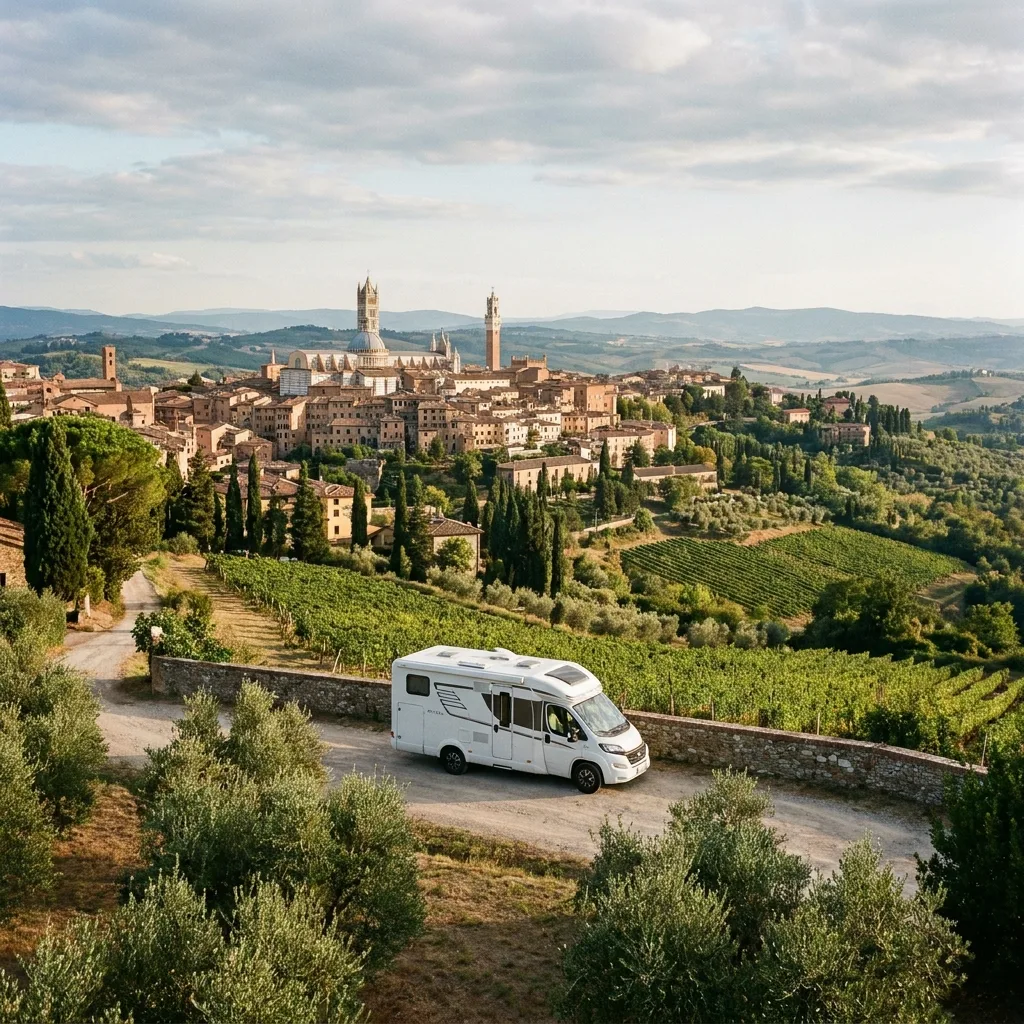
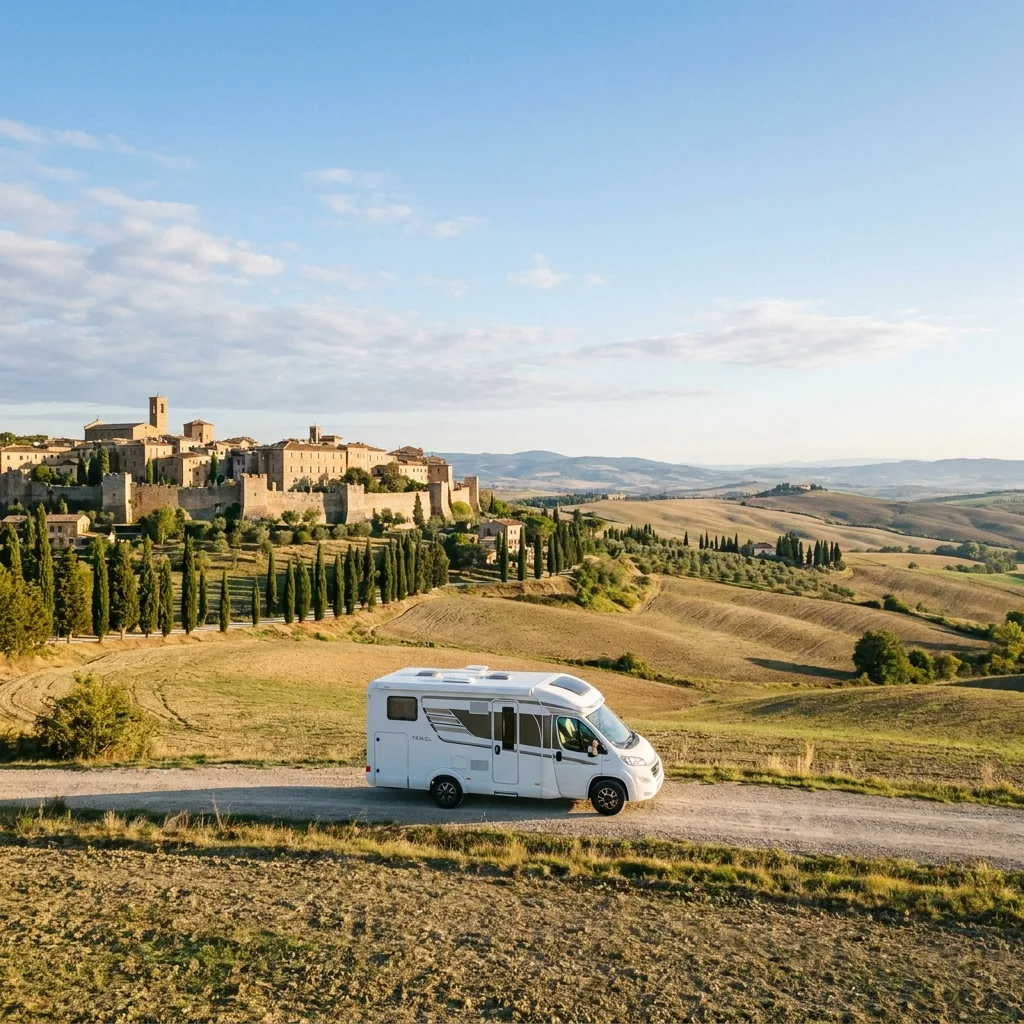
Siena is a medieval city in the Tuscan hills, known for the shell-shaped Piazza del Campo where the Palio horse race takes place. The thirteenth-century Duomo di Siena stands out with its black and white marble facade, while the 88-meter-high Torre del Mangia offers views over the red roofs. You can wander through narrow brick streets of the different city districts and taste local specialties like panforte on the terraces.
Stop 8
Val d'Orcia
Val d'Orcia is a UNESCO World Heritage site thanks to its rolling landscape of golden grain fields and stately cypress trees. In the 15th-century town of Pienza, you can admire the central Cattedrale di Pienza, designed by Pope Pius II. In the middle of an open field stands the Cappella di Vitaleta, which beautifully contrasts with the hills. On a hilltop near San Quirico d'Orcia, the Cipressi San Quirico surround a rise. The region exudes a serene tranquility, especially at sunset over the rolling fields.
Stop 9
Maremma
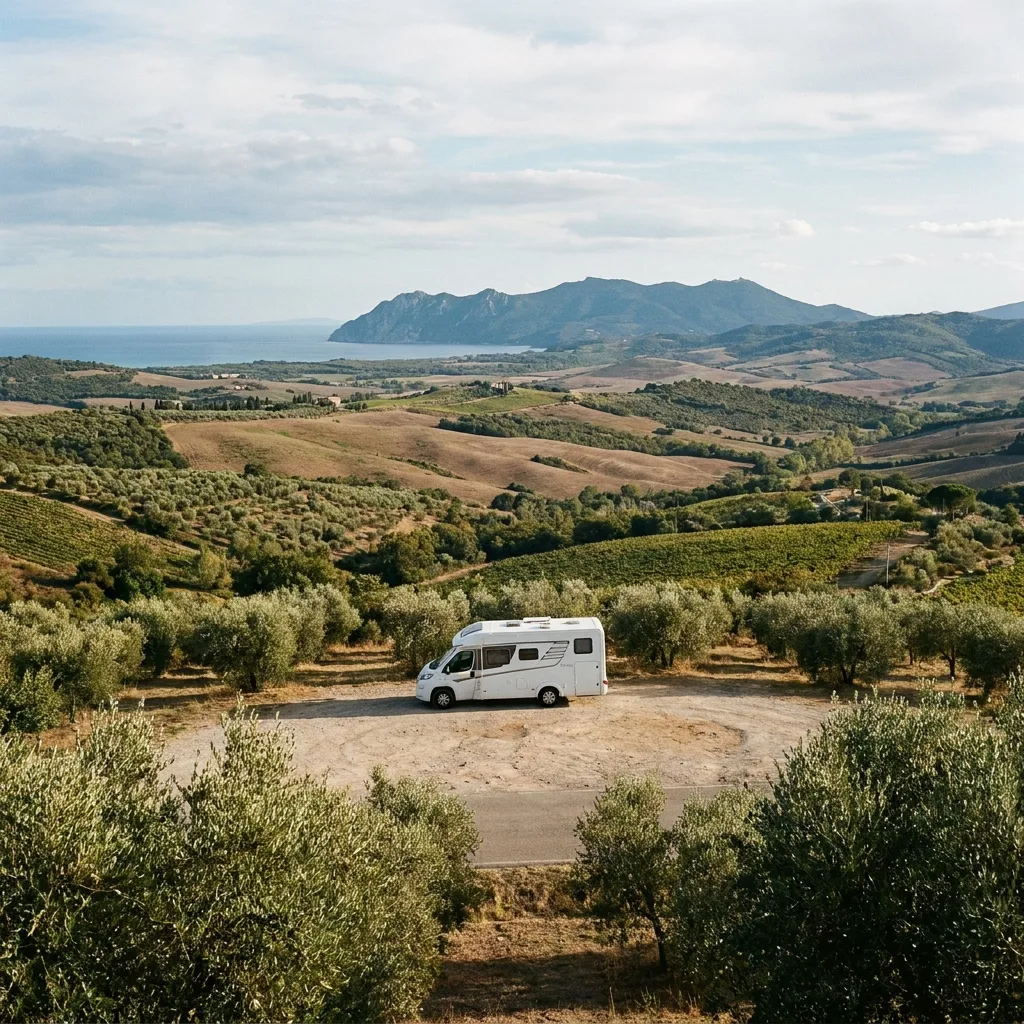
The Maremma covers the coastal strip of Southern Tuscany and includes the 9,800-hectare Parco Regionale della Maremma. In this nature reserve, Maremmana cattle graze among pine forests and marshes, bordering the Tyrrhenian Sea. Via the dams of the Laguna di Orbetello, you reach the Monte Argentario peninsula, where Punta Telegrafo reaches an altitude of 635 meters. Here you can visit the port towns of Porto Ercole and Porto Santo Stefano, known for their sixteenth-century Spanish forts.
Stop 10
Orvieto
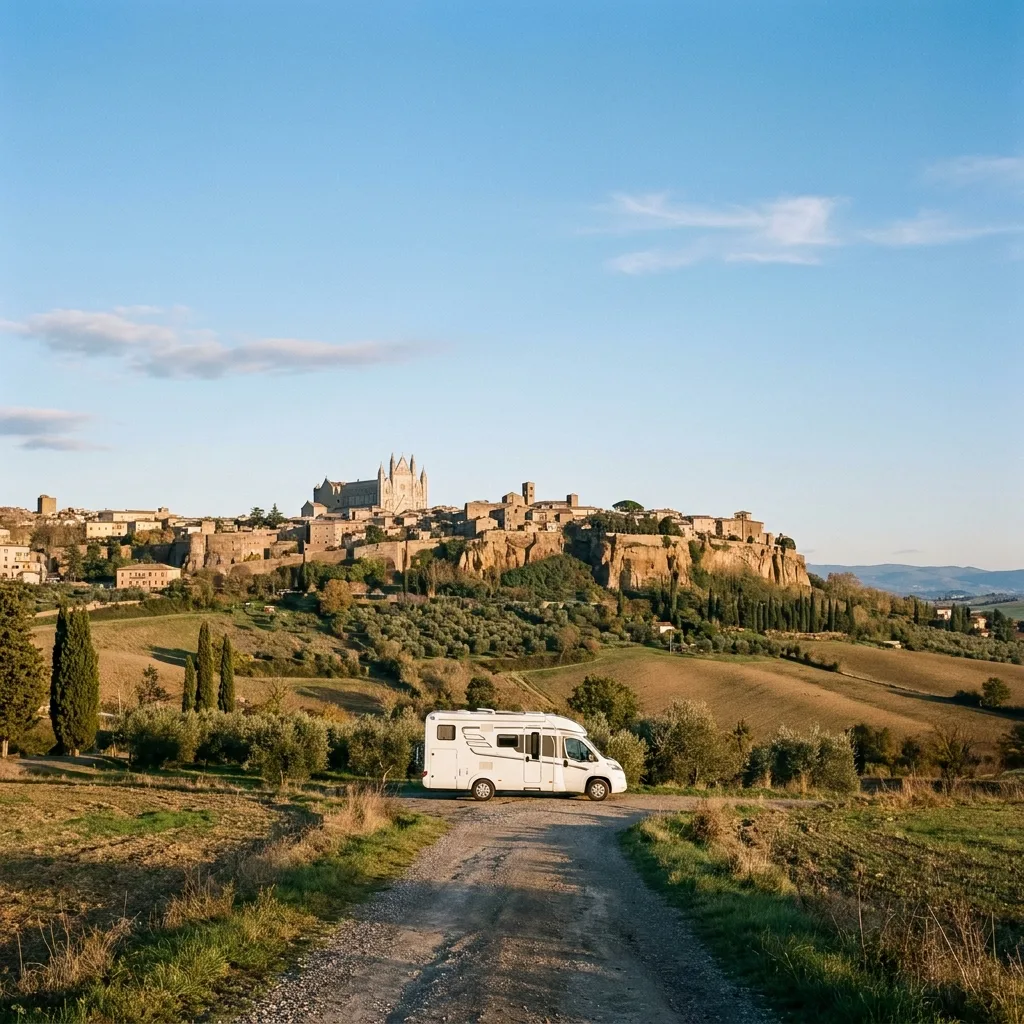
Orvieto is situated on a volcanic tuff plateau and hides a wealth of underground secrets. The Duomo di Orvieto displays a magnificent mosaic facade for you to admire. In the Pozzo San Patrizio, descend into a 62-meter deep well with a double spiral staircase. Beneath the car-free centre, explore Orvieto Underground, a labyrinth of over 1,200 rock-hewn passages. Wander through the charming centre with views over the Umbrian hills from the city walls.
Stop 11
Assisi
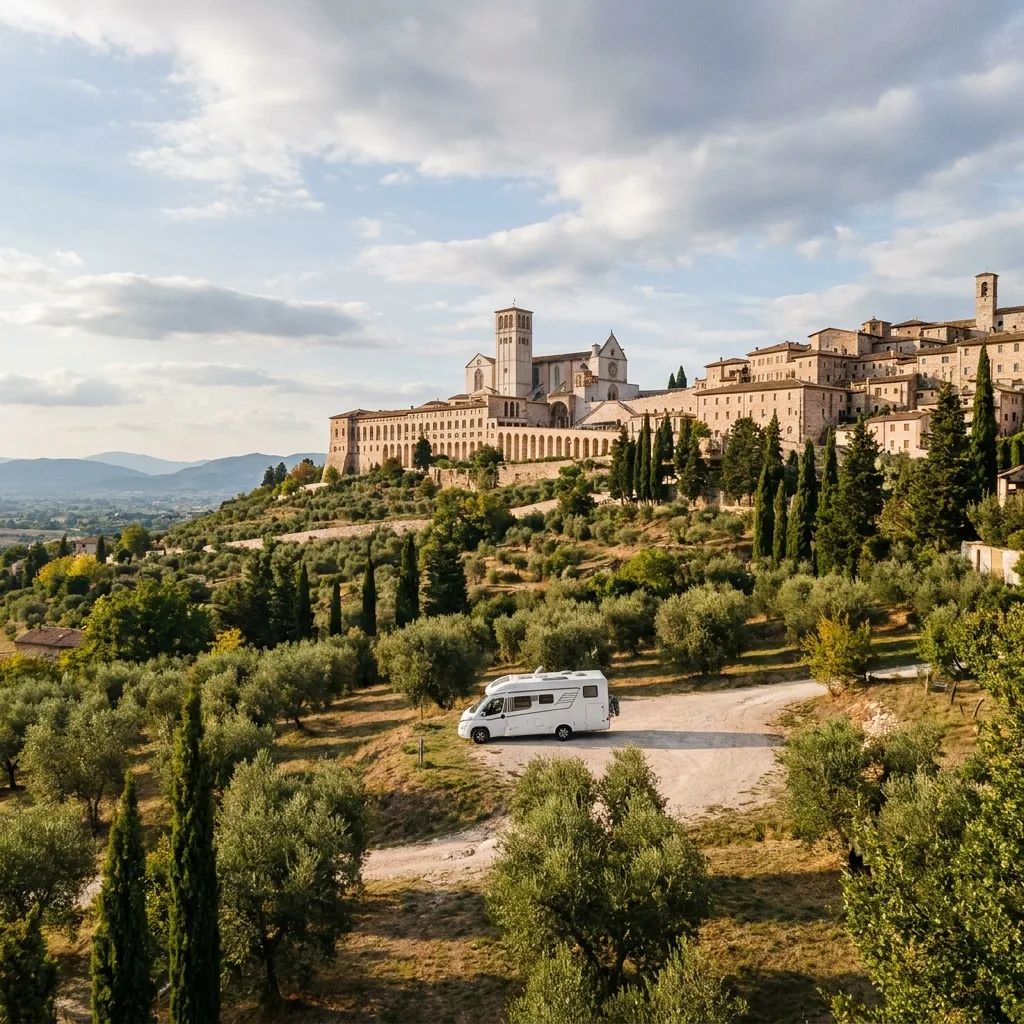
Assisi, a pilgrimage site of pink-white limestone, lies against the slopes of Monte Subasio. The thirteenth-century Basilica di San Francesco displays frescoes by Giotto and Cimabue. On the Piazza del Comune stands the Tempio di Minerva from the first century BC. From the fourteenth-century fortress Rocca Maggiore, you can look out over the Valle Umbra. A serene atmosphere fills the city, with traces of ancient devotion everywhere.
Stop 12
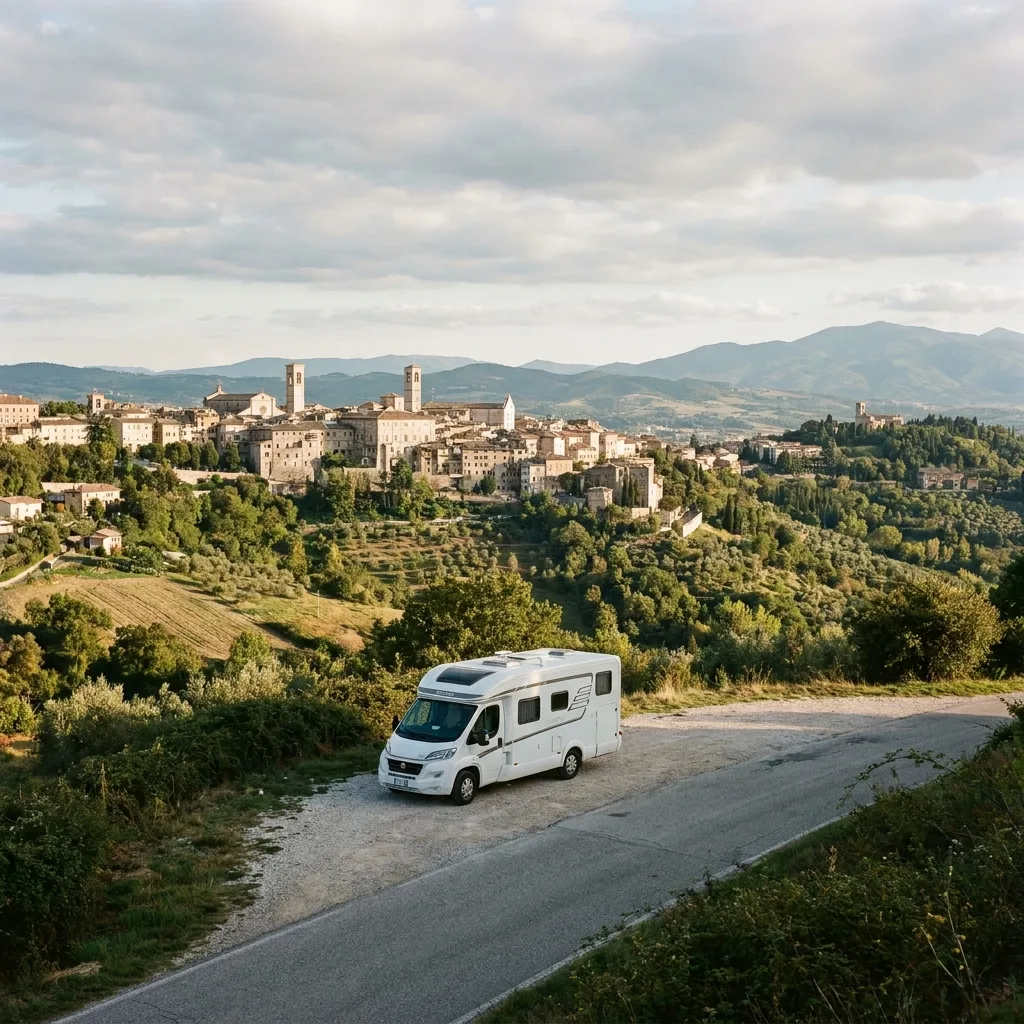
Perugia
Perugia leads you through underground escalators, past the 16th-century Rocca Paolina, to a medieval center. On Piazza IV Novembre stands the Fontana Maggiore with marble reliefs. The Cattedrale di San Lorenzo, with its unfinished facade, overlooks the wide steps. In the Galleria Nazionale dell'Umbria, works by Perugino hang between Gothic arches. The atmosphere is lively, with students relaxing on the cathedral steps in the sun.
Ready to hit the road?
We'll email you a personal travel proposal within 24 hours — motorhome, route and full cost overview included. Save €400–€800 on average vs. a travel agency.
No packages, no middlemen. Learn how it works
Camproads gave me a lot of inspiration for our campervan trip. The routes are beautiful, with a good balance of nature and city life, and the route generator made planning super easy. It's also really handy that there are so many good camping options at the locations, and that you can easily find the campervan that suits your needs and compare prices. This way, we can plan everything ourselves and book the campervan directly with the rental company. That's much cheaper than an organized trip!
Michiel van de Bunt
February 2026
What a difference from how I used to plan trips. Through Camproads, I put together a complete campervan trip in just a few minutes. It's so easy to use, and you can customize everything to your liking. The ability to choose your travel pace makes it even more enjoyable, especially now that we're traveling with a baby for the first time.
Alieke Zelhorst
February 2026