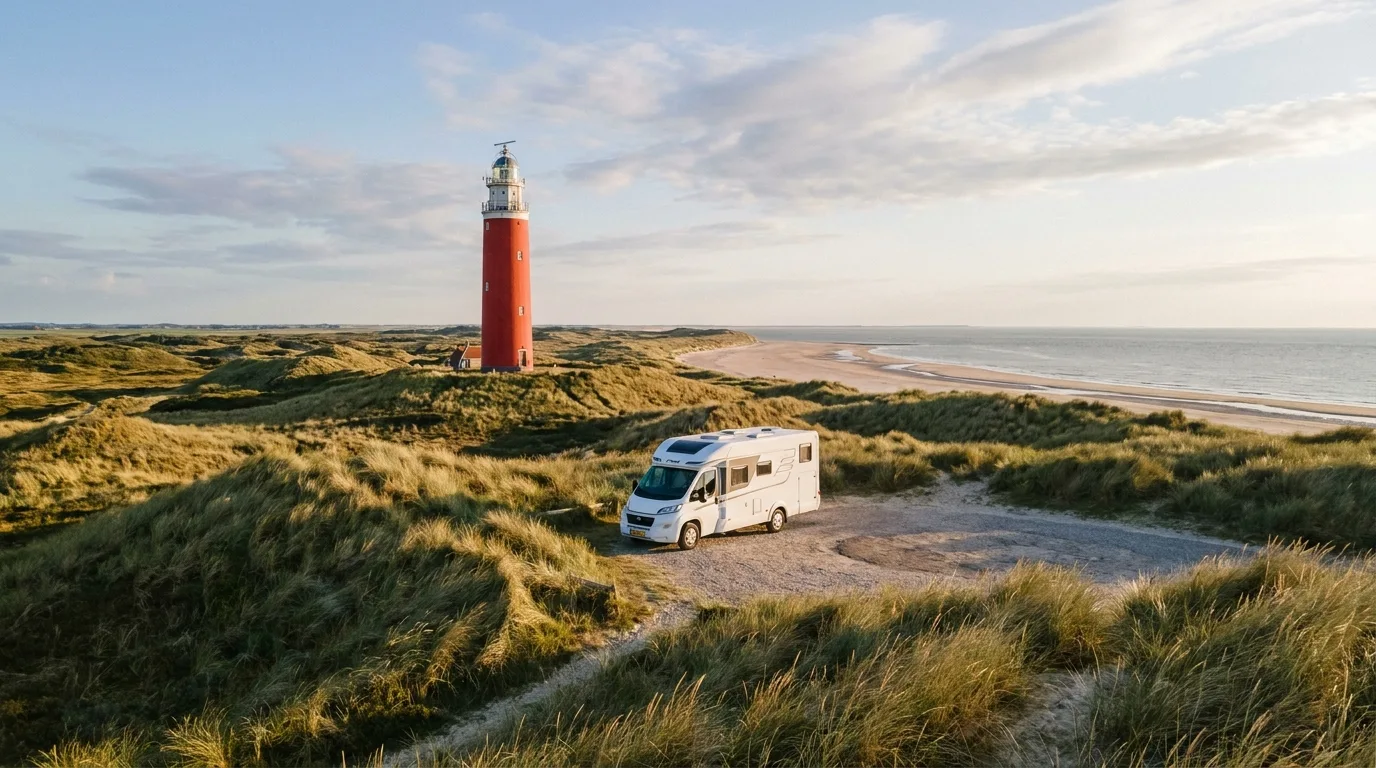
The Wadden Islands and Coast - Texel, Terschelling and Ameland by CampervanTexel, Terschelling and Ameland by Campervan
Take this trip by motorhome
Save €400–€800 on average vs. a travel agency
Duration
x daysDistance
530 km
stops
12
Choose a date and duration that fits your preferences
About this route
Highlights
- ✦Alkmaar cheese market on Friday morning
- ✦The Schoorl Dunes, the highest and widest in the Netherlands
- ✦Two nights in Texel: Ecomare, the lighthouse and De Slufter
- ✦The Afsluitdijk and the harbour of Harlingen
- ✦Two nights in Terschelling with the Oerol landscape and the Boschplaat
- ✦Two nights in Ameland: lighthouse, seals and the Wadden Sea
- ✦The Lauwersmeer as the darkest place in the Netherlands
- ✦Groningen, Sneek and the Frisian Lakes
- ✦Enkhuizen and the Zuiderzee Museum
The route
Stop 1
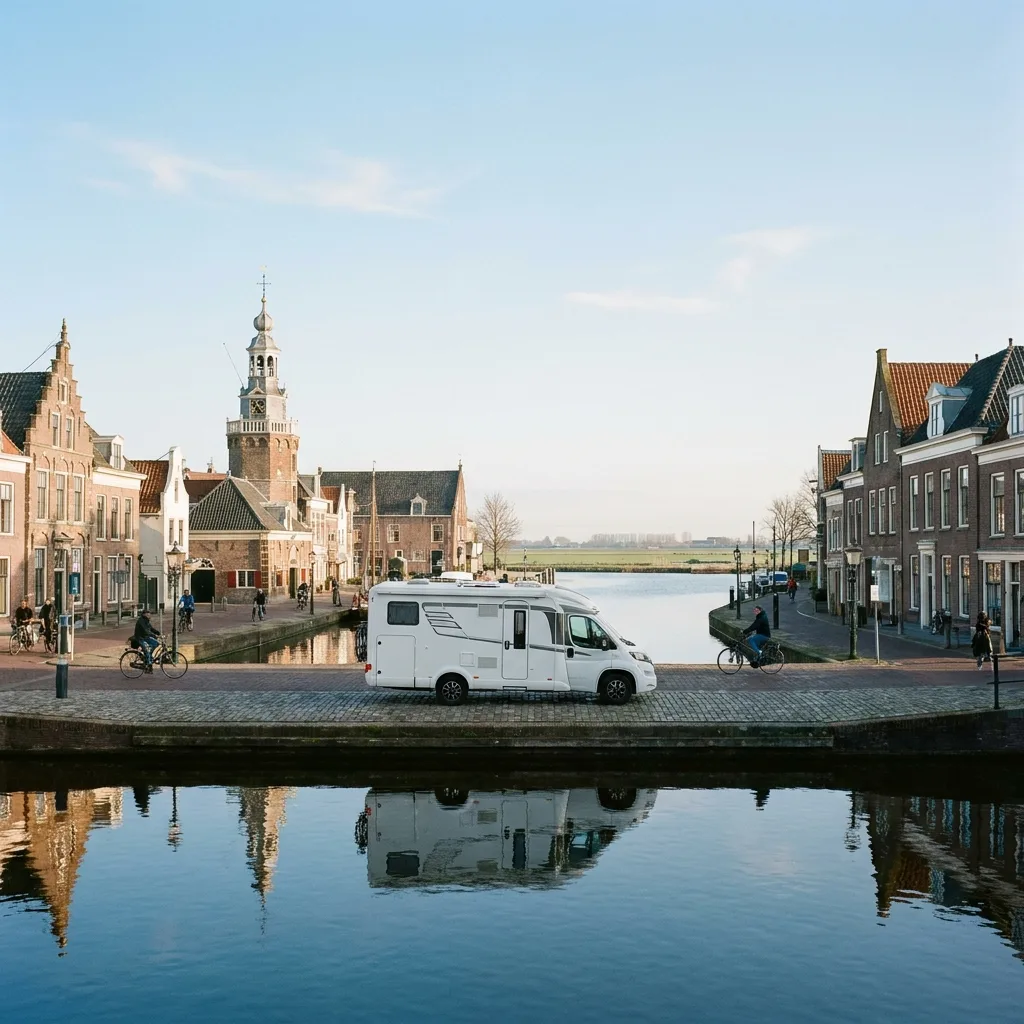
Alkmaar
Most visitors come to Alkmaar for the cheese market on the Waagplein, staged on Friday mornings through the summer season: carriers in white suits and coloured straw hats trot stacks of round cheeses to the weigh house on wooden barrows. It is a demonstration of an old trade rather than real business, the square fills early, and anyone who wants a view from the front should arrive well before the start. The weigh house itself, with its carillon and mechanical horsemen, holds the Dutch Cheese Museum. Away from the square, Alkmaar turns out to be a pleasant canal town with the Grote of Sint-Laurenskerk, the quays of the Bierkade and a ring of moats plied by tour boats. In 1573 it was the first Dutch city to hold off a Spanish siege. Park outside the ring of canals and walk the last few streets.
Stop 2
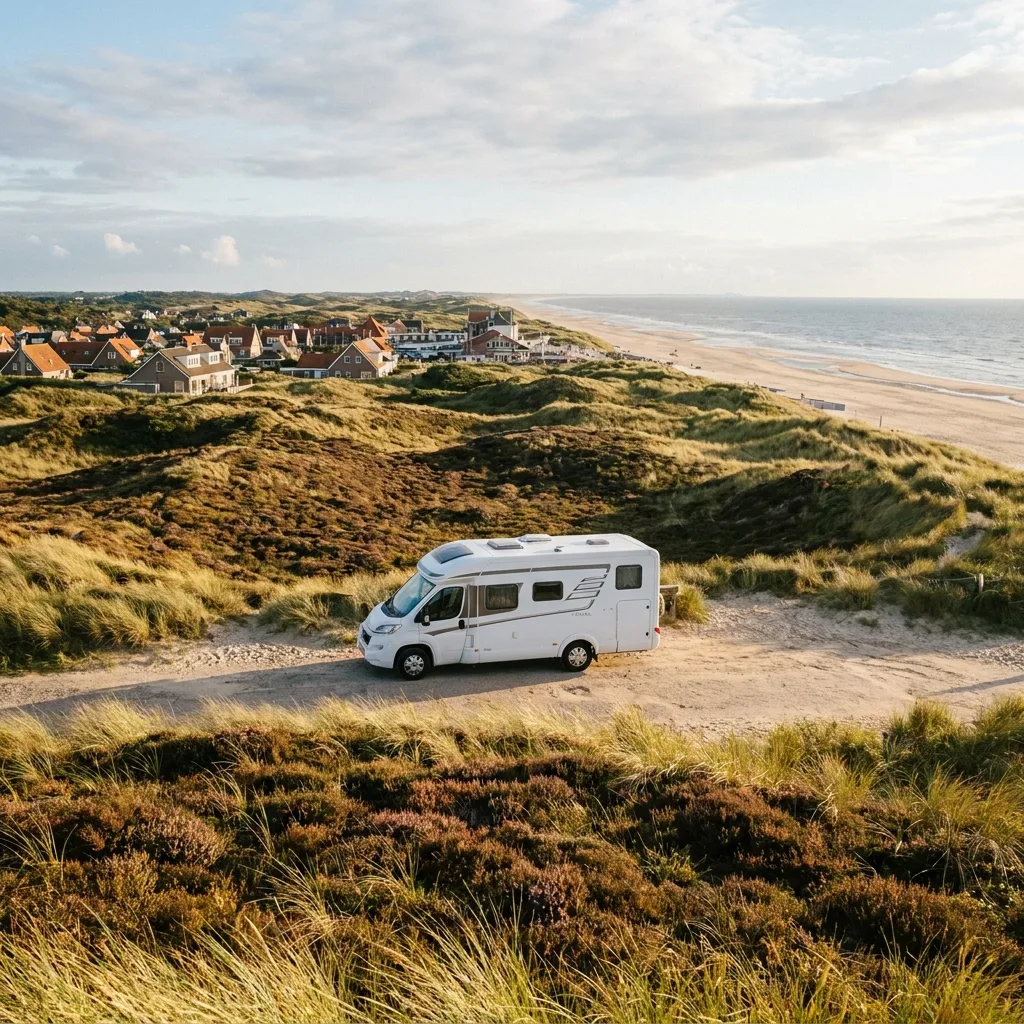
Bergen aan Zee & Schoorl Dunes
Bergen aan Zee is a small seaside village at the end of the road through the dunes, with a wide beach, a handful of beach pavilions and a sea aquarium. Inland lie the Schoorl dunes, the highest and widest dune belt in the Netherlands, where pine woods were once planted to hold the drifting sand in place; footpaths climb over bare sandy summits with views out to sea and back across the polder. At Schoorl the Klimduin rises steeply straight from the village square, an open slope of sand that children run down. The village of Bergen, a short way inland, was an artists' colony in the early twentieth century, the Bergen School, and still has galleries and a museum. Outside the summer months it is quiet here; on warm weekends the car parks at the dune entrances fill early in the day.
Stop 3
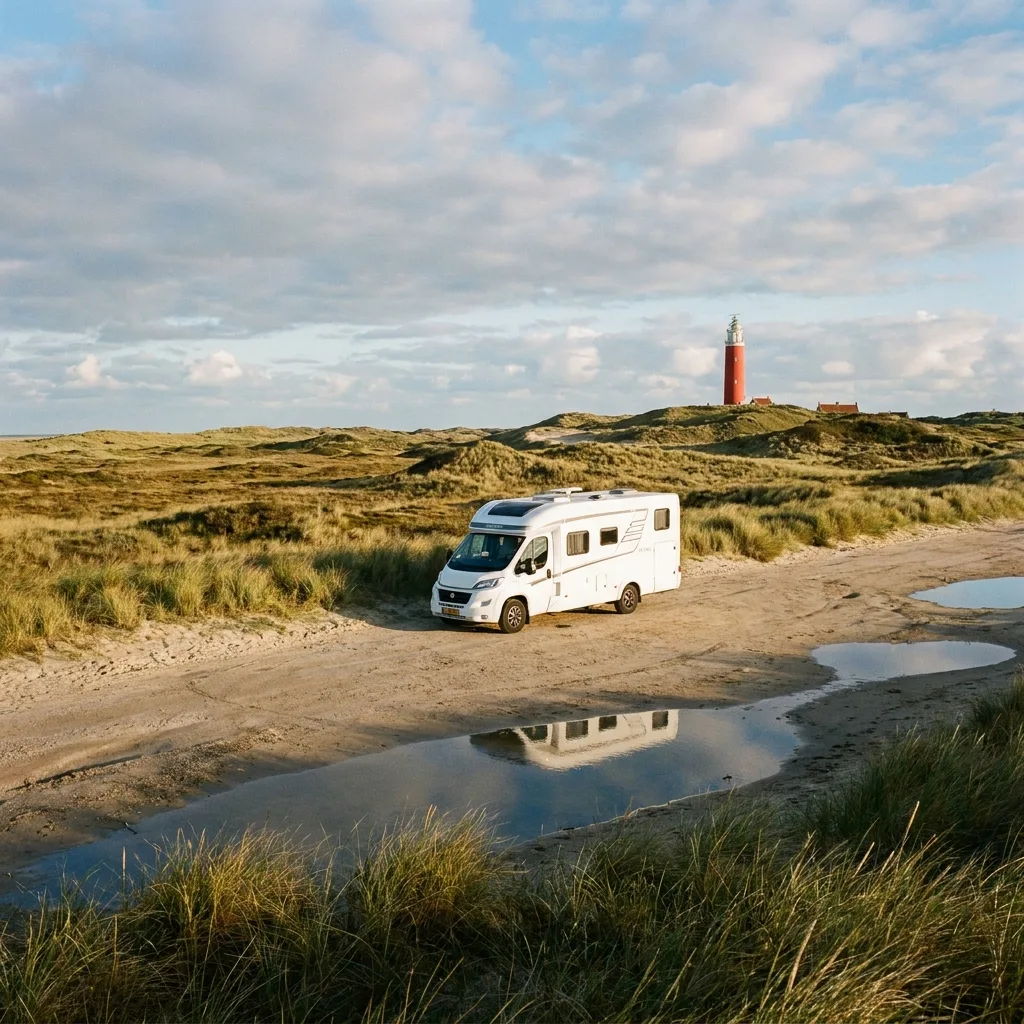
Texel
Texel is the largest and most varied of the Wadden islands: dunes and pine woods along the west side, polders full of sheep in the middle, and a broad North Sea beach lined with groynes. At De Slufter the sea runs inland through a gap in the dune ridge, creating a salt marsh where sea lavender turns the valley purple in late summer. Ecomare cares for rescued seals and explains the ecology of the Wadden Sea; elsewhere on the island there are bird hides and boats out to the sandbanks where the seals themselves haul out. Den Burg is the main village, with a market and shops. You arrive by car ferry from Den Helder, which runs all year and carries motorhomes; in high season expect to queue for a sailing. Two nights allow time for the beach, the cycle paths and the mudflats.
Stop 4
Harlingen & the Wadden Coast
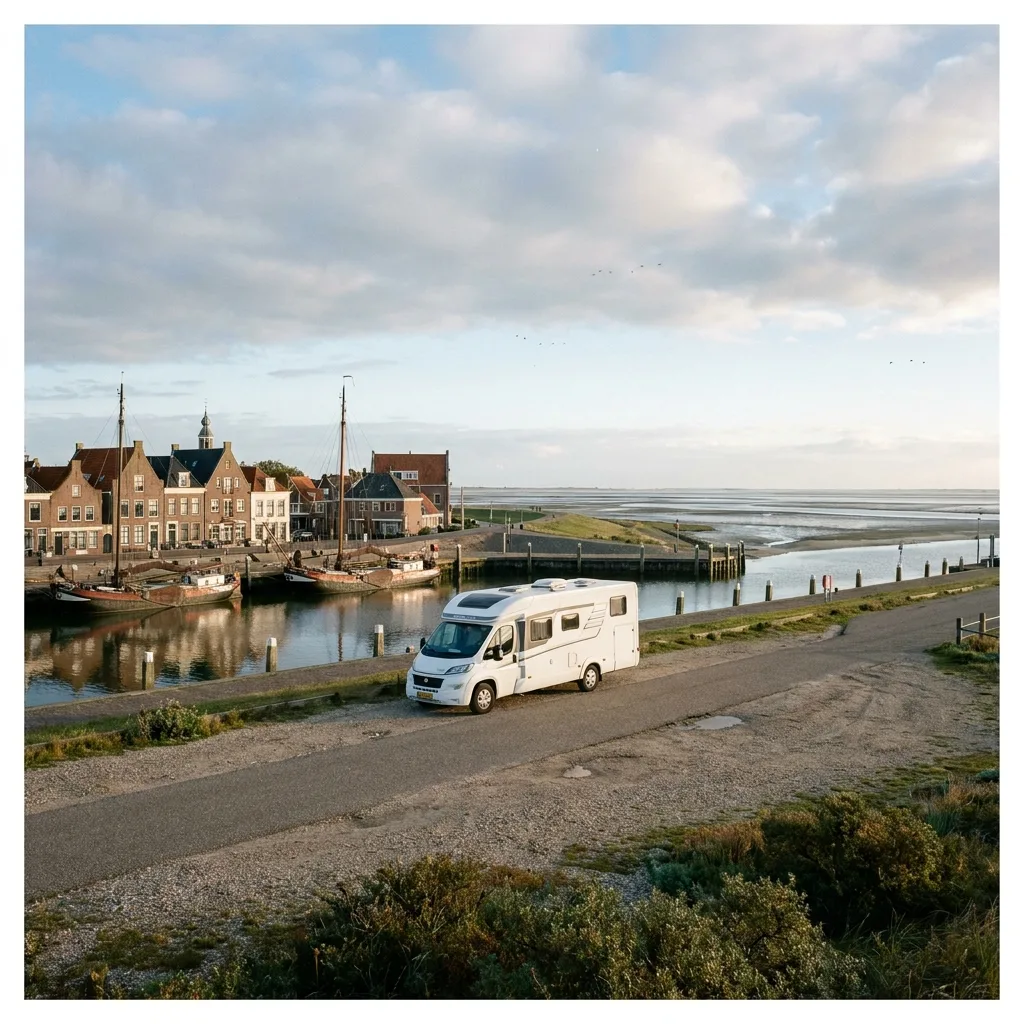
Harlingen is the only Frisian sea port still in working use, with a harbour mouth that opens straight onto the Wadden Sea. Along the Noorderhaven stand seventeenth and eighteenth century warehouses and skippers' houses with their gables turned to the water, and the streets behind them hold several hundred listed buildings. In the Willemshaven, sailing charter ships lie along the quay with masts rising above the rooftops. Ferries to Vlieland and Terschelling leave from the same harbour; Vlieland is closed to visitors' cars, so you leave the motorhome ashore and travel across as a foot passenger. The Wadden Sea in front is a UNESCO World Heritage site and largely falls dry at low tide, when wading birds spread out over the exposed flats to feed. Outside July and August the quays stay quiet, and the town works well as a base for a day out on one of the islands and a night back on the mainland.
Stop 5
Terschelling
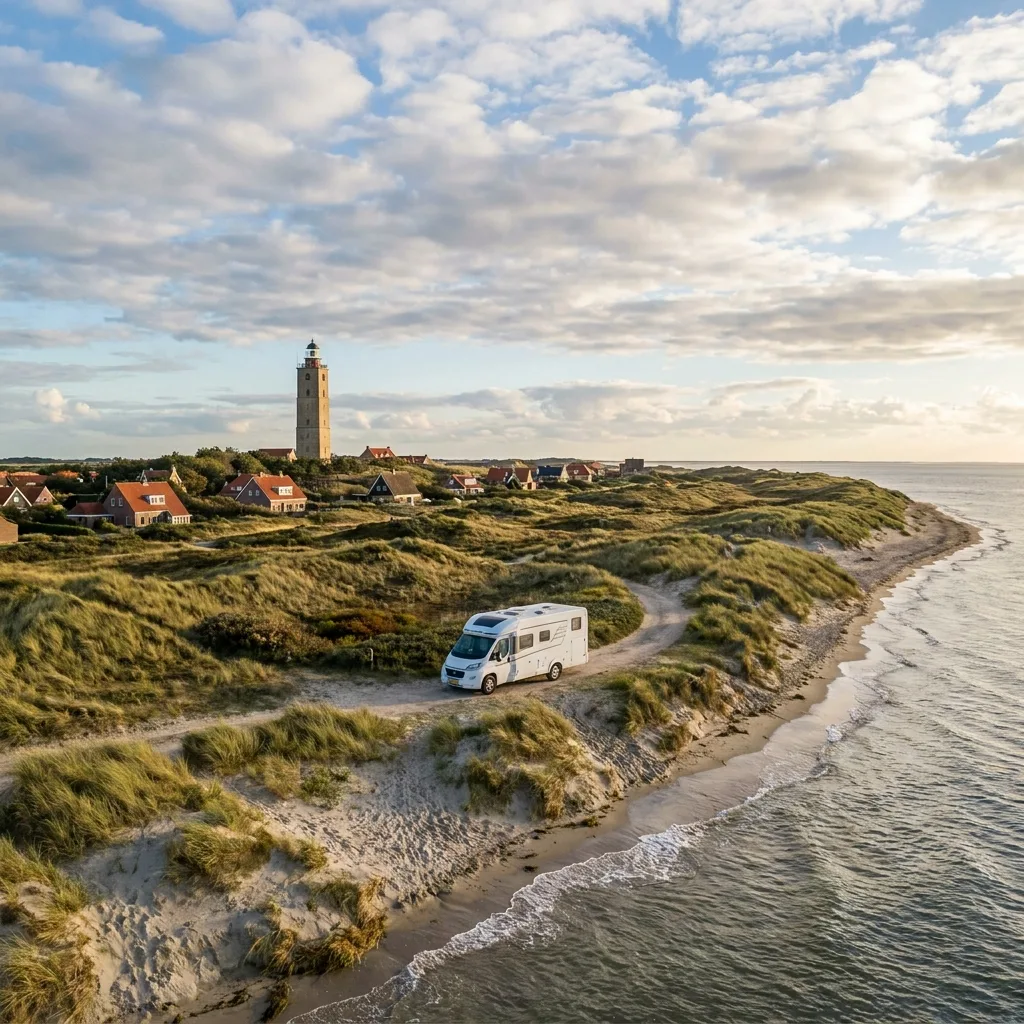
Terschelling is one of the most diverse Wadden Islands, offering an expansive landscape of dunes, salt marshes, and wide beaches. The iconic Brandaris lighthouse towers high above the village of West-Terschelling and has served as a beacon for shipping for centuries. On the east side of the island lies the vast nature reserve Boschplaat, where rare birds breed and nature has free rein. Hikers and cyclists explore miles of unpaved paths here that lead through the Noordsvaarder and along the Wadden Sea. The villages on the island each have their own character, ranging from maritime charm to rustic farmhouses. In the polders, sheep and cows graze, while the cranberry fields produce a unique local product. The expansive views over the North Sea and the mudflats create a constant sense of space and tranquility.
Stop 6
Leeuwarden
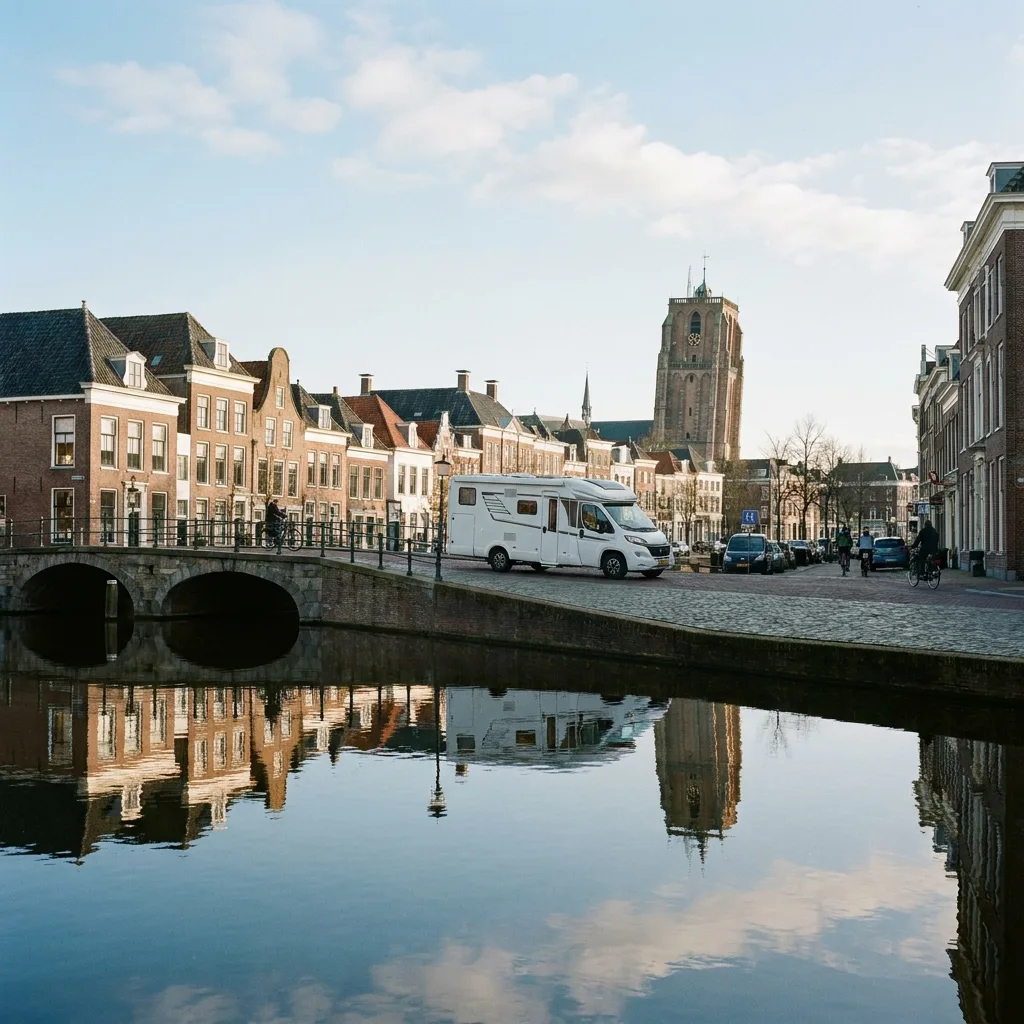
Leeuwarden is the capital of Friesland, the only Dutch province with a second official language, and road signs here carry place names in both Frisian and Dutch. The skyline belongs to the Oldehove, a church tower begun in 1529 and abandoned within a few years because it started to lean while it was still being built. Unfinished and distinctly crooked, it is still standing and you can climb it. The Fries Museum on the Wilhelminaplein tells the story of the province, from the people who lived on artificial mounds to Mata Hari, who was born in the city. A short walk away, the Princessehof ceramics museum occupies the house where M.C. Escher was born. Leeuwarden was European Capital of Culture in 2018 and kept a lively centre of canals and workshops from it. The old streets are narrow and full of cyclists, so leave the motorhome on the edge of town and do the centre on foot; almost nothing worth seeing lies more than a short walk from the Oldehove.
Want to actually take this trip?
We put together the complete package for you — motorhome, ferry, campsites — in one personal email.
Stop 7
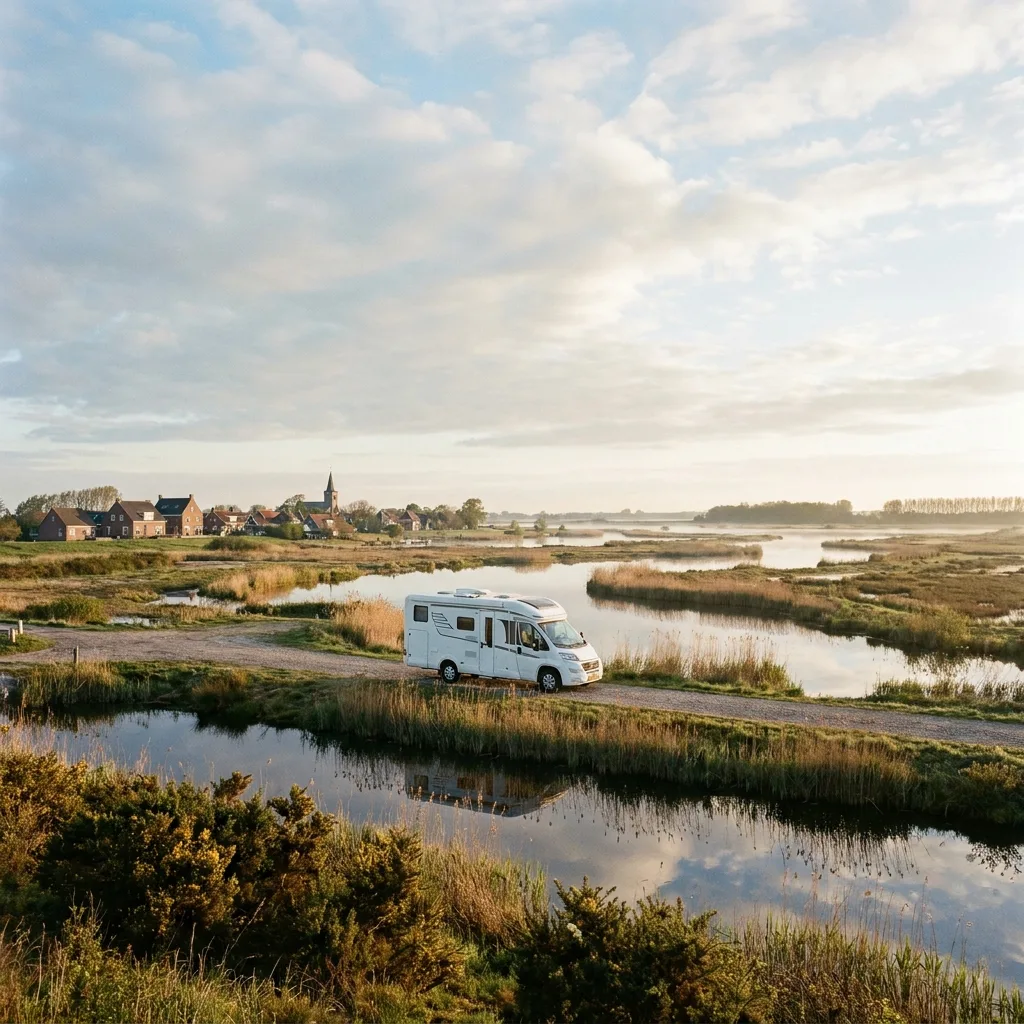
Ameland
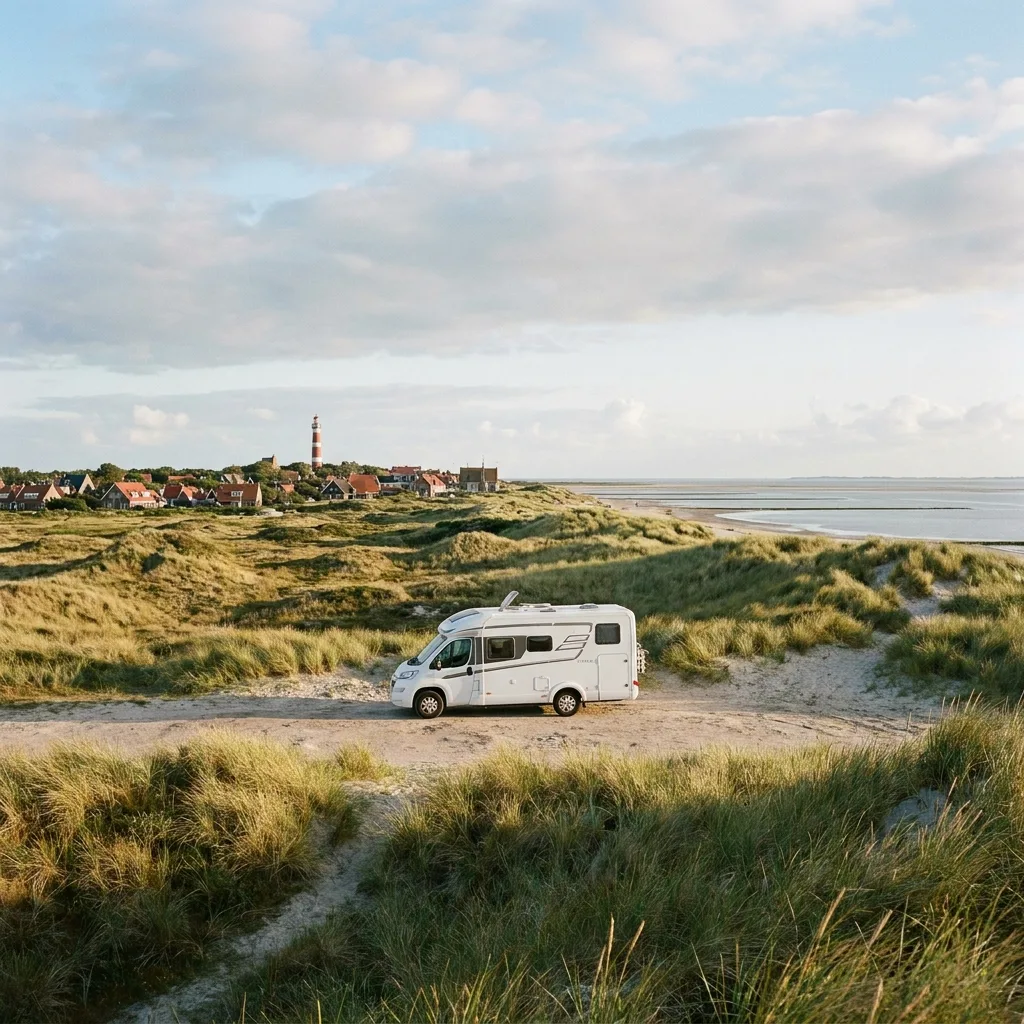
Ameland welcomes visitors with a vast landscape of dunes, salt marshes, and wide sandy beaches. The distinctive red-and-white striped Bornrif Lighthouse stands tall above the western tip of the island. To the east lies the Het Oerd Nature Reserve, an extensive dune area where countless bird species rest among the vegetated dune valleys. Hollum Beach is a popular spot for walks along the surf with views of the North Sea. In the authentic villages of Nes and Hollum, historic commander's houses recall a rich maritime past. The ferry crossing from Holwerd immediately immerses travelers in the slow rhythm of ebb and flow. Extensive cycling paths traverse the entire island, connecting the sheltered forests with the open salt marshes of the Wadden Sea.
Stop 8
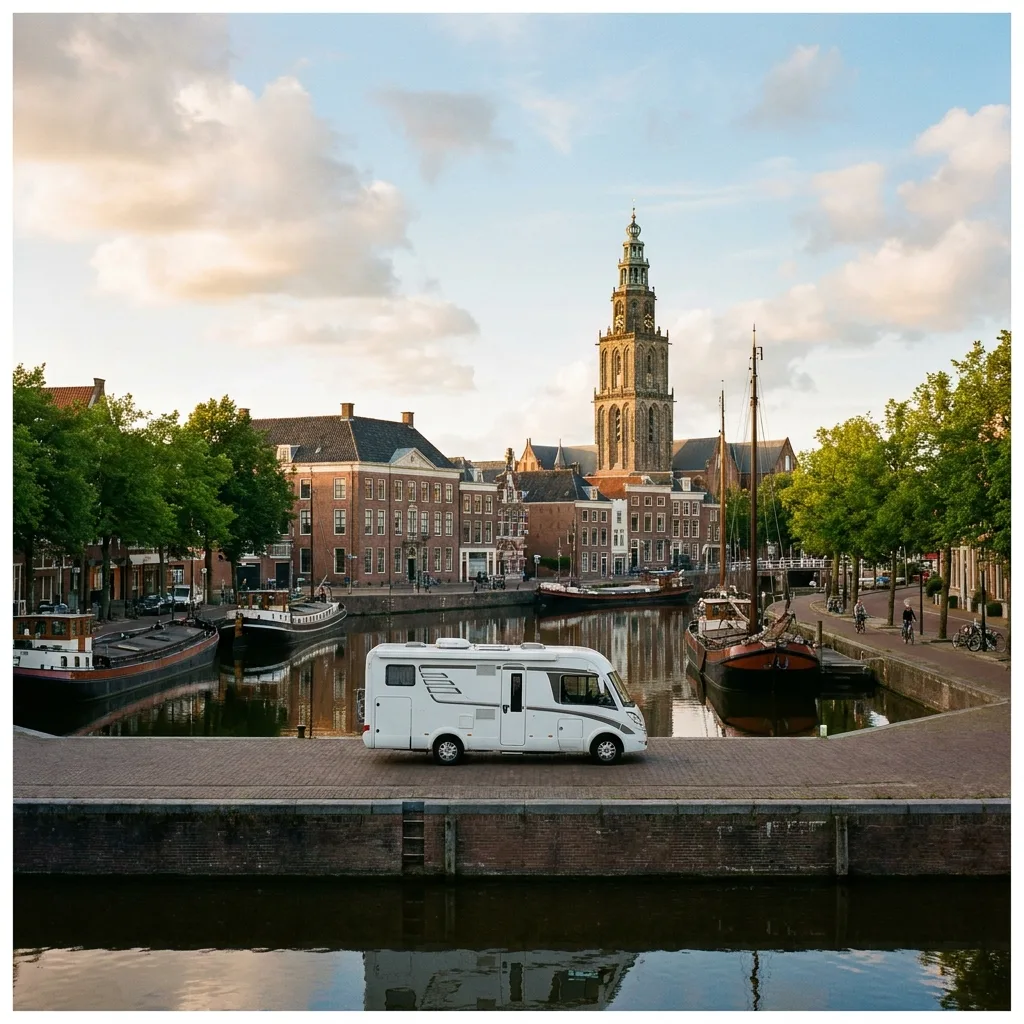
Lauwersmeer National Park
Until 1969 this water was open to the Wadden Sea; since the dam went in, the former Lauwerszee has become a brackish lake of mudflats, reed fringes and salt marsh. It is a national park now and one of the richest bird areas in the country: in autumn and winter tens of thousands of geese and waders drop in, and the hides along the shore let you watch them without putting them up. Konik horses and Scottish Highland cattle graze the land and keep it open, so very little woodland takes hold. With almost no street lighting for miles in any direction, the park is recognised as a Dark Sky Park, and on a clear moonless night you can trace the Milky Way with the naked eye. On the north side lies the fishing harbour of Lauwersoog, where the ferry to Schiermonnikoog leaves. This is open, windy country with very little to break the weather, so pick a sheltered spot for the night, and aim for a moonless sky if the stars are the reason you came.
Stop 9
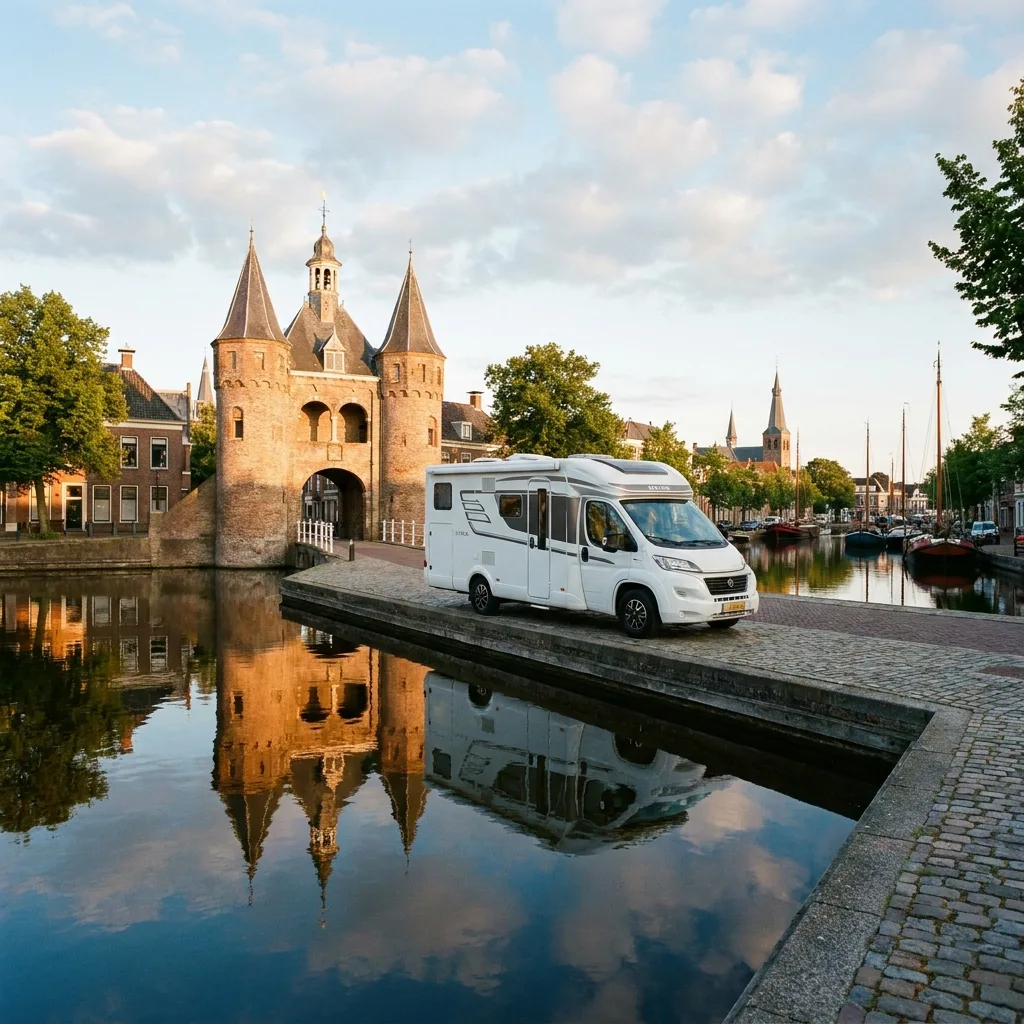
Groningen
Groningen is the big city of the northern Netherlands, and it has so many students that the streets feel young and are dominated by bicycles. The Martini Tower rises almost a hundred metres above the Grote Markt and can be climbed to a gallery with a view over the city and the flat farmland of mounds and dykes around it. The Groninger Museum sits on an island in the canal in front of the station, split into brightly coloured pavilions that are a sight in themselves. On the market square stands Forum Groningen, a cultural building with a library, cinemas and a roof terrace that looks out free of charge over the rooftops. The centre is compact and largely closed to through traffic, so leave the motorhome at a park and ride site on the ring road and take the bus in. Behind it all lies the Noorderplantsoen, the park where half the city ends up on the grass the moment the weather allows.
Stop 10
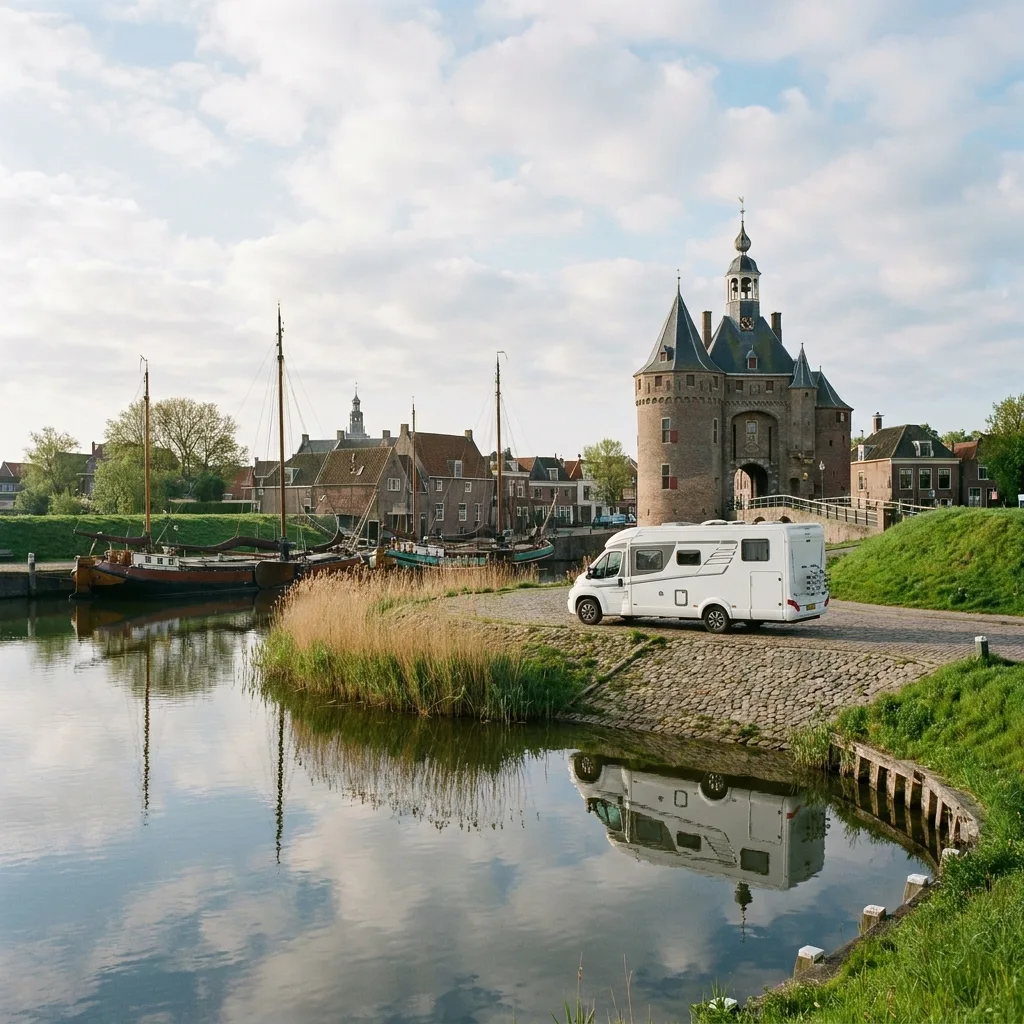
Sneek & the Frisian Lakes
Sneek forms the beating heart of Frisian waterway culture and is inextricably linked with the surrounding lakes. The iconic Waterpoort marks the entrance to the historic city center, where canals and quays define the streetscape. At the Frisian Maritime Museum, the rich history of sailing and fishing in this region becomes tangible. The expansive waters of the nearby Sneekermeer attract sailors and watersports enthusiasts from all corners of the globe. Along the lake shores, reed beds and panoramic views alternate in a typical Dutch polder landscape. Small waterside villages offer tranquil mooring spots and charming terraces directly on the quay. The area invites long bike rides over the dikes or relaxed hours by the water.
Stop 11
Enkhuizen
Enkhuizen lived from herring and the East India trade, then slipped into the background when the Zuiderzee was closed off in 1932, which is largely why its seventeenth-century streets survive. The Zuiderzeemuseum has an indoor section by the harbour and an open-air museum where whole streets, a smokehouse, a rope walk and a church from vanished fishing villages have been rebuilt; a boat runs there from the car park on the edge of town. The Drommedaris of 1540 still guards the entrance to the old harbour and now serves as a cultural venue. Botters and klippers with dark sails lie along the quays. For motorhome travellers this makes a practical stop on the IJsselmeer, with summer ferries across the water to Stavoren and Urk.
Stop 12
Alkmaar
Most visitors come to Alkmaar for the cheese market on the Waagplein, staged on Friday mornings through the summer season: carriers in white suits and coloured straw hats trot stacks of round cheeses to the weigh house on wooden barrows. It is a demonstration of an old trade rather than real business, the square fills early, and anyone who wants a view from the front should arrive well before the start. The weigh house itself, with its carillon and mechanical horsemen, holds the Dutch Cheese Museum. Away from the square, Alkmaar turns out to be a pleasant canal town with the Grote of Sint-Laurenskerk, the quays of the Bierkade and a ring of moats plied by tour boats. In 1573 it was the first Dutch city to hold off a Spanish siege. Park outside the ring of canals and walk the last few streets.
Ready to hit the road?
We'll email you a personal travel proposal within 24 hours — motorhome, route and full cost overview included. Save €400–€800 on average vs. a travel agency.
No packages, no middlemen. Learn how it works
Camproads gave me a lot of inspiration for our campervan trip. The routes are beautiful, with a good balance of nature and city life, and the route generator made planning super easy. It's also really handy that there are so many good camping options at the locations, and that you can easily find the campervan that suits your needs and compare prices. This way, we can plan everything ourselves and book the campervan directly with the rental company. That's much cheaper than an organized trip!
Michiel van de Bunt
February 2026
What a difference from how I used to plan trips. Through Camproads, I put together a complete campervan trip in just a few minutes. It's so easy to use, and you can customize everything to your liking. The ability to choose your travel pace makes it even more enjoyable, especially now that we're traveling with a baby for the first time.
Alieke Zelhorst
February 2026