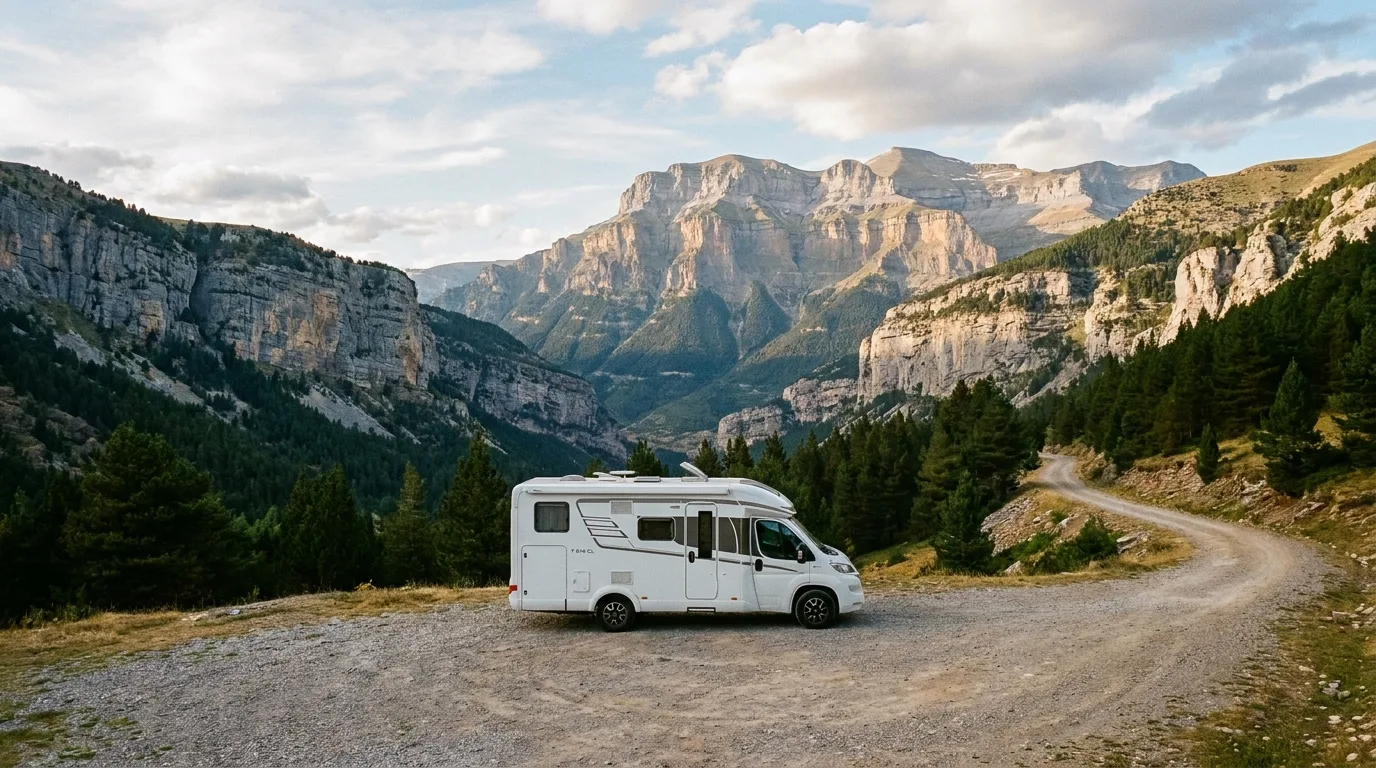
Take this trip by motorhome
Save €400–€800 on average vs. a travel agency
Duration
x daysDistance
1290 km
stops
13
Choose a date and duration that fits your preferences
About this route
Highlights
- ✦Explore the semi-desert Bardenas Reales with its unique formations
- ✦Wander through the medieval villages of Sos del Rey Católico and Aínsa
- ✦Discover the impressive mountain landscapes of Ordesa y Monte Perdido
- ✦Drive through the green Valle de Tena and enjoy mountain panoramas
- ✦Experience Val d'Aran's unique culture and Aigüestortes lakes
- ✦Visit the historic cities of Zaragoza and Hondarribia
- ✦Begin and end your campervan adventure in Basque Irún
The route
Stop 1
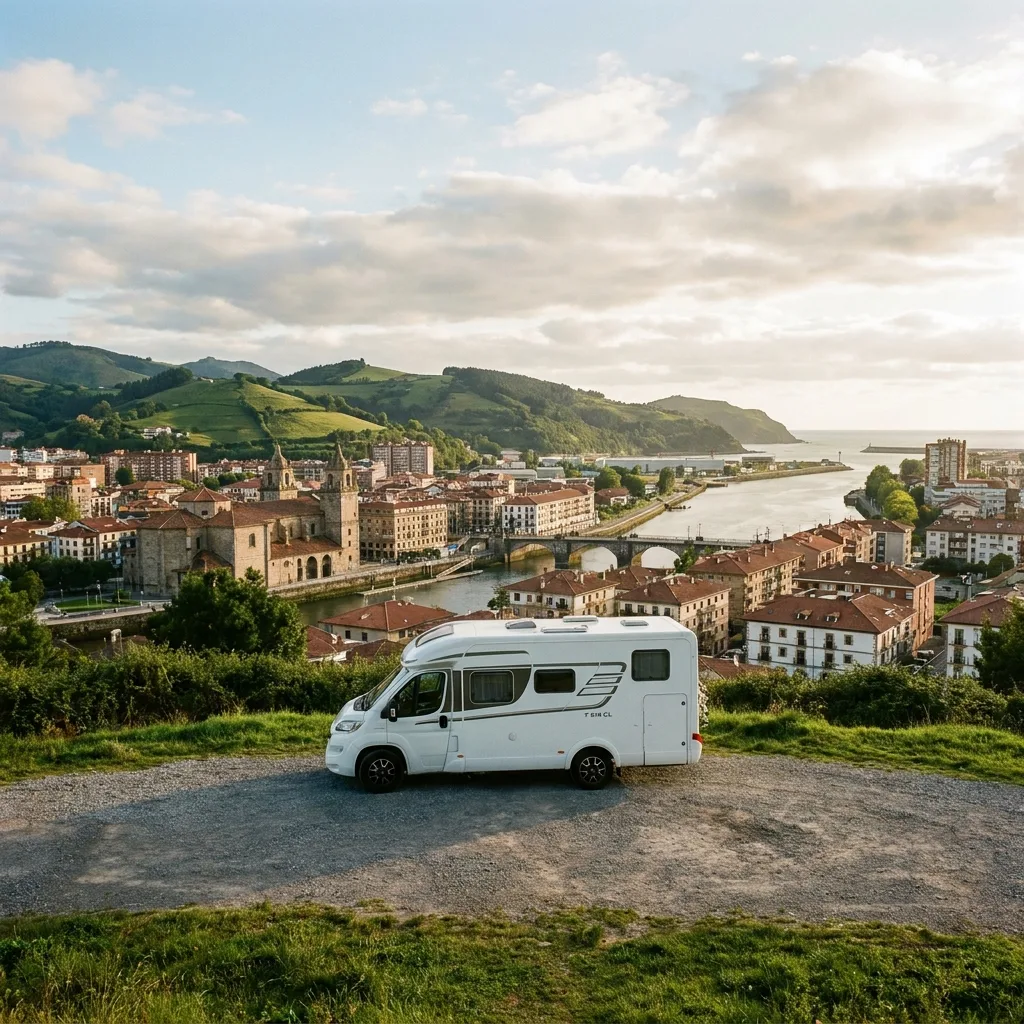
Irún
Irún is a border town with a unique island that changes administration between Spain and France every six months. At the Museo Romano Oiasso, you can discover archaeological finds from Roman times. Those who walk up to Monte San Marcial enjoy a panoramic view of the hills and the Basque coastline. The lively city on the Bidasoa and the Bay of Txingudi is a melting pot of cultures; from Monte San Marcial, a panoramic vista unfolds.
Stop 2
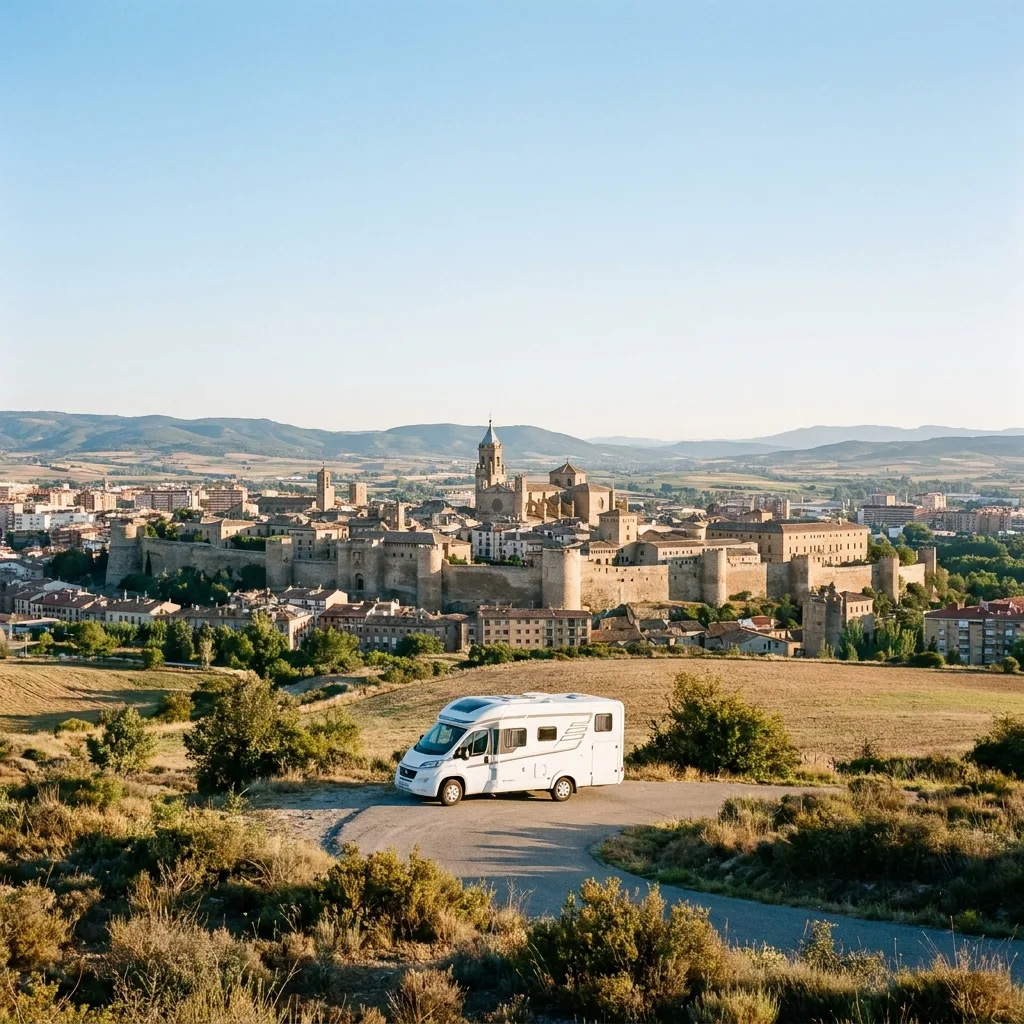
Pamplona
Pamplona is the capital of Navarre and is known for the Gothic Catedral de Pamplona from the 14th and 15th centuries. In the Casco Antiguo, the Plaza del Castillo forms the central square, while the Ciudadela de Pamplona is a 16th-century star-shaped fortress that now serves as a city park. You can explore the narrow streets of the old town for local Navarrese gastronomy and walk along the massive fortifications that surround the city.
Stop 3
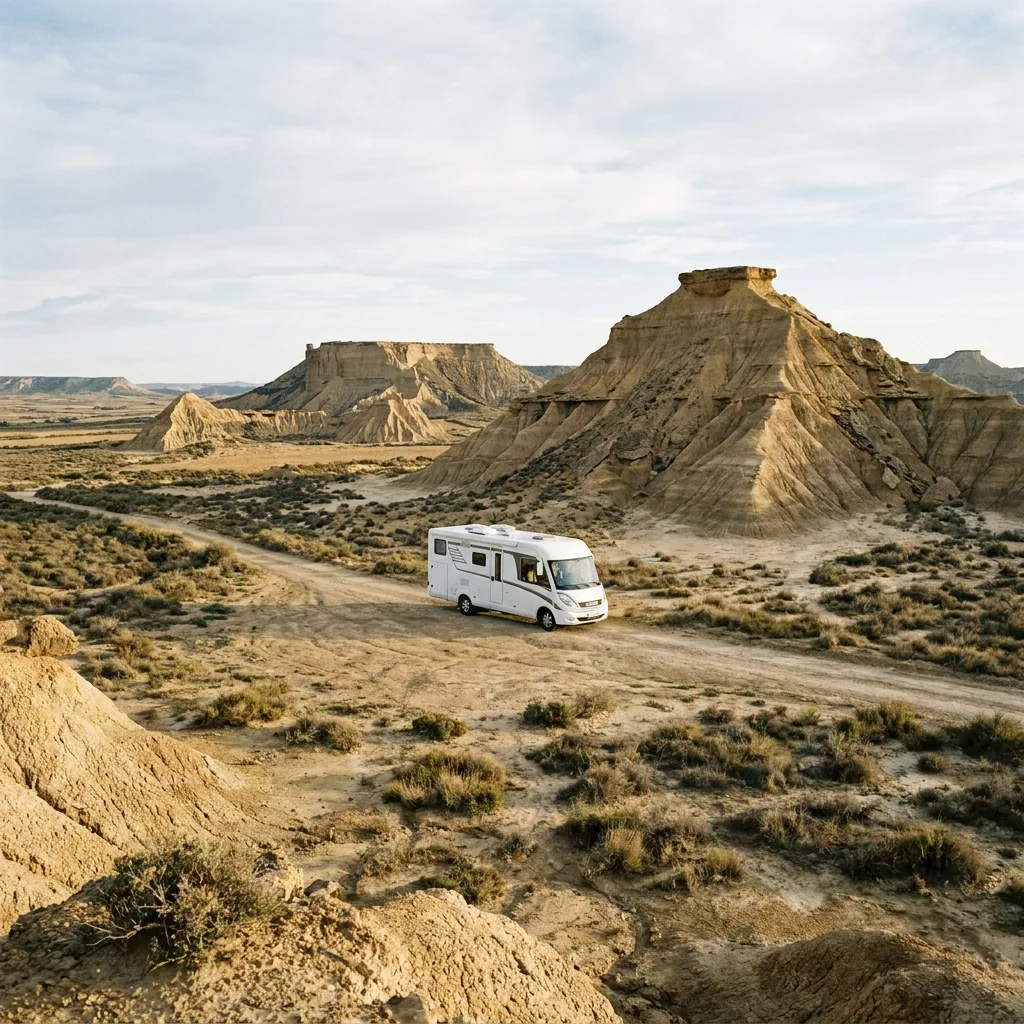
Bardenas Reales
Bardenas Reales is a 42,000-hectare semi-desert in Navarra, characterized by clay and sandstone formations. This UNESCO biosphere reserve features table mountains and ravines, with the Castildetierra rock formation as its natural symbol. You can explore the area via unpaved roads along the Pisquerra and Cabezo de Cortinillas, or use the marked trails for hikers and cyclists outside the military base.
Stop 4
Sos del Rey Católico
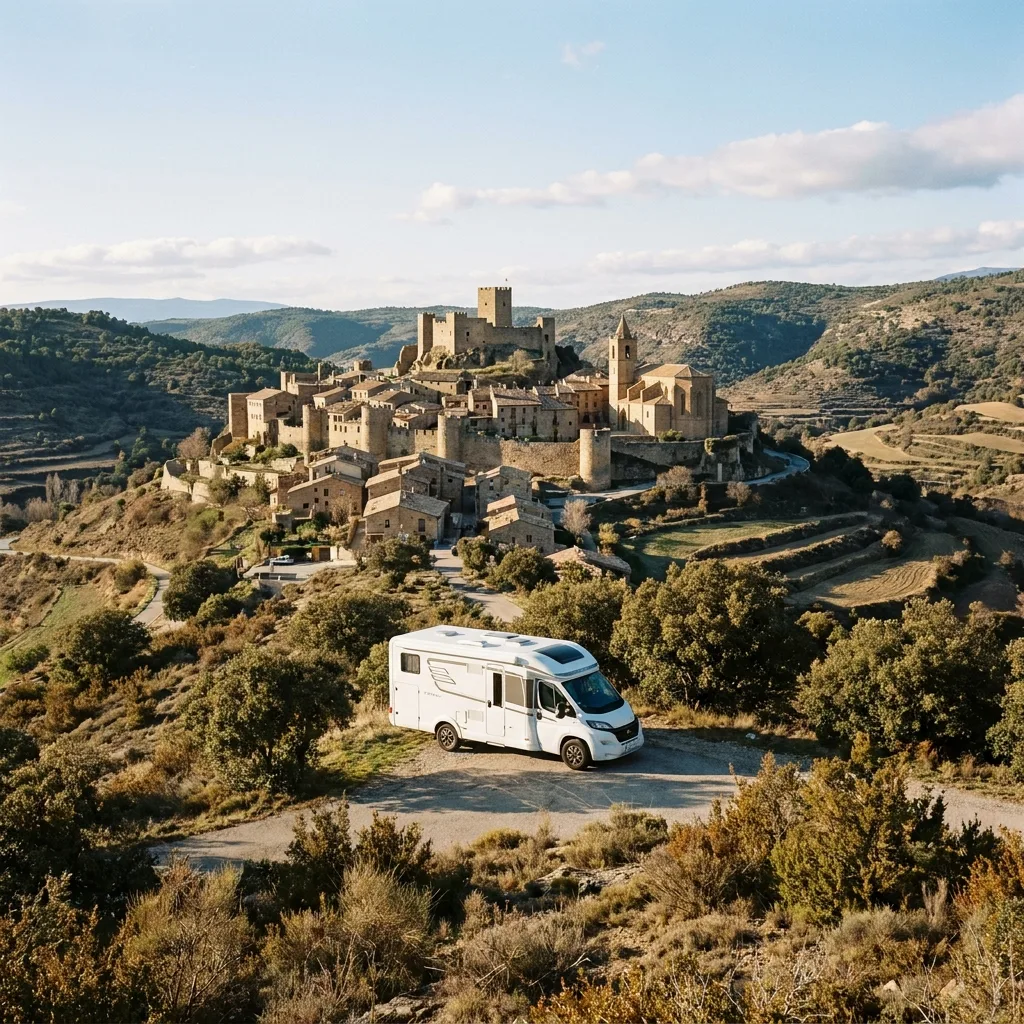
Sos del Rey Católico is a fortified village on a ridge in the Aragón region and forms one of the historic Cinco Villas. Here you can visit the fifteenth-century Palacio de Sada, the birthplace of King Fernando II de Aragón, and the Romanesque Iglesia San Esteban. The core is enclosed by medieval city walls with seven entrance gates that open onto narrow alleys and the central Plaza de la Villa.
Stop 5
Jaca
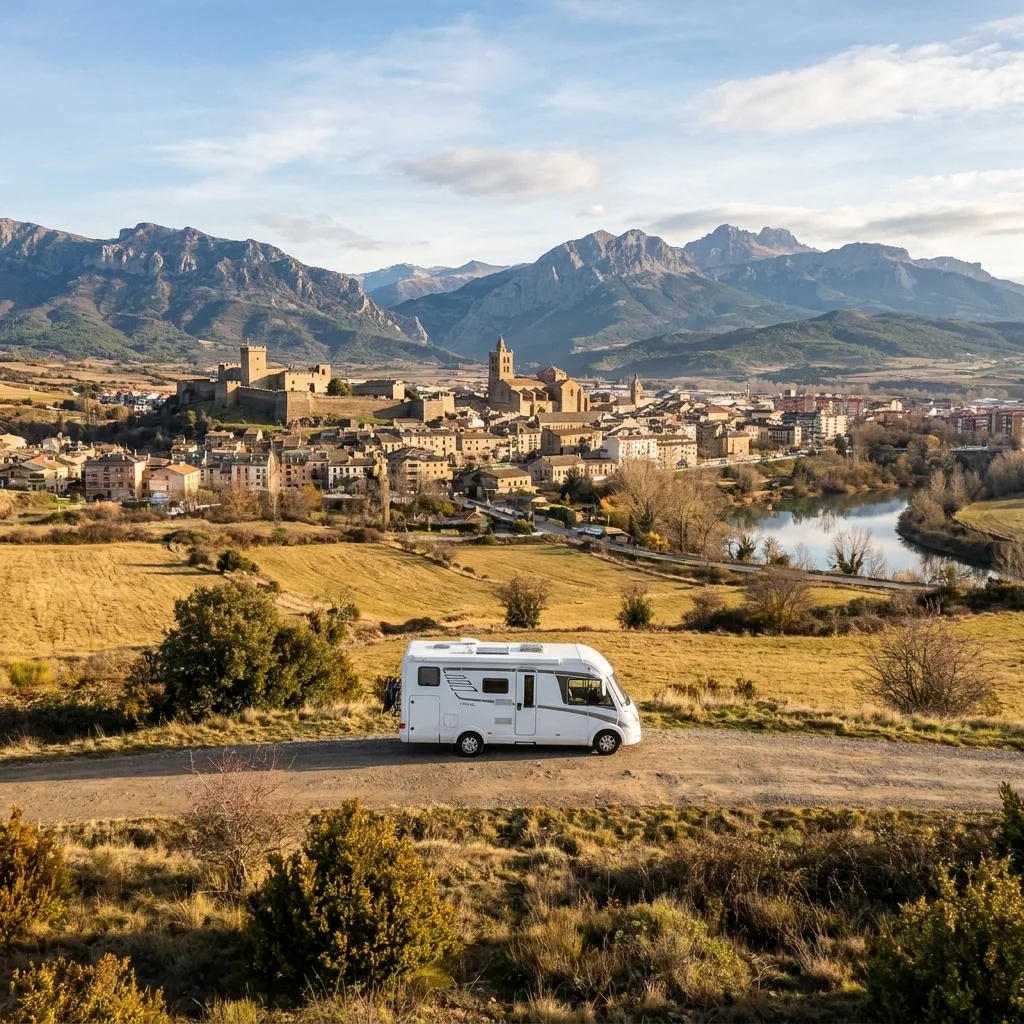
Jaca brings the history of the Pyrenees to life, with an intact sixteenth-century fortress and one of Spain's oldest Romanesque cathedrals. In the Ciudadela de Jaca, a pentagonal fortress, you experience the region's military past. In the center stands the imposing Catedral de Jaca, showcasing early Romanesque architecture. From the hill of Fuerte de Rapitán, you overlook the surrounding valley and the snow-capped peaks. The lively city combines culture and nature, with the Pyrenees always on the horizon.
Stop 6
Valle de Tena
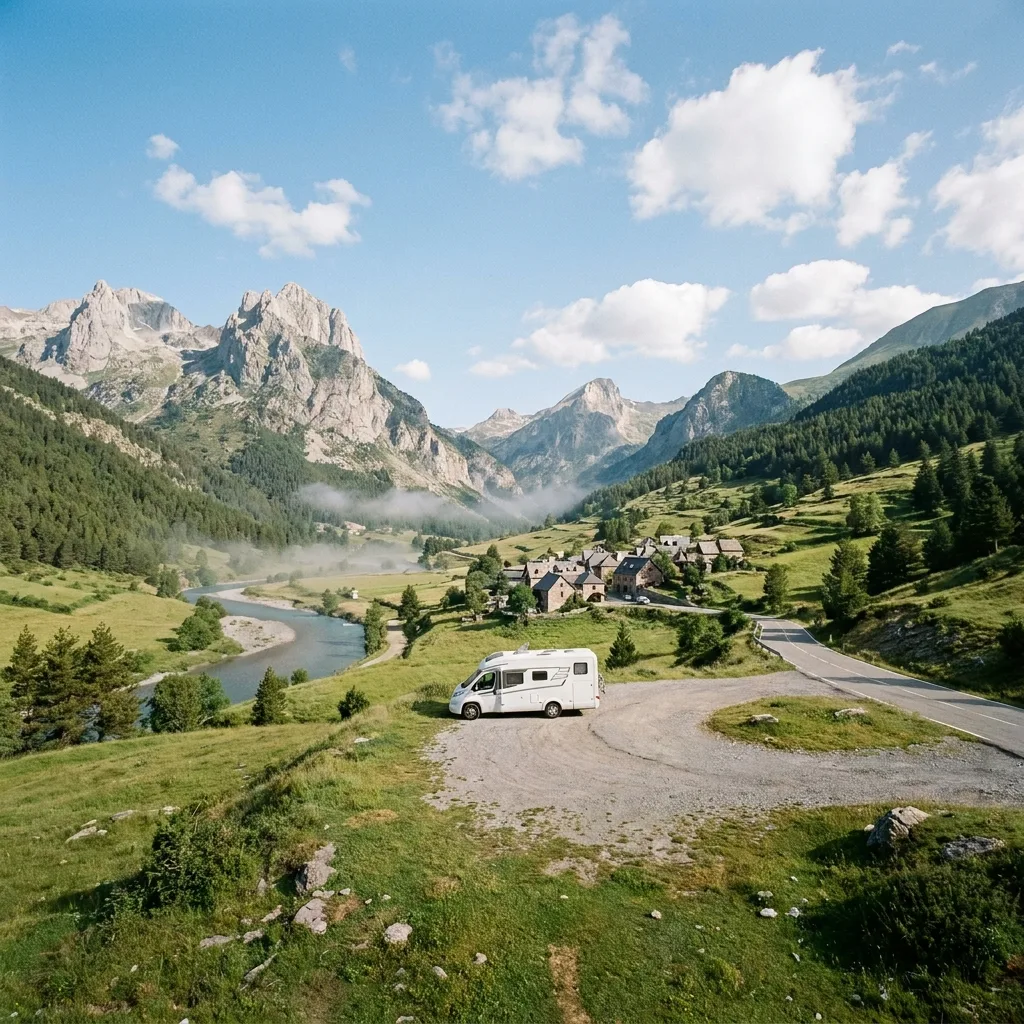
The Valle de Tena showcases a glacial valley, surrounded by mountain peaks exceeding 3000 meters. The clear water of the Embalse de Lanuza reservoir reflects the surrounding mountains. Right next to it lies Sallent de Gállego, a charming village with traditional stone and slate architecture. From Formigal-Panticosa, hiking trails lead to the clear mountain lakes, locally called ibones. In this peaceful environment, you will find the silence of the mountains, with the Embalse de Lanuza as its central point.
Want to actually take this trip?
We put together the complete package for you — motorhome, ferry, campsites — in one personal email.
Stop 7
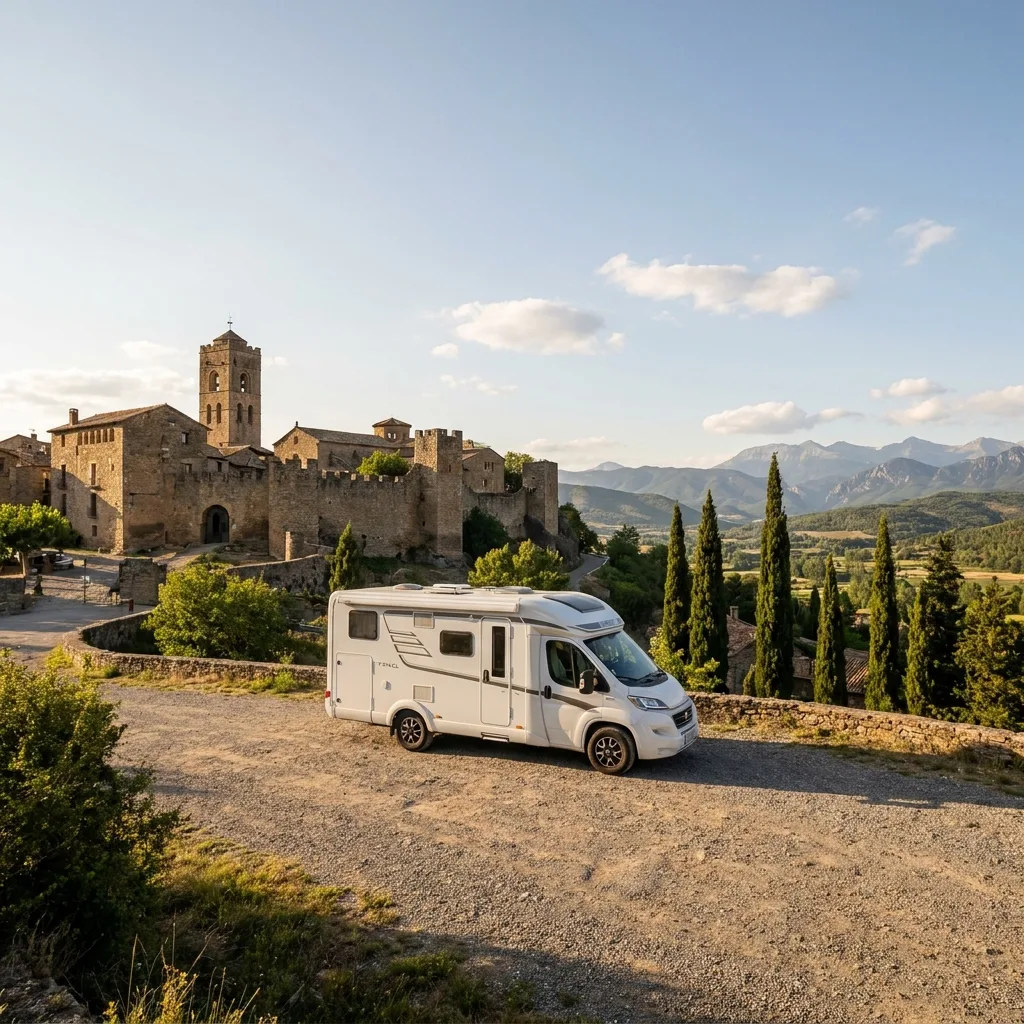
Torla
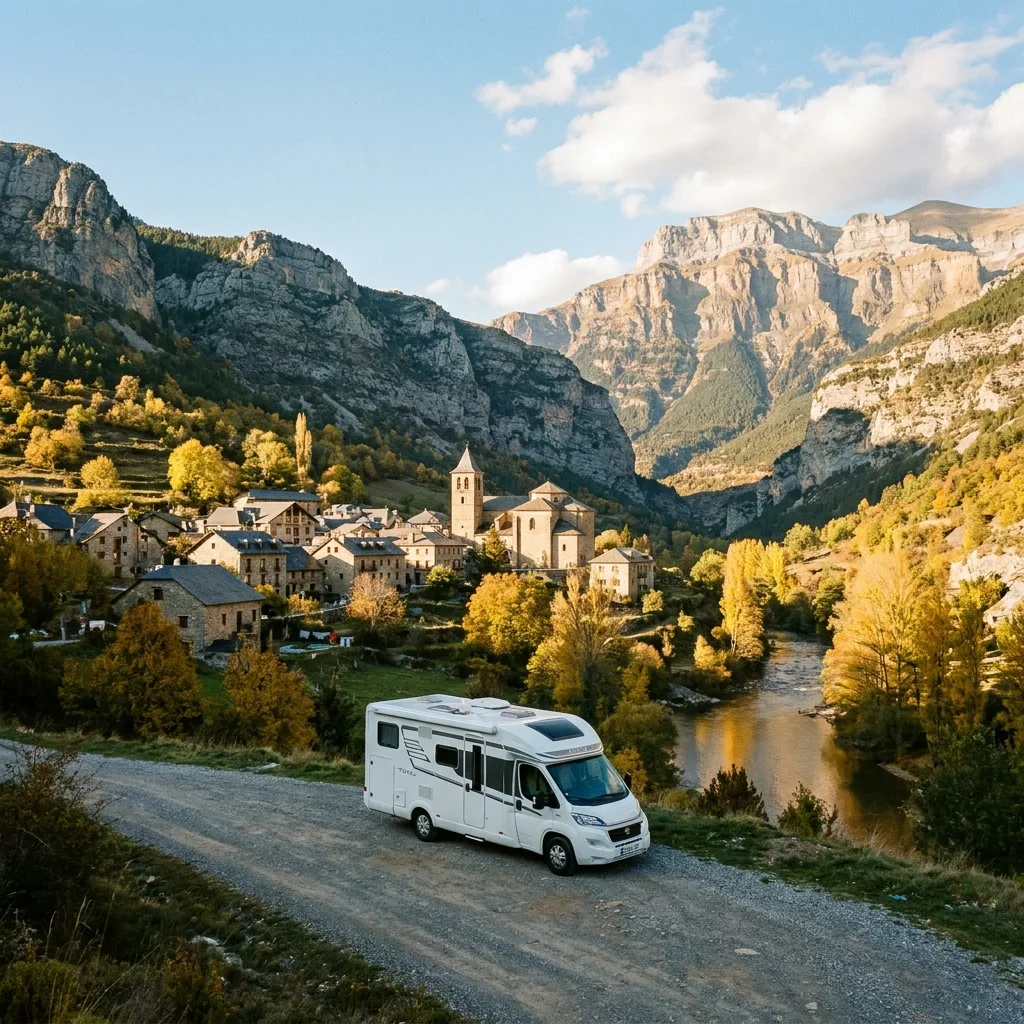
Torla is a charming mountain village where you wander through narrow streets between medieval stone houses and slate roofs. The Iglesia San Salvador, with its robust stone walls, stands out beautifully against the imposing limestone rock faces. From the stone Puente de los Navarros, you overlook the Ara river and the green entrance to the Valle de Bujaruelo. The tranquil atmosphere of the village is shaped by the imposing mountain peaks that emerge everywhere, part of the Ordesa y Monte Perdido National Park.
Stop 8
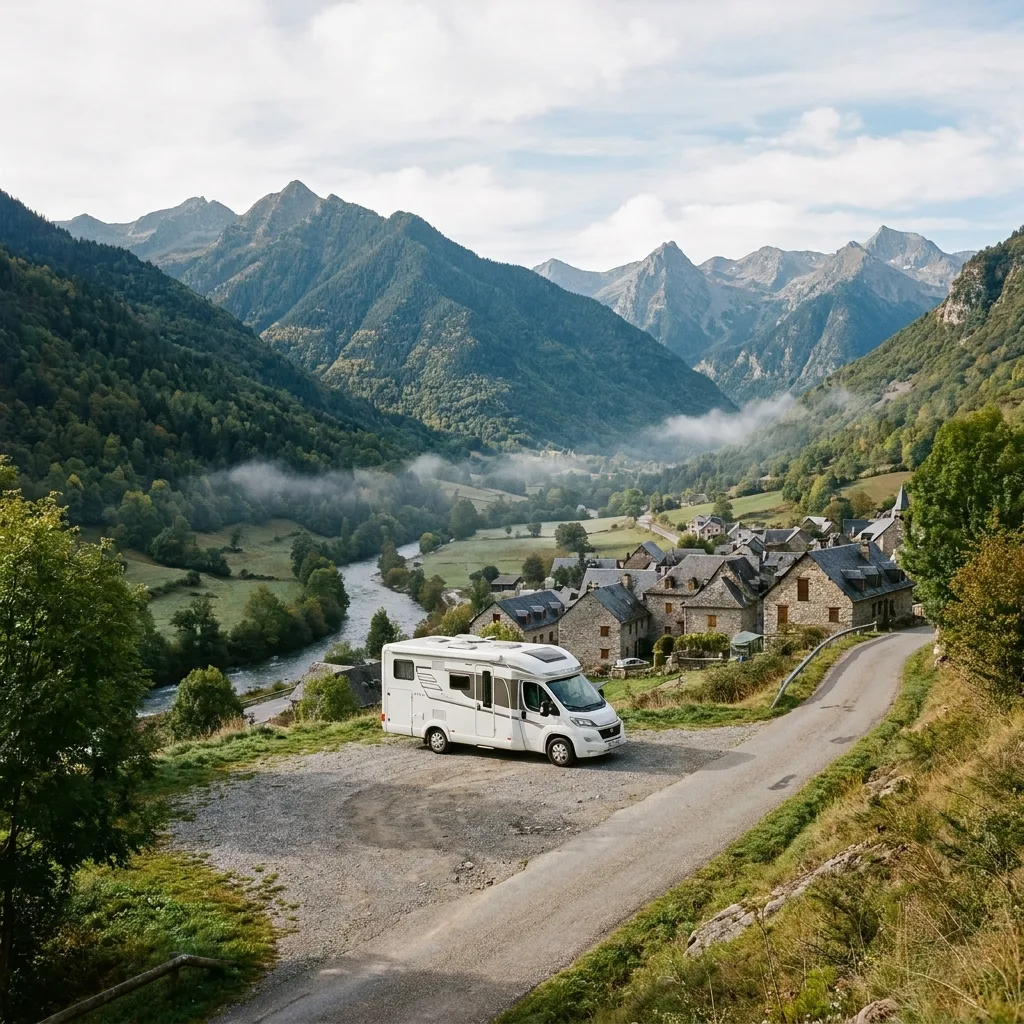
Aínsa
Aínsa is a medieval fortified town where history comes alive in its walled center. You can wander through narrow streets and across the atmospheric Plaza Mayor, dominated by the eleventh-century Castillo de Aínsa and the Romanesque Iglesia de Santa María. From the old city walls, you look out over the turquoise Embalse de Mediano and the surrounding mountain peaks. The town's tranquil atmosphere is enhanced by the panoramic views over the confluence of the Cinca and Ara rivers.
Stop 9
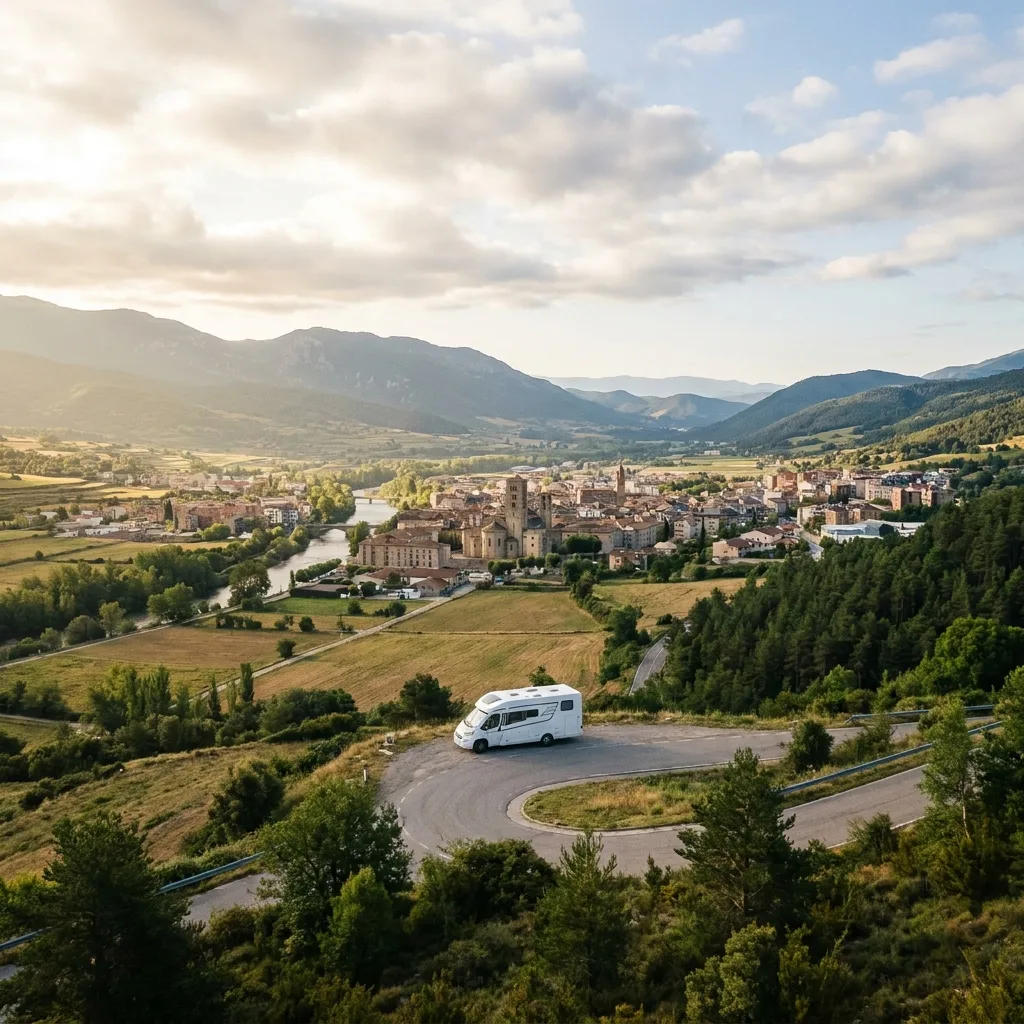
Val d'Aran
Val d'Aran surprises with its distinctive architectural style and the rugged beauty of the Pyrenees. In the capital Vielha, you'll discover stone houses with characteristic slate roofs. Hike to the twelfth-century Santuari de Montgarri, a secluded pilgrimage site amidst the mountains. Around Baqueira-Beret, explore extensive mountain trails leading to peaks above 2500 meters. The stone villages are nestled between high mountain peaks, a reflection of the robust landscape where the Garonne originates.
Stop 10
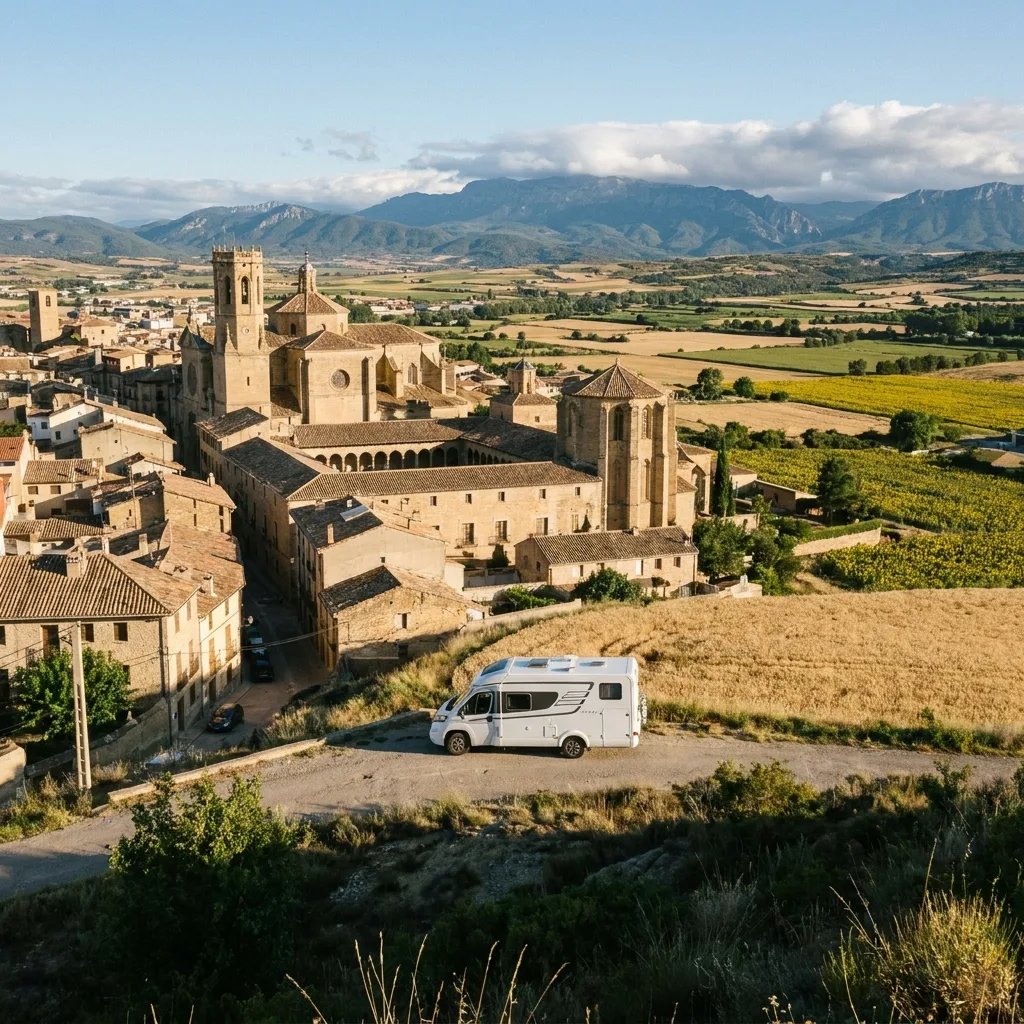
La Seu d'Urgell
La Seu d'Urgell is located in the Catalan Pyrenees at the confluence of the rivers Segre and Valira, near the border with Andorra. The 12th-century Catedral de Santa Maria d'Urgell is the only fully Romanesque cathedral in Catalonia. In the Parc del Segre, you can use the Olympic whitewater course for kayaking, while the Museu Diocesà displays religious art treasures. From the city, you can walk directly into the Cadí-Moixeró Natural Park.
Stop 11
Huesca
Huesca, capital of its province, borders the Ebro Valley and the Pyrenees. Its medieval centre features the 13th-century Gothic Catedral de Huesca and the 12th-century monastery San Pedro el Viejo, housing the royal tombs of Alfonso I and Ramiro II. Stroll through Parque Miguel Servet or buy local products from Aragón in the narrow streets.
Stop 12
Hondarribia
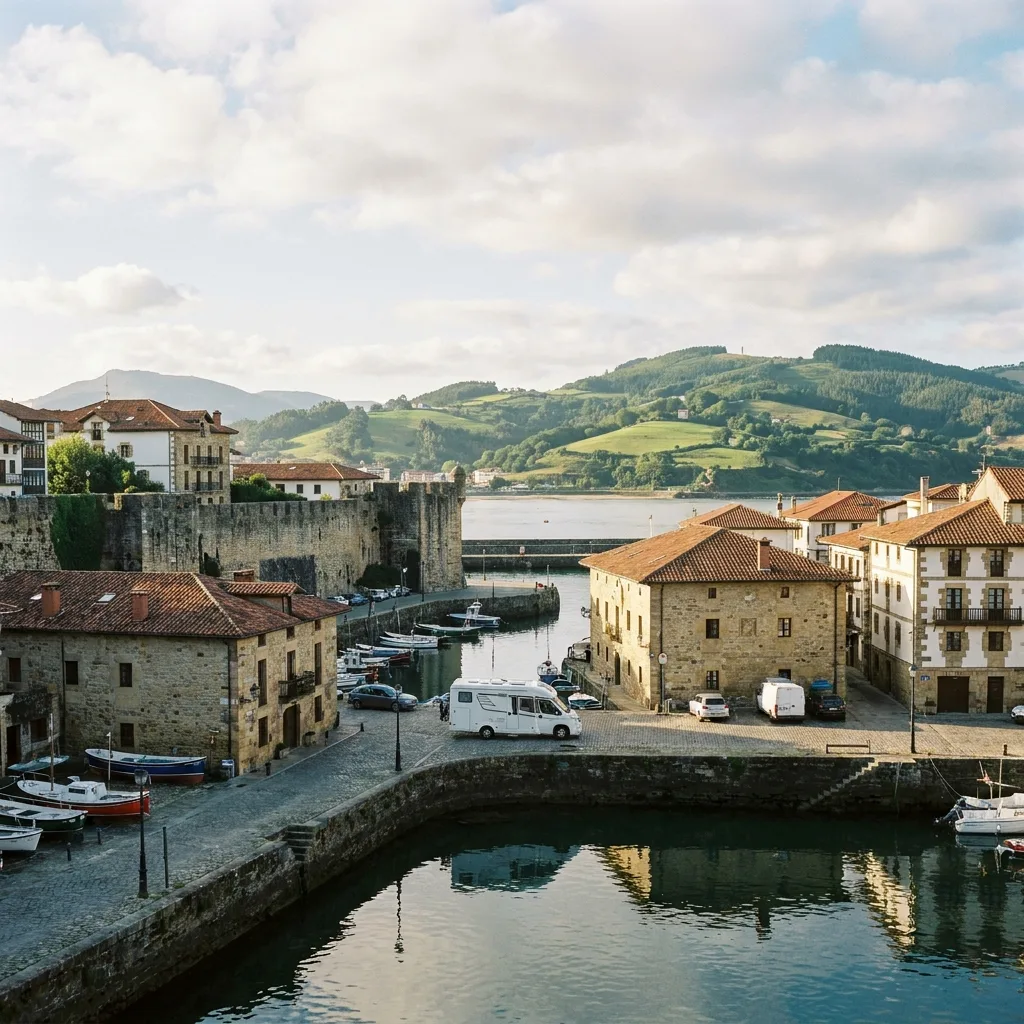
Hondarribia sits at the Bidasoa mouth, opposite the French border. Its Casco Antiguo has medieval city walls and Castillo Carlos V, a tenth-century fortress. La Marina district has whitewashed houses with colourful wooden balconies for Basque pintxos. A spacious sandy beach lies on the town's edge, along the sheltered bay.
Stop 13
Irún
Irún is a border town with a unique island that changes administration between Spain and France every six months. At the Museo Romano Oiasso, you can discover archaeological finds from Roman times. Those who walk up to Monte San Marcial enjoy a panoramic view of the hills and the Basque coastline. The lively city on the Bidasoa and the Bay of Txingudi is a melting pot of cultures; from Monte San Marcial, a panoramic vista unfolds.
Ready to hit the road?
We'll email you a personal travel proposal within 24 hours — motorhome, route and full cost overview included. Save €400–€800 on average vs. a travel agency.
No packages, no middlemen. Learn how it works
Camproads gave me a lot of inspiration for our campervan trip. The routes are beautiful, with a good balance of nature and city life, and the route generator made planning super easy. It's also really handy that there are so many good camping options at the locations, and that you can easily find the campervan that suits your needs and compare prices. This way, we can plan everything ourselves and book the campervan directly with the rental company. That's much cheaper than an organized trip!
Michiel van de Bunt
February 2026
What a difference from how I used to plan trips. Through Camproads, I put together a complete campervan trip in just a few minutes. It's so easy to use, and you can customize everything to your liking. The ability to choose your travel pace makes it even more enjoyable, especially now that we're traveling with a baby for the first time.
Alieke Zelhorst
February 2026