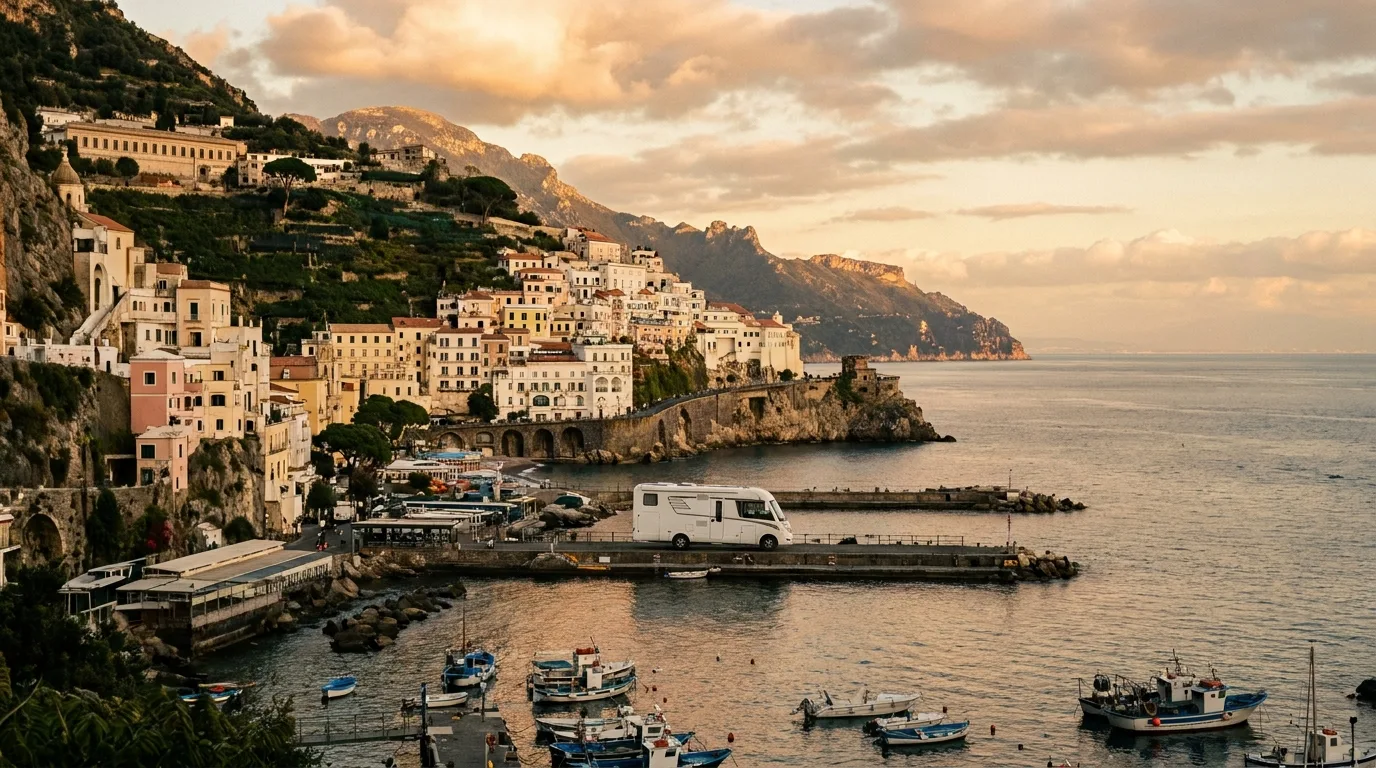
Take this trip by motorhome
Save €400–€800 on average vs. a travel agency
Duration
x daysDistance
1263 km
stops
14
Choose a date and duration that fits your preferences
About this route
Highlights
- ✦Explore ancient Rome, Pompeii and the Sassi of Matera
- ✦Wander through the whitewashed streets of Sperlonga and Sorrento
- ✦Discover the vibrant culture of Naples and the trulli of Alberobello
- ✦Admire the Greek temples of Paestum and the baroque of Lecce
- ✦Enjoy the Adriatic coast at Polignano a Mare and Salento
- ✦Visit Trani's cathedral and the mysterious Castel del Monte
- ✦Conclude your journey in Gargano National Park and Vieste
The route
Stop 1
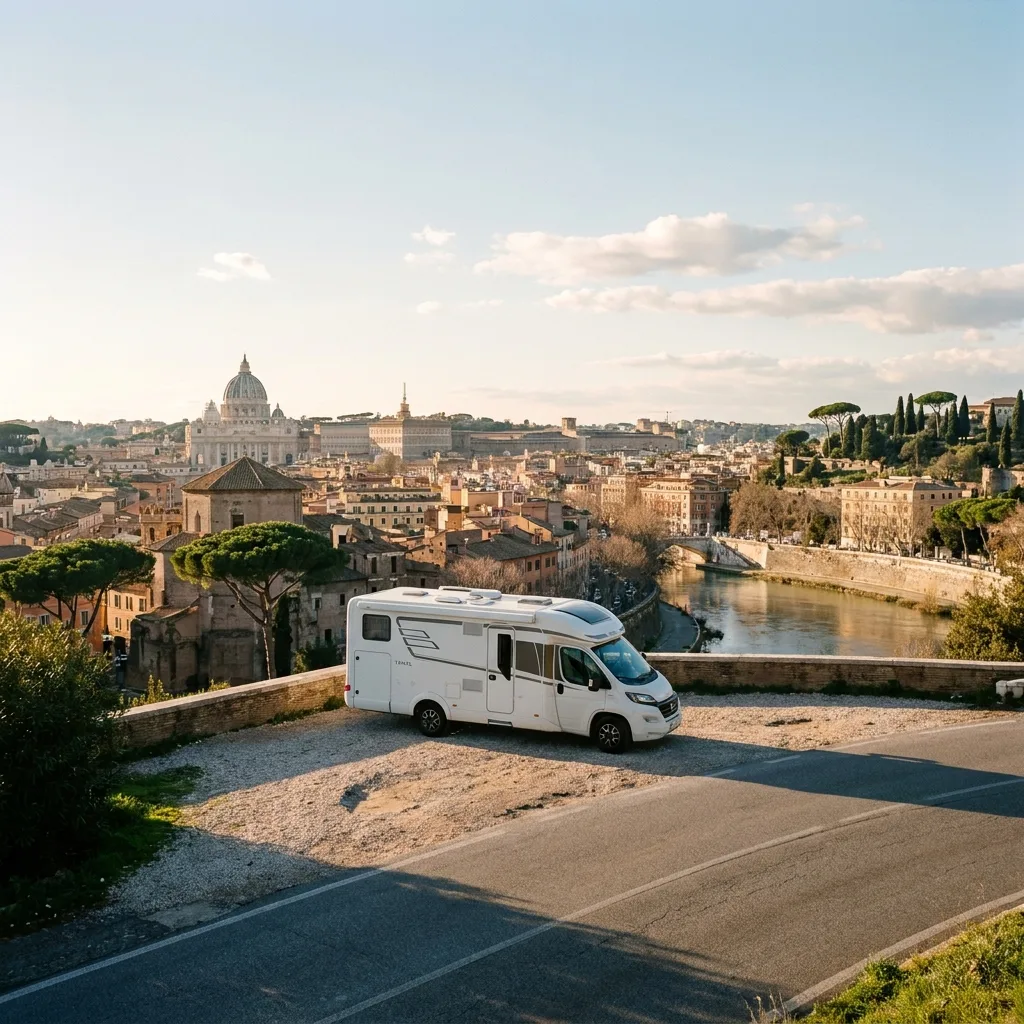
Rome
Rome is a city where the grandeur of the ancient empire and the Renaissance converge. You can admire the Colosseum, an amphitheater from the first century AD. In the center stands the Pantheon with its unique open dome. The eighteenth-century Fontana di Trevi attracts many visitors with its baroque splendor. Wander through the narrow, lively streets of Trastevere or find tranquility in the green park Villa Borghese. The hustle and bustle of the city blends here with ancient history.
Stop 2
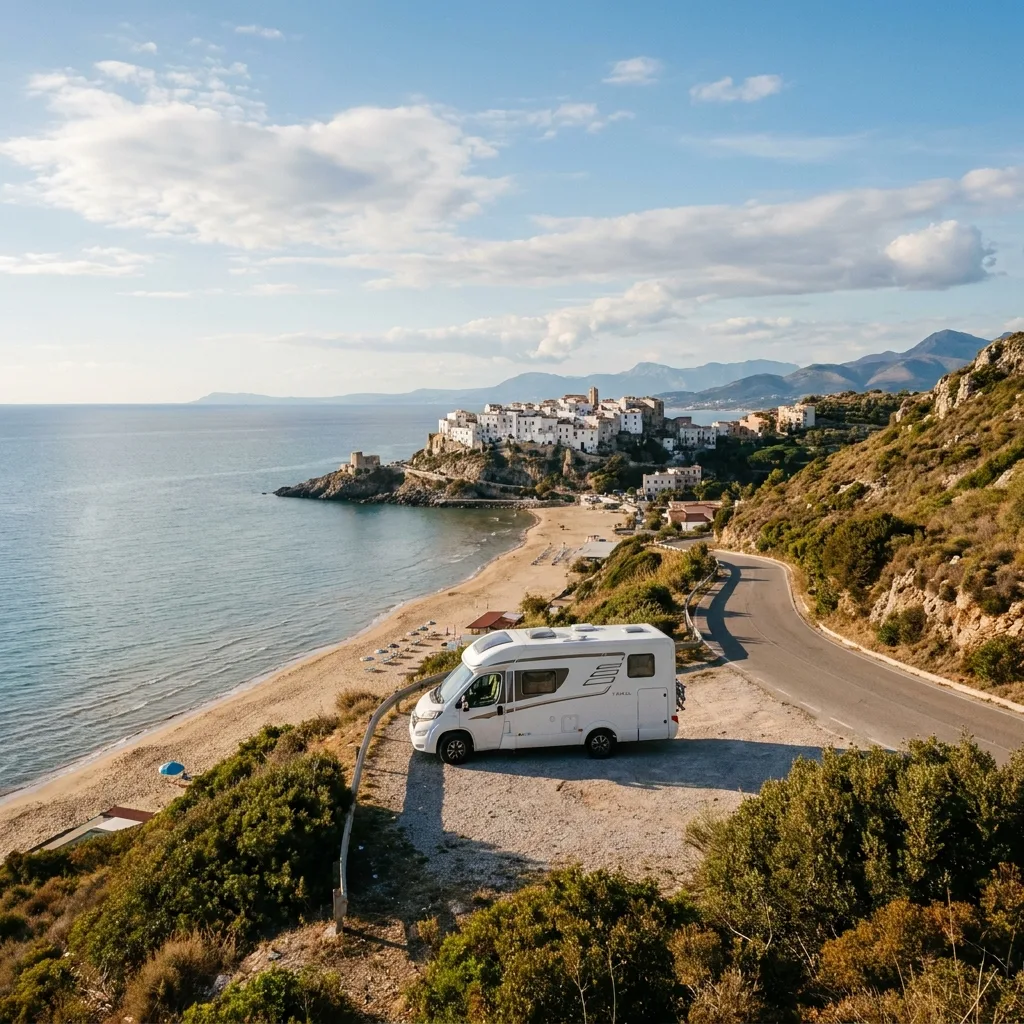
Sperlonga
Sperlonga surprises with its picturesque whitewashed houses, perched high on a rocky promontory on the Tyrrhenian Sea. You explore the Villa di Tiberio, an imperial summer residence from the first century. The museum displays ancient sculptures from the Grotta di Tiberio. Near the marina stands the Torre Truglia. Along the coastal paths, you discover sandy beaches at the foot of the cliffs and enjoy the relaxed atmosphere with views of the Pontine Islands.
Stop 3
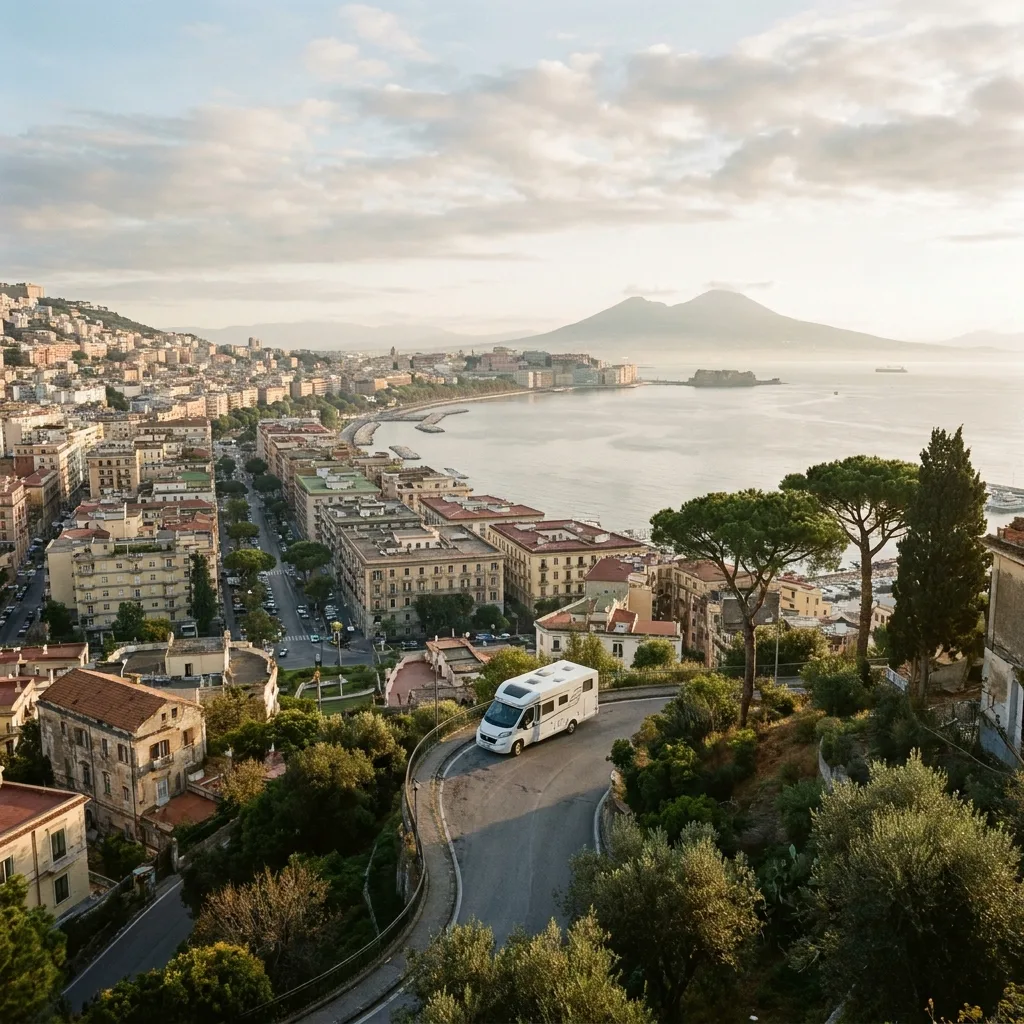
Naples
Naples is located at the foot of Mount Vesuvius on the Tyrrhenian Sea and has a historic center that is a UNESCO World Heritage site. At the Museo Archeologico Nazionale, you can view the collection of Roman finds from Pompeii, while Napoli Sotterranea reveals an underground network of ancient aqueducts. On the coastline, Castel dell'Ovo, a twelfth-century fortress on the Megaride peninsula, dominates.
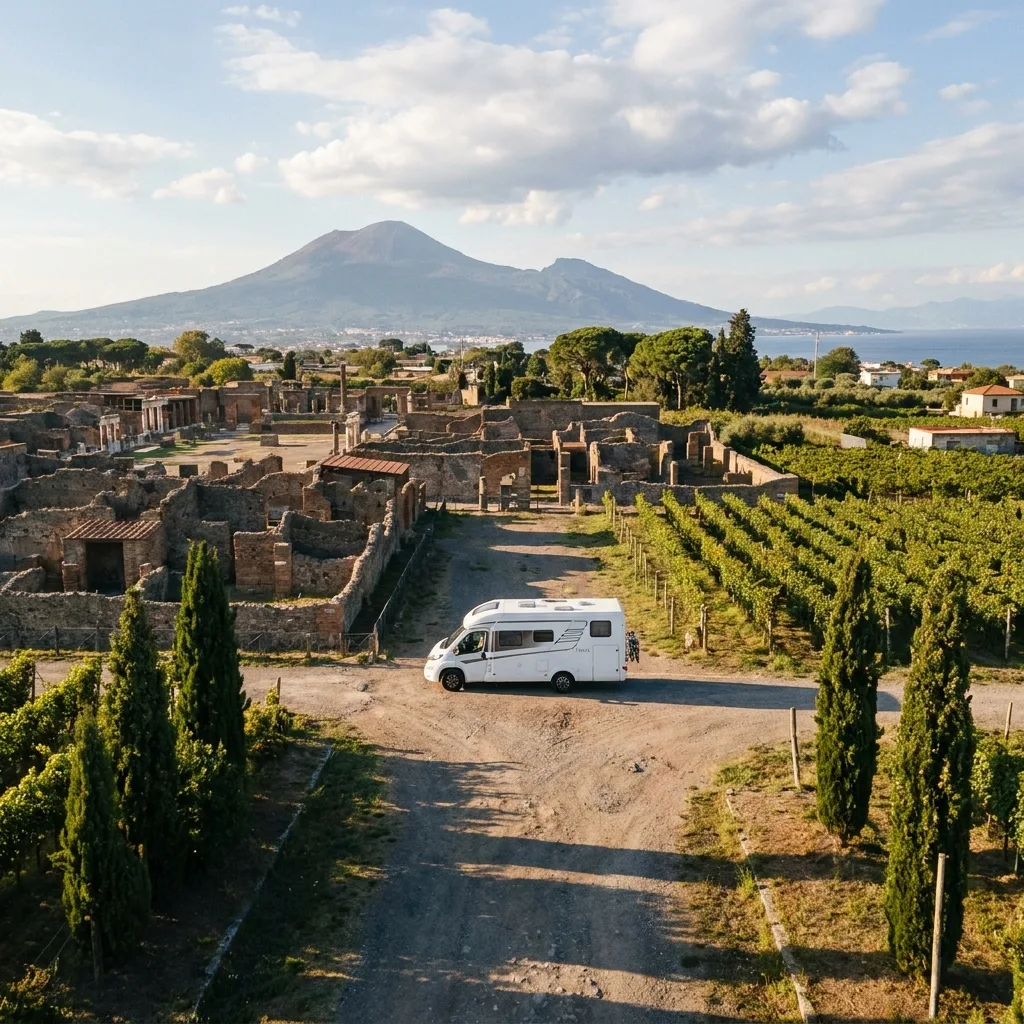
Stop 4
Pompeii
Pompeii showcases the fascinating remains of a Roman city, suddenly buried under the ash of Vesuvius in 79 AD. In the Parco Archeologico Pompei, you walk past amphitheatres and houses that depict Roman life. The Villa dei Misteri fascinates with its vivid frescoes. From Vesuvius, you enjoy a panoramic view over the Bay of Naples. The extensive site makes history tangible, with Vesuvius prominent on the horizon.
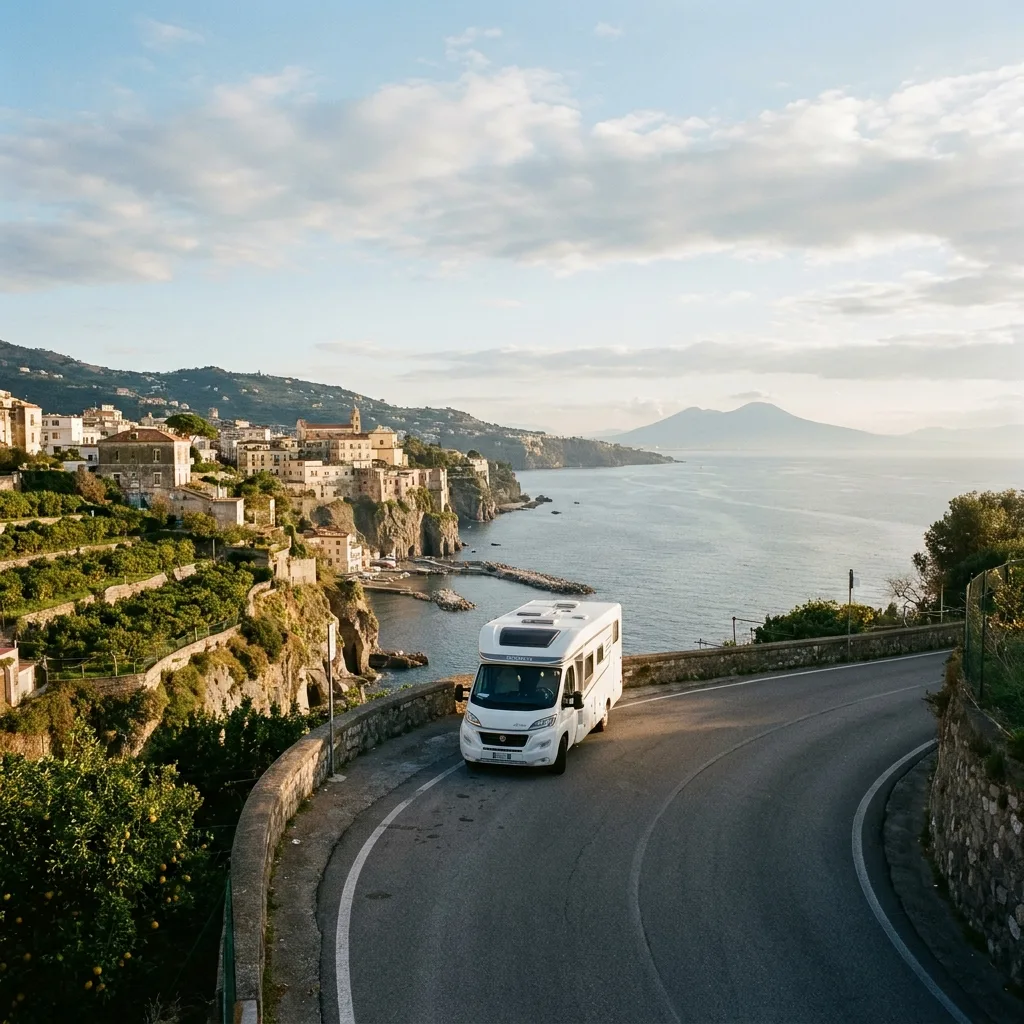
Stop 5
Sorrento
Sorrento is located on fifty-meter high tuff cliffs above the Gulf of Naples. From Piazza Tasso, you can look into the Vallone dei Mulini gorge, where ruins of thirteenth-century mills stand. You can walk through the old town to the fishing harbor Marina Grande or visit the gardens of Villa Comunale for a view of Mount Vesuvius.
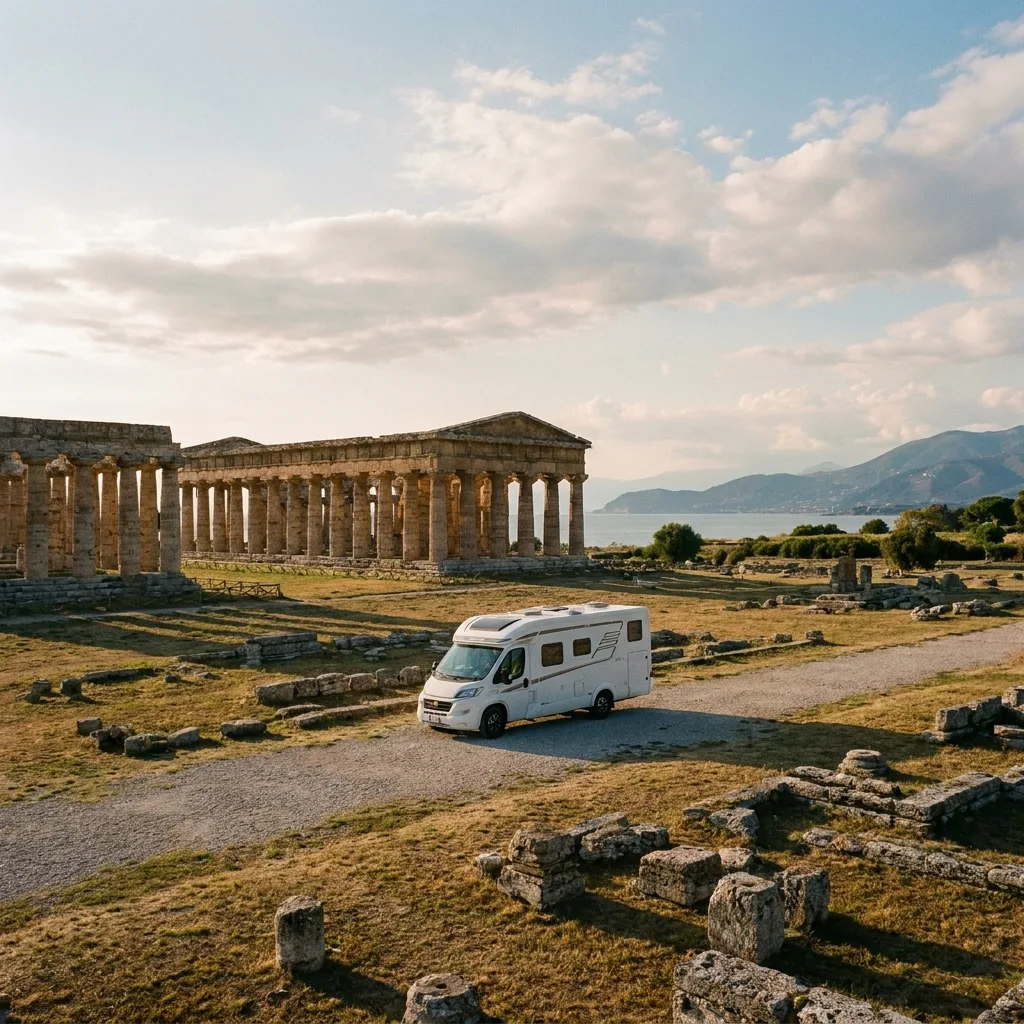
Stop 6
Paestum
The archaeological site of Paestum includes three Doric temples from the sixth and fifth centuries BC, including the Tempio di Nettuno and the Hera Temple. Directly behind these Greek remains in Campania lies the Parco Nazionale del Cilento, Vallo di Diano e Alburni, where limestone cliffs define the coastline. You can taste buffalo mozzarella at local farms or follow hiking trails through the rugged hills to panoramic viewpoints.
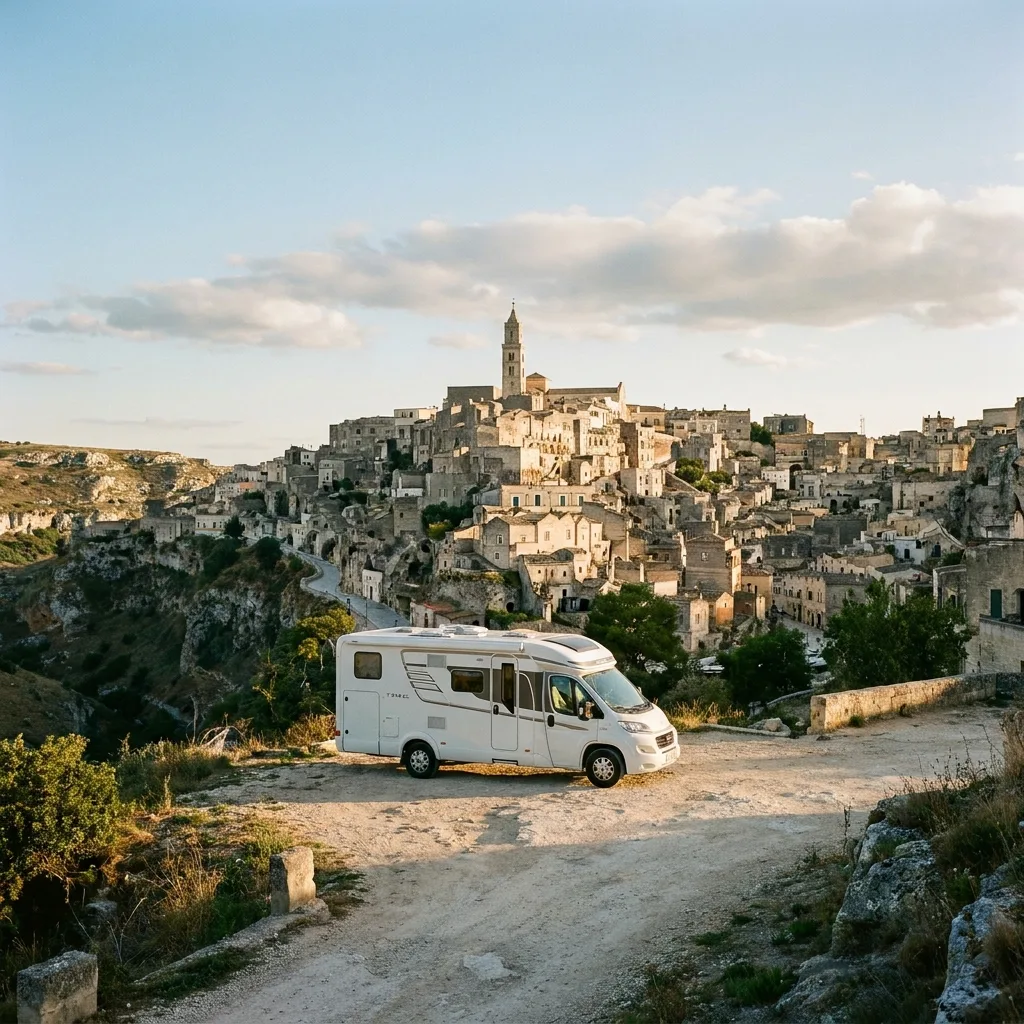
Stop 7
Matera
Matera is one of the oldest continuously inhabited cities in the world and is known for the Sassi di Matera, a system of cave dwellings and churches carved into the limestone. The thirteenth-century Cattedrale di Matera forms the highest point of the city on the Civita hill. From the other side of the gorge in the Parco della Murgia, you have a view of the stacked buildings of this UNESCO World Heritage site.
Want to actually take this trip?
We put together the complete package for you — motorhome, ferry, campsites — in one personal email.
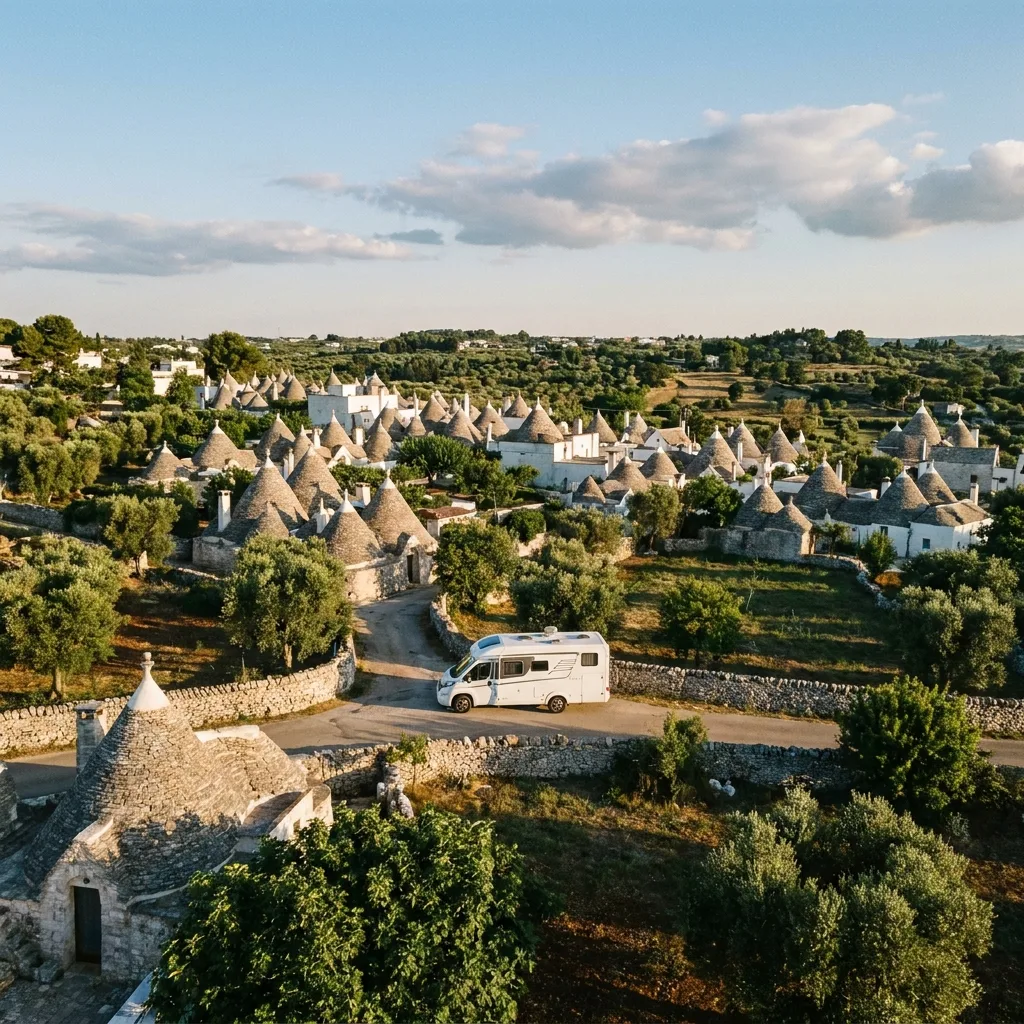
Stop 8
Alberobello
Alberobello in the Valle d'Itria is known for its hundreds of trulli, whitewashed limestone houses with conical roofs. In the Rione Monti district, you'll see these structures with lime-painted symbols on their roofs, while the 18th-century Trullo Sovrano is the only two-story example. In the center, you can visit the Basilica Santi Medici and, in the surrounding area, see olive groves on red soil.
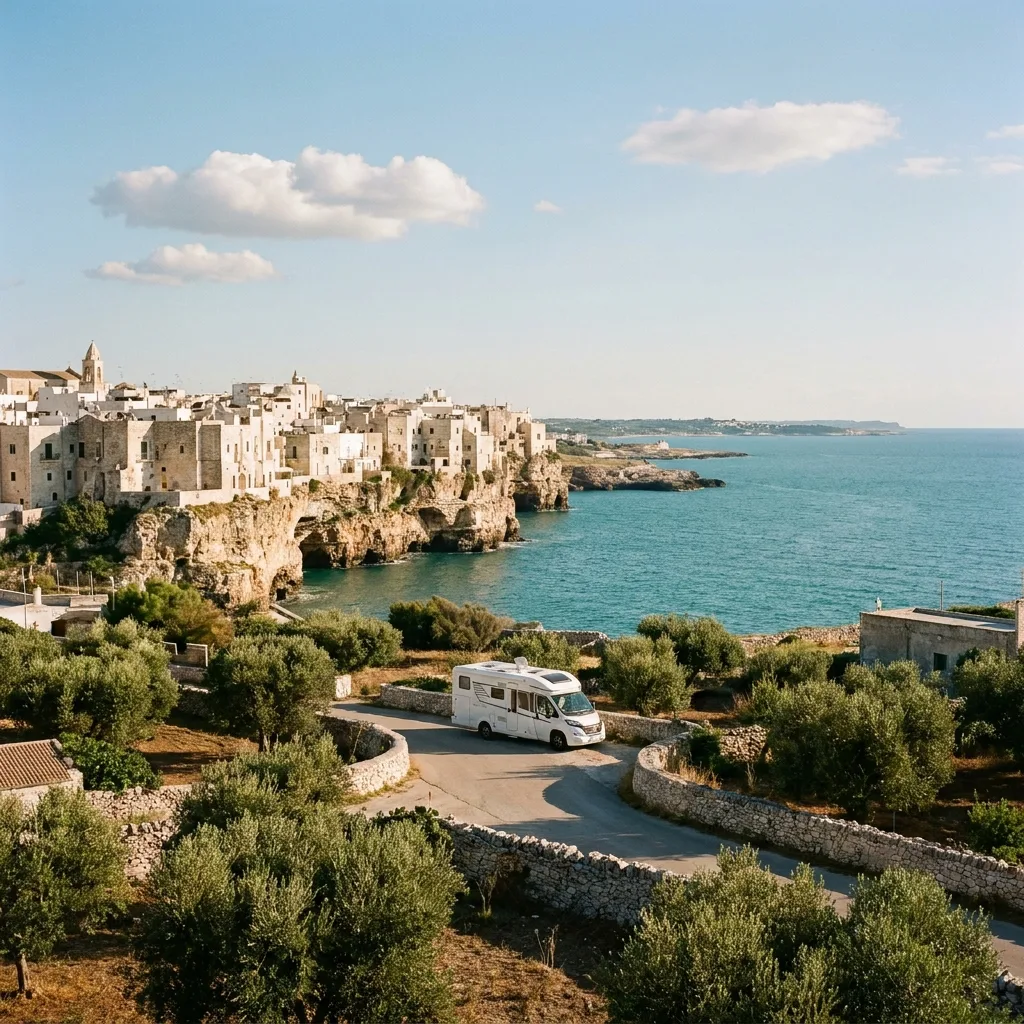
Stop 9
Polignano a Mare
Polignano a Mare is built on limestone cliffs that rise 20 meters above the Adriatic Sea. The inlet of Lama Monachile forms a pebble beach between steep rock faces, and the Grotta Palazzese is a cave located directly beneath the buildings. In the center, you can read poems on walls and doors, while on the outskirts of the village stands the statue of Domenico Modugno. You can explore the coastline and natural sea caves by boat.
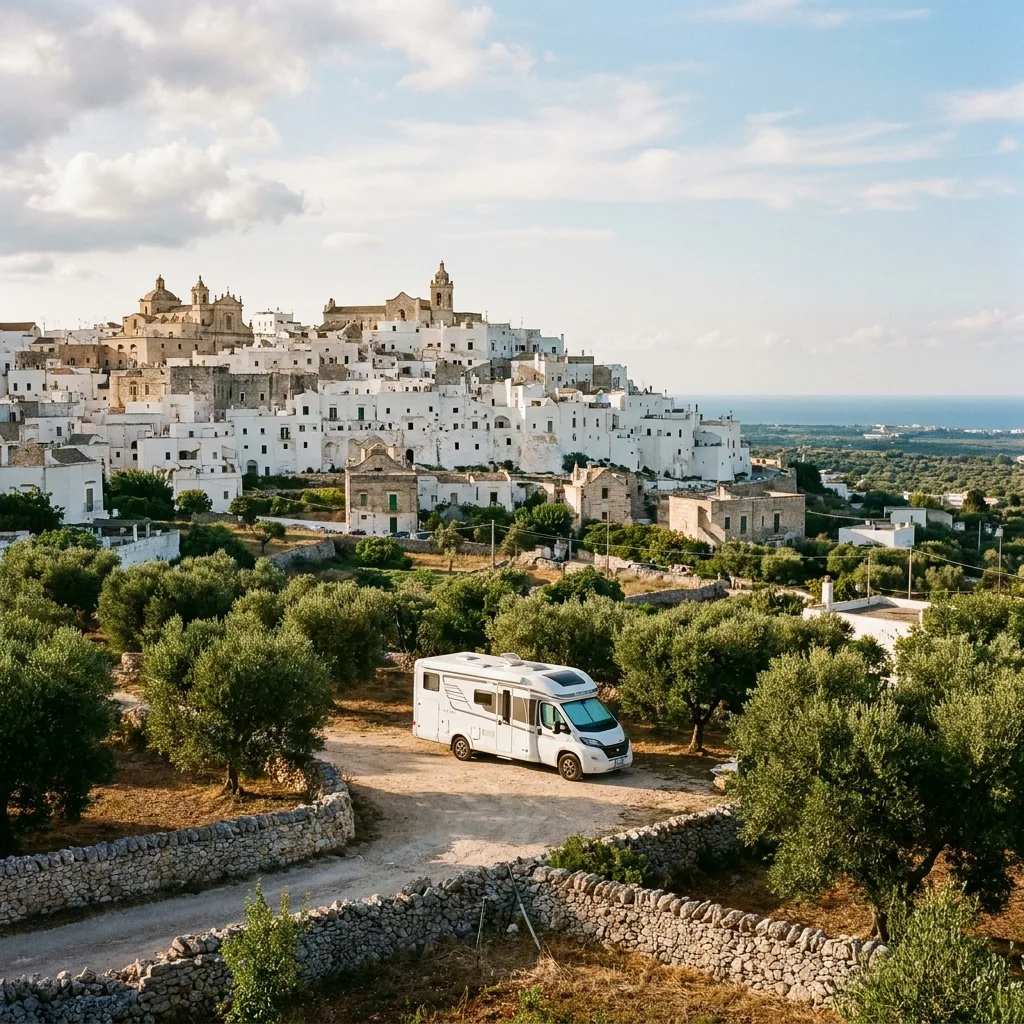
Stop 10
Ostuni
Ostuni is known as the Città Bianca due to its whitewashed limestone houses in the historic centre on a hill in Puglia. The fifteenth-century Concattedrale di Santa Maria Assunta stands out with a sand-coloured facade amidst the white buildings. On Piazza della Libertà stands the baroque Colonna di Sant'Oronzo from 1771. From the old city walls, you can overlook the Adriatic coast and olive groves.
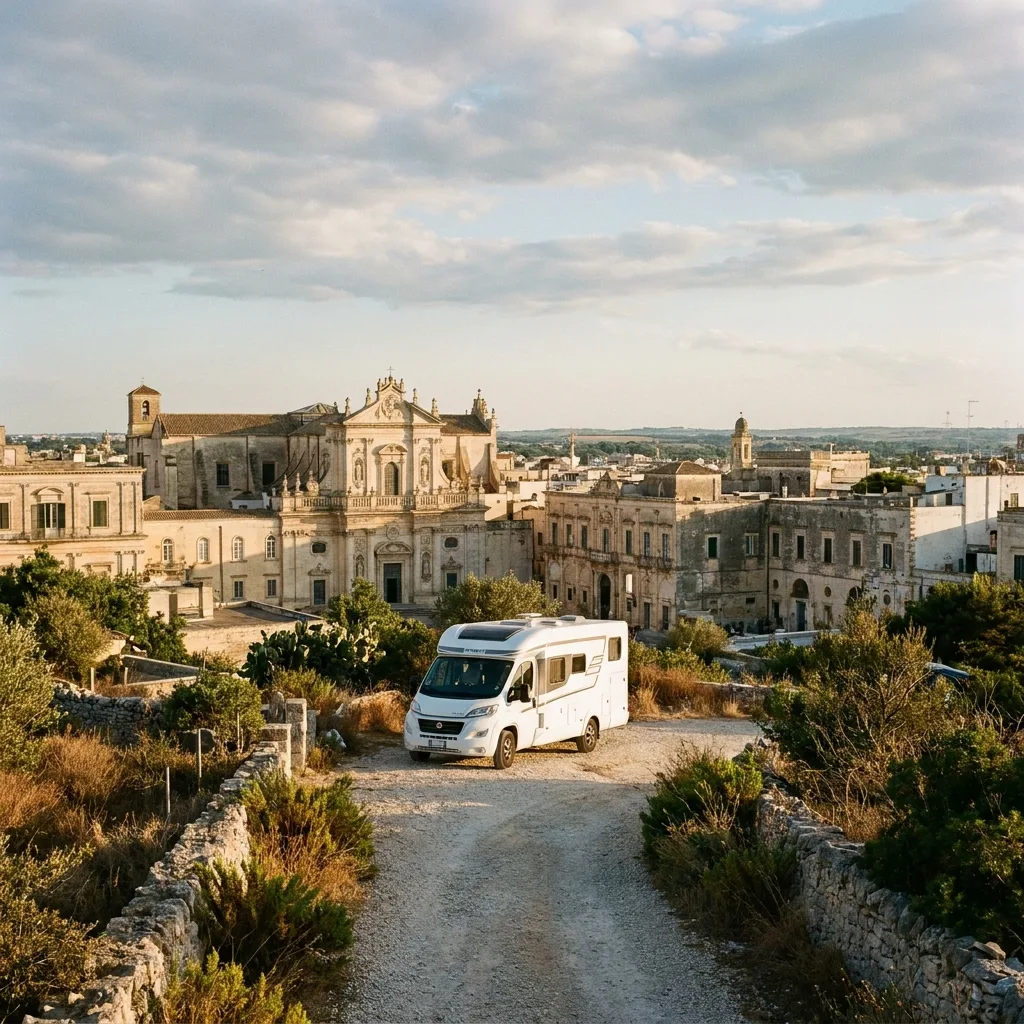
Stop 11
Lecce
Lecce is known for its Baroque architecture of golden limestone, also called pietra leccese. The Basilica di Santa Croce has a facade full of figures, and on Piazza del Duomo, the Cattedrale and Palazzo Vescovile form a cohesive whole. In the center lies the Anfiteatro Romano from the second century. Amidst the Baroque buildings, you can taste local specialties such as the pasticciotto in this city in the Salento region.
Stop 12
Salento
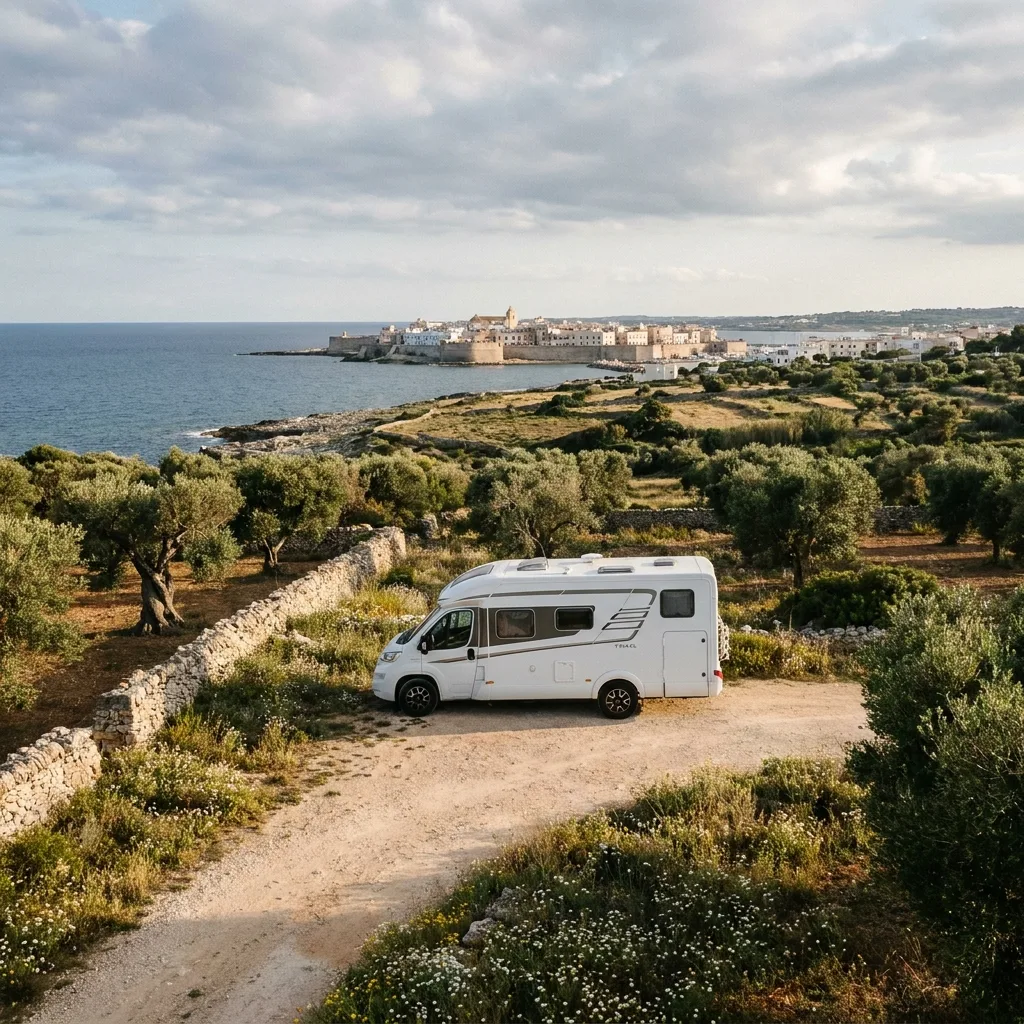
The Salento region forms the heel of the Italian boot between the Adriatic and Ionian Seas. Here you can visit the Centro Storico of Gallipoli, which is connected to the mainland by a sixteenth-century bridge. Along the coastline, limestone cliffs alternate with sandy beaches such as Spiaggia della Purità and the Punta della Suina nature reserve. The inland is characterized by vast olive groves and whitewashed villages.
Stop 13
Trani
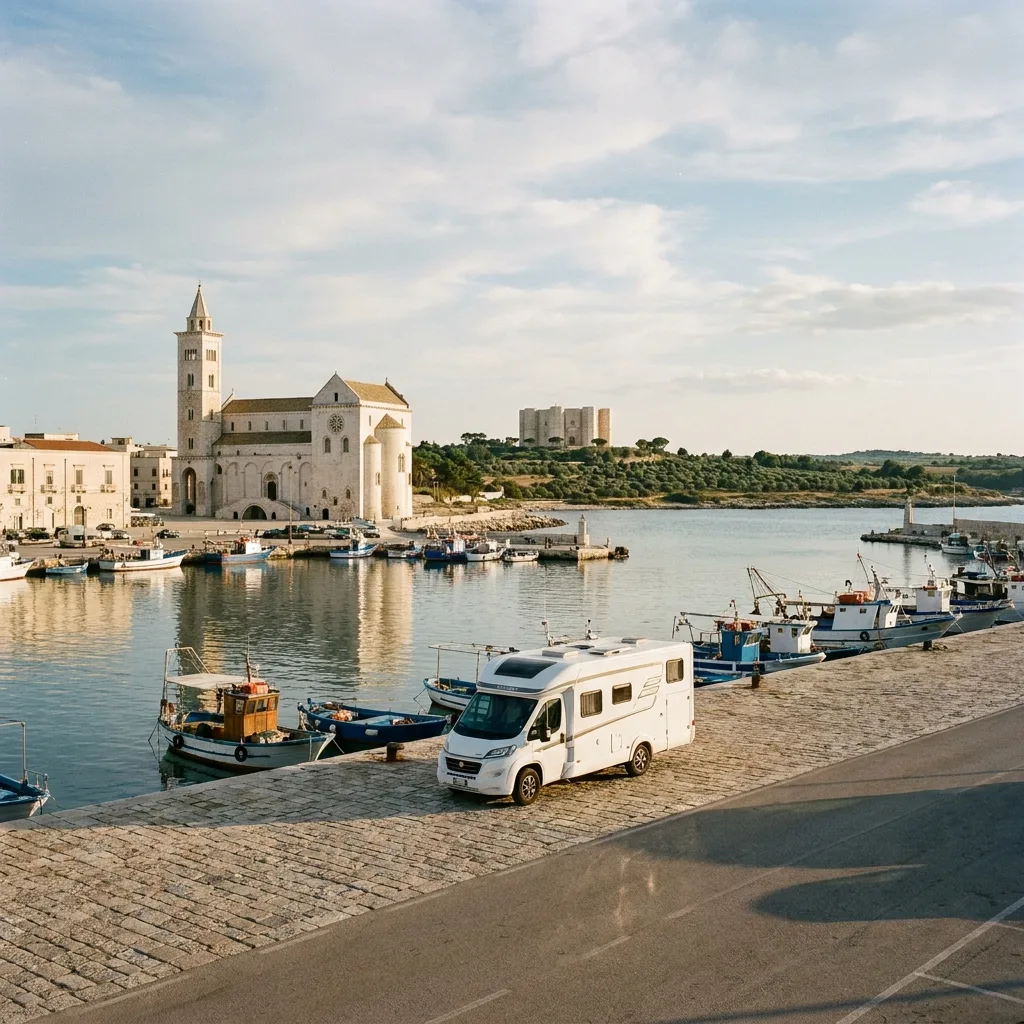
Trani is a port city in Puglia known for the Cattedrale di San Nicola Pellegrino, a thirteenth-century white limestone structure located directly on the Adriatic Sea. In the Porto di Trani, fishing boats lie near the historic Jewish quarter. Inland stands Castel del Monte, an octagonal castle from 1240 with eight towers, built by Emperor Frederick II on a 540-meter-high hill. From here, you overlook the region's olive groves.
Stop 14
Gargano
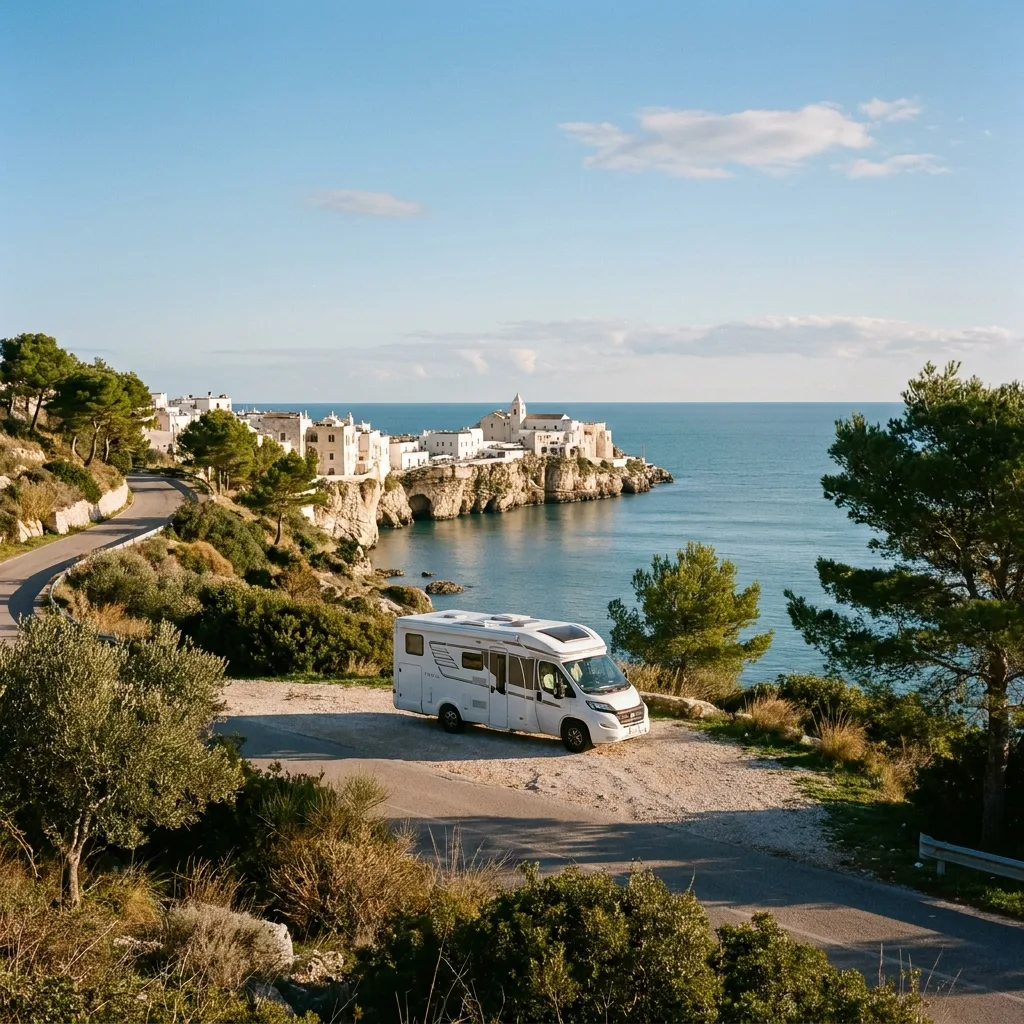
The Gargano peninsula in the Puglia region forms the Parco Nazionale del Gargano and consists of limestone cliffs along the Adriatic Sea. At its heart lies the Foresta Umbra, an ancient forest with beech trees that are part of the UNESCO World Heritage. Near the town of Vieste, you will pass the 25-meter-high monolith Pizzomunno on Scialara beach. Along the rocky coastline are trabucchi, wooden fishing structures still used for catching fish.
Ready to hit the road?
We'll email you a personal travel proposal within 24 hours — motorhome, route and full cost overview included. Save €400–€800 on average vs. a travel agency.
No packages, no middlemen. Learn how it works
Camproads gave me a lot of inspiration for our campervan trip. The routes are beautiful, with a good balance of nature and city life, and the route generator made planning super easy. It's also really handy that there are so many good camping options at the locations, and that you can easily find the campervan that suits your needs and compare prices. This way, we can plan everything ourselves and book the campervan directly with the rental company. That's much cheaper than an organized trip!
Michiel van de Bunt
February 2026
What a difference from how I used to plan trips. Through Camproads, I put together a complete campervan trip in just a few minutes. It's so easy to use, and you can customize everything to your liking. The ability to choose your travel pace makes it even more enjoyable, especially now that we're traveling with a baby for the first time.
Alieke Zelhorst
February 2026