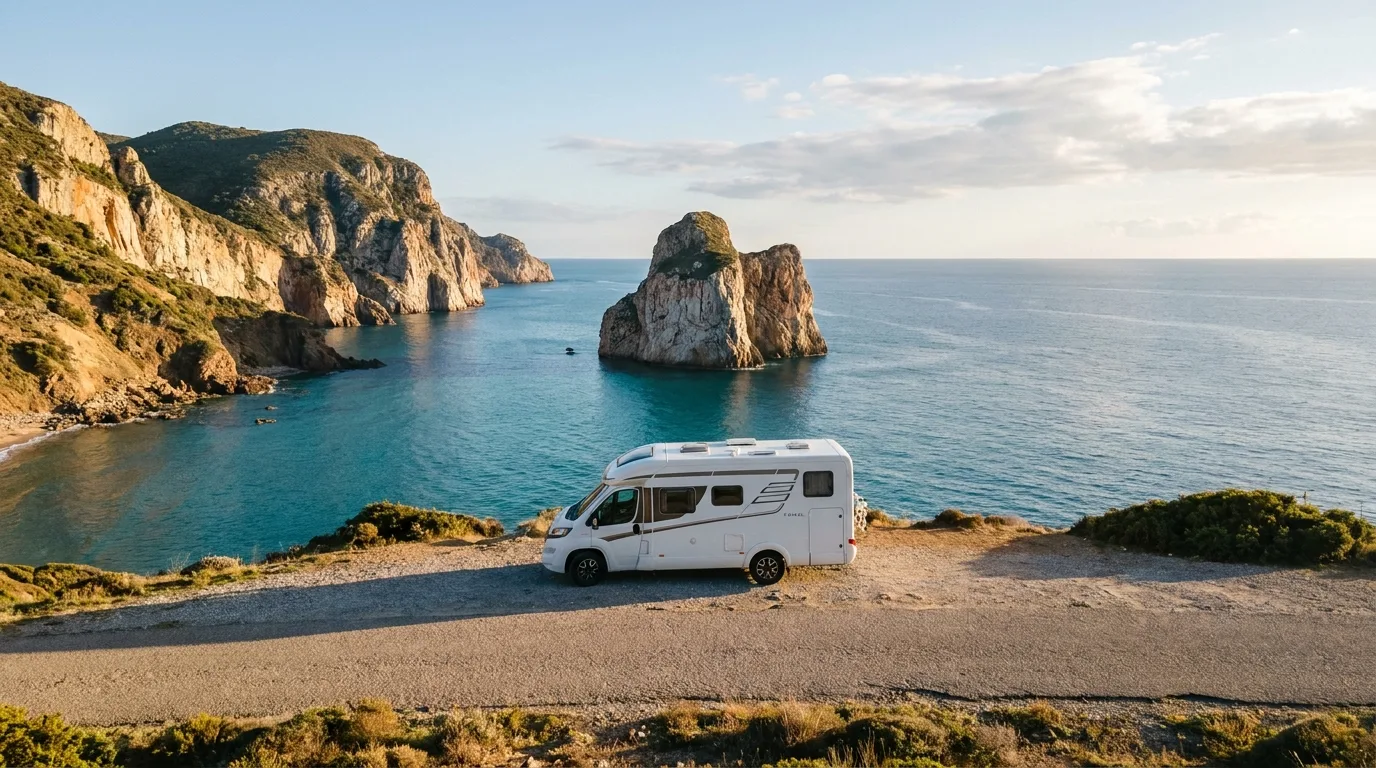
Take this trip by motorhome
Save €400–€800 on average vs. a travel agency
Duration
x daysDistance
539 km
stops
10
Choose a date and duration that fits your preferences
About this route
Highlights
- ✦Cagliari: the Castello district, the flamingos and the ruins of Nora
- ✦Chia: dunes and beach, with Porto Pino next to it
- ✦Sant'Antioco and Carloforte, the Ligurian town on San Pietro
- ✦The mining coast near Iglesias: Pan di Zucchero and Porto Flavia near Masua
- ✦The desert dunes of Piscinas on the Costa Verde
- ✦Torre dei Corsari and the quartz beach Is Arutas, with Tharros next to it
- ✦Su Nuraxi di Barumini, Nuragic complex on the World Heritage List
- ✦The wild horses on the Giara di Gesturi
The route
Stop 1
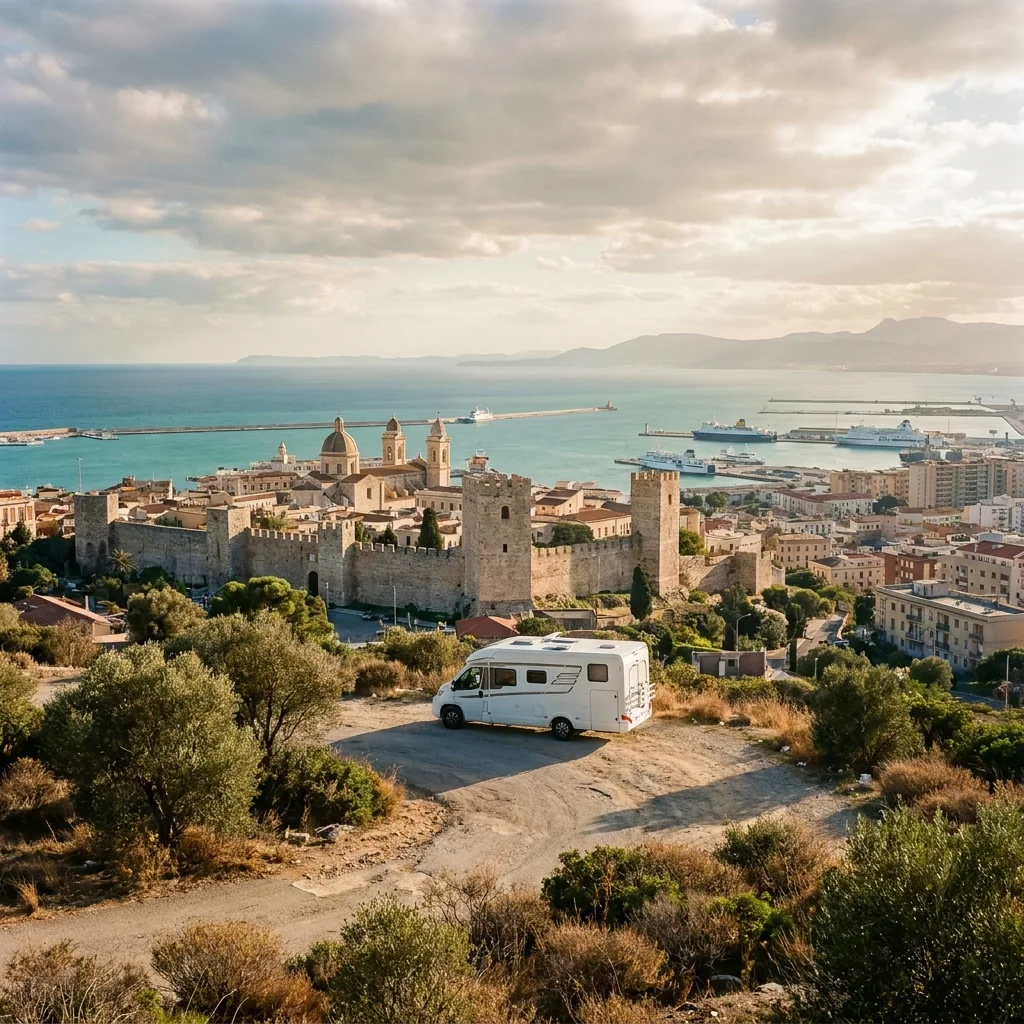
Cagliari
Cagliari is the capital of Sardinia and is situated on seven limestone hills overlooking the Golfo degli Angeli. In the medieval Castello district stands the Bastione di Saint Remy from 1901, connecting the upper town with the squares below. You can see pink flamingos in the Molentargius-Saline regional park and find the eight-kilometre-long sandy Poetto beach on the east side. You will also find a second-century Roman amphitheatre carved into the rocks.
Stop 2
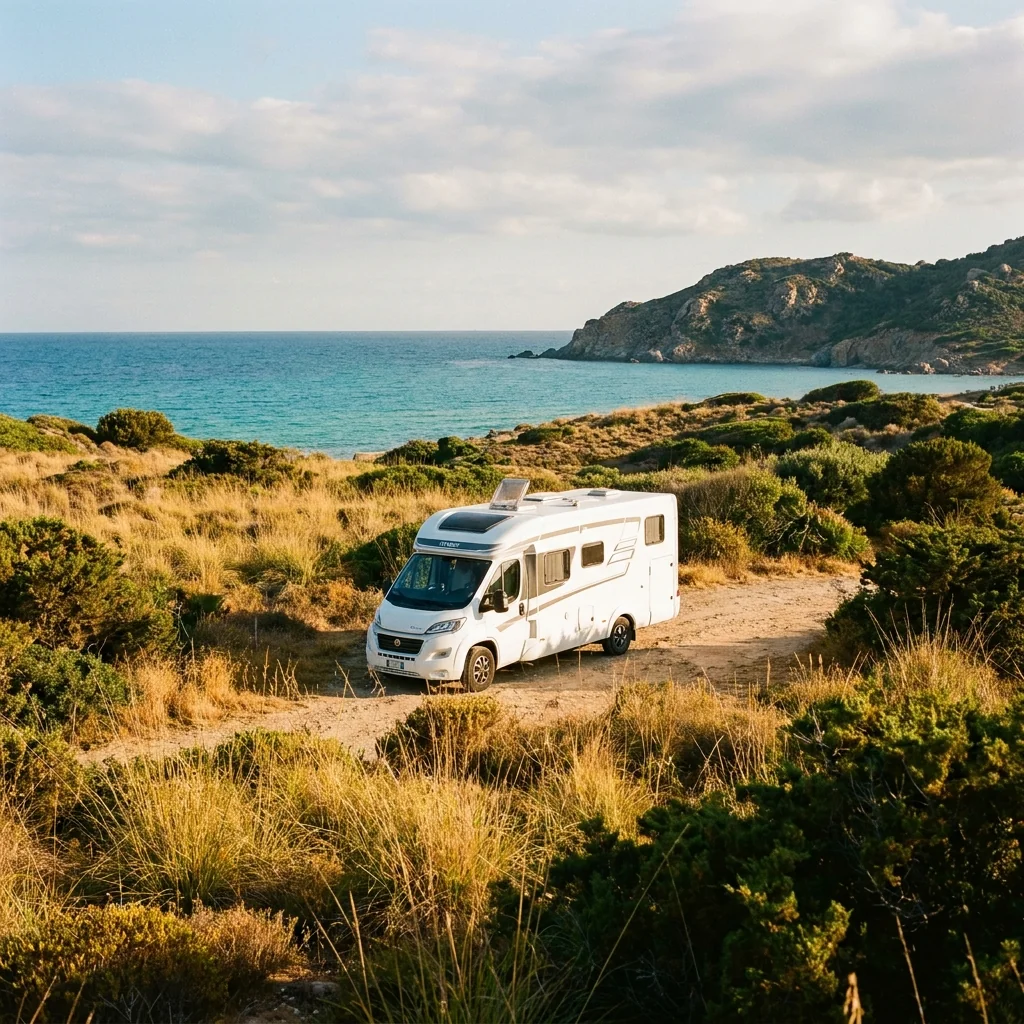
Chia
Expansive sand dunes and the sixteenth-century Torre di Chia define the face of Chia, a coastal town at the southern tip of Sardinia. From the Spanish defence tower, you enjoy a panoramic view over the Laguna di Chia, where pink flamingos calmly forage in the shallow water. At Spiaggia Su Giudeu, you walk among juniper bushes that grow right up to the surf. The charming coastline offers a picturesque view of the mountains of the hinterland.
Stop 3
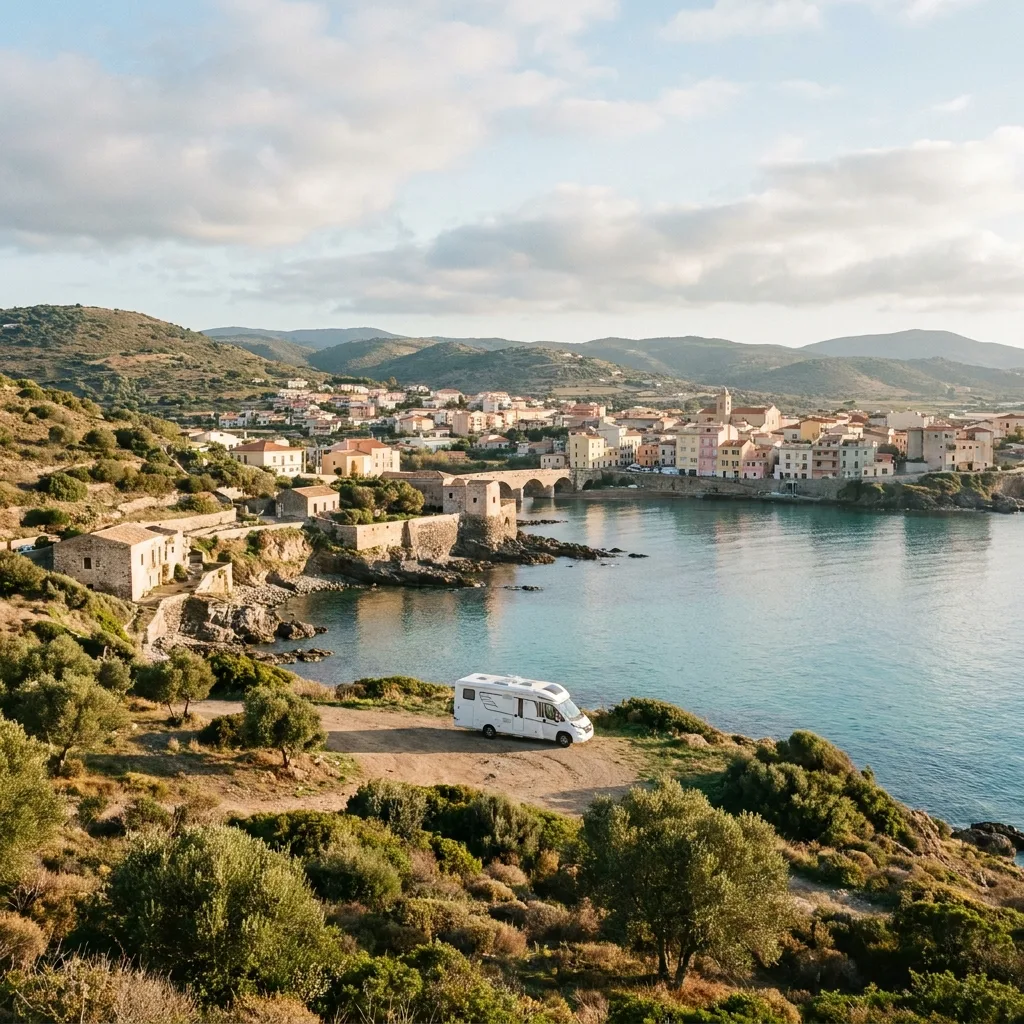
Sant'Antioco
Sant'Antioco's rich history comes alive in ancient catacombs and the rare art of sea silk weaving. In the Basilica di Sant'Antioco, you can explore fifth-century catacombs. The Museo del Bisso showcases the unique weaving art with sea silk. Along the coastline, cliffs and bays alternate. Experience the tranquil atmosphere of the island during a walk along this coast, all the way to the Capo Sperone lighthouse at the southernmost point.
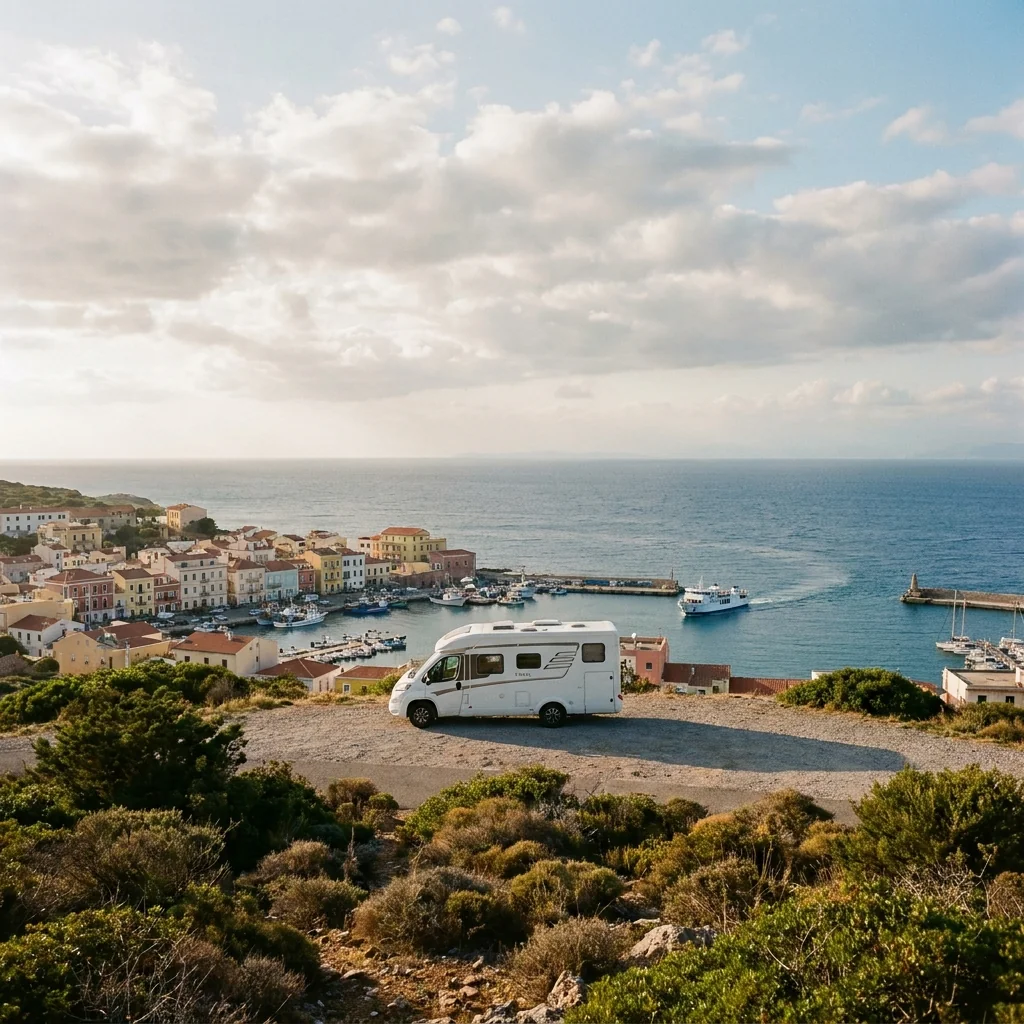
Stop 4
Carloforte
Carloforte on the island of Isola San Pietro is known for its Tabarchine culture, a legacy of Ligurian colonists who settled here in 1738. Pastel-coloured houses adorn the narrow streets and the quay of Lungomare Battellieri, while pink flamingos forage in the Saline di Carloforte. You can explore a coastline with steep cliffs and bays where the tonnara tradition influences local gastronomy.
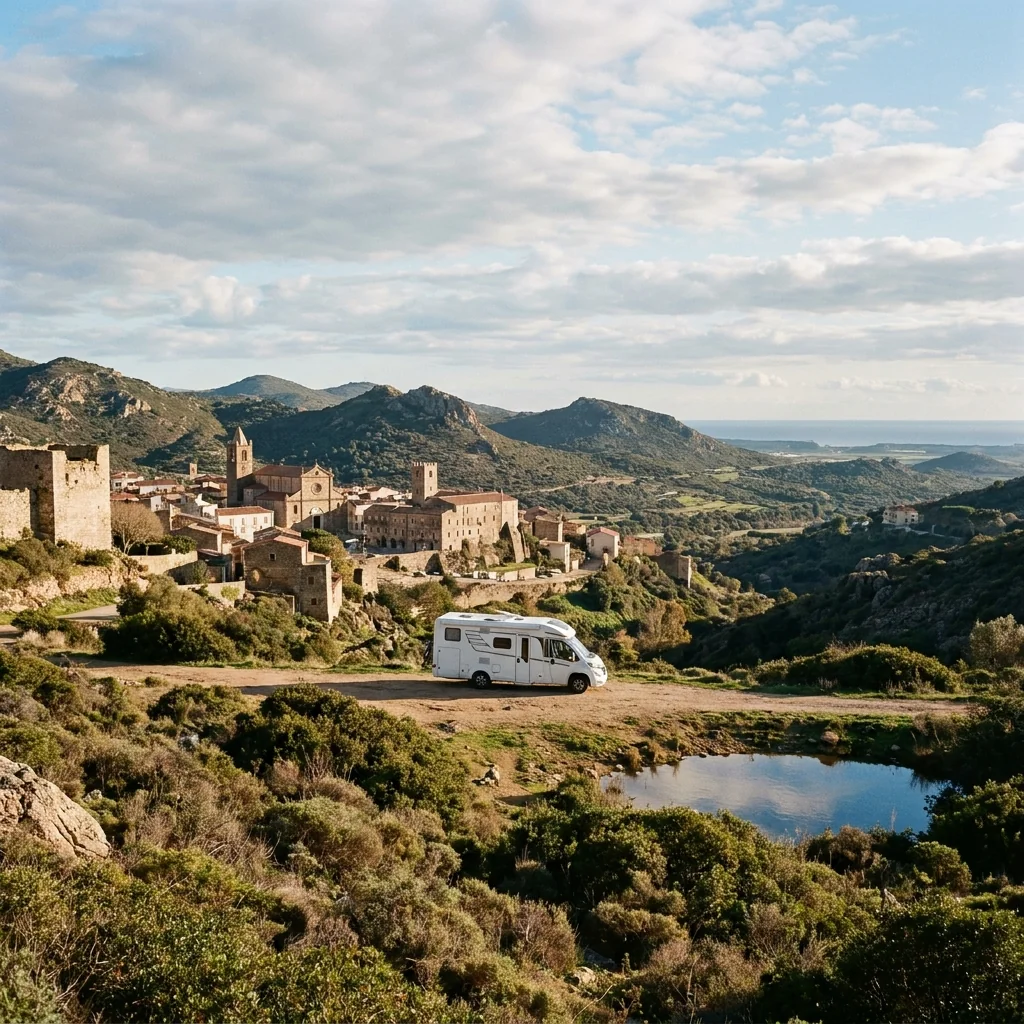
Stop 5
Iglesias
Iglesias takes you back to a rich past of lead and silver mining, visible in its charming medieval center. Admire the thirteenth-century Cattedrale di Santa Chiara and the Castello di Salvaterra, both showcasing their Pisan and Spanish architecture. The Museo dell'Arte Mineraria delves deeper into the local industrial history, with a system of underground passages to explore. The atmosphere of the former mining center is palpable in the old streets, where history and architecture converge.
Want to actually take this trip?
We put together the complete package for you — motorhome, ferry, campsites — in one personal email.
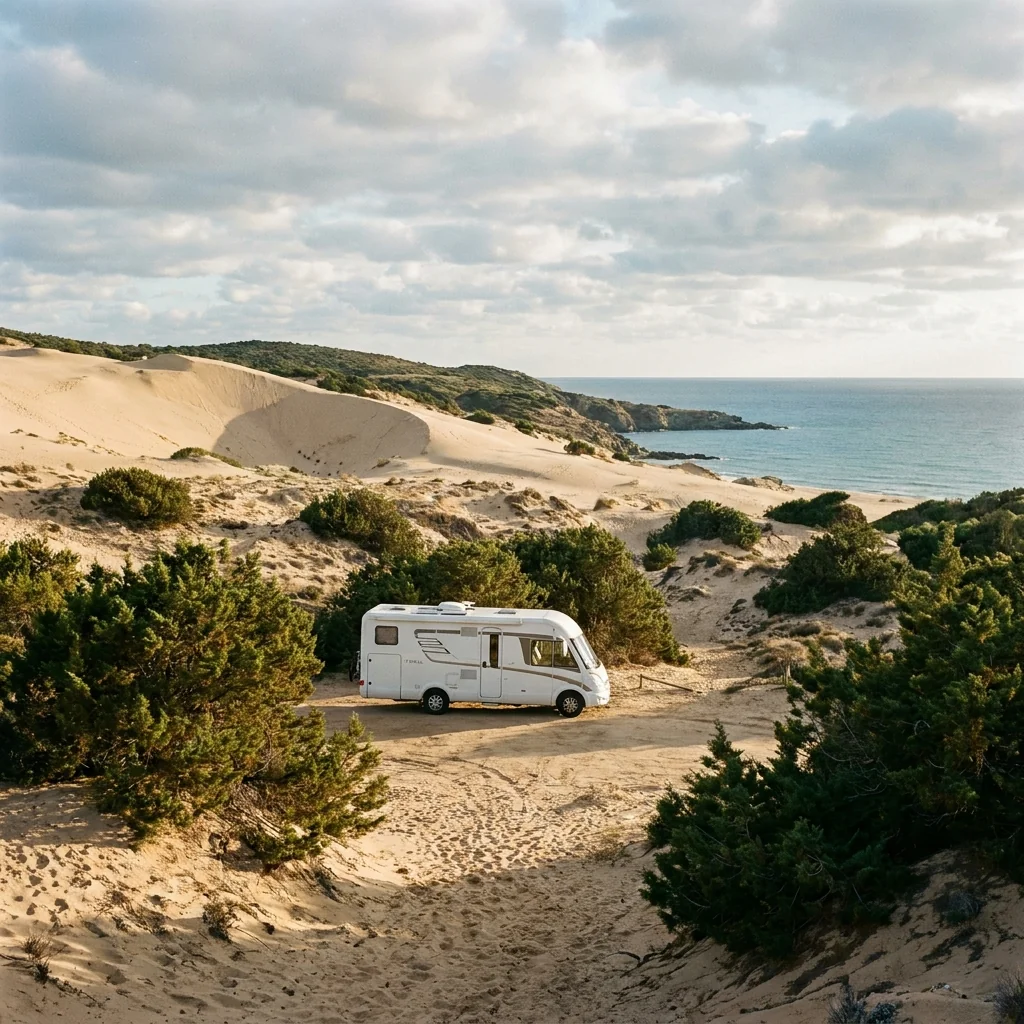
Stop 6
Piscinas
The Dune di Piscinas on the Costa Verde are golden-yellow sand dunes that reach up to sixty meters high, making them among the highest in Europe. You reach the coast via the remains of the mining settlement Miniera di Ingurtosu, where abandoned buildings recall the industrial past. The red river Rio Piscinas flows here across the beach into the surf of the Mediterranean Sea. You will find this nature reserve at the end of an unpaved road on the Sardinian west coast.
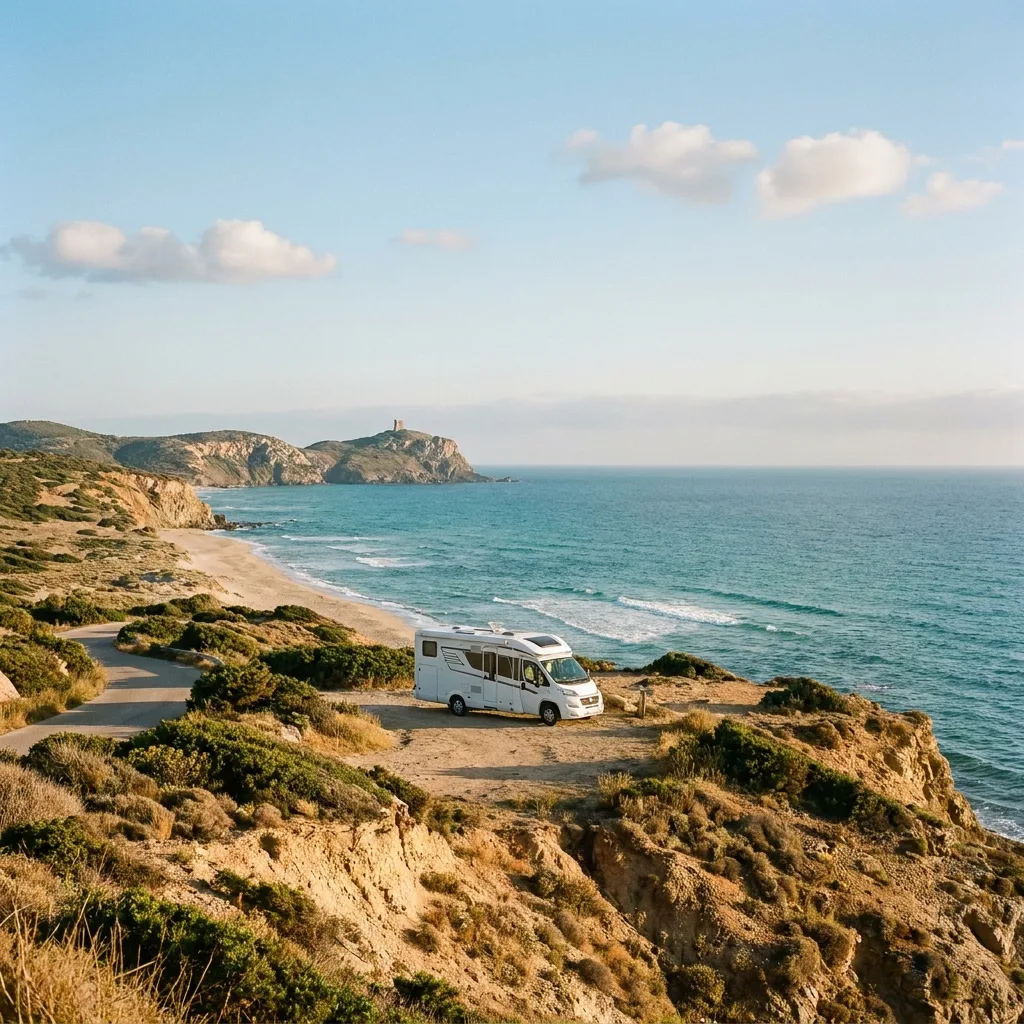
Stop 7
Torre dei Corsari
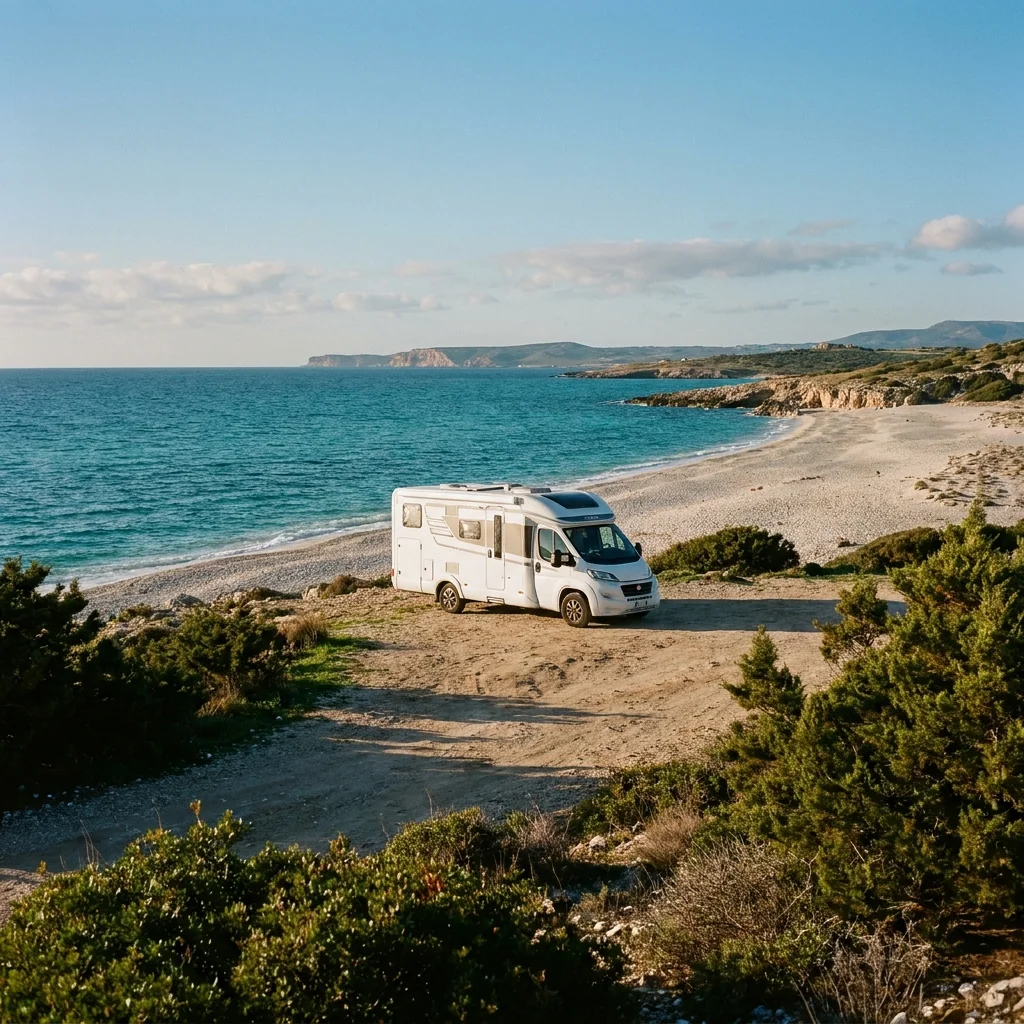
Torre dei Corsari features the Dune di Sabbia d'Oro, a dune area whose shapes are constantly changed by the mistral wind. The sixteenth-century Spanish watchtower Torre di Flumentorgiu offers panoramic views over the Gulf of Oristano and the limestone cliffs. You can walk along the wide sandy beach of Spiaggia Torre dei Corsari or explore the village built against the hills. The golden dunes and historic vistas near Torre di Flumentorgiu give this place a serene atmosphere.
Stop 8
Is Arutas
Is Arutas beach consists of white and pink quartz grains that resemble grains of rice. The turquoise sea on the Sardinian coast deepens quickly, making it excellent for snorkeling and exploring the underwater world. A constant sea breeze makes this a popular spot for windsurfers. In the surrounding brackish lagoons, groups of pink flamingos live, which you might be lucky enough to observe up close. You can walk along the coastline to Mari Ermi for a panoramic view of the Mediterranean Sea.
Stop 9
Su Nuraxi di Barumini
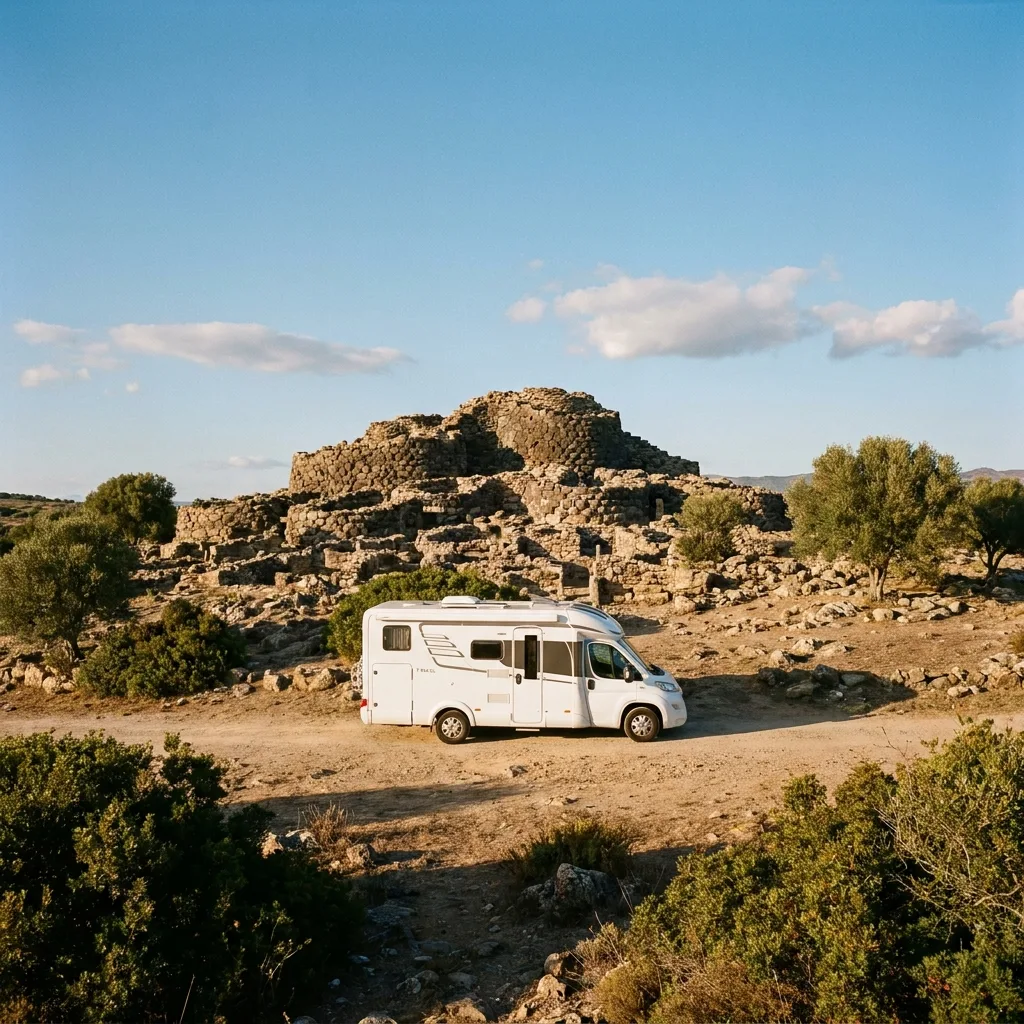
Su Nuraxi di Barumini is a prehistoric nuraghe complex that shows the transition from simple settlements to complex fortified villages. Within this UNESCO World Heritage site, you will find an imposing central tower, surrounded by a labyrinth of circular dwellings and defensive structures. Here you walk through the remains of a Nuragic civilization from the Bronze Age. The atmosphere of this ancient culture is palpable between the stone walls.
Stop 10
Cagliari
Cagliari is the capital of Sardinia and is situated on seven limestone hills overlooking the Golfo degli Angeli. In the medieval Castello district stands the Bastione di Saint Remy from 1901, connecting the upper town with the squares below. You can see pink flamingos in the Molentargius-Saline regional park and find the eight-kilometre-long sandy Poetto beach on the east side. You will also find a second-century Roman amphitheatre carved into the rocks.
Ready to hit the road?
We'll email you a personal travel proposal within 24 hours — motorhome, route and full cost overview included. Save €400–€800 on average vs. a travel agency.
No packages, no middlemen. Learn how it works
Camproads gave me a lot of inspiration for our campervan trip. The routes are beautiful, with a good balance of nature and city life, and the route generator made planning super easy. It's also really handy that there are so many good camping options at the locations, and that you can easily find the campervan that suits your needs and compare prices. This way, we can plan everything ourselves and book the campervan directly with the rental company. That's much cheaper than an organized trip!
Michiel van de Bunt
February 2026
What a difference from how I used to plan trips. Through Camproads, I put together a complete campervan trip in just a few minutes. It's so easy to use, and you can customize everything to your liking. The ability to choose your travel pace makes it even more enjoyable, especially now that we're traveling with a baby for the first time.
Alieke Zelhorst
February 2026