Meuse & Ardennes - from Maastricht to the Semoisfrom Maastricht to the Semois
This route is ready and waiting — planned out day by day
Inside the Camproads Netherlands guide: every stage, campsites and our honest tips. Instant PDF download.
€19.95
Instant download · NL, EN & DE
€19.95
Instant download · NL, EN & DE
Duration
x daysDistance
444 km
stops
9
Choose a date and duration that fits your preferences
About this route
Highlights
- ✦Two nights in Maastricht, with Valkenburg and the three-country point as a day trip
- ✦The Meuse upstream past Liège, Huy and Namur
- ✦Dinant beneath its limestone cliff, with citadel and saxophones
- ✦The Han-sur-Lesse cave, reached by the historic tram
- ✦Bouillon's castle in a loop of the Semois
- ✦The view from Rochehaut over the hamlet of Frahan
- ✦Bastogne and the Battle of the Bulge of 1944
- ✦No low-emission zone anywhere in Wallonia
The route
Stop 1
Maastricht
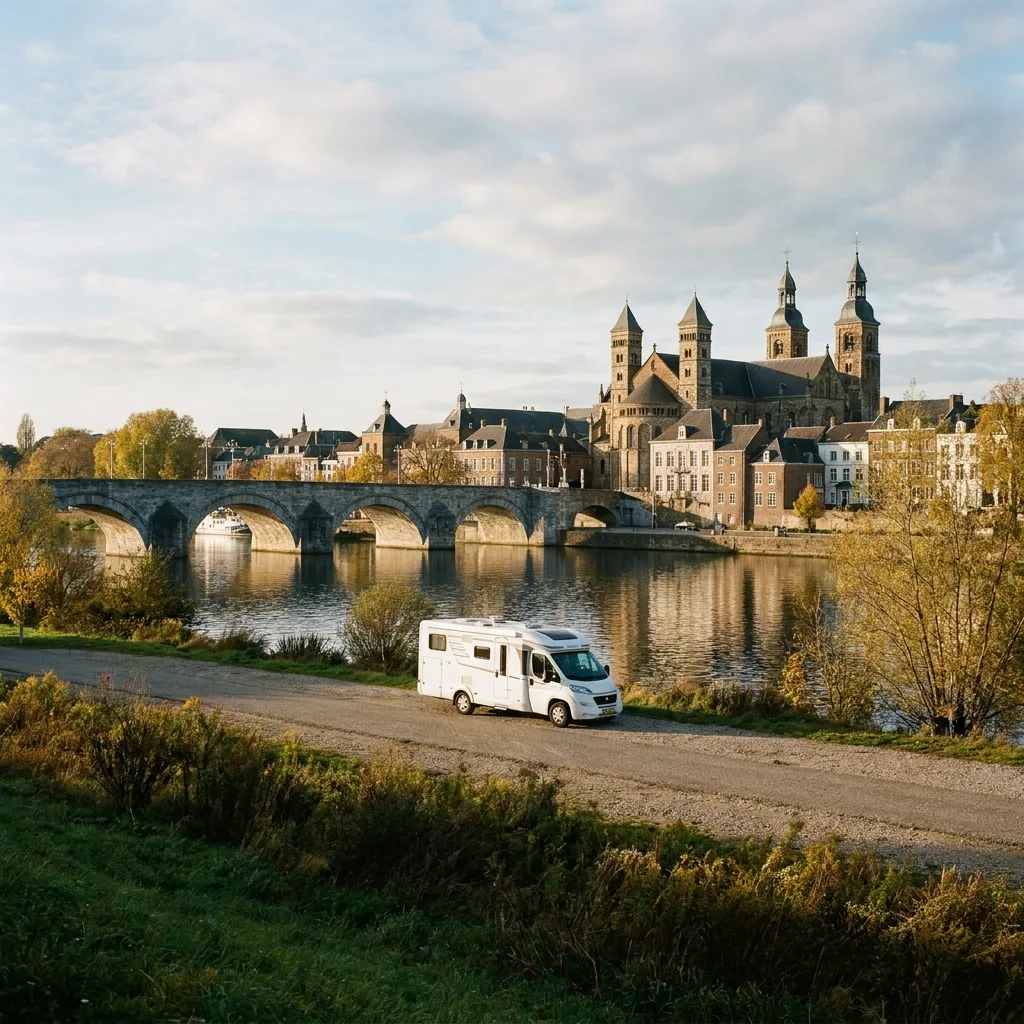
Maastricht is the oldest city in the Netherlands, where the Meuse enters the country. On the Vrijthof, the bookstore is located in the thirteenth-century Dominican church, and under the Sint-Pietersberg, guided tours run through the marl caves. The city does not have an environmental zone; park on the outskirts and explore the center on foot.
Stop 2
Namur
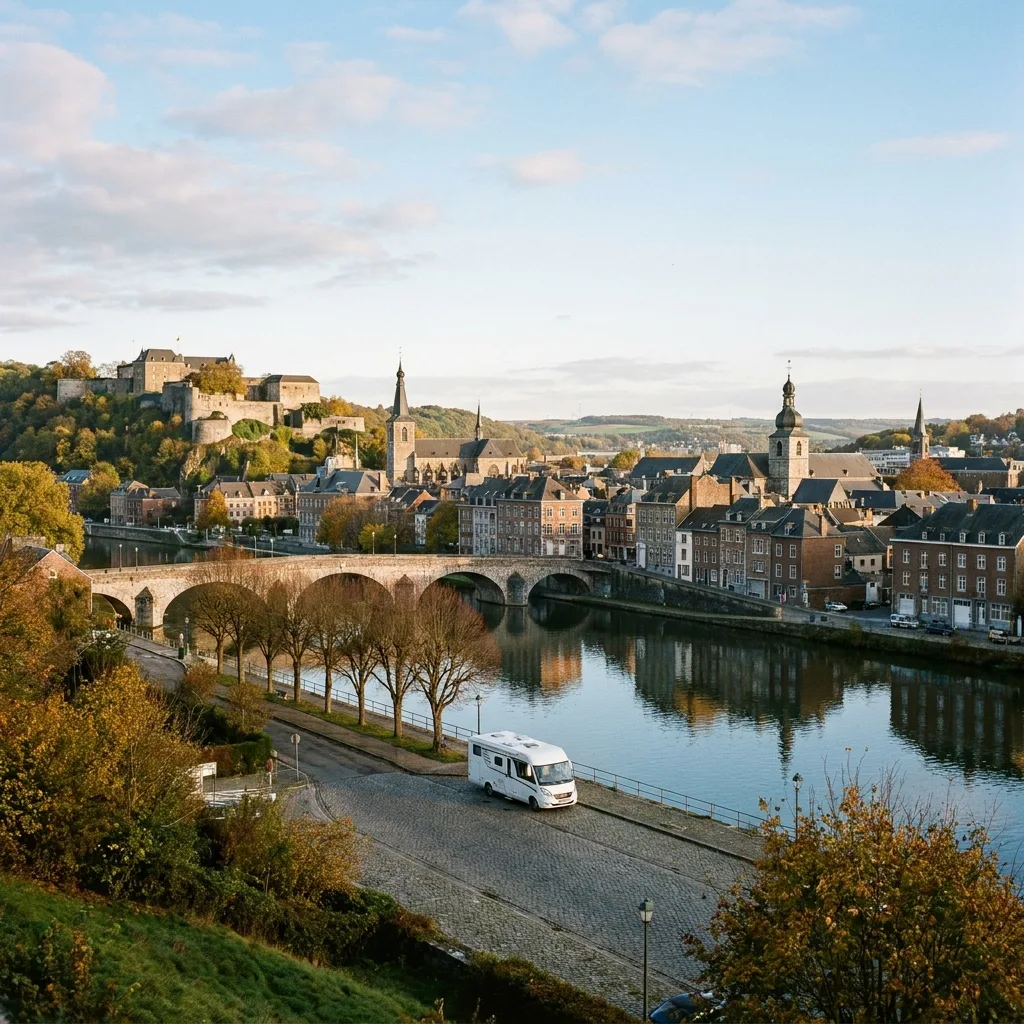
Namur is the place to sleep: the city lies where the Sambre meets the Meuse, beneath the citadel that generations of military engineers have carved into the limestone. The cable car takes you to the top in a few minutes; downstairs, you can eat in the streets around the cathedral.
Stop 3
Dinant
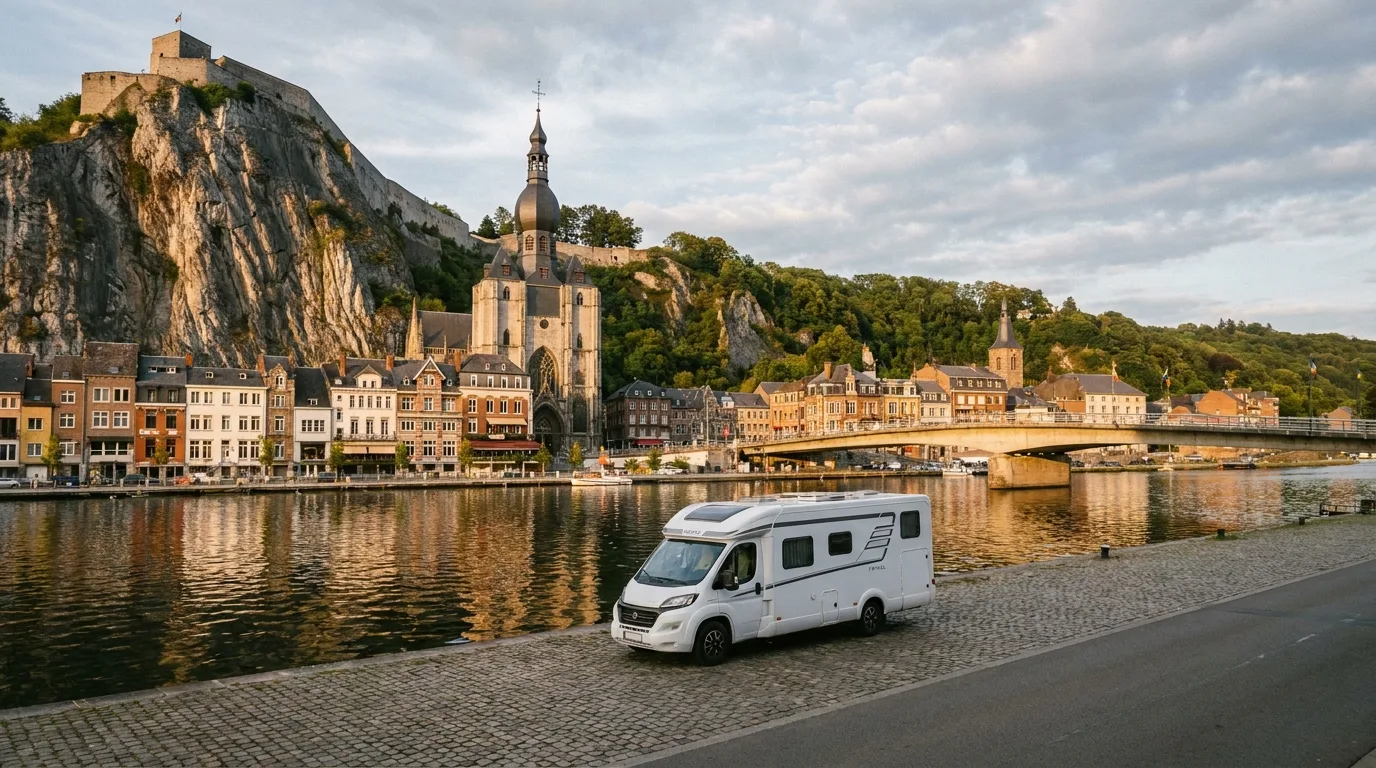
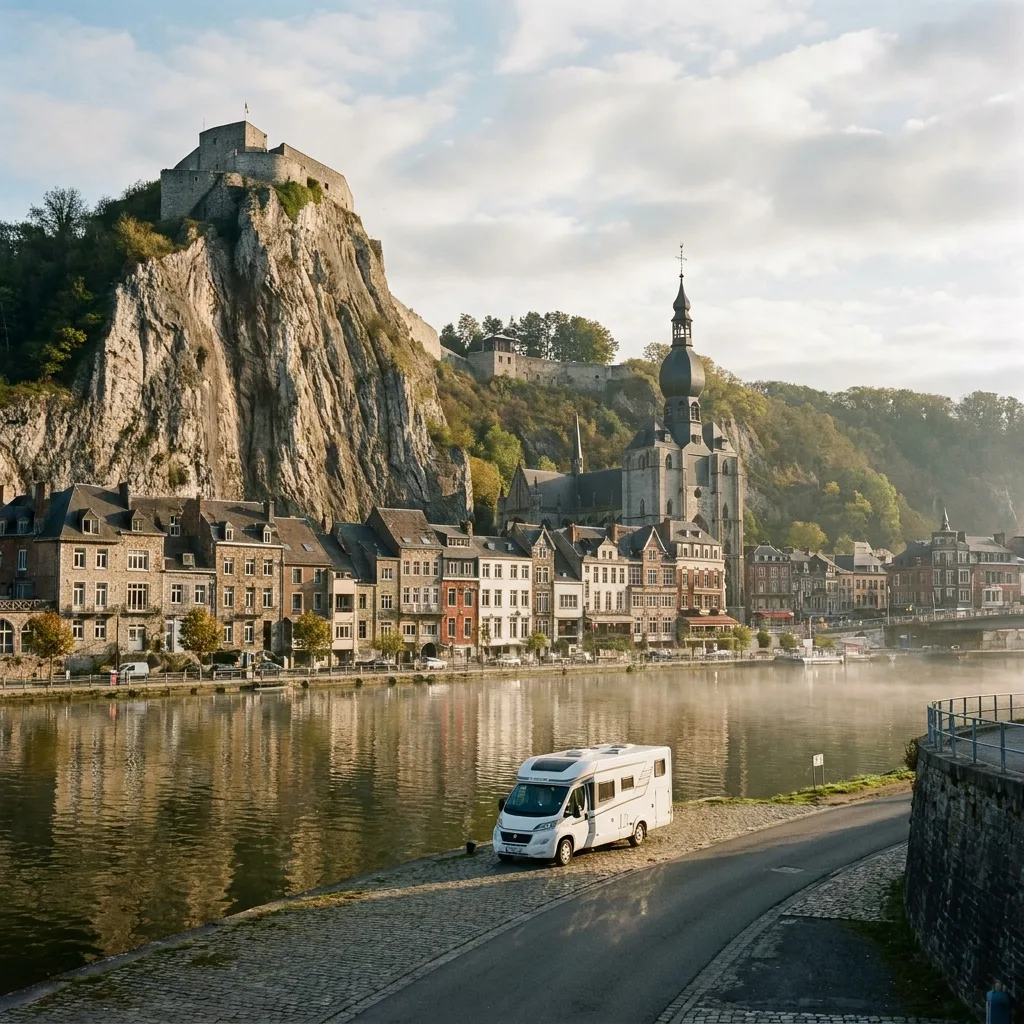
The houses of Dinant seem to be compressed by the massive rock face rising directly behind the quayside. Those who climb the 408 steps reach the citadel for a panoramic view over the green Meuse Valley. Below, the Collégiale Notre-Dame stands out with its pear-shaped church tower rising above the rooftops. On the Pont Charles de Gaulle, colorful saxophones stand as a tribute to inventor Adolphe Sax. The quayside is a lively spot where you can enjoy the sight of passing pleasure boats.
Stop 4
Han-sur-Lesse
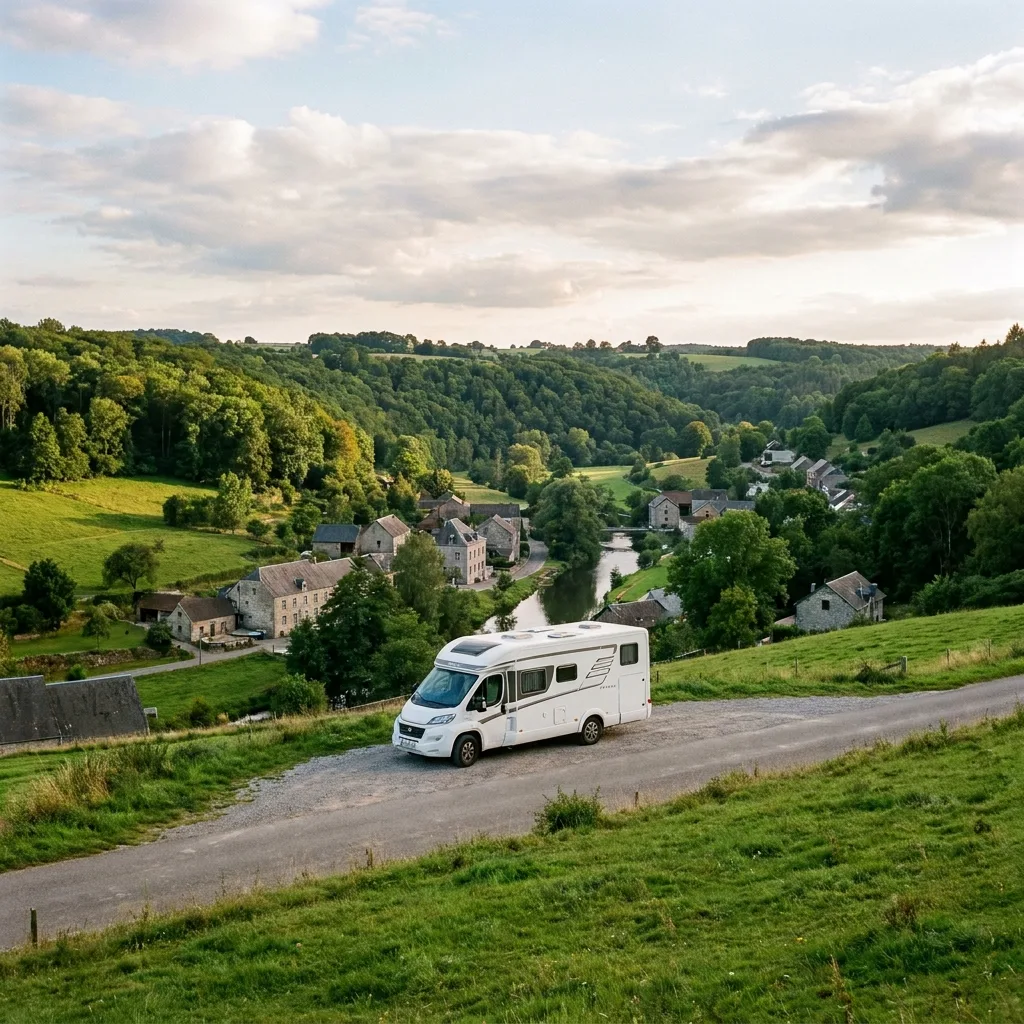
Han-sur-Lesse takes you into an underground world where the river Lesse flows through deep limestone caves. A historic narrow-gauge tram from the early twentieth century transports passengers over creaking rails to the entrance of the domain. In the depths, the Caves of Han reveal enormous halls such as the spacious Salle du Dôme. In the accompanying Wildlife Park, bison and wolves roam freely through the dense undergrowth. In the lively village, visitors relax on the terraces around the church.
Want to actually take this trip?
We put together the complete package for you — motorhome, ferry, campsites — in one personal email.
Stop 5
Bouillon
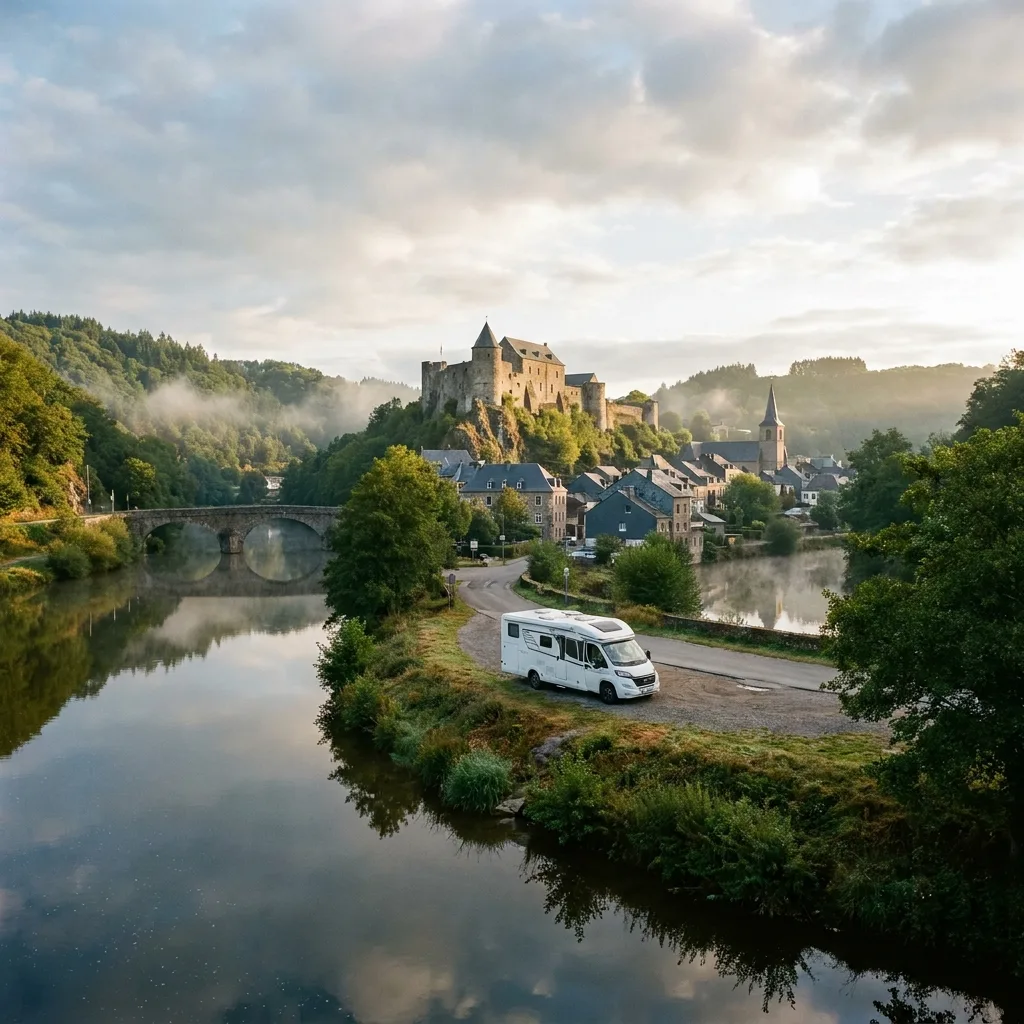
Bouillon is dominated by a medieval castle that towers on a rock ridge above a bend of the Semois. Three drawbridges lead to the Château de Bouillon, where passages are carved deep into the rocks. In the courtyard, birds of prey fly past you during a falconry display. Down in the town, houses reflect in the river that winds through the valley. The steep streets create a lively bustle with views of the forested Ardennes.
Stop 6
Bastogne
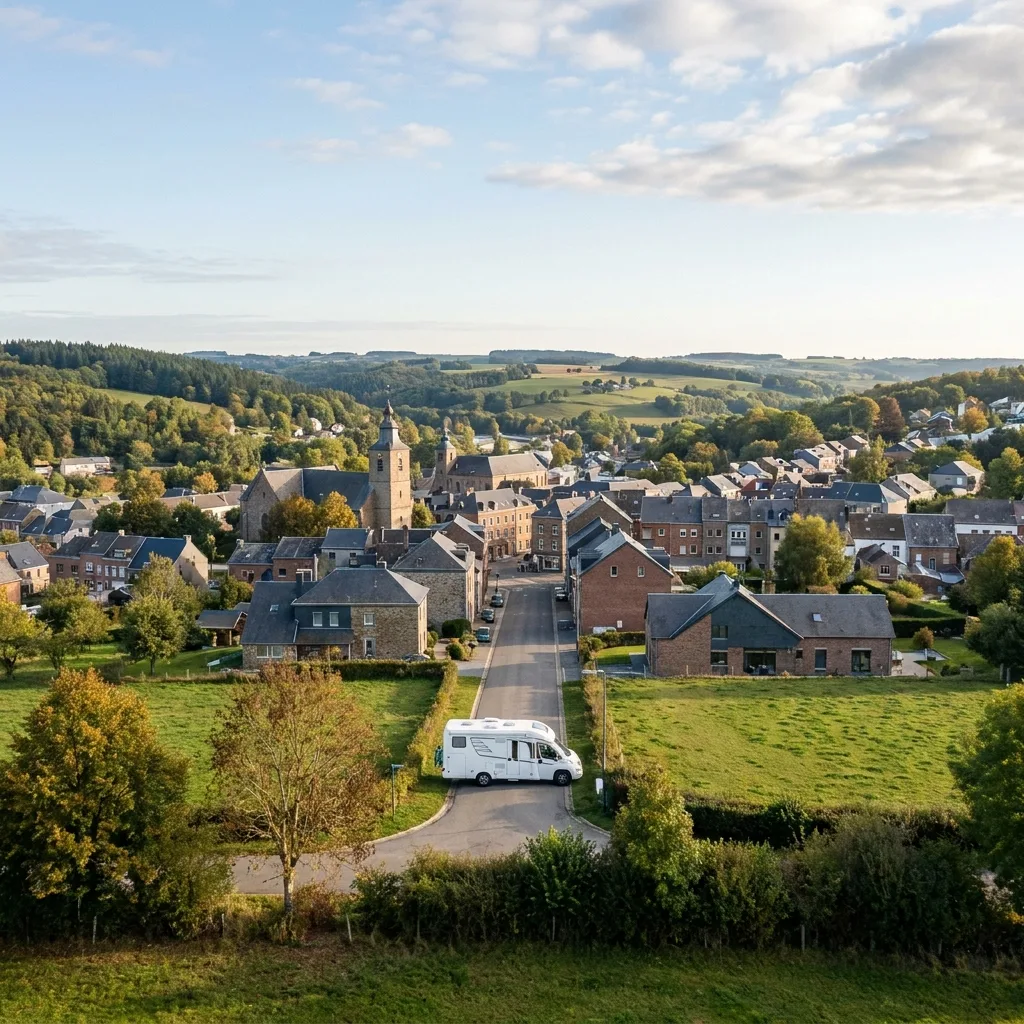
Bastogne was surrounded in December 1944; a Sherman tank stands on the Place McAuliffe and the star-shaped memorial to the American dead sits on the Mardasson hill outside town. Allow half a day for the memorial, the museum and the foxholes still visible in the woods at Bois Jacques. Overnight parking at the museum is not allowed.
Stop 7
La Roche-en-Ardenne
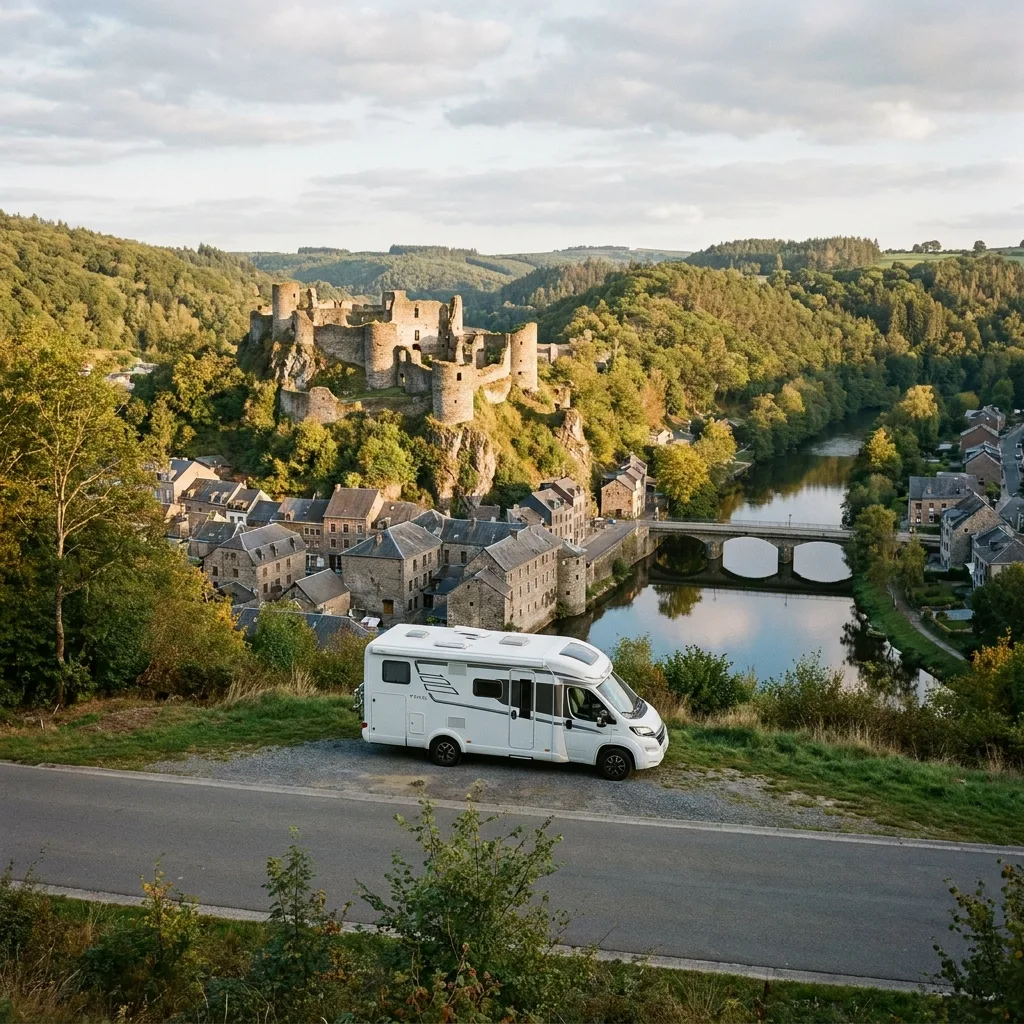
The grey castle ruin of La Roche-en-Ardenne towers on a steep rock face above the houses and dominates the deep valley. From the walls of the Château féodal, you look out over the rooftops and the wooded slopes along the Ourthe. In the streets, butchers sell smoked Ardennes ham, and on the river, kayaks glide downstream through the greenery. Those who seek out the surrounding forests will find silence there, while the terraces on the quay offer a lively view of the rippling stream.
Stop 8
Durbuy
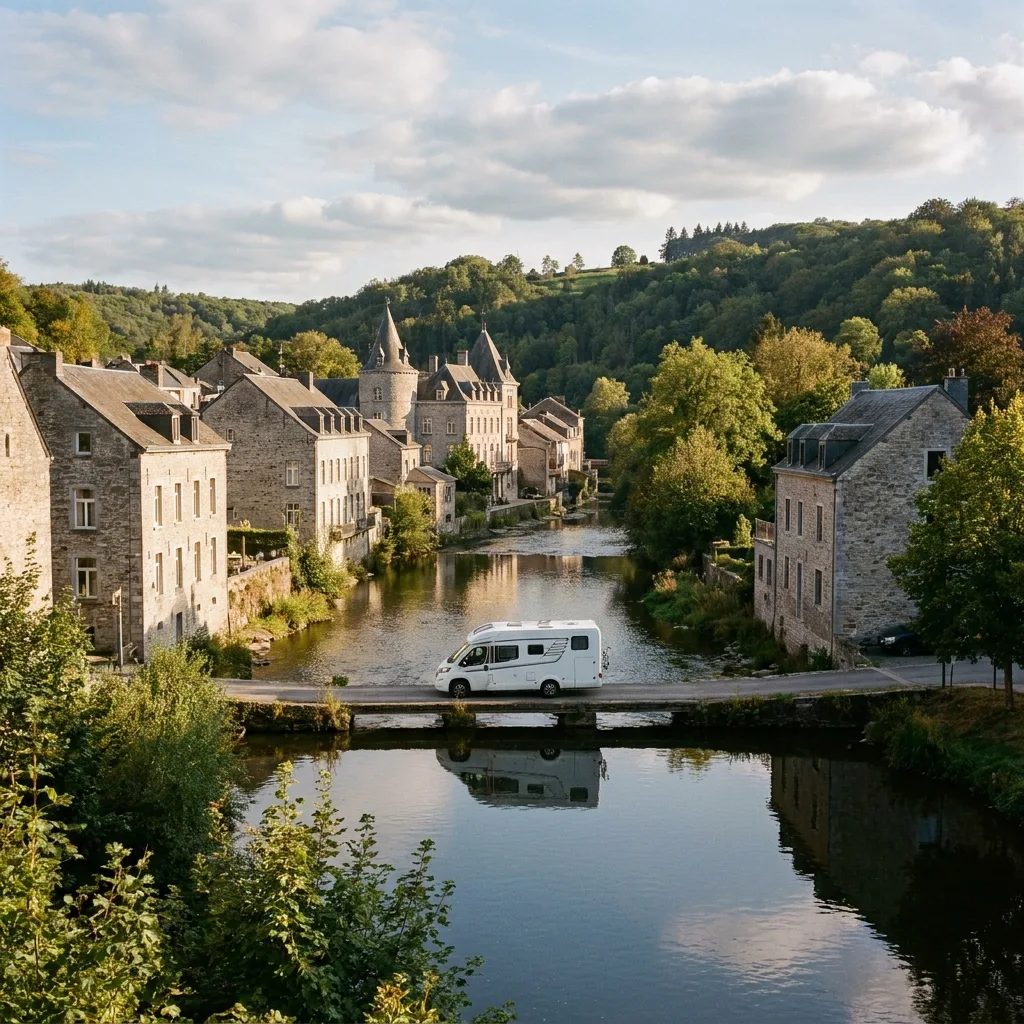
Thanks to a fourteenth-century city charter, Durbuy holds the title of the smallest city in the world and consists of cobblestone streets with grey houses. Along the Ourthe, the Topiary Park displays artfully pruned boxwood plants in the shape of animals. From the bridge, you can overlook Durbuy Castle, which, as a private estate, towers above the grey rooftops. The Jam Manufactory sells artisanal jam made from Ardennes fruit. The lively core gives way to a tranquil view of folded limestone layers near the Falize Rock.
Stop 9
Maastricht
Maastricht is the oldest city in the Netherlands, where the Meuse enters the country. On the Vrijthof, the bookstore is located in the thirteenth-century Dominican church, and under the Sint-Pietersberg, guided tours run through the marl caves. The city does not have an environmental zone; park on the outskirts and explore the center on foot.
Ready to hit the road?
We'll email you a personal travel proposal within 24 hours — motorhome, route and full cost overview included. Save €400–€800 on average vs. a travel agency.
No packages, no middlemen. Learn how it works
Camproads gave me a lot of inspiration for our campervan trip. The routes are beautiful, with a good balance of nature and city life, and the route generator made planning super easy. It's also really handy that there are so many good camping options at the locations, and that you can easily find the campervan that suits your needs and compare prices. This way, we can plan everything ourselves and book the campervan directly with the rental company. That's much cheaper than an organized trip!
Michiel van de Bunt
February 2026
What a difference from how I used to plan trips. Through Camproads, I put together a complete campervan trip in just a few minutes. It's so easy to use, and you can customize everything to your liking. The ability to choose your travel pace makes it even more enjoyable, especially now that we're traveling with a baby for the first time.
Alieke Zelhorst
February 2026