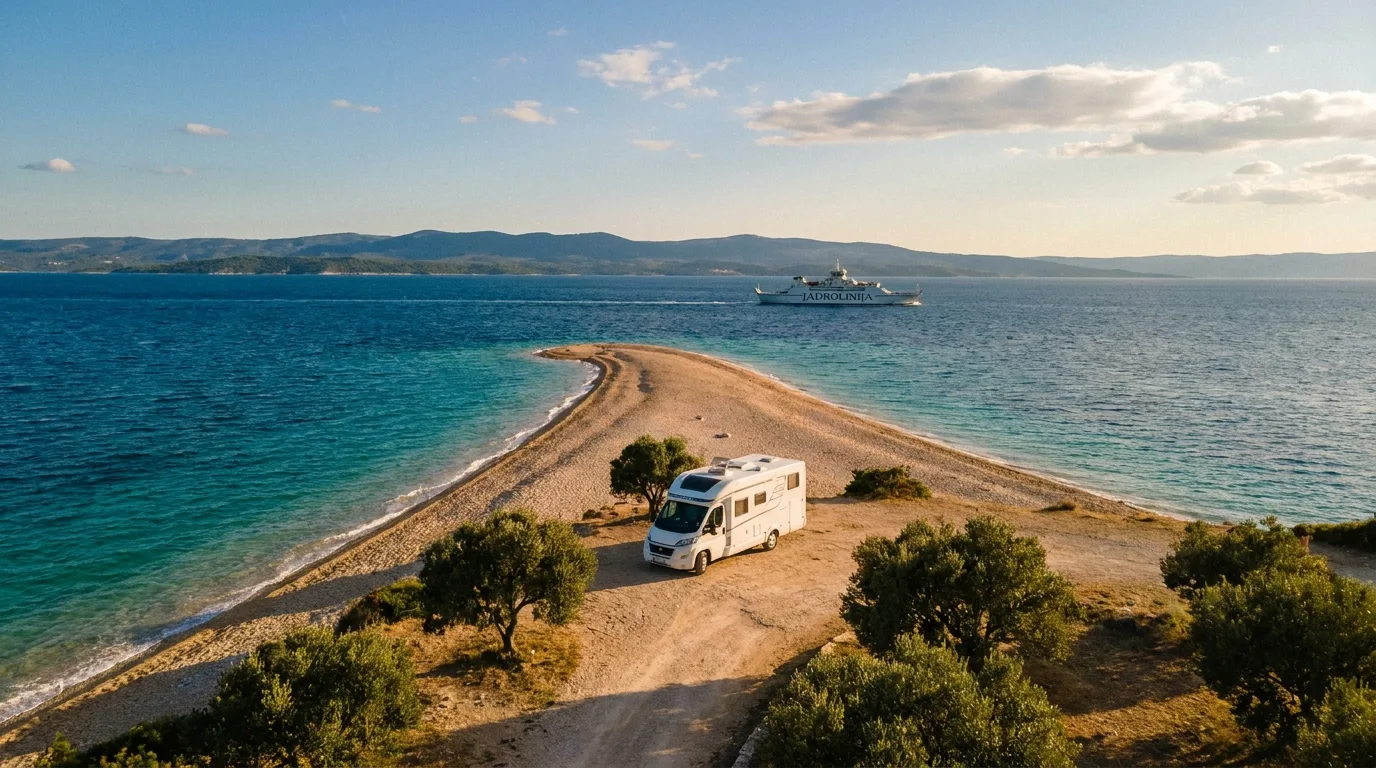
Island Hopping in Dalmatia - from Split to Dubrovnik by Motorhomefrom Split to Dubrovnik by Motorhome
Take this trip by motorhome
Save €400–€800 on average vs. a travel agency
Duration
x daysDistance
605 km
stops
9
Choose a date and duration that fits your preferences
About this route
Highlights
- ✦Diocletian's Palace in Split
- ✦Zlatni Rat on Brač, the beach that changes shape with the wind
- ✦The Makarska Riviera below Mount Biokovo, with the Skywalk
- ✦Two nights in Hvar: Stari Grad, lavender and the Pakleni Islands
- ✦The Neretva Delta, the garden of Dalmatia
- ✦Korčula, the walled city of Marco Polo
- ✦The oysters and the city walls of Ston on Pelješac
- ✦The salt lakes and the monastery island of Mljet
- ✦Two nights in Dubrovnik with a walk on the city walls
The route
Stop 1
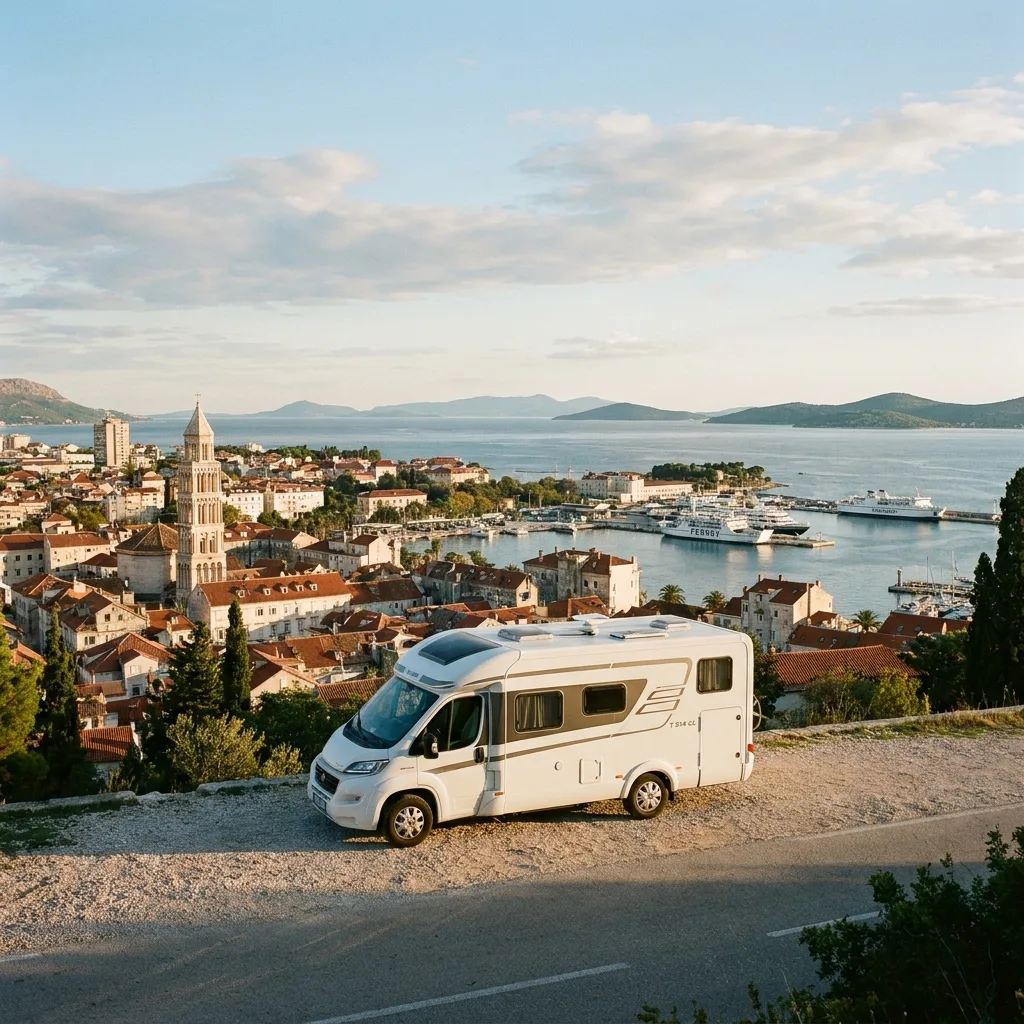
Split
Split is a city that grew within a Roman palace: Diocletian's Palace is not a ruin but a residential area with cellars, a cathedral in the emperor's mausoleum, and cafes on the peristyle. The Riva, the promenade under the palm trees, and the Marjan hill with its viewpoints belong to the evening. The campsite is located in Stobreč by the sea, with the bus to the center; the ferry port is next to the old city.
Stop 2
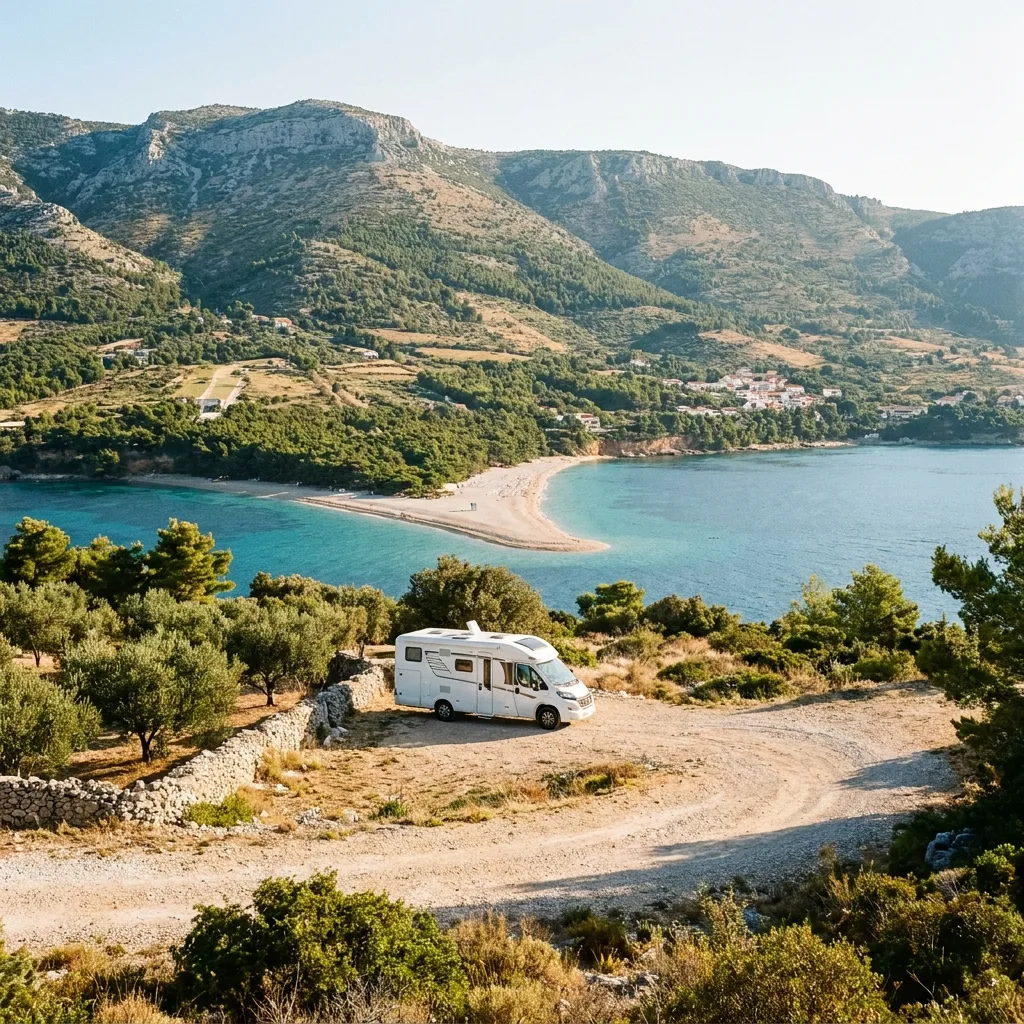
Brač
Brač is the island of the white stone used to build Diocletian's Palace and the White House, and of Zlatni Rat, the pebble spit near Bol that changes shape with the wind. Bol has the beach and wines of the south coast, Vidova Gora is the highest peak of the Adriatic islands, and further afield are the Blaca hermitage and the stonemasonry school in Pučišća. The campsites are near Bol and Supetar; the ferry from Split docks in Supetar, and the one to Makarska departs from Sumartin.
Stop 3
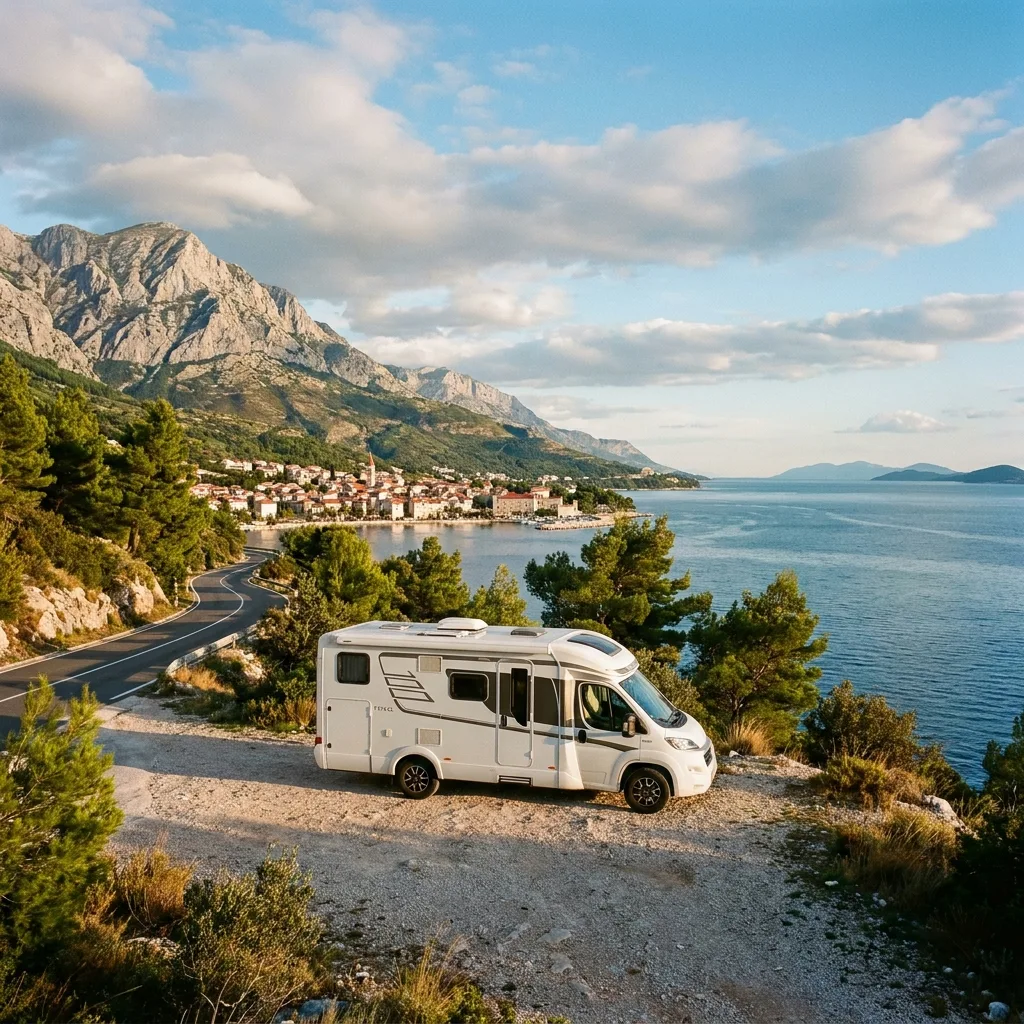
Makarska Riviera
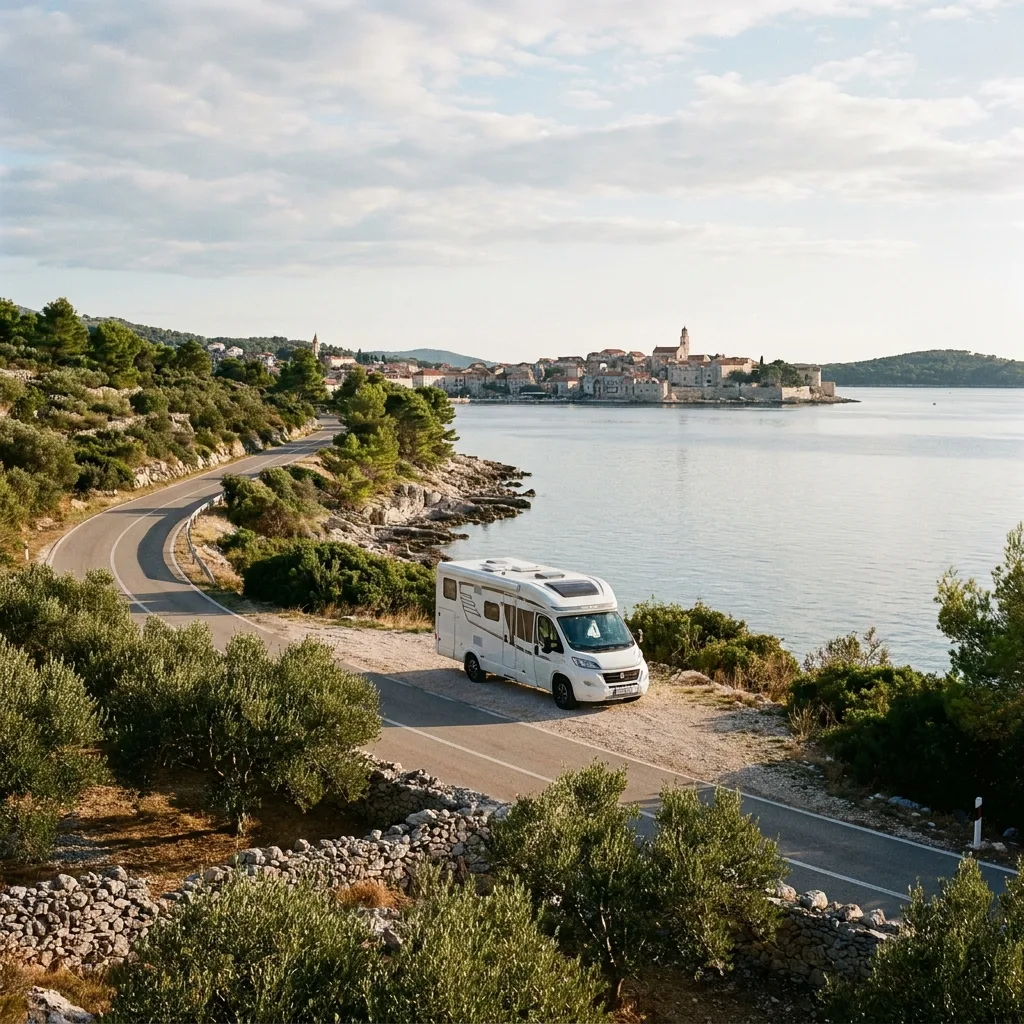
The Makarska Riviera is sixty kilometers of pebble beach beneath the sheer wall of Biokovo, with Makarska as a lively port city in the middle and villages like Brela and Tučepi on either side. The road up the mountain to the Skywalk, a glass platform at 1228 meters, is narrow and steep, but the view over the islands is the best on the coast. The campsites are located along the beach; the ferry to Hvar departs from Drvenik, half an hour further south.
Stop 4
Hvar
Hvar is the sunniest island in the Adriatic Sea, with the town of Hvar and its Venetian arsenal and fortress on one side, and Stari Grad with its UNESCO-listed Greek fields on the other. Around Velo Grablje are lavender fields and the abandoned village of Malo Grablje, Jelsa offers wines, and from the town, a taxi boat sails to the Pakleni Islands. The campsites are located near Stari Grad, Jelsa, and Vrboska; the ferry to the mainland departs from Sućuraj on the eastern tip.
Want to actually take this trip?
We put together the complete package for you — motorhome, ferry, campsites — in one personal email.
Stop 5
Neretva Delta
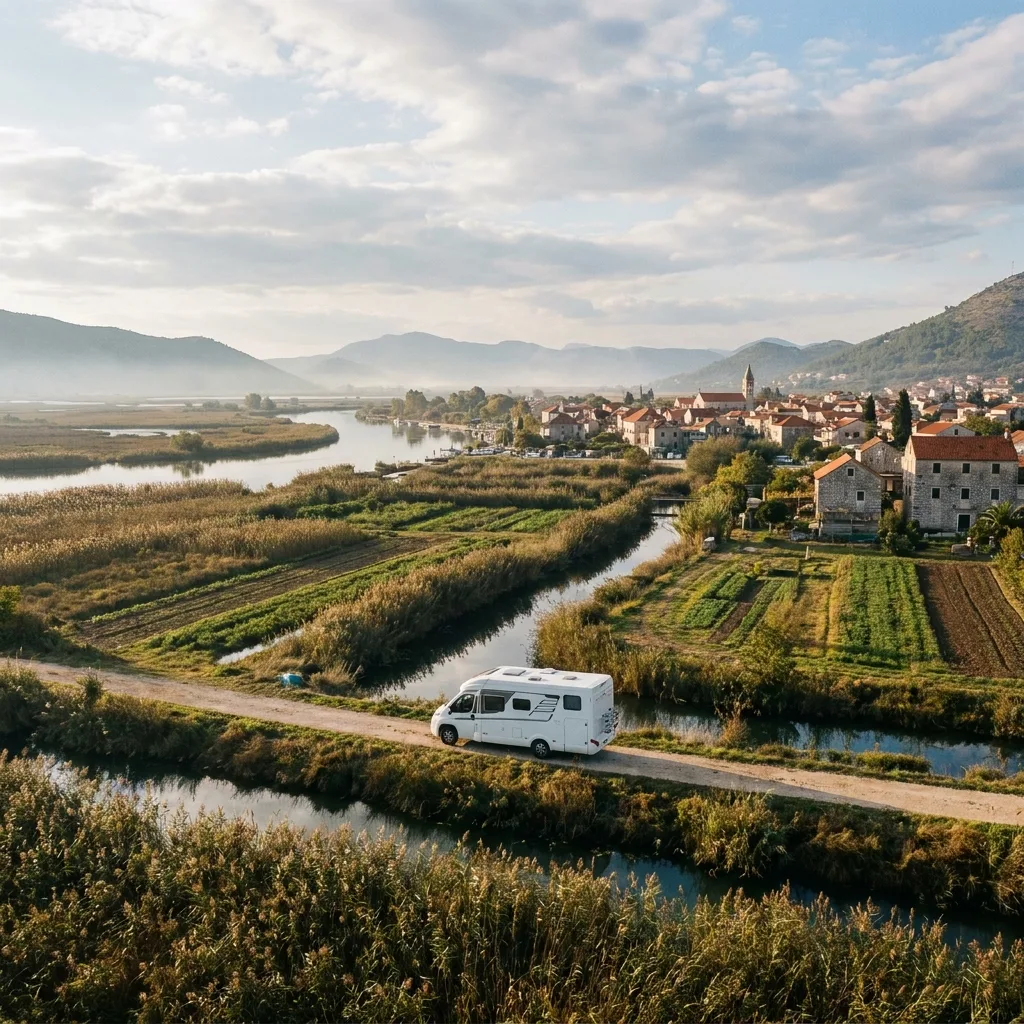
The Neretva Delta is a surprise between the coast and the mountains: a plain of canals, tangerine groves, and reed beds where farmers transport their harvest in flat boats, with Metković as the main town and the Narona Museum on a Roman forum in Vid. A boat trip through the canals and a plate of frog legs or eel are a must. The campsite is located at the mouth by the sea; the ferry to Pelješac departs from Ploče.
Stop 6
Korčula
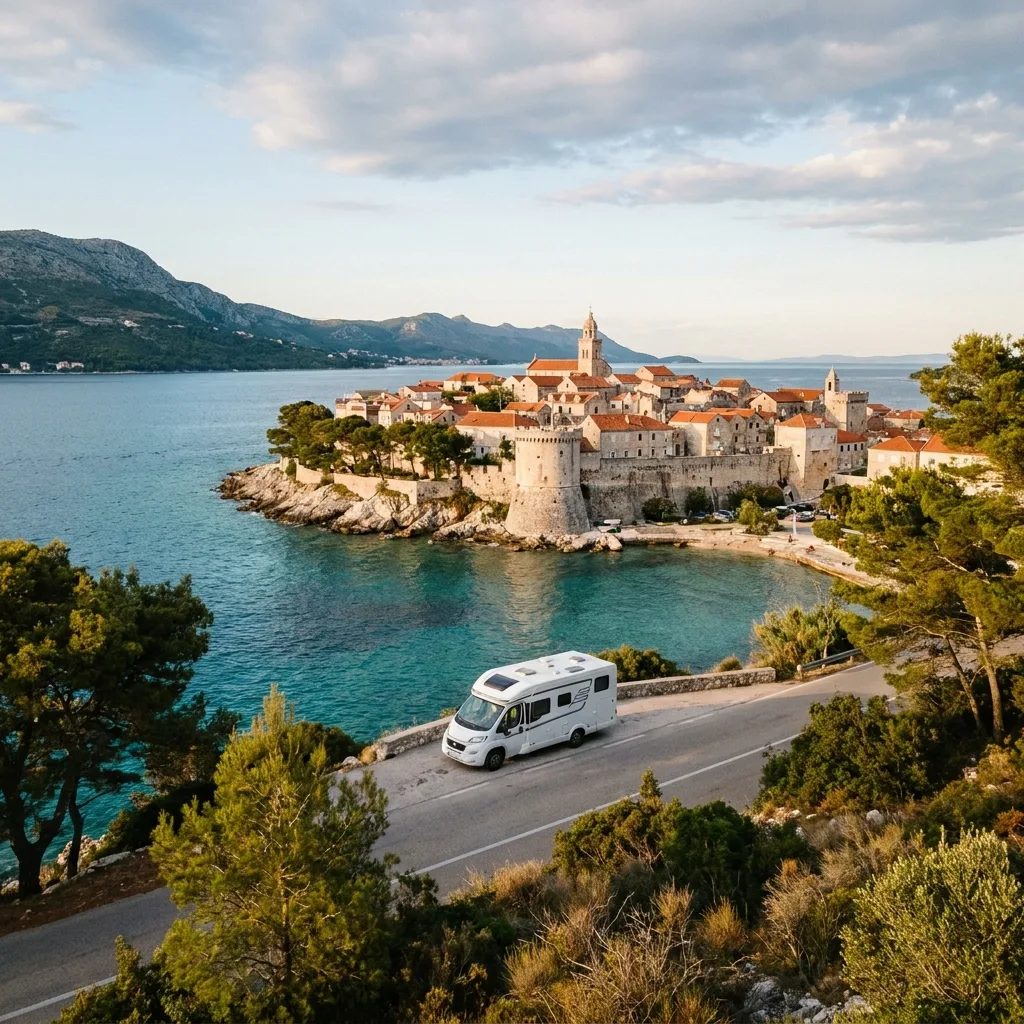
Korčula is the island where Marco Polo is said to have been born, with a walled city on a peninsula whose streets are laid out in a herringbone pattern to break the wind, and with the Moreška, a sword dance that has been performed here for five hundred years. Outside the city are the wines of Lumbarda and Smokvica, the beach of Pupnatska Luka, and the town of Vela Luka. The campsites are located near Lumbarda and Korčula town; the ferry docks in Dominče, opposite Orebić.
Stop 7
Ston
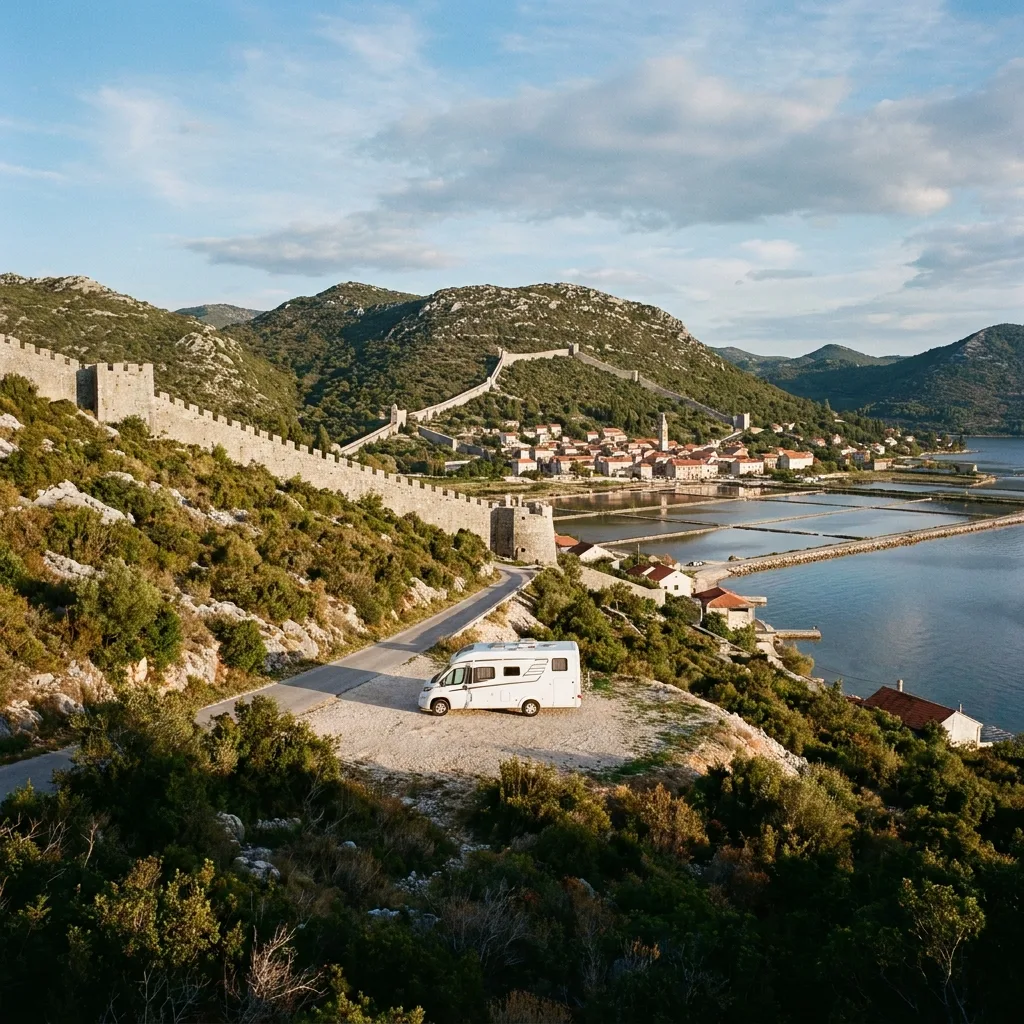
Ston is a small town at the foot of the Pelješac peninsula with the longest city wall in Europe after the Chinese, which runs over the hill to Mali Ston, and with salt pans that have been used since Roman times. The oysters and mussels from the bay of Mali Ston can be eaten at the growers' stalls on the quay. Pelješac itself is a wine region of dingač and postup, with Orebić as a seaside resort below Sveti Ilija. The campsite is located near Prapratno, where the ferry to Mljet departs.
Stop 8
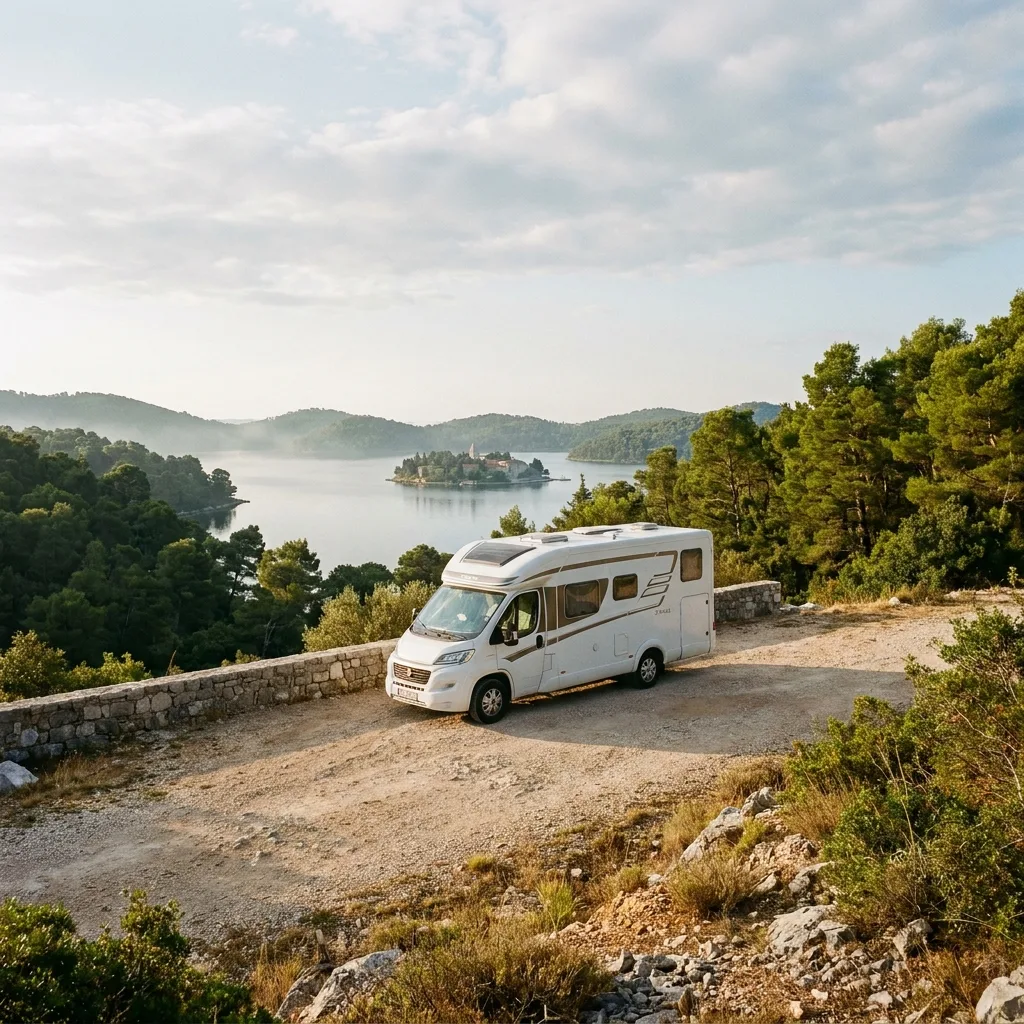
Mljet National Park
Mljet is the greenest island in the Adriatic Sea, featuring a national park in the west, encompassing two saltwater lakes and an islet with a Benedictine monastery situated in the largest lake. A cycling path encircles the lakes, and a boat provides transport to the monastery. Near Babino Polje, you will find Odysseus' Cave, while the eastern tip of the island boasts the beautiful beach of Saplunara. The campsite is conveniently located near Ropa, right on the edge of the national park. The ferry docks in Sobra, providing easy access to the island.
Stop 9
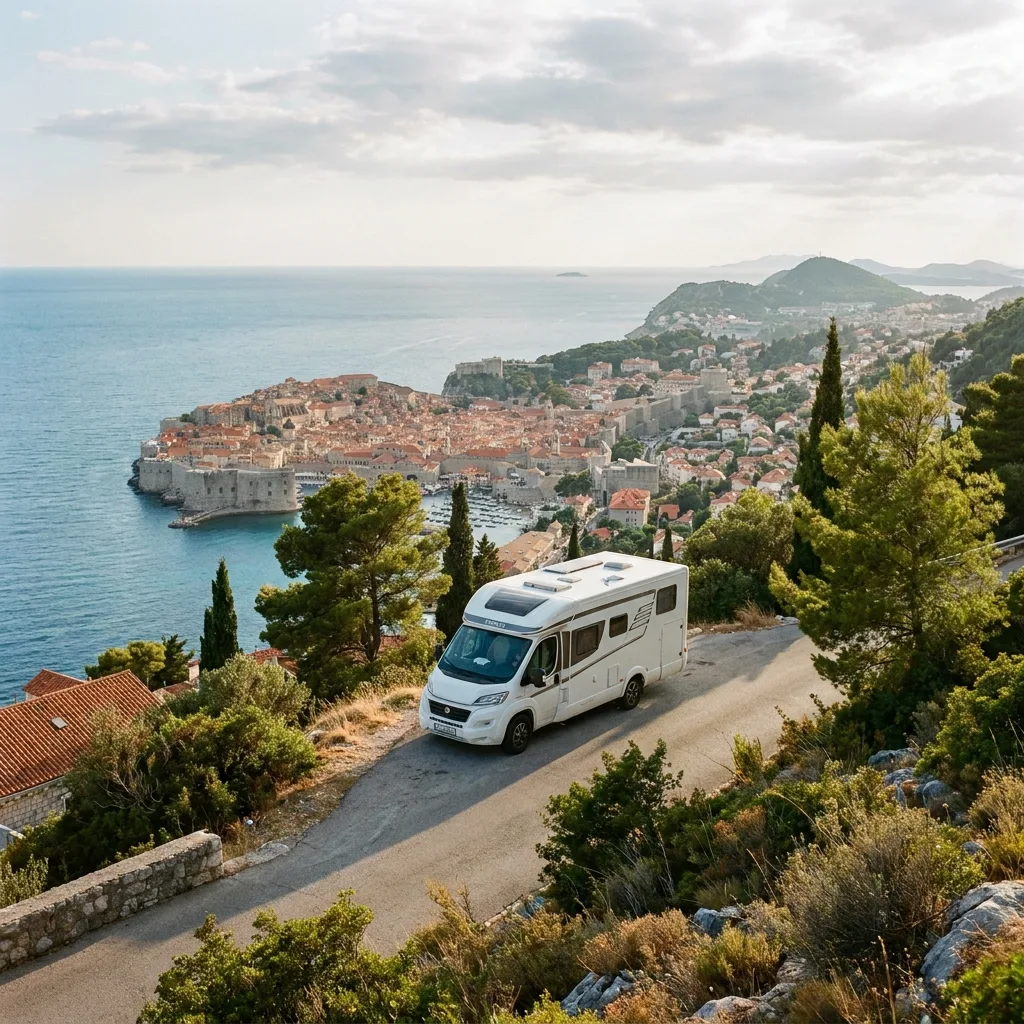
Dubrovnik
Dubrovnik is the pearl of the Adriatic Sea, a walled city of white stone with a two-kilometer walk on the walls and the cable car to Srđ for the view. The city is at its most beautiful early in the morning, before the cruise ships; Cavtat and the island of Lokrum are a boat trip away from the old harbor. The campsite is located in Mlini, on the coast below Cavtat, with a bus to the city; the airport is a fifteen-minute drive away.
Ready to hit the road?
We'll email you a personal travel proposal within 24 hours — motorhome, route and full cost overview included. Save €400–€800 on average vs. a travel agency.
No packages, no middlemen. Learn how it works
Camproads gave me a lot of inspiration for our campervan trip. The routes are beautiful, with a good balance of nature and city life, and the route generator made planning super easy. It's also really handy that there are so many good camping options at the locations, and that you can easily find the campervan that suits your needs and compare prices. This way, we can plan everything ourselves and book the campervan directly with the rental company. That's much cheaper than an organized trip!
Michiel van de Bunt
February 2026
What a difference from how I used to plan trips. Through Camproads, I put together a complete campervan trip in just a few minutes. It's so easy to use, and you can customize everything to your liking. The ability to choose your travel pace makes it even more enjoyable, especially now that we're traveling with a baby for the first time.
Alieke Zelhorst
February 2026