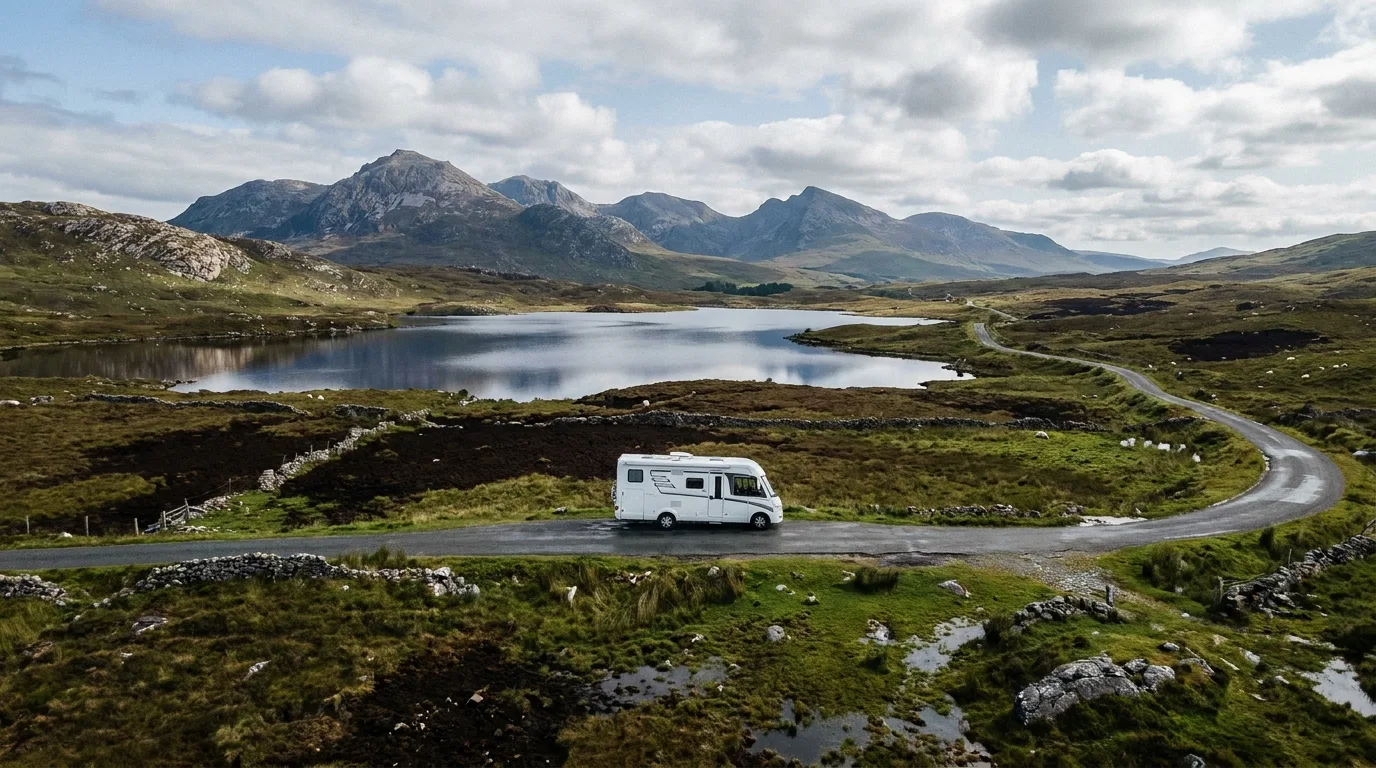
Take this trip by motorhome
Save €400–€800 on average vs. a travel agency
Duration
x daysDistance
1302 km
stops
14
Choose a date and duration that fits your preferences
About this route
Highlights
- ✦Arrive and depart by ferry at Rosslare
- ✦Medieval Kilkenny and the Rock of Cashel
- ✦Kinsale, Killarney and two nights on the Dingle Peninsula
- ✦Across the Shannon to the Cliffs of Moher and the Burren
- ✦Sky Road above Clifden and the Killary fjord
- ✦Clonmacnoise, monastic city on the Shannon
- ✦Newgrange, five thousand years old and older than the pyramids
- ✦Glendalough, monastic valley with two lakes in the Wicklow Mountains
The route
Stop 1
Wexford
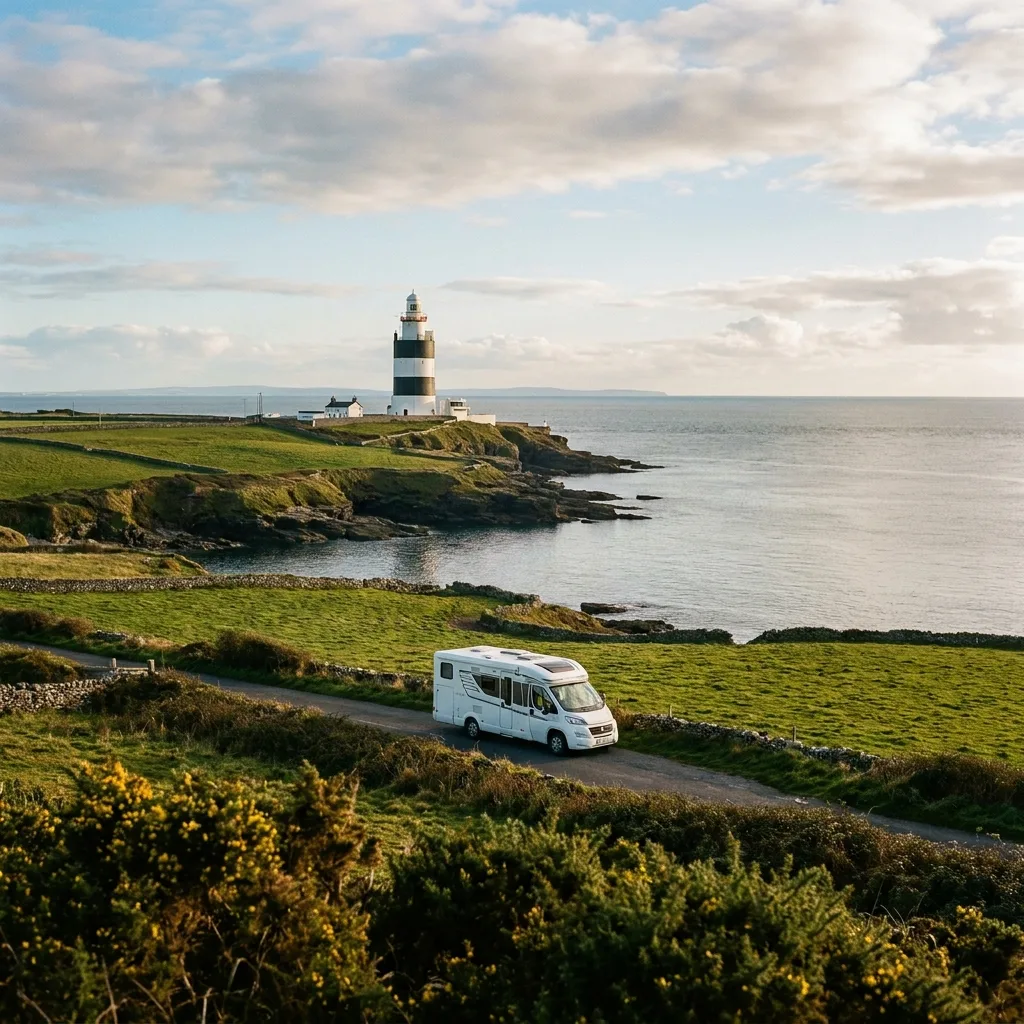
Wexford, a port city with a rich maritime past, surprises you with its sights. You can climb the Hook Lighthouse, the oldest working lighthouse in the world, with a guide. At the quay lies the Dunbrody Famine Ship, a replica of a nineteenth-century emigrant ship. Tintern Abbey shows the ruins of a Cistercian abbey. You can take an atmospheric walk along the Slaney over Wexford's long quay. The narrow main street runs parallel to the quays.
Stop 2
Kilkenny
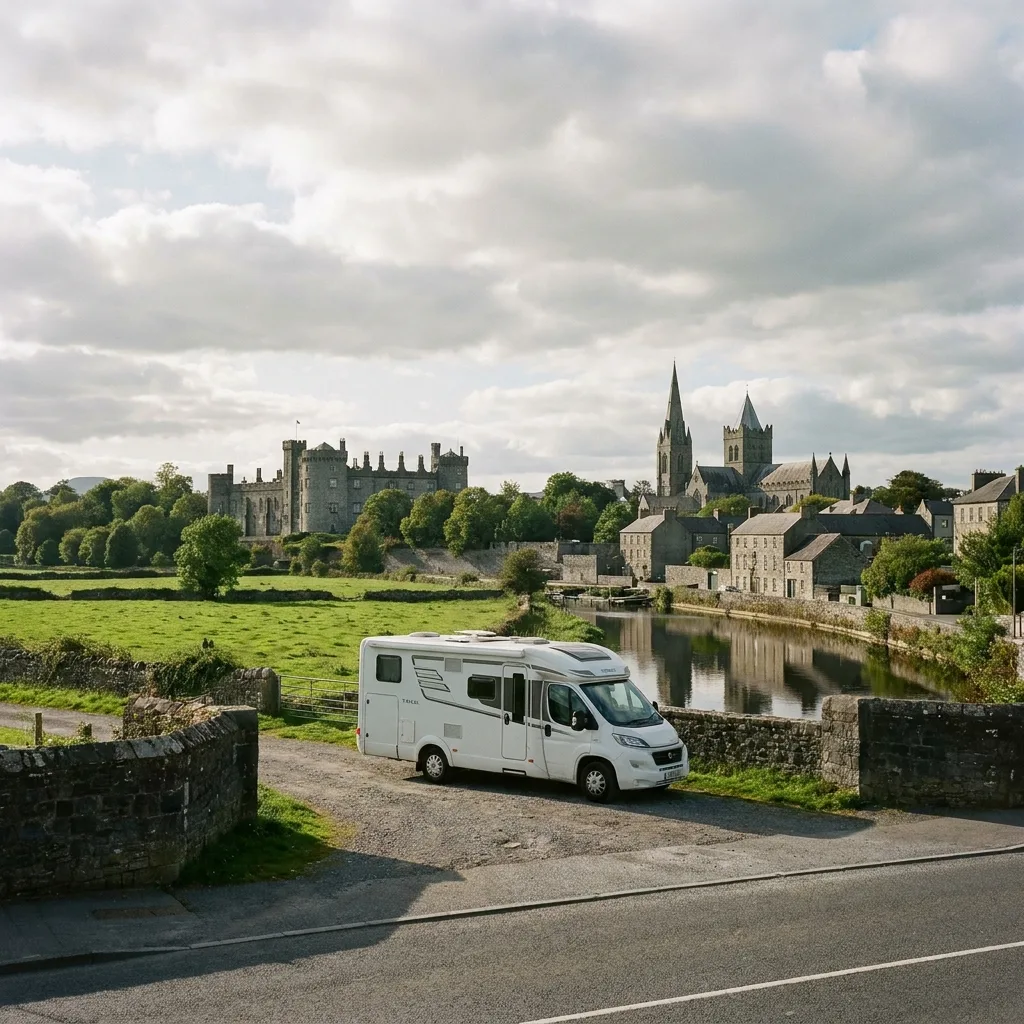
The medieval city of Kilkenny breathes history and vibrant culture, known as the best preserved in Ireland. You explore Kilkenny Castle, the imposing castle of the Butlers with an expansive park. The round tower of St. Canice's Cathedral offers a panoramic view after a climb. The lively Medieval Mile connects these places, where you can taste the famous Smithwick's beer, brewed since 1710, in cozy pubs. You can easily explore the compact city center on foot.
Stop 3
Ardmore
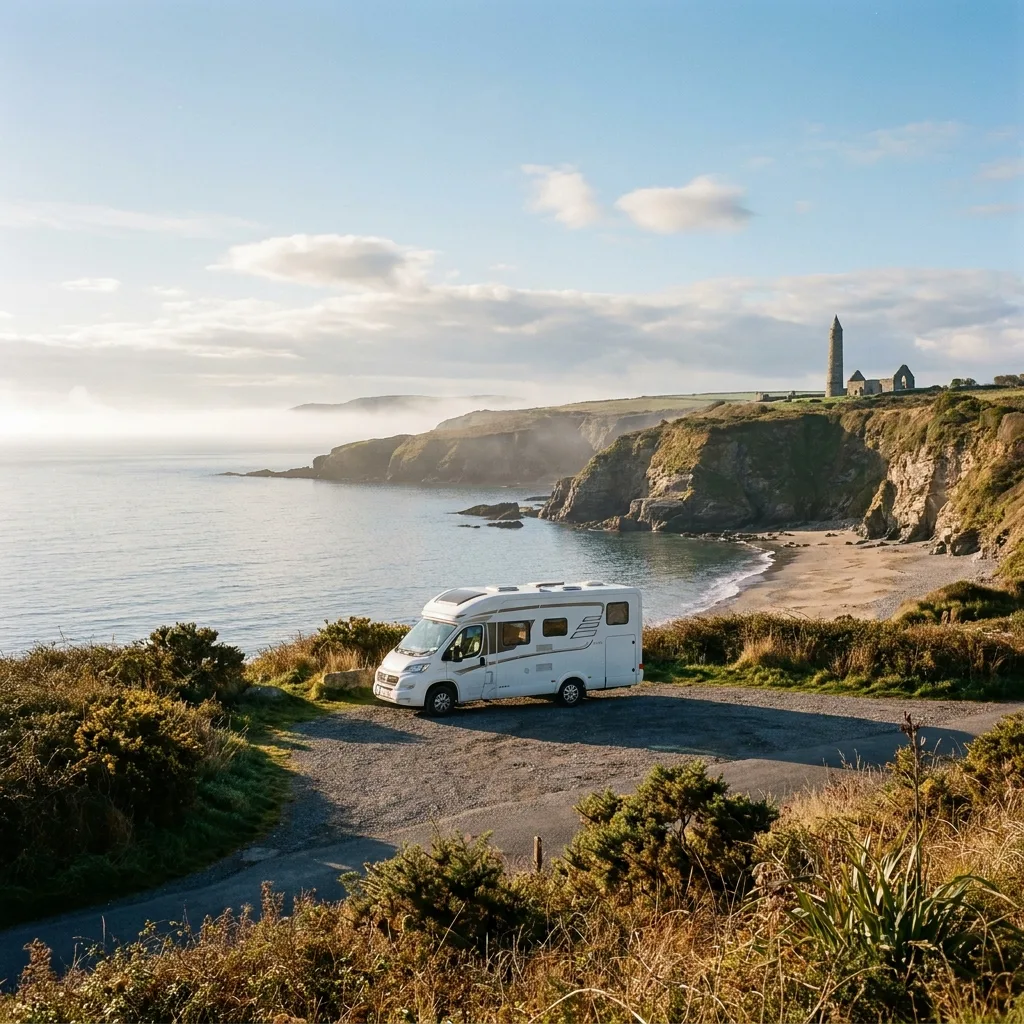
Ardmore is a charming village where the traces of Ireland's early Christian history are tangible. Saint Declan baptised Christians here even before the arrival of Patrick, as evidenced by his round tower and oratory above the beach. A cliff walk around the headland leads you past a shipwreck and an old watchtower. Nearby, the Copper Coast, a UNESCO Geopark, reveals abandoned copper mines, dramatic bays, and striking sea stacks. Here you experience serene tranquility with sweeping views over the Irish Sea.
Stop 4
Kinsale
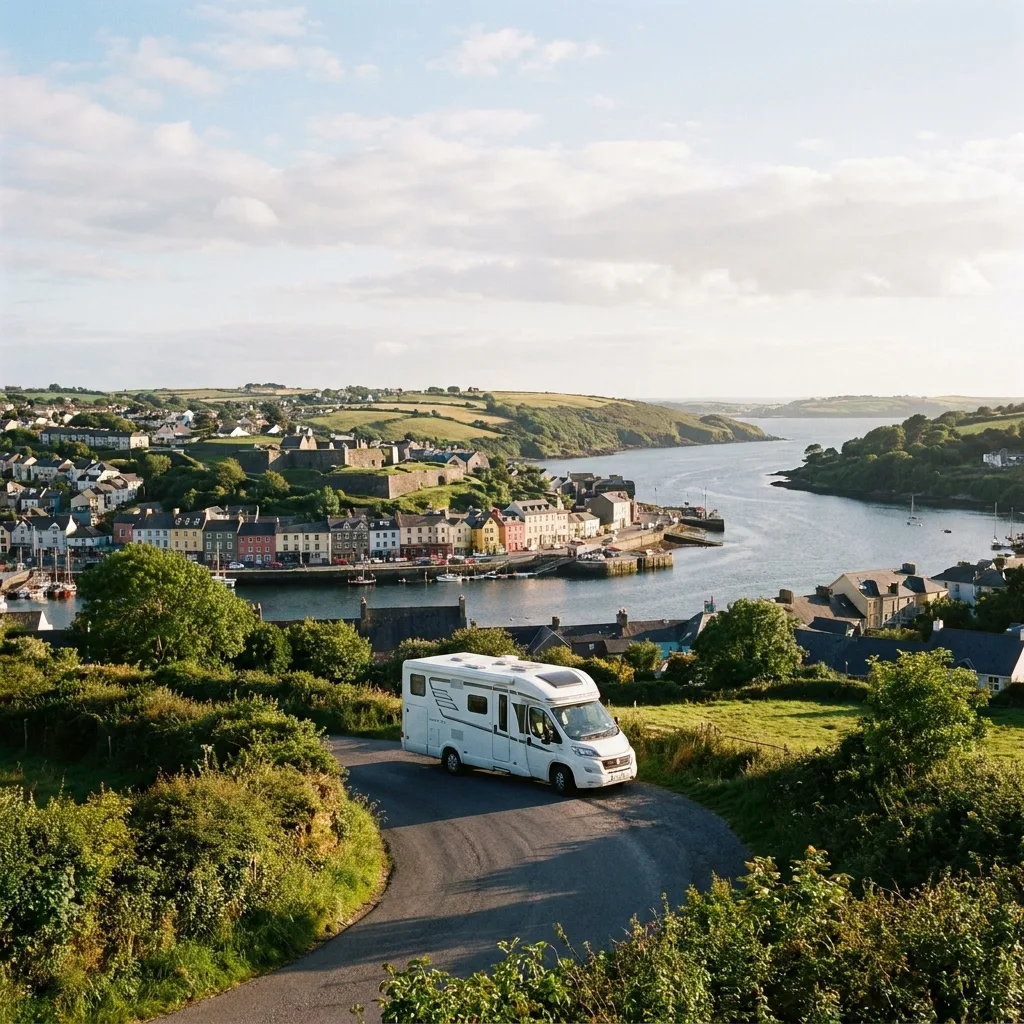
Kinsale is the official starting point of the Wild Atlantic Way and immediately feels different from Cork: colourful facades, yachts in the harbour, and more restaurants per inhabitant than anywhere else in Ireland. Walk the Scilly Walk to Charles Fort, a star-shaped 17th-century fort with views over the mouth of the Bandon. The motorhome won't fit in the narrow streets of the centre; park on the outskirts near the harbour.
Stop 5
Killarney National Park
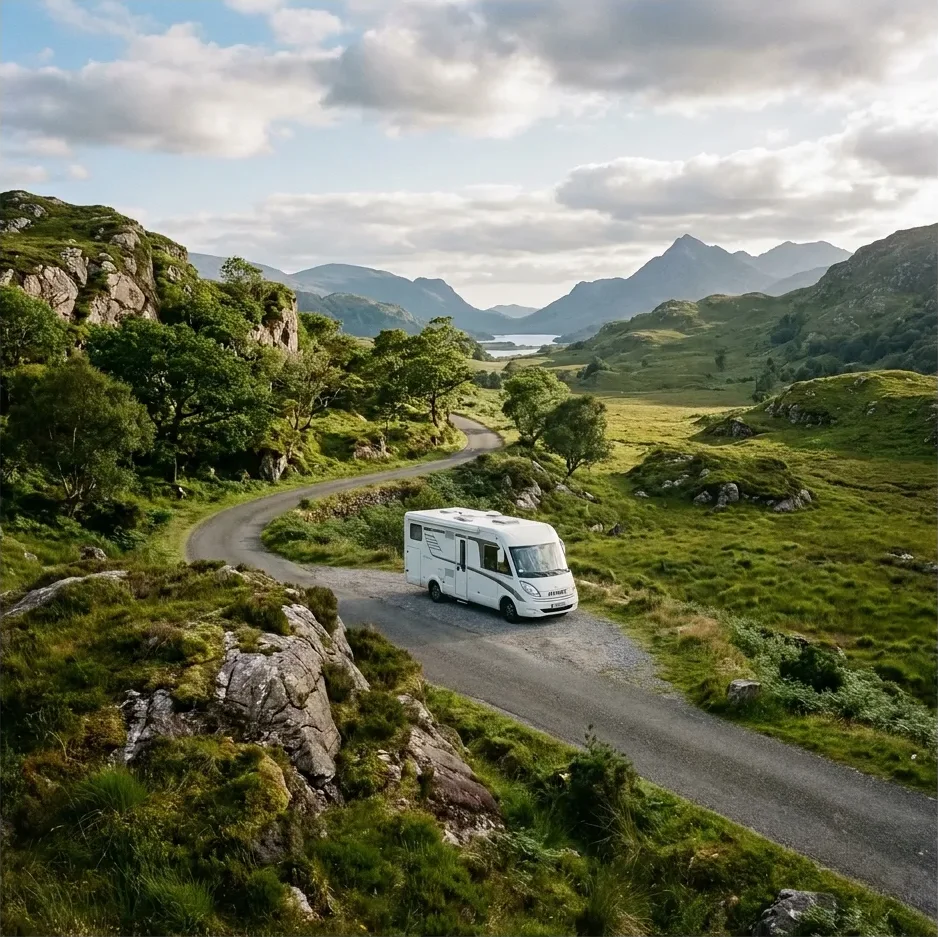
Killarney National Park is the reason everyone comes to Kerry: three lakes, ancient oak forests, the waterfalls of Torc, and deer grazing in the Muckross meadows in the morning. You do the Gap of Dunloe on foot or by bike, as the narrow road through the gorge is not suitable for a motorhome. Drive the Ring of Kerry counter-clockwise, in the same direction as the tour buses; the opposite direction causes problems on narrow sections.
Stop 6
Dingle Peninsula
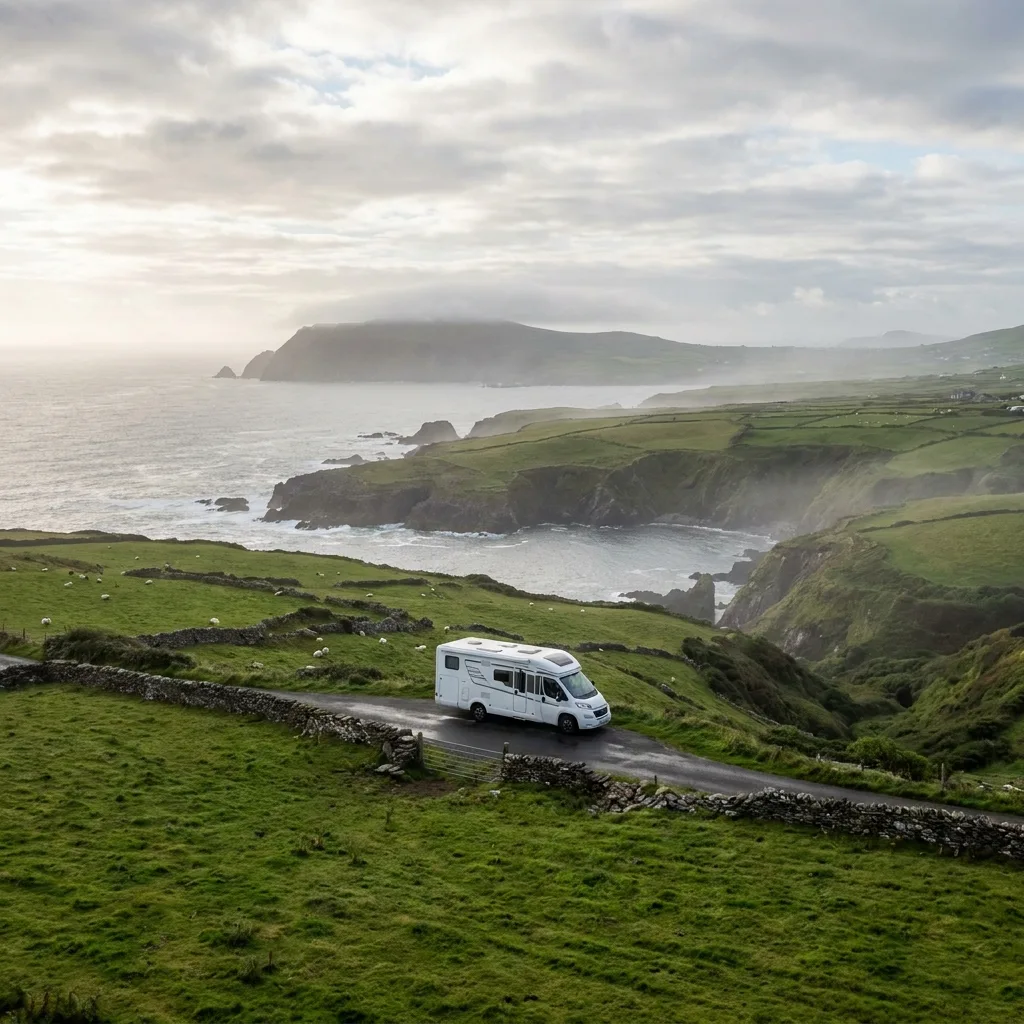
Dingle is the peninsula where Irish is still the main language and where the Slea Head Drive is the most beautiful coastal road in the country. Drive it clockwise, as indicated by the signs; oncoming traffic can be a problem on the narrow sections along the cliffs. Along the road are the beehive huts of Fahan, Coumeenoole beach, and views of the Blaskets. Dingle town has more pubs than streets, live music every evening, and a good motorhome pitch at the harbour.
Stop 7
Cliffs of Moher
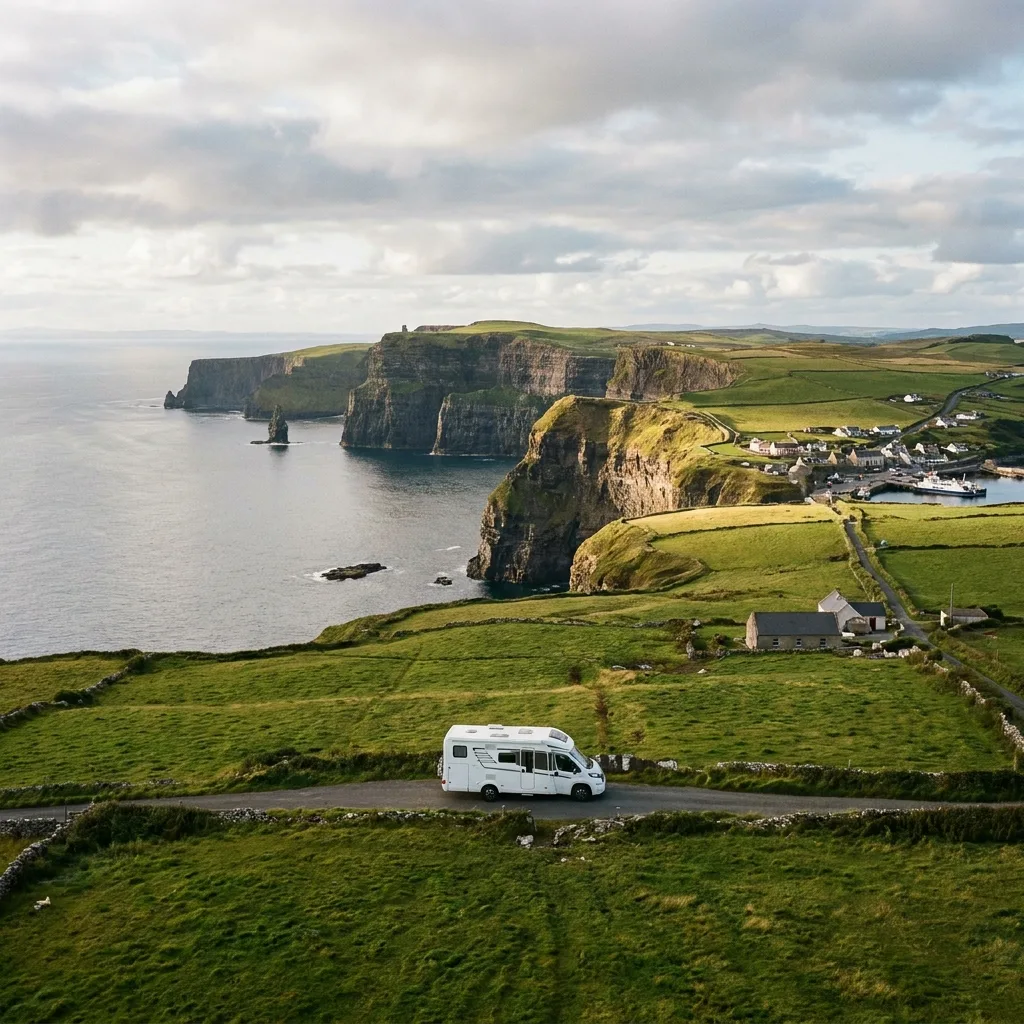
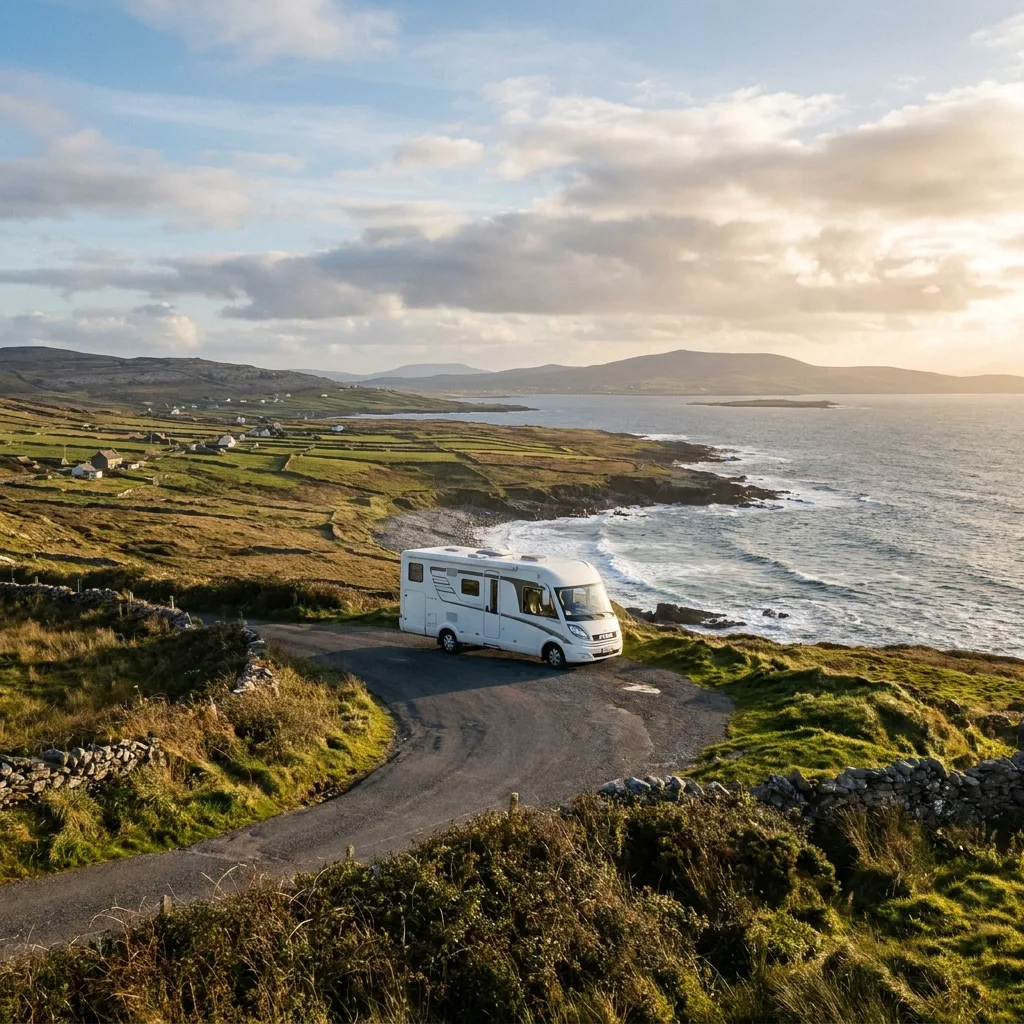
The Cliffs of Moher are busy during the day, so turn it around: stay at the campsite in Doolin in the afternoon, walk the coastal path to the cliffs and return when the visitor centre car park empties. In the evening light, you'll have the two-hundred-metre-high cliffs and the puffins almost to yourself. Doolin itself is the village for traditional music: three pubs, sessions every evening, and boats to the Aran Islands depart from the pier.
Want to actually take this trip?
We put together the complete package for you — motorhome, ferry, campsites — in one personal email.
Stop 8
Galway
Galway is bursting with life, where street musicians fill Shop Street with cheerful sounds. By the harbor stands the Spanish Arch, a historic archway that recalls bygone eras. The colorful houses of the Long Walk offer charming views over the water. You can wander through the narrow alleys of the Latin Quarter or discover the green oasis of Eyre Square. The evenings are lively, with live music echoing from the many pubs along The Quays.
Stop 9
Connemara National Park
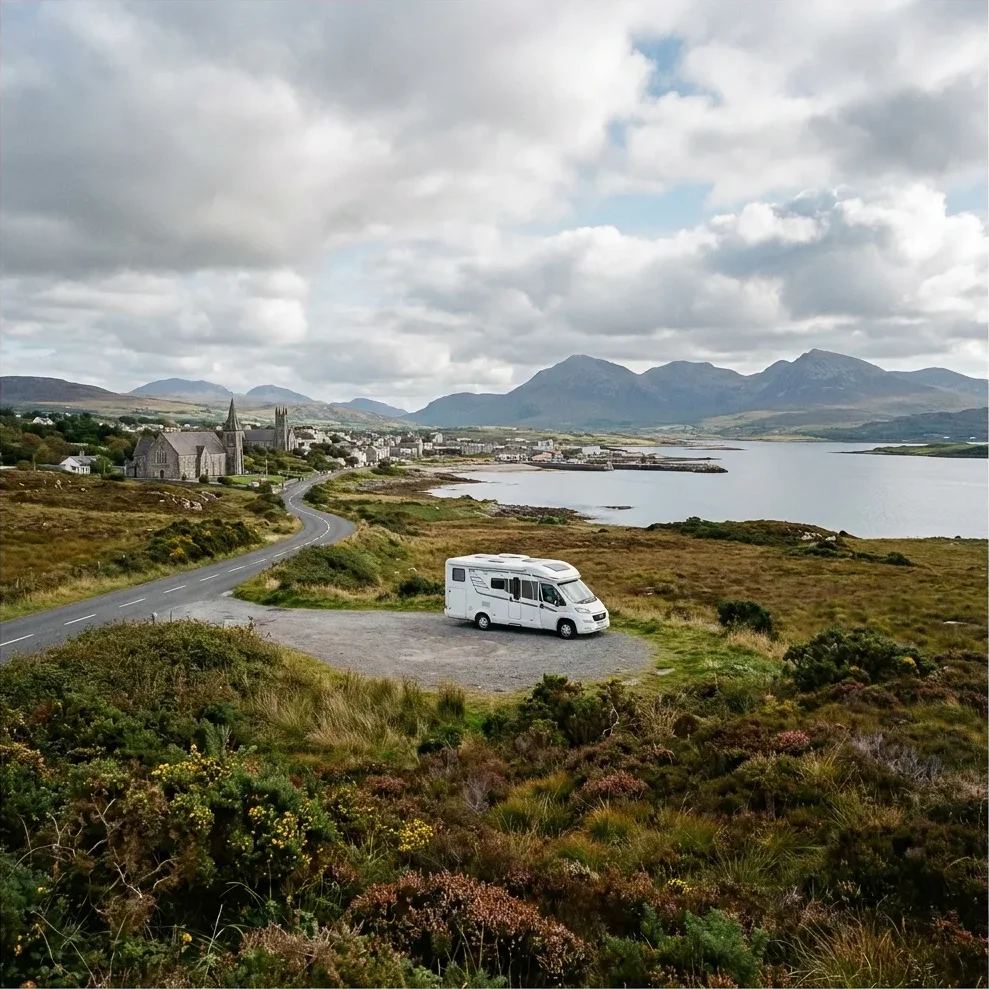
Purple heather fields and rugged mountain peaks dominate the landscape of Connemara National Park. Those who follow the paths to the top of Diamond Hill look out over the white towers of Kylemore. From the cliffs at Clifden Bay, you have a view of the islands Inishturk and Turbot. In the valley lie the overgrown ruins of Clifden Castle among grazing sheep. In lively Clifden, music often plays from the pubs on Main Street.
Stop 10
Westport
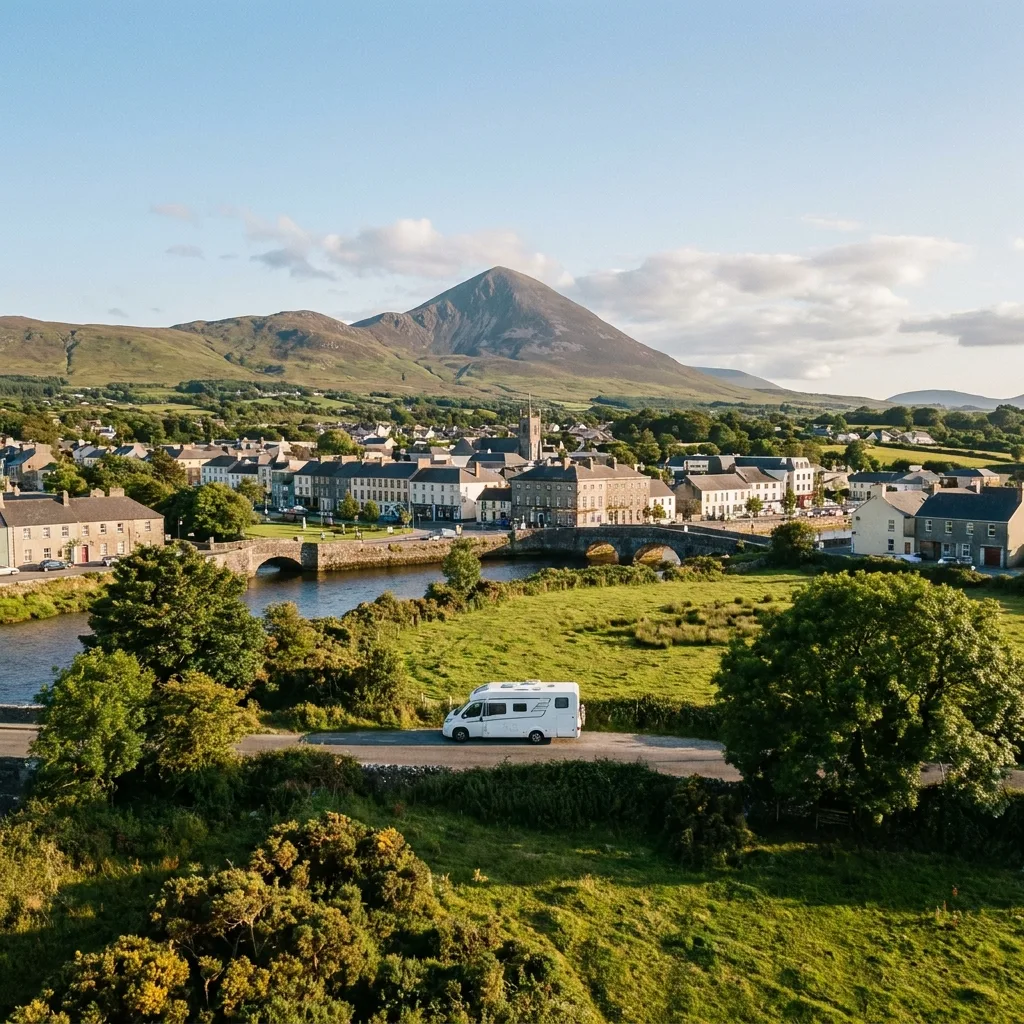
Westport is a Georgian town with a river through its centre and a series of pubs, of which Matt Molloy's, belonging to The Chieftains' flautist, is the best known. Croagh Patrick, the holy mountain, is right next to it: the climb from Murrisk is steep and stony and takes three to four hours up and down, with a chapel at the top and views over the three hundred islands of Clew Bay. Those who don't climb can cycle the Great Western Greenway towards Achill.
Stop 11
Athlone
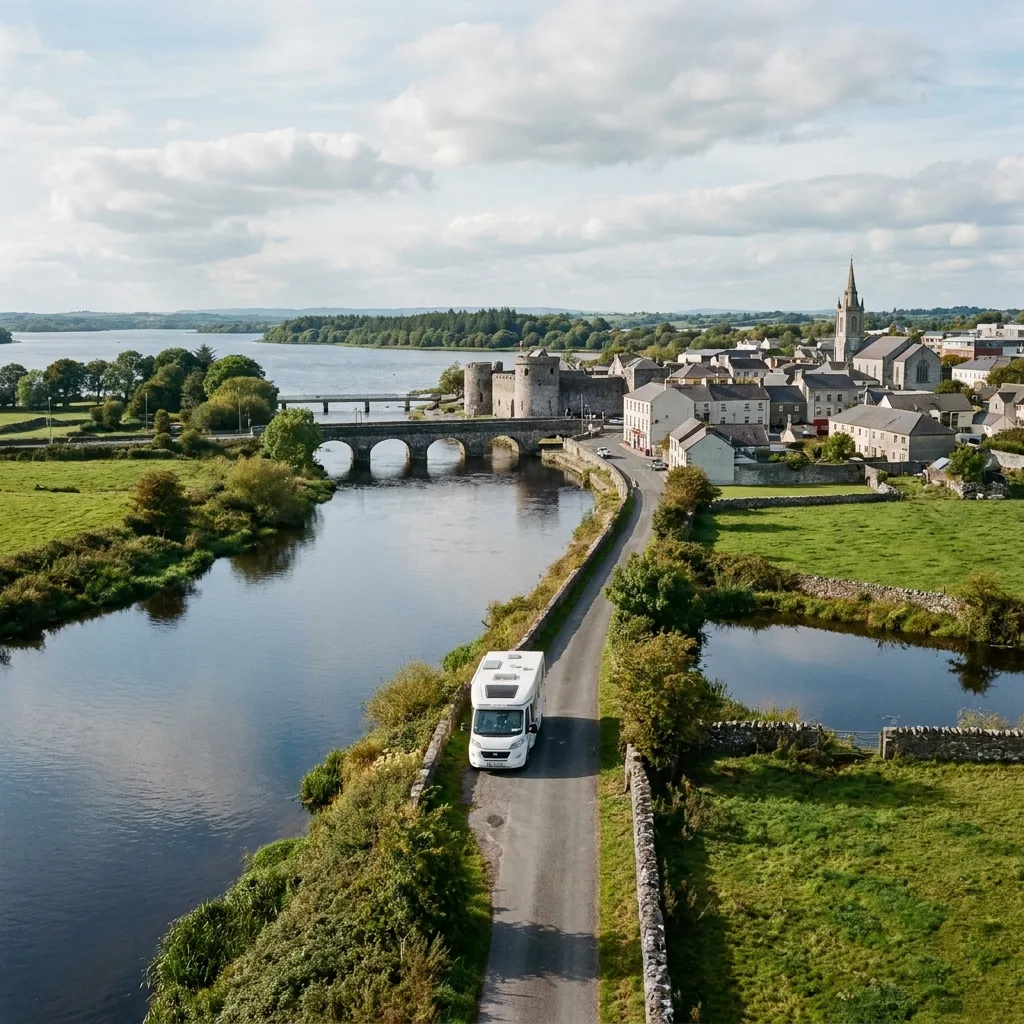
Athlone offers a rich history and a vibrant aquatic world where the Shannon flows from Lough Ree. At the foot of the impressive Athlone Castle lies Sean's Bar, which claims to be Ireland's oldest pub. The expansive Lough Ree is a lake full of islands and reed beds. You can rent a boat to explore its waters or take a Viking cruise for a relaxing trip. The town exudes a cozy atmosphere, where, after a day on the water, you can settle into the historic Sean's Bar.
Stop 12
Dublin
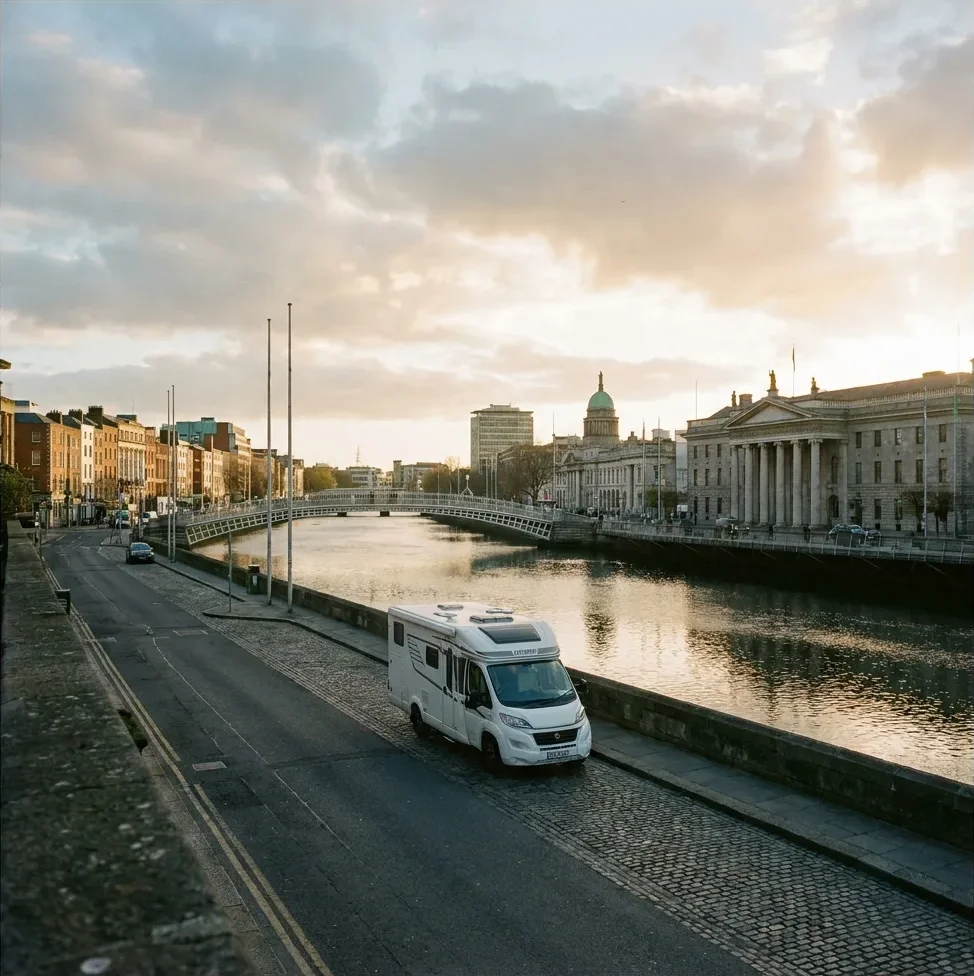
Dublin has Trinity College with the Book of Kells, the Guinness Storehouse with city views, and Temple Bar if you like it lively; those who prefer it quieter can walk along the Grand Canal or through Kilmainham Park. Driving a motorhome into the city centre is not a good idea: narrow streets, toll roads, and hardly any parking spaces. The campsite is in the southwest of the city, with a bus to the centre. Many rental motorhomes are picked up here; the depots are on the outskirts of the city.
Stop 13
Glendalough
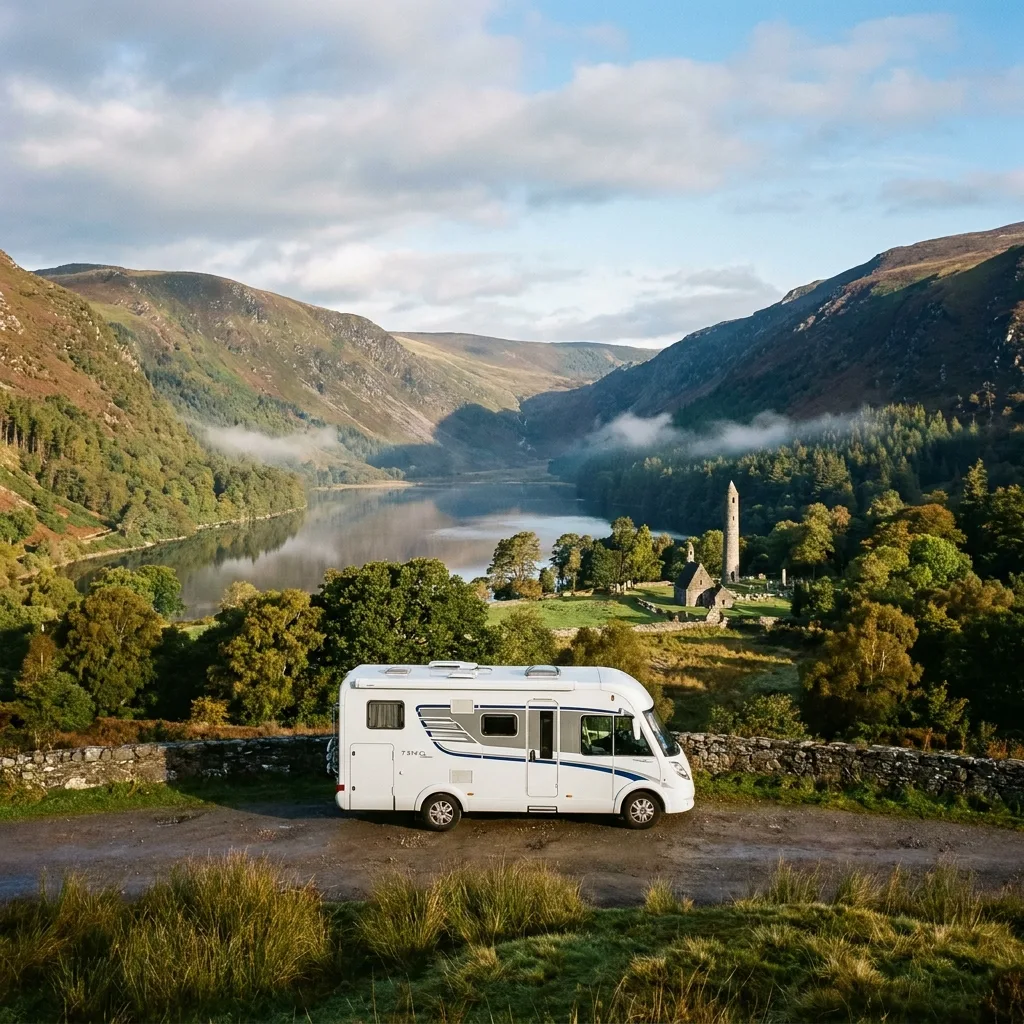
Glendalough is a monastic valley with two lakes nestled between the Wicklow Mountains: a round tower, a roofless cathedral, and hiking trails ranging from half an hour to a full day. The Spinc walk runs above the Upper Lake, and via the Wicklow Gap or Sally Gap, you drive through barren plateaus with peat lakes where Braveheart and P.S. I Love You were filmed. The road over the Sally Gap is narrow but manageable for a motorhome.
Stop 14
Wexford
Wexford, a port city with a rich maritime past, surprises you with its sights. You can climb the Hook Lighthouse, the oldest working lighthouse in the world, with a guide. At the quay lies the Dunbrody Famine Ship, a replica of a nineteenth-century emigrant ship. Tintern Abbey shows the ruins of a Cistercian abbey. You can take an atmospheric walk along the Slaney over Wexford's long quay. The narrow main street runs parallel to the quays.
Ready to hit the road?
We'll email you a personal travel proposal within 24 hours — motorhome, route and full cost overview included. Save €400–€800 on average vs. a travel agency.
No packages, no middlemen. Learn how it works
Camproads gave me a lot of inspiration for our campervan trip. The routes are beautiful, with a good balance of nature and city life, and the route generator made planning super easy. It's also really handy that there are so many good camping options at the locations, and that you can easily find the campervan that suits your needs and compare prices. This way, we can plan everything ourselves and book the campervan directly with the rental company. That's much cheaper than an organized trip!
Michiel van de Bunt
February 2026
What a difference from how I used to plan trips. Through Camproads, I put together a complete campervan trip in just a few minutes. It's so easy to use, and you can customize everything to your liking. The ability to choose your travel pace makes it even more enjoyable, especially now that we're traveling with a baby for the first time.
Alieke Zelhorst
February 2026