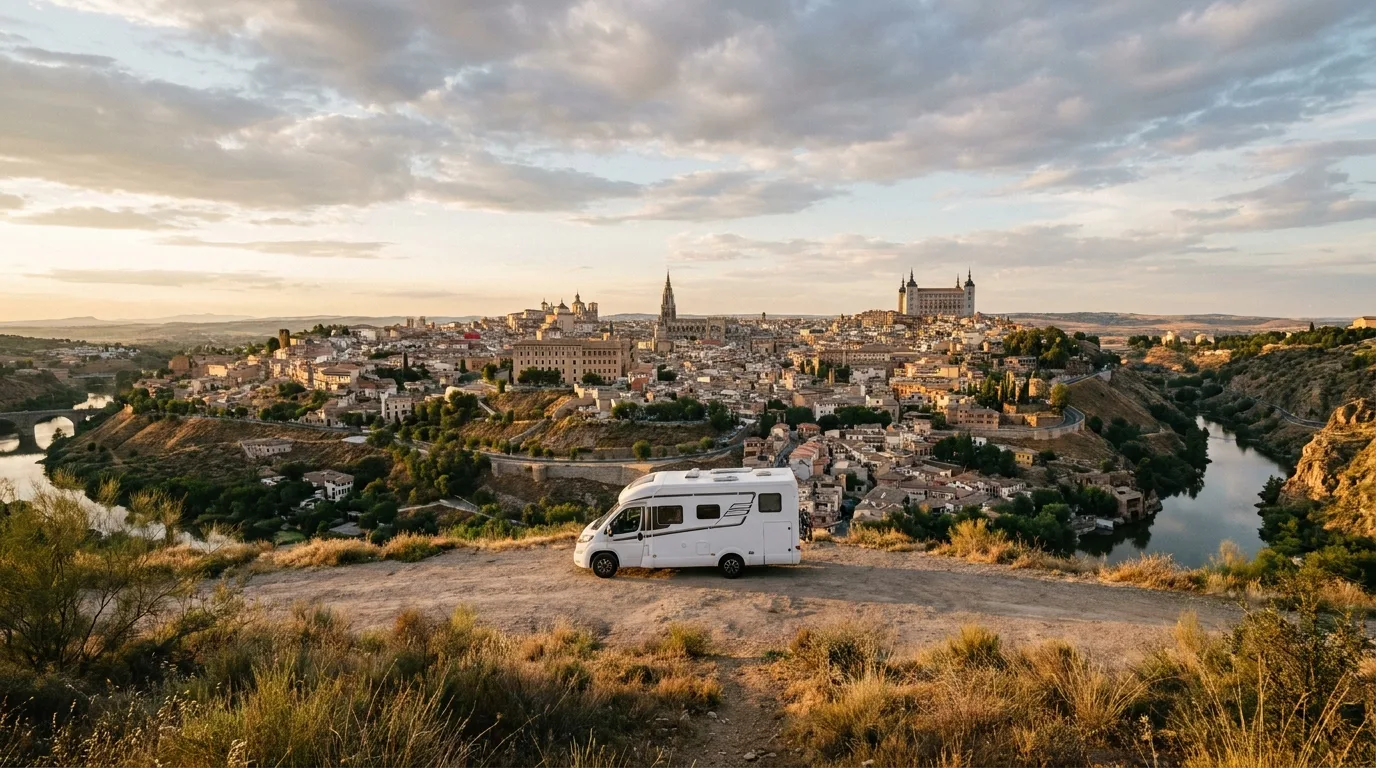
Take this trip by motorhome
Save €400–€800 on average vs. a travel agency
Duration
x daysDistance
2491 km
stops
18
Choose a date and duration that fits your preferences
About this route
Highlights
- ✦Explore the Gothic splendor of Burgos Cathedral
- ✦Taste wine and wander through car-free Laguardia in Rioja
- ✦Discover the surreal landscape of the Roman gold mine Las Médulas
- ✦Spot vultures and eagles in Monfragüe’s rugged nature
- ✦Step back in time at Mérida’s impressive Roman monuments
- ✦Be impressed by Ávila’s exceptionally preserved medieval city walls
- ✦Admire the Roman aqueduct and fairytale Alcázar in Segovia
The route
Stop 1
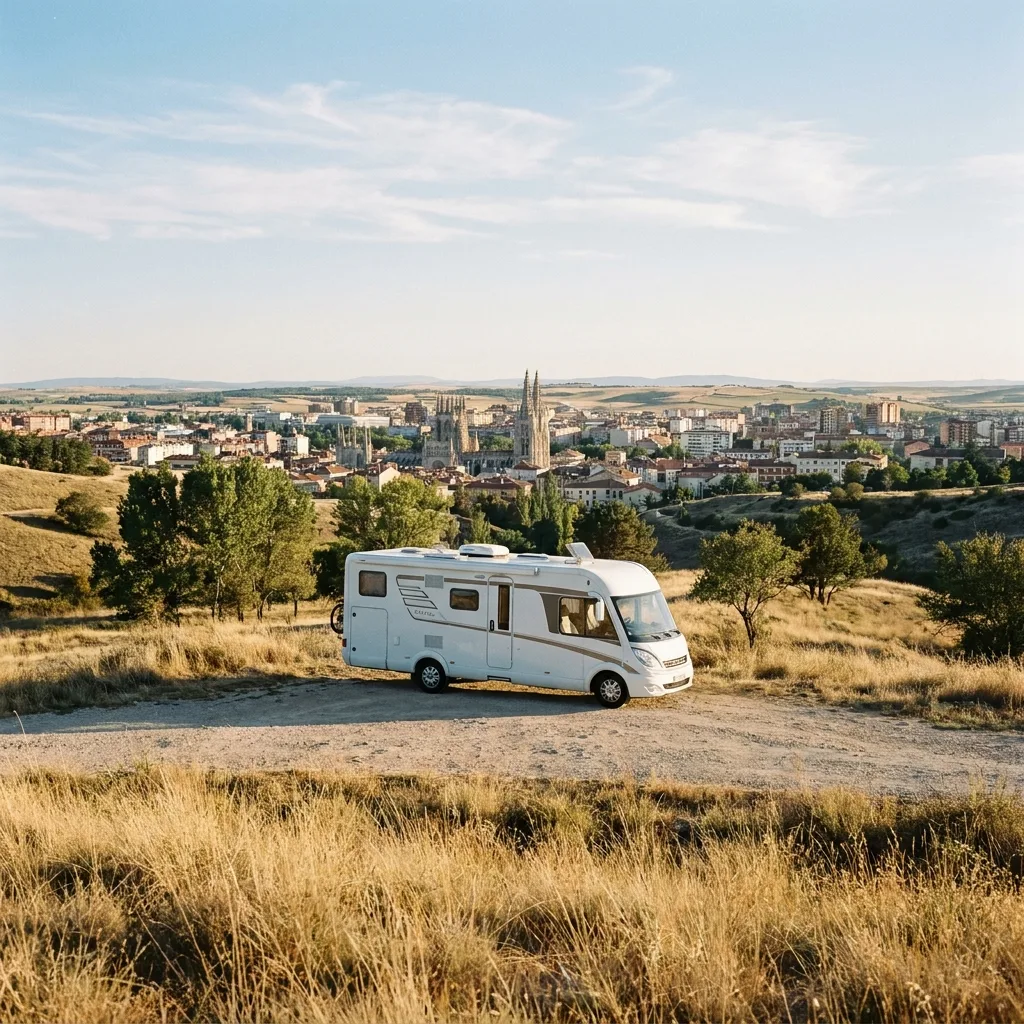
Burgos
Burgos is a city in Castile known for the Gothic Catedral de Burgos, construction of which began in 1221. You can walk through the Arco de Santa María to the city center or visit the royal monastery Monasterio de las Huelgas from the twelfth century. The pilgrimage route to Santiago runs through the center along the Arlanzón river. In the local eateries, you can taste morcilla de Burgos, a blood sausage with rice.
Stop 2
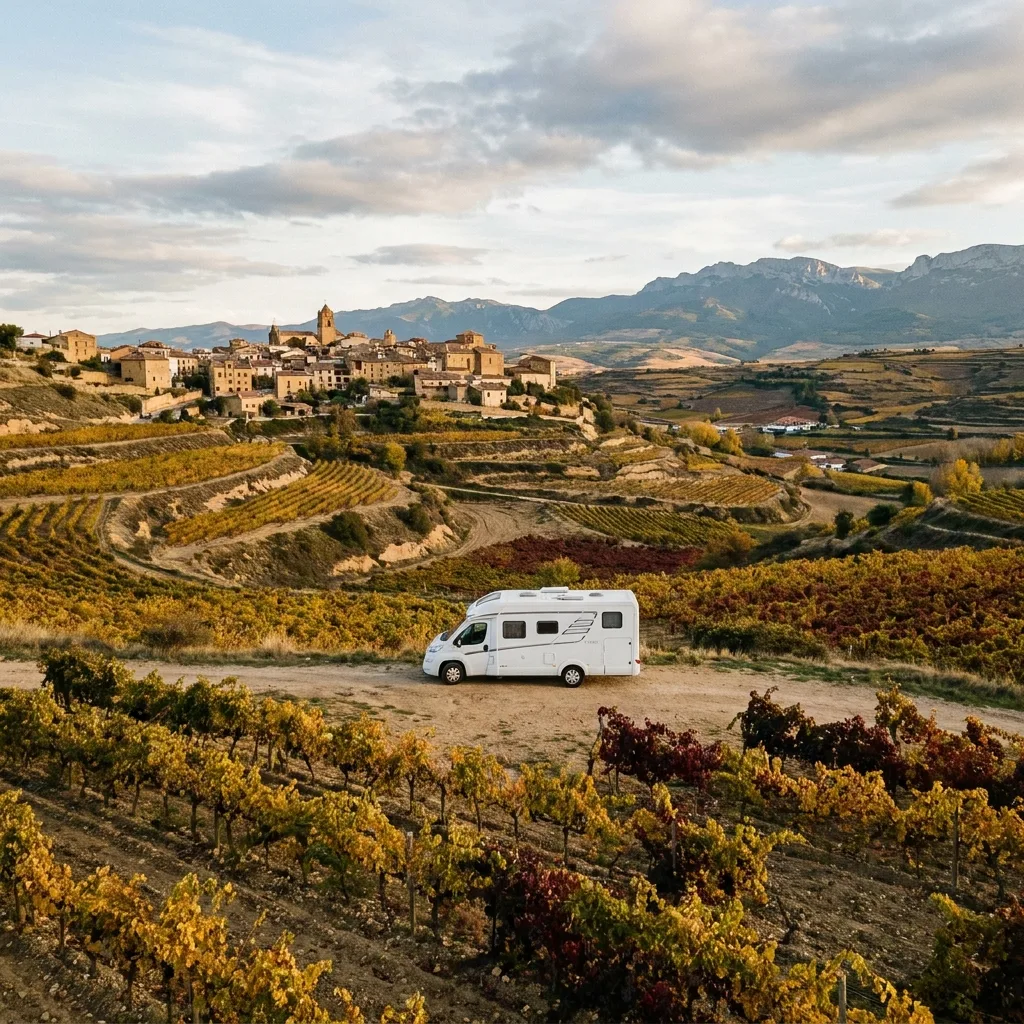
La Rioja
La Rioja is Spain's wine region: along the Ebro, vineyards are terraced against the Sierra de Cantabria. In Haro, old bodegas are clustered around the station, allowing you to walk from cellar to cellar. Logroño's Calle Laurel is a street where every bar creates its own pincho. The Camino de Santiago runs right through the region, and in the surrounding villages, you'll see pilgrims walking. In Haro, the Barrio de la Estación packs several century-old wineries into a few streets.
Stop 3
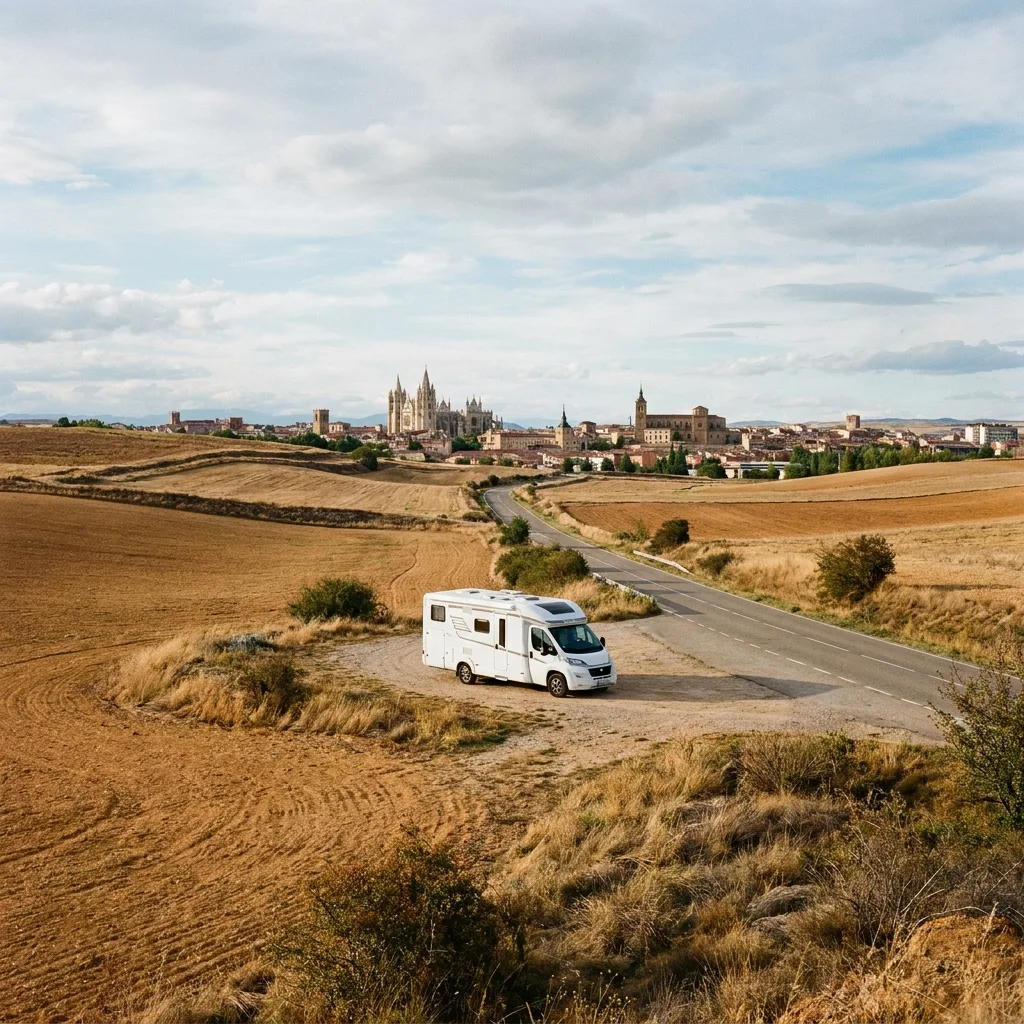
León
León is located on the Bernesga River in Castilla y León on the pilgrimage route to Santiago de Compostela. The thirteenth-century Gothic Catedral de León features 1,800 square meters of stained-glass windows. You can view Romanesque frescoes in the Basílica de San Isidoro and visit the Casa Botines, designed by Antoni Gaudí in 1892. In the narrow streets of the Barrio Húmedo, you can eat tapas at local bars.
Stop 4
Las Médulas
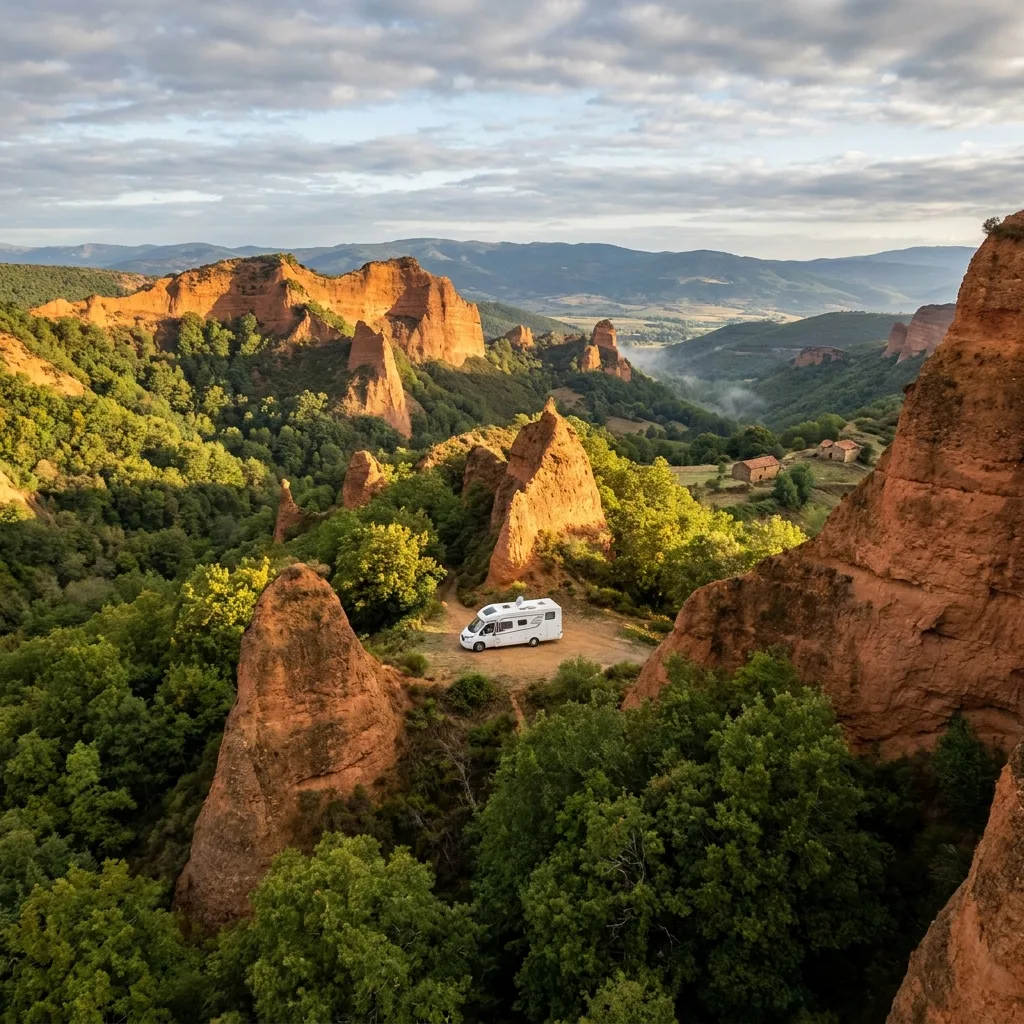
Las Médulas in the El Bierzo region is a former Roman gold mine from the first century AD, listed as a UNESCO World Heritage site. The landscape is characterized by red rock formations and cavities such as La Cuevona, which were created by the mining technique ruina montium. Here you can walk past ancient chestnut trees to the Mirador de Orellán and the Galería de Orellán, where you walk through carved passages in the mountains.
Stop 5
Salamanca
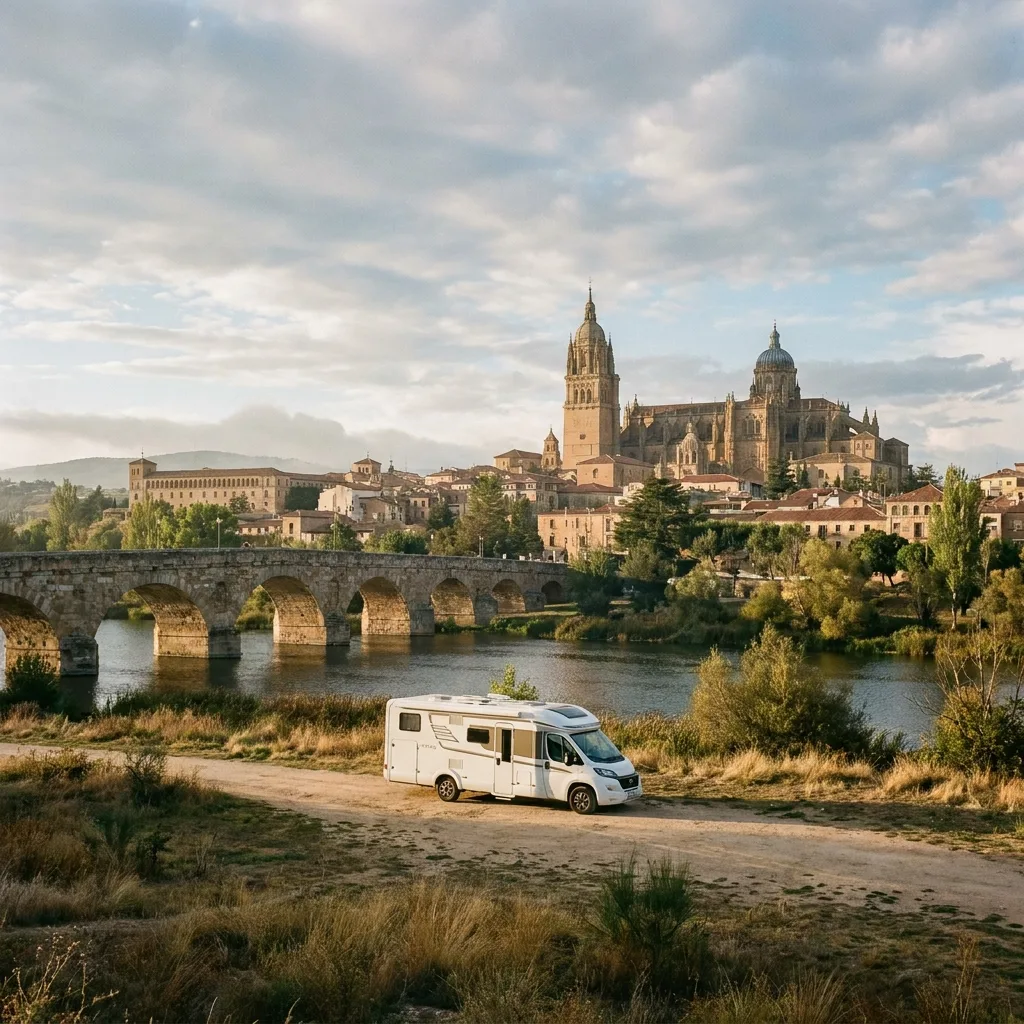
Salamanca is a university city in Castilla y León known for its golden sandstone buildings and the 18th-century Plaza Mayor. Here you can visit the Universidad de Salamanca, founded in 1218, and a cathedral complex featuring the 12th-century Catedral Vieja and the 16th-century Catedral Nueva. From the Roman bridge, you can cross the Tormes River to the historic city center.
Stop 6
Ciudad Rodrigo
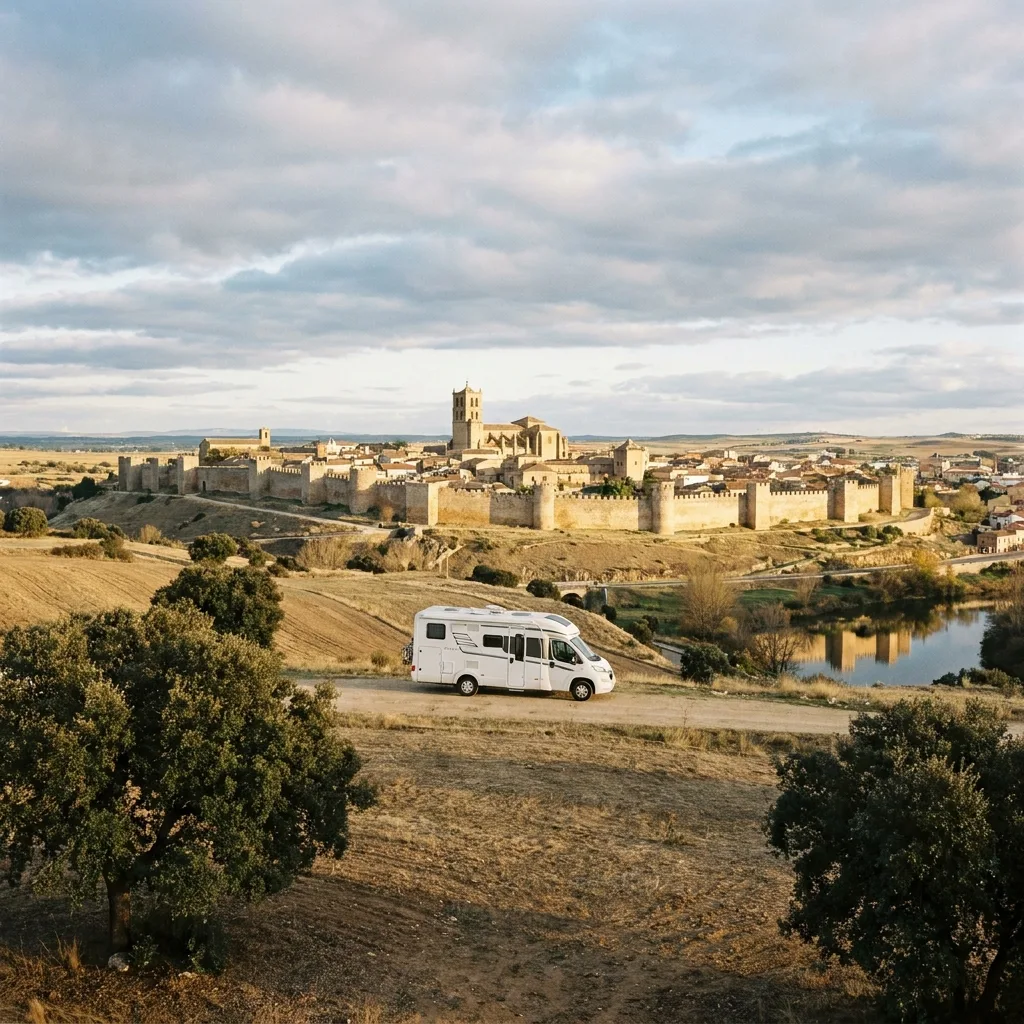
Ciudad Rodrigo is a fortified city in Castile and León near the Portuguese border, completely enclosed by the medieval Murallas Ciudad Rodrigo. You can walk along these city walls or visit the Catedral Santa María and the Plaza Mayor with its sixteenth-century town hall in the center. Along the Águeda River, there are walking paths outside the city center with its noble mansions and medieval street plan.
Stop 7
Cáceres
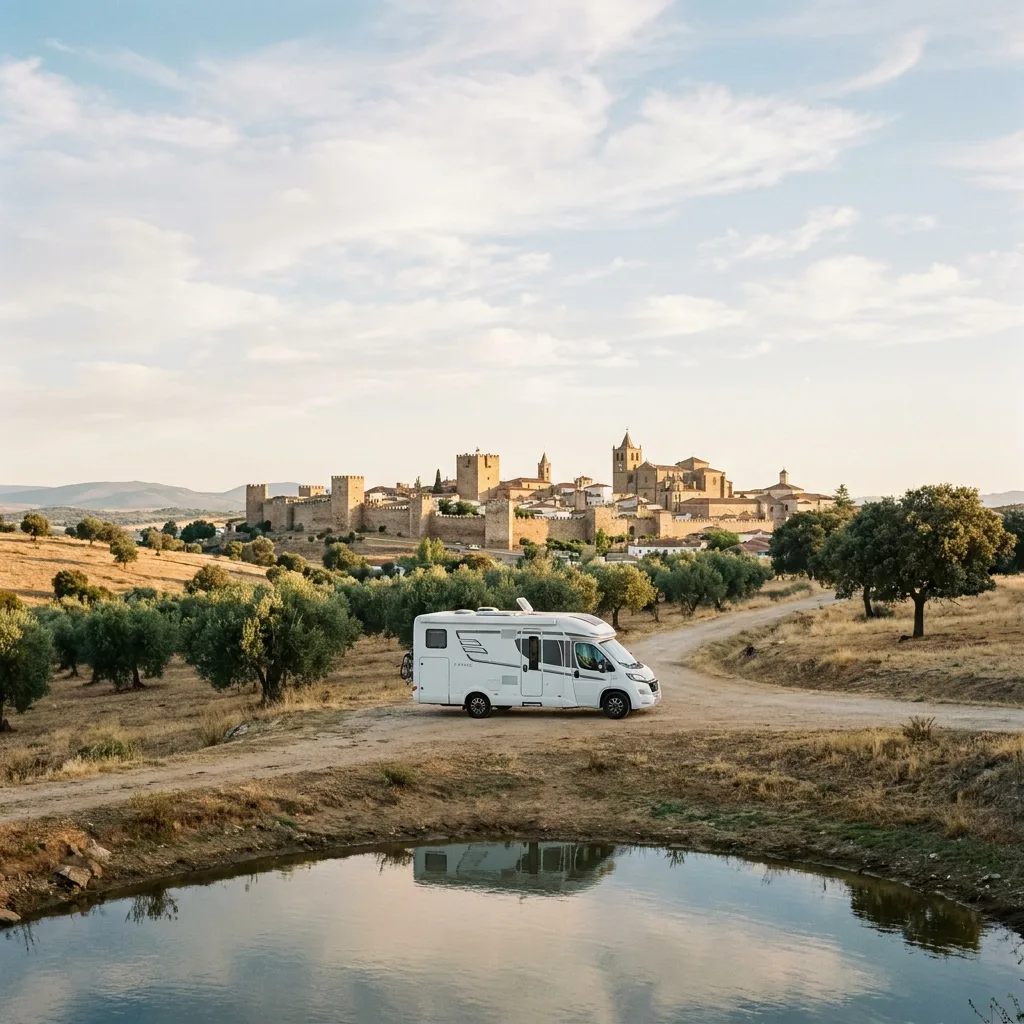
Cáceres in the Extremadura region is a UNESCO World Heritage site due to its Ciudad Monumental, a medieval city center surrounded by Moorish walls. You can walk past the 12th-century Torre de Bujaco and the Plaza Mayor with stone arcades. Among the granite palaces and in the Jewish quarter, storks nest on the church towers and roofs.
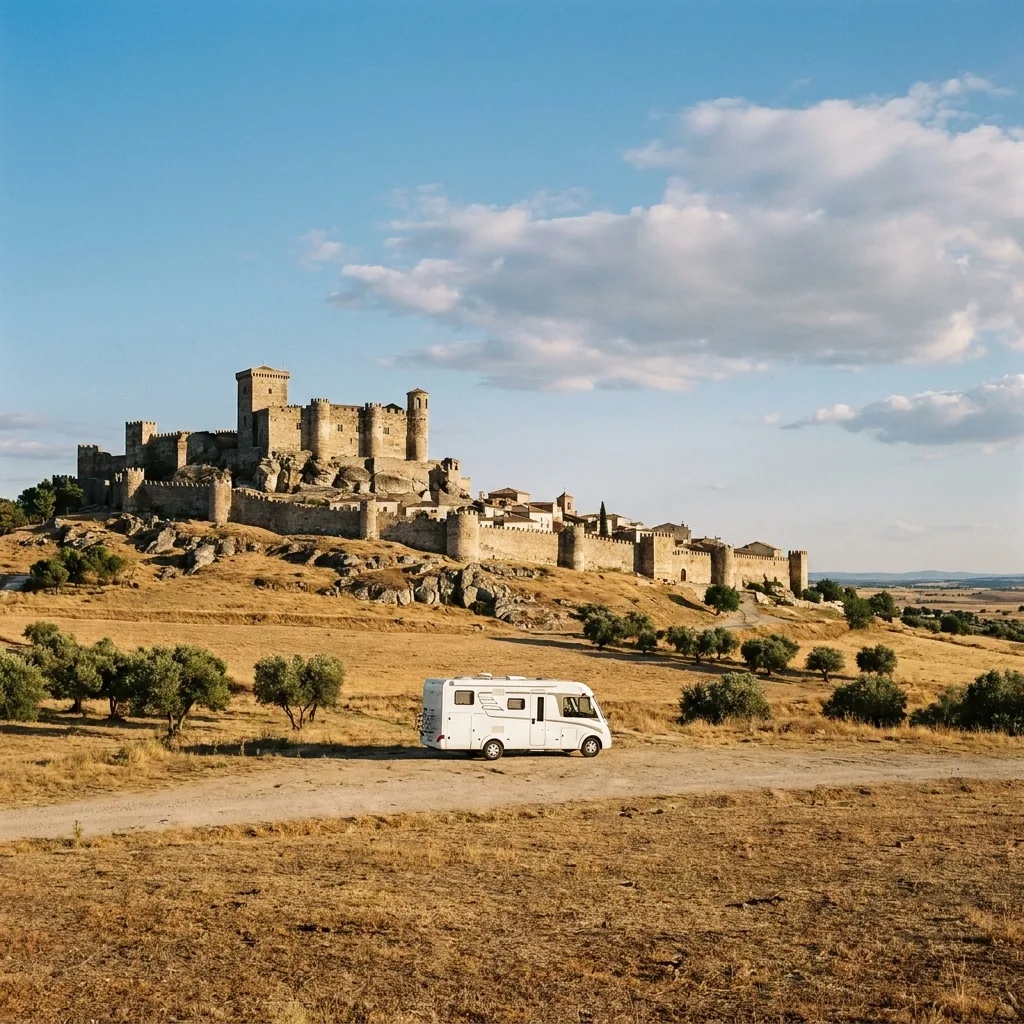
Stop 8
Trujillo
Trujillo is a city in Extremadura known for its Plaza Mayor and the palaces of sixteenth-century explorers like Francisco Pizarro. Detailed sculptures can be seen on the corners of the Palacio de la Conquista, while the Castillo de Trujillo, a ninth-century Moorish fortress, towers above the city on a granite hill. You can walk along the old city walls for a view of the surrounding dehesas.
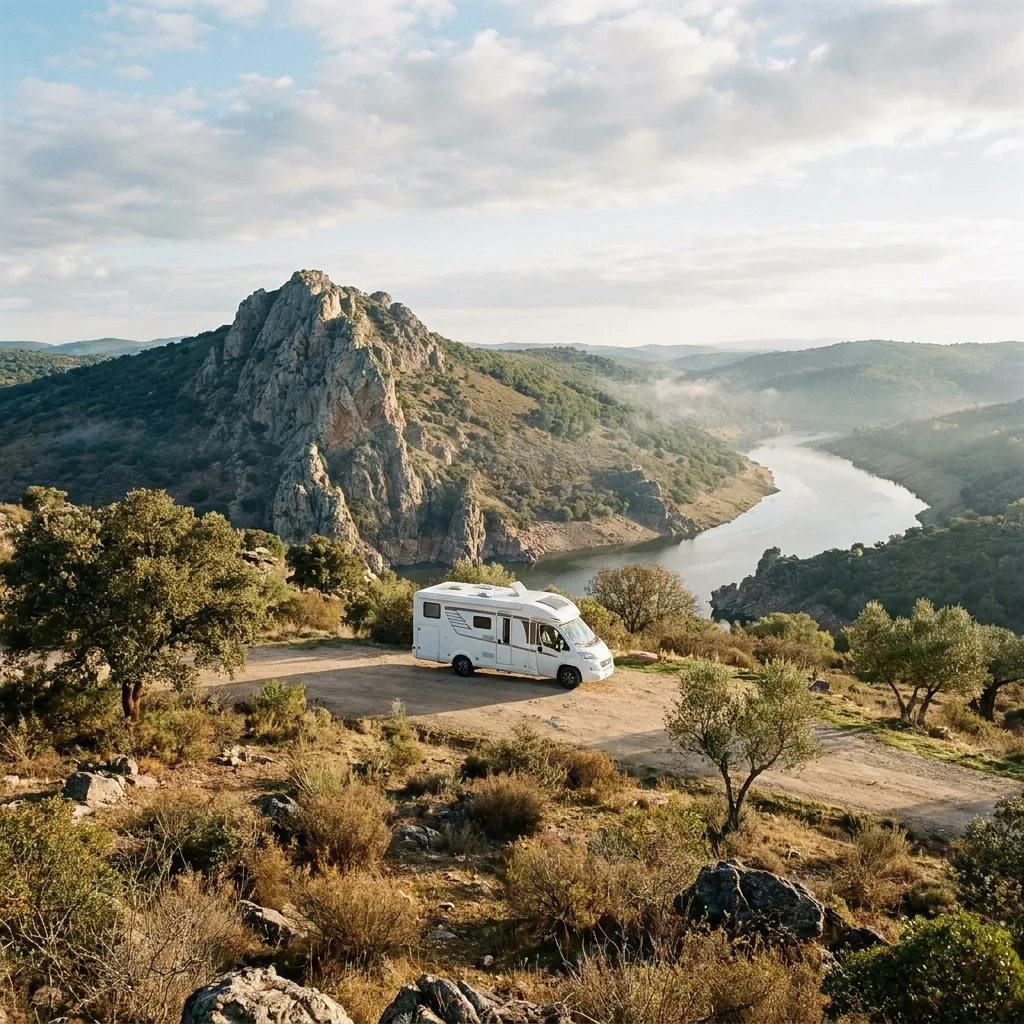
Stop 9
Monfragüe
Monfragüe National Park in Extremadura is located where the Tajo and Tiétar rivers converge. From the 300-meter-high rock face Salto del Gitano, you can observe nesting griffon vultures and black storks. Hike to Castillo de Monfragüe for a panoramic view or visit the information center in Villarreal de San Carlos. The park is officially certified as a Starlight Destination for astronomical observations.
Want to actually take this trip?
We put together the complete package for you — motorhome, ferry, campsites — in one personal email.
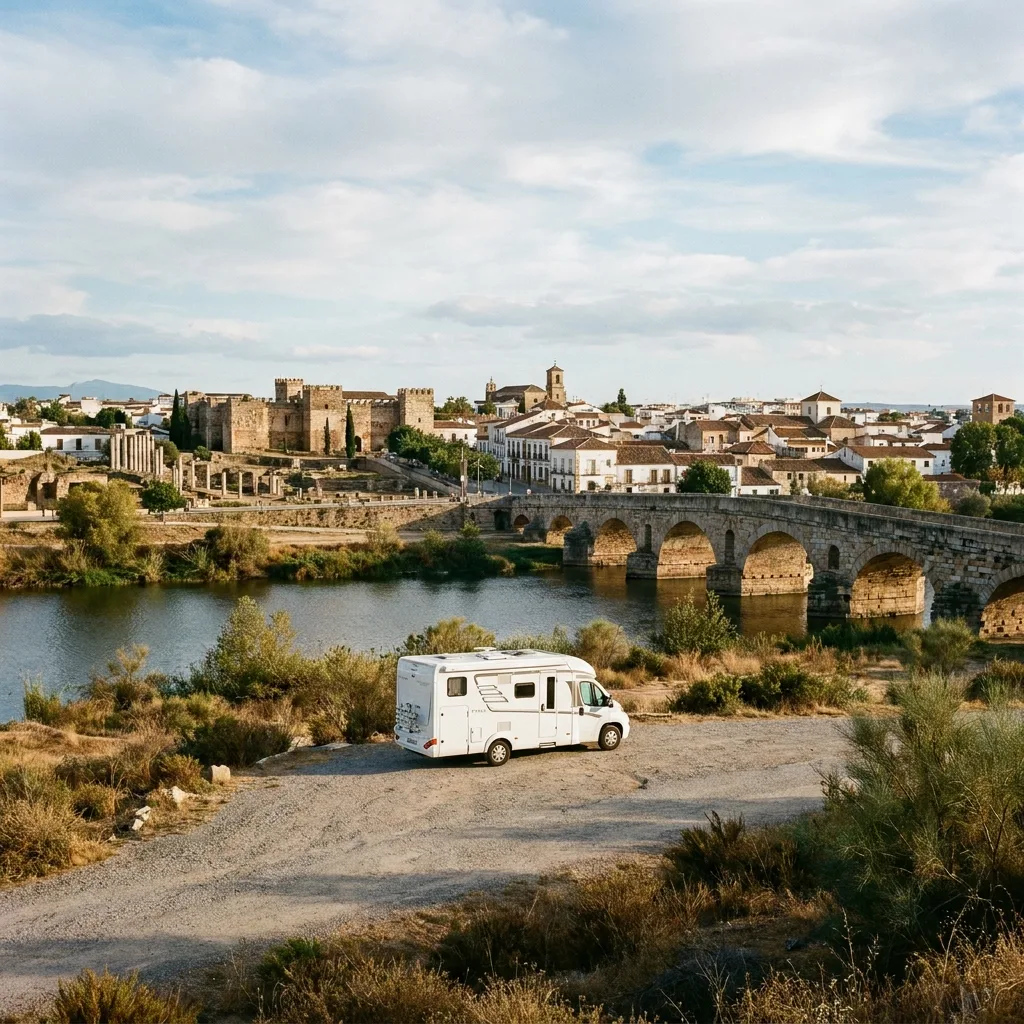
Stop 10
Mérida
Mérida reveals a rich Roman history, visible in the structures of Emerita Augusta. The Teatro Romano from 15 BC and the adjacent Anfiteatro allow you to experience the ancient atmosphere of performances and gladiatorial fights. The Puente Romano spans the Guadiana river for almost 800 meters. Outside the center, you can see the arches of the Acueducto de los Milagros, an impressive aqueduct. A walk along the Puente Romano offers an atmospheric view of the city.
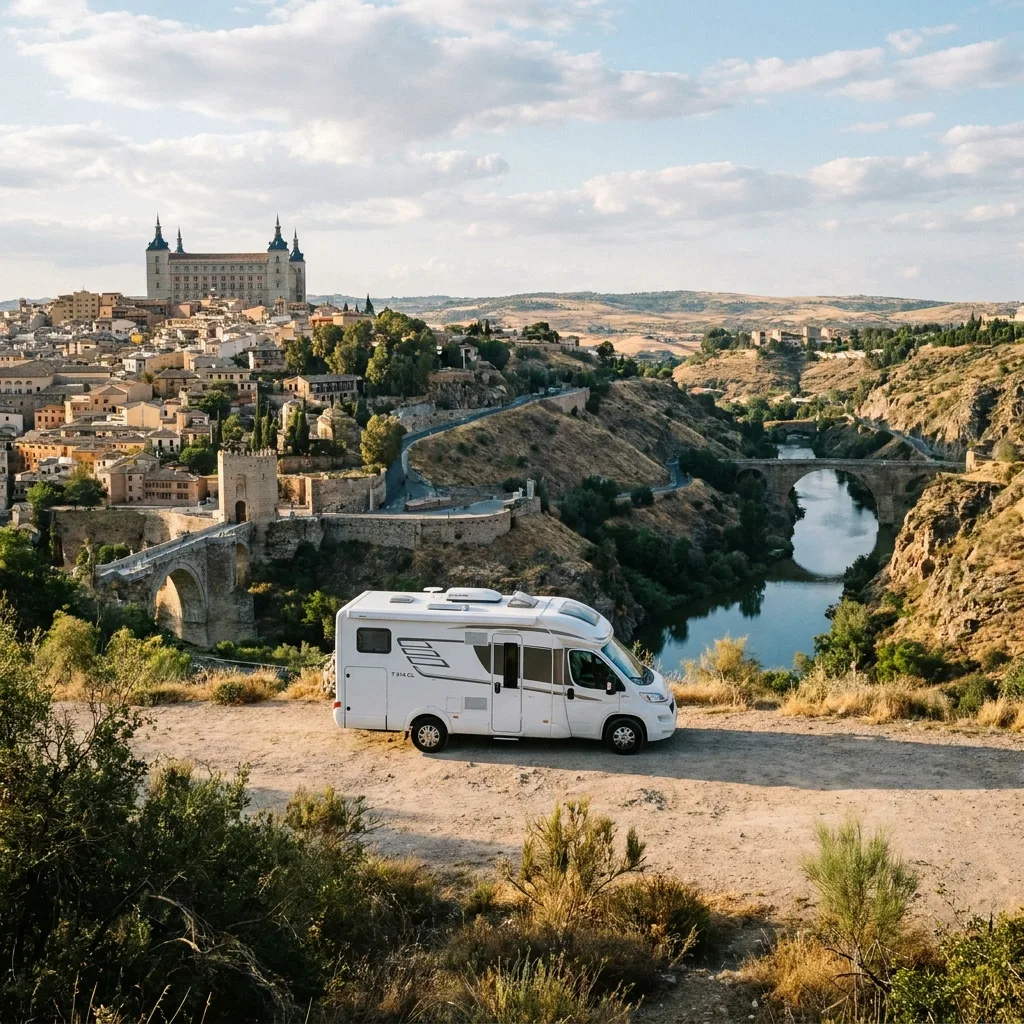
Stop 11
Toledo
Toledo is situated on a rocky outcrop above the Tagus River and is known for the historical fusion of Christian, Islamic, and Jewish cultures. In the medieval center, you'll find the thirteenth-century Gothic Catedral de Toledo and the elevated Alcázar de Toledo. The fourteenth-century Puente de San Martín provides access to the city, where local forges still work the traditional Toledo steel.
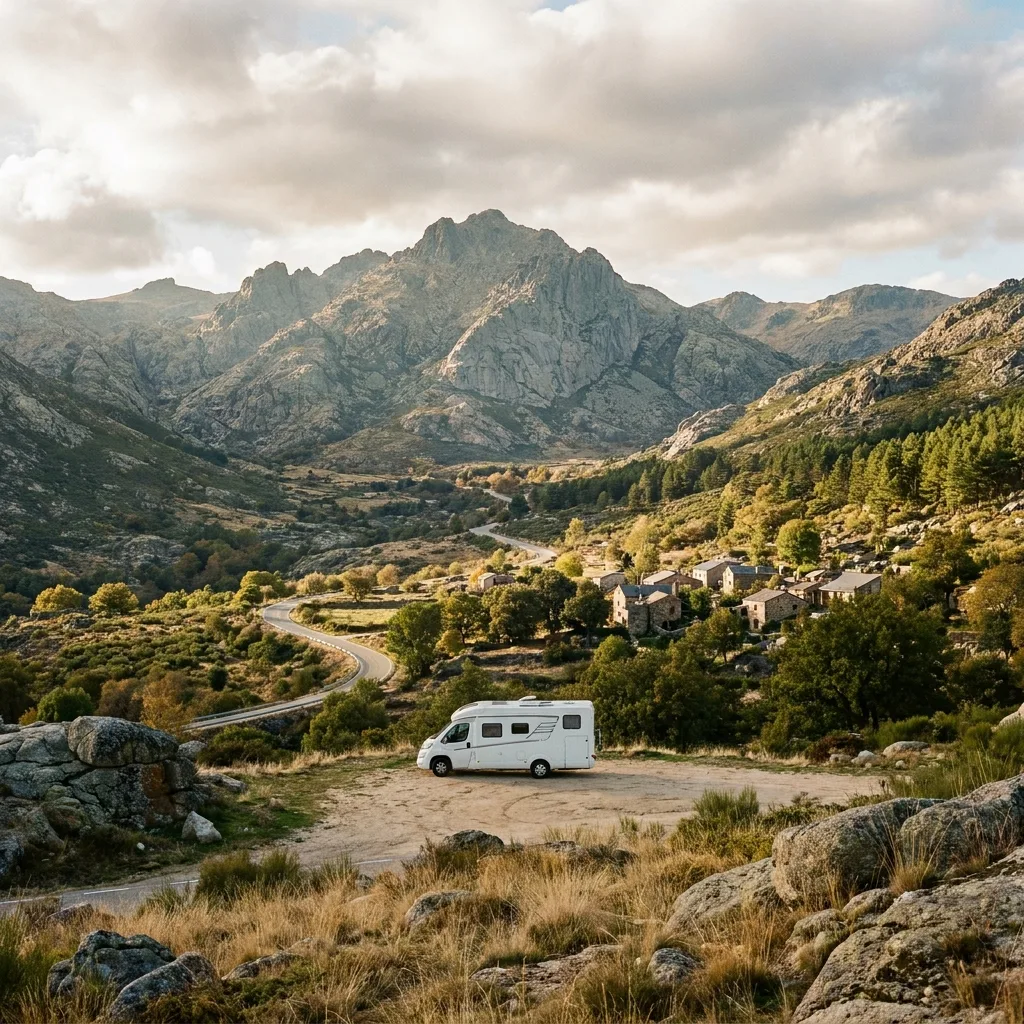
Stop 12
Sierra de Gredos
The Sierra de Gredos is a mountain range in Central Spain with granite peaks and glacial valleys, with Pico Almanzor forming the highest point at 2,592 metres. Here you can hike to the Circo de Gredos or Laguna Grande, where you can observe the Spanish ibex on the rocky slopes. The area is recognised as a Starlight Reserve due to the starry sky above the pine forests. Parking areas at the access points give you direct access to the hiking trails.
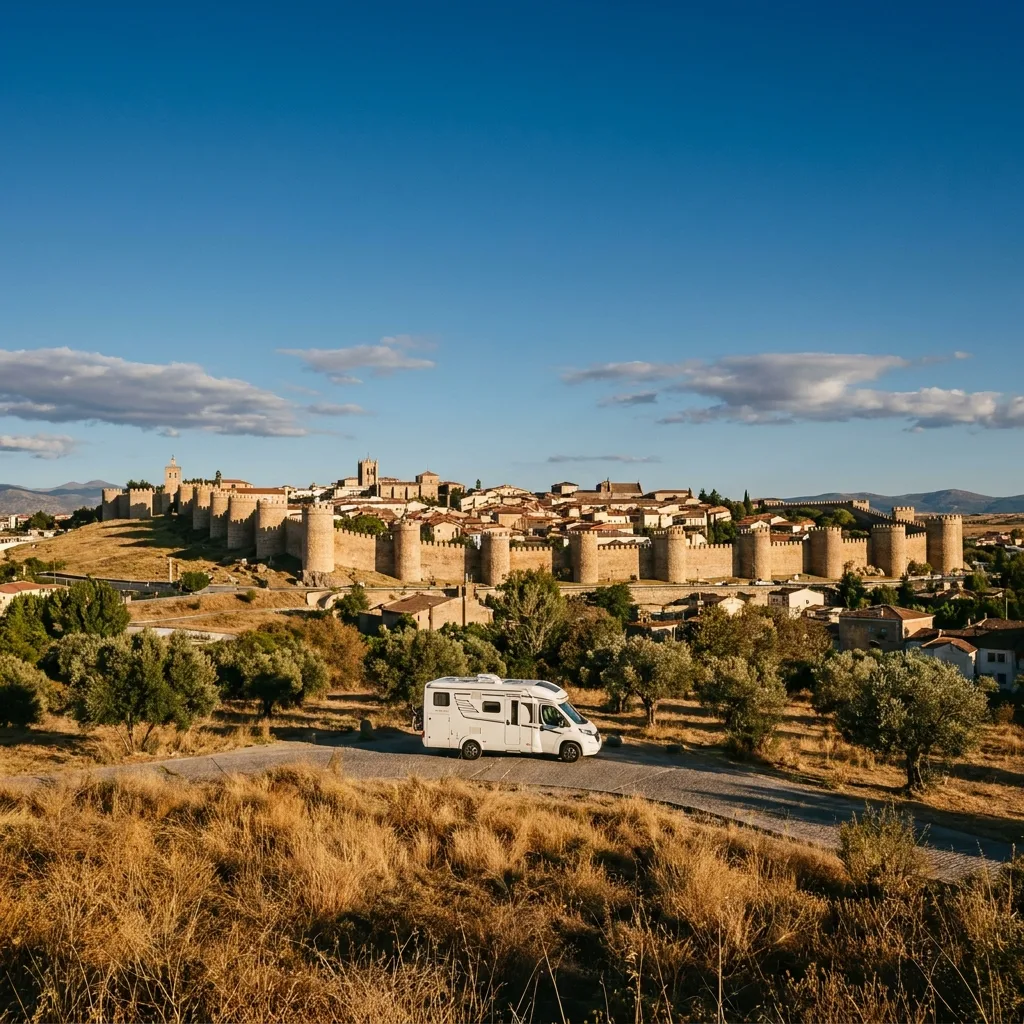
Stop 13
Ávila
Ávila is situated on a plateau and is completely enclosed by the Muralla de Ávila, a medieval city wall over two kilometers long with 88 watchtowers. Within the walls, you'll find the Catedral de Ávila, whose apse is integrated into the city wall as a defensive tower. Just outside the gates stands the Romanesque Basílica San Vicente. You can walk along the battlements for views of the city center and the Castilian plateau.
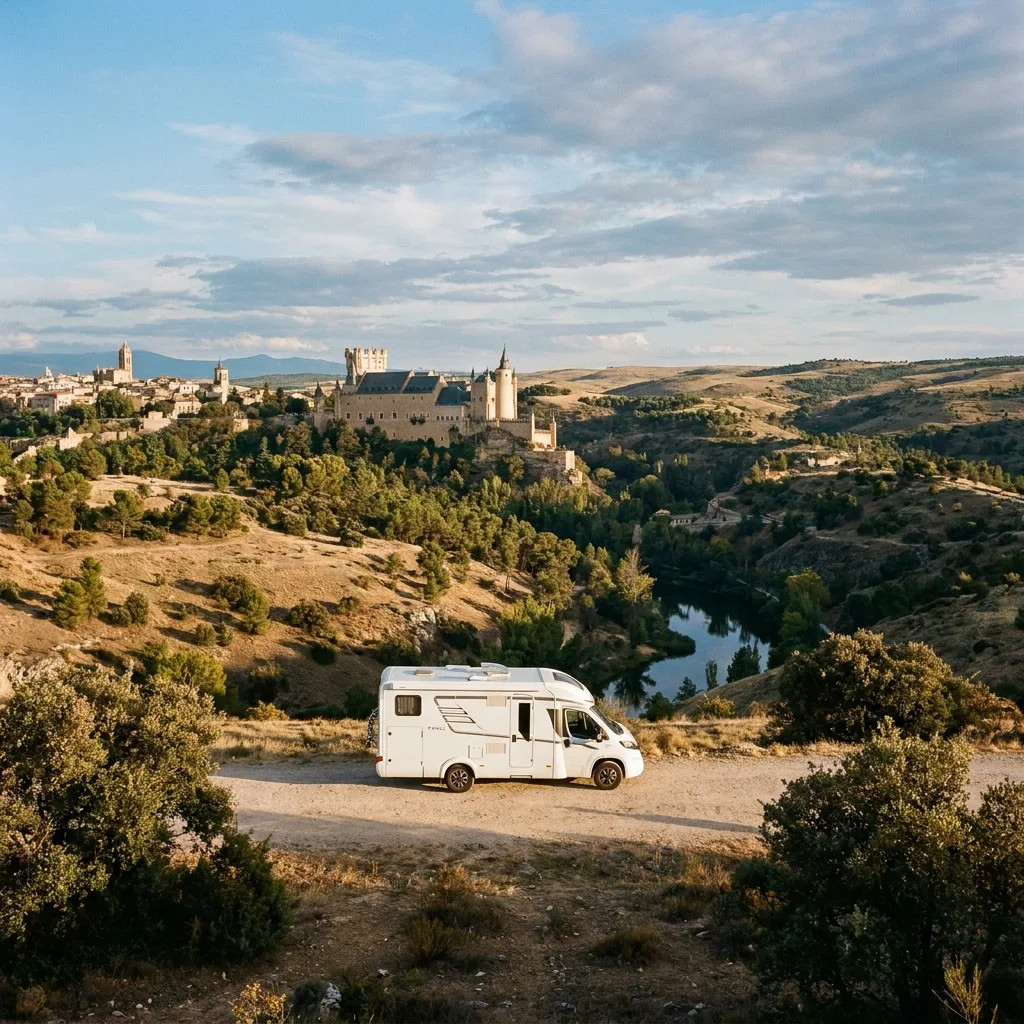
Stop 14
Segovia
Segovia is a city in Castile and León known for the Roman Aqueduct of Segovia from the first century, built without mortar. In the center, you will find the sixteenth-century Gothic Cathedral of Segovia on the Plaza Mayor and the former Jewish quarter. On the west side stands the Alcázar of Segovia on a rock, a castle with foundations from the twelfth century. From the city walls, you can look out over the Sierra de Guadarrama.
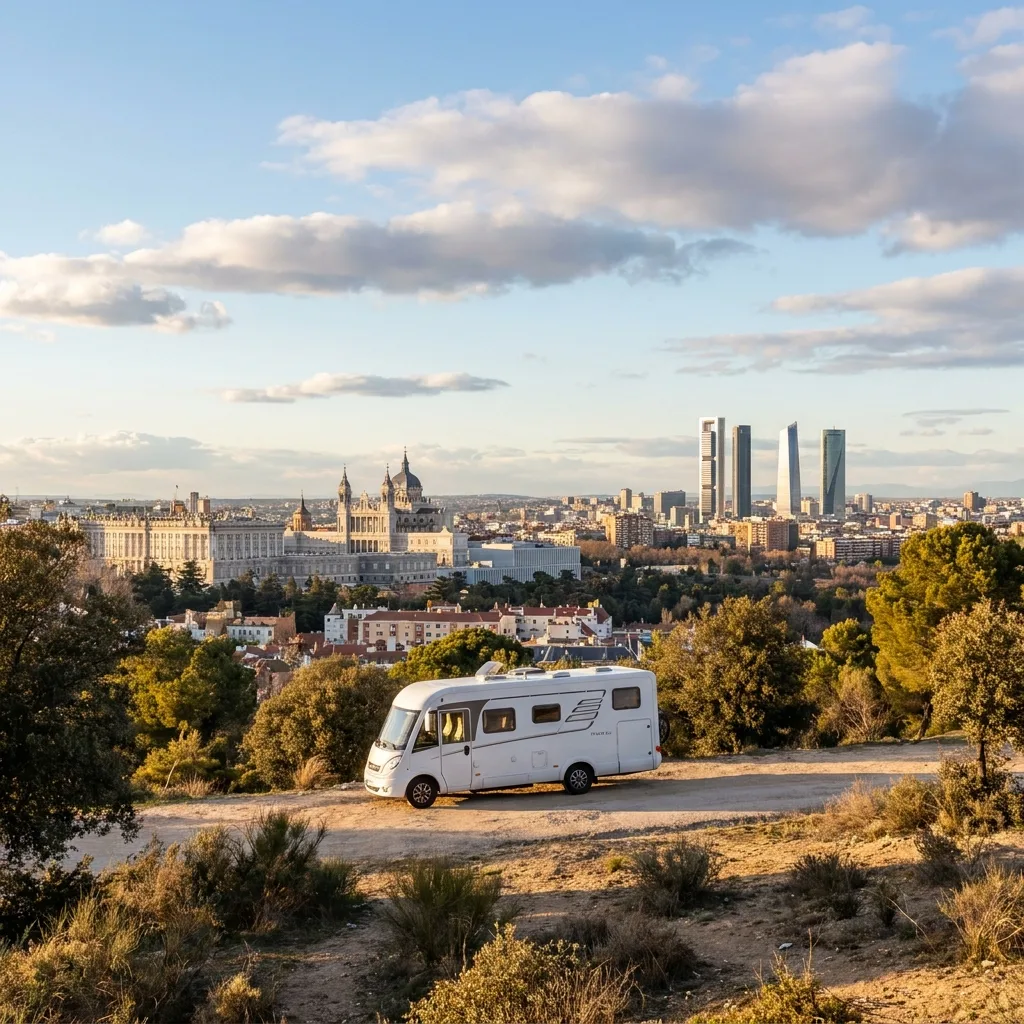
Stop 15
Madrid
Madrid is the capital and geographical center of Spain. The Museo del Prado displays works by Velázquez and Goya; the Palacio Real is the largest royal palace in Europe by floor area. You can wander through the medieval streets of the La Latina district and across the Plaza Mayor with its Baroque architecture. In the Parque del Retiro, the nineteenth-century Palacio de Cristal stands by a rowing pond.
Stop 16
Aranjuez
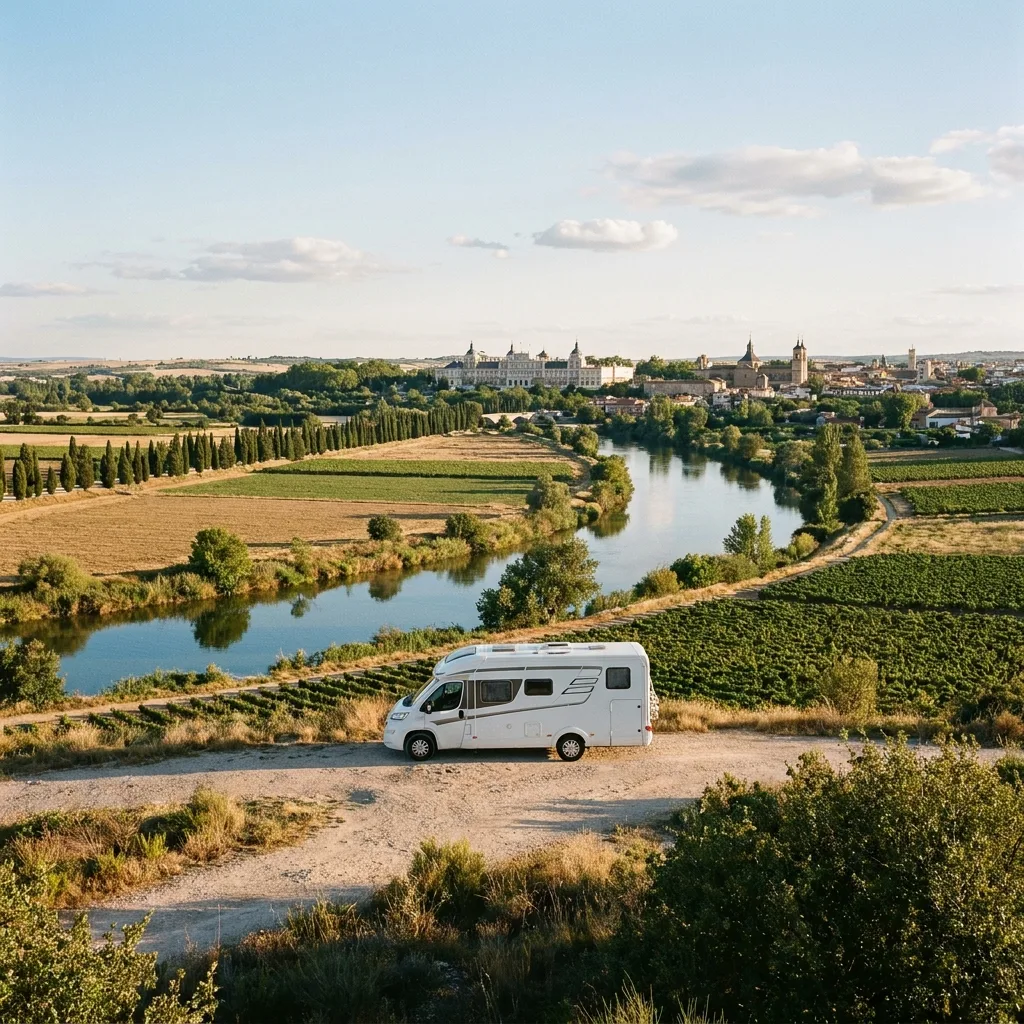
Aranjuez is the former spring residence of the Spanish monarchs and is a UNESCO World Heritage site due to its historic cultural landscape along the Tagus River. Here you can visit the 18th-century Palacio Real de Aranjuez and the Museo de Falúas Reales with the royal barges. In the Jardín del Príncipe you will find the Casa del Labrador, a neoclassical pleasure pavilion from 1803. The city has a geometric street plan with wide boulevards and monumental squares.
Stop 17
Valladolid
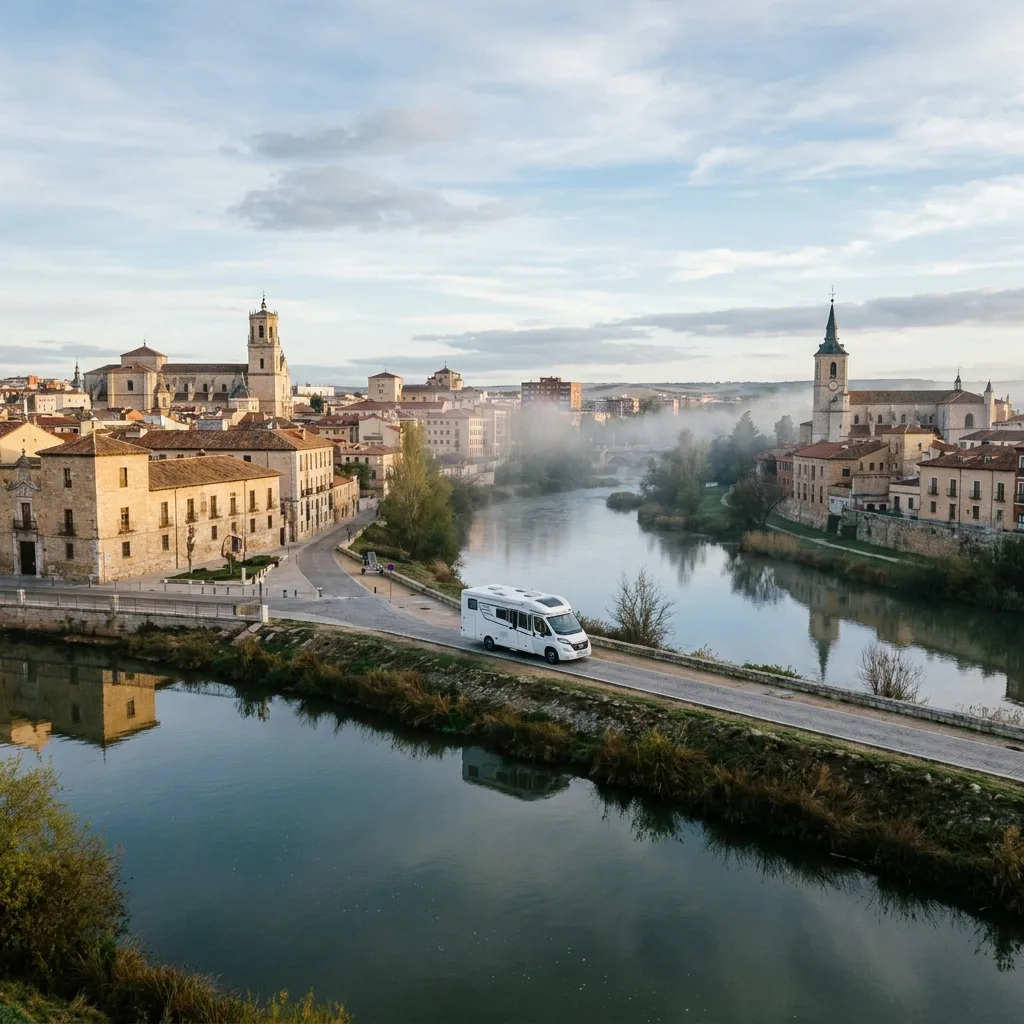
Valladolid is the capital of Castilla y León and is known for its sixteenth-century Plaza Mayor with red facades and arches. Here you can visit the Museo Nacional de Escultura in the fifteenth-century Colegio de San Gregorio, which houses a collection of wooden sculptures. The Catedral de Valladolid is a design by Juan de Herrera from 1582 and remained largely unfinished. In the city, you can taste wines from the nearby regions of Ribera del Duero and Rueda.
Stop 18
Burgos
Burgos is a city in Castile known for the Gothic Catedral de Burgos, construction of which began in 1221. You can walk through the Arco de Santa María to the city center or visit the royal monastery Monasterio de las Huelgas from the twelfth century. The pilgrimage route to Santiago runs through the center along the Arlanzón river. In the local eateries, you can taste morcilla de Burgos, a blood sausage with rice.
Ready to hit the road?
We'll email you a personal travel proposal within 24 hours — motorhome, route and full cost overview included. Save €400–€800 on average vs. a travel agency.
No packages, no middlemen. Learn how it works
Camproads gave me a lot of inspiration for our campervan trip. The routes are beautiful, with a good balance of nature and city life, and the route generator made planning super easy. It's also really handy that there are so many good camping options at the locations, and that you can easily find the campervan that suits your needs and compare prices. This way, we can plan everything ourselves and book the campervan directly with the rental company. That's much cheaper than an organized trip!
Michiel van de Bunt
February 2026
What a difference from how I used to plan trips. Through Camproads, I put together a complete campervan trip in just a few minutes. It's so easy to use, and you can customize everything to your liking. The ability to choose your travel pace makes it even more enjoyable, especially now that we're traveling with a baby for the first time.
Alieke Zelhorst
February 2026