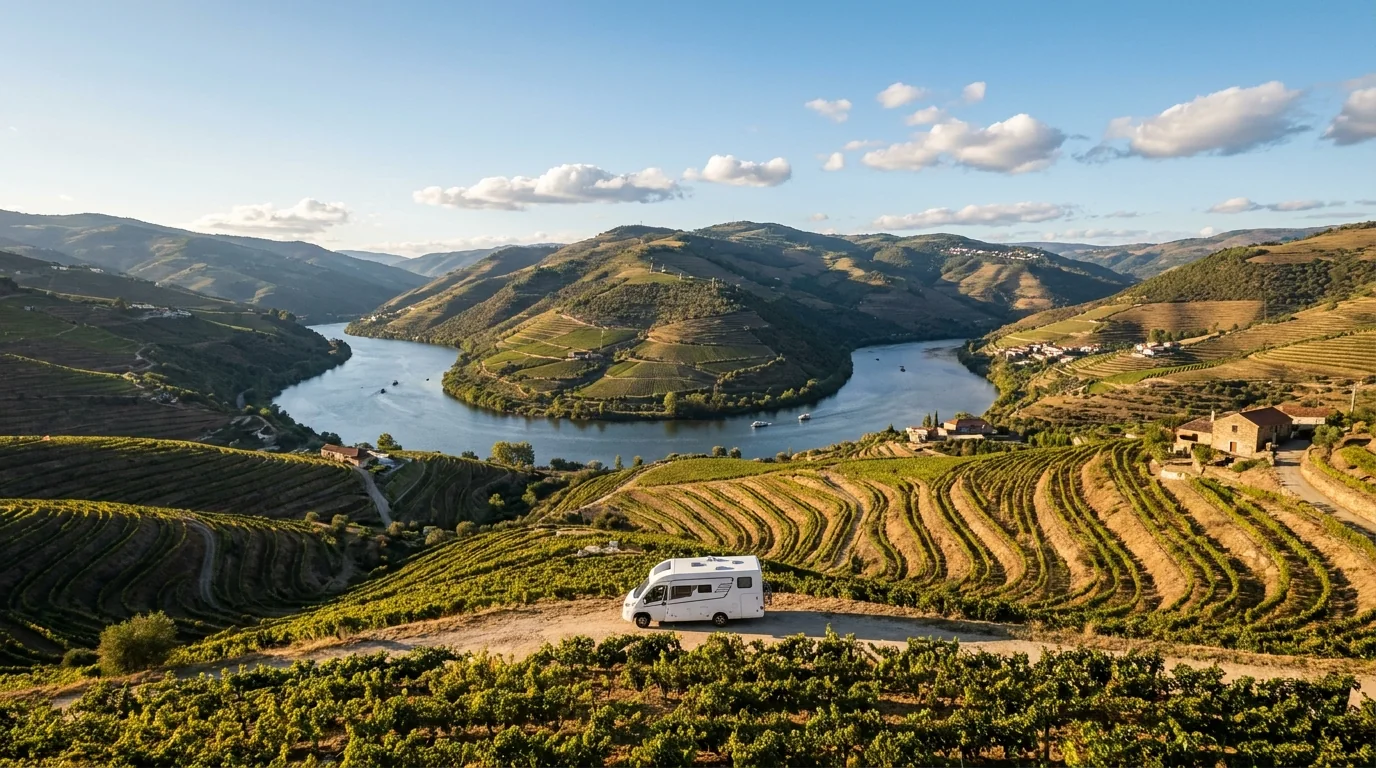
This route is ready and waiting — planned out day by day
Inside the Camproads Portugal guide: every stage, campsites and our honest tips. Instant PDF download.
€14.95
Instant download · NL, EN & DE
€14.95
Instant download · NL, EN & DE
Duration
x daysDistance
701 km
stops
10
Choose a date and duration that fits your preferences
About this route
Highlights
- ✦Porto: the Ribeira, the Ponte Dom Luís I and the port cellars of Gaia
- ✦Guimarães, the birthplace of Portugal, and Viana do Castelo on the Lima river
- ✦The granite espigueiros of Soajo and the castle of Lindoso
- ✦Vila do Gerês as a base: Cascata do Arado, Campo do Gerês and the Peneda-Gerês Park
- ✦Pitões das Júnias, mountain village on the high plateau where wolves live
- ✦The prehistoric rock carvings of Vila Nova de Foz Côa
- ✦Pinhão: quintas, terraces and the viewpoints of Galafura and Régua
- ✦Lamego and the Baroque Santuário dos Remédios
The route
Stop 1
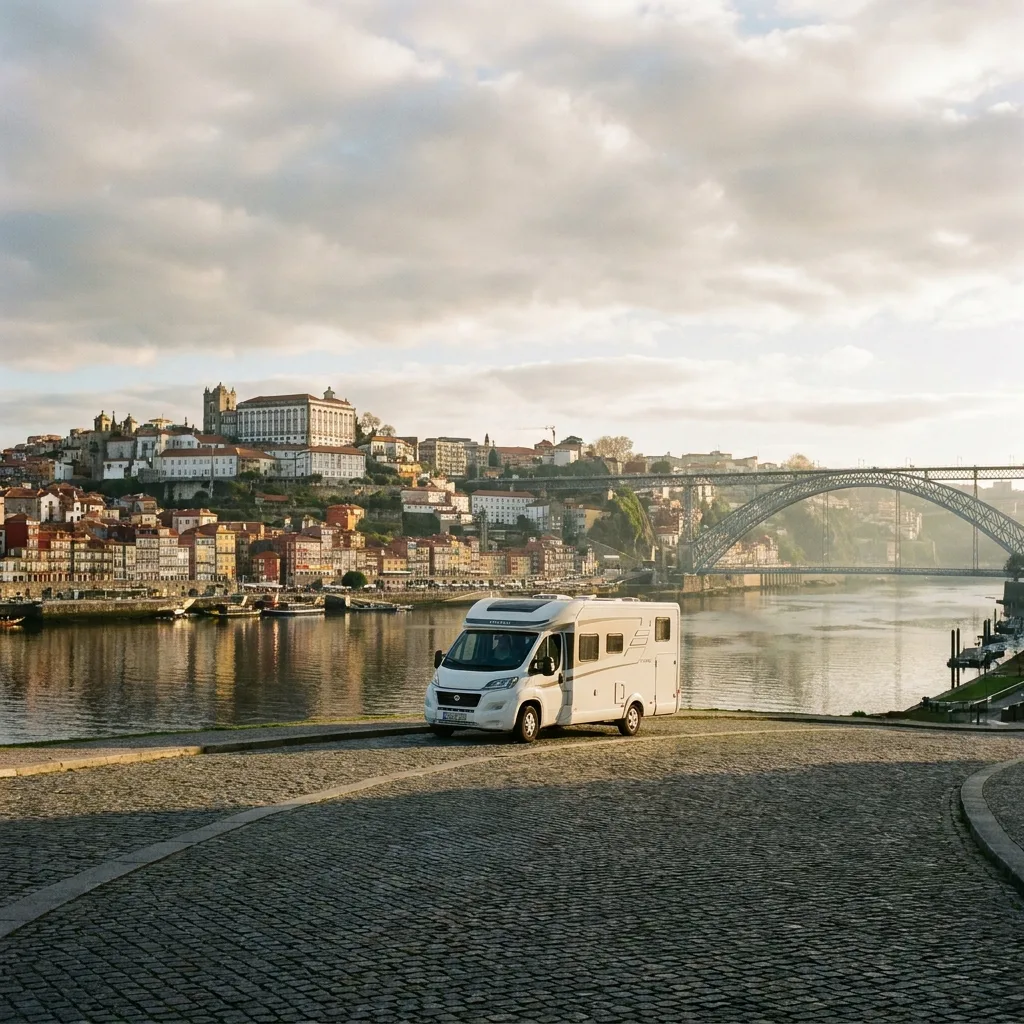
Porto
Porto is the city of port wine, where the historic Ribeira district along the Douro River tells its story. Walk past the 75-meter-high Torre dos Clérigos towering over the city, or admire the neo-Gothic architecture of Livraria Lello bookstore. The double-deck bridge Ponte Dom Luís I connects the city with Vila Nova de Gaia, where you can visit the port wine cellars. Traditional rabelo boats lie at the quay there, creating a lively image of the river.
Stop 2
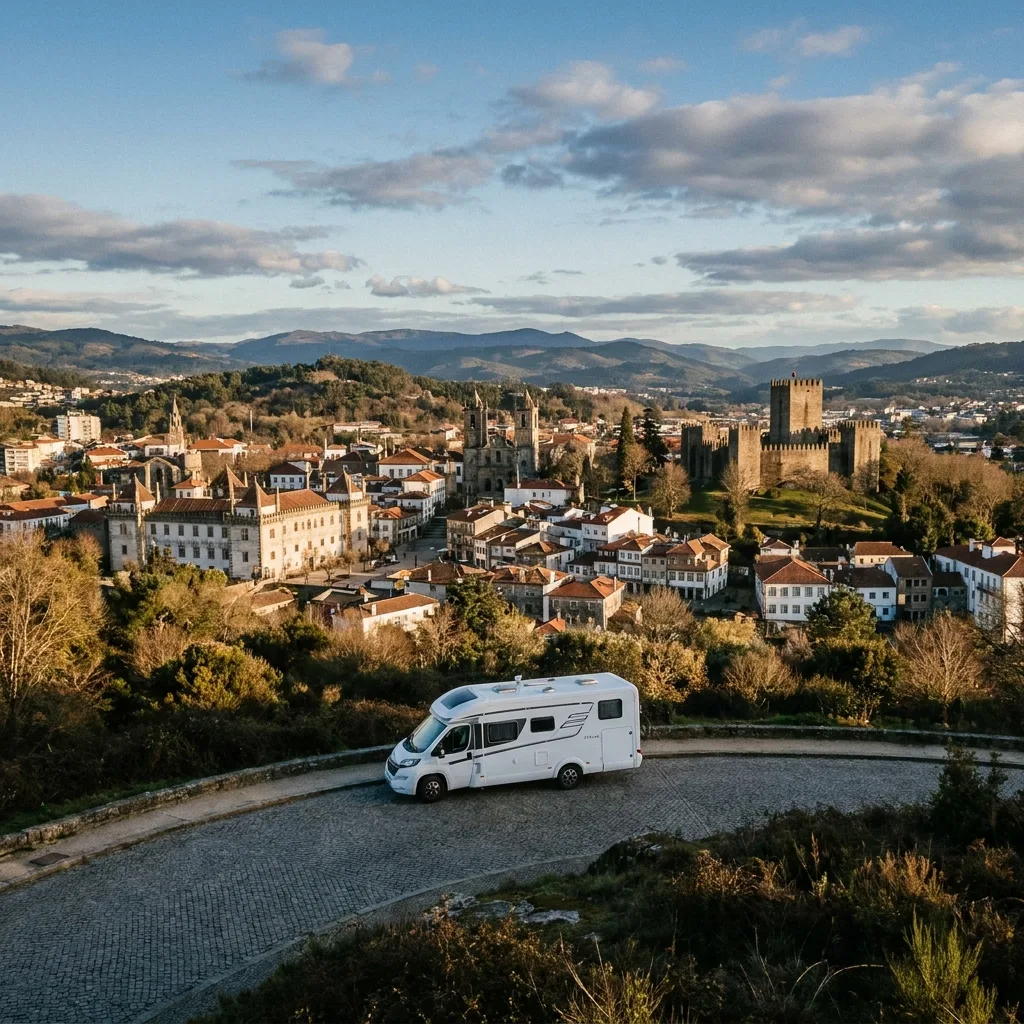
Guimarães
Guimarães is the historic place where the kingdom of Portugal originated in the twelfth century. You can walk past the tenth-century Castelo de Guimarães, a robust fortress. Nearby stands the Paço dos Duques de Bragança, a fifteenth-century palace that stands out with its 39 brick chimneys. From the lively Largo da Oliveira, you can take the cable car up to the 613-meter high Monte da Penha. There you can enjoy a panoramic view over the green Minho region.
Stop 3
Viana do Castelo
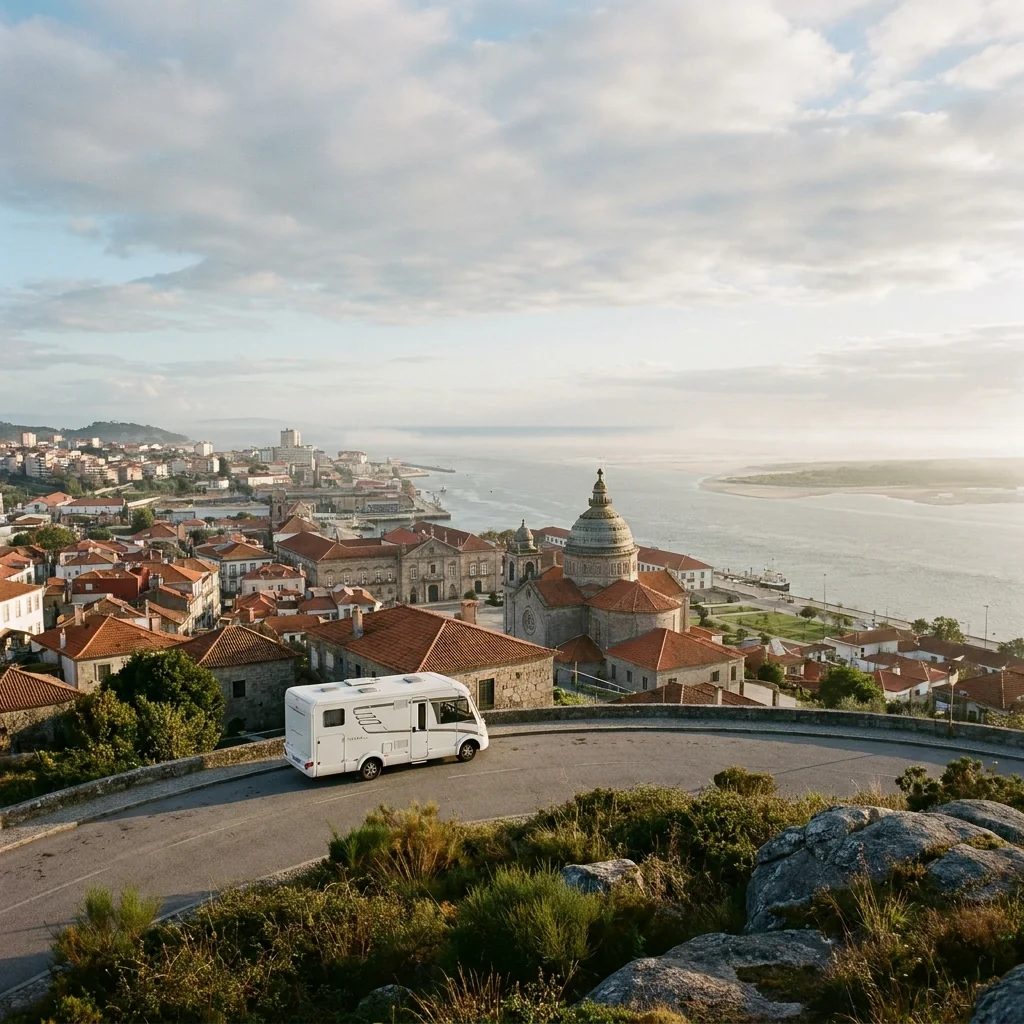
Viana do Castelo is located at the mouth of the Lima River and is known for fishing and shipbuilding. On the 228-meter-high Monte de Santa Luzia stands the neo-Byzantine Santuário de Santa Luzia from the twentieth century, which overlooks the city and the Atlantic Ocean. In the old town, you will find Manueline windows and azulejos around the sixteenth-century Praça da República. Across the river lies Praia do Cabedelo, a sandy beach with dunes where you can practice water sports.
Stop 4
Soajo
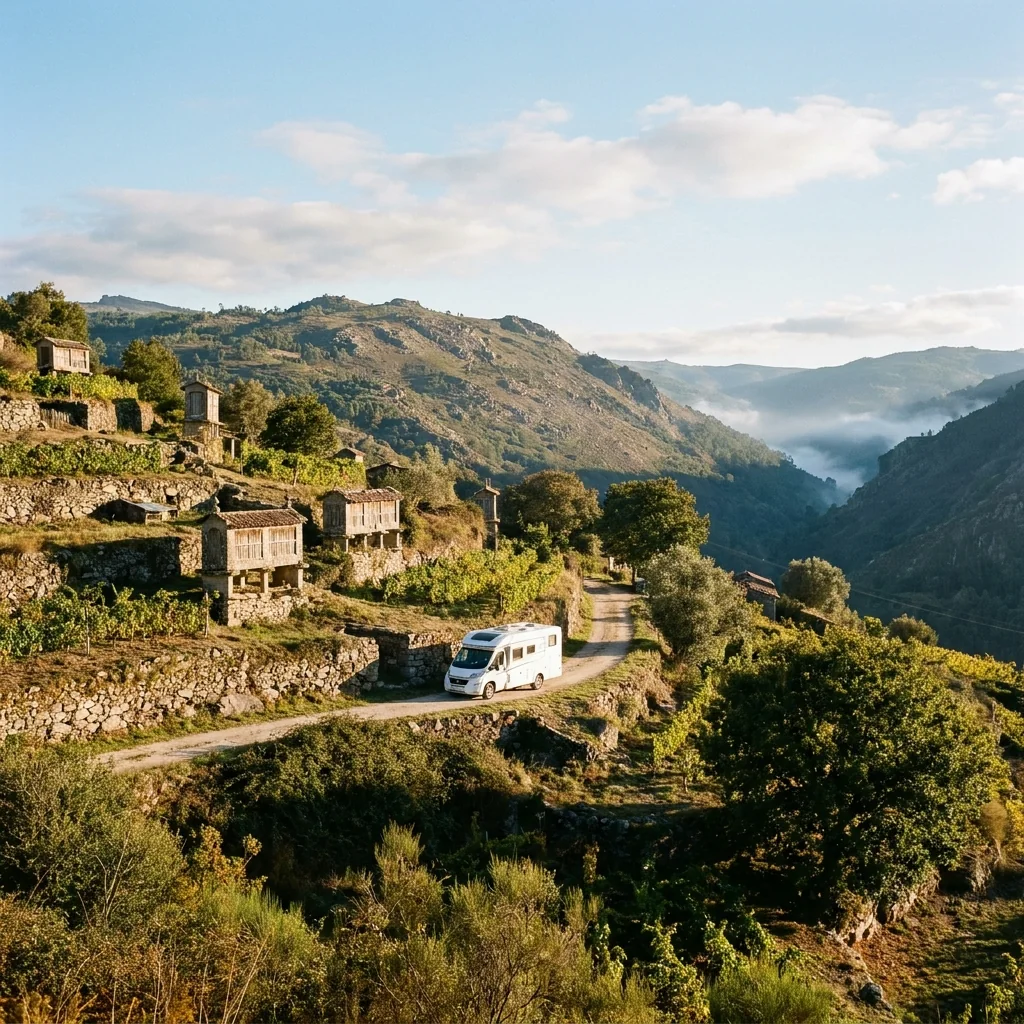
Soajo is known for the Espigueiros de Soajo, a group of 24 stone granaries from the eighteenth and nineteenth centuries on a granite rock plateau. In the Peneda-Gerês National Park, you can hike the trails of the Serra da Peneda where wild Garrano horses graze. You can cool off in the river at the natural pool Poço Bento and observe how traditional agricultural culture is preserved in the village.
Stop 5
Vila do Gerês
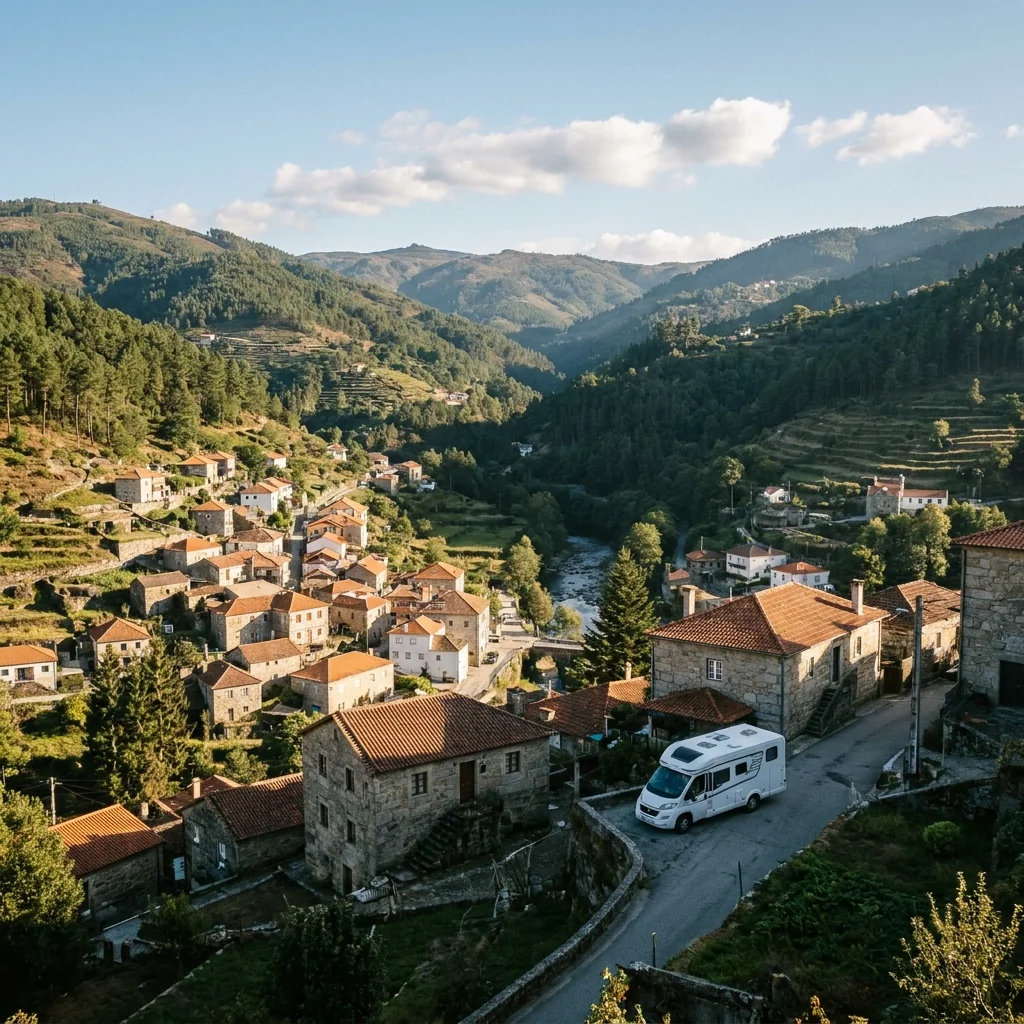
Vila do Gerês thrives on the medicinal springs that have been bubbling up from the granite soil since Roman times. At Termas do Gerês, you can experience the healing power of the mineral water in a historic spa. Those who walk through Parque das Termas pass moss-covered granite blocks and ponds among the trees. On the Albufeira da Caniçada reservoir, kayakers glide across the water past green slopes. The atmosphere is calm as you look out from a terrace over the reflective bays of the lake.
Want to actually take this trip?
We put together the complete package for you — motorhome, ferry, campsites — in one personal email.
Stop 6
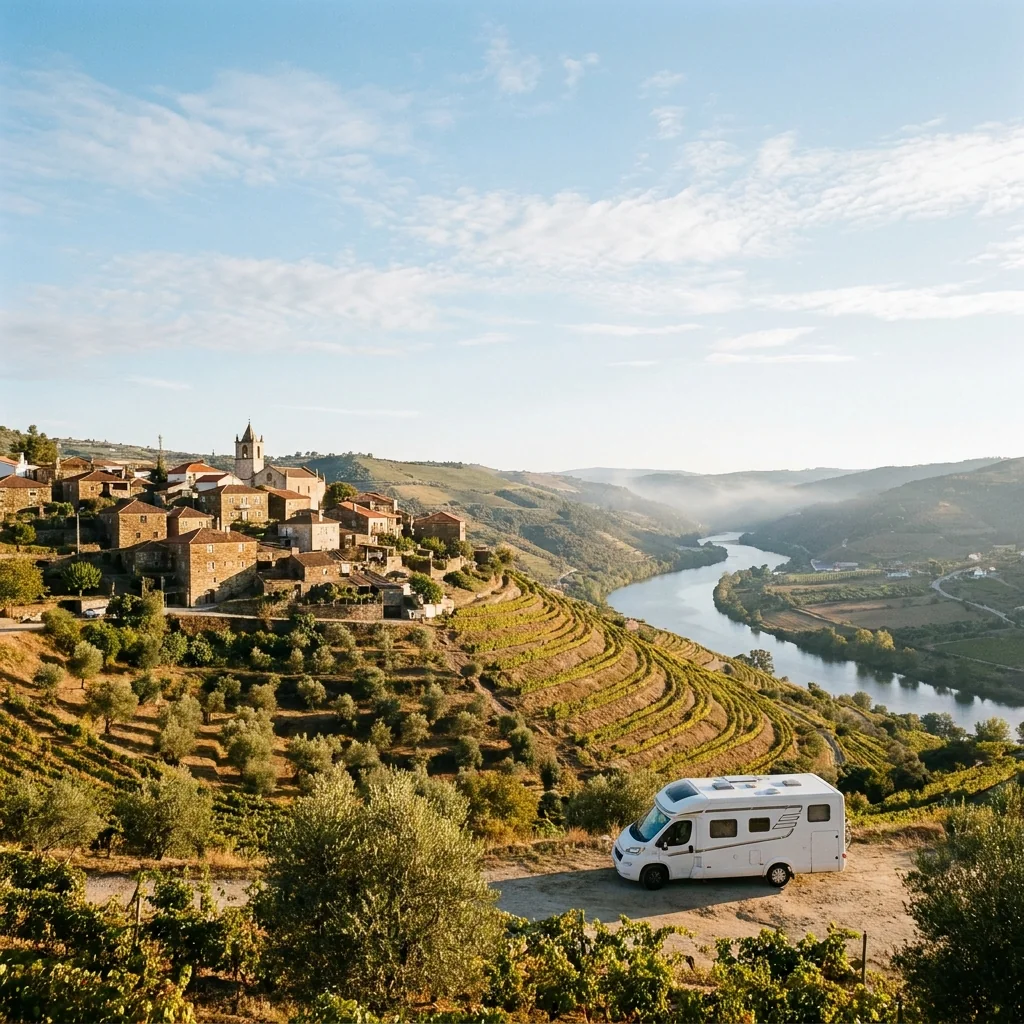
Pitões das Júnias
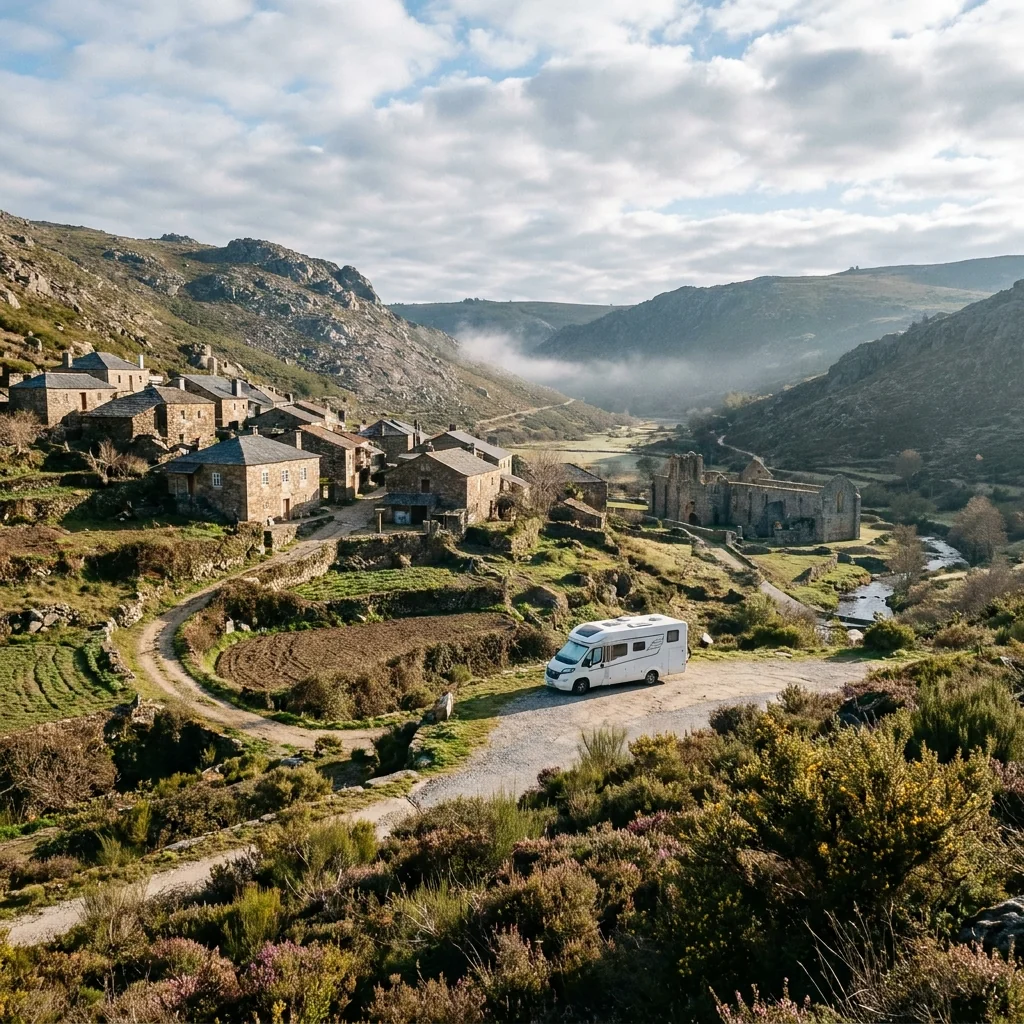
Pitões das Júnias surprises you with its traditional mountain village character, located at approximately 1100 meters altitude. In the valley, you discover the ruins of the twelfth-century Cistercian monastery Mosteiro de Santa Maria das Júnias. A wooden walking path leads you to the Cascata de Pitões, a thirty-meter-high waterfall. The village itself features granite houses and traditional espigueiros that define the streetscape. Here you experience a serene atmosphere amidst robust nature and historical buildings.
Stop 7
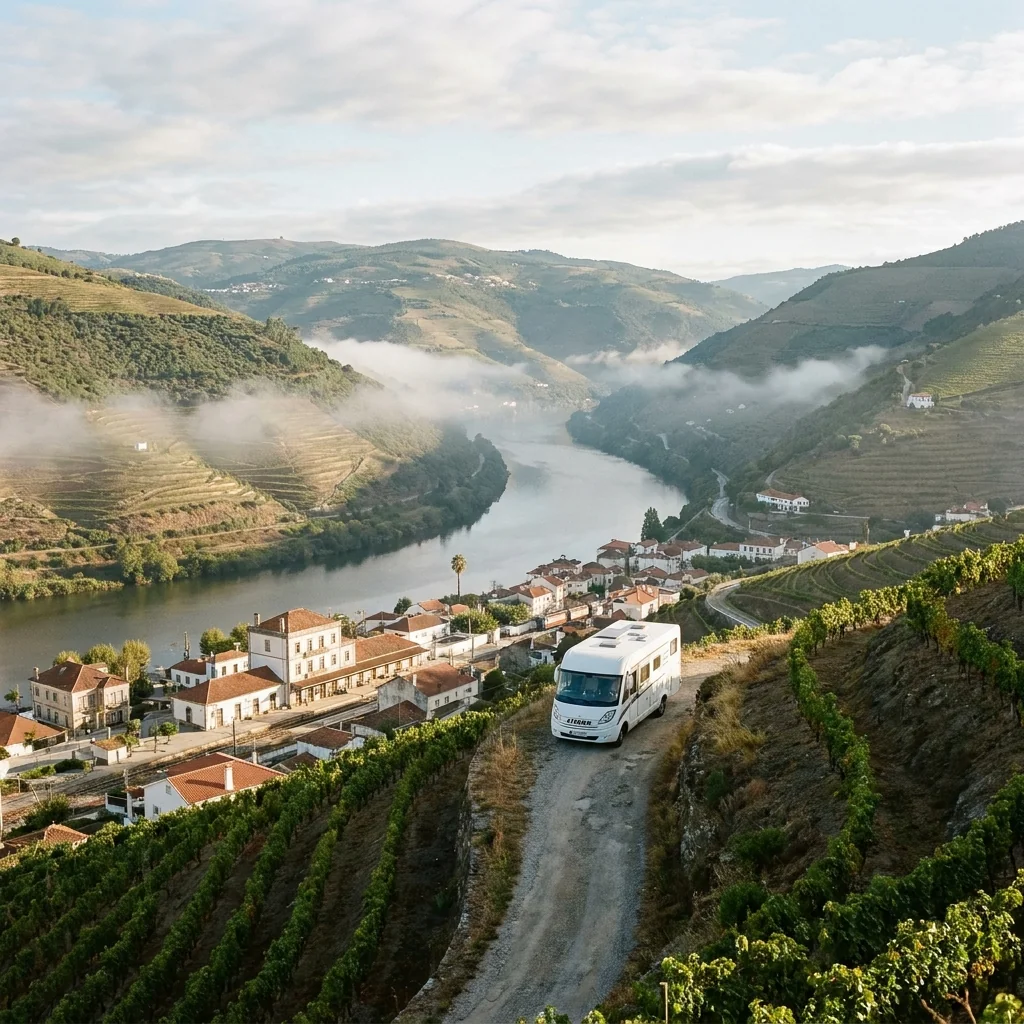
Vila Nova de Foz Côa
Vila Nova de Foz Côa is known for its thousands of prehistoric rock carvings, visible in the open air. In the vast Parque Arqueológico Vale do Côa, these ancient artworks are located, surrounded by vineyards and almond trees. The Museu do Côa displays some of the findings and offers sweeping views over the valley. You can visit the remote rock sites from the visitor center with guides in off-road vehicles. Along the tranquil Rio Côa, you experience a serene silence near the ancient rock walls.
Stop 8
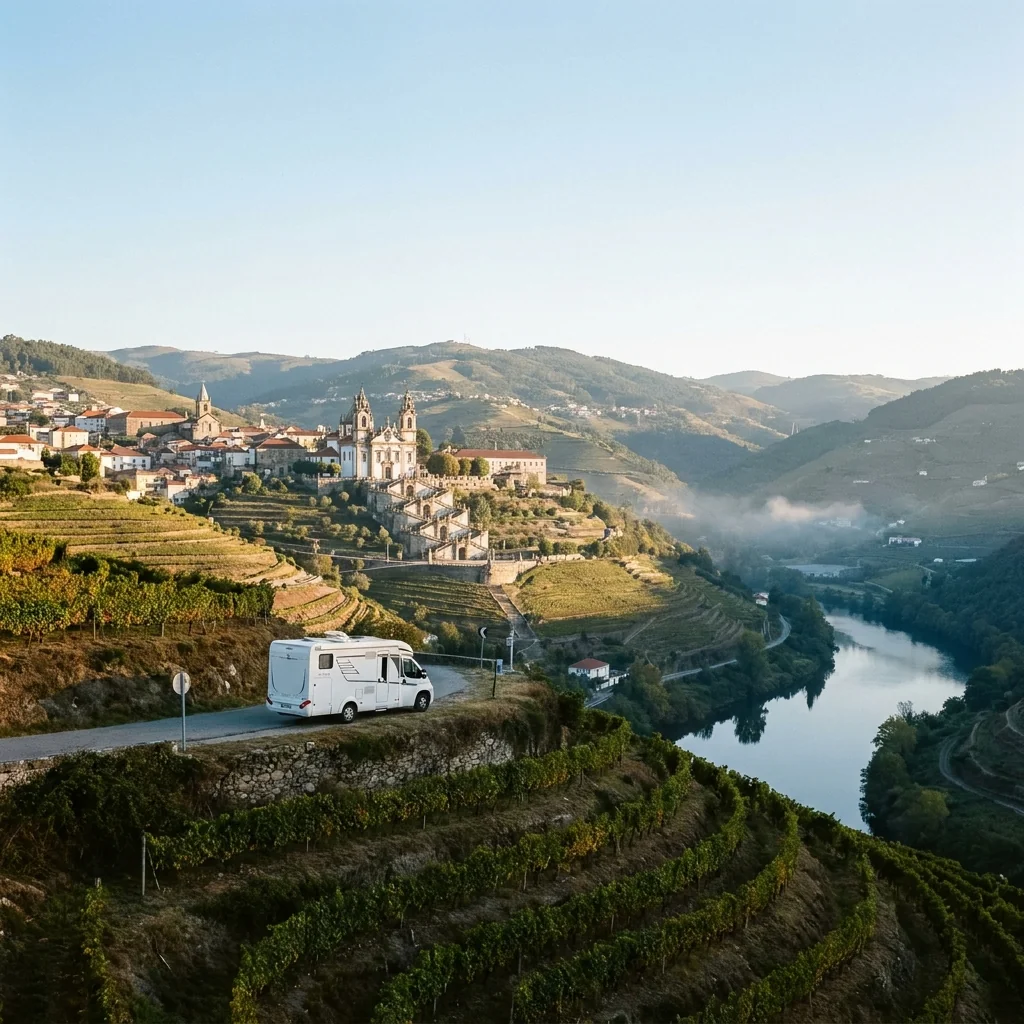
Pinhão
Douro viticulture comes to life in Pinhão, where the Pinhão and Douro rivers converge. The Estação de Pinhão train station stands out with 24 azulejo panels from 1937, depicting winemaking and the landscape. At Quinta do Bomfim, you can visit the vineyards and taste the local port wine. From the quay, you can take a trip on the Rio Douro in a traditional wooden rabelo boat. Along the lively quay, you can stroll leisurely along the water, with views of the terraces.
Stop 9
Lamego
Lamego is a city in the Douro Valley, dominated by the eighteenth-century Santuário de Nossa Senhora dos Remédios. A baroque staircase with 686 steps leads you up to this sanctuary on the forested hilltop. In the city center, you can admire the Gothic Sé de Lamego Cathedral from the twelfth century and the remains of the medieval castle. Local specialties such as the sparkling Raposeira wine and dried presunto characterize the gastronomy.
Stop 10
Porto
Porto is the city of port wine, where the historic Ribeira district along the Douro River tells its story. Walk past the 75-meter-high Torre dos Clérigos towering over the city, or admire the neo-Gothic architecture of Livraria Lello bookstore. The double-deck bridge Ponte Dom Luís I connects the city with Vila Nova de Gaia, where you can visit the port wine cellars. Traditional rabelo boats lie at the quay there, creating a lively image of the river.
Ready to hit the road?
We'll email you a personal travel proposal within 24 hours — motorhome, route and full cost overview included. Save €400–€800 on average vs. a travel agency.
No packages, no middlemen. Learn how it works
Camproads gave me a lot of inspiration for our campervan trip. The routes are beautiful, with a good balance of nature and city life, and the route generator made planning super easy. It's also really handy that there are so many good camping options at the locations, and that you can easily find the campervan that suits your needs and compare prices. This way, we can plan everything ourselves and book the campervan directly with the rental company. That's much cheaper than an organized trip!
Michiel van de Bunt
February 2026
What a difference from how I used to plan trips. Through Camproads, I put together a complete campervan trip in just a few minutes. It's so easy to use, and you can customize everything to your liking. The ability to choose your travel pace makes it even more enjoyable, especially now that we're traveling with a baby for the first time.
Alieke Zelhorst
February 2026