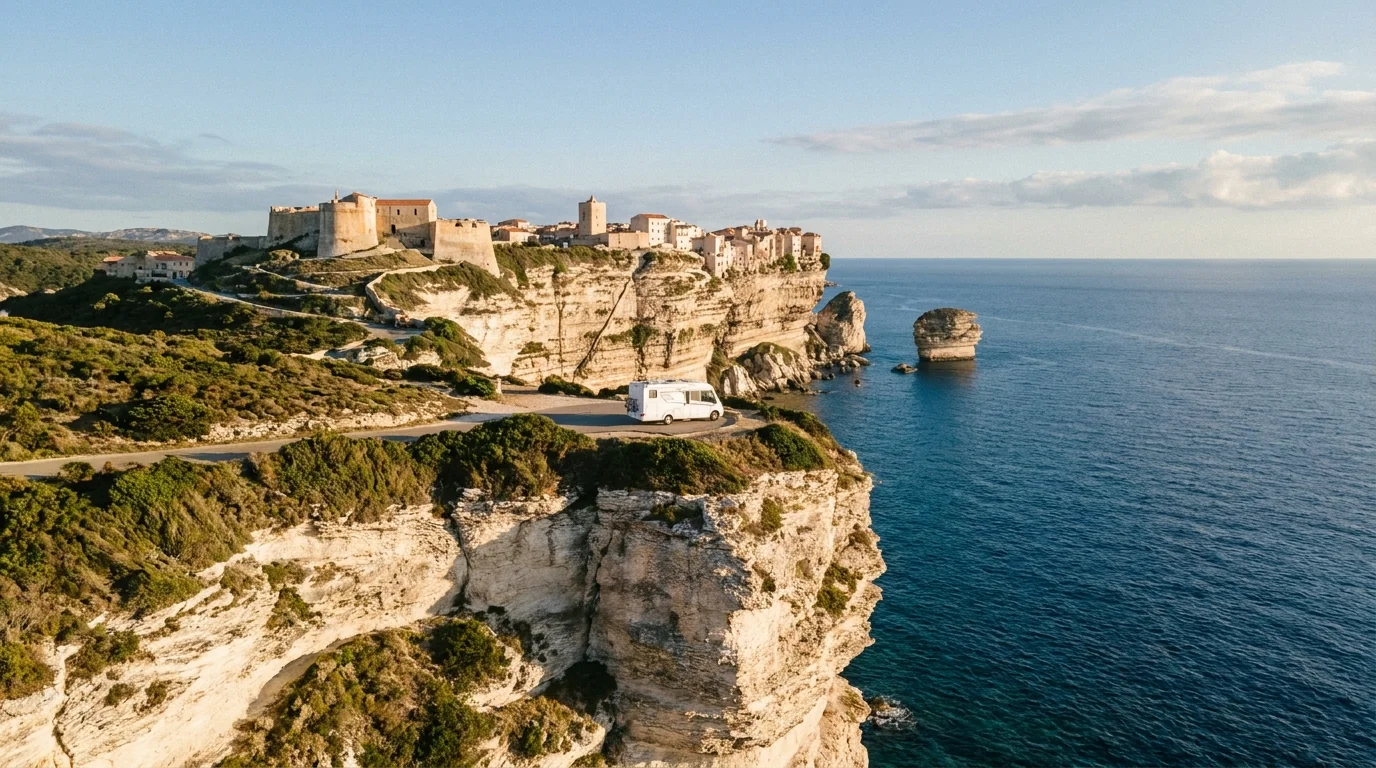
Take this trip by motorhome
Save €400–€800 on average vs. a travel agency
Duration
x daysDistance
664 km
stops
13
Choose a date and duration that fits your preferences
About this route
Highlights
- ✦Explore the authentic Vieux Port of Bastia
- ✦Admire the Genoese citadel of Calvi above the marina
- ✦Drive along the spectacular red rocks of the Golfe de Porto
- ✦Discover the historic mountain town of Corte and the Restonica gorge
- ✦Gaze over the imposing limestone cliffs and citadel of Bonifacio
The route
Stop 1
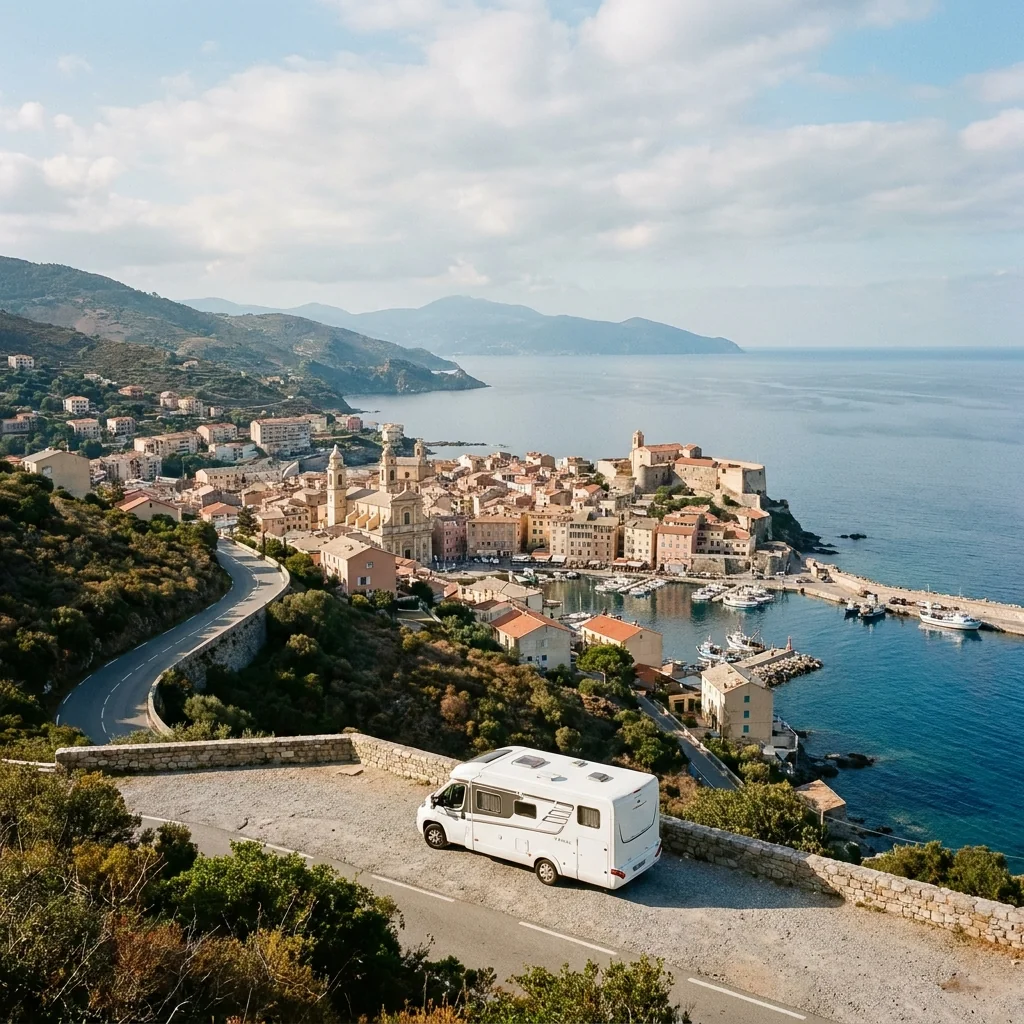
Bastia
Bastia is the port city of Northern Corsica and is dominated by the 17th-century Église Saint-Jean-Baptiste with its two bell towers. Here you can visit the Citadel of Bastia, a fortified district founded by the Genoese in the 14th century on a rock above the coastline. At the foot of the Terra Vecchia district lies the Vieux Port, while Place Saint-Nicolas, with an area of 22,400 square meters, is one of the largest squares in France.
Stop 2
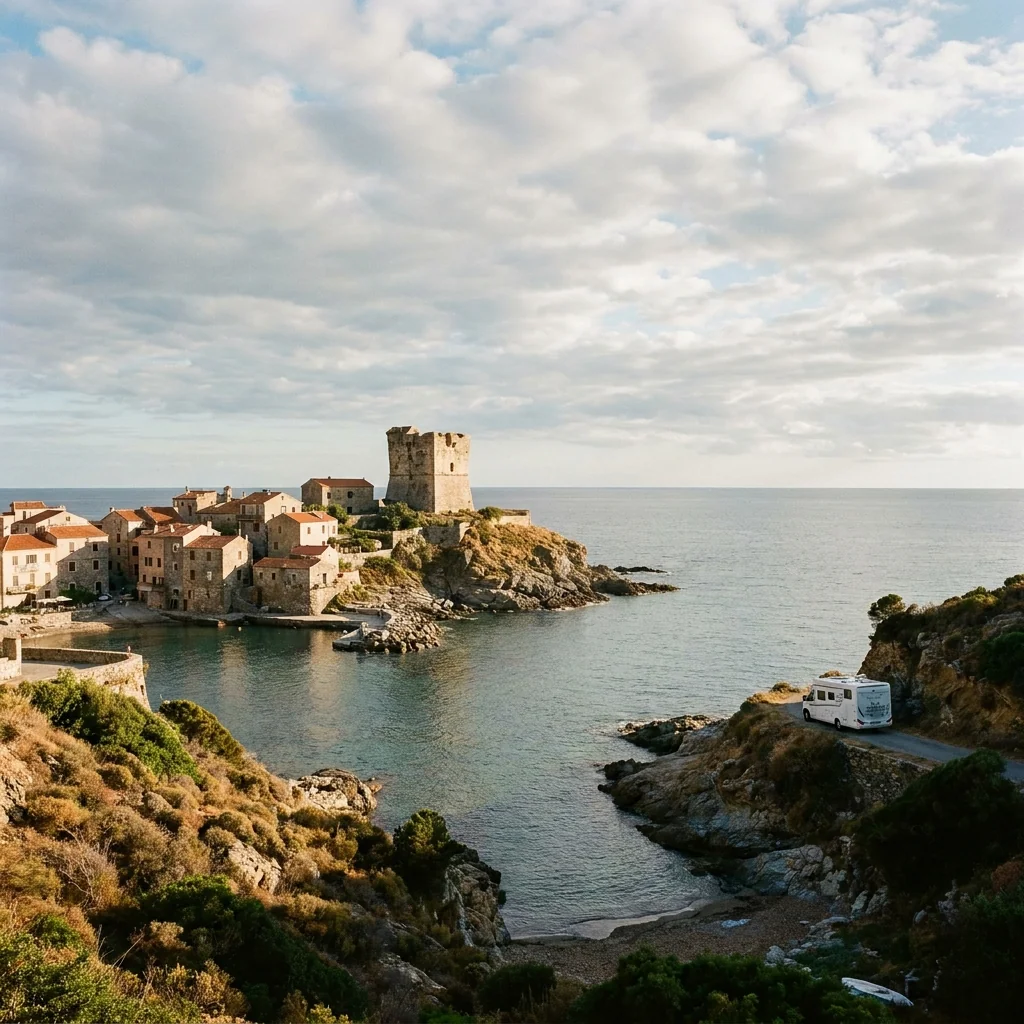
Erbalunga
Erbalunga is a fishing village where the houses are built directly on the waterline of the Mediterranean Sea. On a rocky outcrop in the harbour stands the partially collapsed Genoese watchtower, the Tour d'Erbalunga, from the sixteenth century. Here you can wander through a maze of narrow alleys and covered passages. These lead to the Place de l'Église, a charming square with terraces under old plane trees. As an artists' village, Erbalunga has a relaxed atmosphere, perfect for enjoying the view of the harbour and the tower.
Stop 3
Saint-Florent
Saint-Florent combines a chic marina with the mountains of Nebbio. Those who climb the round 15th-century citadel look out over the azure Golfe de Saint-Florent. In the 12th-century Cathédrale de Nebbio, you'll find the mummified body of Saint Floriano. Boats sail from the harbor to the white sandy beaches of the Désert des Agriates. A lively atmosphere prevails on the quay as the sun sets behind the citadel and the terraces fill up.
Stop 4
Île-Rousse
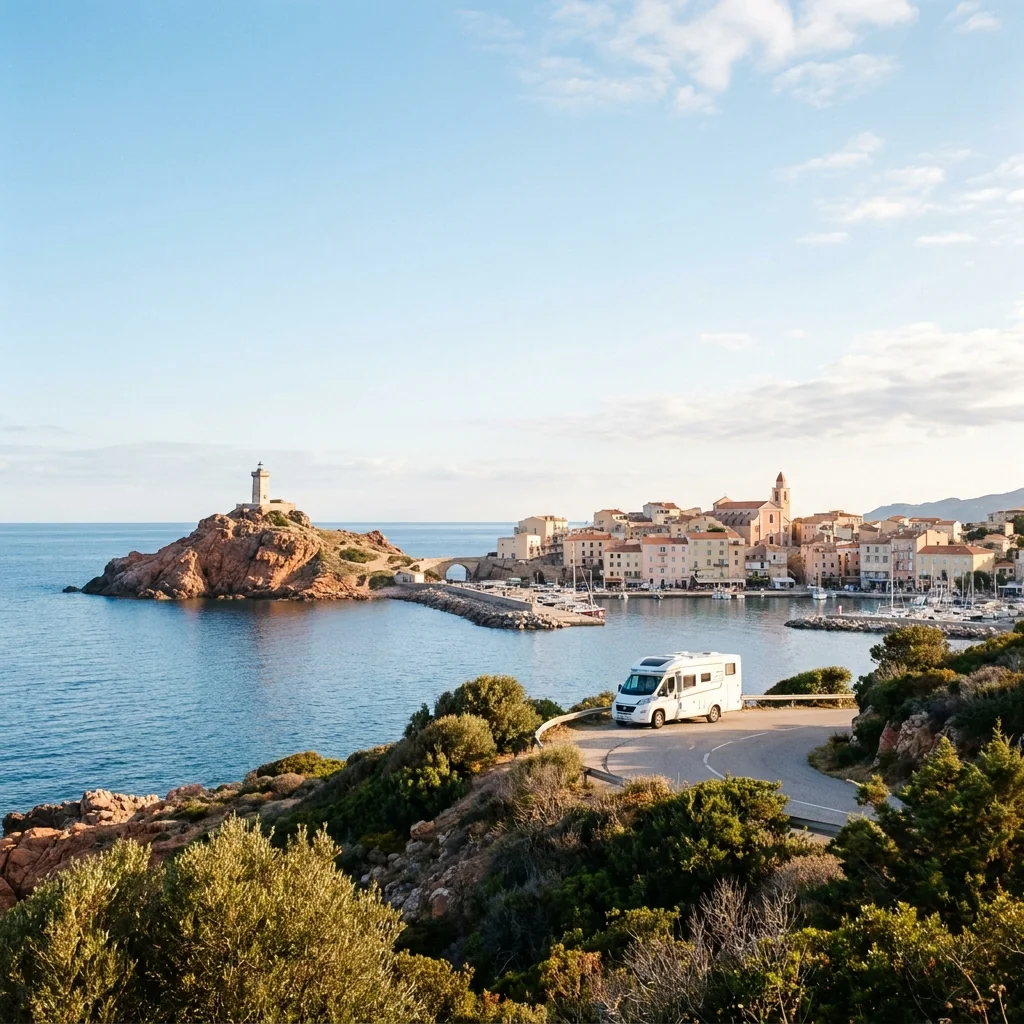
Île-Rousse is a port town on the north coast of Corsica, founded in 1758 by Pasquale Paoli. From the quay, you can walk to the Île de Pietra peninsula, where a lighthouse and a sixteenth-century Genoese tower stand on the red granite rocks. On the central Place Paoli, you'll find terraces under plane trees, and in the nearby covered market hall, you can buy local products. The sandy beach is directly adjacent to the town centre.
Stop 5
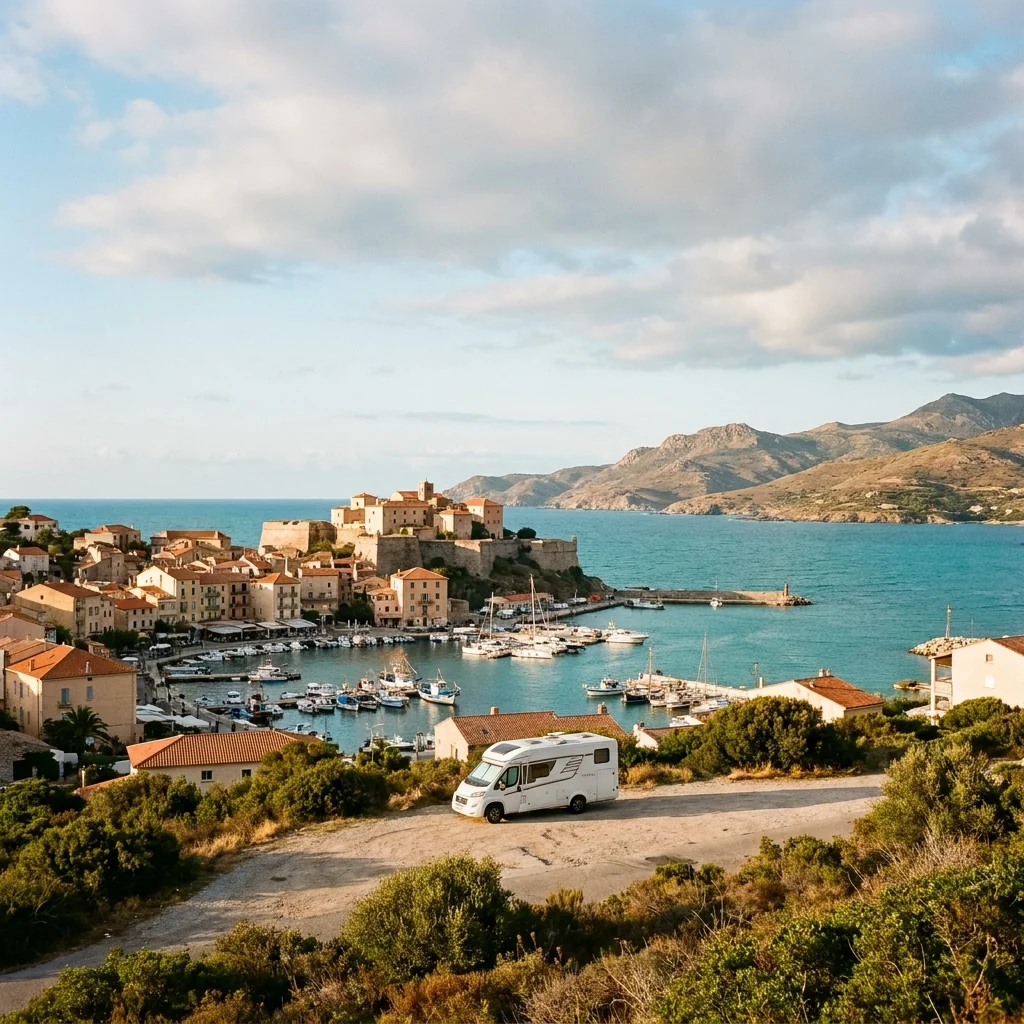
Calvi
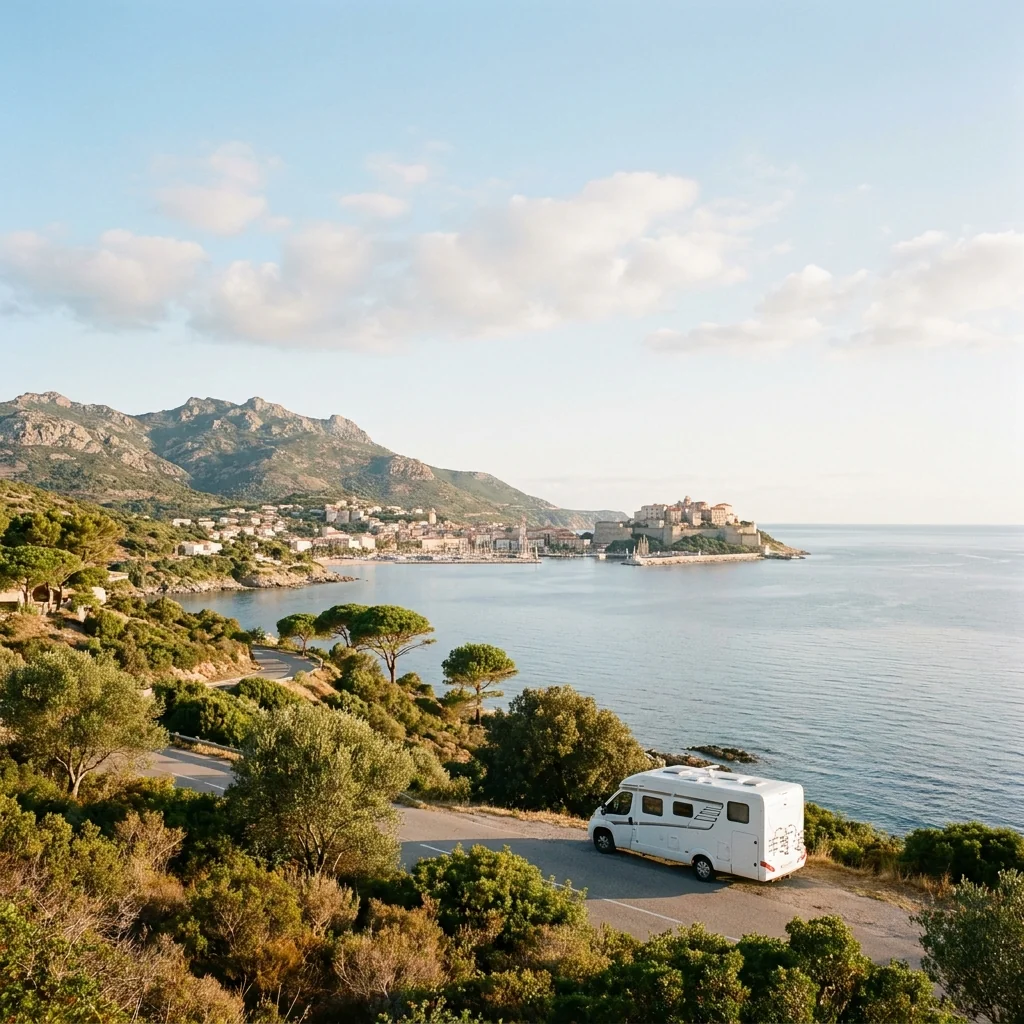
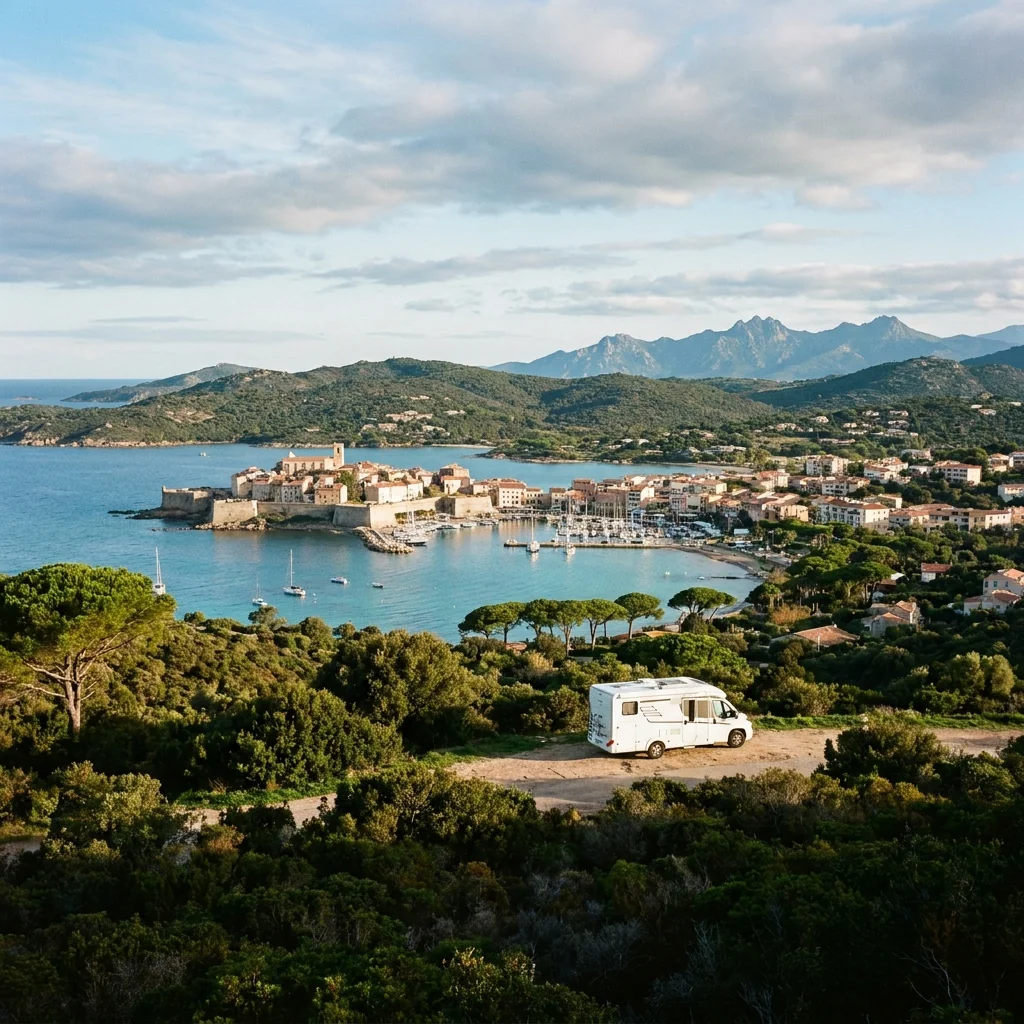
A 13th-century Genoese citadel towers high above the marina in Calvi. Within the city walls, you'll find a plaque dedicated to Christopher Columbus among the narrow streets. Along the coastline, the expansive sandy beach stretches out for a dip in the bay. Those who venture into the Balagne mountains will see the stone houses of Sant'Antonino and the artisan workshops in Pigna. From the lively quay in the harbour, you can see the illuminated masts of sailing yachts against the fortress rocks.
Stop 6
Porto
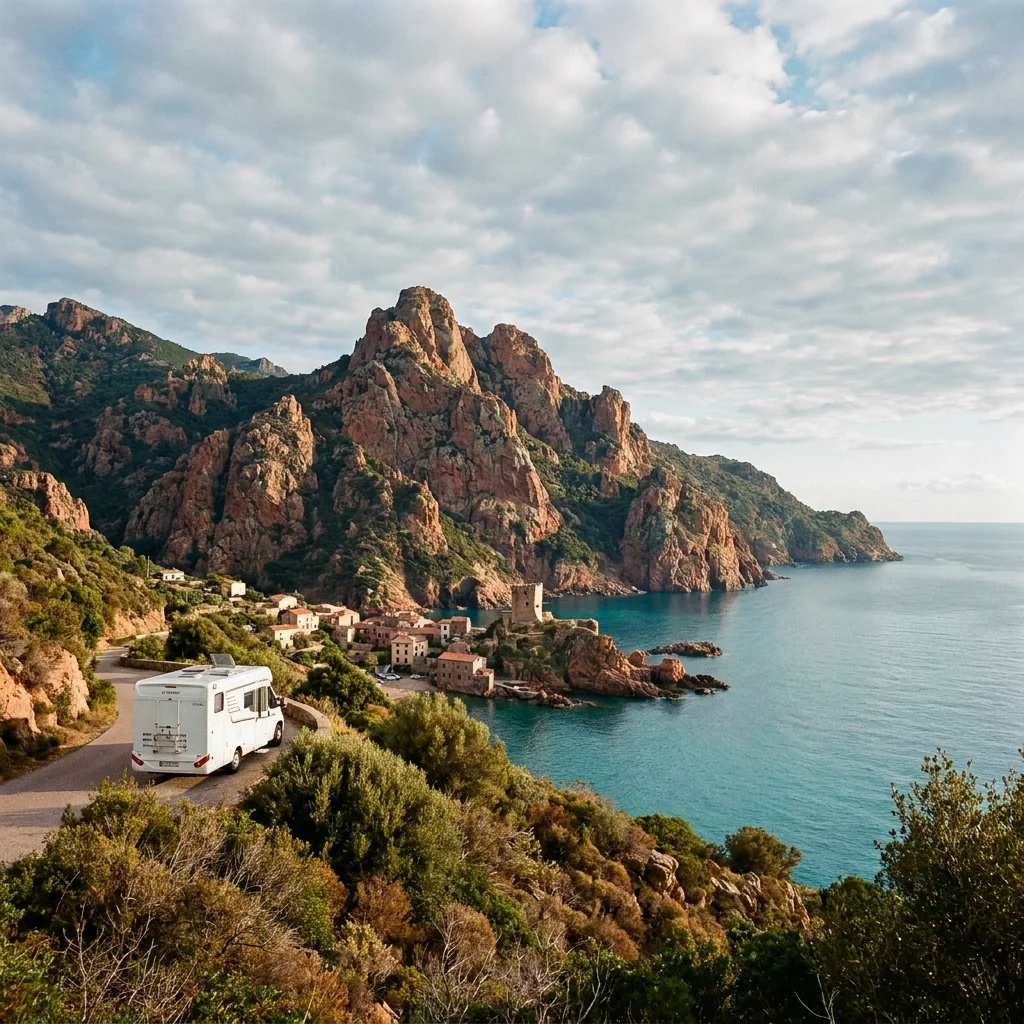
Porto is nestled between red porphyry rocks and the sea, at the end of the Golfe de Sagone, with the Genoese tower above the bay. From the beach, you overlook one of the most beautiful gulfs of the island.
Want to actually take this trip?
We put together the complete package for you — motorhome, ferry, campsites — in one personal email.
Stop 7
Calacuccia
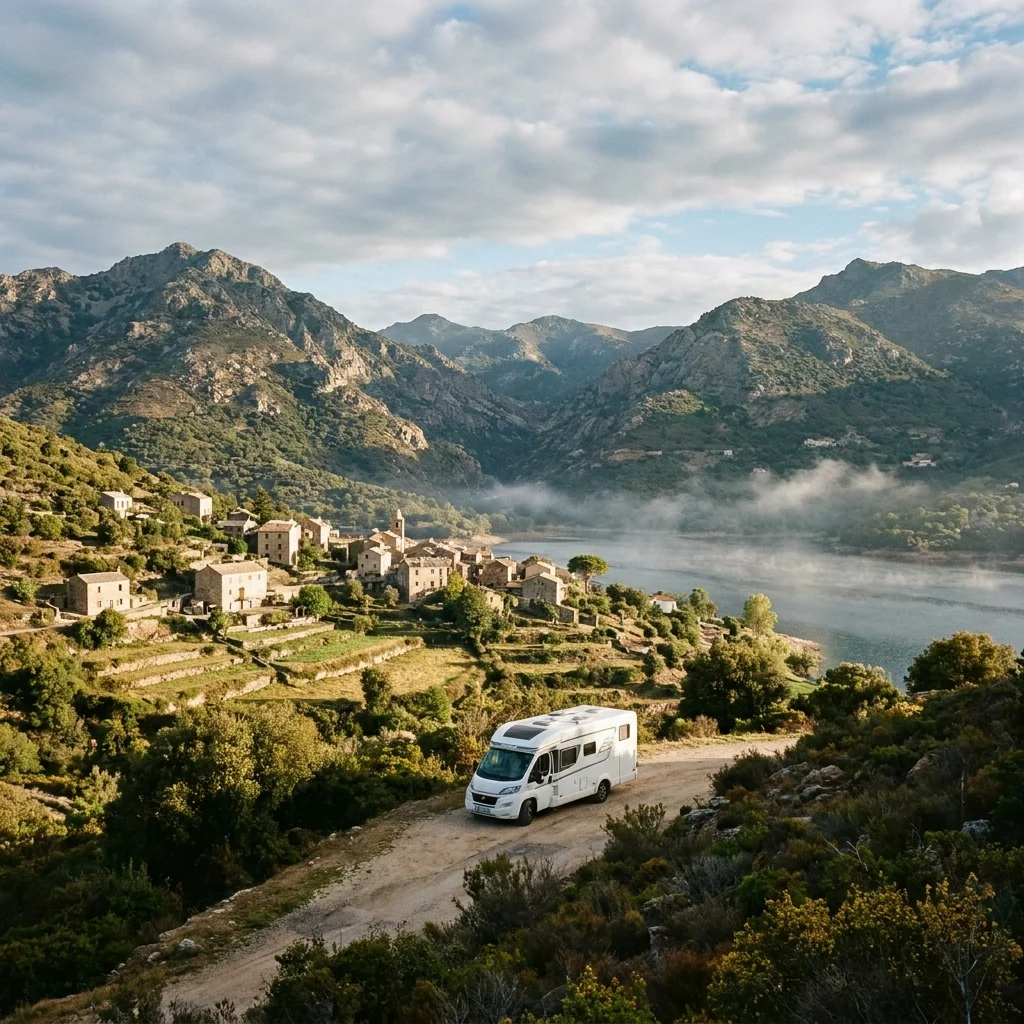
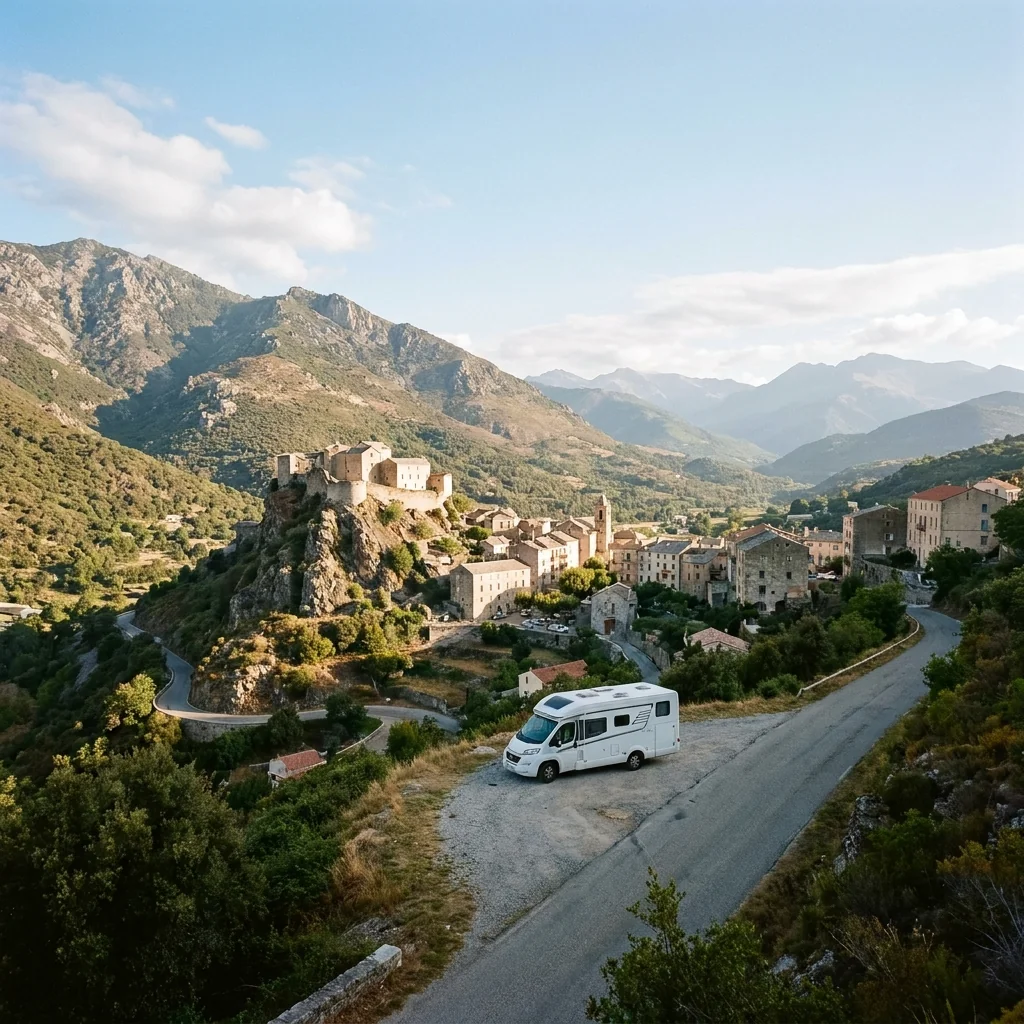
Calacuccia allows you to experience the rugged nature and authentic shepherd culture of Corsica. The Niolu Valley stretches out at the foot of Monte Cinto, at 2706 meters the highest mountain on the island. You walk along Lac de Calacuccia, a reservoir created in 1968 by a dam in the Golo River. Pine forests and natural pools invite exploration, or you can climb the granite flanks. The shepherd culture is visible in the stone houses and narrow alleys, giving the valley a timeless tranquility.
Stop 8
Corte
Corte is the historic capital of the Corsican interior. The citadel overlooks the rooftops and mountains, and the museum covers the island's history. The Restonica gorge behind it features clear natural pools and hikes between granite walls.
Stop 9
Ajaccio
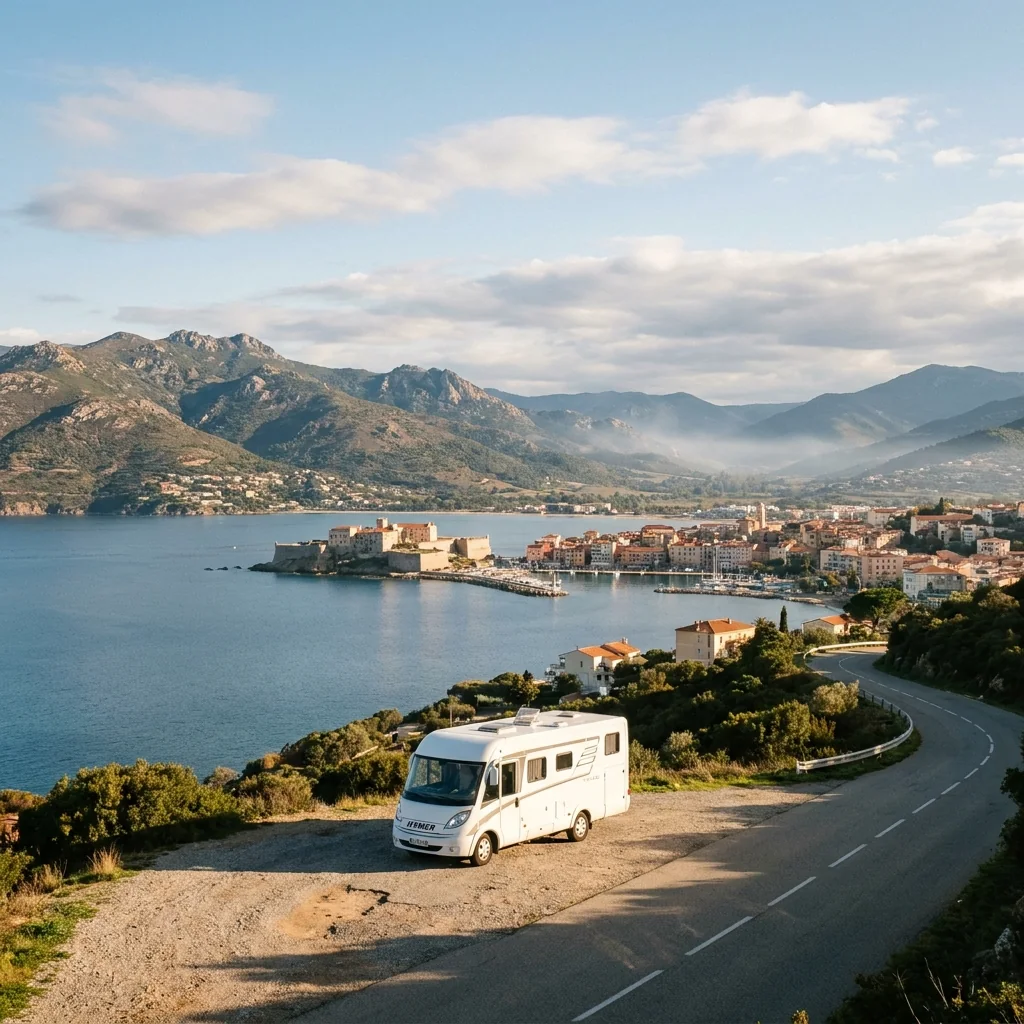
Ajaccio is the sunny capital of Corsica and Napoleon's birthplace, with the Maison Bonaparte, the Palais Fesch, and the cathedral. In the evening, stroll along the Place de Gaulle and dine at the old port.
Stop 10
Sartène
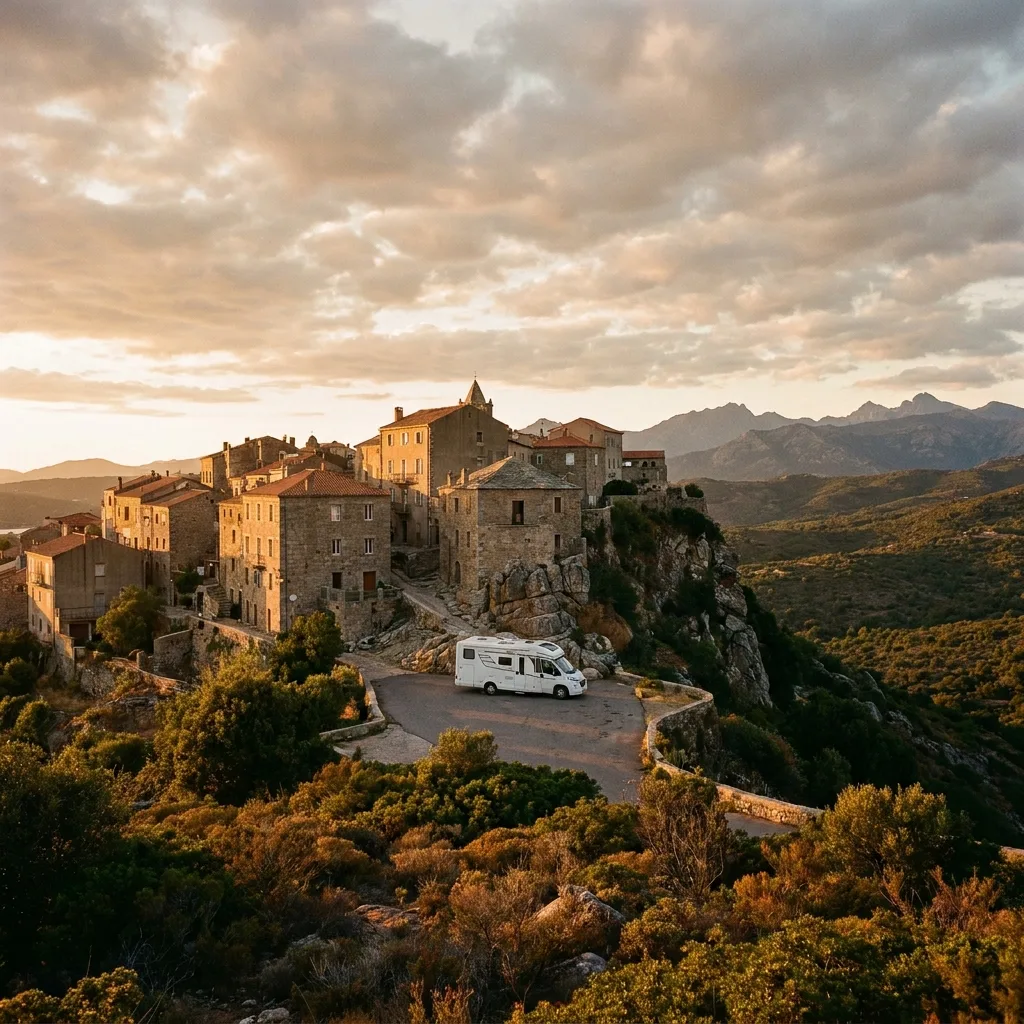
Sartène appears robust due to the tall, dark granite houses standing close together against the hillside. In the Santa Anna district, narrow alleys and steep stairs lead past grey facades. The sixteenth-century Église Sainte-Marie dominates the Place de la Libération. From the city's edge, the view extends over the vineyards of the Sartenais region. The city feels traditional due to its massive architecture and the view of the rugged peaks of Southwest Corsica.
Stop 11
Bonifacio
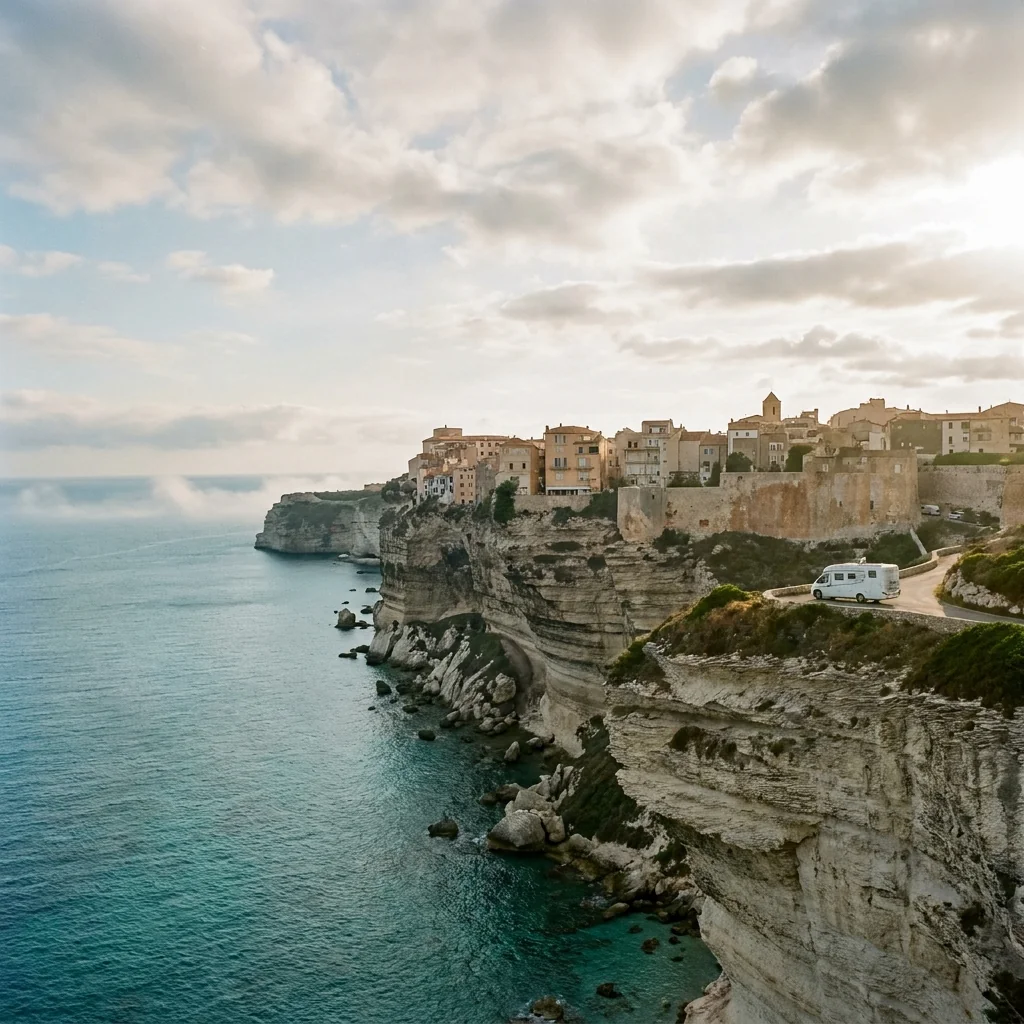
Bonifacio is a citadel on white limestone cliffs, with the harbour deep in an inlet below. The upper town, the Escalier du Roi d'Aragon and a boat trip along the cliffs or to the Lavezzi Islands are the three things to do.
Stop 12
Porto-Vecchio
A sixteenth-century citadel in Porto-Vecchio towers high above a deep natural inlet. From the Bastion de France, you overlook the salt pans and the Marina where white sailing yachts moor. Those who seek out the shallow bay of Plage Santa Giulia will find refreshment in clear water against a backdrop of cork oaks and maquis. The lively atmosphere in the upper town remains noticeable until the sun sets behind the mountains and the citadel walls turn ochre yellow.
Stop 13
Bastia
Bastia is the port city of Northern Corsica and is dominated by the 17th-century Église Saint-Jean-Baptiste with its two bell towers. Here you can visit the Citadel of Bastia, a fortified district founded by the Genoese in the 14th century on a rock above the coastline. At the foot of the Terra Vecchia district lies the Vieux Port, while Place Saint-Nicolas, with an area of 22,400 square meters, is one of the largest squares in France.
Ready to hit the road?
We'll email you a personal travel proposal within 24 hours — motorhome, route and full cost overview included. Save €400–€800 on average vs. a travel agency.
No packages, no middlemen. Learn how it works
Camproads gave me a lot of inspiration for our campervan trip. The routes are beautiful, with a good balance of nature and city life, and the route generator made planning super easy. It's also really handy that there are so many good camping options at the locations, and that you can easily find the campervan that suits your needs and compare prices. This way, we can plan everything ourselves and book the campervan directly with the rental company. That's much cheaper than an organized trip!
Michiel van de Bunt
February 2026
What a difference from how I used to plan trips. Through Camproads, I put together a complete campervan trip in just a few minutes. It's so easy to use, and you can customize everything to your liking. The ability to choose your travel pace makes it even more enjoyable, especially now that we're traveling with a baby for the first time.
Alieke Zelhorst
February 2026