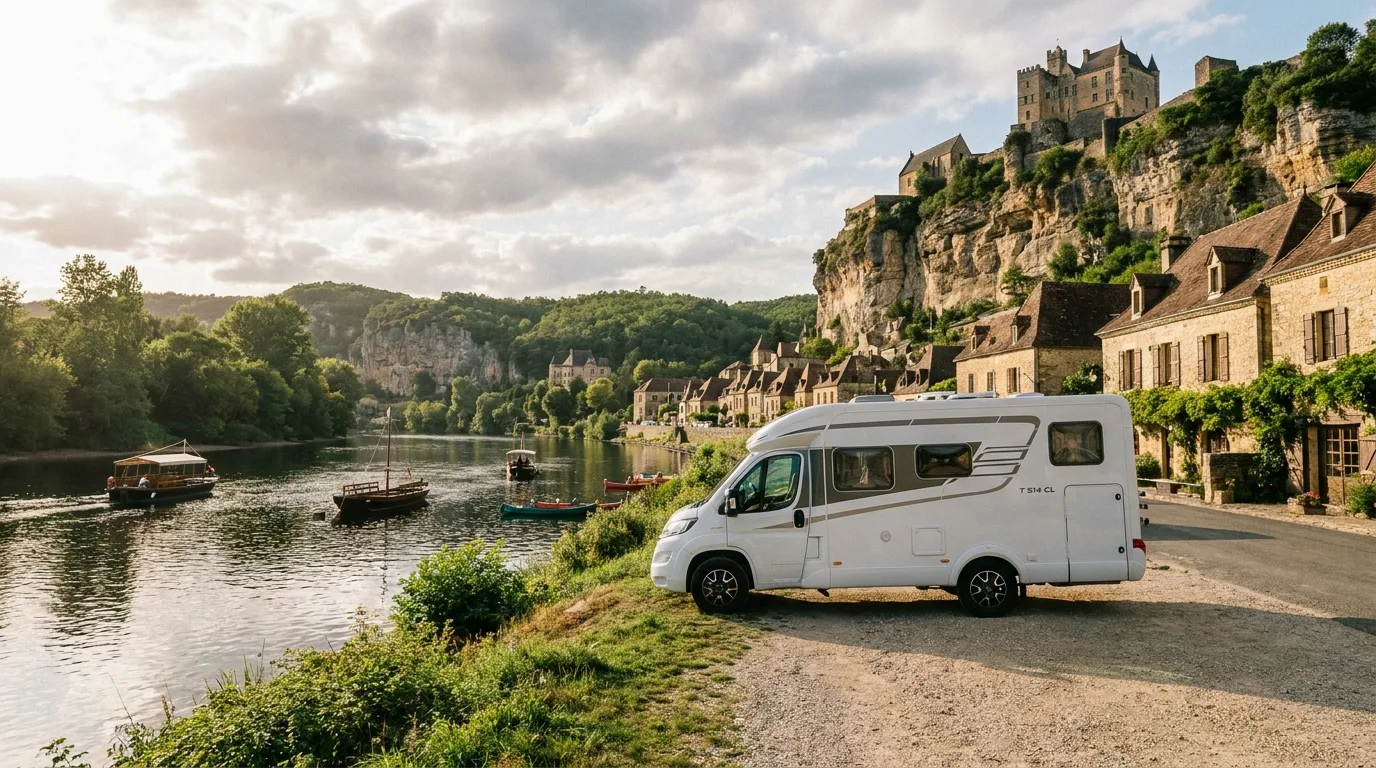
Dordogne, Lot and Pyrenees - from Saint-Émilion to Biarritz by Motorhomefrom Saint-Émilion to Biarritz by Motorhome
The complete France camper guide
Routes planned out day by day, with campsites and our honest tips. Instant PDF download.
€14.95
Instant download · NL, EN & DE
€14.95
Instant download · NL, EN & DE
Duration
x daysDistance
1088 km
stops
14
Choose a date and duration that fits your preferences
About this route
Highlights
- ✦Saint-Émilion, wine village on the UNESCO list with an underground church
- ✦Lascaux IV and the prehistoric Vézère Valley
- ✦Two nights in Sarlat, with the Saturday market and the castles of Beynac and Castelnaud
- ✦Rocamadour against the cliff and the underground river of Padirac
- ✦Saint-Cirq-Lapopie high above the Lot, with canoeing and the wine of Cahors
- ✦Albi, the red cathedral city, and Toulouse
- ✦The Cirque de Gavarnie, the Pont d'Espagne, and the Col du Tourmalet
- ✦Basque villages around Espelette and the waves of Biarritz
The route
Stop 1
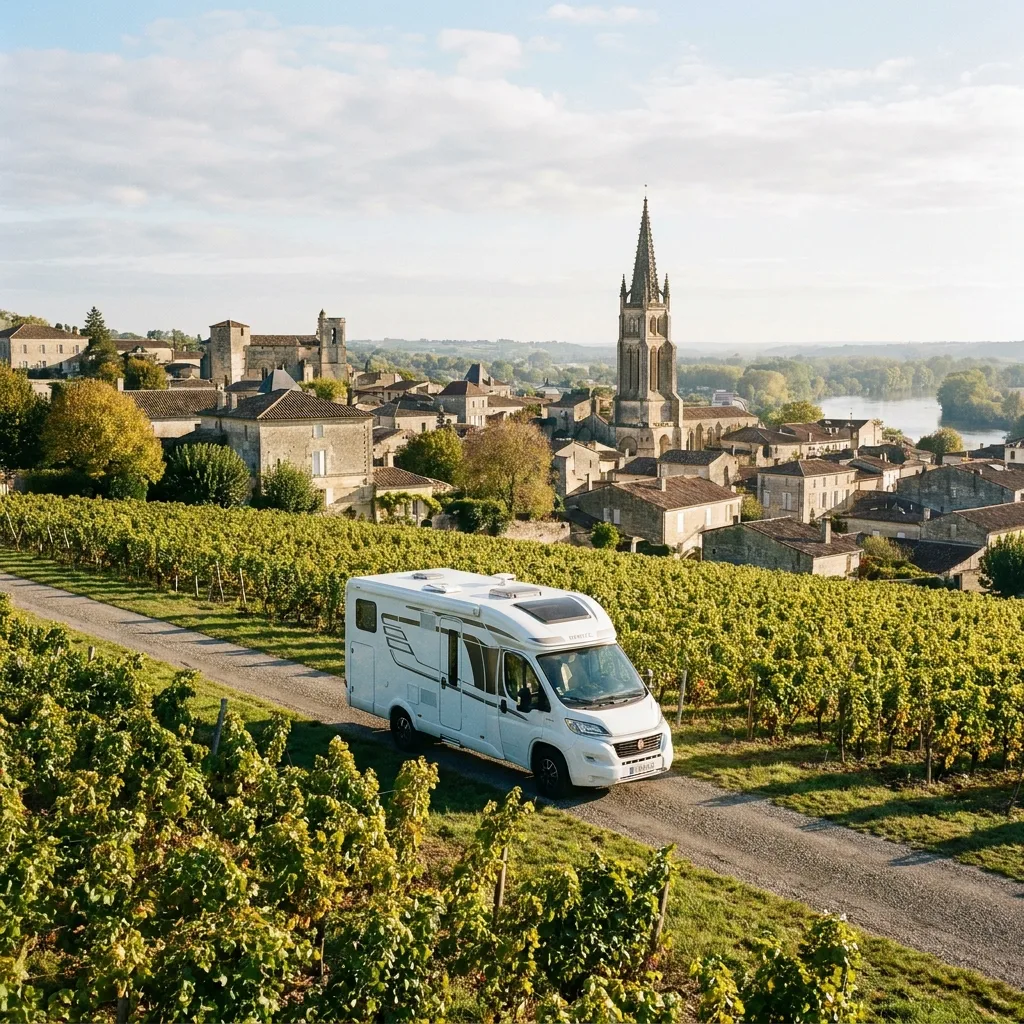
Saint-Émilion
Saint-Émilion is a wine village of golden limestone situated on a hill amidst the vineyards, featuring a church carved into the rock and a labyrinth of steep, winding streets. The motorhome park is located on the edge of the village, within easy walking distance of the monolithic church bell tower and the various wineries offering delightful tastings. Just an hour from Bordeaux Airport, this is the ideal and most logical place to pick up your motorhome and gently ease into your journey, allowing you to acclimatize at a relaxed pace.
Stop 2
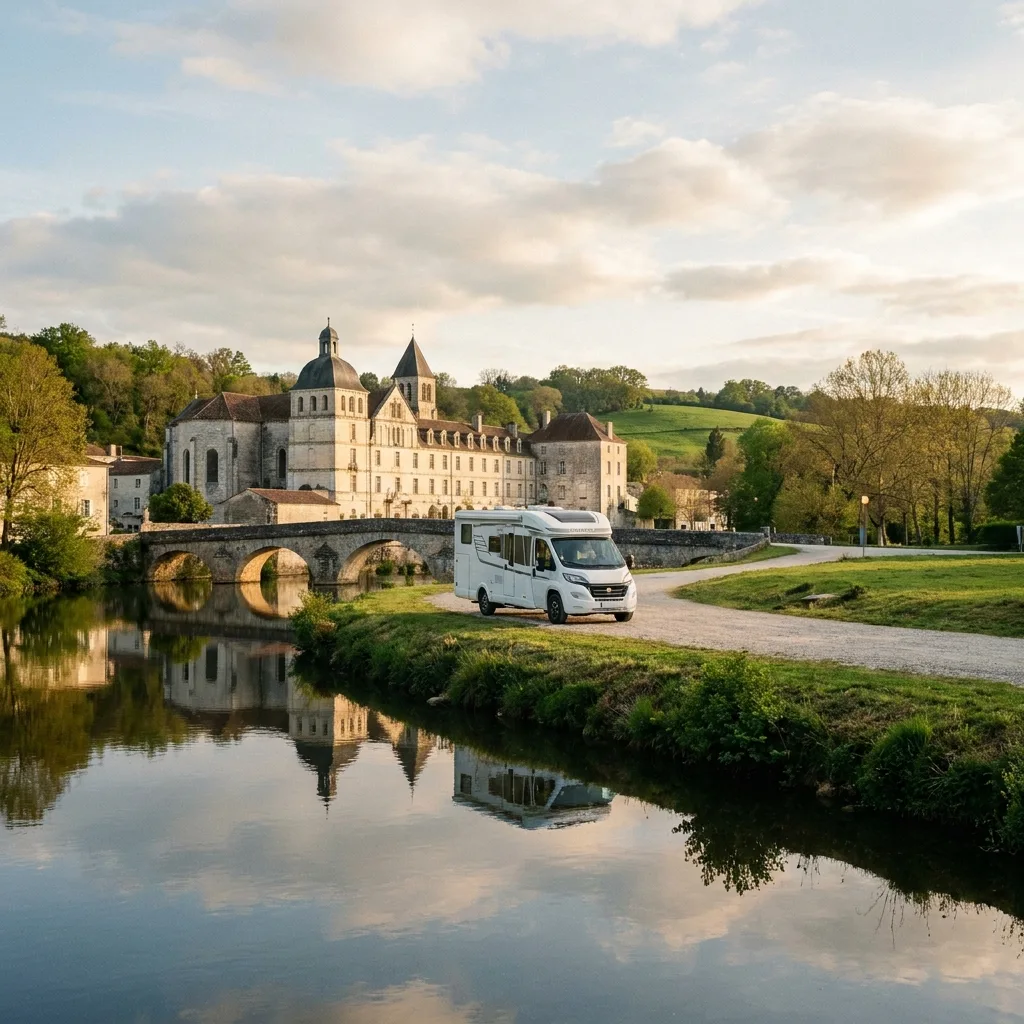
Brantôme
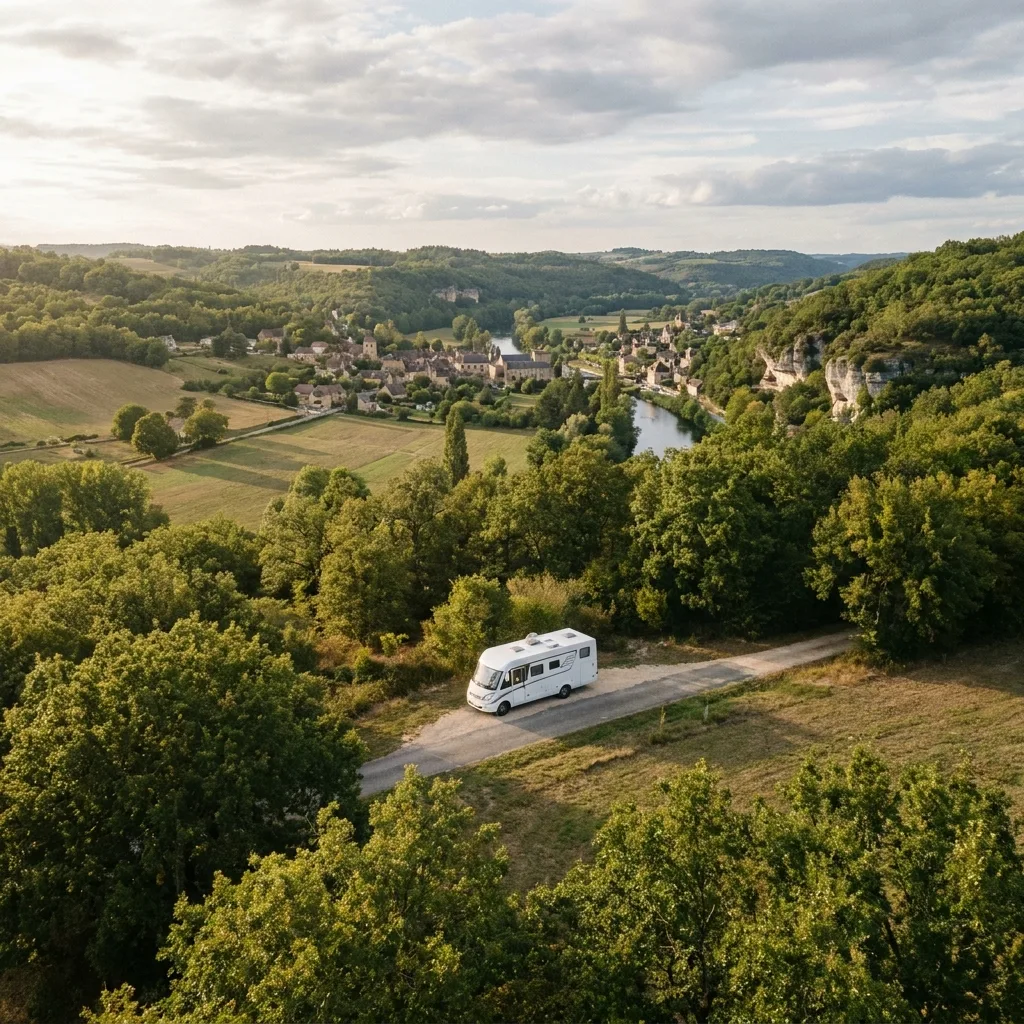
Brantôme is embraced by the Dronne, making the village appear like an island and earning it the nickname 'Venice of the Périgord'. The Abbaye de Brantôme, partly carved into the rock face, showcases its rich history. Across the river stretches Le Pont Coudé, a striking elbow-shaped bridge. Along the water, canoes are ready for a relaxing trip on the Dronne. Behind the abbey, you'll discover the caves where monks once carved their chapels during a peaceful evening stroll.
Stop 3
Lascaux
Lascaux is the heart of prehistory, where you can admire the famous cave paintings. Lascaux IV in Montignac displays a complete replica of the painted cave, a window into 20,000-year-old art. In the Vézère Valley, you'll also find the rock shelters of La Roque Saint-Christophe. The museum of Les Eyzies deepens your knowledge of early humans. This popular spot attracts many visitors, so book Lascaux IV in advance. The large, flat motorhome parking makes a visit easy.
Stop 4
Sarlat
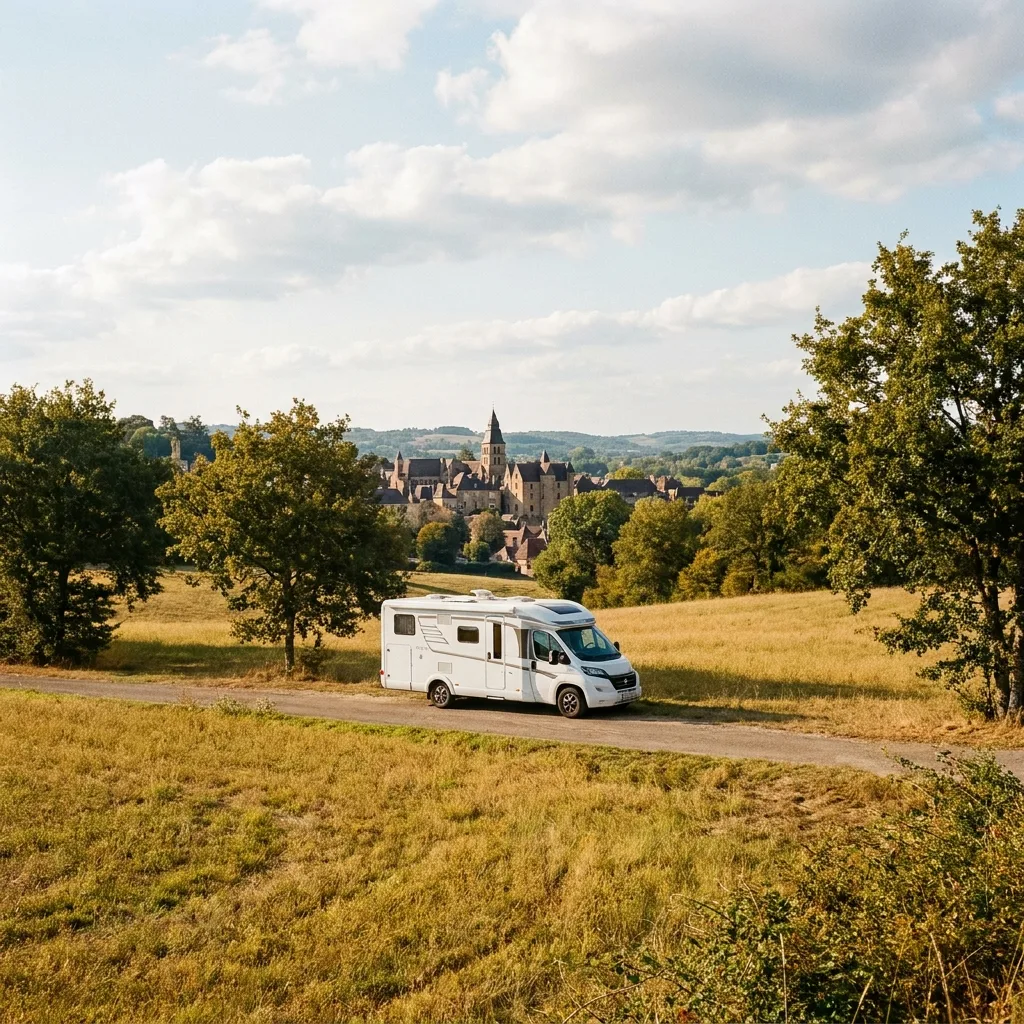
Warm, honey-coloured stone colours the streets of Sarlat and its perfectly preserved medieval centre. At the market, the scents of truffles and walnuts fill the alleys around the Cathédrale Saint-Sacerdos. In the Jardins de Marqueyssac, thousands of hand-pruned boxwood shrubs lie in undulating forms across the ridge. From the Château de Beynac, you can overlook the wide Dordogne Valley. Those who paddle among the canoes to the charming La Roque-Gageac will see the golden-yellow houses against the rock face.
Stop 5
Beynac
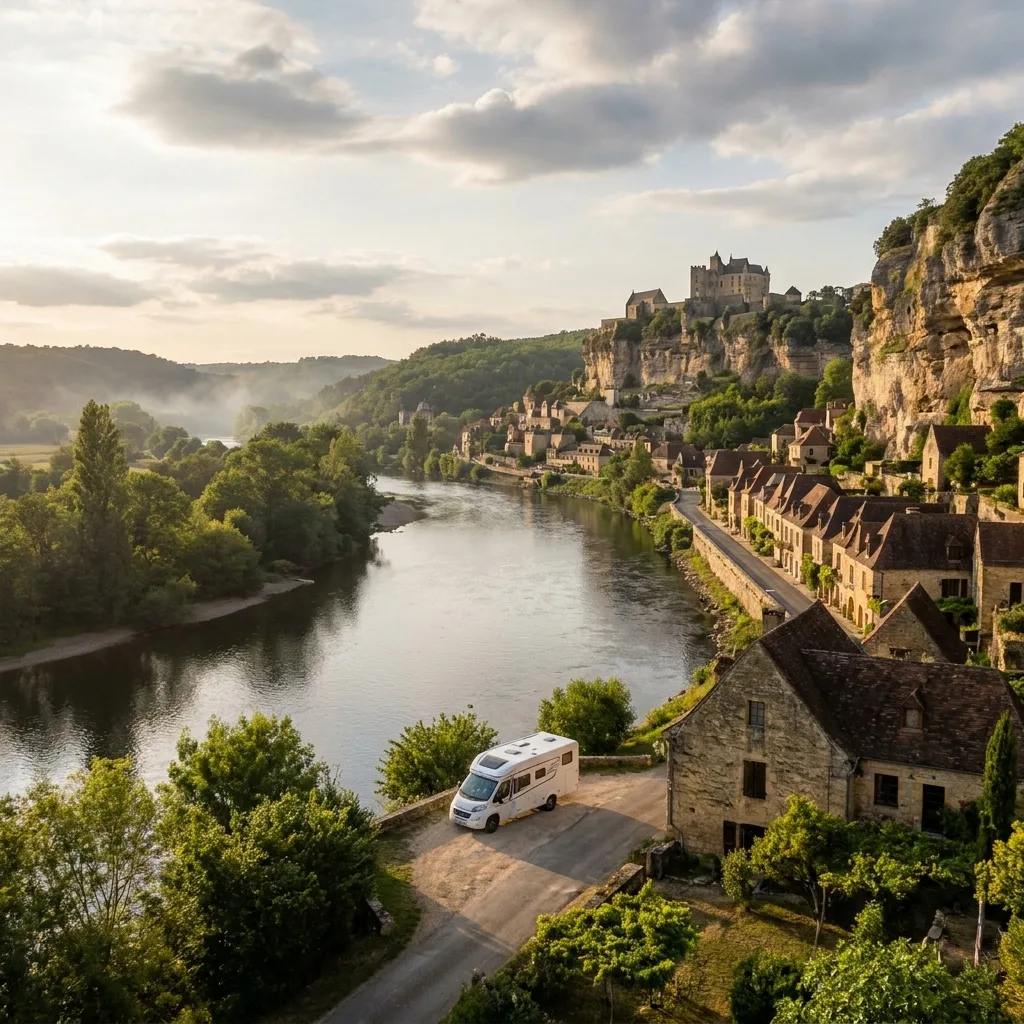
Beynac and La Roque-Gageac face each other on a bend of the Dordogne: one a fortress of the French king high on the rock, the other a village clinging to the cliff, with an exotic garden and gabarres that sail you across the river. Castelnaud, the English castle on the other side, has a museum of medieval warfare with working catapults. Overnight stays are possible at the riverside campsite below Beynac.
Stop 6
Saint-Cirq-Lapopie
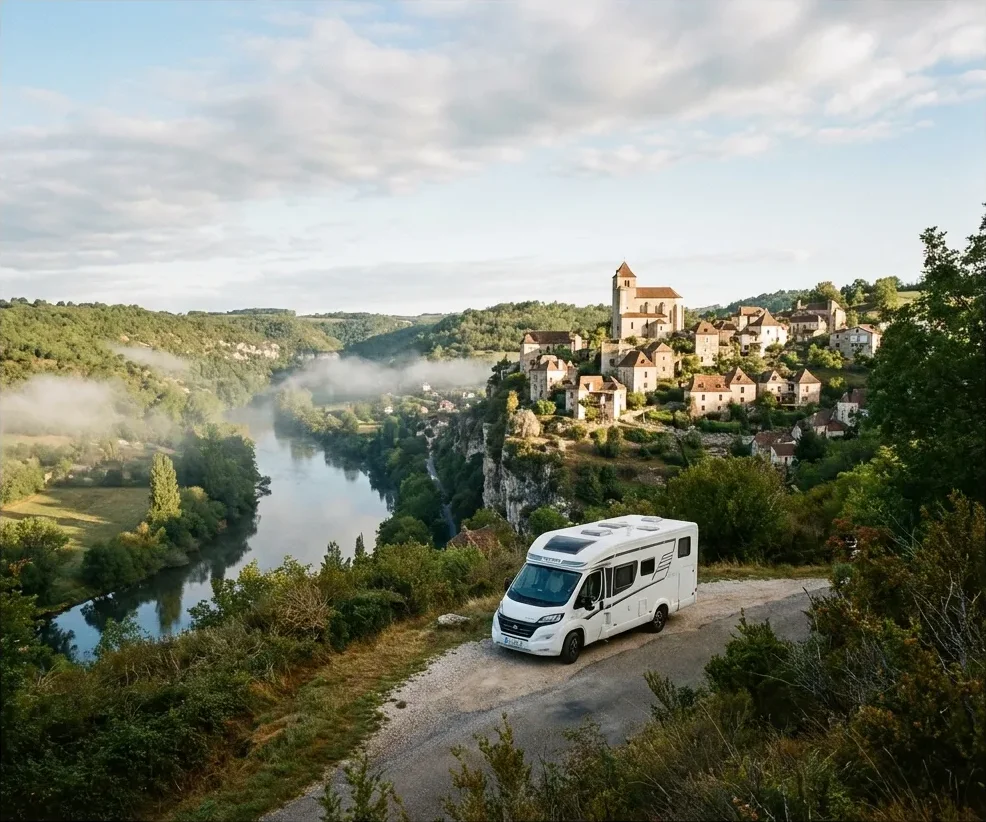
Saint-Cirq-Lapopie balances a hundred metres above the Lot on a rocky outcrop, with artists' studios in the medieval houses and a towpath carved into the cliff. In the evening tranquility, when the day-trippers are gone, the village is at its most beautiful; you can canoe on the Lot and visit a cave with real prehistoric paintings at Pech Merle. The campsite is by the river below the village; motorhomes are not allowed in the village itself.
Stop 7
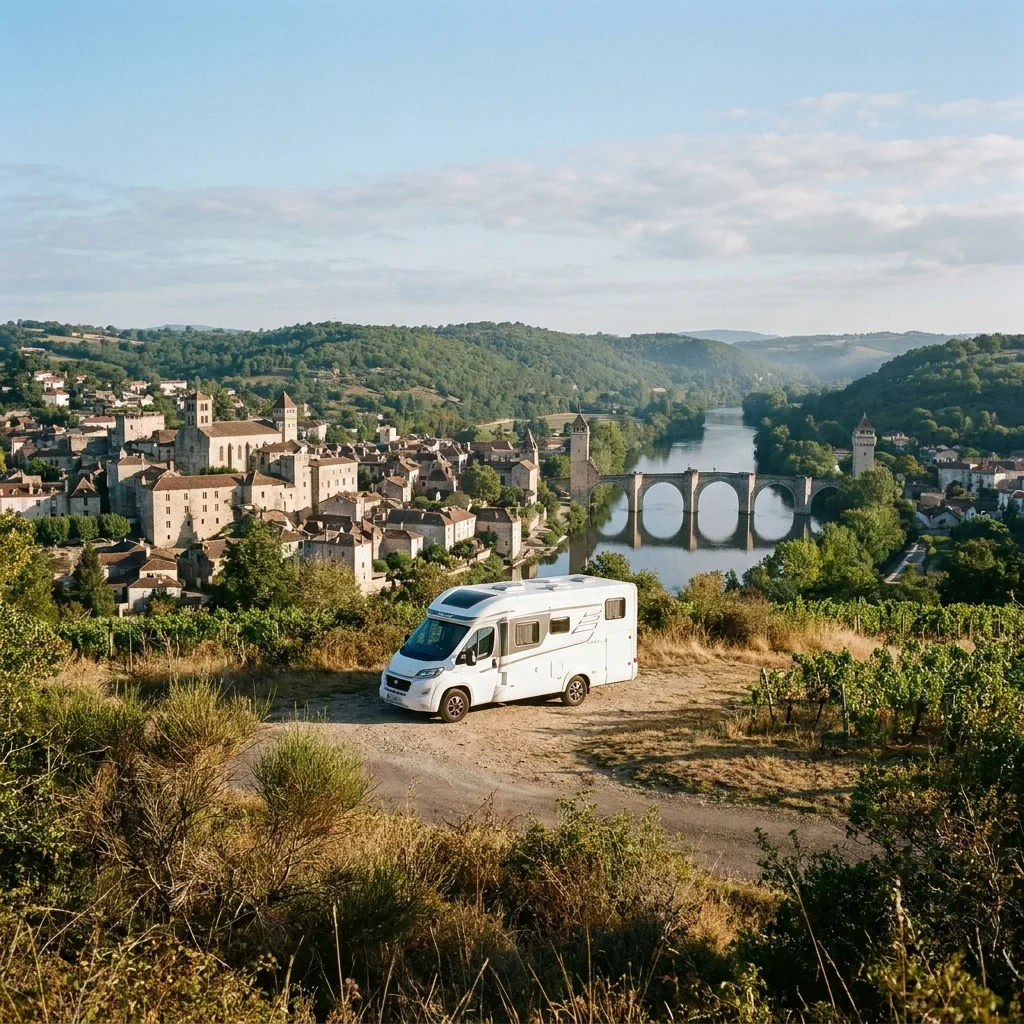
Cahors
Cahors surprises with its ancient Pont Valentré, a fortified bridge spanning the Lot. Wander through the old town, where you'll discover secret gardens and admire the imposing Cathédrale Saint-Étienne with its Byzantine domes. Along the river, wineries invite you to taste the dark Malbec wine, which originates here. For a panoramic view of the city and the river, climb Mont Saint-Cyr. The lively city centre, with its atmospheric squares, lets you enjoy local wines and dishes.
Want to actually take this trip?
We put together the complete package for you — motorhome, ferry, campsites — in one personal email.
Stop 8
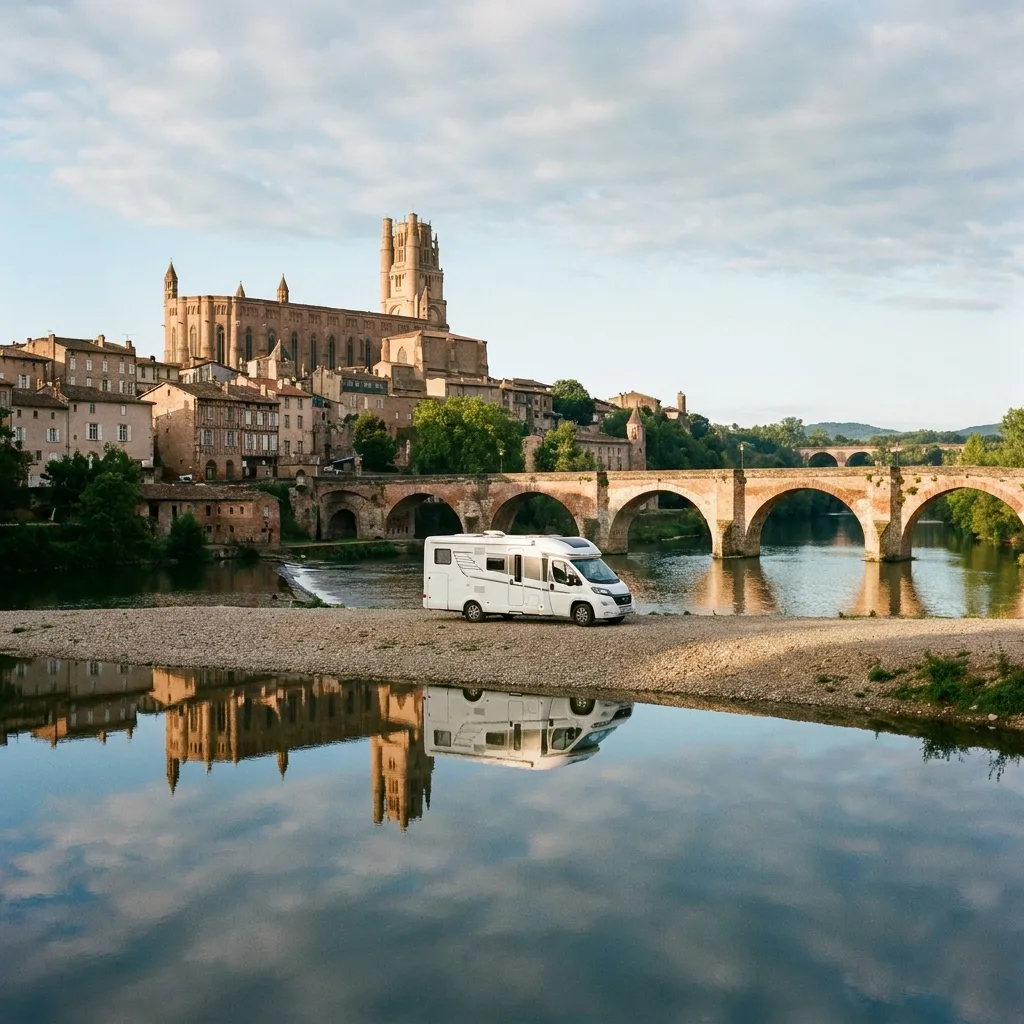
Albi
Albi immediately stands out with its deep red bricks that give the entire city a warm glow. From the outside, the Cathédrale Sainte-Cécile looks like an impregnable fortress, but inside it reveals an exuberantly painted blue vault. The Palais de la Berbie houses a large collection of works by the painter Toulouse-Lautrec. Those who look up at Cordes-sur-Ciel will see the bastide rising above its surroundings. From the Pont Vieux, you have an atmospheric view of the red walls reflected in the river Tarn.
Stop 9
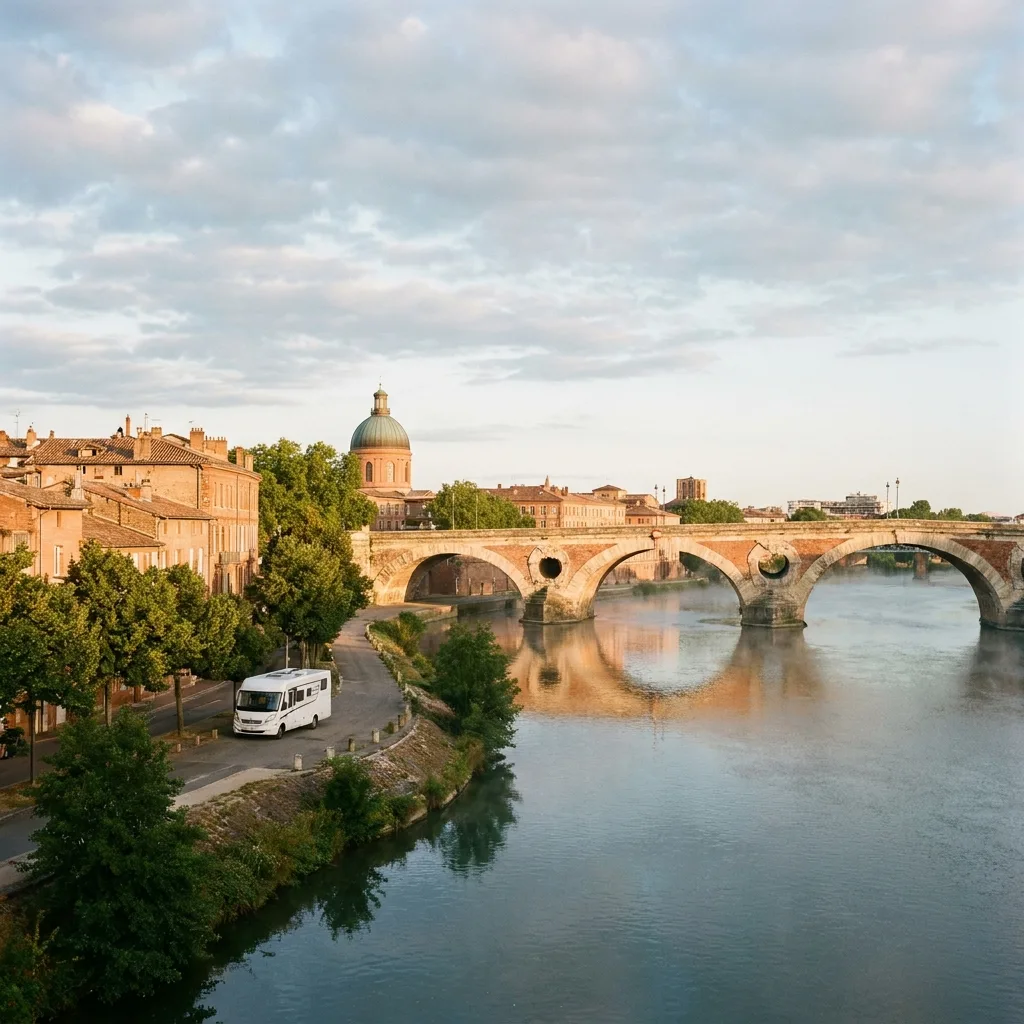
Toulouse
Toulouse is the pink city: bricks in all shades, the Capitole on an enormous square, the Saint-Sernin as Europe's largest Romanesque church, and the Garonne quays as a spot for the evening. The Cité de l'Espace and the Airbus visitor centre attract those who love technology. The campsite on the outskirts of the city has a direct bus to the centre; parking a motorhome in the city centre is not an option.
Stop 10
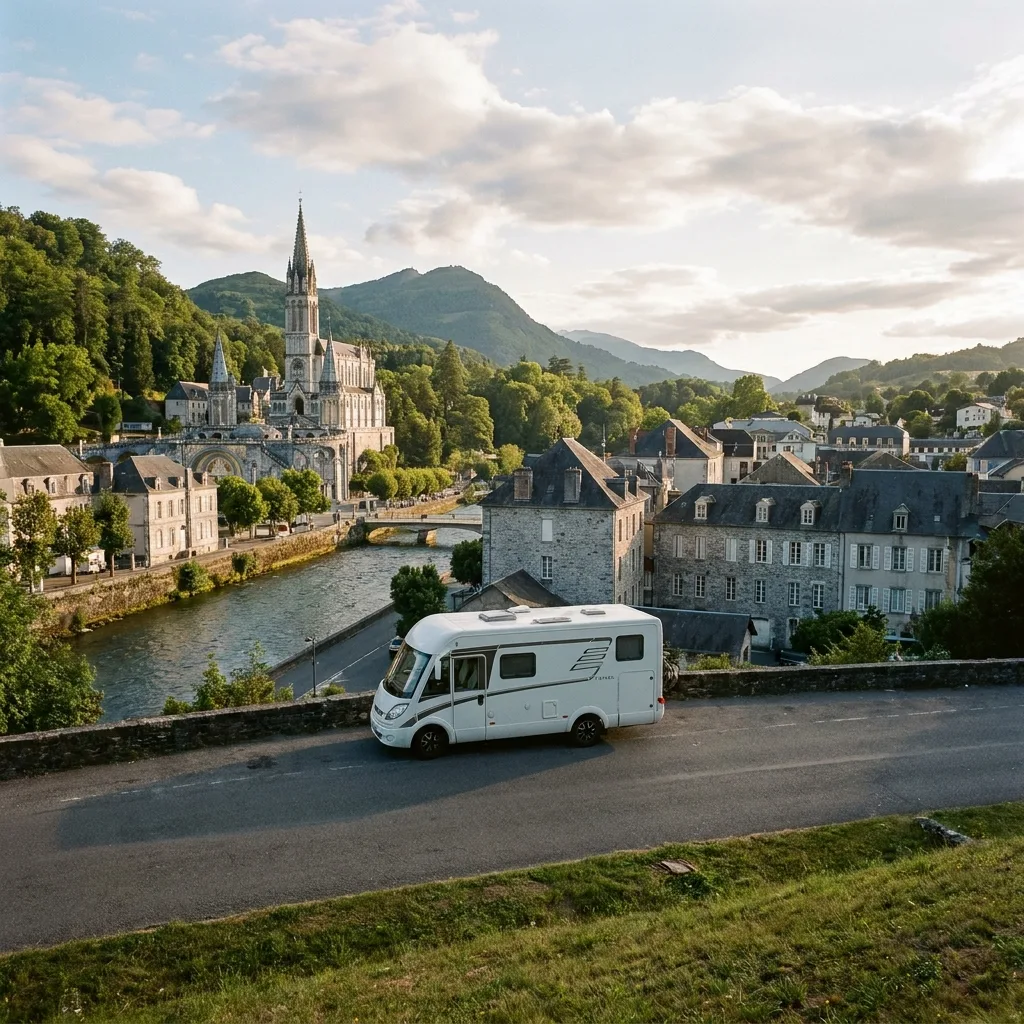
Lourdes
Lourdes is the pilgrimage town at the foot of the Pyrenees, with the Grotto of Massabielle, the superimposed basilicas, and the candlelit procession every evening; those who don't come for that will primarily find a well-equipped place to sleep beneath the mountains. The motorhome pitches and campsites are located along the Gave de Pau, within walking distance of the sanctuary. The fortress above the town has a Pyrenean Museum and the best view of the mountain range.
Stop 11
Cirque de Gavarnie
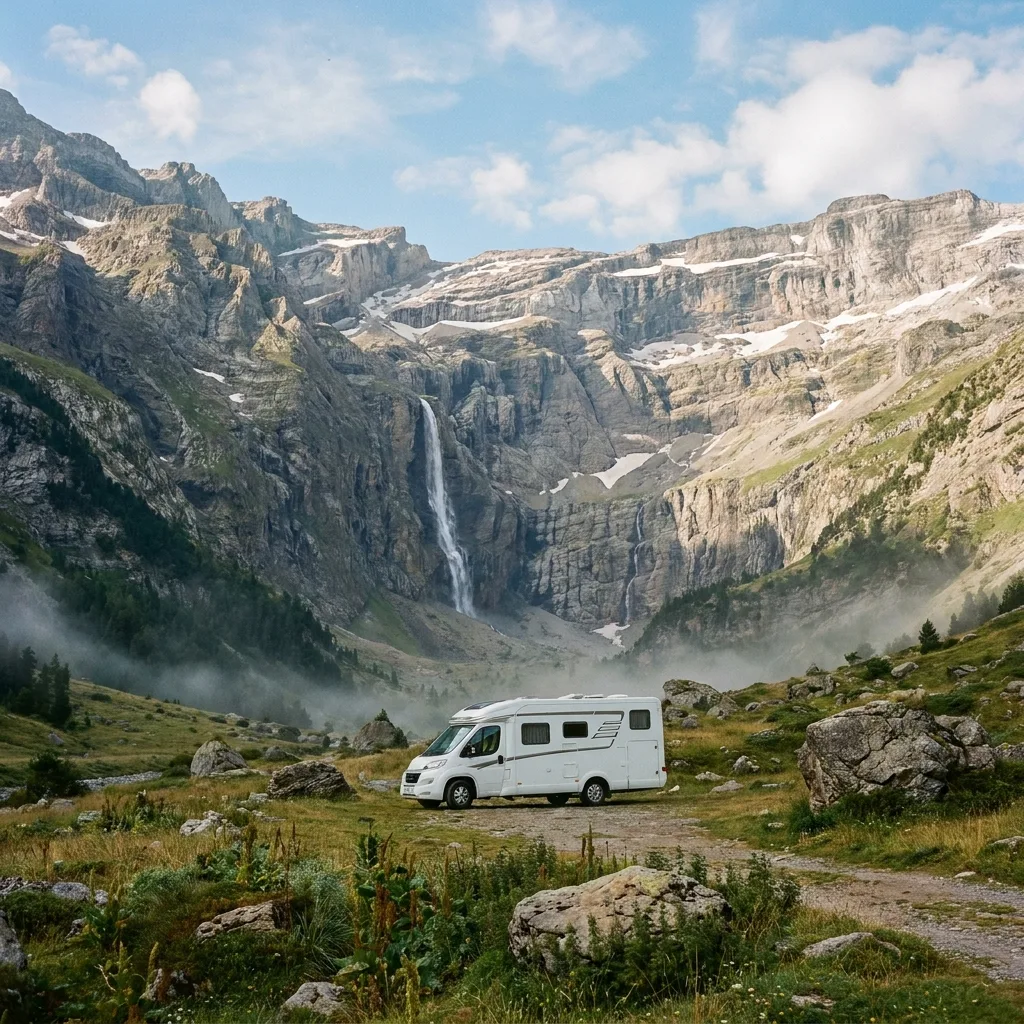
The Cirque de Gavarnie is the largest natural monument in the Pyrenees: a semicircle of 1500-metre high rock faces containing France's highest waterfall. The walk from the village to the foot of the cirque takes an hour and is flat; those who want to go further can climb to the Refuge des Espuguettes or drive to the Cirque de Troumouse. The motorhome pitches and campsites are located in the village, and the light on the walls is most beautiful in the morning and evening.
Stop 12
Cauterets
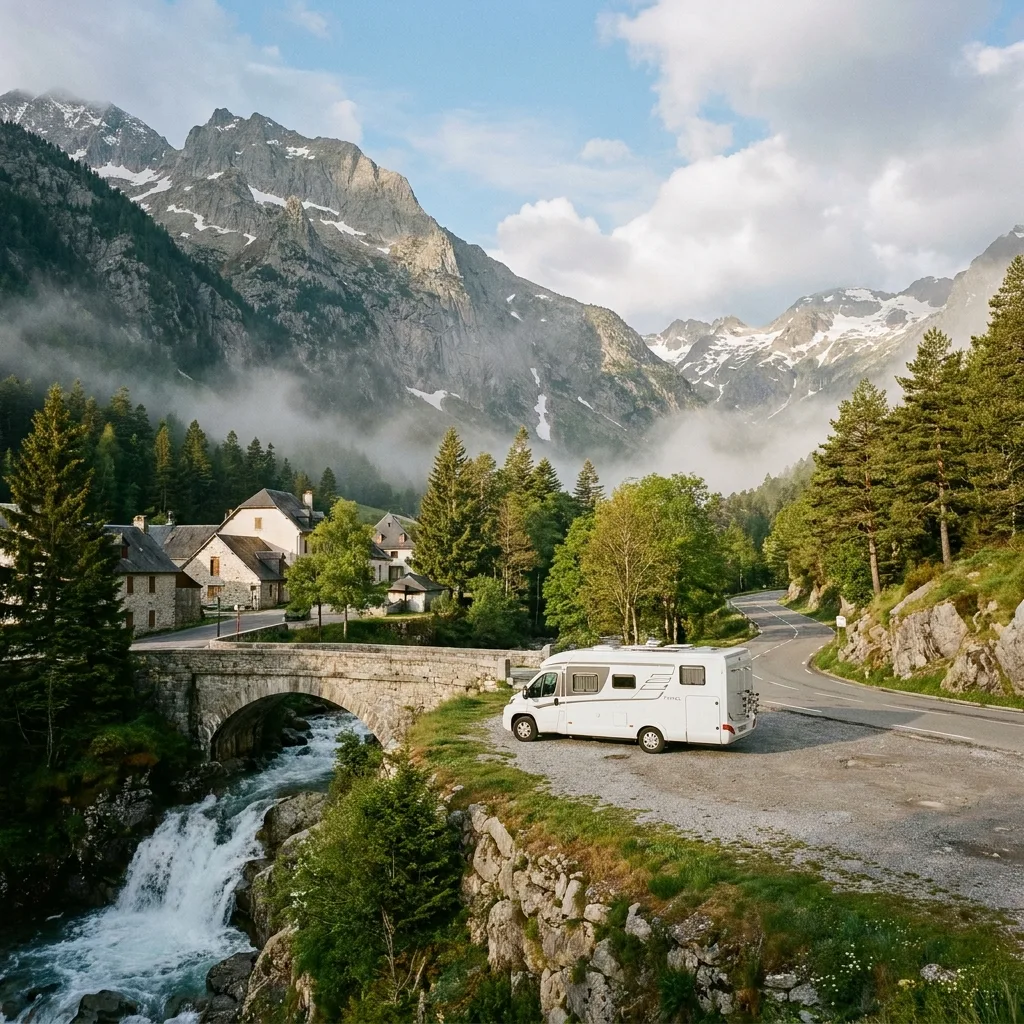
Cauterets exudes the grandeur of a nineteenth-century spa town, visible in its charming wooden station building. Via a winding road, you reach the Pont d'Espagne, where streams converge under the old bridge. Along that road, you can admire the Cascade du Cerisey, where water powerfully cascades down. A chairlift takes you to the clear Lac de Gaube, a mountain lake with the majestic Vignemale in the background. The atmosphere in Cauterets is lively, with many hikers exploring the rugged Pyrenean nature.
Stop 13
Saint-Jean-Pied-de-Port
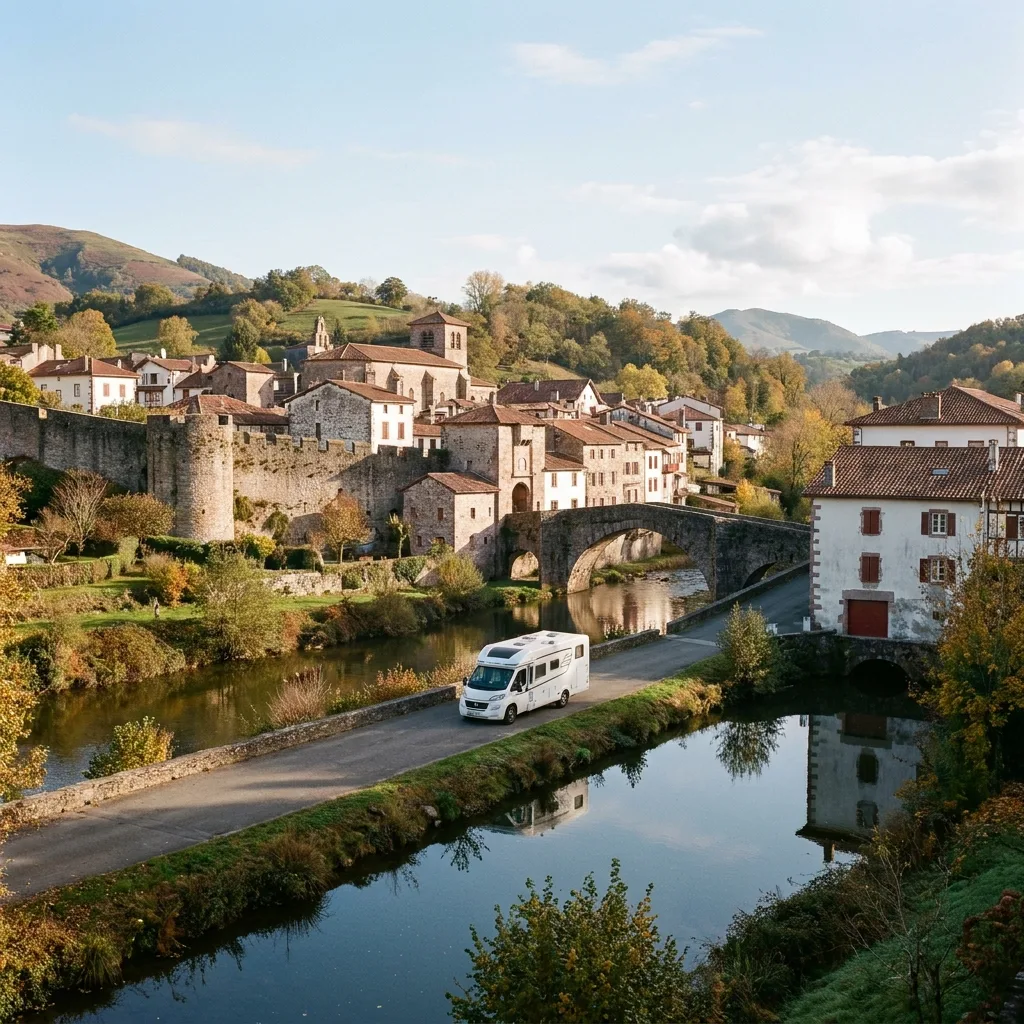
Saint-Jean-Pied-de-Port is the walled Basque town, a starting point for pilgrims crossing the Pyrenees. Above the town, the Vauban citadel offers panoramic views. The Porte Saint-Jacques leads to the upper town, full of narrow streets and red and white houses. The Pont Romain over the Nive is often filled with hikers. The lively atmosphere of pilgrims and local trade fills the streets, with hikers carrying shells on their backpacks around the Nive.
Stop 14
Biarritz
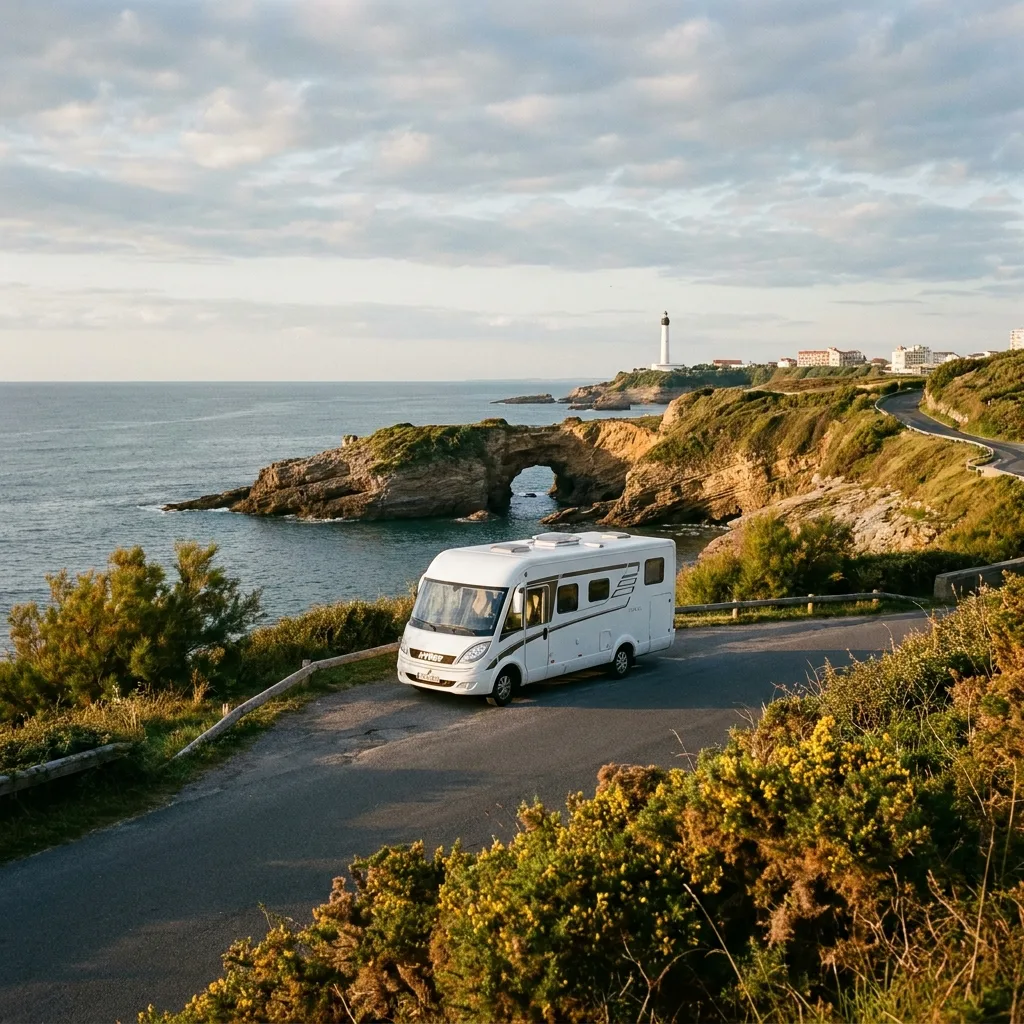
Biarritz combines the grandeur of an imperial seaside resort with the relaxed atmosphere of a surf paradise. From the Phare de Biarritz, you can enjoy panoramic views of the city and coastline. The Grande Plage beneath the casino attracts sunbathers and surfers. At the Port des Pêcheurs, you can experience the maritime atmosphere among the fishing boats, while the lively Halles surprise with local delicacies. Everywhere along the rocky coastline, you'll discover viewpoints that emphasize the grandeur of the Atlantic Ocean.
Ready to hit the road?
We'll email you a personal travel proposal within 24 hours — motorhome, route and full cost overview included. Save €400–€800 on average vs. a travel agency.
No packages, no middlemen. Learn how it works
Camproads gave me a lot of inspiration for our campervan trip. The routes are beautiful, with a good balance of nature and city life, and the route generator made planning super easy. It's also really handy that there are so many good camping options at the locations, and that you can easily find the campervan that suits your needs and compare prices. This way, we can plan everything ourselves and book the campervan directly with the rental company. That's much cheaper than an organized trip!
Michiel van de Bunt
February 2026
What a difference from how I used to plan trips. Through Camproads, I put together a complete campervan trip in just a few minutes. It's so easy to use, and you can customize everything to your liking. The ability to choose your travel pace makes it even more enjoyable, especially now that we're traveling with a baby for the first time.
Alieke Zelhorst
February 2026