This route is ready and waiting — planned out day by day
Inside the Camproads France guide: every stage, campsites and our honest tips. Instant PDF download.
€14.95
Instant download · NL, EN & DE
€14.95
Instant download · NL, EN & DE
Duration
x daysDistance
1238 km
stops
14
Choose a date and duration that fits your preferences
About this route
Highlights
- ✦Explore Étretat's chalk cliffs and Honfleur's harbor
- ✦Visit the D-Day beaches and Bayeux Tapestry
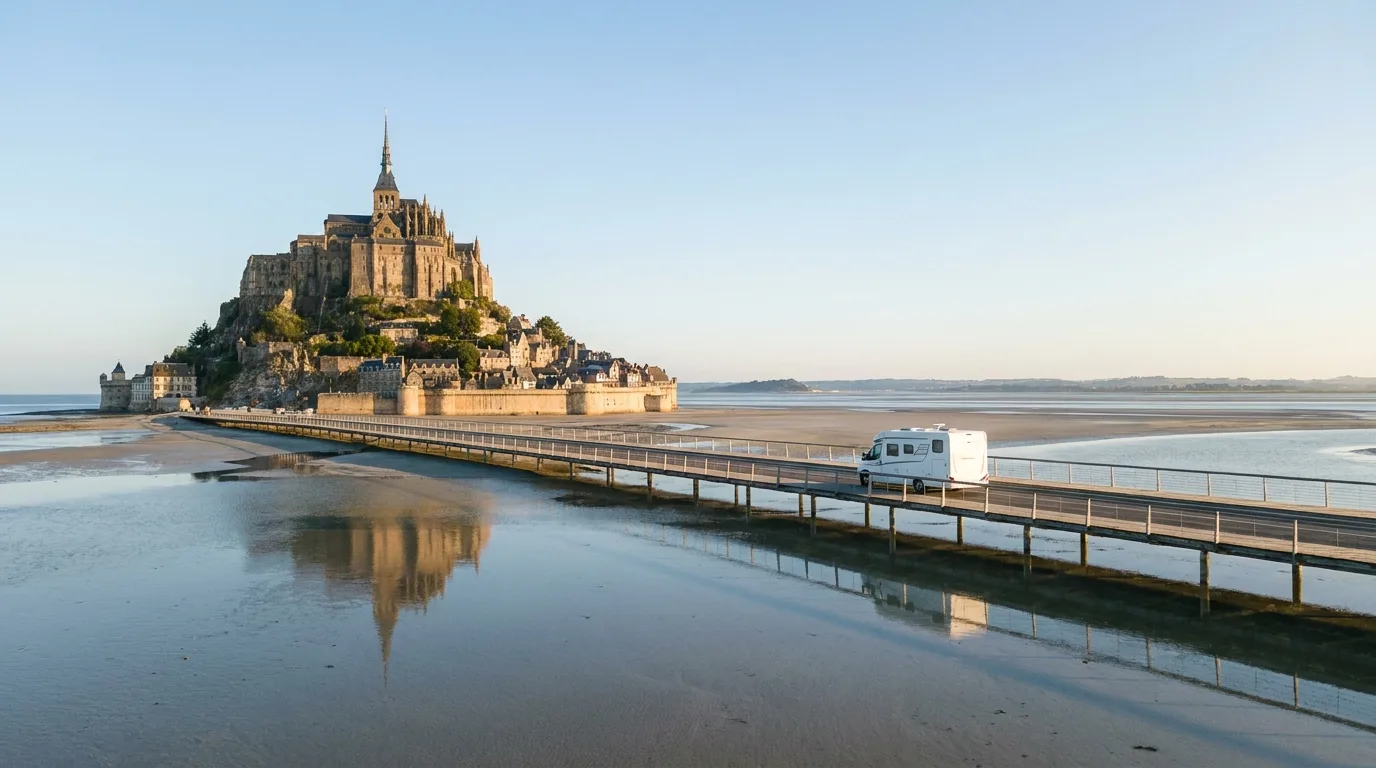
- ✦Admire the magical Mont-Saint-Michel in its bay
- ✦Walk Saint-Malo's ancient city walls
- ✦Discover Brittany's pink granite coast
- ✦Stand on the dramatic cliffs of Pointe du Raz
- ✦Explore the prehistoric menhirs of Carnac
The route
Stop 1
Calais
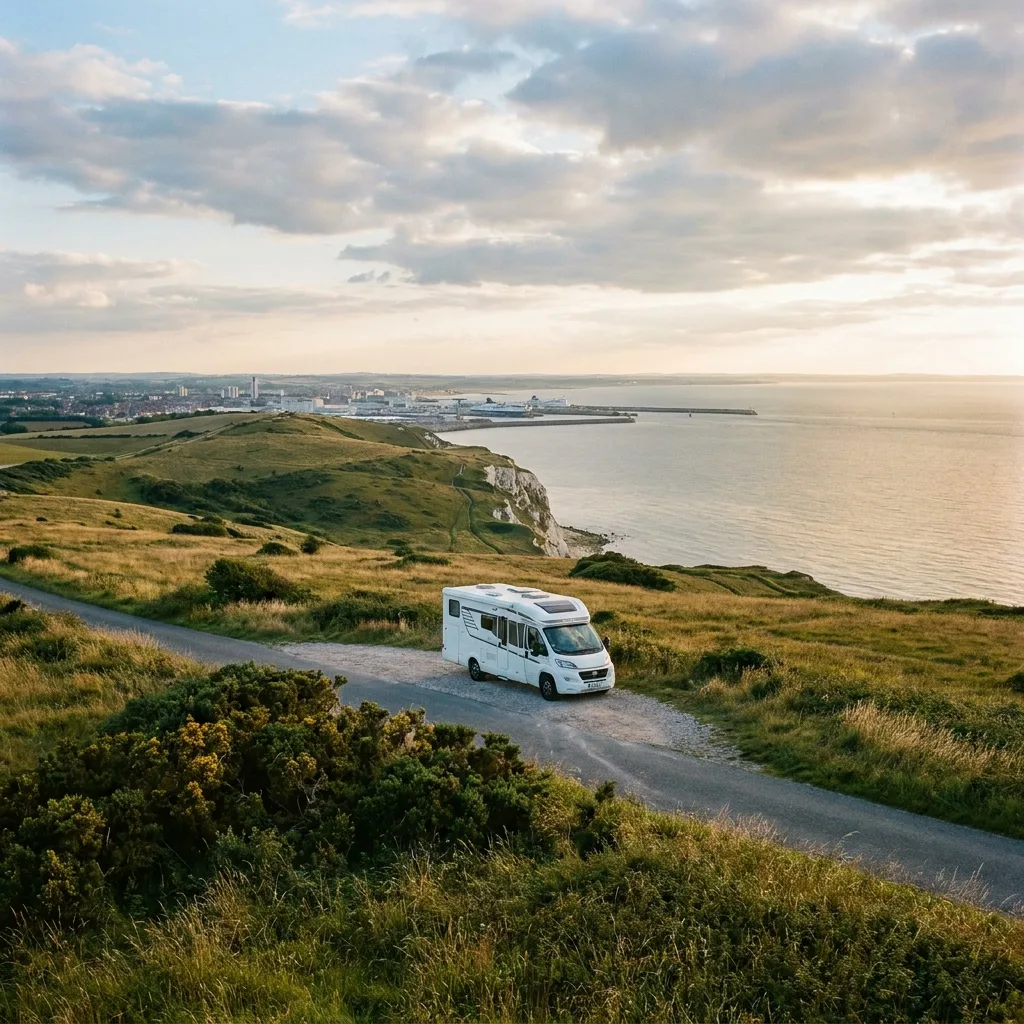
Calais is a port city on the Strait of Calais where the Hôtel de Ville, with its 75-metre-high belfry, dominates the skyline. In front of the town hall stands the bronze sculpture group Les Bourgeois de Calais, designed in 1895 by Auguste Rodin. On the coast, you will find the Phare de Calais, a 53-metre-high lighthouse offering views over the harbour and the Channel. Along the waterline are sandy beaches and a promenade overlooking the white chalk cliffs.
Stop 2
Bay of Somme
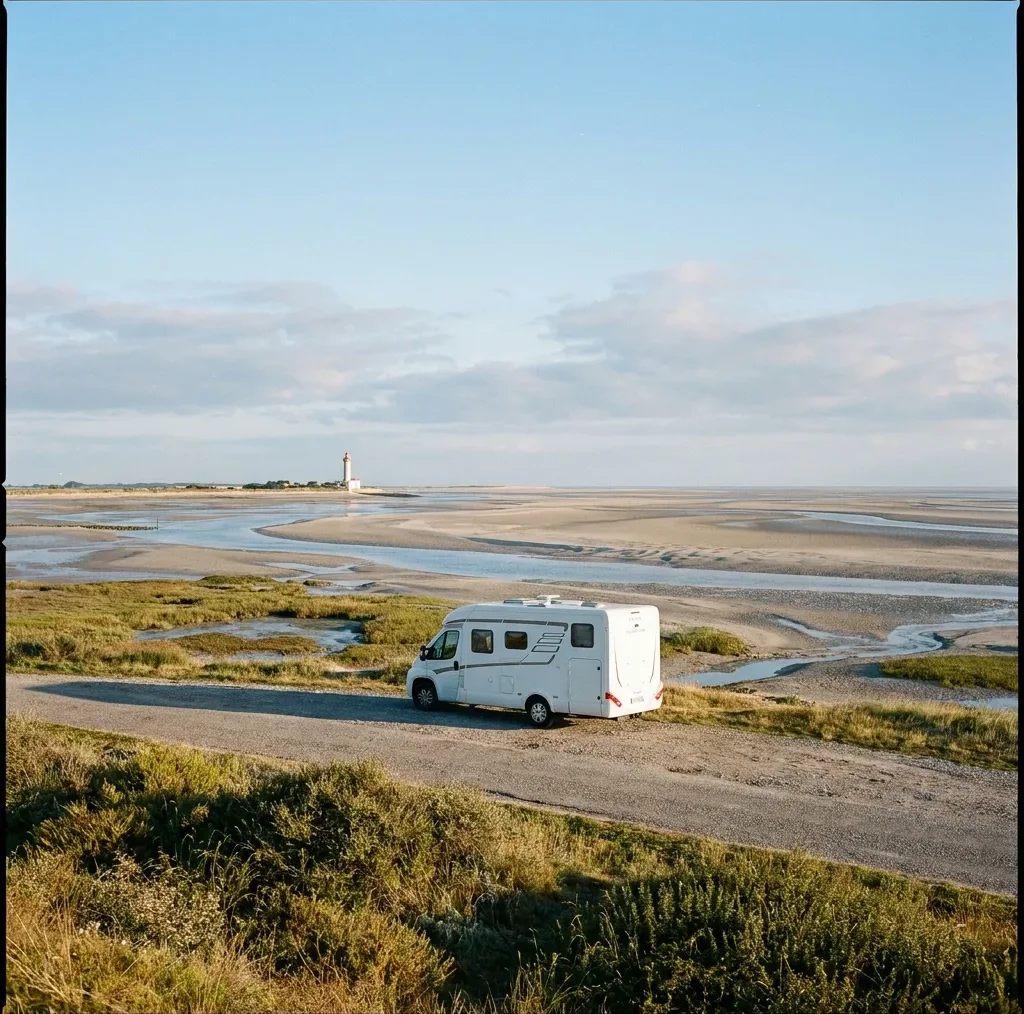
The Baie de Somme is a 72-square-kilometre estuary where you'll find France's largest colony of common seals at Pointe du Hourdel. In medieval Saint-Valery-sur-Somme, visit the quays from where William the Conqueror departed for England in 1066. Stroll through the Parc du Marquenterre, a 200-hectare nature reserve where countless migratory birds settle among the dunes and marshes.
Stop 3
Étretat
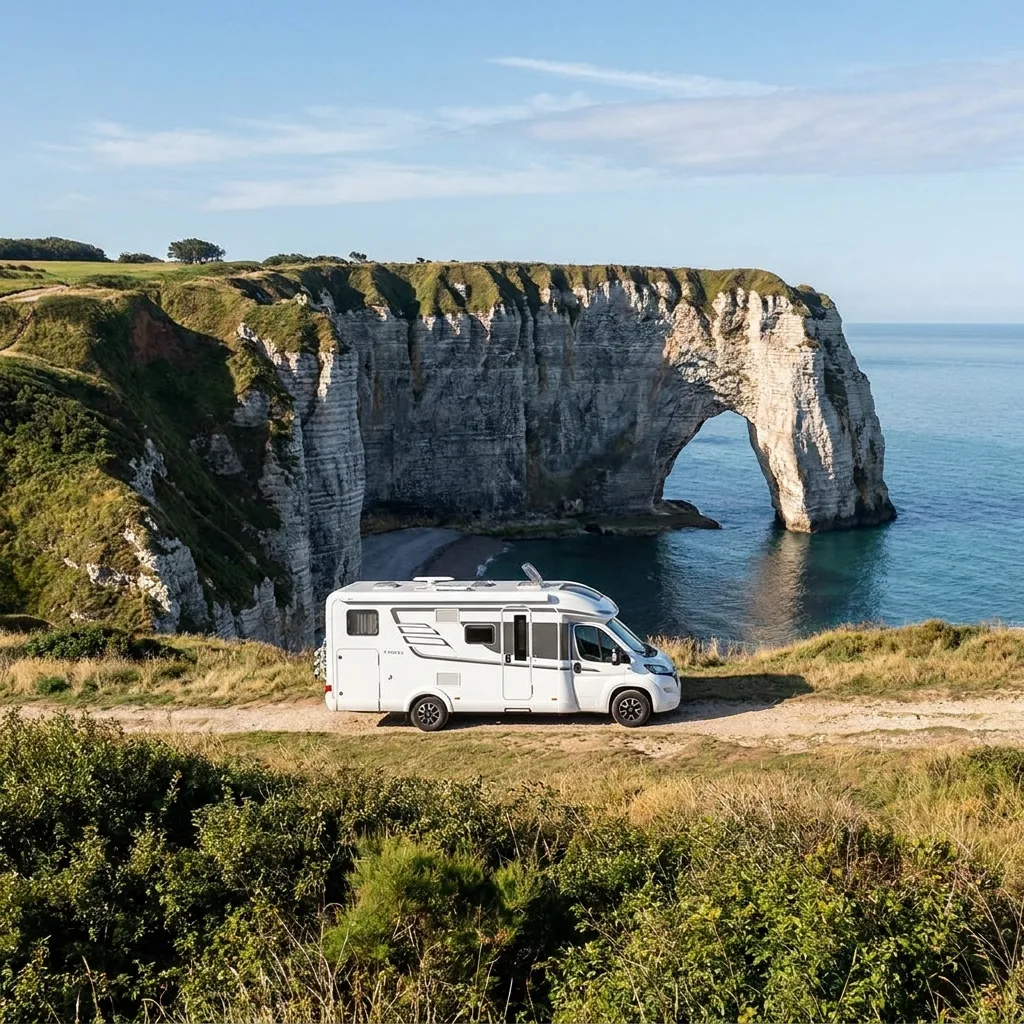
White chalk cliffs and natural arches form the recognisable landscape of Étretat on the Norman Alabaster Coast. You walk along the paths atop the cliffs and discover the Falaise d'Aval and Falaise d'Amont. At the Falaise d'Amont stands the Notre-Dame-de-la-Garde chapel, offering panoramic views of the coastline. The 70-metre-high rock needle L'Aiguille strikingly juts out of the sea. In the village, you'll find charming half-timbered houses and fish restaurants on the pebble beach, where a lively atmosphere prevails.
Stop 4
Honfleur
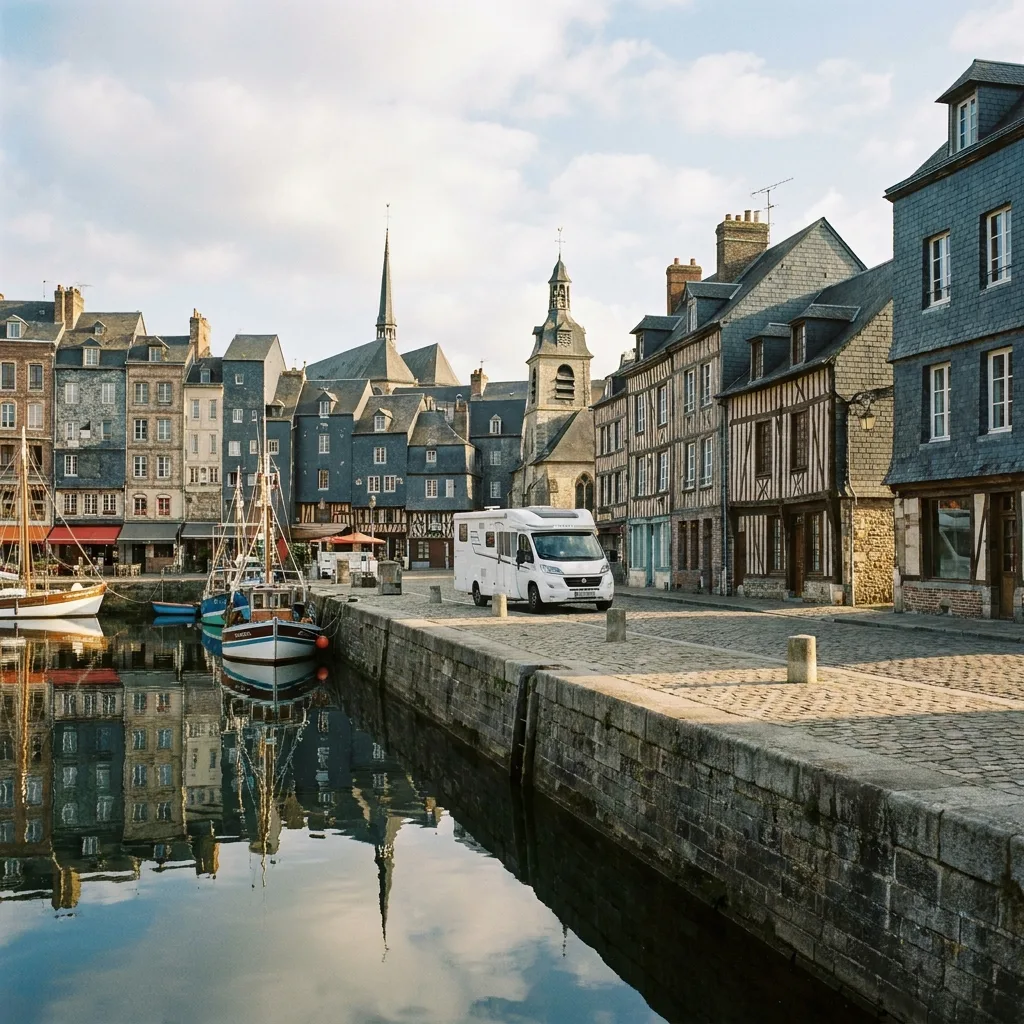
Honfleur exudes a maritime atmosphere, especially around the Vieux Bassin with its narrow buildings and slate facades. The fifteenth-century Église Sainte-Catherine, France's largest wooden church, stands out with its detached bell tower. From the surrounding hills, you can enjoy a panoramic view of the mouth of the Seine and the Pont de Normandie. The lively harbour and historic architecture allow you to experience the activity on the water everywhere.
Stop 5
Bayeux
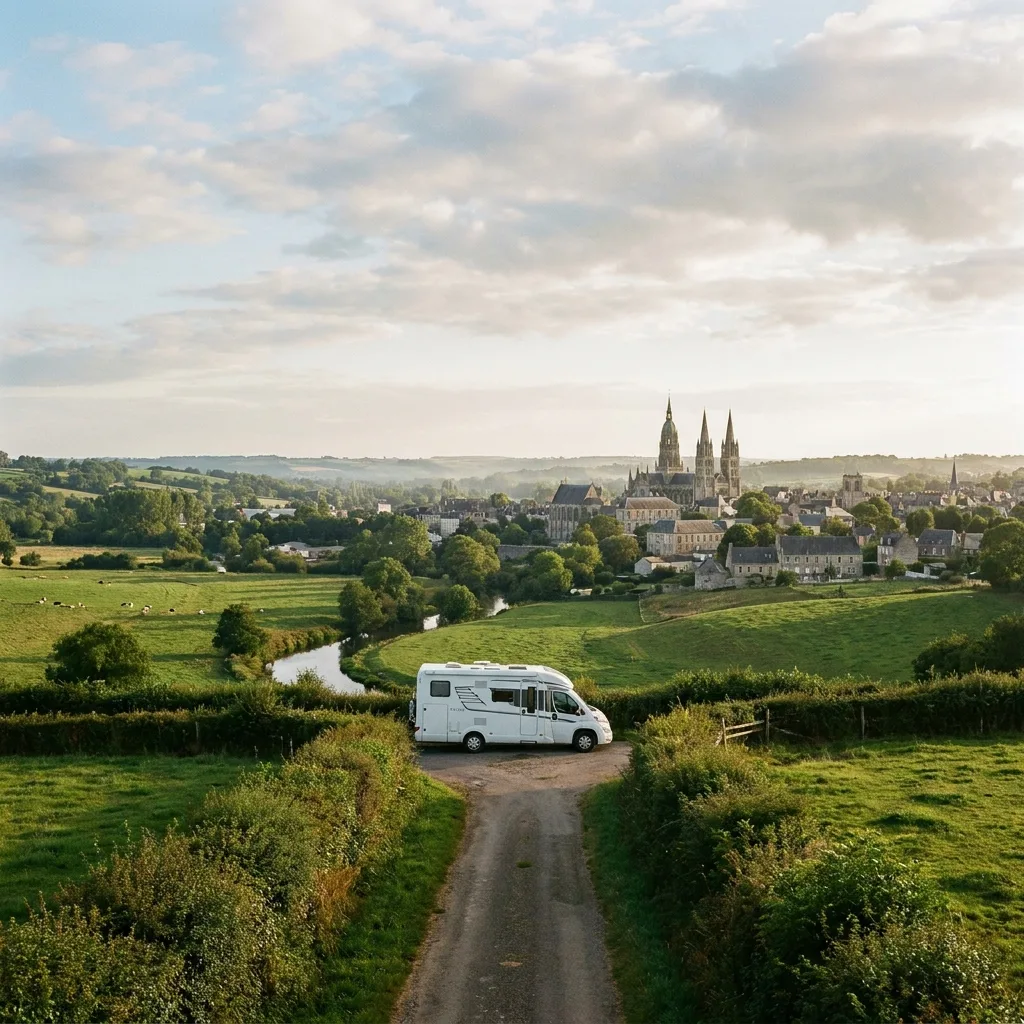
Bayeux is a Norman city known for the 70-metre-long Bayeux Tapestry from the 11th century, depicting the conquest of England in 1066. In the centre stands the Gothic Cathédrale de Bayeux from 1077, and you can see old watermills along the River Aure. You can visit monuments of the Battle of Normandy about the liberation in 1944 in a city centre that was spared during World War II.
Stop 6
D-Day beaches
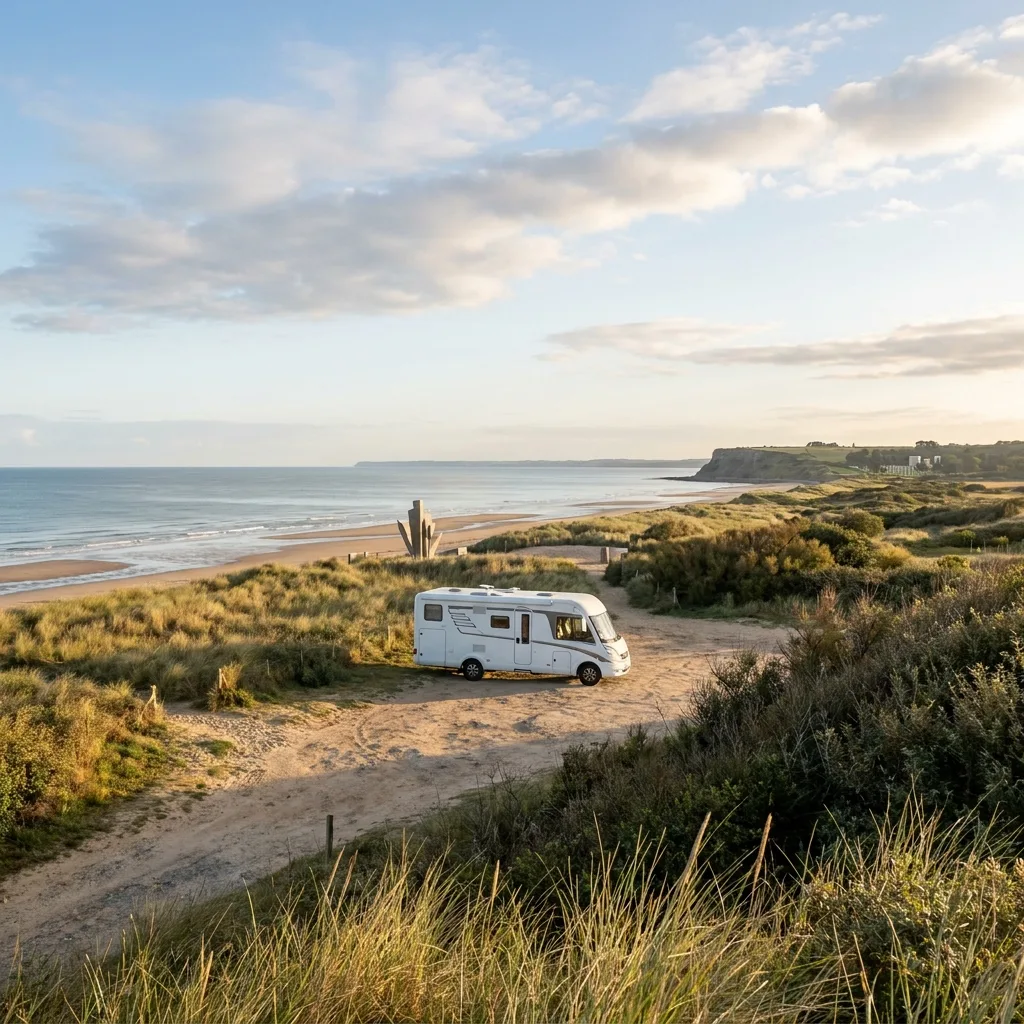
The D-Day beaches in Normandy are the coast where the Allied landing took place on June 6, 1944. At Omaha Beach, 9,387 white marble crosses commemorate the fallen soldiers at the Cimetière Américain. At Pointe du Hoc, you can see deep bomb craters in the cliffs, silent witnesses to the battle. Along the coastline, bunkers and museums showcase the history of the liberation. At low tide, the beaches are so wide and empty that the distance the landing troops had to cover truly becomes visible.
Stop 7
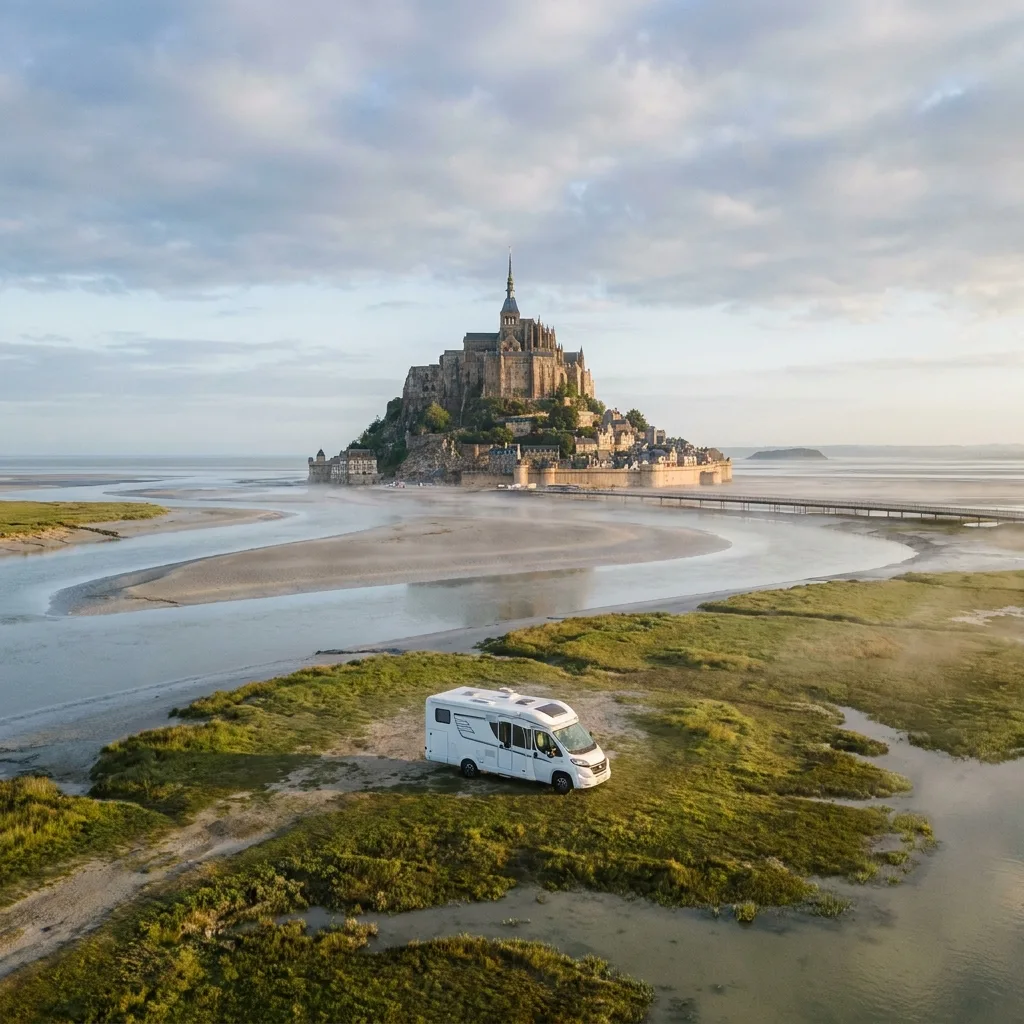
Mont-Saint-Michel
Mont-Saint-Michel is a granite rocky island in Normandy with a Benedictine abbey dating back to the year 708. You walk along the Grande Rue past half-timbered houses to the top of the eighty-metre-high rock. In the Baie Mont-Saint-Michel, you experience a tidal difference of fourteen metres, which turns the abbey into an island at high tide. From the medieval walls, you look out over the sand flats that dry up at low tide.
Want to actually take this trip?
We put together the complete package for you — motorhome, ferry, campsites — in one personal email.
Stop 8
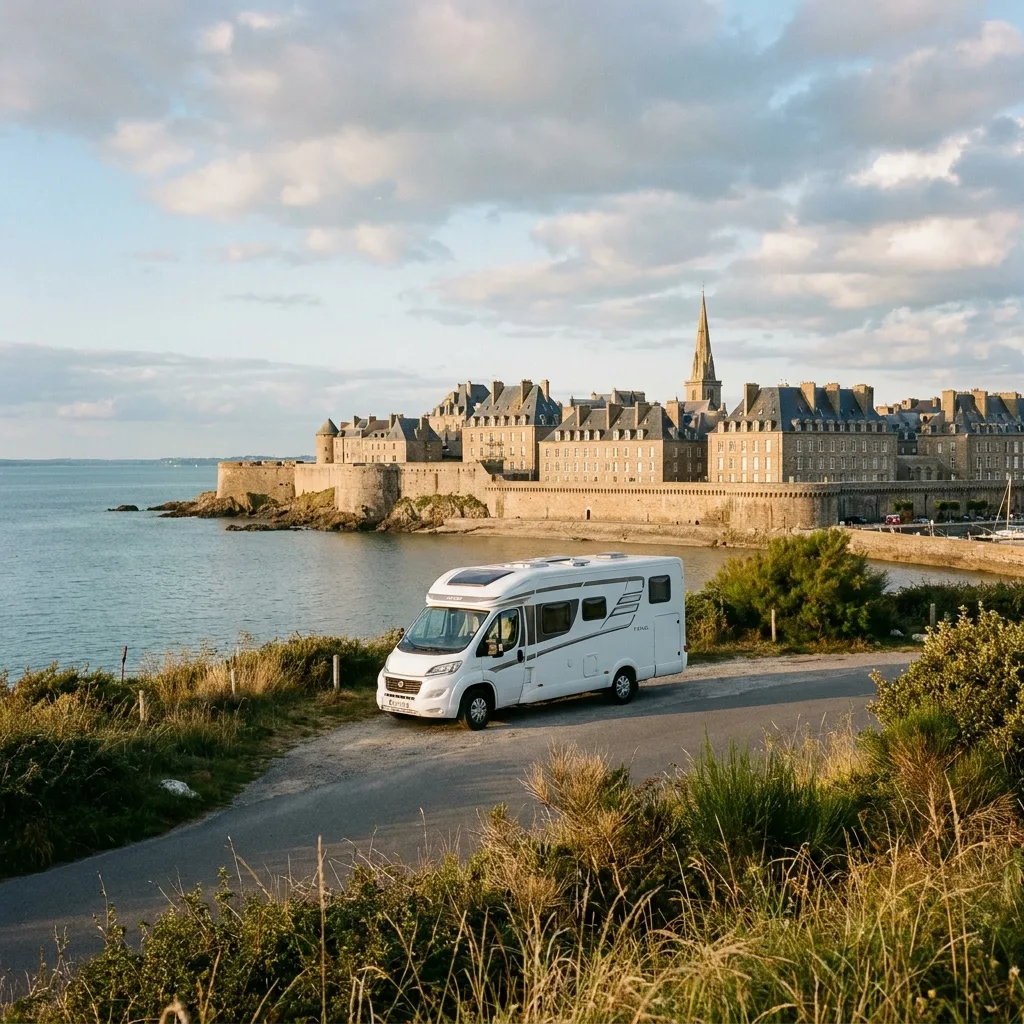
Saint-Malo
The fully walled historic city centre, Intra-Muros, full of granite mansions, makes Saint-Malo a special Breton port city. You can walk along the city walls for panoramic views of the harbour and the coast. At low tide, you can walk across the sand to the seventeenth-century Fort National. You can also reach the rocky island Grand Bé, the final resting place of writer Chateaubriand. The atmosphere in the walled city is lively, with narrow streets leading to cozy squares.
Stop 9
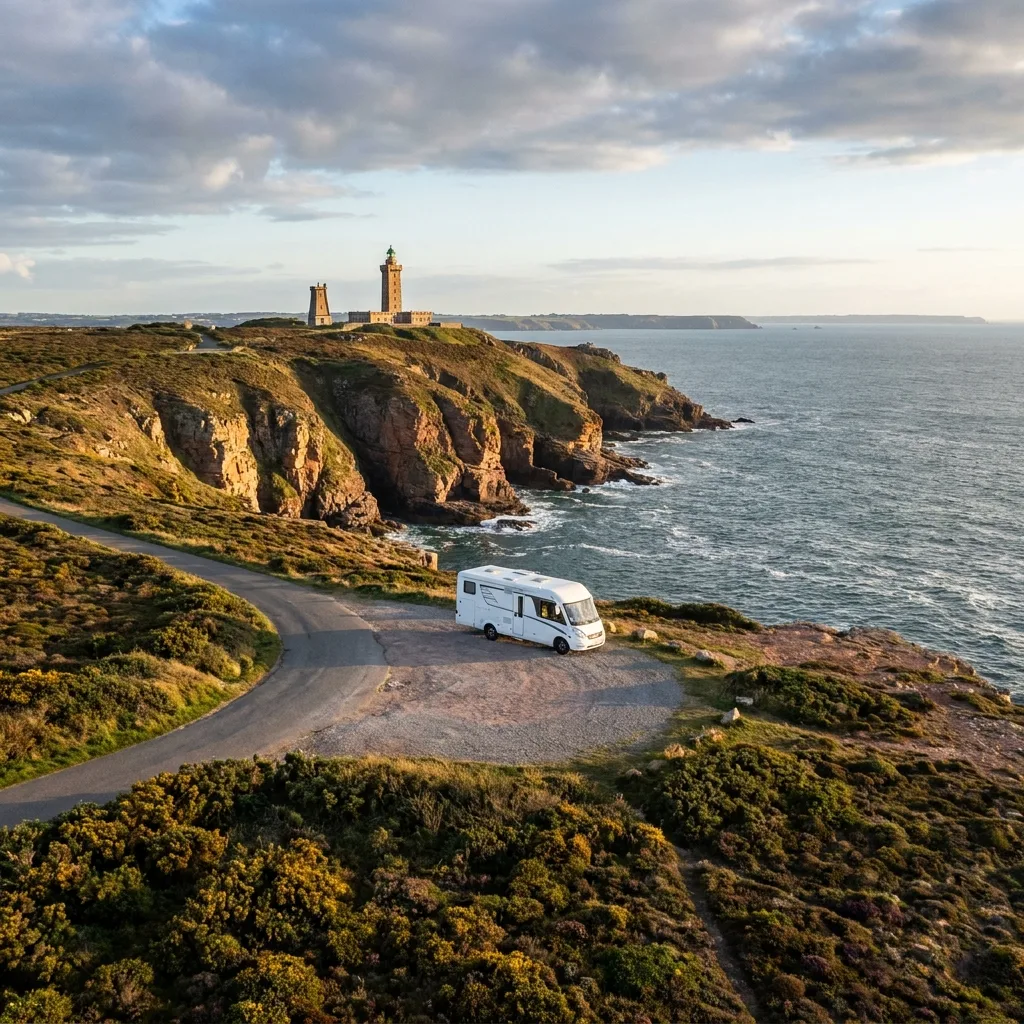
Cape Fréhel
Cap Fréhel surprises with rugged pink sandstone cliffs towering seventy metres above the Atlantic Ocean. The Phare du Cap Fréhel marks the tip of the peninsula. The fourteenth-century Fort La Latte, an imposing fortress, stands on a rocky headland. Between the beacons, you walk across vast moorlands of the Côte d'Émeraude, full of blooming gorse and heather. The fresh sea air and expansive views make for a lively walk along the cliffs.
Stop 10
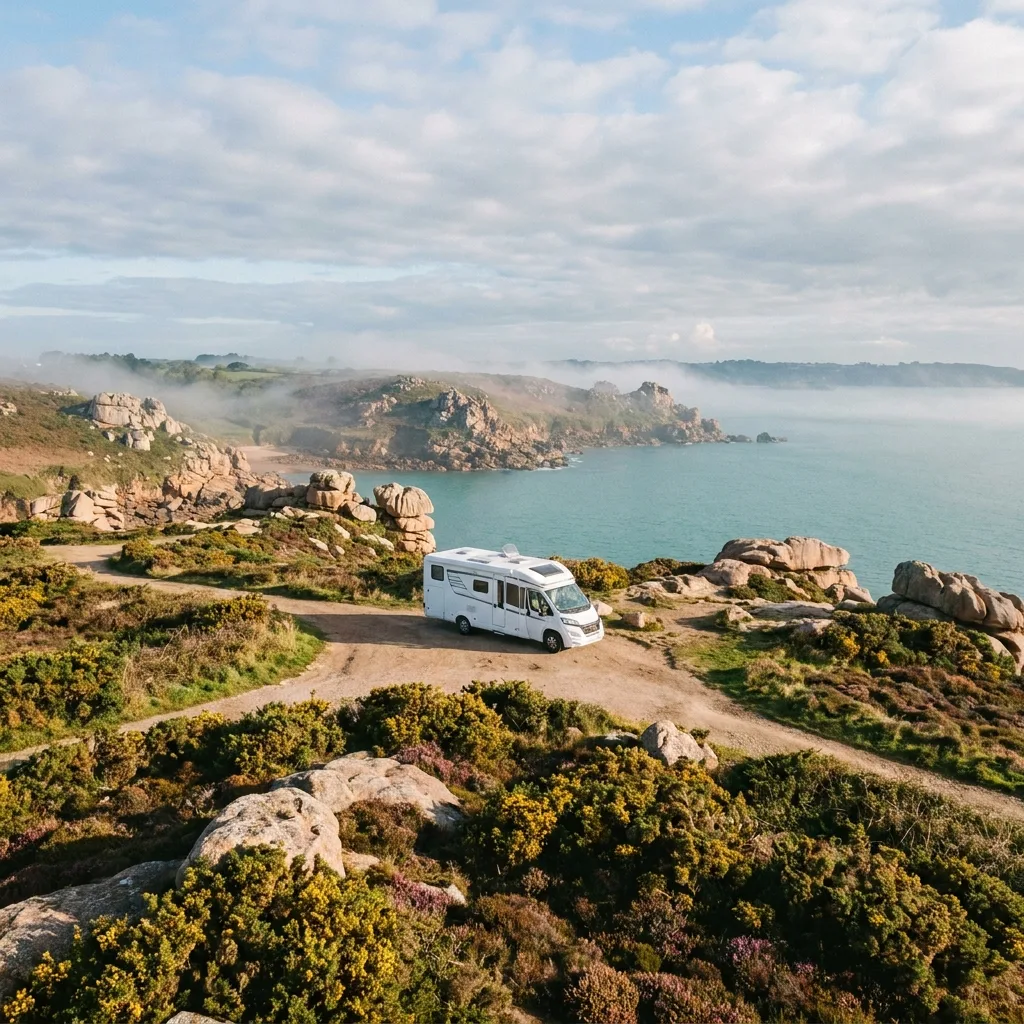
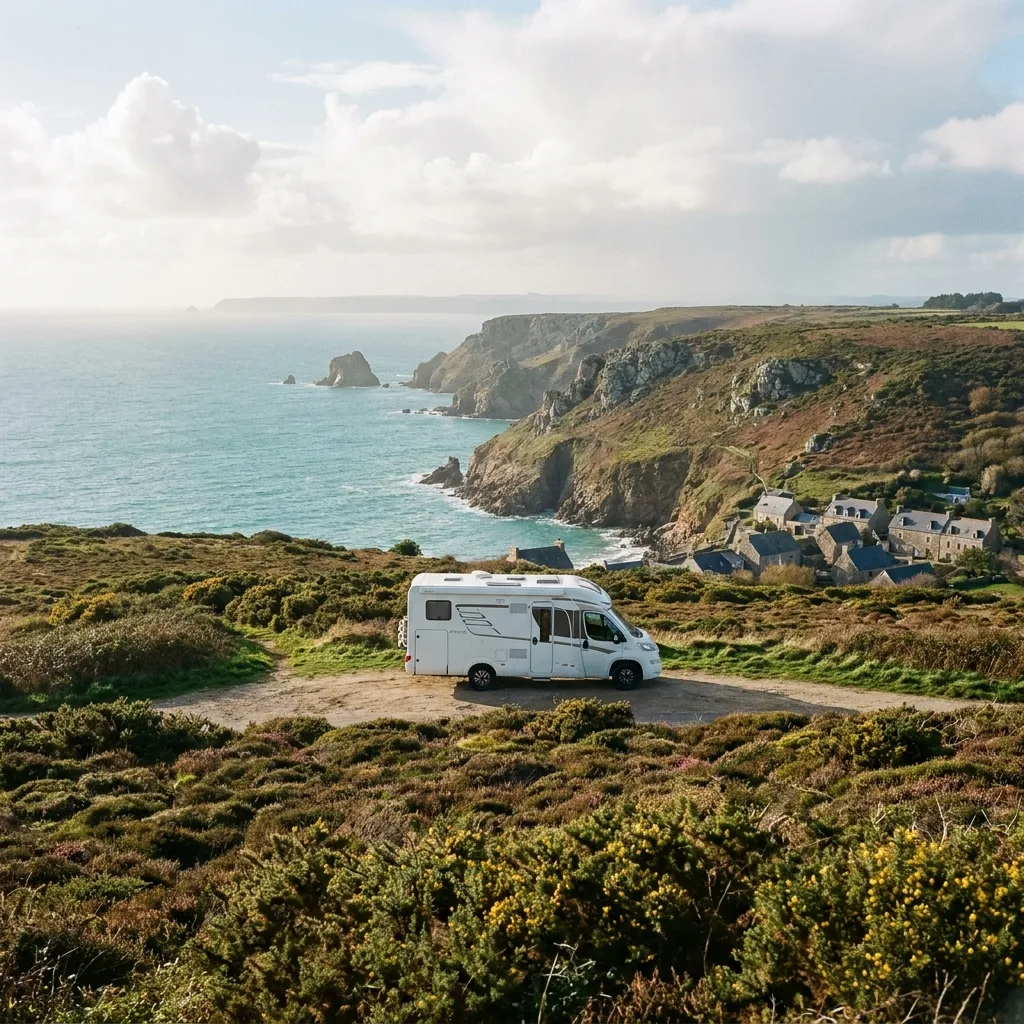
Côte de Granit Rose
The Côte de Granit Rose in Brittany is known for the pink rock formations of Ploumanac'h, shaped by erosion. Here you can walk along the Sentier des Douaniers to the fifteen-metre-high Phare de Men-Ruz lighthouse, which was rebuilt in 1948 from pink granite. From the coast, you look out onto the Archipel des Sept-Îles, France's oldest bird sanctuary, which has been a protected nature reserve since 1912.
Stop 11
Crozon
The Crozon peninsula forms the heart of the Parc Naturel Régional d'Armorique in western Brittany. At Pointe de Pen-Hir, the three rock formations of Tas de Pois rise perpendicularly from the Atlantic Ocean. Here you can walk along coastal paths to the cliffs of Cap de la Chèvre, where you overlook the Bay of Douarnenez and ancient fortifications. Scattered throughout the area you will find prehistoric menhirs that bear witness to the habitation of this part of Finistère.
Stop 12
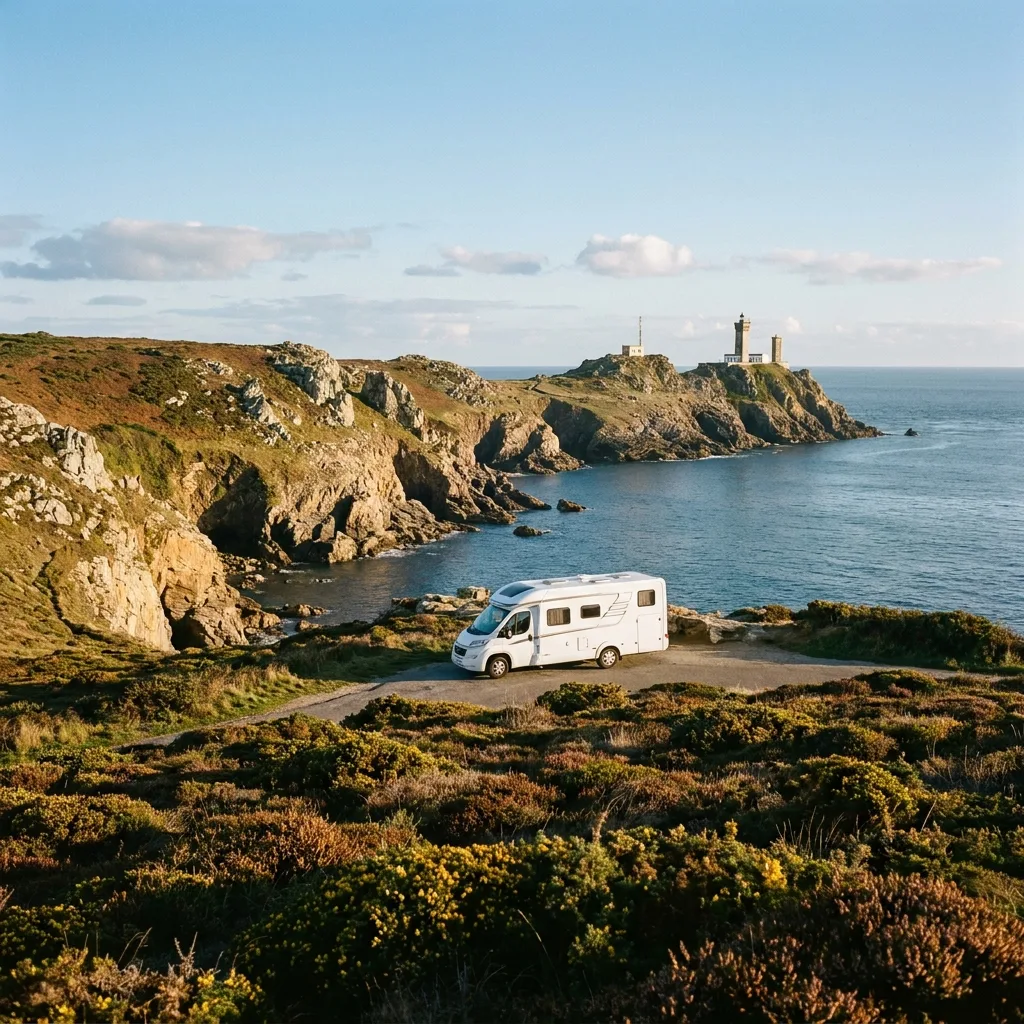
Pointe du Raz
Pointe du Raz is a rugged peninsula where granite cliffs rise seventy metres above the Atlantic Ocean. From the cape, you look out over the Raz de Sein strait, where the Phare de la Vieille stands proudly. On a clear day, the island of Île de Sein appears on the horizon. Here you can walk along the rocky edges of this protected nature reserve, which is part of the Sentier des Douaniers. The wind is almost always strong here, and the sound of the waves can be heard all the way up on the cape.
Stop 13
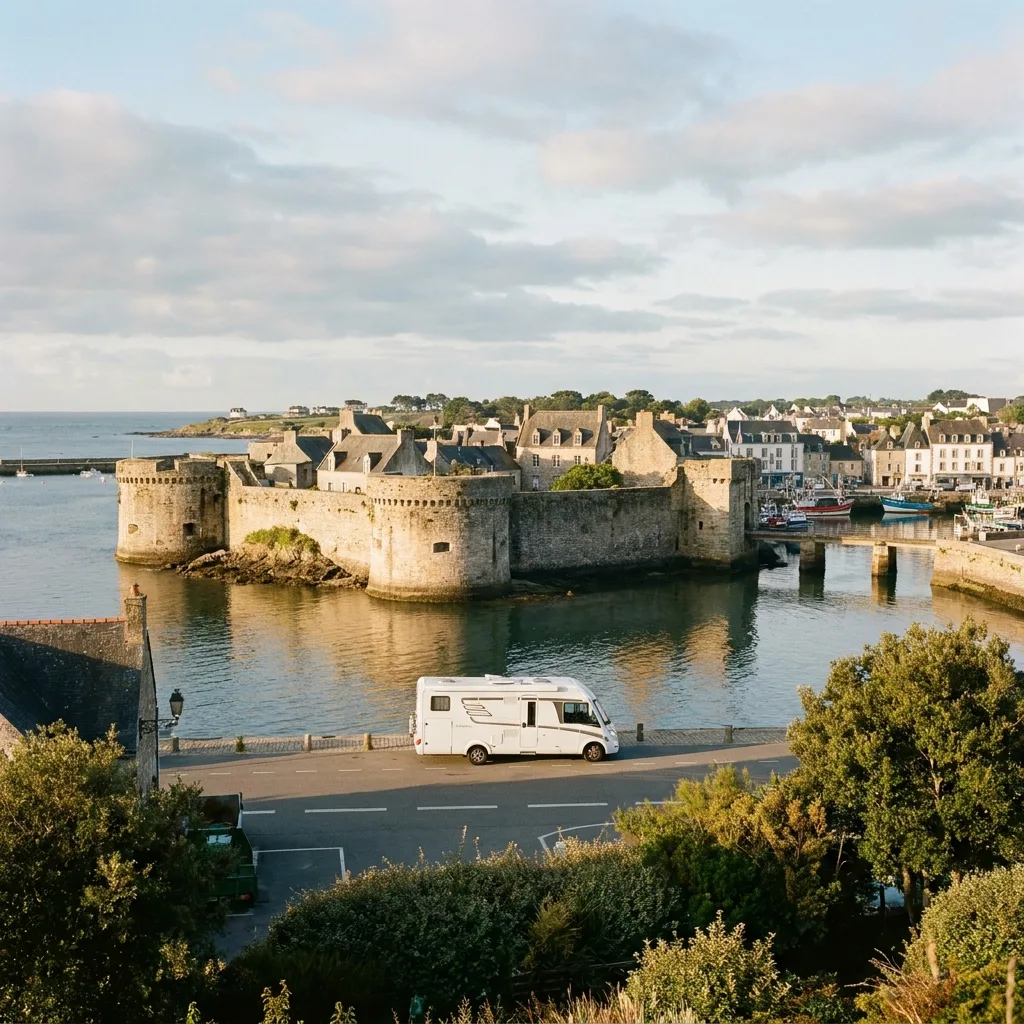
Concarneau
Concarneau surprises with its Ville Close, a fourteenth-century fortified town on an island in the bay. You reach this historic centre via a stone bridge and can walk along the walls for panoramic views. Along the coastline, you'll discover the Marinarium, the oldest marine biological station in the world, dating from 1859. For relaxation, the sandy beach Plage des Sables Blancs is nearby. From the ramparts, you can see the bustling activity of the fishing port and the tranquility of the marina converge.
Stop 14
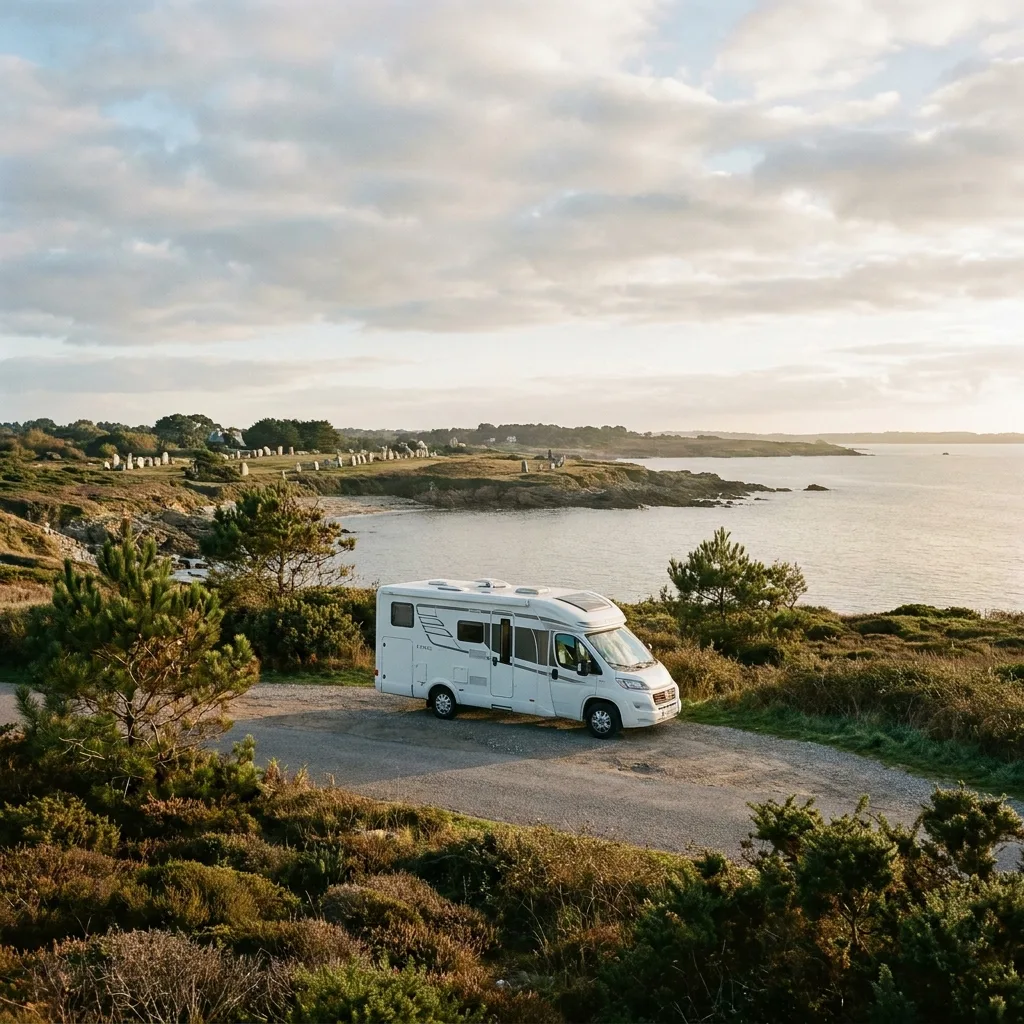
Quiberon
Quiberon surprises with a peninsula that alternates rugged cliffs with soft sandy beaches. On the Presqu'île de Quiberon, you'll find the wild Côte Sauvage on the west side. The east side of the peninsula offers expansive sandy beaches. Not far from here are the Alignements de Carnac, more than 3,000 Neolithic menhirs. A drive over the narrow spit of land constantly offers views of the Atlantic Ocean and the Baie de Quiberon.
Ready to hit the road?
We'll email you a personal travel proposal within 24 hours — motorhome, route and full cost overview included. Save €400–€800 on average vs. a travel agency.
No packages, no middlemen. Learn how it works
Camproads gave me a lot of inspiration for our campervan trip. The routes are beautiful, with a good balance of nature and city life, and the route generator made planning super easy. It's also really handy that there are so many good camping options at the locations, and that you can easily find the campervan that suits your needs and compare prices. This way, we can plan everything ourselves and book the campervan directly with the rental company. That's much cheaper than an organized trip!
Michiel van de Bunt
February 2026
What a difference from how I used to plan trips. Through Camproads, I put together a complete campervan trip in just a few minutes. It's so easy to use, and you can customize everything to your liking. The ability to choose your travel pace makes it even more enjoyable, especially now that we're traveling with a baby for the first time.
Alieke Zelhorst
February 2026