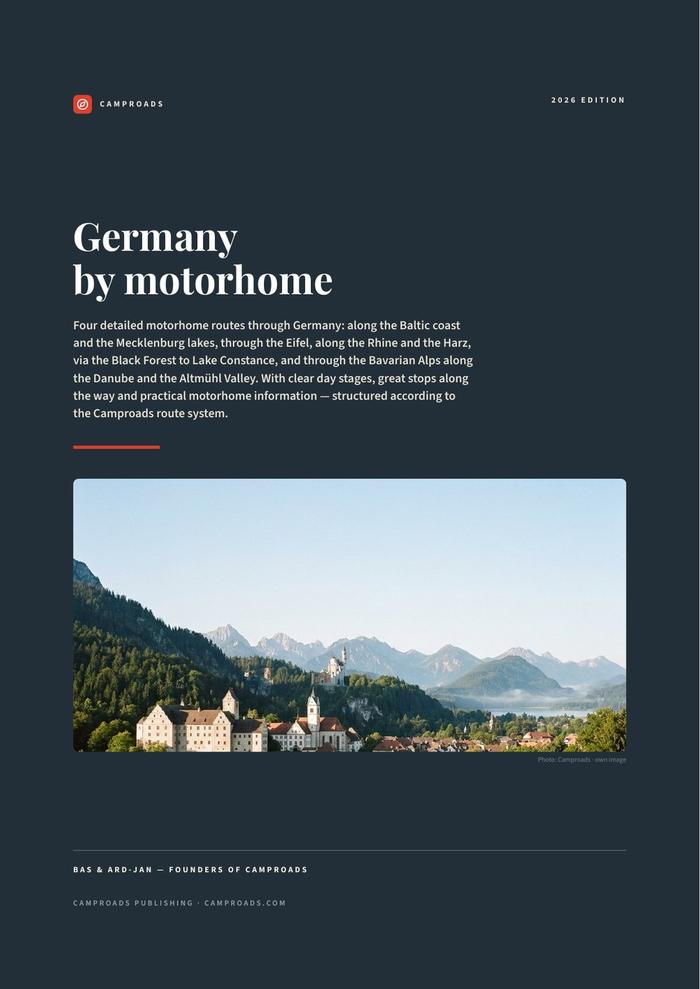
The complete Germany camper guide
Routes planned out day by day, with campsites and our honest tips. Instant PDF download.
€14.95
Instant download · NL, EN & DE
€14.95
Instant download · NL, EN & DE
Duration
x daysDistance
1248 km
stops
13
Choose a date and duration that fits your preferences
About this route
Highlights
- ✦Admire the iconic Holstentor in Hanseatic city Lübeck
- ✦Explore the maritime Museumshafen Flensburg near the Danish border
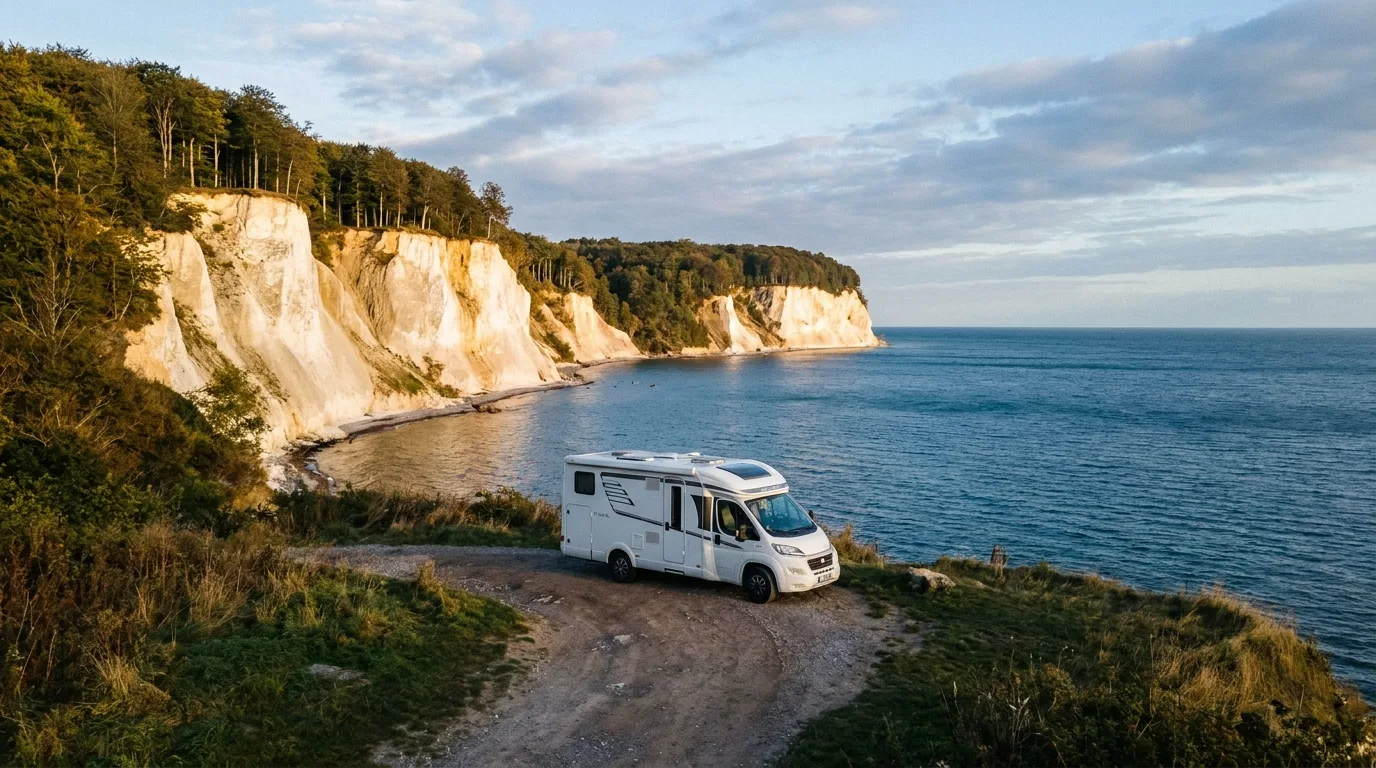
- ✦Hike along the impressive Kreidefelsen in Jasmund National Park
- ✦Discover the grand Imperial Spas and Ahlbeck Pier on Usedom
- ✦Explore nature and lakes in Müritz National Park
- ✦Visit Schwerin Castle, a fairytale surrounded by lakes
The route
Stop 1
Lübeck
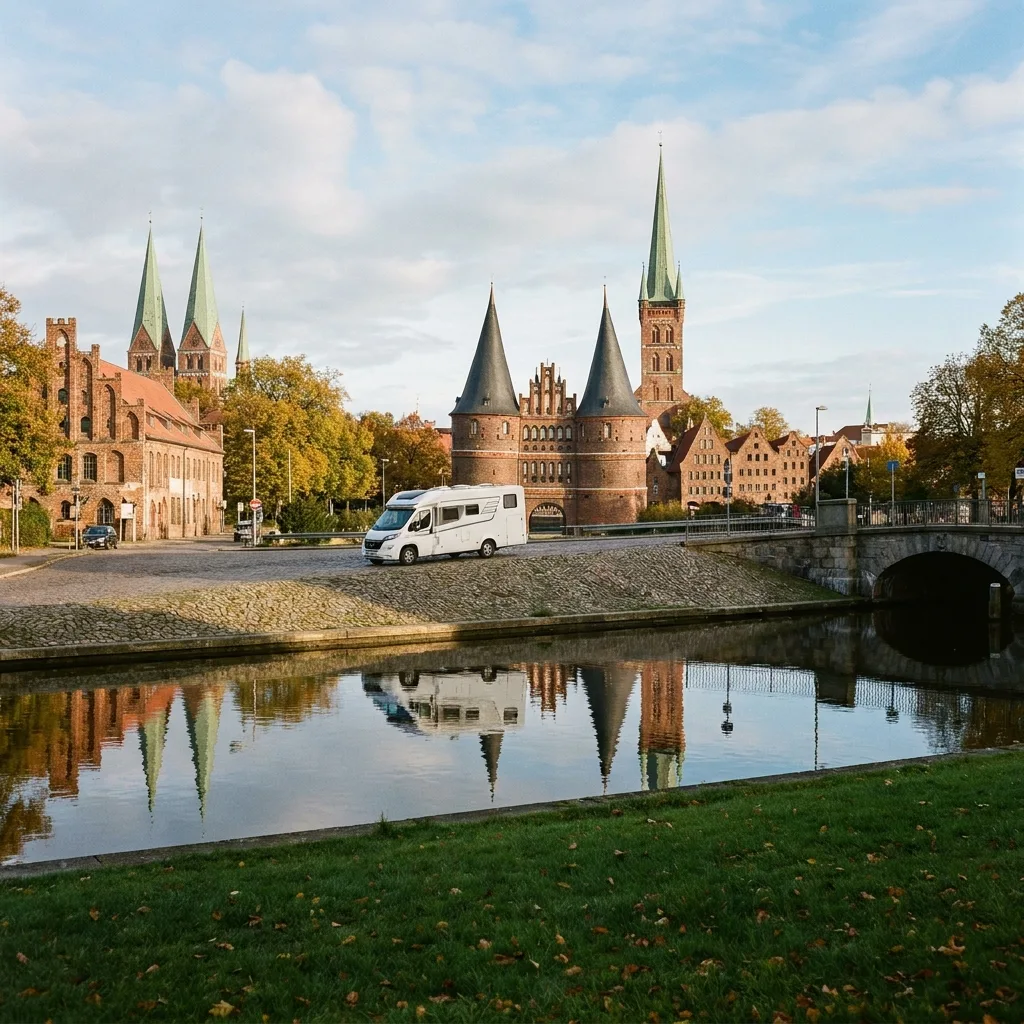
Lübeck preserves its Brick Gothic architecture on a medieval island between the arms of the Trave river. The massive Holstentor, with its leaning towers, marks the entrance to the old town. In St. Mary's Church, the vaults soar high above the remnants of the fallen bells. Dark glazed bricks cover the facade of the Lübeck Town Hall. The scent of marzipan fills Niederegger's shop, while the hustle and bustle fades in the narrow alleys behind the houses.
Stop 2
Kiel
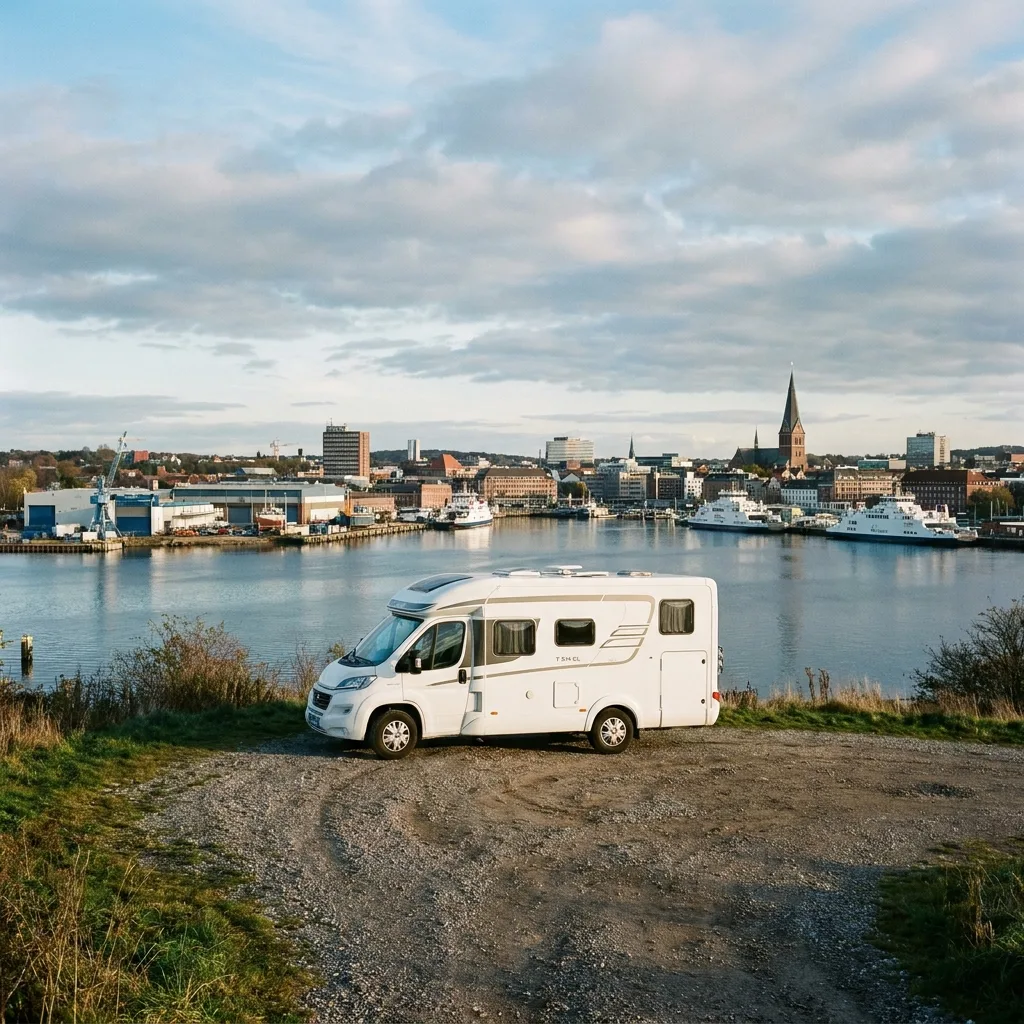
Kiel revolves around the maritime dynamics of the Baltic Sea as an important hub for international shipping. Along the quays of the Kieler Förde, you'll see enormous ferries to Scandinavia docking while sailors cross the bay. On the east side stands the 85-meter-high Marine-Ehrenmal Laboe with the U-995 submarine, where you can explore its cramped interior. At the locks of the Kiel Canal, colossal cargo ships slowly pass by in a constant stream of activity.
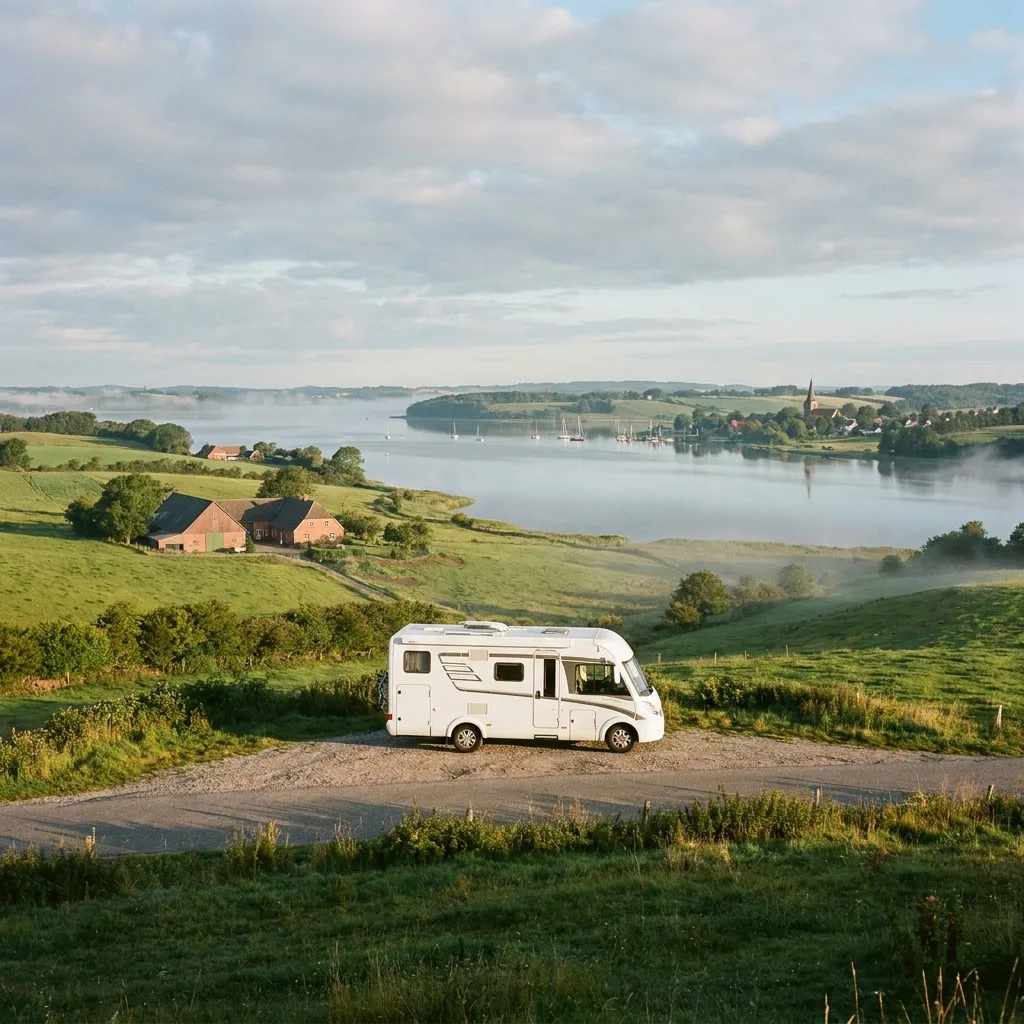
Stop 3
Flensburg
Flensburg is located on the Flensburg Fjord near the Danish border and is known for the Museumshafen where you can admire sailing ships from the eighteenth and nineteenth centuries. In the immediate vicinity, you can visit Schloss Glücksburg, a moated castle built between 1582 and 1587 for the House of Schleswig-Holstein-Sonderburg. On the Geltinger Birk peninsula, you can walk through a 773-hectare nature reserve where wild Konik horses graze.
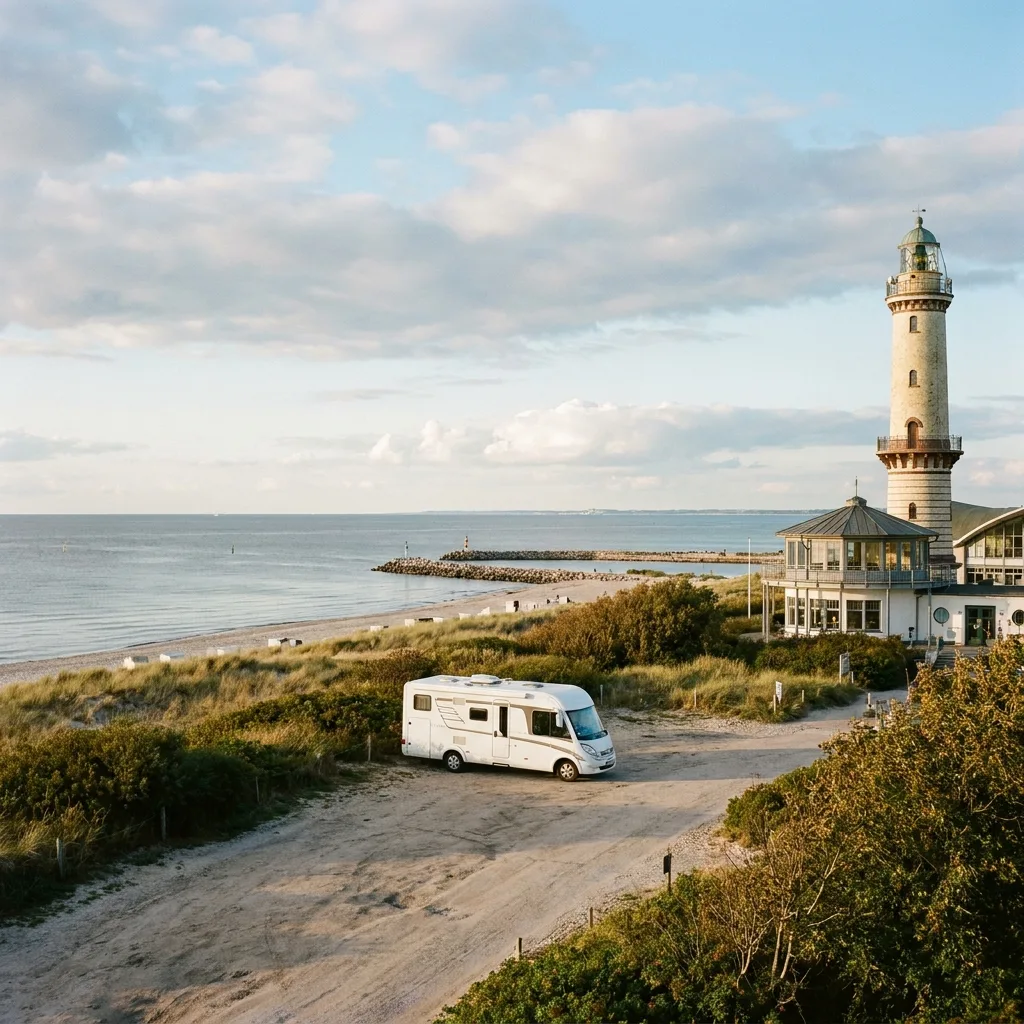
Stop 4
Warnemünde
Warnemünde showcases its maritime character with wide sandy beaches and a historic fishing harbour. Along the quay of the Alter Strom, fishing boats and sailing ships bob in a fifteenth-century canal. Along the coastline, the white Warnemünder Leuchtturm rises next to the Teepott, a building with a striking wavy concrete roof. The lively hustle and bustle at the fish stalls on the quay blends with the salty sea air as large cruise ships slowly sail out of the harbour.
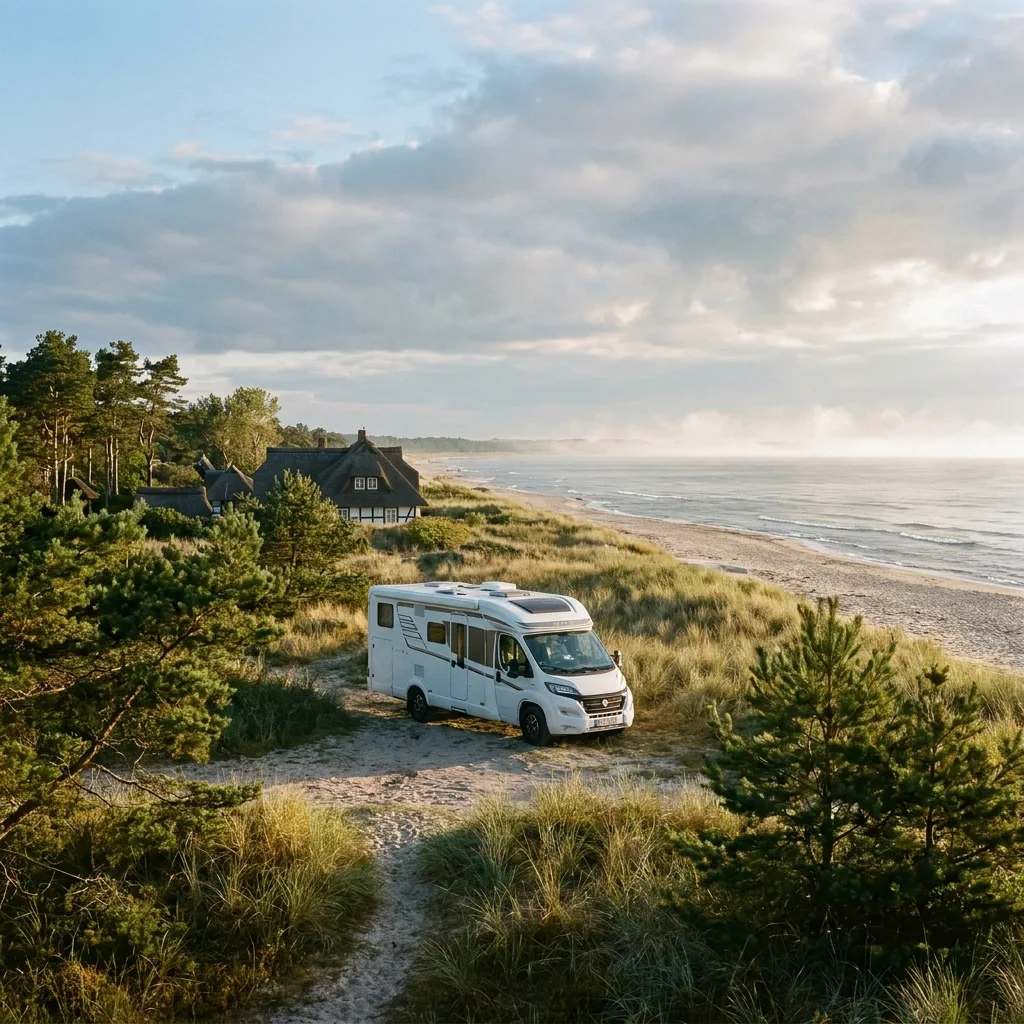
Stop 5
Fischland-Darß-Zingst
The Fischland-Darß-Zingst peninsula on the Baltic Sea is largely located within the Vorpommersche Boddenlandschaft National Park. You can walk along the wind-shaped trees of the Darßer Weststrand or visit the 270-meter-long Seebrücke Zingst. The villages are characterized by thatched-roof skipper's houses, while the shallow lagoons offer a resting place for over 60,000 migrating cranes in autumn.
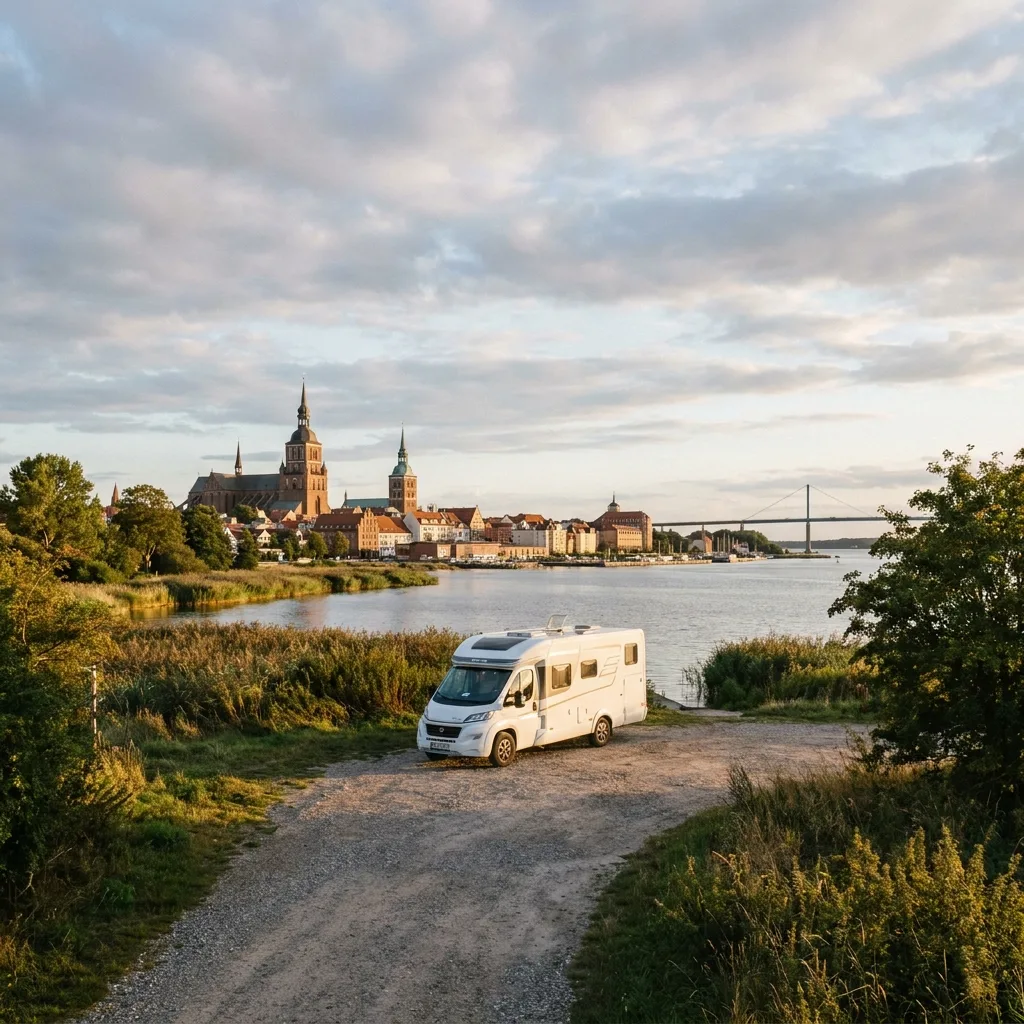
Stop 6
Stralsund
The Hanseatic City of Stralsund has been on the UNESCO World Heritage List since 2002 due to its historic city center with Brick Gothic architecture. At the Alter Markt, you will find the medieval Rathaus and the 104-meter-high Marienkirche. In the harbor, the three-masted sailing ship Gorch Fock I from 1933 lies next to the Ozeaneum, a museum with aquariums about the northern seas. From the quay, you can look out onto the Rügenbrücke, which connects the city with the island of Rügen.
Want to actually take this trip?
We put together the complete package for you — motorhome, ferry, campsites — in one personal email.
Stop 7
Rügen
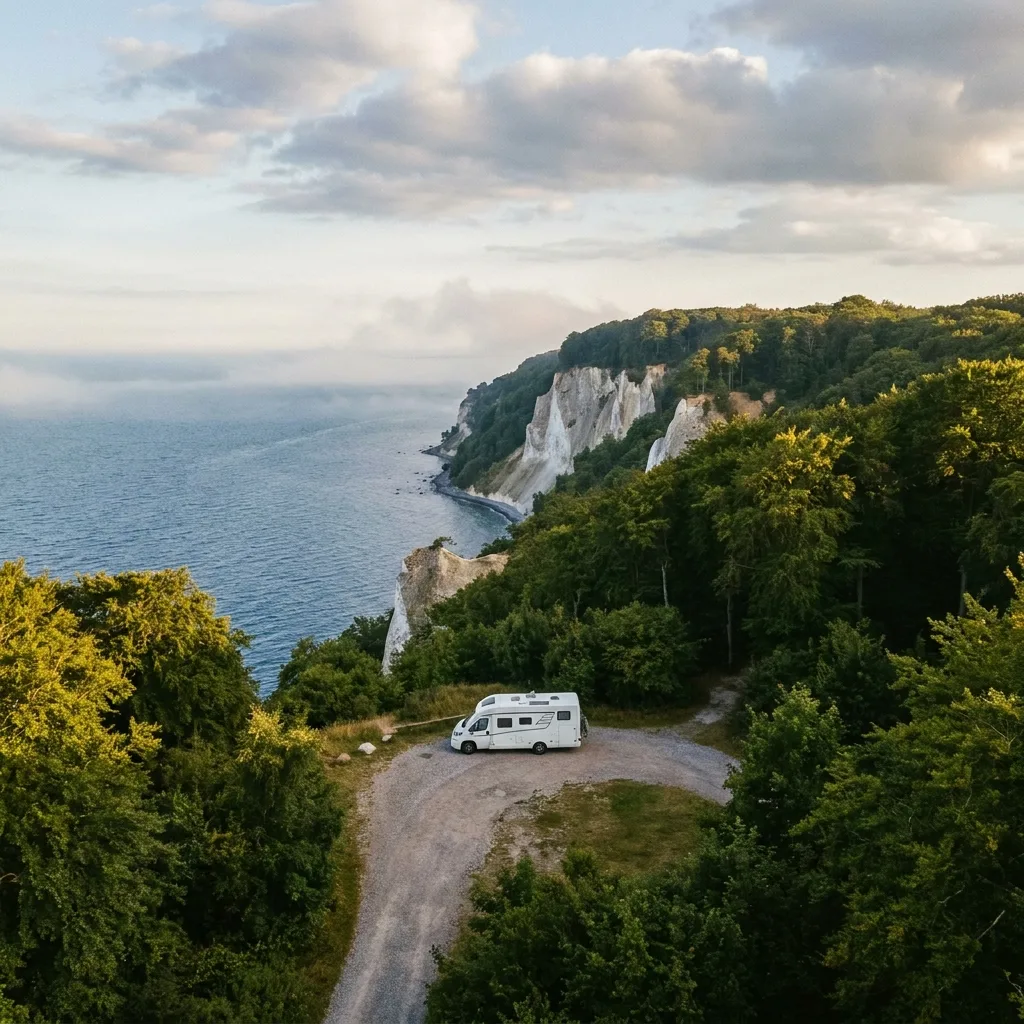
The island of Rügen in the Baltic Sea is home to Jasmund National Park, Germany's smallest national park with the 118-meter-high chalk cliff Königsstuhl. Here you can walk through ancient beech forests which are UNESCO World Heritage listed and directly border the steep coastline of the Kreidefelsen. In the seaside resorts, you'll see the Bäderarchitektur with white villas and historic piers along the sandy beaches.
Stop 8
Cape Arkona
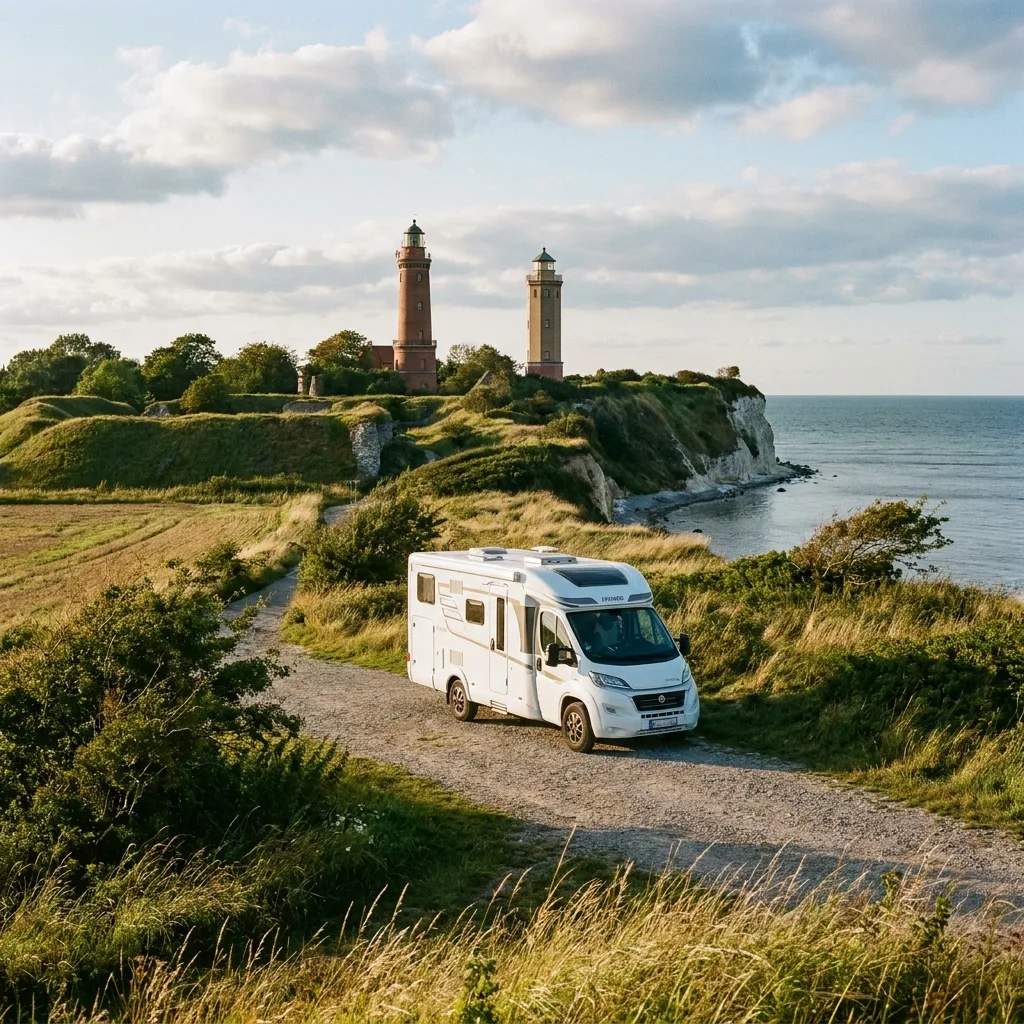
Kaap Arkona is a 45-meter-high chalk cliff cape on the Baltic Sea, with historic towers and expansive views. On top of the cape are the Schinkelturm, the Leuchtfeuer, and the Peilturm. Nearby lie the remains of the ninth-century Slavic temple fortress Jaromarsburg. A short walk leads to the picturesque fishing village of Vitt with its thatched-roof houses. The cape and Vitt, accessible from Putgarten by bike, on foot, or by shuttle train, offer a serene place for the salty sea air.
Stop 9
Usedom
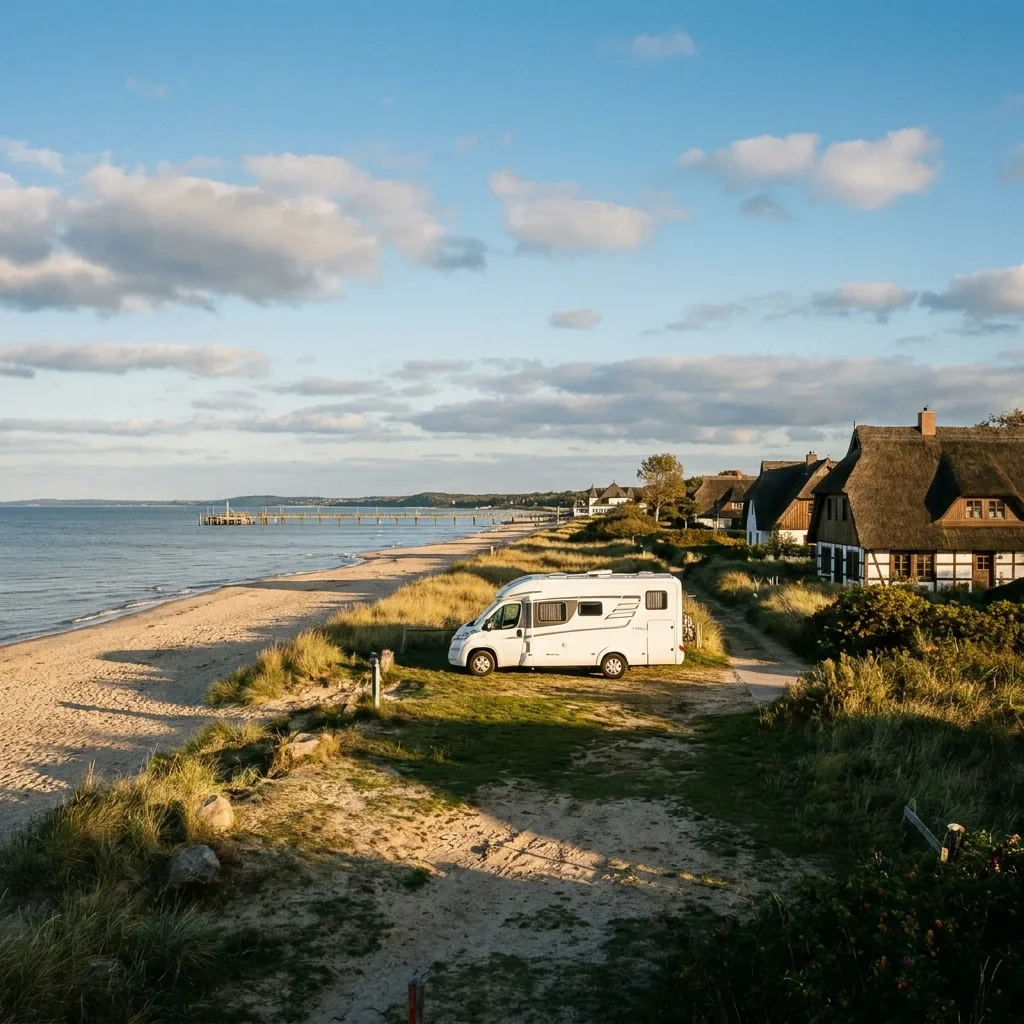
Usedom is Germany's sunniest island, located in the northeast on the Baltic Sea. In the Kaiserbäder, white villas in the Bäderarchitektur style stand, and the Seebrücke Ahlbeck from 1898 is the country's oldest pier. The Historisch-Technisches Museum Peenemünde in the north showcases the former research site for twentieth-century rockets. You can cycle along paths connecting the seaside resorts and wide sandy beaches along the coastline.
Stop 10
Müritz National Park
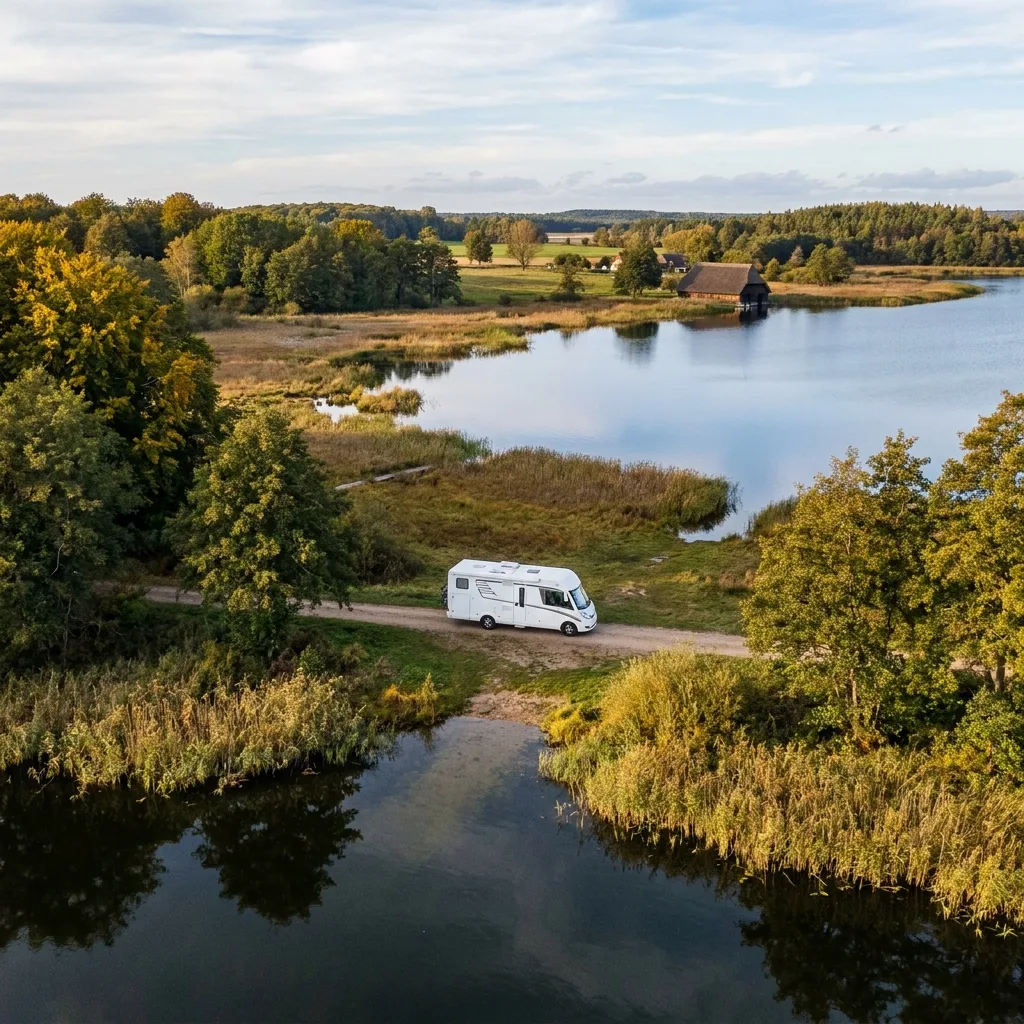
More than a hundred lakes and ancient forests define the landscape of Müritz National Park. In the Serrahner Buchenwälder, you'll walk among the gnarled trunks of beech trees that are part of the UNESCO World Heritage. Those who climb the 55-meter-high Käflingsbergturm will overlook the treetops and the vast landscape of the Mecklenburg Lake District. Along the shores of the Feisnecksee, ospreys search for prey while cranes and red deer appear among the dense reeds.
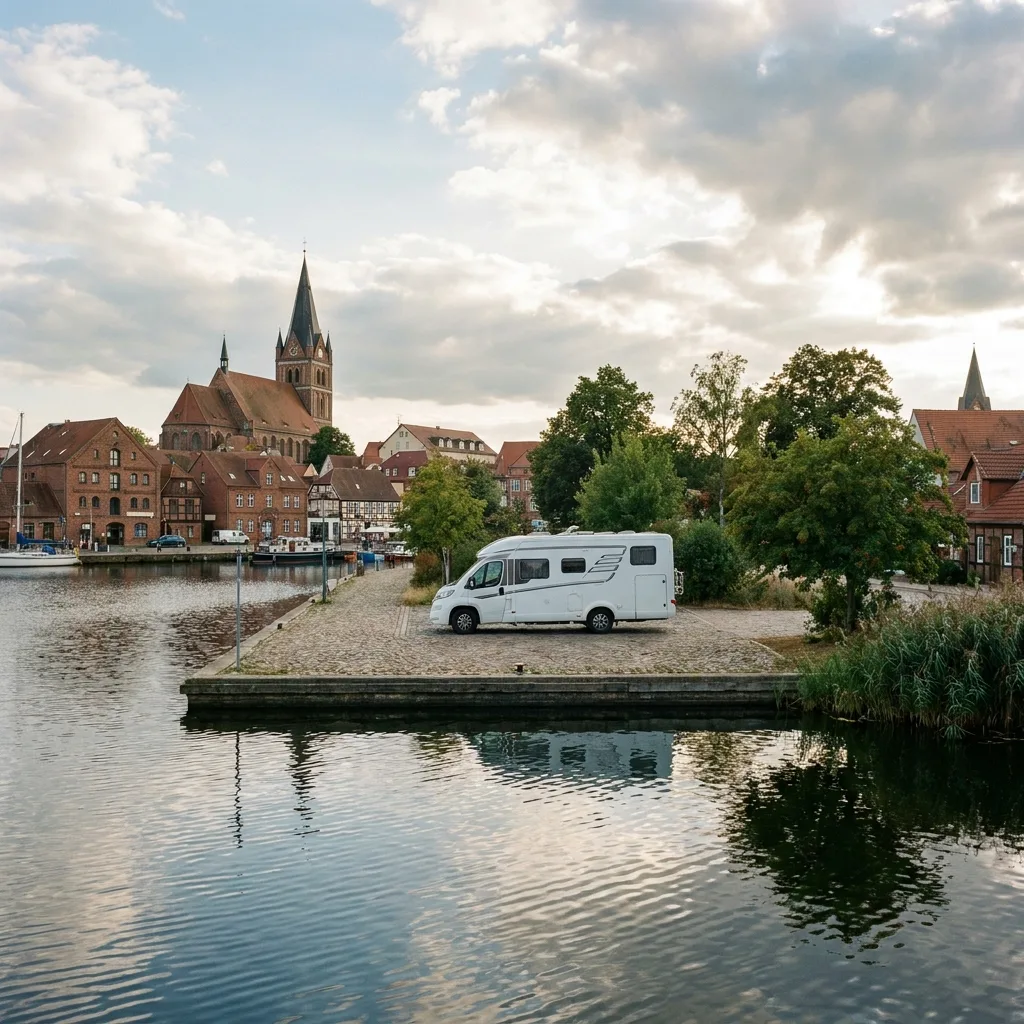
Stop 11
Waren an der Müritz
Waren an der Müritz is located on the northern shore of Lake Müritz, Germany's largest inland lake with an area of 117 square kilometers. At the Müritzeum, you can visit the country's largest freshwater aquarium landscape. From the town, you can walk or cycle directly into Müritz National Park, a nature reserve with ancient beech forests. The Stadthafen Waren offers moorings for boats and waterside terraces.
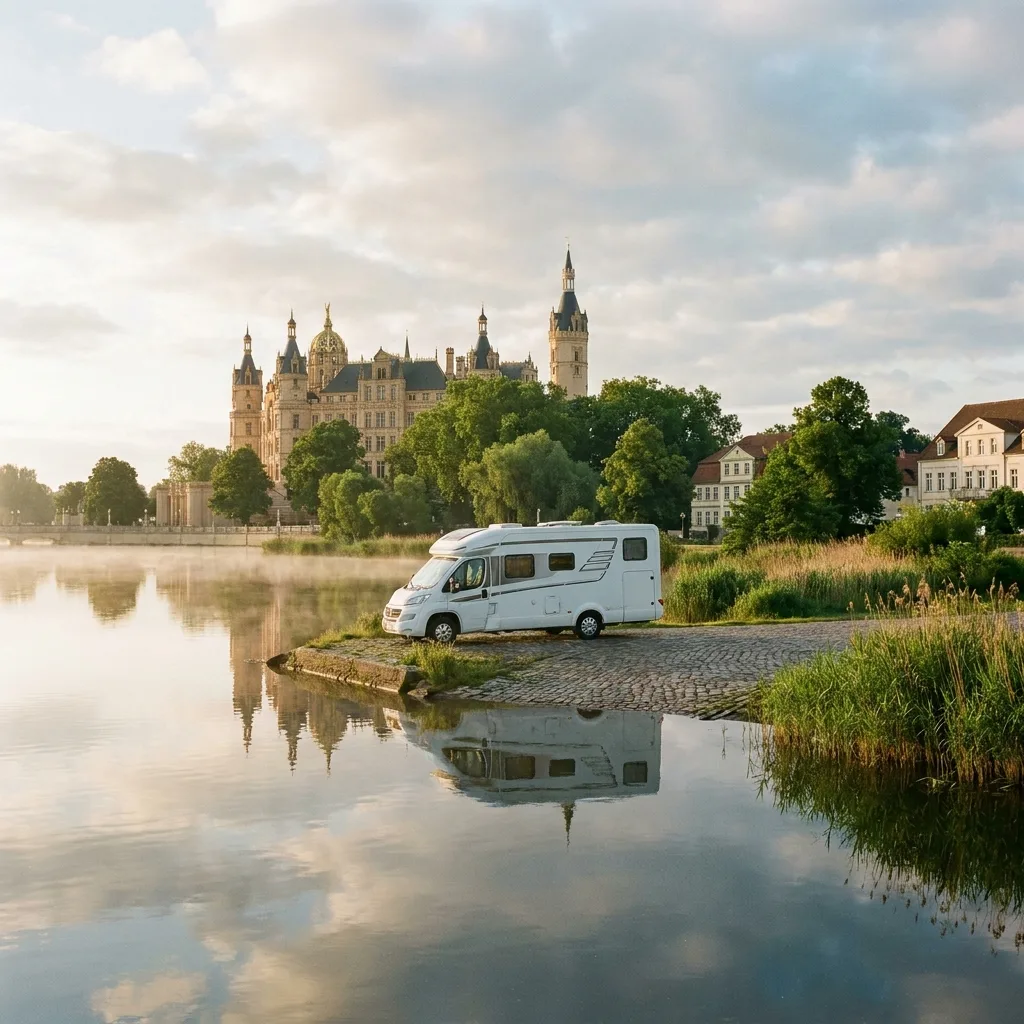
Stop 12
Schwerin
Schwerin is the capital of Mecklenburg-Vorpommern and is situated between seven lakes, including the Schweriner See. The Schweriner Schloss, located on its own island, took its current form in the nineteenth century as a residence for the grand dukes. The city center features half-timbered houses and the fourteenth-century Schweriner Dom, an example of Brick Gothic. You can stroll through the castle gardens or take a boat trip on the water.
Stop 13
Lübeck
Lübeck preserves its Brick Gothic architecture on a medieval island between the arms of the Trave river. The massive Holstentor, with its leaning towers, marks the entrance to the old town. In St. Mary's Church, the vaults soar high above the remnants of the fallen bells. Dark glazed bricks cover the facade of the Lübeck Town Hall. The scent of marzipan fills Niederegger's shop, while the hustle and bustle fades in the narrow alleys behind the houses.
Ready to hit the road?
We'll email you a personal travel proposal within 24 hours — motorhome, route and full cost overview included. Save €400–€800 on average vs. a travel agency.
No packages, no middlemen. Learn how it works
Camproads gave me a lot of inspiration for our campervan trip. The routes are beautiful, with a good balance of nature and city life, and the route generator made planning super easy. It's also really handy that there are so many good camping options at the locations, and that you can easily find the campervan that suits your needs and compare prices. This way, we can plan everything ourselves and book the campervan directly with the rental company. That's much cheaper than an organized trip!
Michiel van de Bunt
February 2026
What a difference from how I used to plan trips. Through Camproads, I put together a complete campervan trip in just a few minutes. It's so easy to use, and you can customize everything to your liking. The ability to choose your travel pace makes it even more enjoyable, especially now that we're traveling with a baby for the first time.
Alieke Zelhorst
February 2026