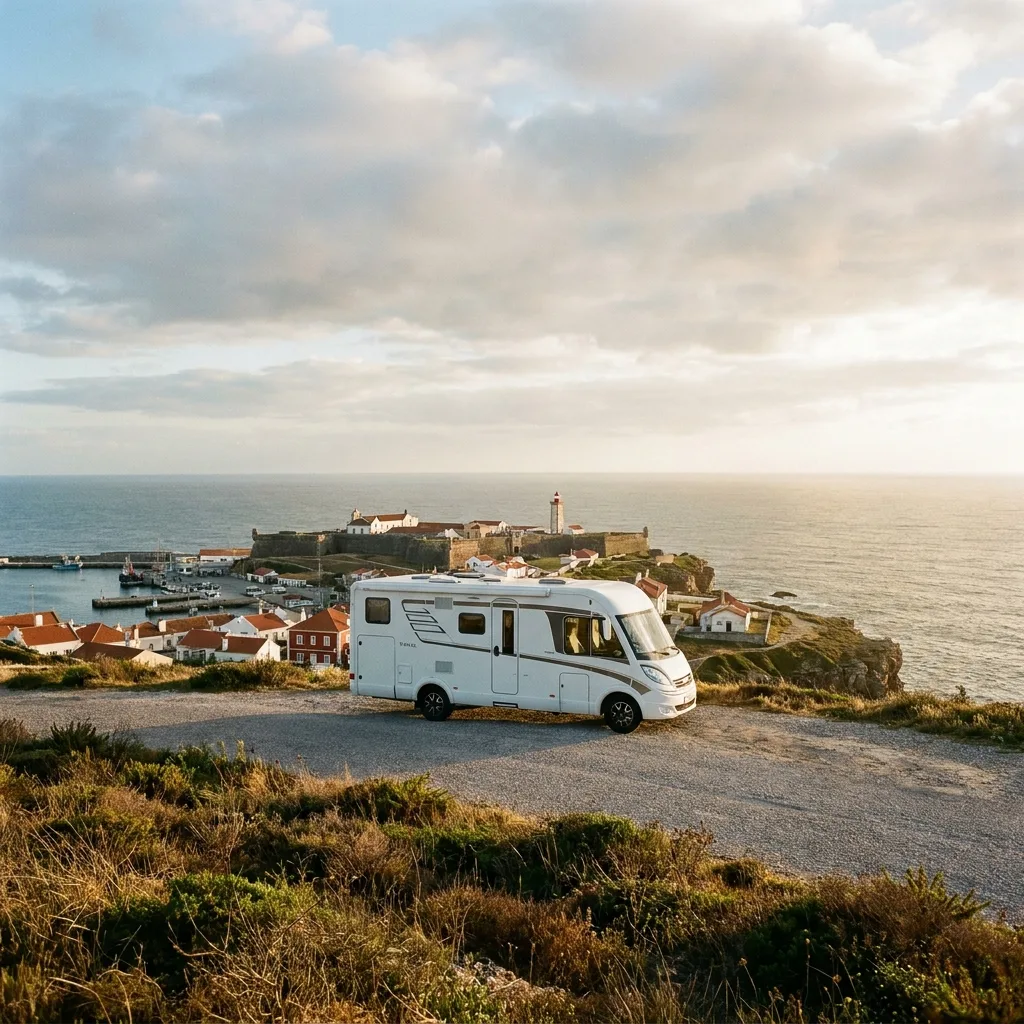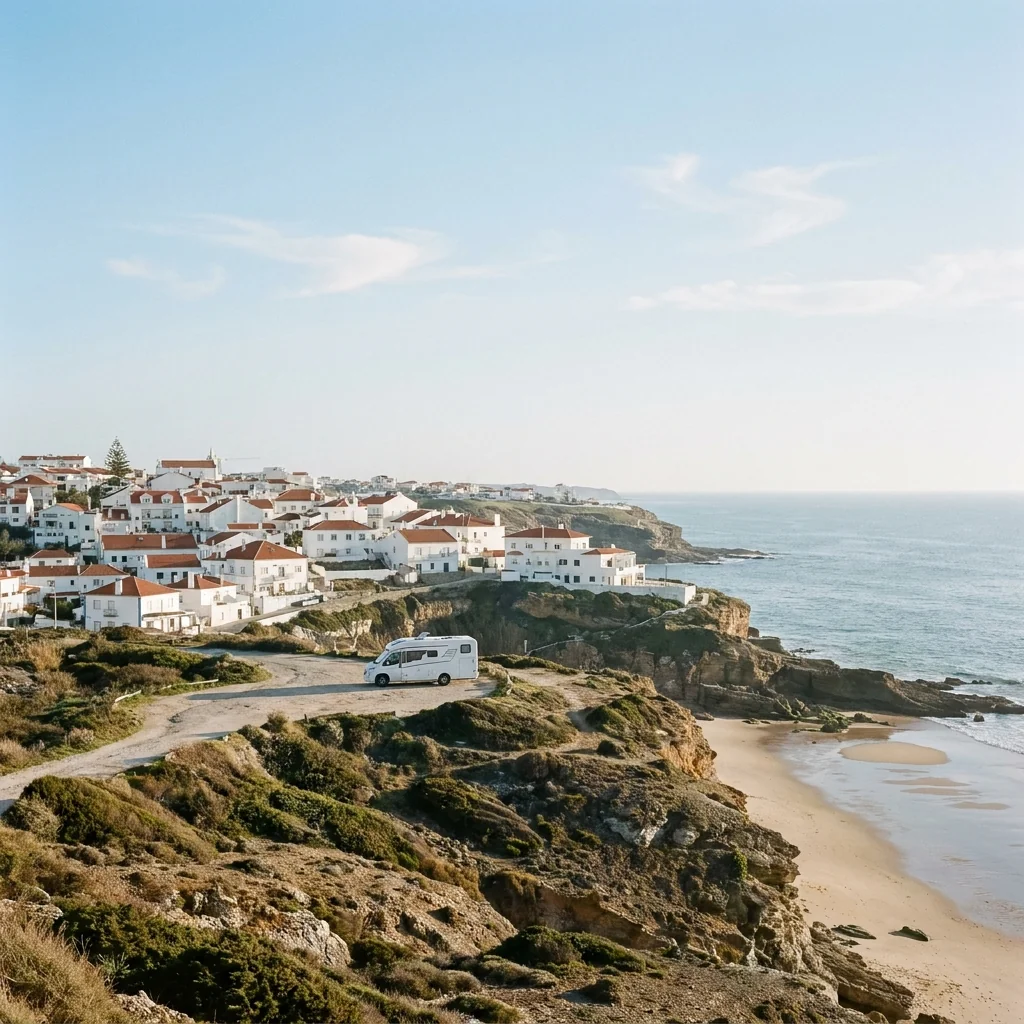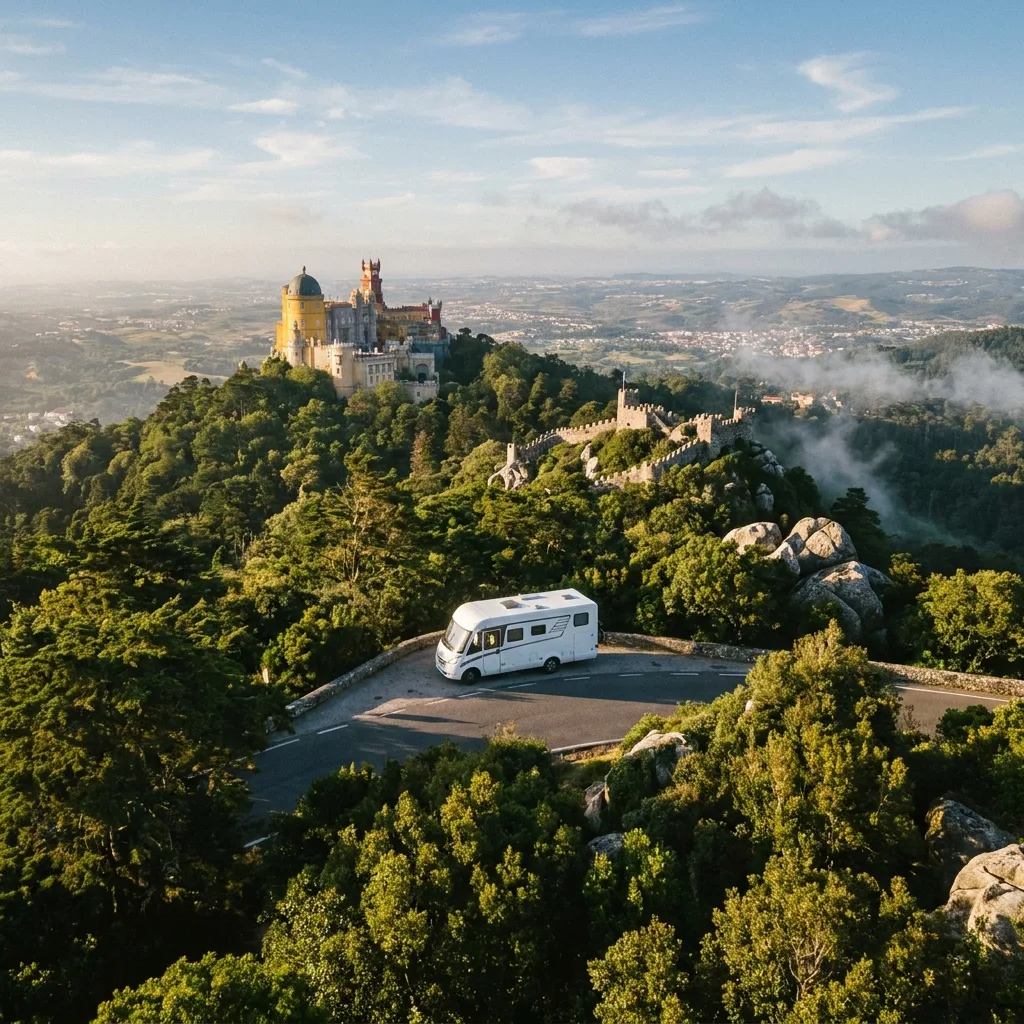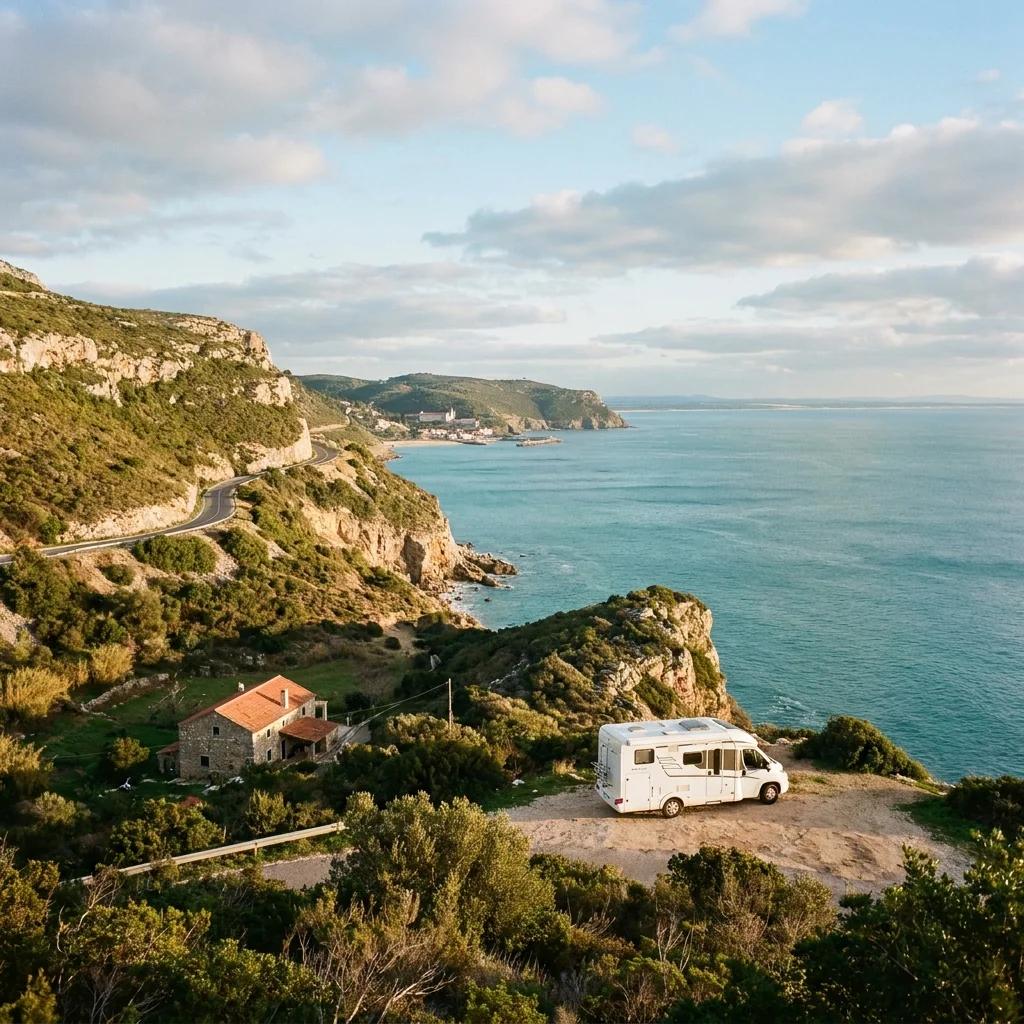
Take this trip by motorhome
Save €400–€800 on average vs. a travel agency
Duration
x daysDistance
0 km
stops
0
Choose a date and duration that fits your preferences
About this route
Highlights
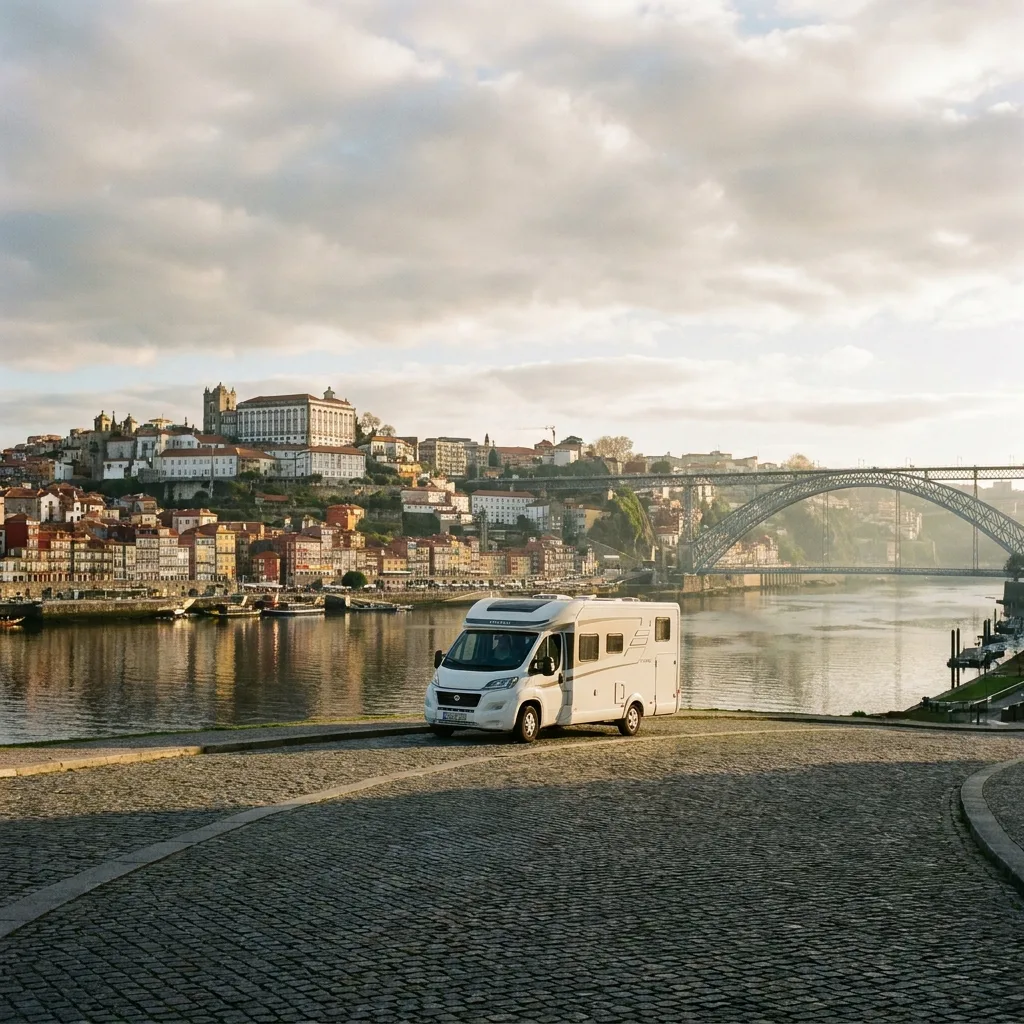
- ✦Walk through the historic Ribeira and over the Ponte Dom Luís I in Porto
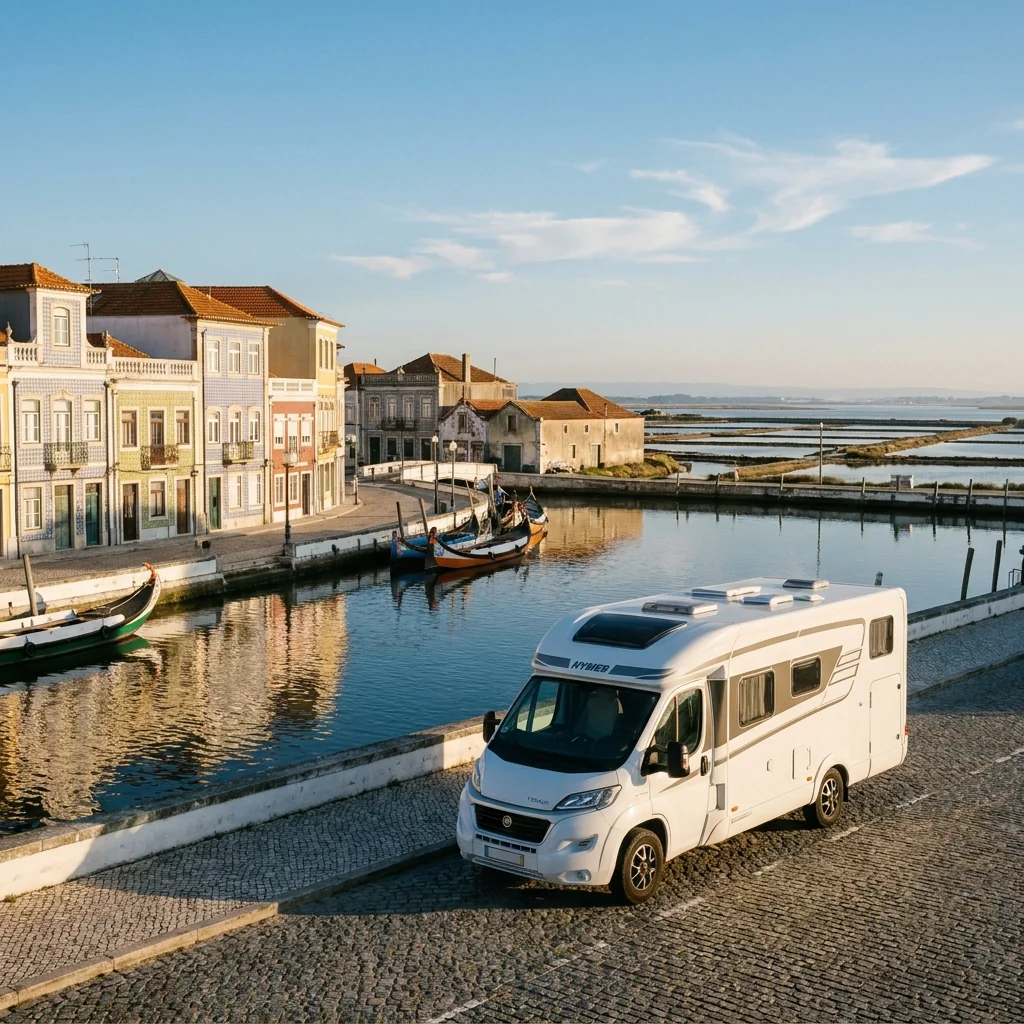
- ✦Sail with a moliceiro through the picturesque canals of Aveiro
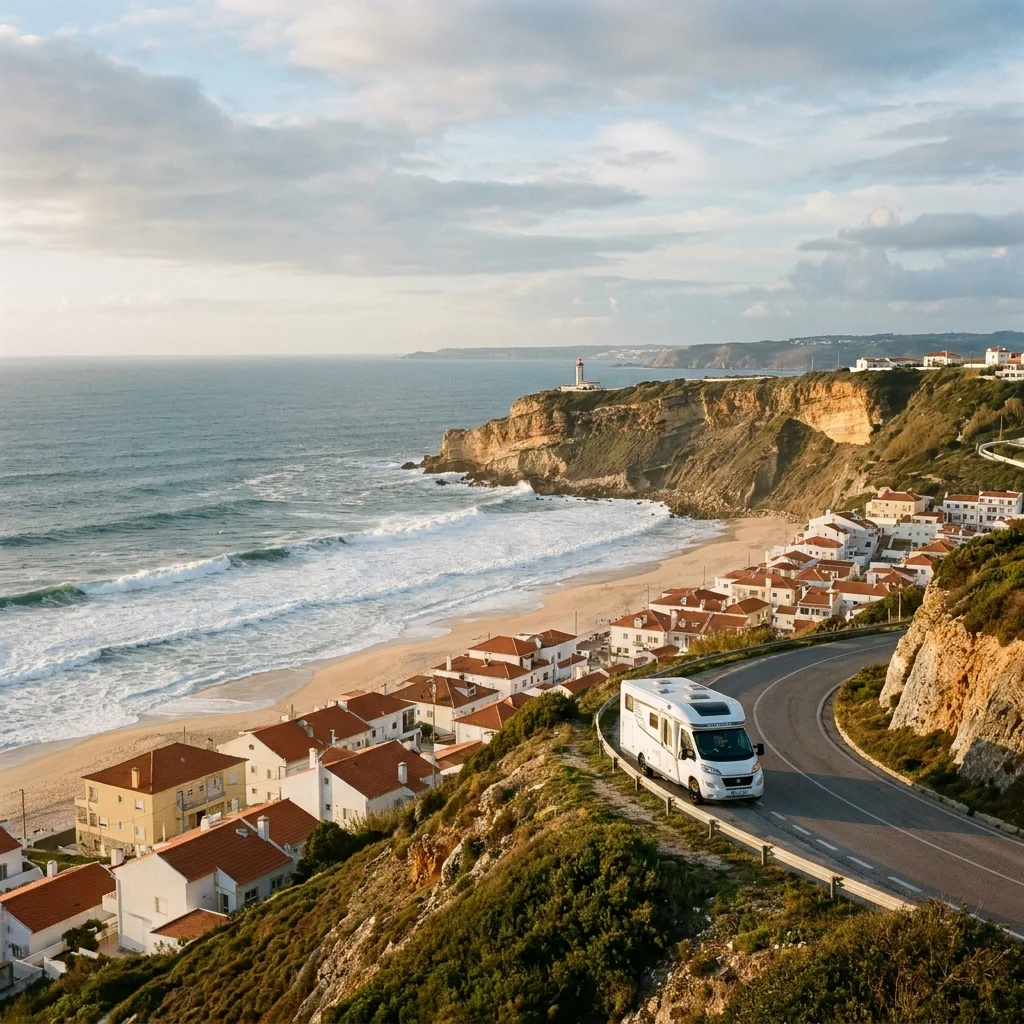
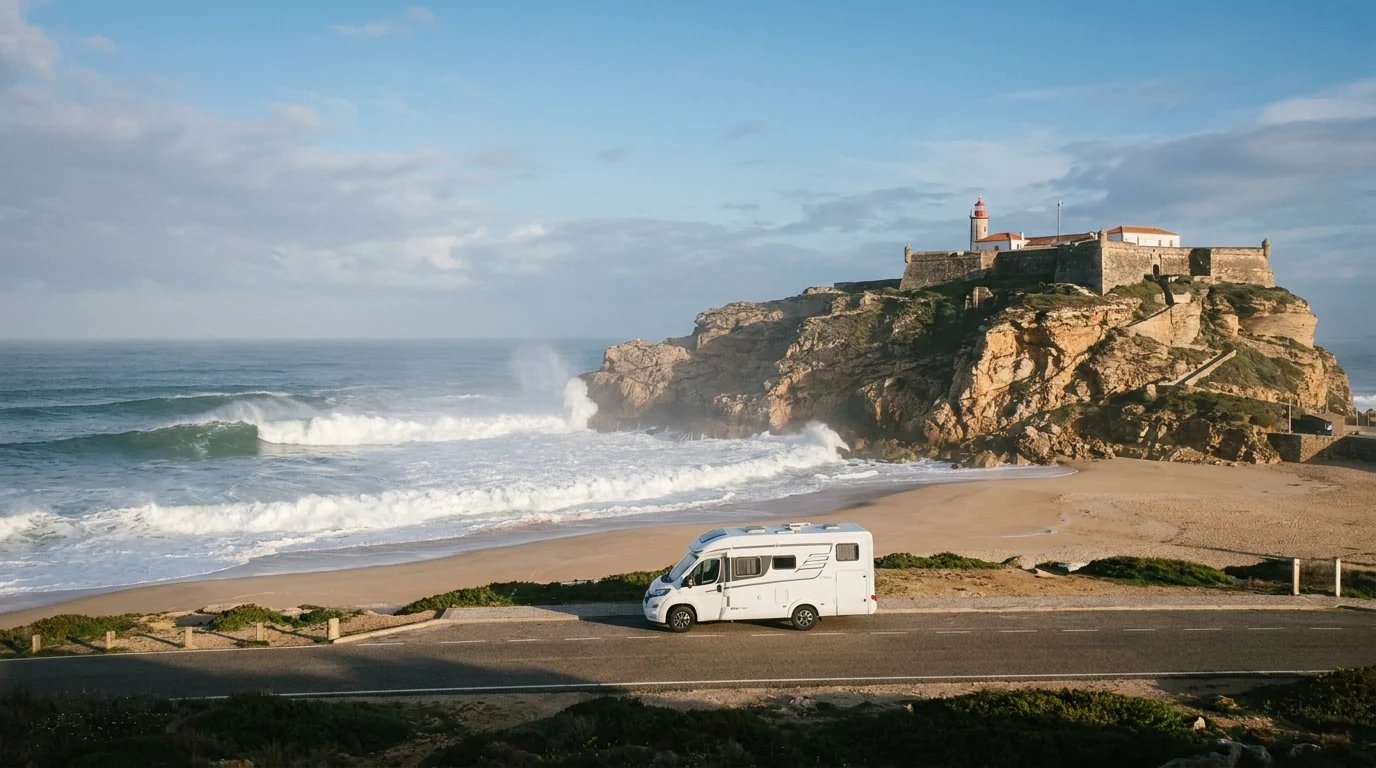
- ✦Climb the Farol da Nazaré and see the famous waves of Praia do Norte
- ✦Explore the walled city of Óbidos and walk along the Muralhas de Óbidos
- ✦Visit the iconic Torre de Belém and the Mosteiro dos Jerónimos in Lisbon
- ✦Drive along the green hills and turquoise bays of the Serra da Arrábida
- ✦Stand at the very tip of Europe at Cabo de São Vicente in Sagres
The route

Stop 1
Sagres
Sagres, located on the southwesternmost tip of the European mainland, exudes a raw, untamed atmosphere. Its steep cliffs and powerful ocean winds attract surfers year-round, who conquer the waves of Praia do Tonel. Hikers explore coastal paths leading to the imposing Fortaleza de Sagres, a historic stronghold situated on a narrow promontory. The village itself boasts a relaxed atmosphere with local eateries serving fresh fish daily. The proximity of sheltered coves like Praia da Mareta offers variety for those seeking respite from the wind. From the high cliffs, you can gaze out over the endless Atlantic Ocean as the sun slowly dips below the horizon. It's a place where the forces of nature are constantly palpable, and time seems to slow down due to its remote character. This location marks the geographical transition between the rugged west coast and the sheltered sandy beaches of the southern Algarve.

Stop 2
Porto
Porto lies majestically on the banks of the Douro, exuding an authentic maritime atmosphere. In the historic Ribeira district, visitors can wander through narrow streets past colourful facades that directly border the water. The iconic Dom Luís I Bridge spectacularly connects the city with the port wine lodges of Vila Nova de Gaia. Above the city, the Torre dos Clérigos towers, offering a panoramic view over the characteristic red roofs. Lovers of architecture and books will feast their eyes in the neo-Gothic Livraria Lello with its famous twisted staircase. The quays invite a moment of tranquility as traditional rabelo boats sail by on the river. In the evenings, the city lights beautifully reflect in the water, creating an unforgettable sight.

Stop 3
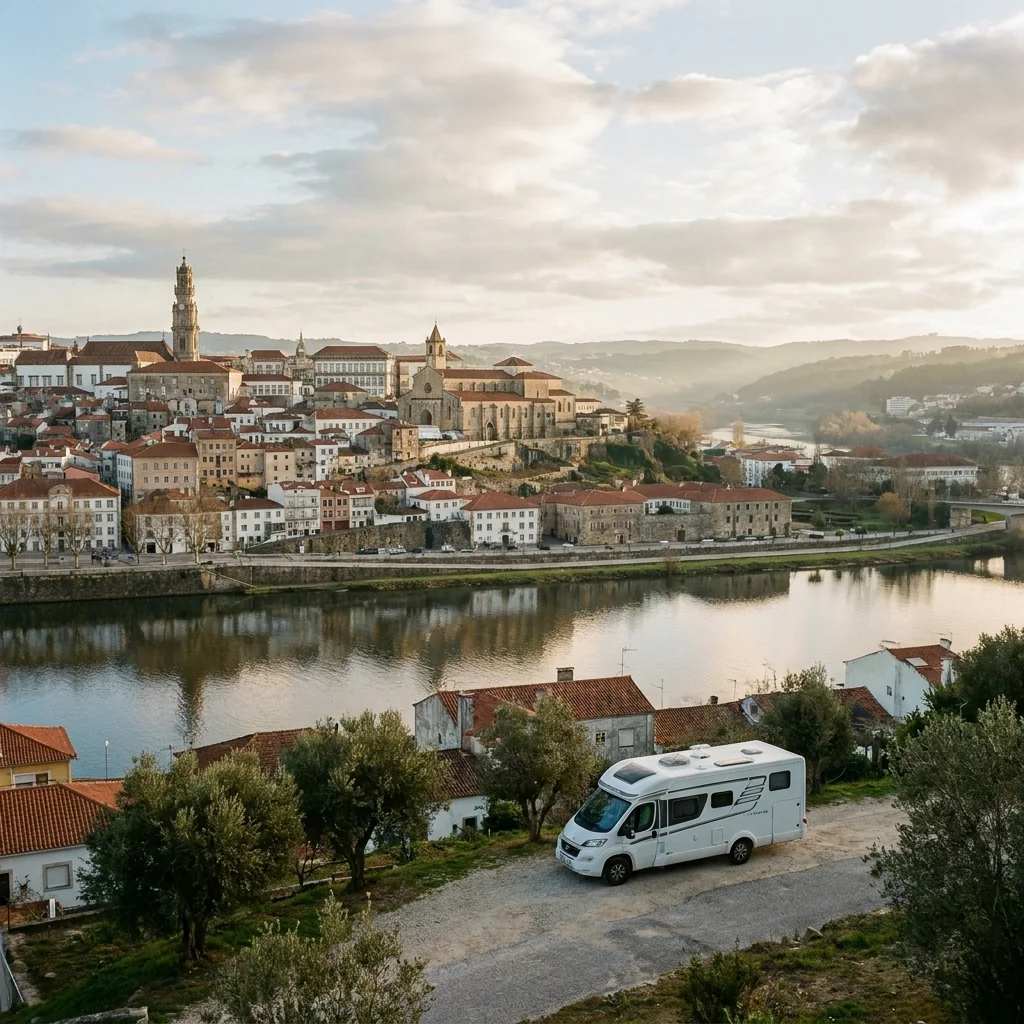
Coimbra
Coimbra rises majestically from the banks of the Mondego River. The upper town is dominated by the ancient buildings of the University of Coimbra, which tower high above the rest of the city. Within the walls of this complex, the baroque Biblioteca Joanina houses an impressive collection of books in a richly decorated interior. Wandering through the narrow, steep streets of the lower town, you pass the robust Sé Velha, a cathedral with the appearance of a fortress. In the evening hours, the melancholic sounds of local Fado echo through the arches of the old city gates. Along the riverbanks, parks and walking paths offer a quieter perspective on the historic skyline. The blend of academic tradition and medieval architecture gives this place a stately and timeless atmosphere.

Stop 4
Nazaré
Nazaré is one of the most distinctive coastal towns on the Portuguese Silver Coast. The town is divided into a lower beach area and the historic Sítio, located on the high cliffs. From the viewpoint at Farol da Nazaré, you have an impressive view of the powerful Atlantic Ocean and Praia do Norte. This beach is world-renowned for the gigantic waves that form here in the winter months due to an underwater canyon. In the narrow streets of the lower town, you can still often see local women in traditional dress drying their fish on the beach. A funicular ride connects the two parts of the town and offers sweeping panoramic views of the bay. The combination of maritime traditions and spectacular natural forces makes the location characteristic of this region. It is a vibrant place where the salty sea air and the sound of the crashing waves define the atmosphere.

Stop 5
Óbidos
Óbidos is a walled medieval town that towers above the surrounding landscape. The whitewashed houses with blue and yellow accents adorn the narrow cobblestone streets of Rua Direita. Walkers can explore the full perimeter of the town via the high Muralhas de Óbidos. From these ramparts, you have a panoramic view of the vineyards and the nearby lagoon. The imposing Castelo de Óbidos dominates the northern end of the town and houses centuries of history. In the small shops, you can taste the local cherry liqueur, ginjinha, served in a chocolate cup. The proximity to the coast makes the air fresh and provides a pleasant climate during a stroll through the maze of alleyways. Parking facilities just outside the town gates make a visit to this historic monument very accessible.

Stop 6
Peniche
This peninsula juts deep into the Atlantic Ocean, offering an impressive spectacle of rugged rocky coasts. At Cabo Carvoeiro, you can admire bizarre limestone formations and an iconic lighthouse overlooking the wild surf. The historic Fortaleza de Peniche is a reminder of a turbulent past and today houses an important museum. From the harbour, boats depart for the pristine Ilha das Berlengas, a nature reserve with crystal-clear waters. Surf enthusiasts make their way to the world-famous waves of Praia dos Supertubos on the south side of the city. The atmosphere in the harbour is authentic, with daily deliveries of fresh fish by the local fleet. Walks along the clifftops offer sweeping views of the ocean and the nearby archipelago. It is a dynamic place where maritime history and active water sports seamlessly intertwine.

Stop 7
Ericeira
This whitewashed fishing village lies atop high sandstone cliffs above the Atlantic Ocean. The old town's cobbled streets feature blue-trimmed houses and charming squares. Along the coastline, various sandy beaches nestle among the rock formations, including the well-known Praia Ribeira d'Ilhas. As part of the Reserva Mundial de Surf, the area attracts ocean enthusiasts year-round. From the wooden walkways above the cliffs, you get panoramic views of the surf and the rugged coastline. The Capela de São Sebastião provides a tranquil vantage point, featuring traditional white and blue tiles on its interior. In the local market hall and fish restaurants, you can taste the daily catch fresh from the nearby harbor. The blend of authentic charm and powerful nature makes this place a distinctive stop on the west coast.

Stop 8
Sintra
Sintra is nestled in the forested hills of the mountain range that shares its name, where a cooler microclimate prevails than on the coast. The area is characterized by lush gardens, dense forests, and narrow roads that wind upwards past historic estates. Perched atop the ridge, the colorful Palácio da Pena boasts eclectic architecture and sweeping views over the region. Hikers follow paths to the nearby Castelo dos Mouros, its ancient walls tracing the contours of the rocks. In the lower part of the town lies Quinta da Regaleira, featuring its symbolism, underground tunnels, and deep wells. The atmosphere in the winding streets of the old town is authentic, with local crafts and traditional pastry shops. From the mountain peaks, the Atlantic Ocean is visible in the distance, while low-hanging clouds regularly drift between the castle towers. A stay here offers the opportunity to discover the rich concentration of monuments and natural beauty at your own pace.

Stop 9
Cabo da Roca
At the westernmost point of mainland Europe, granite cliffs tower more than a hundred meters above the Atlantic Ocean. The rugged coastline offers sweeping views of the horizon, where the wind often has free rein. Near the Farol do Cabo da Roca, a distinctive stone monument marks the geographical coordinates of this unique spot. Walking paths wind along the steep cliffs, connecting the viewpoint with surrounding coves in the natural park. The vegetation here consists of low-growing succulents that can withstand the salty seawater and constant sea breeze. Visitors here experience the raw power of the ocean as waves crash against the rock formations. The landscape provides a spectacular conclusion to the forested hills of the Serra de Sintra. The sunset at this spot is a visual spectacle that bathes the surrounding cliffs in a golden glow.
Want to actually take this trip?
We put together the complete package for you — motorhome, ferry, campsites — in one personal email.
Stop 10
Aveiro
Aveiro, situated on the edge of a vast lagoon, is crisscrossed by picturesque canals. Colorful moliceiros sail through the water, reminiscent of the time when seaweed was harvested here. Elegant Art Nouveau buildings line the quays, reflecting the city's prosperous history. The nearby coastline at Costa Nova attracts visitors with its characteristic brightly colored striped wooden houses. In the compact center, you can sample local delicacies like the sweet ovos moles at artisan pastry shops. Strolling through the narrow streets of the old fishing district of Beira Mar offers an authentic glimpse into daily life. The surrounding salt pans provide a tranquil backdrop for an outdoor stroll. The contrast between the historic heart and the modern university district gives the place a unique dynamic.

Stop 11
Serra da Arrábida
Here, the forested slopes of the Serra da Arrábida plunge steeply down into the turquoise waters of the Atlantic Ocean. Within the Parque Natural da Arrábida, you'll find a limestone mountain range that creates a unique microclimate for rare Mediterranean flora. Along the coastline lie secluded coves such as Praia do Portinho, among white limestone cliffs and crystal-clear waters. High on the southern slope lies the Convento da Arrábida, a 16th-century monastery that overlooks the vast blue horizon. Narrow, winding roads lead to panoramic viewpoints offering expansive views of the Tróia Peninsula and the Sado Estuary. Hikers can follow marked trails that lead through dense cork oak forests and along rugged cliff edges. The combination of pristine nature and beaches makes this a serene spot for peace-seekers on the Portuguese coast. Local specialties from the nearby fishing villages enhance the authentic atmosphere of this protected natural area.

Stop 12
Comporta
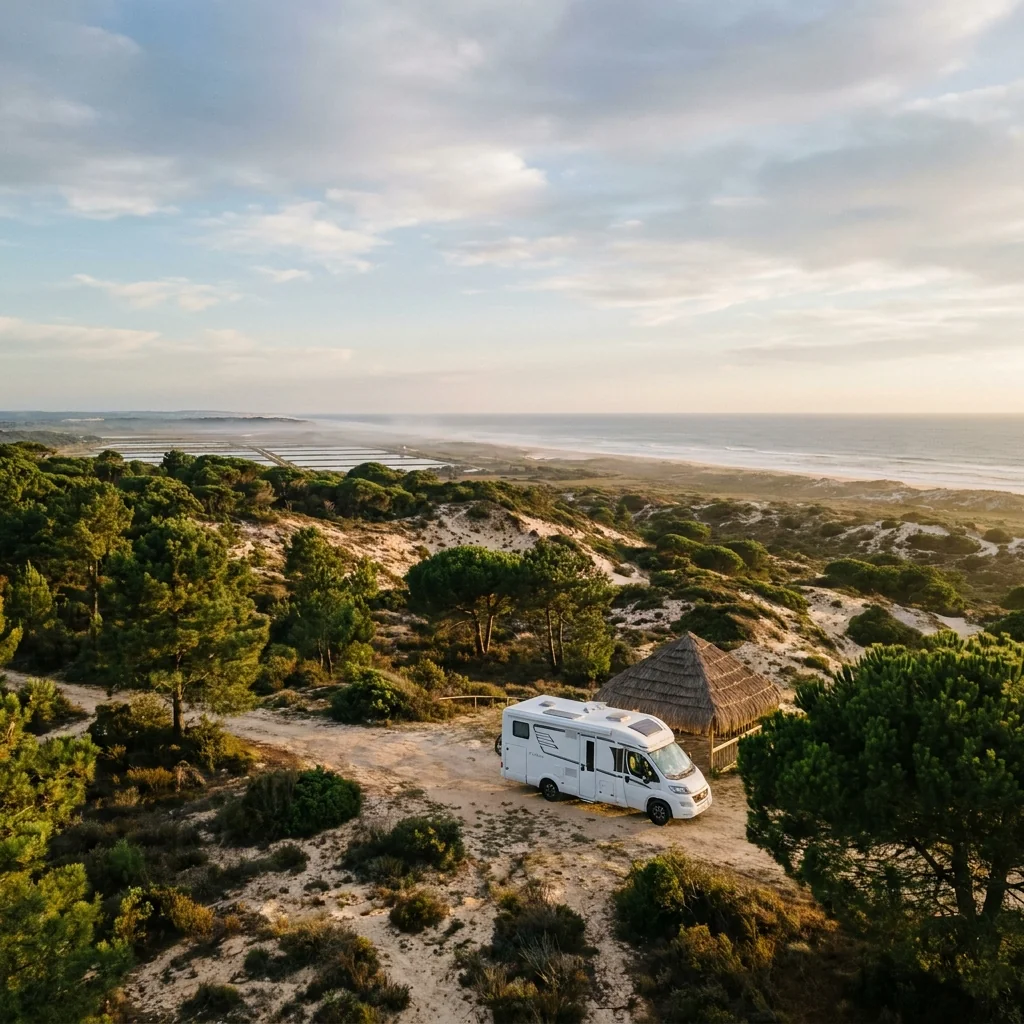
Comporta lies at the foot of the Troia Peninsula, surrounded by extensive rice paddies and pine forests. The white sand of Praia da Comporta offers ample space for walks along the Atlantic surf. In nearby Carrasqueira, you'll find the iconic Cais Palafítico, a traditional wooden fishing pier built on stilts that extends deep into the estuary. This area forms a tranquil haven where the natural beauty of the Sado Estuary blends with a relaxed village atmosphere. Birdwatchers can observe numerous storks and flamingos building their nests in the surrounding marshes. The simple white houses with thatched roofs give the surroundings a distinctive and timeless look. The combination of unspoiled dunes and local vineyards makes a stay here a serene experience amidst a vast coastal landscape.

Stop 13
Porto Covo
Porto Covo is a charming fishing village known for its whitewashed houses with blue trim. The central square, Largo Marquês de Pombal, is the heart of the settlement and exudes a tranquil, authentic atmosphere. Along the rugged coastline, sheltered coves are among the cliffs, with Praia Grande being the most popular spot for a refreshing swim. From the coastline, you have an unobstructed view of the nearby Ilha do Pessegueiro, which is home to a historic fort. Hikers can directly access the Rota Vicentina trails here, which wind over the sandy dunes. The local gastronomy in the narrow streets primarily focuses on fresh fish and seafood from the Atlantic Ocean. The contrast between the calm village center and the rugged power of the ocean is palpable everywhere. In the evening sun, the surrounding rock formations turn deep orange as the wind sweeps over the cliff tops.

Stop 14
Vila Nova de Milfontes
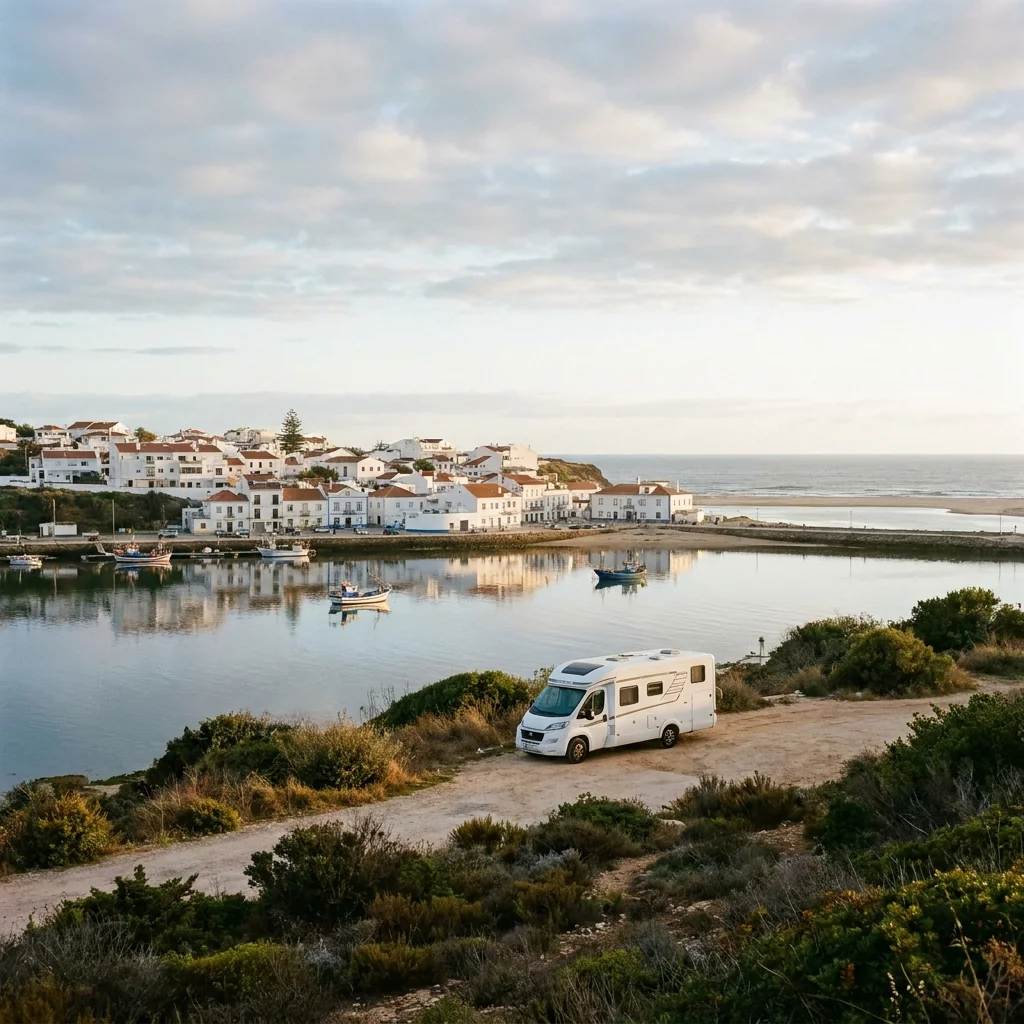
Vila Nova de Milfontes is situated where the Mira River flows into the Atlantic Ocean. The village is characterized by white houses with blue accents and charming squares. Along the waterfront, Praia da Franquia offers calm swimming waters, while the ocean beaches on the opposite side are more challenging. The historic Forte de Milfontes guards the estuary and offers panoramic views of the coastline. Hikers often follow the paths of the Rota Vicentina here, which run along the rugged cliffs. The tides constantly change the landscape, creating new sandbanks in the river. In the evenings, the sky above the estuary turns a deep orange.

Stop 15
Zambujeira do Mar
Zambujeira do Mar is perched atop high, dark cliffs that plunge vertically into the Atlantic Ocean. The white village exudes serene tranquility, with narrow streets that lead directly to spectacular viewpoints over the coastline. The central beach, Praia da Zambujeira, is surrounded by rugged rock formations and offers shelter from the powerful ocean wind. Hikers often follow the dusty paths of the Rota Vicentina here, which wind along the precipice. At the small Capela Nossa Senhora, people gather at the end of the day for an unobstructed view of the setting sun. The combination of rugged nature and the simplicity of village life makes this a characteristic stop in the Alentejo. The salty sea air and the constant sound of the crashing waves dictate the rhythm of the day here.

Stop 16
Odeceixe
Odeceixe is located on the border of the Algarve and the Alentejo, nestled in a valley where a river meets the sea. The white village climbs steeply up the hills, offering views over the surrounding farmland. On the coast, Praia de Odeceixe forms a wide, horseshoe-shaped sandy beach, surrounded by dark cliffs. The winding Rio de Seixe flows into the Atlantic Ocean here, creating tranquil lagoons ideal for a refreshing swim. Hikers follow the paths of the Rota Vicentina along the rugged coastline with panoramic views. In the village center, you'll find narrow streets and a traditional windmill at the highest point. The atmosphere here has remained relaxed and authentic, far away from large-scale resorts. The interplay of fresh and salt water makes this place a unique natural stop along the west coast.

Stop 17
Praia da Bordeira
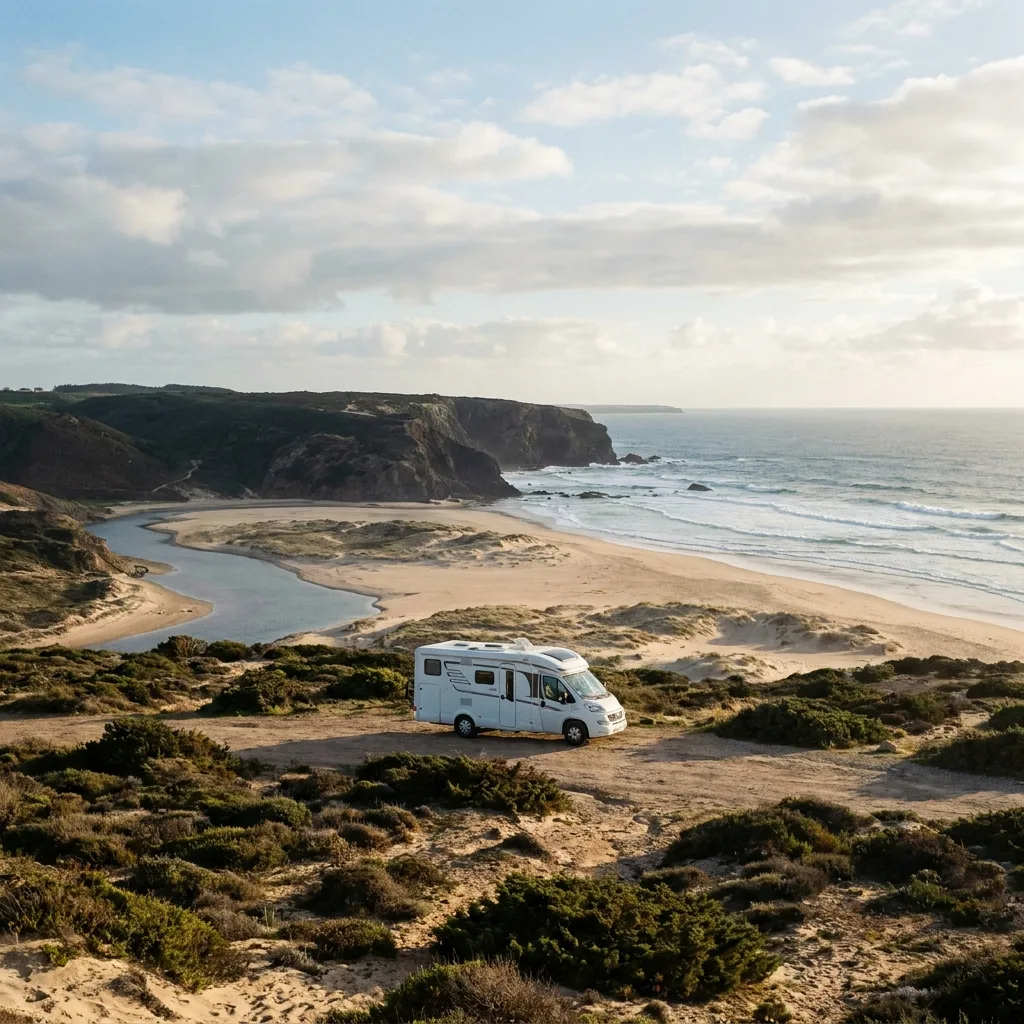
On the rugged west coast of the Algarve, an impressively wide sandy beach stretches out, where the ocean has free rein. The Ribeira da Bordeira empties into the sea here, forming a shallow lagoon that beautifully contrasts with the high cliffs. Wooden boardwalks wind across the expansive Dunas da Bordeira, offering sweeping views of the hinterland. From the nearby unpaved paths on the Pontal da Carrapateira, you look down on the wild surf and fishing spots. It is a place where the wind always blows and surfers brave the powerful waves of the Atlantic Ocean. Hikers follow the trails along the edge of the limestone cliffs to experience the salty sea air and the tranquility of this protected natural area. The sunset paints the red cliff faces in a warm glow, while the sound of the crashing waves is the only constant. Here you experience the raw beauty of the Portuguese coastline on a scale rarely found elsewhere.

Stop 18
Cape St. Vincent
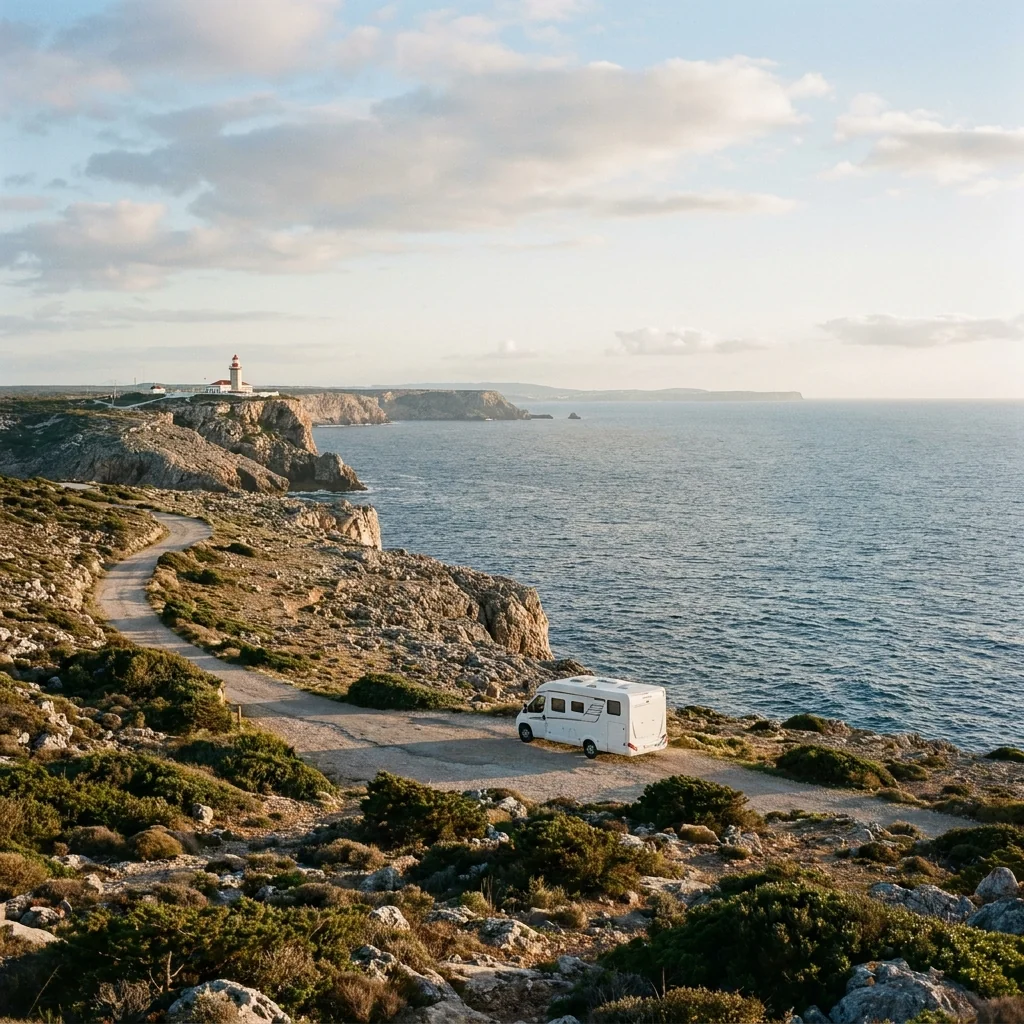
Cape St. Vincent marks the extreme southwestern point of the European mainland. Here, the sixty-meter-high cliffs plunge vertically into the turbulent Atlantic Ocean. Perched atop the rocks is one of Europe's most powerful lighthouses, its beam reaching far out to sea. Visitors often gather here in the late afternoon to watch the sun sink into the ocean. The constant wind and the sound of crashing waves amplify the feeling of being at the end of the world. Narrow paths, part of the renowned Rota Vicentina, wind along the cliff edges. In autumn, this is an excellent spot for observing migrating birds of prey. The rugged beauty of this remote coastal landscape leaves an indelible impression.

Stop 19
Lisbon
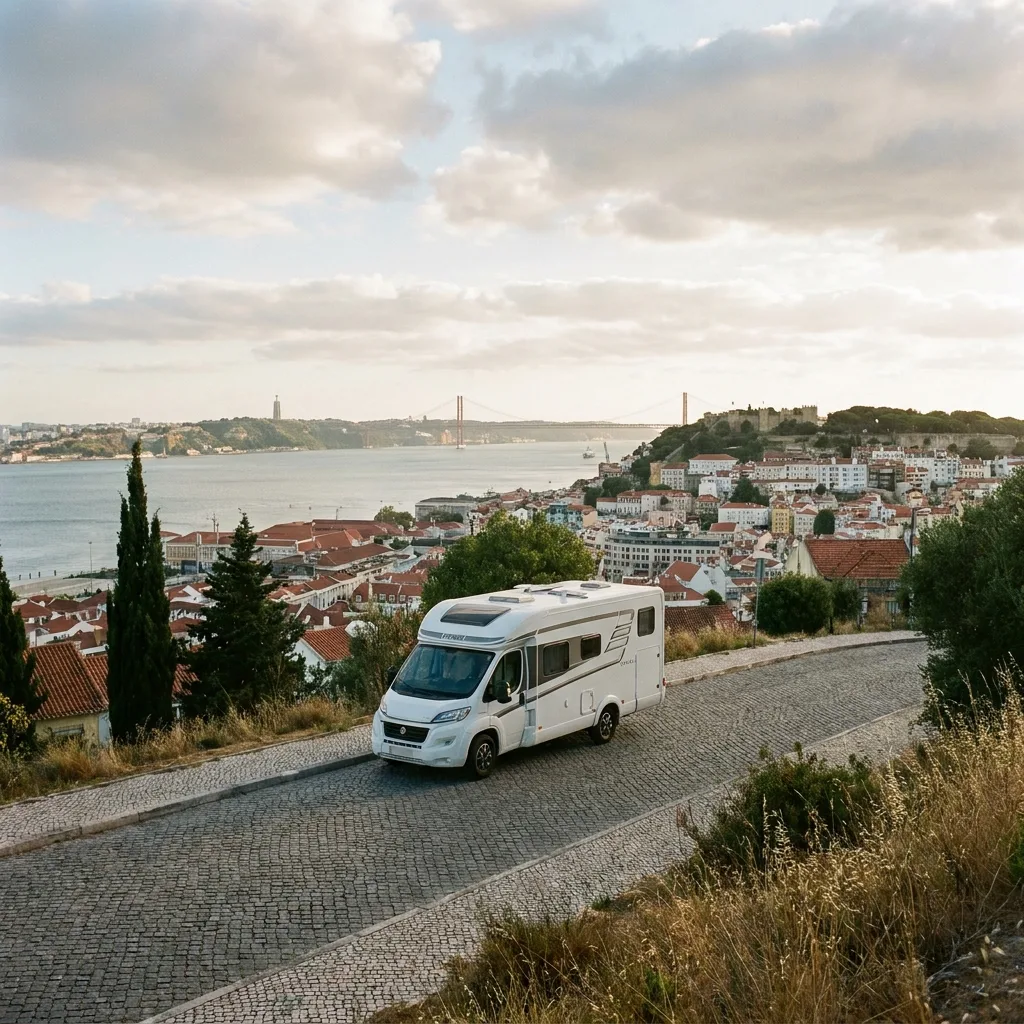
The Portuguese capital stretches across seven hills on the banks of the Tagus River. In the narrow, steep streets of the Alfama district, fado music regularly echoes from local restaurants. On the waterfront stands the white Belém Tower, a reminder of historical voyages of discovery. From the walls of São Jorge Castle, there are views over the red rooftops and the river. The Jerónimos Monastery displays detailed sculpture in the distinctive Manueline style. Yellow trams run on rails through districts where walls are decorated with azulejos. At the large Praça do Comércio by the river, the connection to the water is immediately palpable. This city combines maritime history with a recognizable European cityscape.
Ready to hit the road?
We'll email you a personal travel proposal within 24 hours — motorhome, route and full cost overview included. Save €400–€800 on average vs. a travel agency.
No packages, no middlemen. Learn how it works
Camproads gave me a lot of inspiration for our campervan trip. The routes are beautiful, with a good balance of nature and city life, and the route generator made planning super easy. It's also really handy that there are so many good camping options at the locations, and that you can easily find the campervan that suits your needs and compare prices. This way, we can plan everything ourselves and book the campervan directly with the rental company. That's much cheaper than an organized trip!
Michiel van de Bunt
February 2026
What a difference from how I used to plan trips. Through Camproads, I put together a complete campervan trip in just a few minutes. It's so easy to use, and you can customize everything to your liking. The ability to choose your travel pace makes it even more enjoyable, especially now that we're traveling with a baby for the first time.
Alieke Zelhorst
February 2026