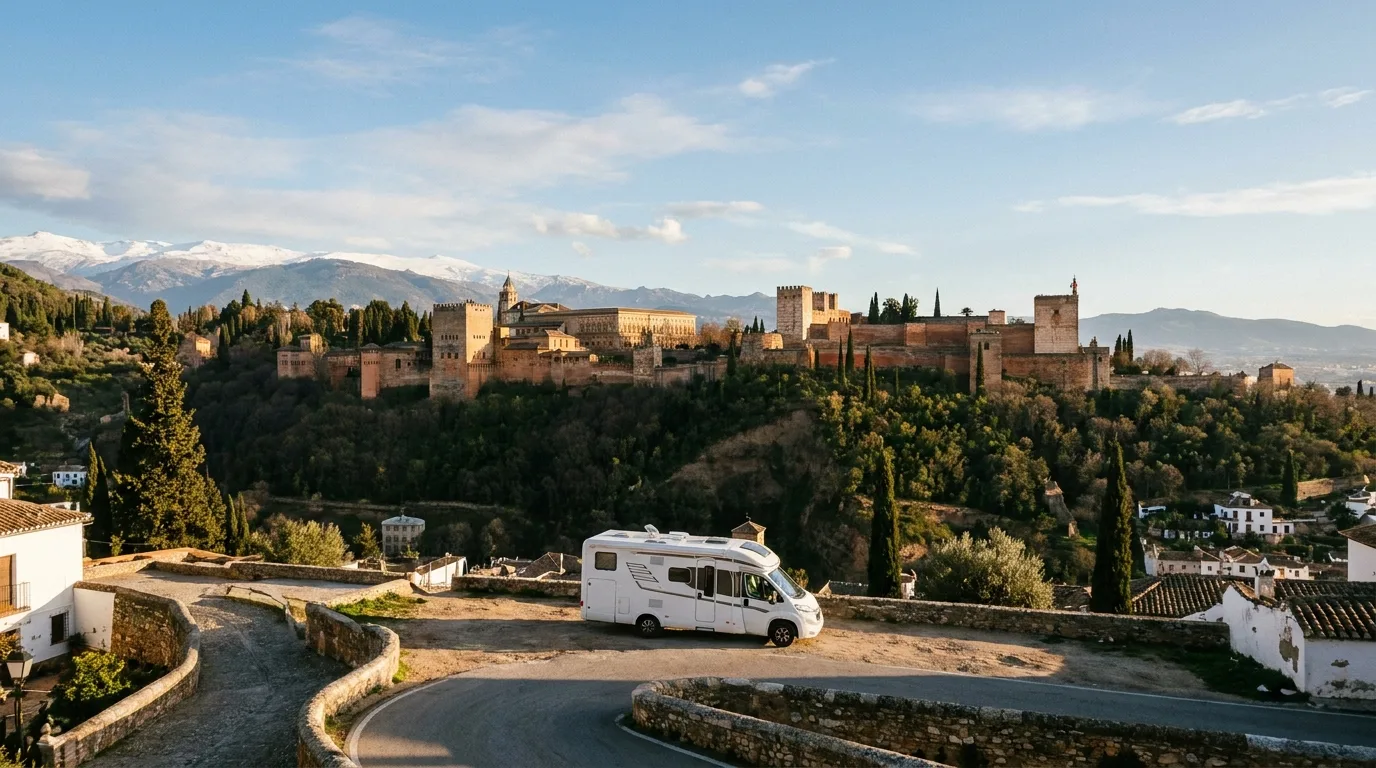
Take this trip by motorhome
Save €400–€800 on average vs. a travel agency
Duration
x daysDistance
1782 km
stops
18
Choose a date and duration that fits your preferences
About this route
Highlights
- ✦Explore the historic Alcazaba de Málaga
- ✦Admire the impressive Alhambra in Granada
- ✦Walk through the Mezquita de Córdoba
- ✦Visit the majestic Catedral de Sevilla
- ✦Enjoy the view from the Balcón de Europa in Nerja
- ✦See the spectacular Puente Nuevo in Ronda
- ✦Discover the white villages of Las Alpujarras
The route
Stop 1
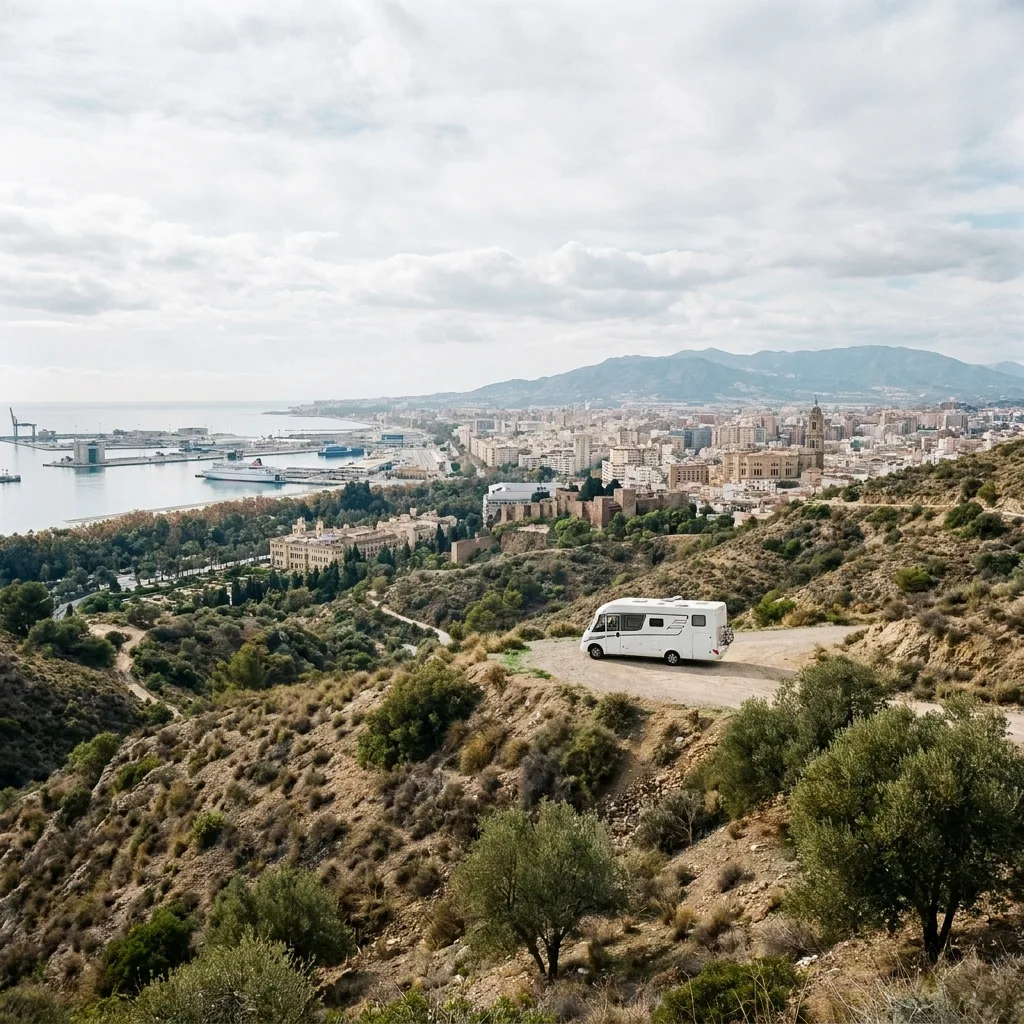
Málaga
Málaga combines Moorish architecture with the lively atmosphere of a Mediterranean port city. The Moorish palace complex Alcazaba de Málaga showcases refined gardens. Higher up, the fourteenth-century Castillo de Gibralfaro offers panoramic views of the city and the sea. In the car-free city center stands the Catedral de Málaga, recognizable by its unfinished tower La Manquita. Narrow streets full of tapas bars, the lively harbor quay, and the city beach La Malagueta define the pleasant Mediterranean atmosphere.
Stop 2
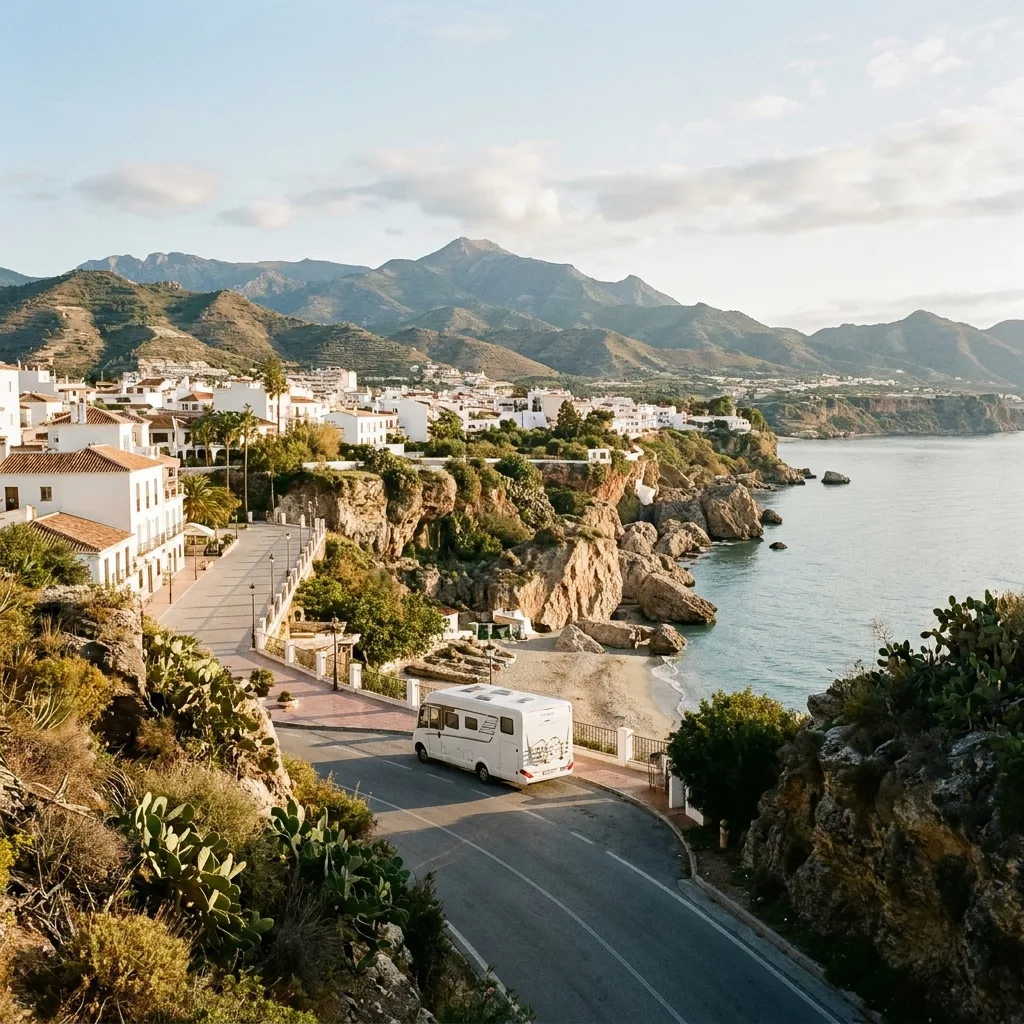
Nerja
Nerja captivates with its Balcón de Europa, a rocky outcrop towering high above the Mediterranean Sea. Explore the Cueva de Nerja, a cave system almost five kilometers long with a 32-meter-high stalactite. Wander through the charming whitewashed streets leading to Playa de Burriana. Or discover the rugged gorges of the Río Chillar on foot by following the riverbed. Experience the lively atmosphere of this coastal town at the foot of the Sierra Almijara on the terraces along the sea.
Stop 3
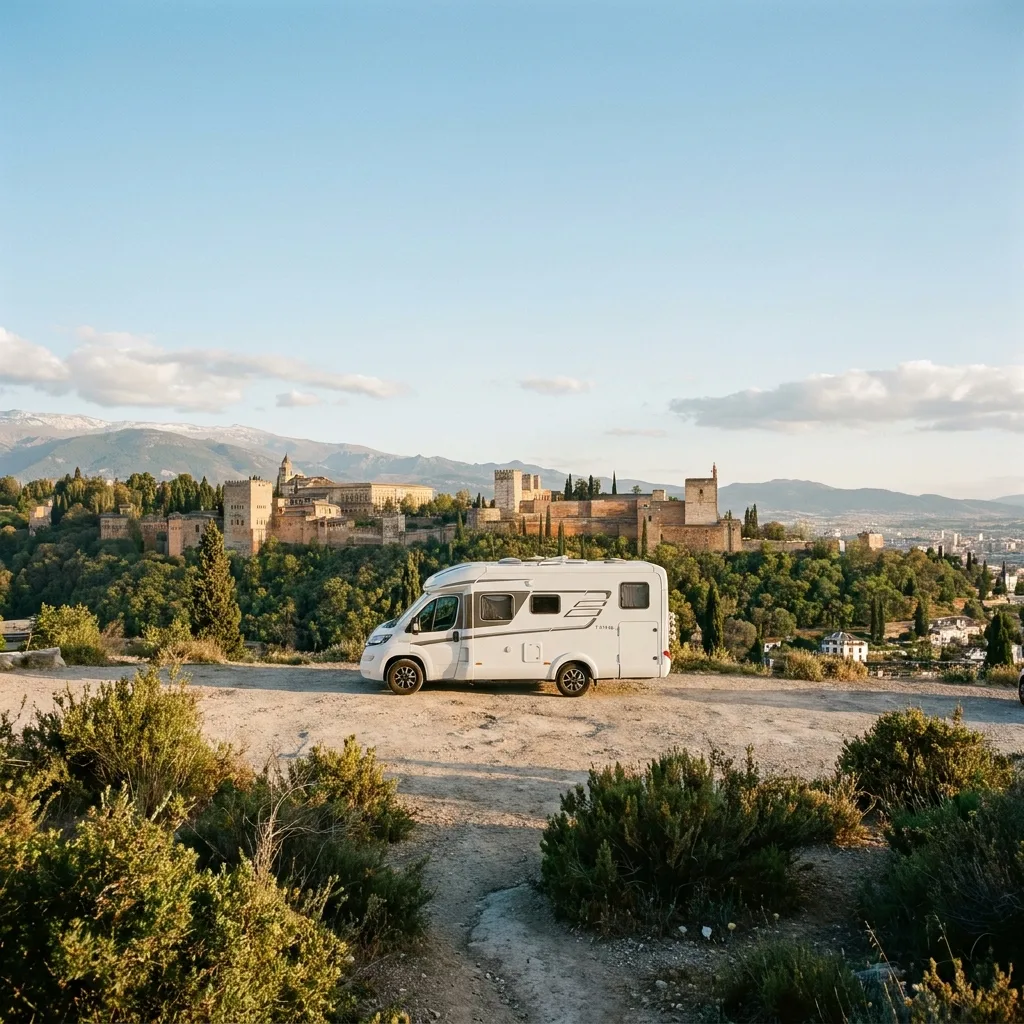
Granada
Granada is an Andalusian city at the foot of the Sierra Nevada, dominated by the thirteenth-century Alhambra palace complex and the Generalife gardens. You can wander through the whitewashed streets of the medieval Albaicín district, where Moorish influences remain visible in the architecture and tea houses. From the viewpoints in this district, you have views of the Sierra Nevada mountain peaks and the city's fortifications.
Stop 4
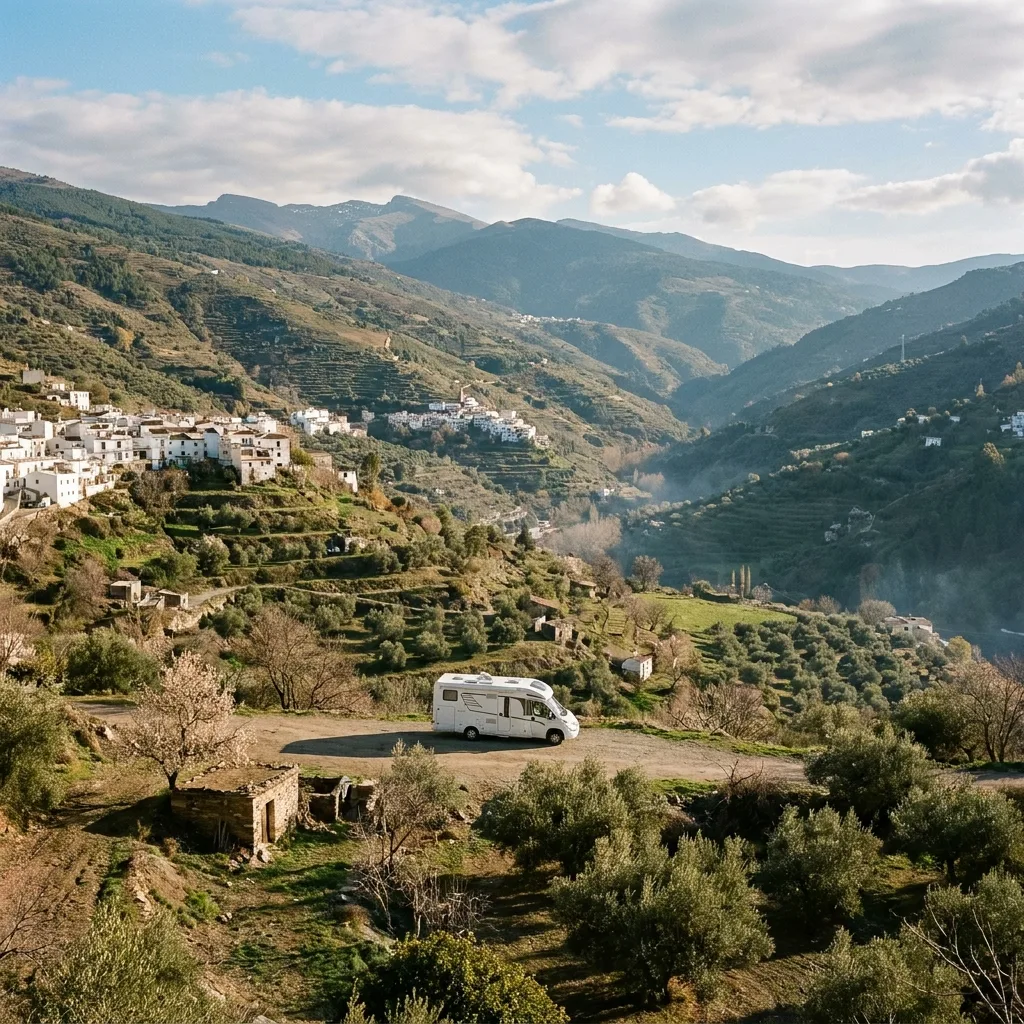
Las Alpujarras
Las Alpujarras is a mountainous region located on the southern slopes of the Sierra Nevada in Andalusia, characterized by its white villages of Moorish architecture. The towns of Pampaneira, Bubión, and Capileira are arranged in a stepped fashion against the hillsides at elevations exceeding 1400 meters. Ancient irrigation channels transport meltwater past houses featuring flat roofs and distinctive chimneys. Hiking trails interconnect the villages, and visitors can explore local weaving mills offering colorful rugs.
Stop 5
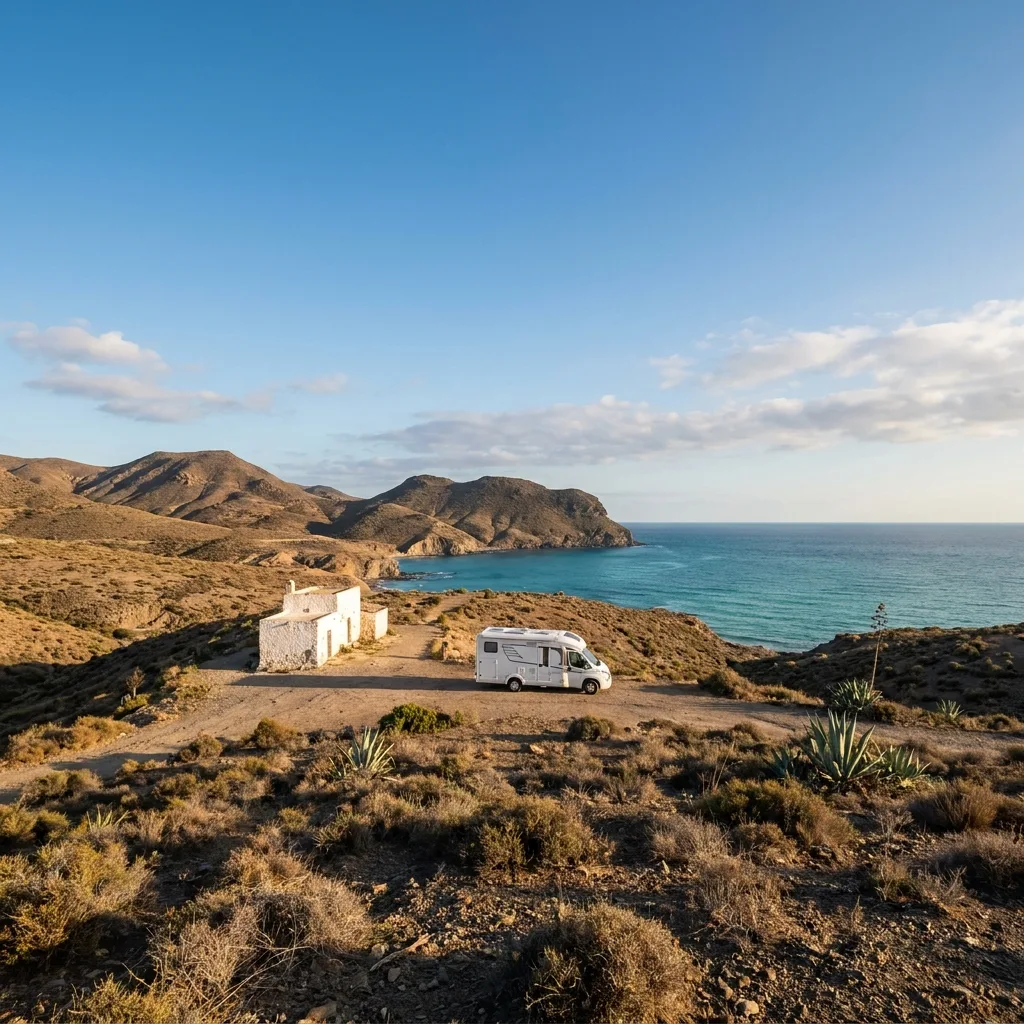
Cabo de Gata
Cabo de Gata-Níjar is a 38,000-hectare volcanic natural park in Eastern Andalusia. At Arrecife de las Sirenas, sharp rock formations jut out from the Mediterranean Sea, while flamingos inhabit the salt flats. Visit sandy beaches such as Playa de los Genoveses and Playa de Mónsul, nestled between coastal cliffs. White fishing villages contrast with the dry, desert-like interior.
Stop 6
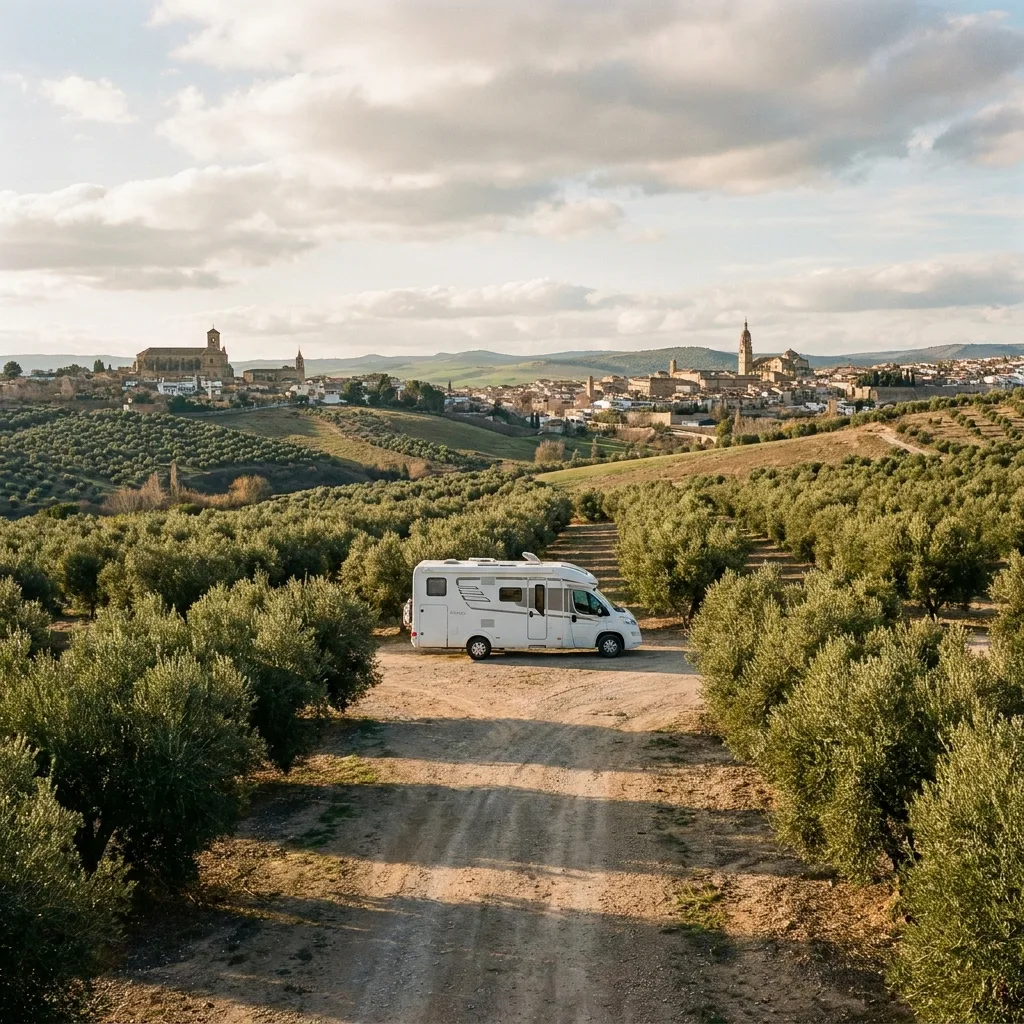
Úbeda
Úbeda transports you back to the Renaissance with a collection of sixteenth-century palaces, among the best-preserved in Europe. On the Plaza de Vázquez de Molina stands the Capilla del Salvador with a richly decorated facade full of sculptures. Nearby, you can admire the elegant Palacio de las Cadenas with a courtyard full of slender columns. Narrow streets full of historical grandeur lead to the city wall, where you can overlook the olive groves of the Guadalquivir Valley.
Stop 7
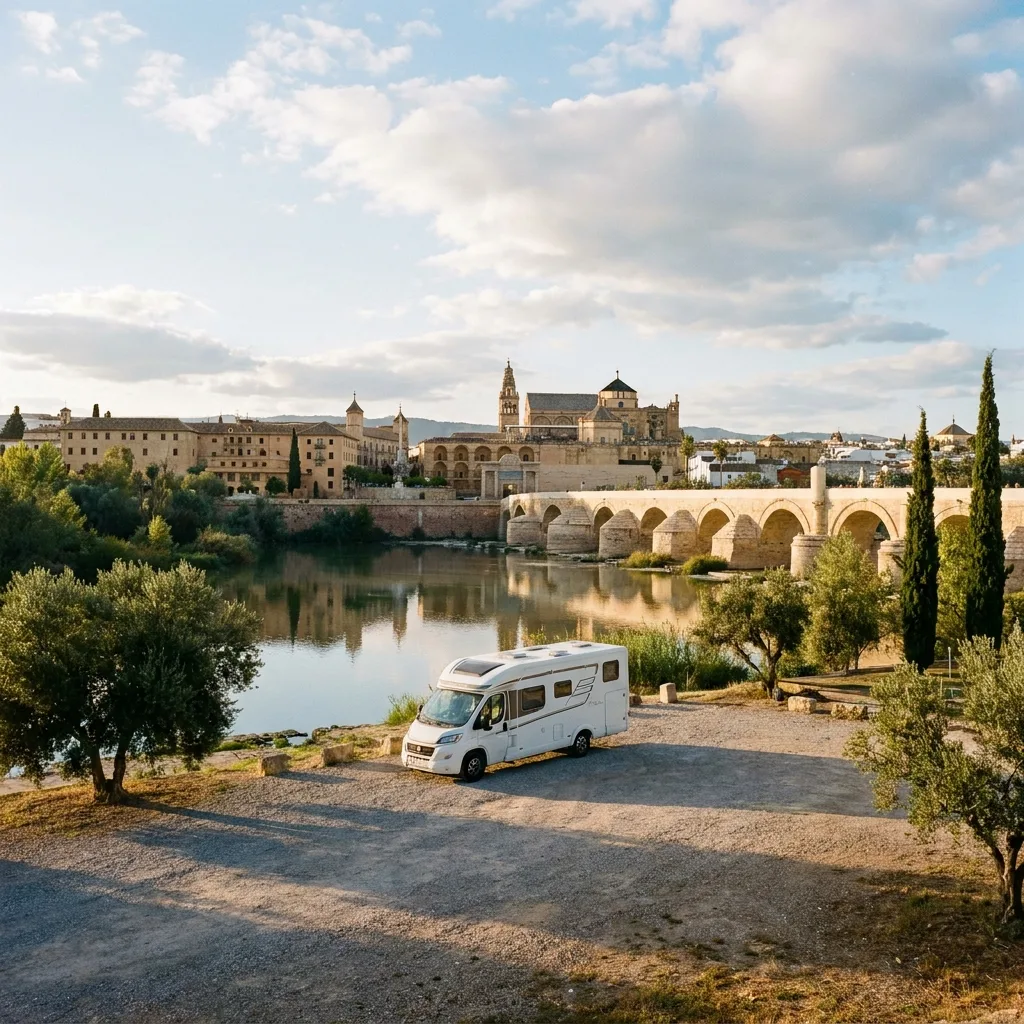
Córdoba
Córdoba in Andalusia is known for the Mezquita, an eighth-century cathedral-mosque with a forest of over eight hundred marble columns and red-and-white arches. You can walk across the Puente Romano, a Roman bridge from the first century BC that spans the Guadalquivir River. In the Jewish Quarter Judería, you will find narrow alleys and the Alcázar de Córdoba with its fourteenth-century terraced gardens and water features.
Stop 8
Sevilla
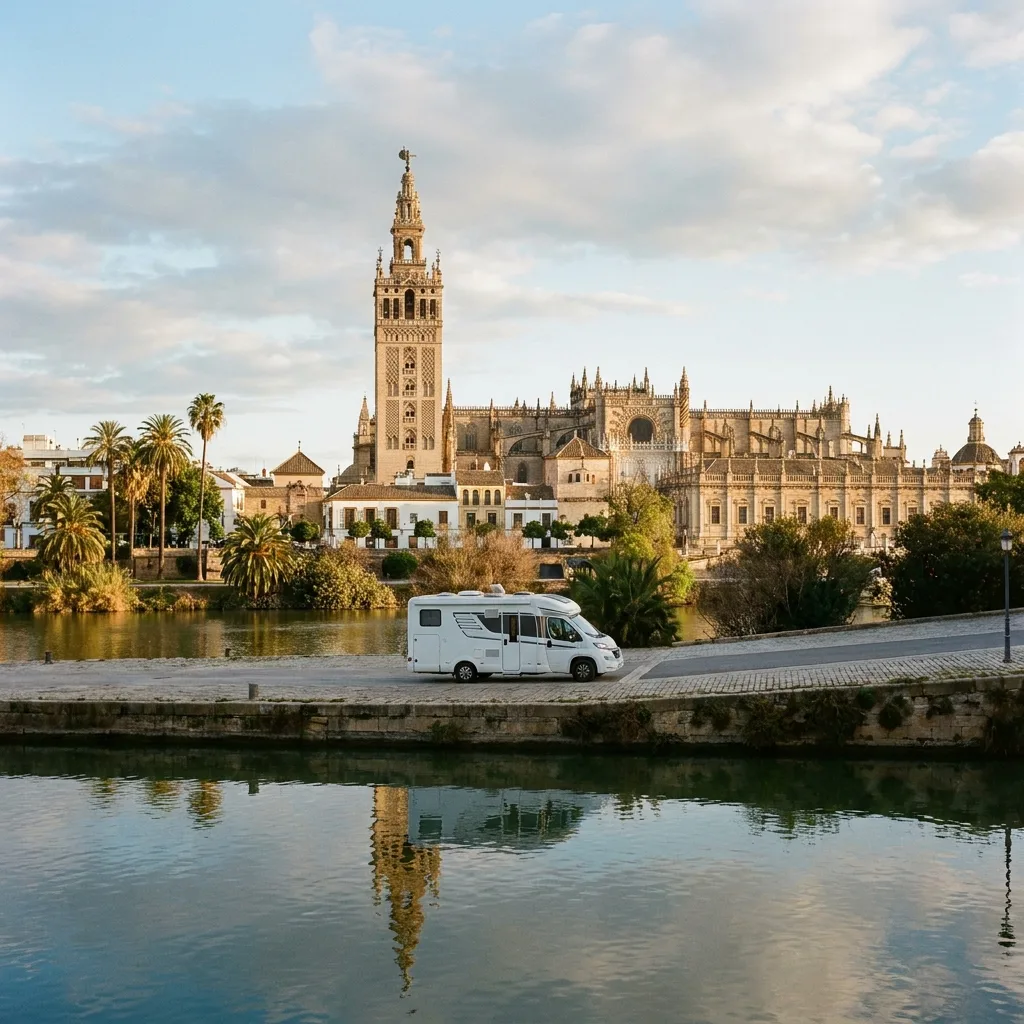
Seville is the capital of Andalusia and houses the largest Gothic cathedral in the world with the Giralda tower. Here you visit the Real Alcázar, a royal palace with Moorish architecture and gardens. At the Plaza de España, built for the 1929 exhibition, you'll see mosaics of all Spanish provinces along a semicircular canal. Along the Guadalquivir river stands the thirteenth-century Torre del Oro.
Stop 9
Doñana
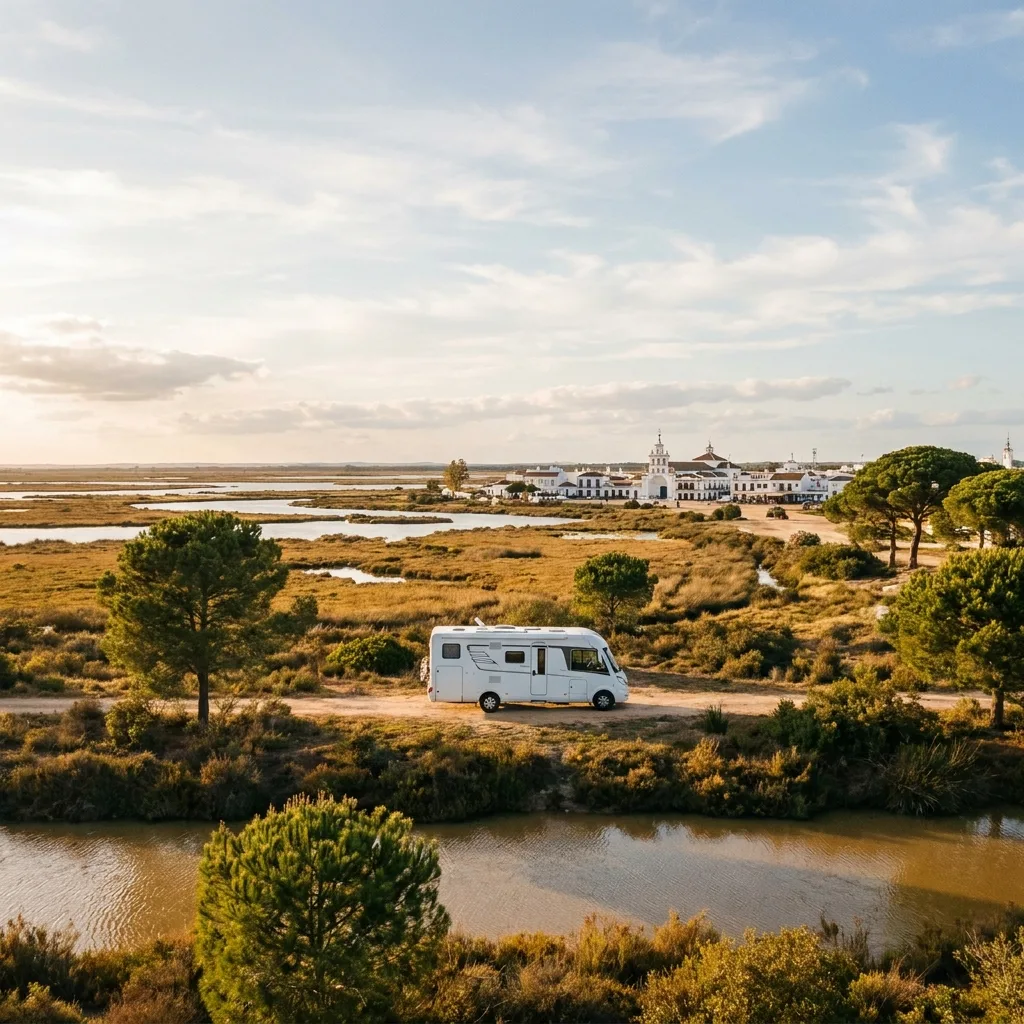
Doñana National Park in Western Andalusia covers over 50,000 hectares of marshes, shifting dunes, and pine forests. In this UNESCO World Heritage site, you will find the rare Iberian lynx and the Marismas del Guadalquivir, which seasonally alternate between dry plains and bird-rich lagoons. The village of El Rocío has unpaved sandy roads where you can see horses and carriages among the whitewashed houses. Thousands of pilgrims gather annually at the Ermita El Rocío.
Want to actually take this trip?
We put together the complete package for you — motorhome, ferry, campsites — in one personal email.
Stop 10
Jerez de la Frontera
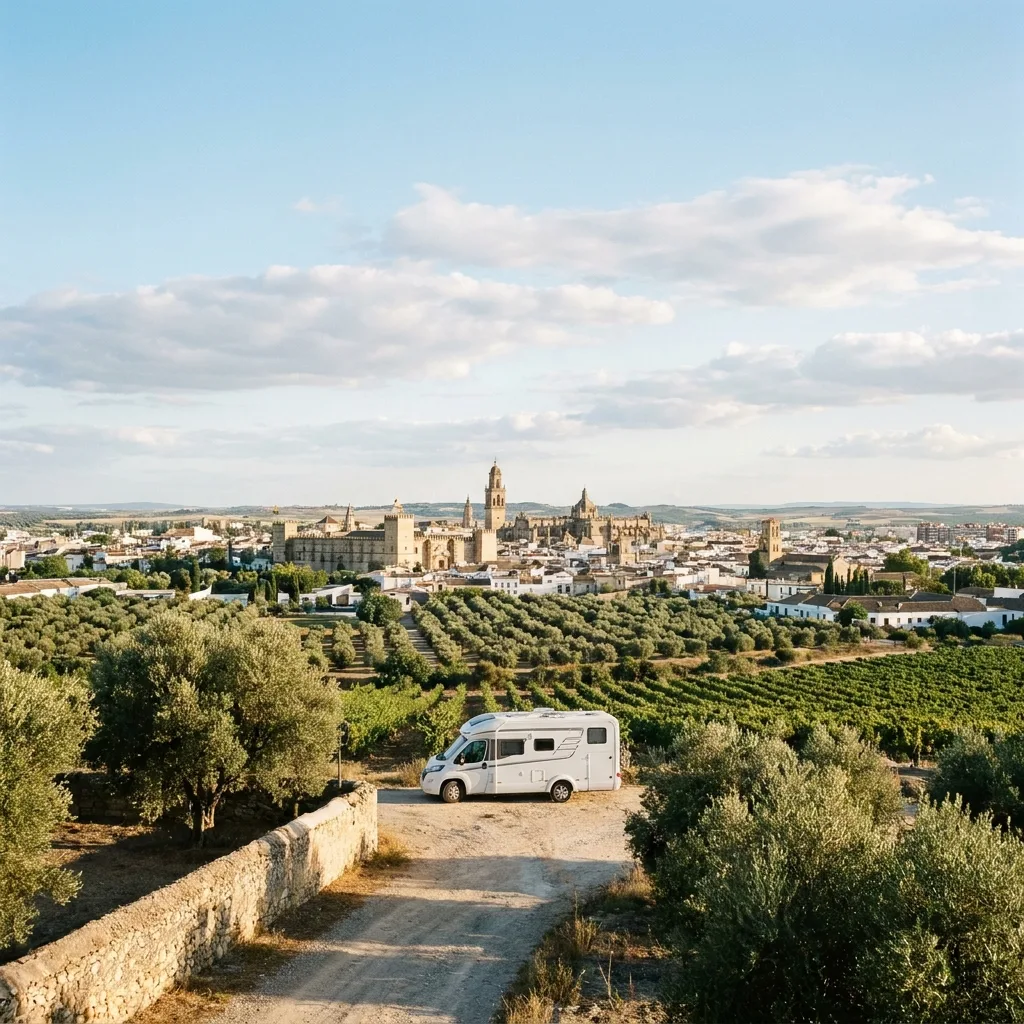
Jerez de la Frontera is the birthplace of flamenco and the center of sherry production in Western Andalusia. The Alcázar de Jerez is an eleventh-century Moorish fortress with an octagonal defensive tower and Arabian baths. The eighteenth-century Catedral de Jerez combines Baroque and Neoclassical styles, and at the Real Escuela Andaluza del Arte Ecuestre, you can watch traditional dressage with Andalusian horses.
Stop 11
Cádiz
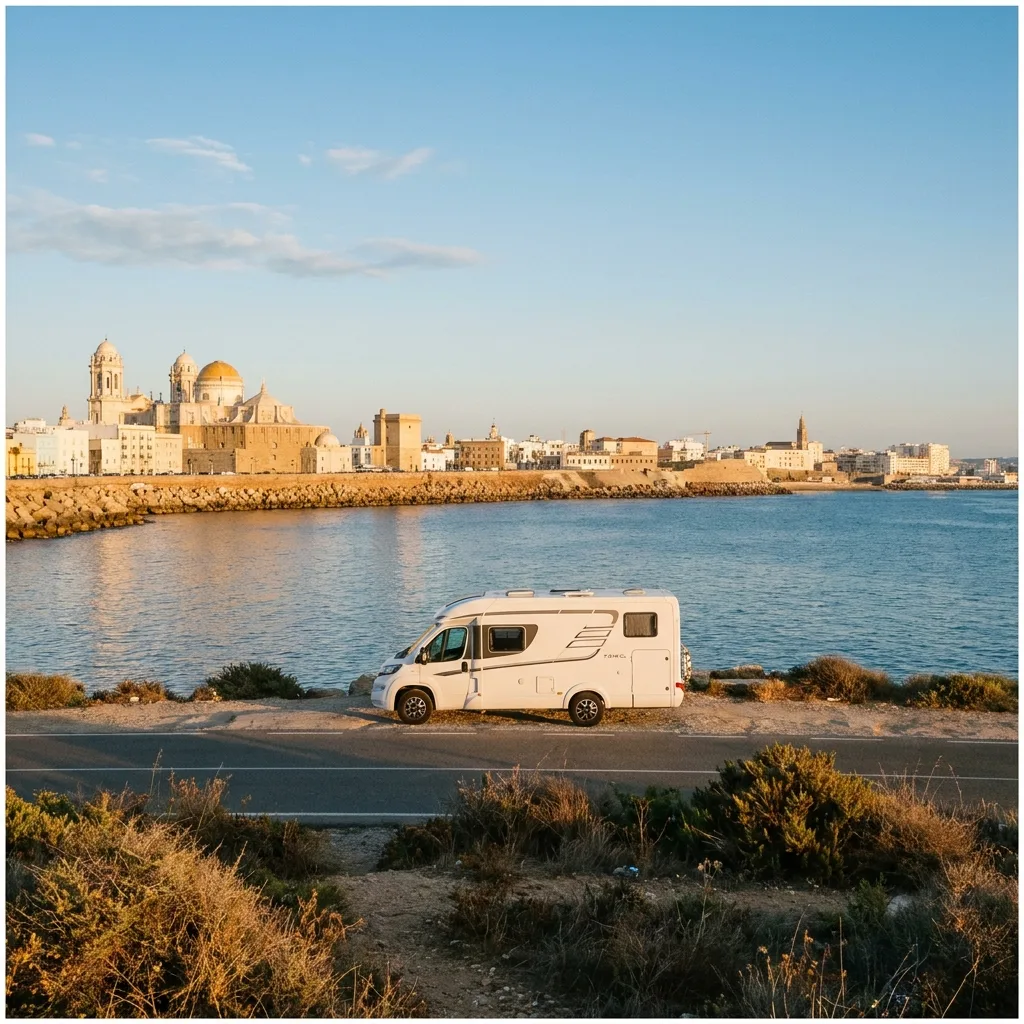
Cádiz, a port city on a narrow peninsula in the Atlantic Ocean, has a rich history dating back to antiquity. The eighteenth-century Catedral de Cádiz, with its golden dome, stands out above the quay from afar. In the El Pópulo district, you can walk past the 45-meter-high Torre Tavira, a former watchtower. The Castillo de Santa Catalina overlooks the bay, a nice spot for a quiet stroll. The city combines its maritime past with lively streets full of Spanish charm.
Stop 12
Vejer de la Frontera
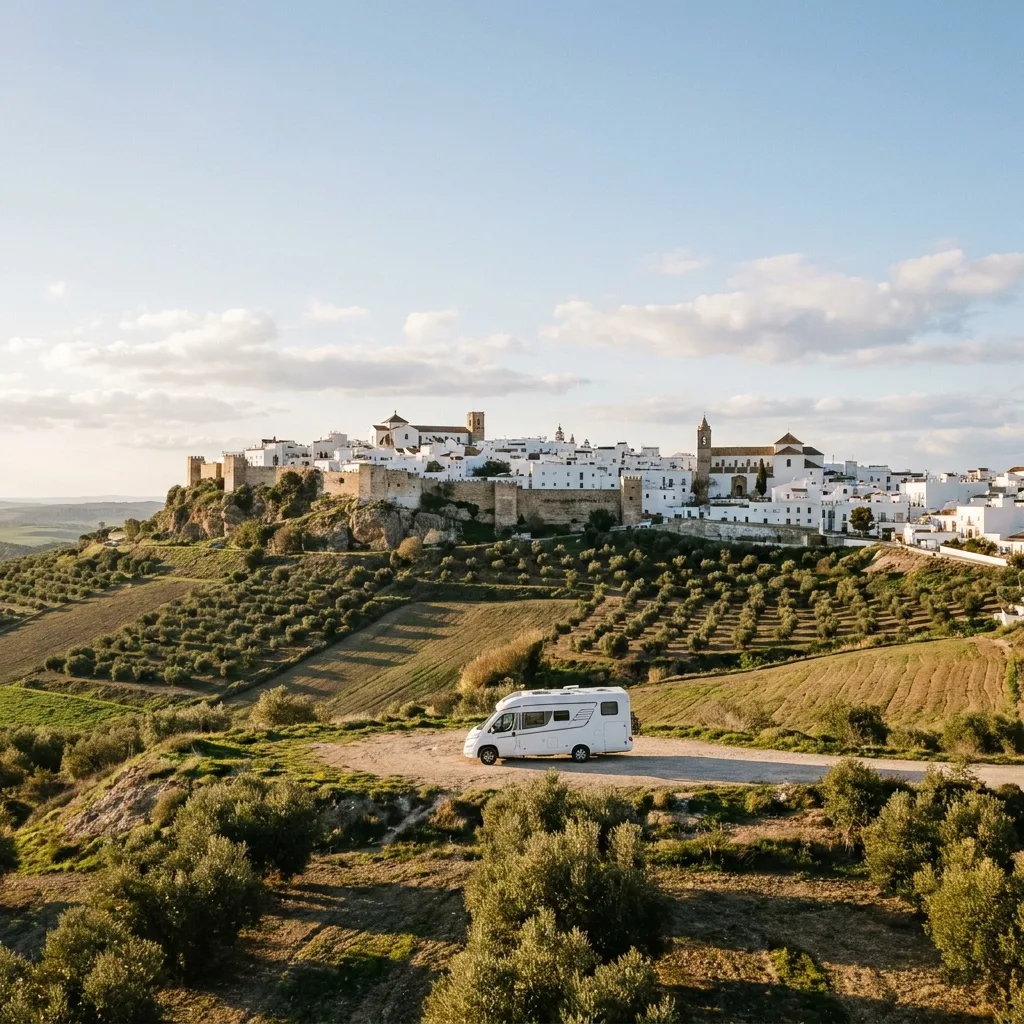
Vejer de la Frontera is situated on a 200-meter high hill on the Costa de la Luz and is surrounded by medieval city walls. In the center, you will find the Iglesia del Divino Salvador, a fourteenth-century church built on the foundations of a mosque, and the Castillo de Vejer at the highest point. In the Plaza de España, you will see a fountain with ceramic frogs, and from the walls, you can look out over the Atlantic Ocean.
Stop 13
Bolonia
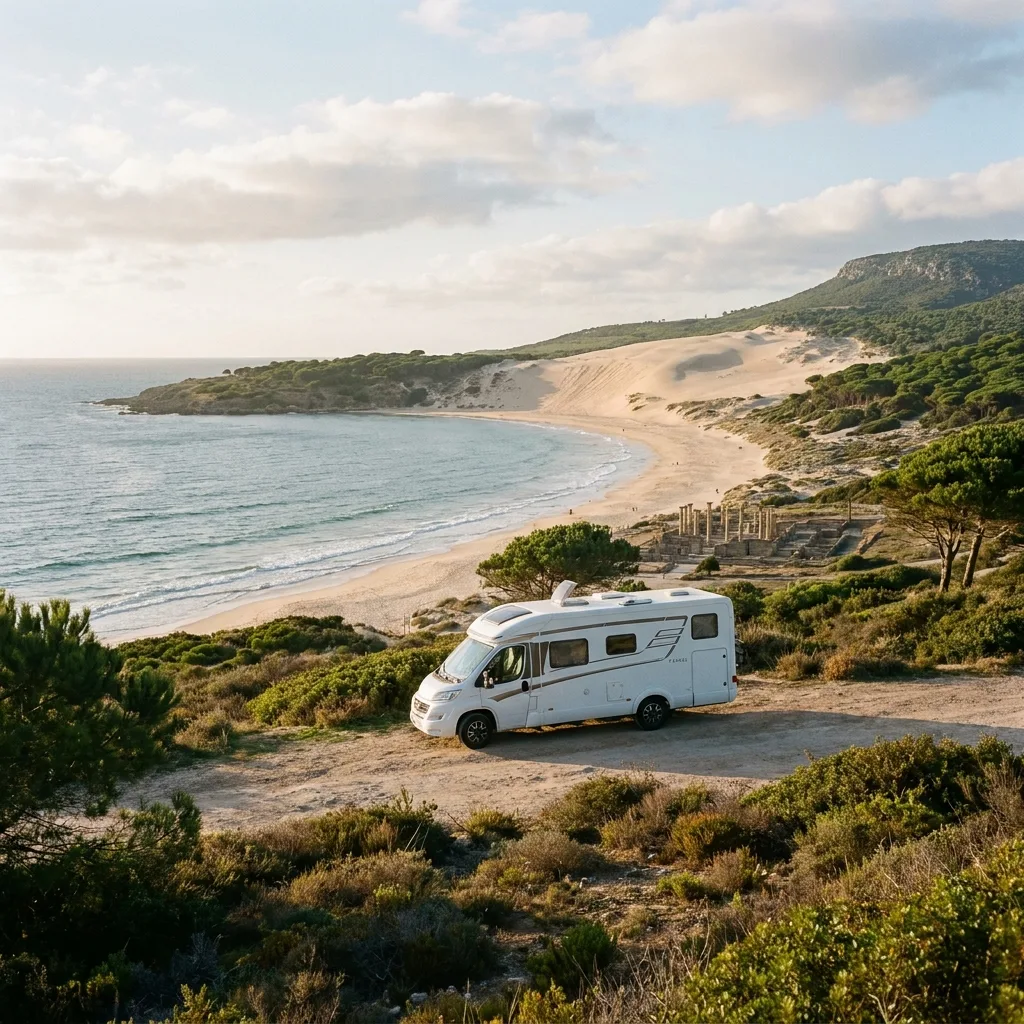
Bolonia is a coastal town on the Costa de la Luz where you will find the Roman ruins of Baelo Claudia from the second century BC. Here you can walk among the preserved columns and the theatre directly on the white sandy beach of the Atlantic Ocean. On the west side, you can climb the Duna de Bolonia, a thirty-meter-high active sand dune with views over the Strait of Gibraltar and the coast of Africa. In the surrounding dunes, cattle graze among the pine trees.
Stop 14
Tarifa
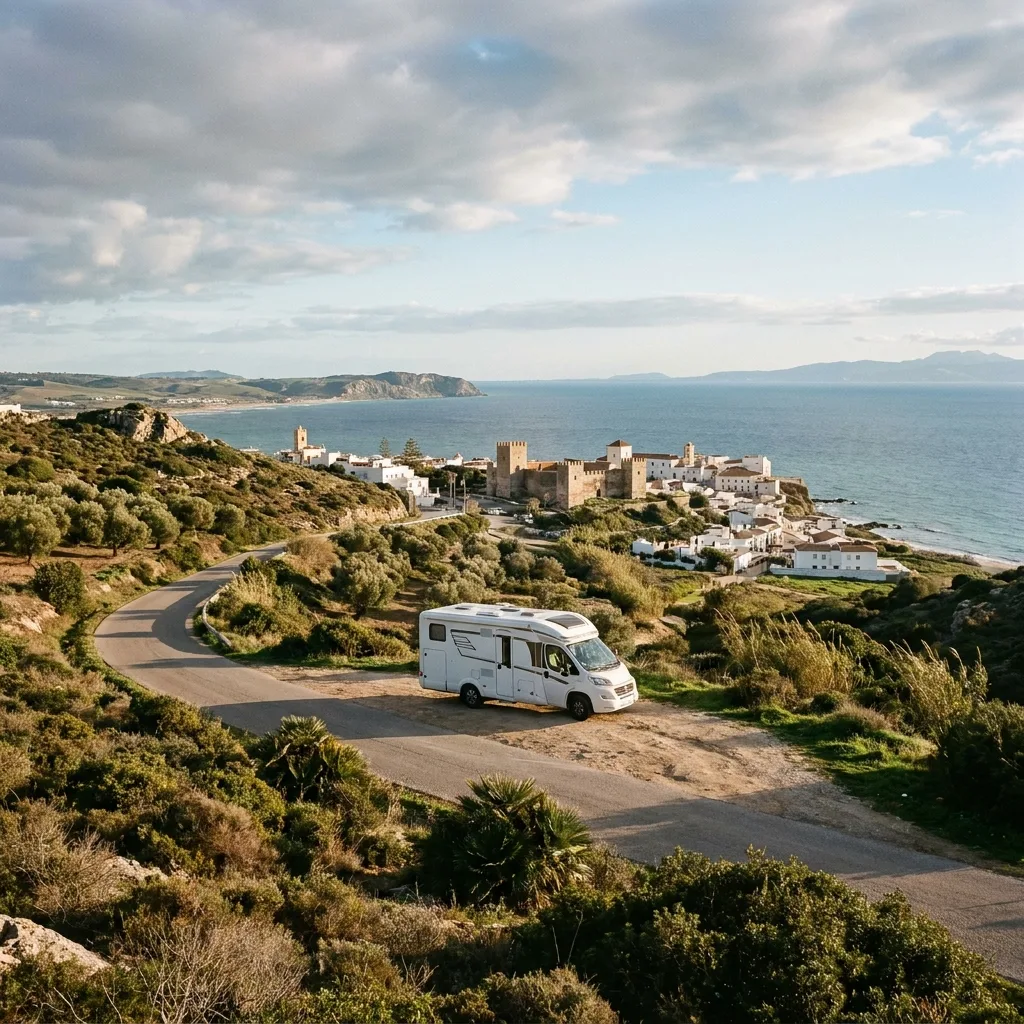
Tarifa forms the southernmost point of mainland Europe on the Strait of Gibraltar, where the Atlantic Ocean and the Mediterranean Sea meet. The tenth-century Castillo de Guzmán el Bueno and Isla de las Palomas mark the coastline; this island is the official dividing point between the two seas. The constant wind makes the sandy beaches an international centre for kitesurfers, and you can take the ferry to Morocco from the quay.
Stop 15
Sierra de Grazalema
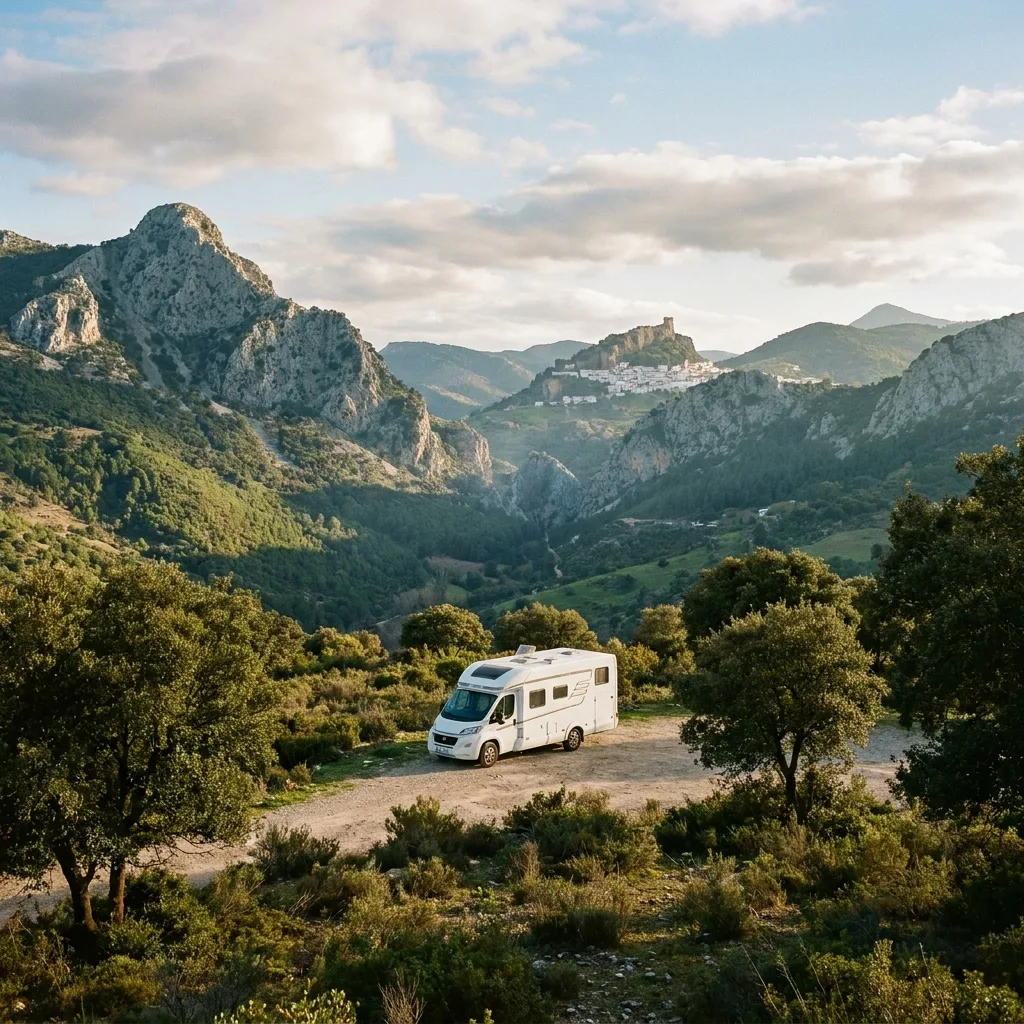
The Sierra de Grazalema is a limestone mountain range with the highest rainfall figures in Spain, making its nature lush and unique. In the El Pinsapar forest, you'll discover the rare Spanish fir. Explore the 400-meter-deep Garganta Verde gorge, where griffon vultures circle high above the cliffs. In the charming white village of Grazalema, narrow roads wind through the UNESCO Biosphere Reserve. Here, you can enjoy a tranquil atmosphere and expansive panoramas over the mountain passes.
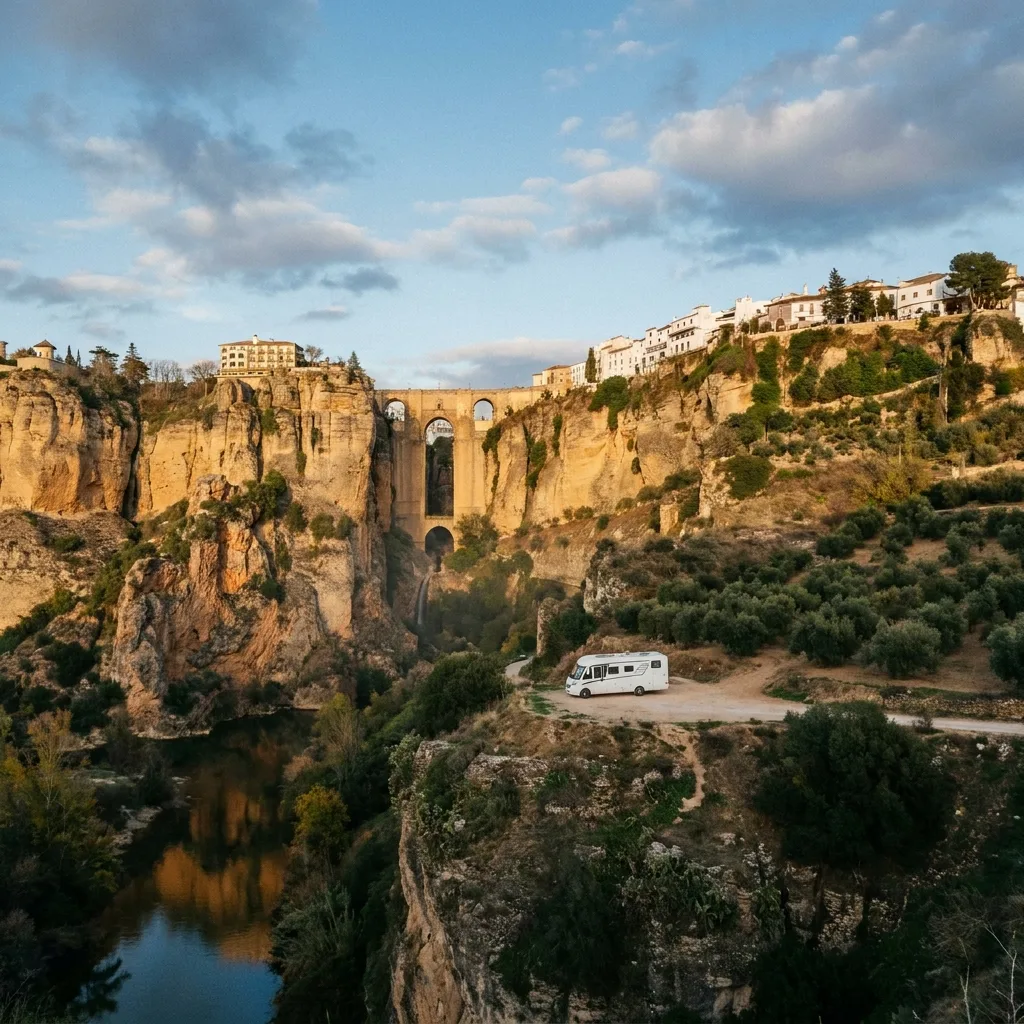
Stop 16
Ronda
Ronda is located in Western Andalusia on a rock plateau that is split in two by the 120-meter-deep Tajo de Ronda gorge. The eighteenth-century Puente Nuevo bridge connects the Moorish quarter with the newer districts above the Guadalevín river. You can walk along paths with views of the Serranía de Ronda mountains and visit the Plaza de Toros from 1785, one of Spain's oldest stone bullrings.
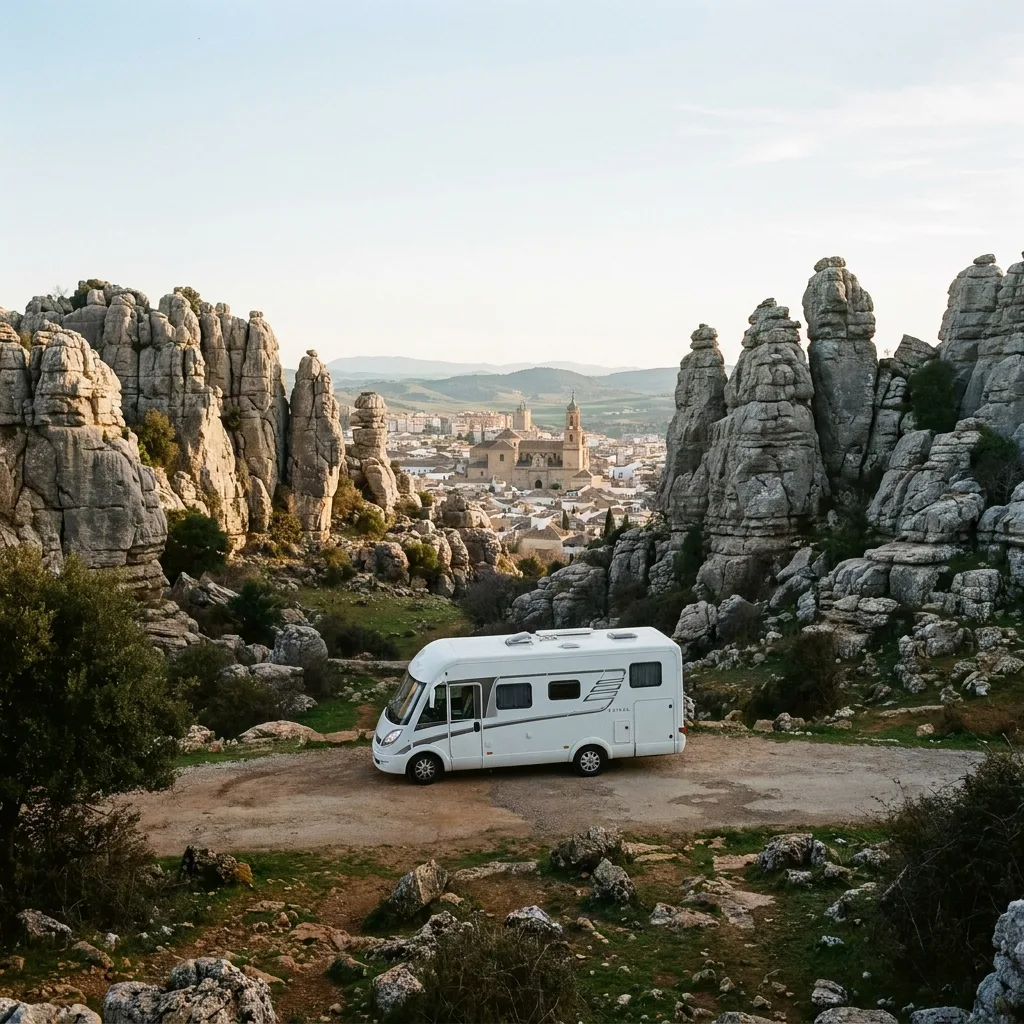
Stop 17
El Torcal
El Torcal de Antequera is a nature reserve in Andalusia with limestone formations at an altitude of 1,200 meters. You can walk along paths past erosion-formed rocks and visit the Bronze Age Dolmen de Menga in the city. From the 14th-century Moorish fortress Alcazaba, you can look out over the rooftops of Antequera and the Peña de los Enamorados rock. In the center, you'll find white buildings nestled among the olive groves.
Stop 18
Málaga
Málaga combines Moorish architecture with the lively atmosphere of a Mediterranean port city. The Moorish palace complex Alcazaba de Málaga showcases refined gardens. Higher up, the fourteenth-century Castillo de Gibralfaro offers panoramic views of the city and the sea. In the car-free city center stands the Catedral de Málaga, recognizable by its unfinished tower La Manquita. Narrow streets full of tapas bars, the lively harbor quay, and the city beach La Malagueta define the pleasant Mediterranean atmosphere.
Ready to hit the road?
We'll email you a personal travel proposal within 24 hours — motorhome, route and full cost overview included. Save €400–€800 on average vs. a travel agency.
No packages, no middlemen. Learn how it works
Camproads gave me a lot of inspiration for our campervan trip. The routes are beautiful, with a good balance of nature and city life, and the route generator made planning super easy. It's also really handy that there are so many good camping options at the locations, and that you can easily find the campervan that suits your needs and compare prices. This way, we can plan everything ourselves and book the campervan directly with the rental company. That's much cheaper than an organized trip!
Michiel van de Bunt
February 2026
What a difference from how I used to plan trips. Through Camproads, I put together a complete campervan trip in just a few minutes. It's so easy to use, and you can customize everything to your liking. The ability to choose your travel pace makes it even more enjoyable, especially now that we're traveling with a baby for the first time.
Alieke Zelhorst
February 2026