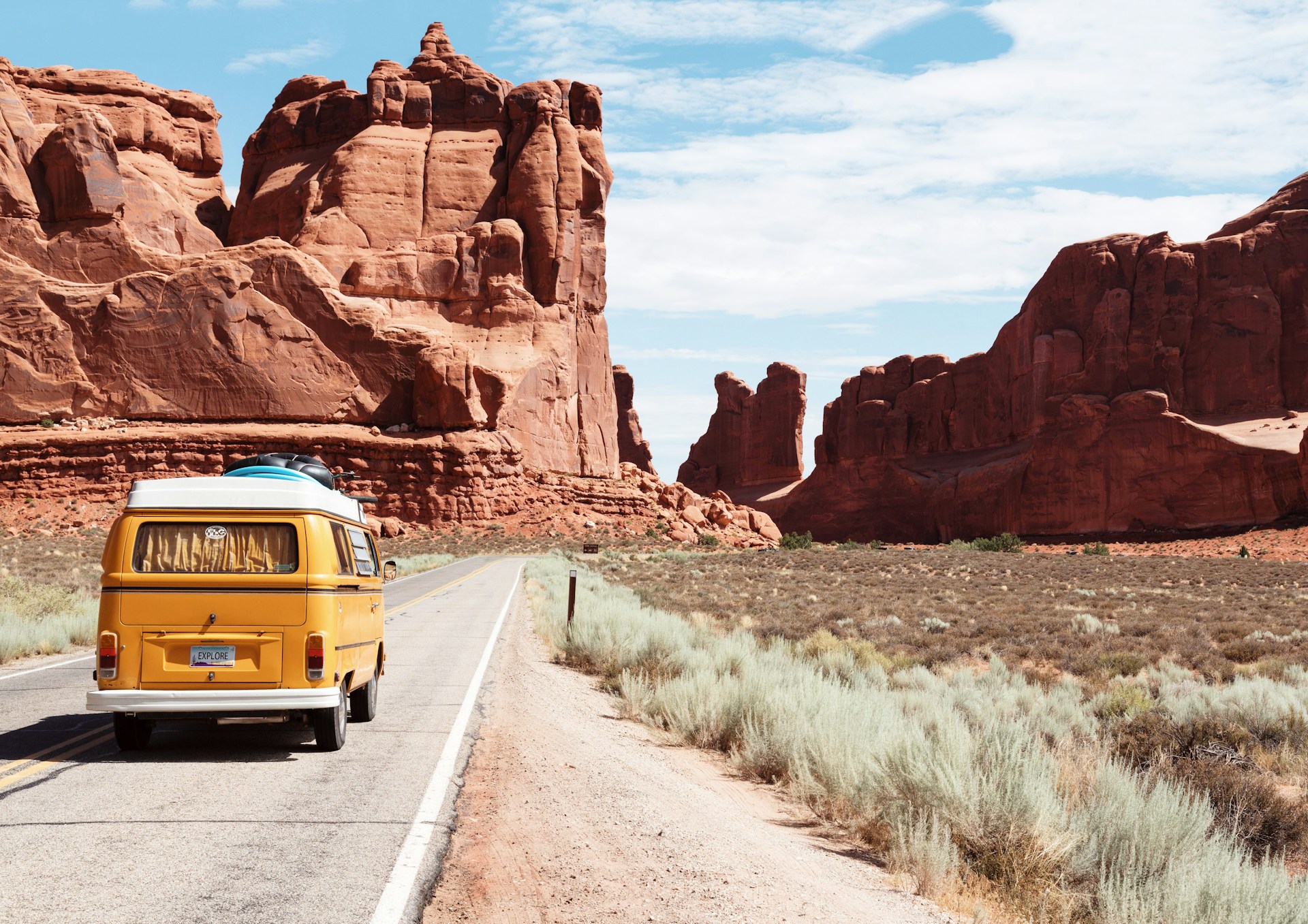
Take this trip by motorhome
Save €400–€800 on average vs. a travel agency
Duration
x daysDistance
0 km
stops
0
Choose a date and duration that fits your preferences
About this route
Highlights
- ✦Geniet van het uitzicht vanaf de Pfänderbahn over de Bodensee
- ✦Ontdek ambachtelijke tradities in het Werkraum Bregenzerwald
- ✦Rijd over de spectaculaire Silvretta-Hochalpenstrasse met talloze bochten
- ✦Bewonder het iconische Goldene Dachl in het hart van Innsbruck
- ✦Verken de indrukwekkende gletsjerwereld bij de Stubai Gletscher
- ✦Beleef de adembenemende panorama's tijdens de rit over de Timmelsjoch
The route
Stop 1
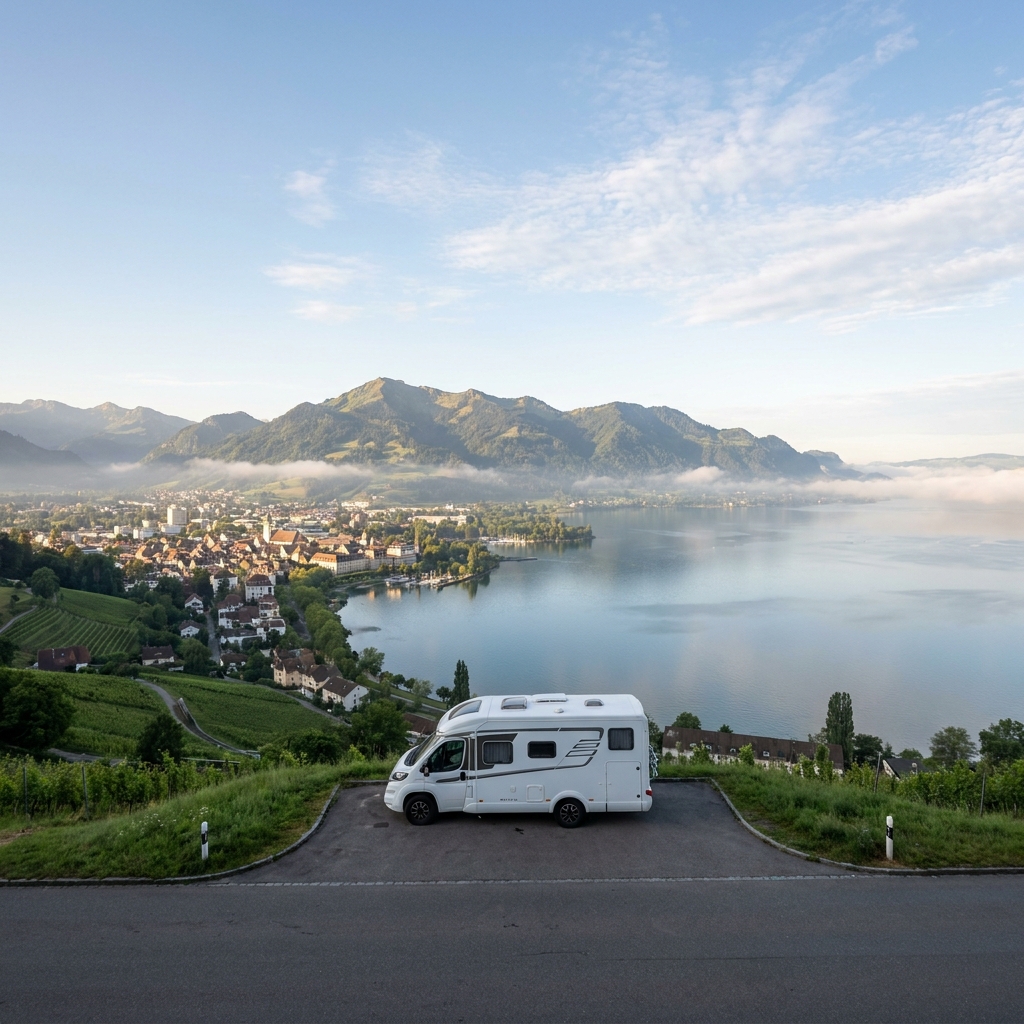
Bregenz & Lake Constance
Bregenz is located on the eastern shore of Lake Constance, combining a historic city center with a modern cultural scene. The city is renowned for the Seebühne, where large-scale open-air operas are performed during the Bregenz Festival. From the quay, you'll enjoy expansive views of the vast body of water that connects three countries. The Pfänderbahn takes you to the summit of the local mountain in just a few minutes, offering panoramic vistas of the Alps and the lake. Along the shores, you'll find extensive parks and walking trails that invite long strolls along the water. Water sports enthusiasts can go sailing, paddleboarding, or take a relaxing boat trip to surrounding towns. In the upper town, explore medieval streets and the distinctive Martinsturm with its wooden dome. This blend of maritime atmosphere and mountain landscape makes it a versatile stop in the country's far west.
Stop 2
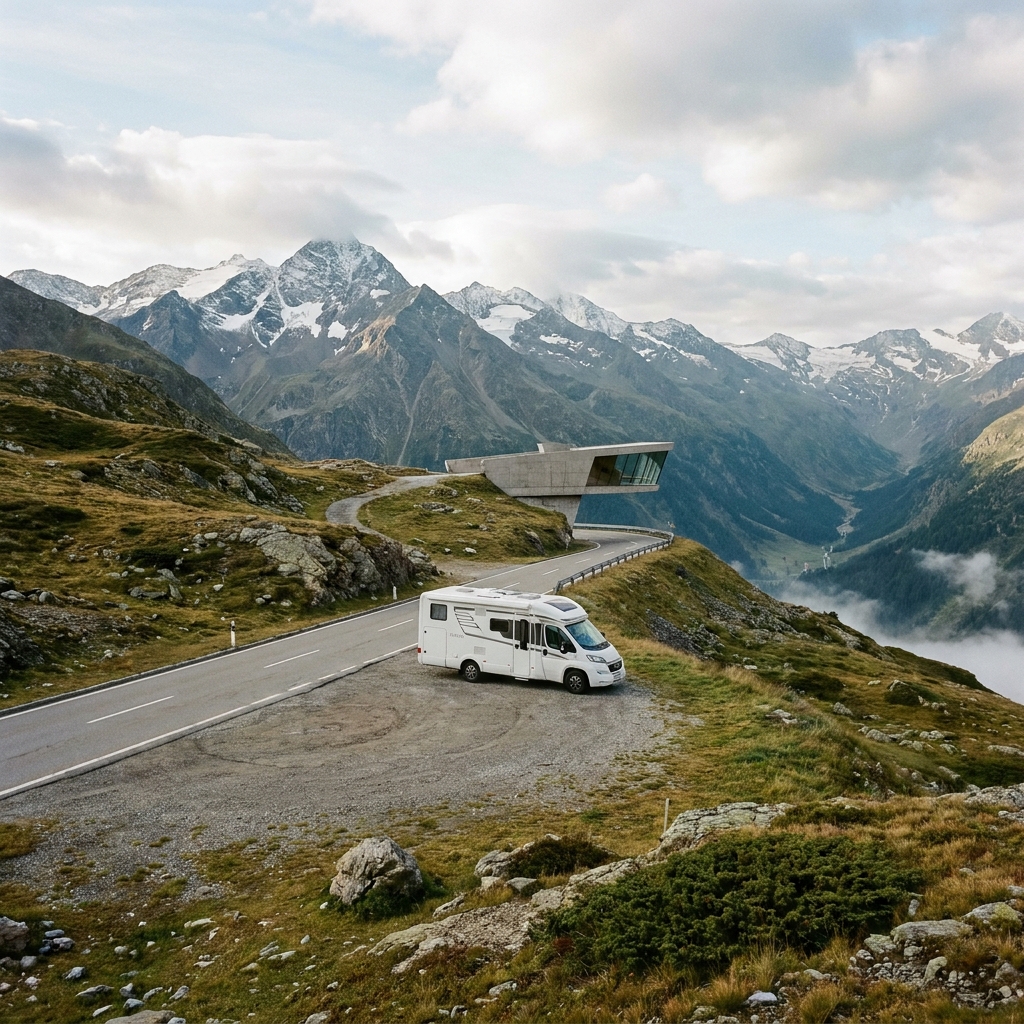
Timmelsjoch
The Timmelsjoch connects the Austrian Ötztal with the Italian Passeiertal via an impressive high-alpine route. Travelers climb to an elevation of over 2,500 meters along steep rock faces and deep abysses. Along the way, various architectural sculptures of the Timmelsjoch Experience offer information about the history and nature of the pass. The Top Mountain Crosspoint houses a unique motorcycle museum and a modern toll station on the border. At the top of the pass, a panoramic view awaits of the surrounding peaks of the Ötztaler Alps. The road is characterized by sharp hairpin bends and vast mountain meadows where cattle often graze. Due to snowfall, the route is only accessible to traffic in the summer months.
Stop 3
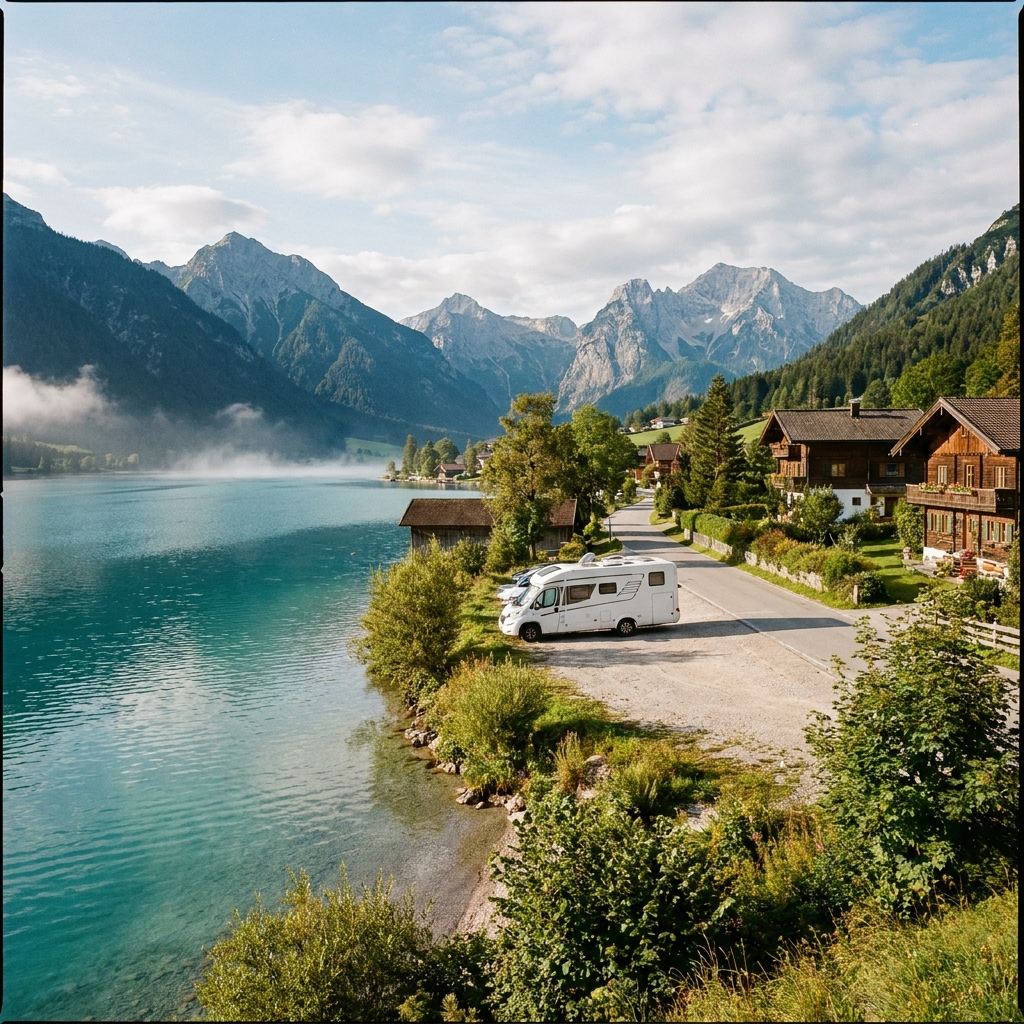
Achensee
The Achensee is nestled between the Karwendel Mountains and the Rofan Mountains and is known as Tyrol's largest lake. Its emerald-green water and steep shores give the area an almost fjord-like character. Visitors can take the Karwendel cable car up for panoramic views of the deep blue water. On the lake itself, historic steamboats of the Achenseeschifffahrt operate, connecting the various villages along the shore. Hikers will find countless trails in the adjacent nature park, ranging from relaxed lakeside paths to challenging mountain hikes. The constant wind also makes the water a popular spot for sailors and surfers. Due to its central location in northern Tyrol, it is a versatile destination for lovers of water and mountains.
Stop 4
Bregenzerwald
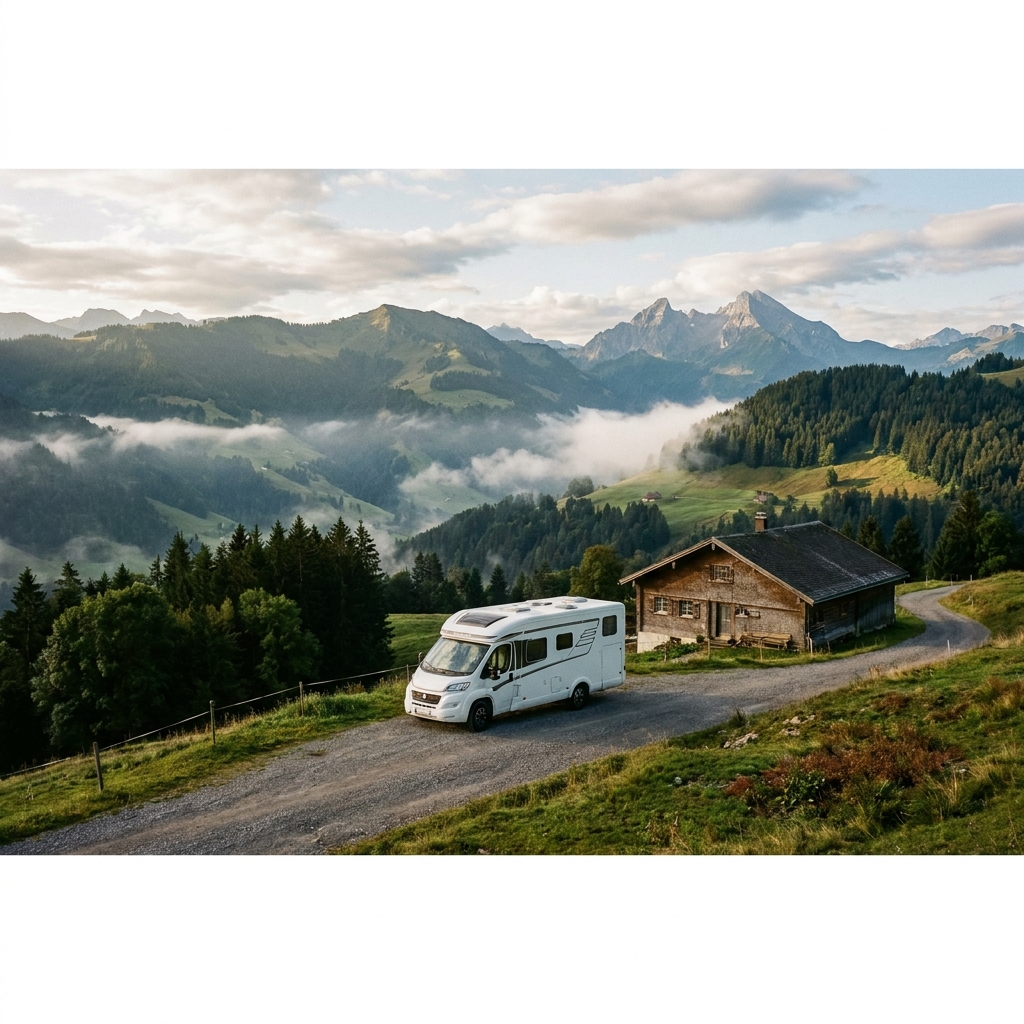
In the west of Austria lies the Bregenzerwald, a region where traditional agriculture and modern wooden architecture go hand in hand. The rolling landscape is characterized by vast alpine meadows and striking mountain peaks such as the Kanisfluh. In villages like Andelsbuch, visitors will find the Werkraum Bregenzerwald, a center that showcases local craftsmanship and contemporary design. Several cable cars provide access to mountain areas like the Diedamskopf, where panoramic views of the region and Lake Constance await. The region is known for the KäseStrasse (Cheese Road), which leads past numerous small-scale farms and cheese dairies in the valley. Well-maintained hiking trails traverse the deep valleys and lead to secluded mountain lakes and authentic wooden settlements. The harmony between nature and human architecture makes a stay here a peaceful experience in the Alps. This area offers a distinctive character that differs significantly from the more touristy valleys in the central Alps.
Stop 5
Arlberg
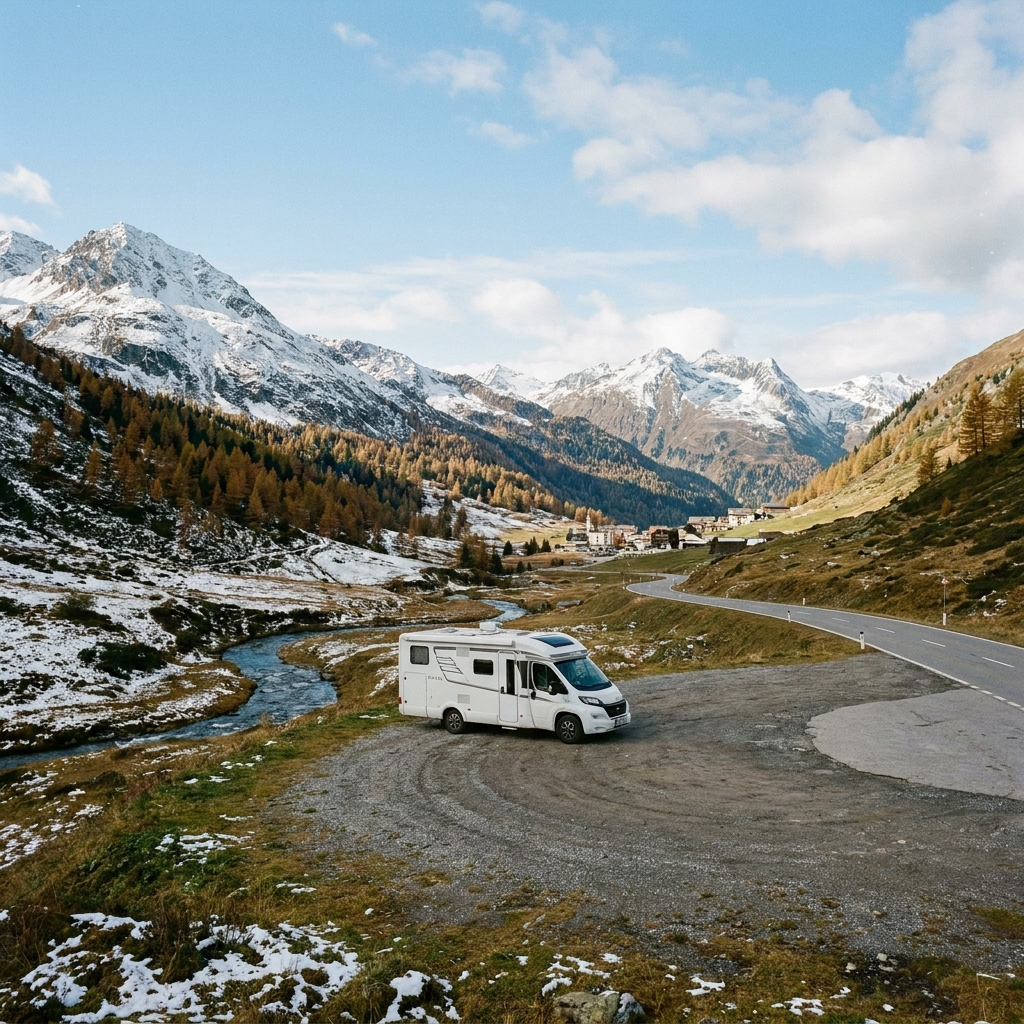
The Arlberg forms the natural border between the federal states of Vorarlberg and Tyrol. This mountain range is known for the impressive Arlberg Pass, which forms an important connection in the Alps. Visitors will find vast mountain pastures and rugged rock peaks here, inviting them to high-altitude hikes. The cable car to the summit of the Valluga offers panoramic views of the surrounding mountain ranges. Along the winding roads of the Flexen Pass, travelers pass historical galleries and steep rock faces. In the villages of St. Anton and Lech, traditional Alpine architecture has been well preserved. The region offers a tranquil retreat amidst high mountain peaks and deep valleys. The landscape here constantly changes due to the shifting light on the limestone rocks.
Stop 6
Montafon
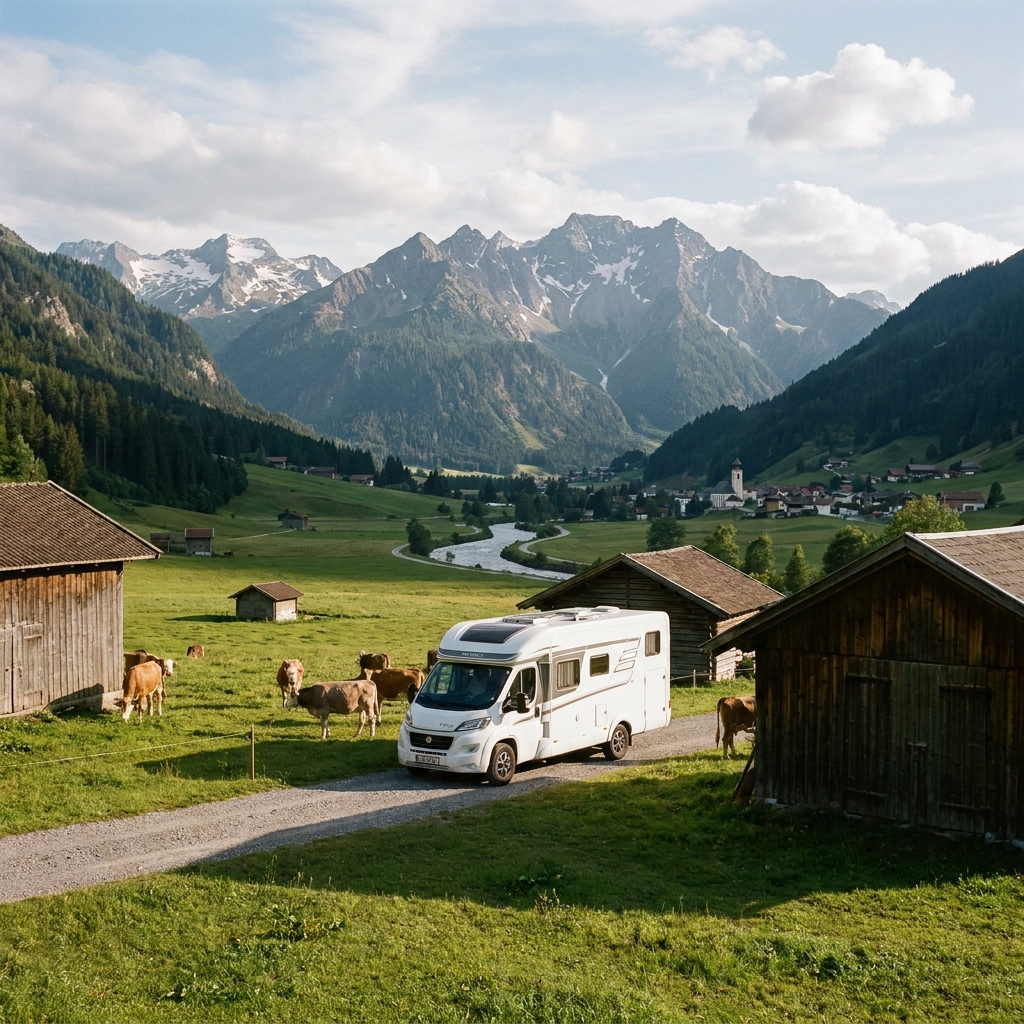
Montafon extends as an impressive high-alpine valley in the far west of Austria. The valley is surrounded by the striking peaks of the Silvretta, Rätikon, and Verwall mountain ranges. Along the banks of the Ill lie characteristic villages that have carefully preserved their alpine traditions. The Silvretta-Bielerhöhe forms the literal high point of the valley, offering panoramic views over the turquoise waters of the Silvretta Reservoir. Hikers find challenging routes here to the foot of Piz Buin, the highest mountain in the region. In summer, cattle graze on the vast alpine meadows that adorn the flanks of the mountains. The winding roads lead past steep rock faces and dense forests to the border with Tyrol.
Want to actually take this trip?
We put together the complete package for you — motorhome, ferry, campsites — in one personal email.
Stop 7
Lech Valley
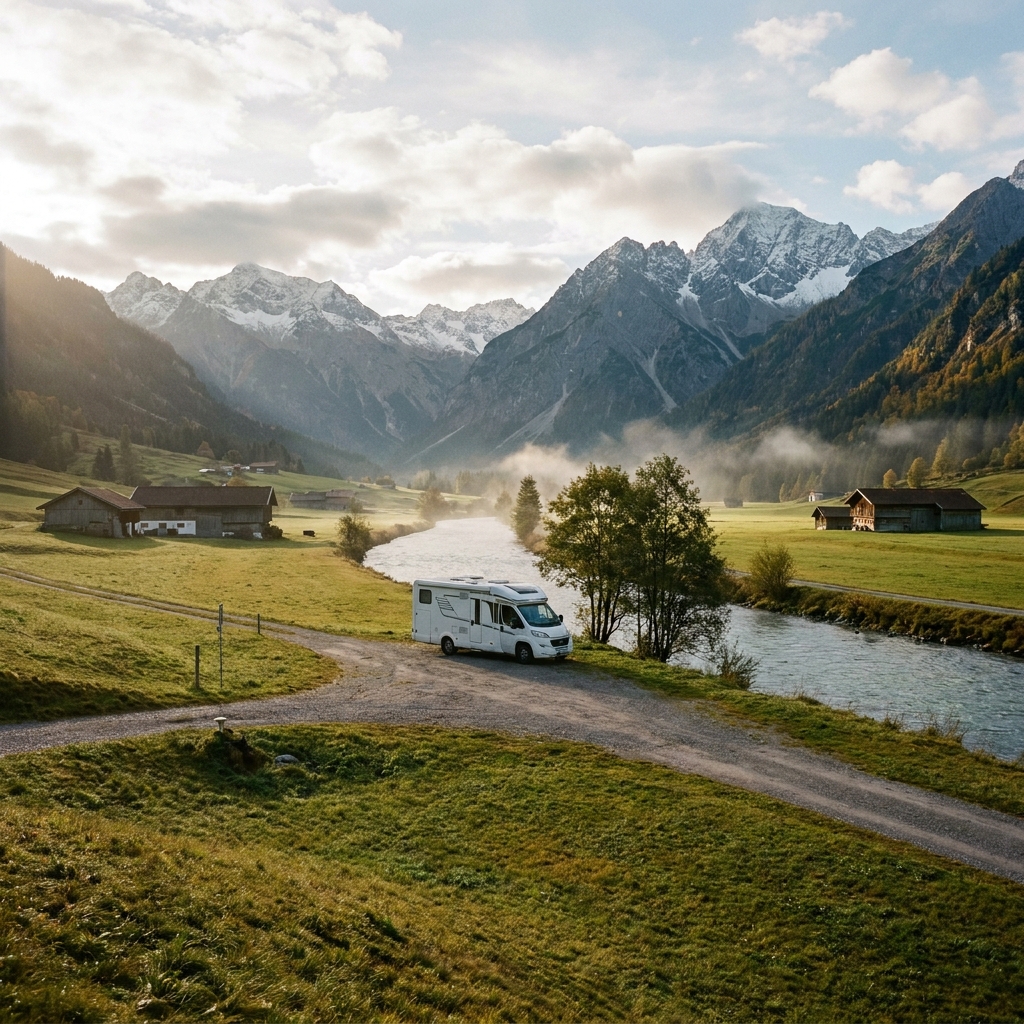
The Lech Valley is one of the last untamed river landscapes in the Alps. In the vast Tiroler Lech Nature Park, the turquoise river flows freely through wide gravel beds and dense floodplain forests. Hikers follow the famous Lechweg, which marks the course of the water through the rugged mountain landscape. For a spectacular view of the valley, the suspension bridge in Holzgau offers an impressive high-altitude experience. The villages in the valley retain their authentic character with traditional painted facades and a peaceful atmosphere. This area is ideally suited for those seeking tranquility in an unspoiled natural environment, far away from the main tourist crowds. Active visitors explore the countless side paths that lead deep into the surrounding mountain ranges. The combination of the wild water and the steep limestone peaks makes this valley a unique destination in West Tyrol.
Stop 8
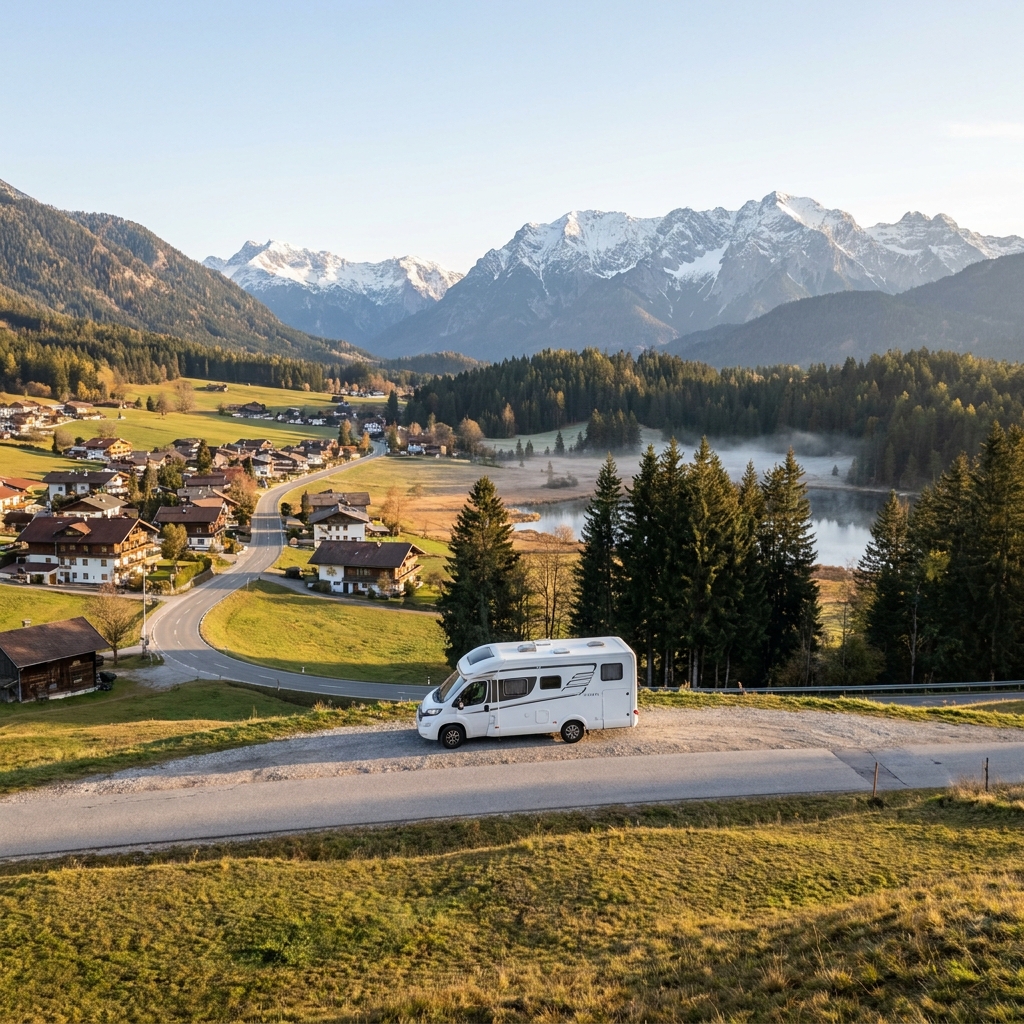
Seefeld
On a sunny high plateau, surrounded by the Karwendel and Wetterstein mountain ranges, lies the charming Seefeld. The white Seekirchl, with its distinctive dome, is the recognizable landmark of this mountain village. Hikers will find an extensive network of trails here, leading directly from the village center to the surrounding mountain peaks. The cable car to the Rosshütte offers panoramic views over the Tyrolean Alps and the vast alpine pastures. Nearby, the Wildsee invites visitors for a relaxed stroll along its wooded shores. The village's flat high-altitude location makes it an accessible destination for those who love mountain landscapes without having to navigate steep passes. The village center retains an authentic charm, with traditional architecture and inviting terraces.
Stop 9
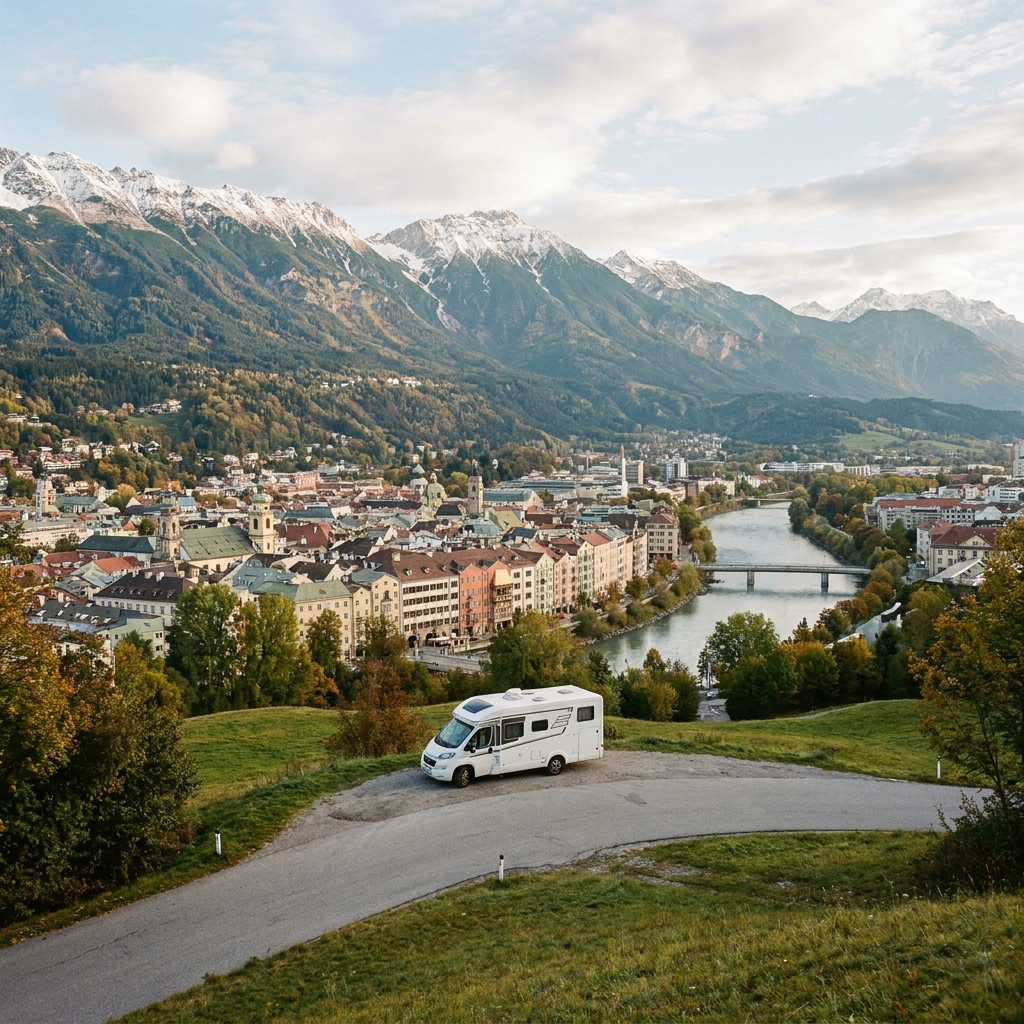
Innsbruck
Innsbruck is nestled deep in the Inn Valley, completely surrounded by the impressive peaks of the Alps. In the historic city center, the shimmering Goldene Dachl and the richly adorned facades immediately catch the eye. A stroll through the narrow streets leads past the imperial splendor of the Hofburg Innsbruck and its accompanying gardens. Within minutes, you can take the cable car up to the Nordkette, where the view over the city and the rugged mountain peaks is breathtaking. The combination of urban culture and direct access to the wilderness makes this place unique for active travelers. Along the banks of the River Inn, the colorful rows of houses create a picturesque contrast with the grey rock of the mountains. Museums and cozy terraces offer plenty of variety after a day full of elevation changes in the surrounding nature. Here you experience the perfect balance between Austrian tradition and a modern Alpine lifestyle.
Stop 10
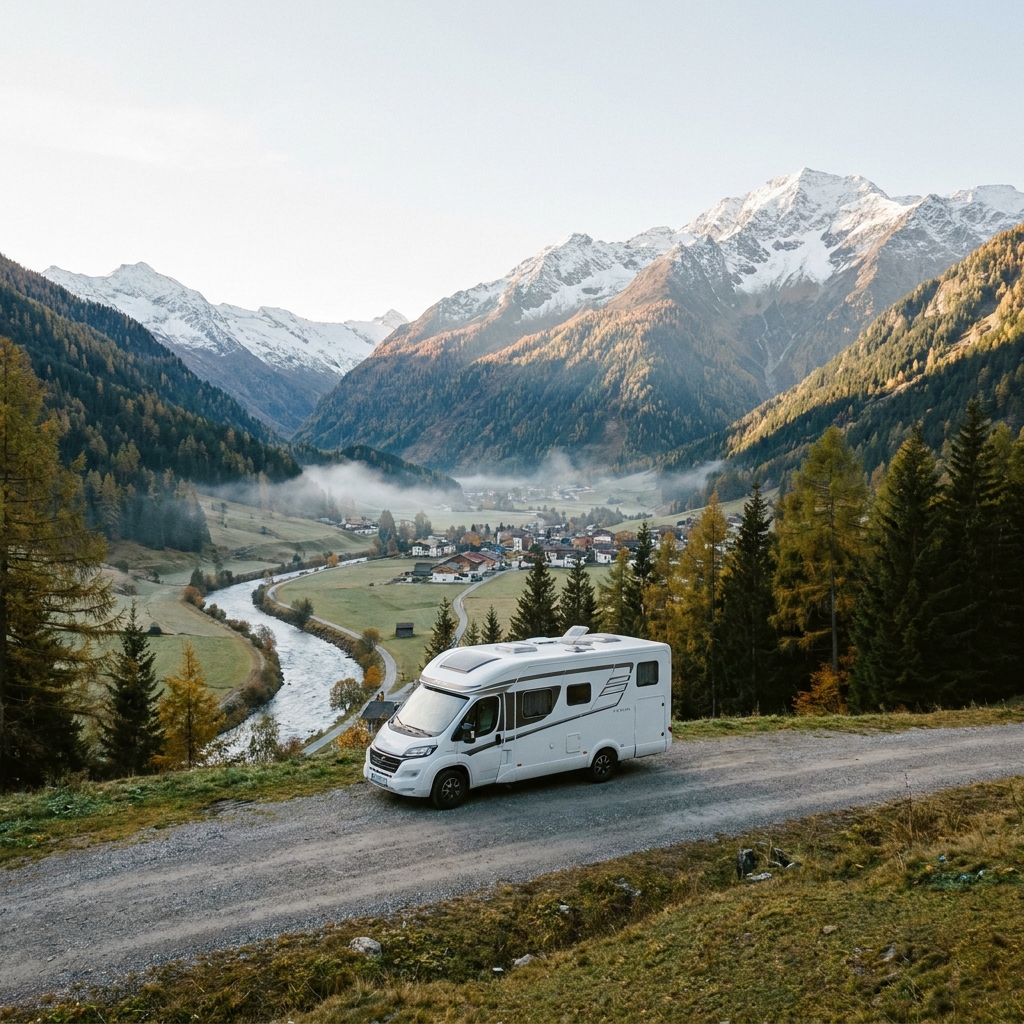
Stubaital
The Stubai Valley stretches south of Innsbruck, offering an impressive alpine landscape dominated by the Stubai Glacier at the end of the valley. Along the banks of the Ruetz, the WildeWasserWeg meanders past spectacular waterfalls and deep gorges. One of the most striking features is the Grawa Waterfall, the widest waterfall in the Eastern Alps. Hikers will find an extensive network of trails leading to mountain lakes and panoramic viewpoints here. The existing cable cars make the high-altitude glacier world easily accessible for a day trip, even in the summer months. The villages exude an authentic Tyrolean atmosphere with wooden farmhouses and green alpine meadows. It is an excellent place to stay longer and explore the various side valleys. The combination of rugged high mountains and accessible nature makes this valley a versatile destination.
Stop 11
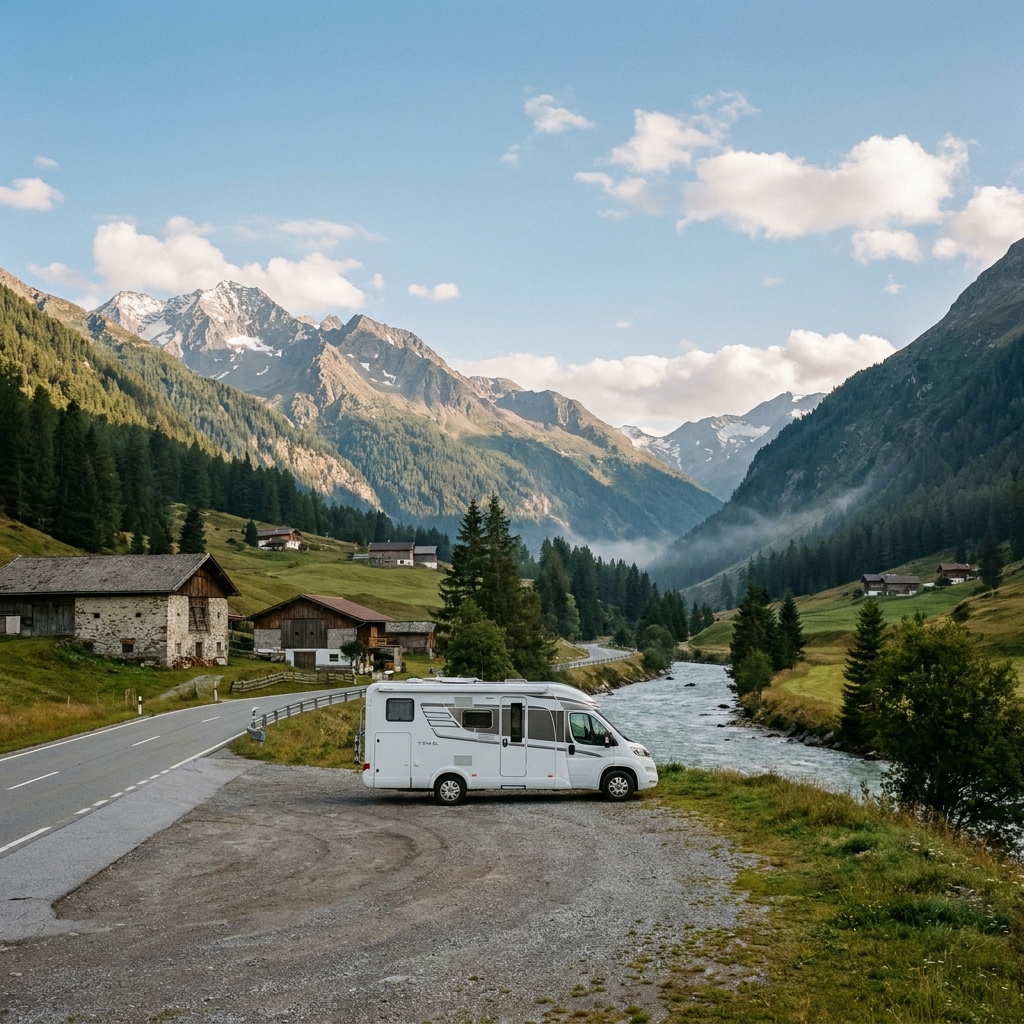
Ötztal
The Ötztal stretches out as a deep alpine valley surrounded by numerous mountain peaks above three thousand meters. In Umhausen, the Stuibenfall plunges down enormous rock faces, creating an impressive natural spectacle along the hiking trails. For active visitors, Area 47 at the entrance to the valley offers an extensive area for rafting and climbing. Relaxation can be found in the futuristically designed Aqua Dome thermal baths in Längenfeld, where floating outdoor pools offer views of the surrounding mountain ranges. Further up the valley are the Sölden glaciers, which form a white backdrop against the blue sky all year round. The route through the valley passes traditional mountain villages and green alpine meadows that gradually transition into rugged high mountains. Hikers will find an extensive network of trails here leading to secluded mountain huts and crystal-clear mountain lakes.
Stop 12
Rhine Delta Lake Constance
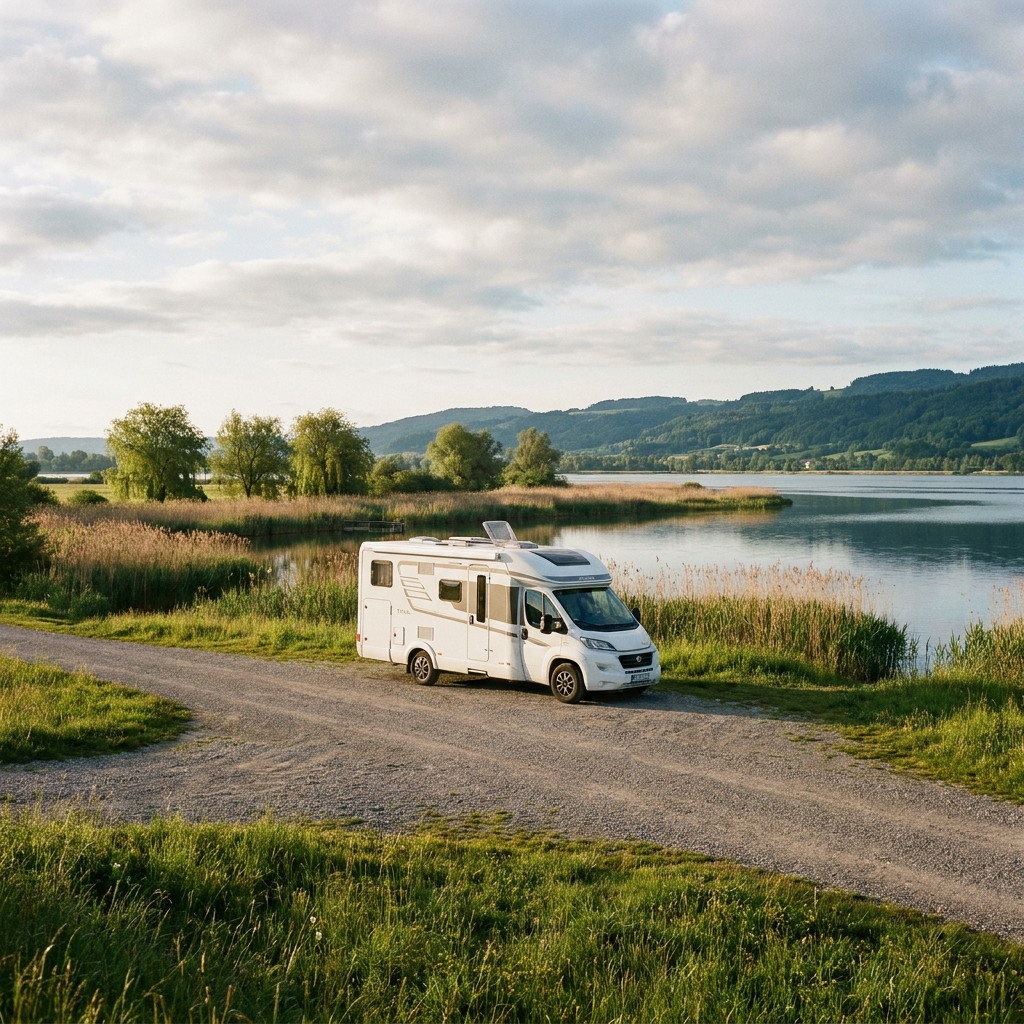
The Rhine Delta on Lake Constance is an extensive nature reserve where the Alpine Rhine flows into the lake. This area is a crucial habitat for hundreds of bird species and offers a serene environment for those seeking tranquility. From the elevated dikes, you have an expansive view over the reed beds and the shimmering water surface. Narrow paths wind through the polders and along the banks of the Alter Rhein, ideal for relaxed bike rides or walks. The transition between river delta and open water creates a unique ecosystem that takes on different hues each season. It is a place where the silence is only broken by birdsong and the lapping of the water. Visitors particularly appreciate the pristine nature, which strongly contrasts with the nearby cities. Here you experience the vastness of the landscape on the border of Austria and Switzerland.
Stop 13
Kufstein
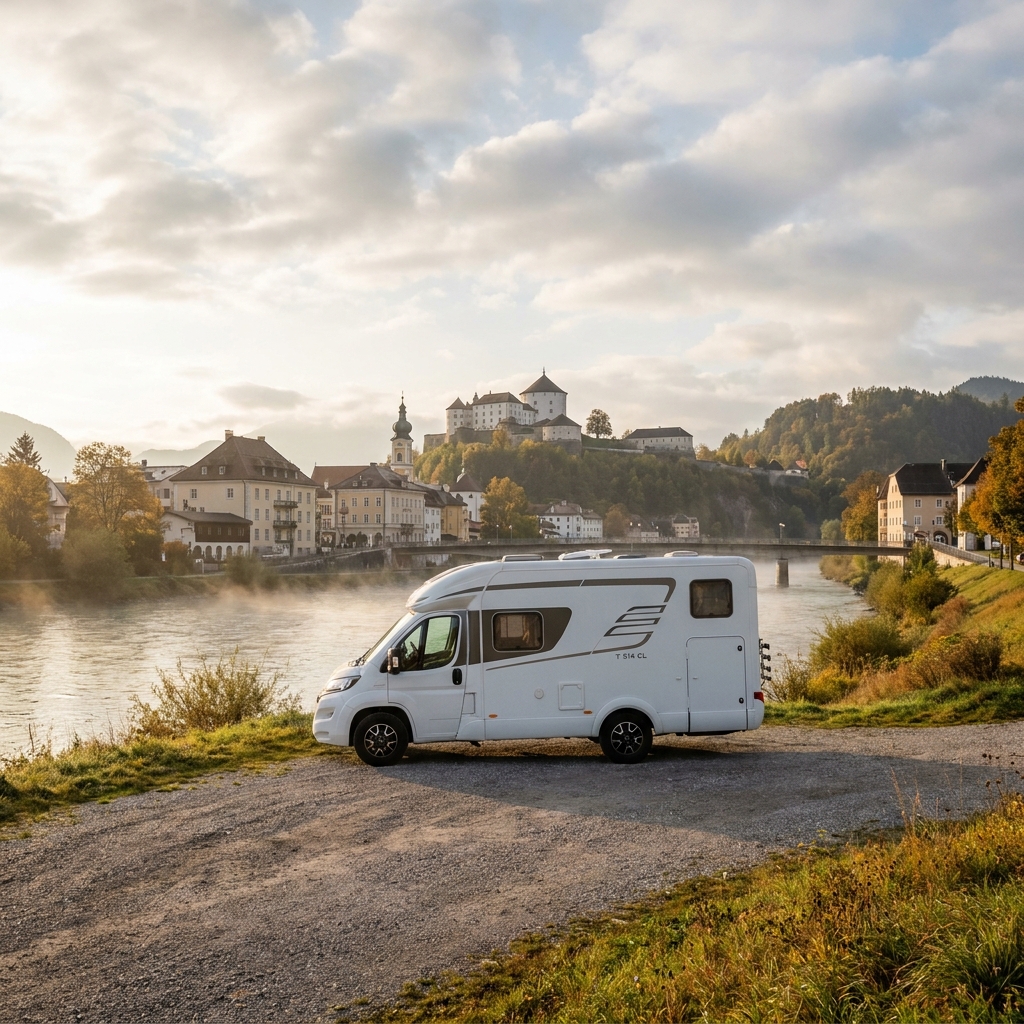
Kufstein is strategically located on the River Inn, close to the German border. The city is dominated by the imposing medieval fortress that towers high above the rooftops. Visitors stroll through the historic Römerhofgasse with its painted facades and traditional signboards. Daily, the sound of the world's largest outdoor organ resonates through the city streets. Just outside the city limits, the rugged peaks of the Kaisergebirge invite visitors to enjoy strenuous hikes and mountain tours. The contrast between the urban culture and the surrounding alpine meadows is clearly palpable here. The proximity of the mountains makes it an ideal place for lovers of both history and nature.
Ready to hit the road?
We'll email you a personal travel proposal within 24 hours — motorhome, route and full cost overview included. Save €400–€800 on average vs. a travel agency.
No packages, no middlemen. Learn how it works
Camproads gave me a lot of inspiration for our campervan trip. The routes are beautiful, with a good balance of nature and city life, and the route generator made planning super easy. It's also really handy that there are so many good camping options at the locations, and that you can easily find the campervan that suits your needs and compare prices. This way, we can plan everything ourselves and book the campervan directly with the rental company. That's much cheaper than an organized trip!
Michiel van de Bunt
February 2026
What a difference from how I used to plan trips. Through Camproads, I put together a complete campervan trip in just a few minutes. It's so easy to use, and you can customize everything to your liking. The ability to choose your travel pace makes it even more enjoyable, especially now that we're traveling with a baby for the first time.
Alieke Zelhorst
February 2026