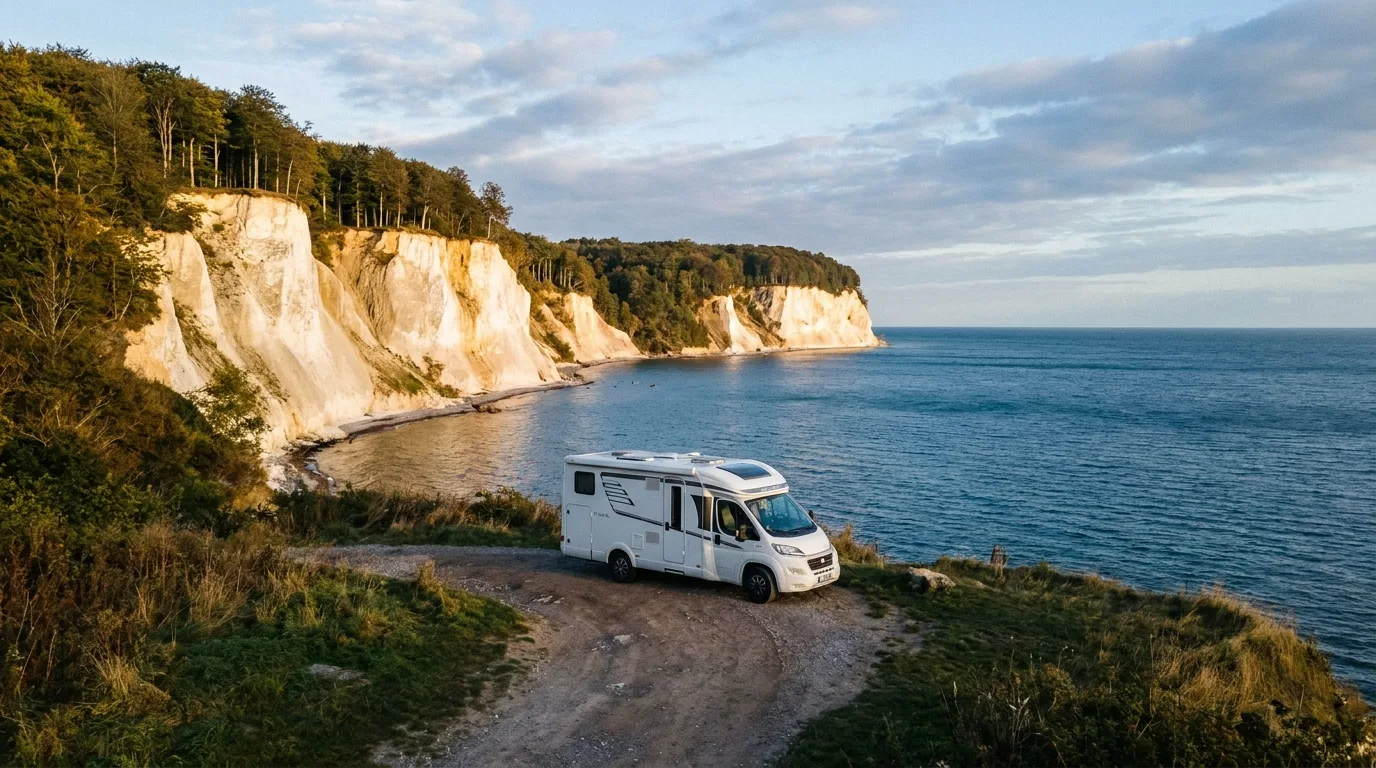
Take this trip by motorhome
Save €400–€800 on average vs. a travel agency
Duration
x daysDistance
0 km
stops
0
Choose a date and duration that fits your preferences
About this route
Highlights
- ✦Bewonder het iconische Holstentor in Hanzestad Lübeck
- ✦Verken het maritieme Museumshafen Flensburg aan de Deense grens
- ✦Wandel langs de indrukwekkende Kreidefelsen in Nationalpark Jasmund
- ✦Ontdek de statige Kaiserbäder en Seebrücke Ahlbeck op Usedom
- ✦Verken de natuur en meren in Müritz Nationaal Park
- ✦Bezoek het sprookjesachtige Schweriner Schloss, omgeven door meren
The route
Stop 1
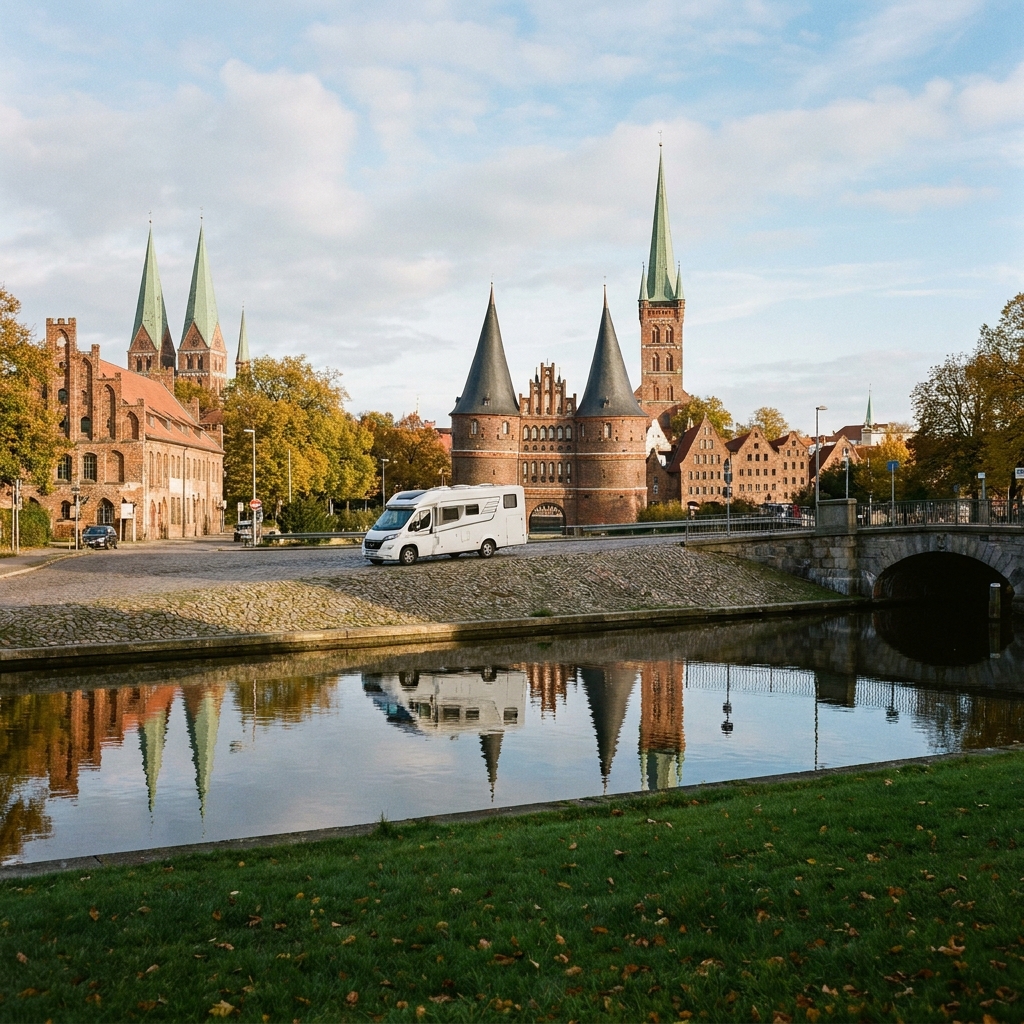
Lübeck
Lübeck is one of the most characteristic Hanseatic cities in Northern Germany and is known for its medieval centre on an island. The city is surrounded by the River Trave, which creates a waterside atmosphere around its historic core. A striking sight upon arrival is the Holstentor, an imposing city gate with leaning towers that recalls the wealth of the Hanseatic period. In the cobbled streets, you'll discover numerous brick Gothic buildings, including St. Mary's Church (Marienkirche) with an impressively high vaulted ceiling. Lübeck's Town Hall (Rathaus) is one of the oldest town halls in the country and displays a unique combination of architectural styles. For lovers of local specialities, a visit to Niederegger's historic premises is the place to taste the famous marzipan. The courtyards and narrow alleyways behind the main roads offer a quiet glimpse into the city's daily history. A stroll along the Obertrave quays completes the experience with views of old warehouses.
Stop 2
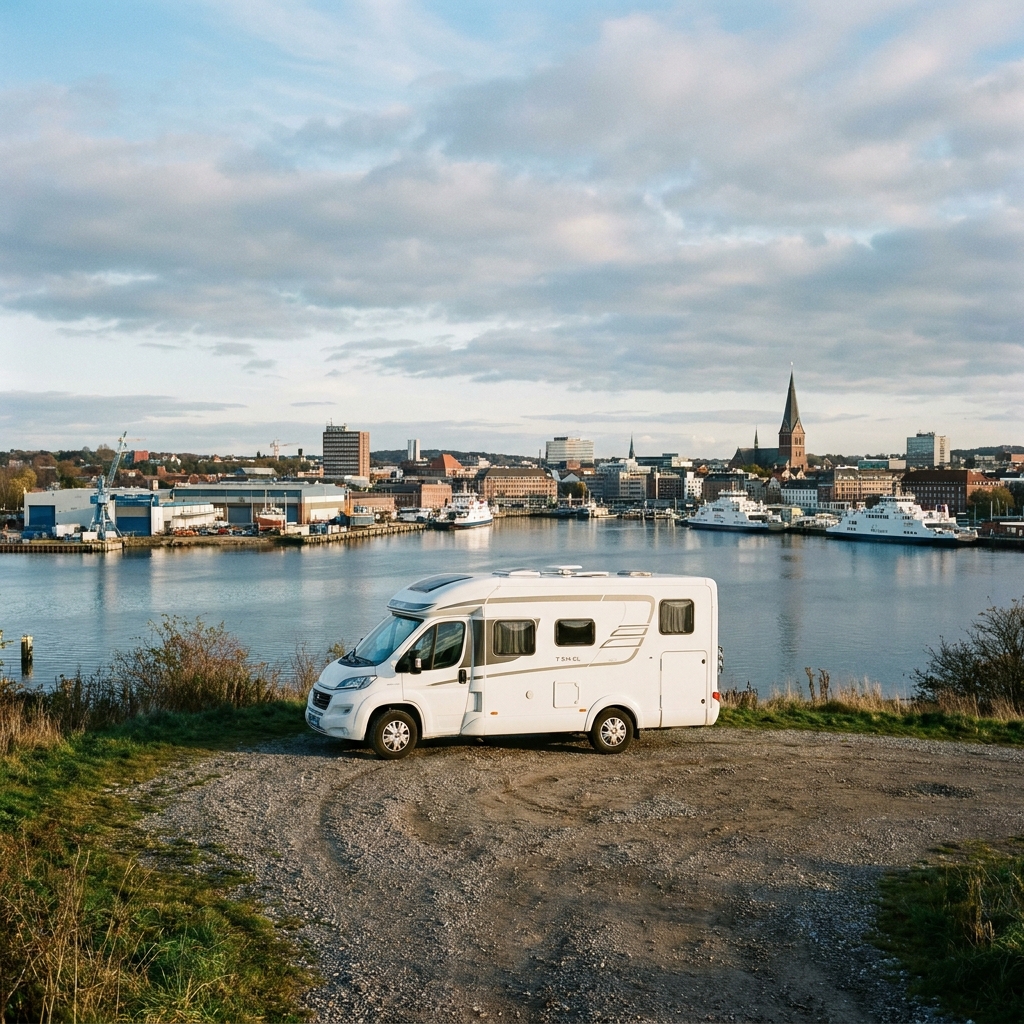
Kiel
Kiel, situated at the end of a deep inlet of the Baltic Sea, exudes the atmosphere of a maritime metropolis. Along the quays of the Kiel Fjord, impressive cruise ships and ferries constantly sail to and from Scandinavia. The city is the gateway to the Kiel Canal, one of the busiest artificial waterways in the world. On the eastern side of the bay, the Laboe Naval Memorial towers high above the water as a prominent landmark. Maritime history enthusiasts can explore an authentic World War II submarine from the inside here. The wide promenades invite long strolls with views of the bustling harbour and sailboats. In the city center, modern architecture and parks alternate, creating an open and expansive feel. The proximity to the water is palpable everywhere and defines the daily rhythm of this northern port city.
Stop 3
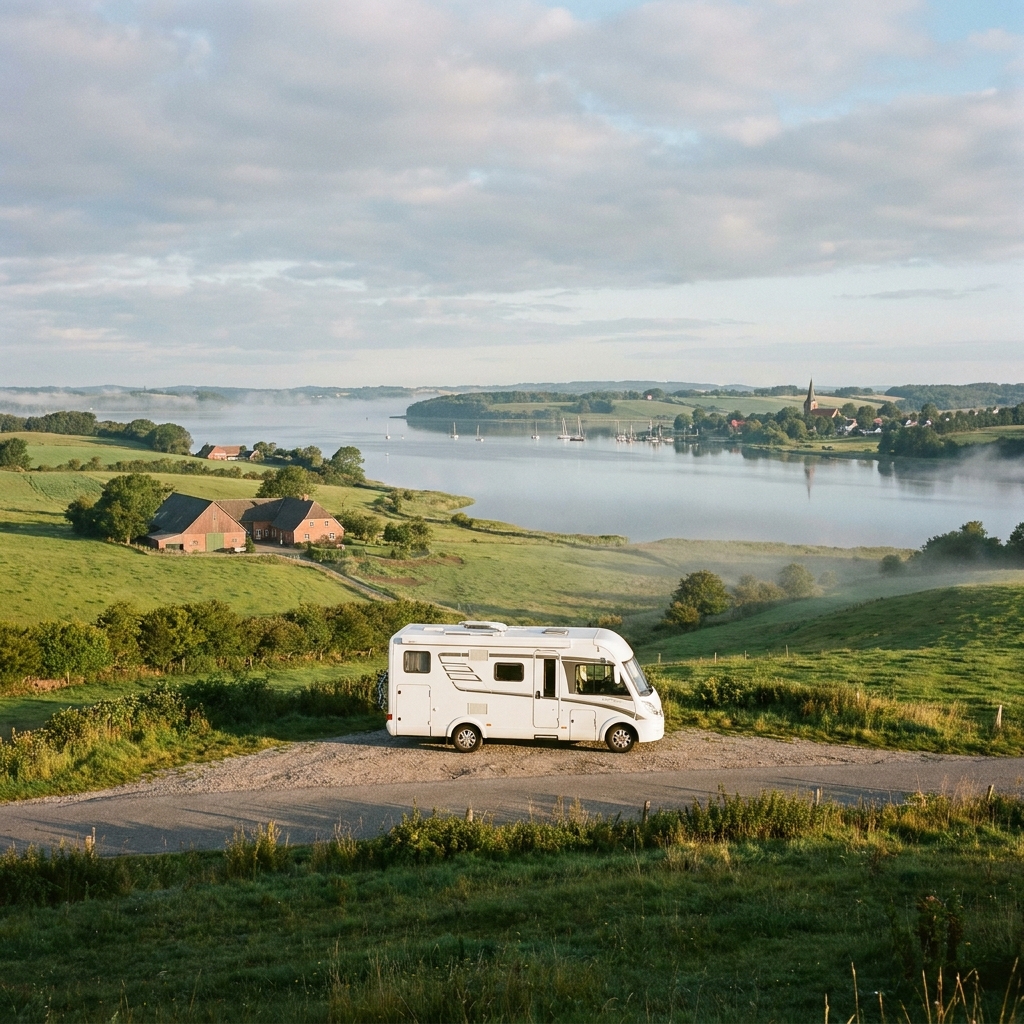
Flensburg & Schlei
Flensburg is nestled at the end of a deep fjord, right on the border with Denmark. Its maritime history comes alive in the historic harbour where old sailing ships lie side by side. Along the shores of the Schlei, a narrow inlet that cuts deep into the land, you'll find idyllic fishing villages and rolling green hills. In the nearby Schloss Glücksburg, you can admire one of Northern Europe's most important moated castles. For those seeking peace and quiet, the Geltinger Birk peninsula offers vast nature reserves with wild horses and rare birds. The atmosphere in the city is a unique blend of German and Scandinavian influences, which is reflected in the architecture and local shops. It's an excellent place to stroll along the waterfront or cycle through the varied coastal landscape. The region invites a slower pace of travel where water and wind take centre stage.
Stop 4
Warnemünde & Rostock
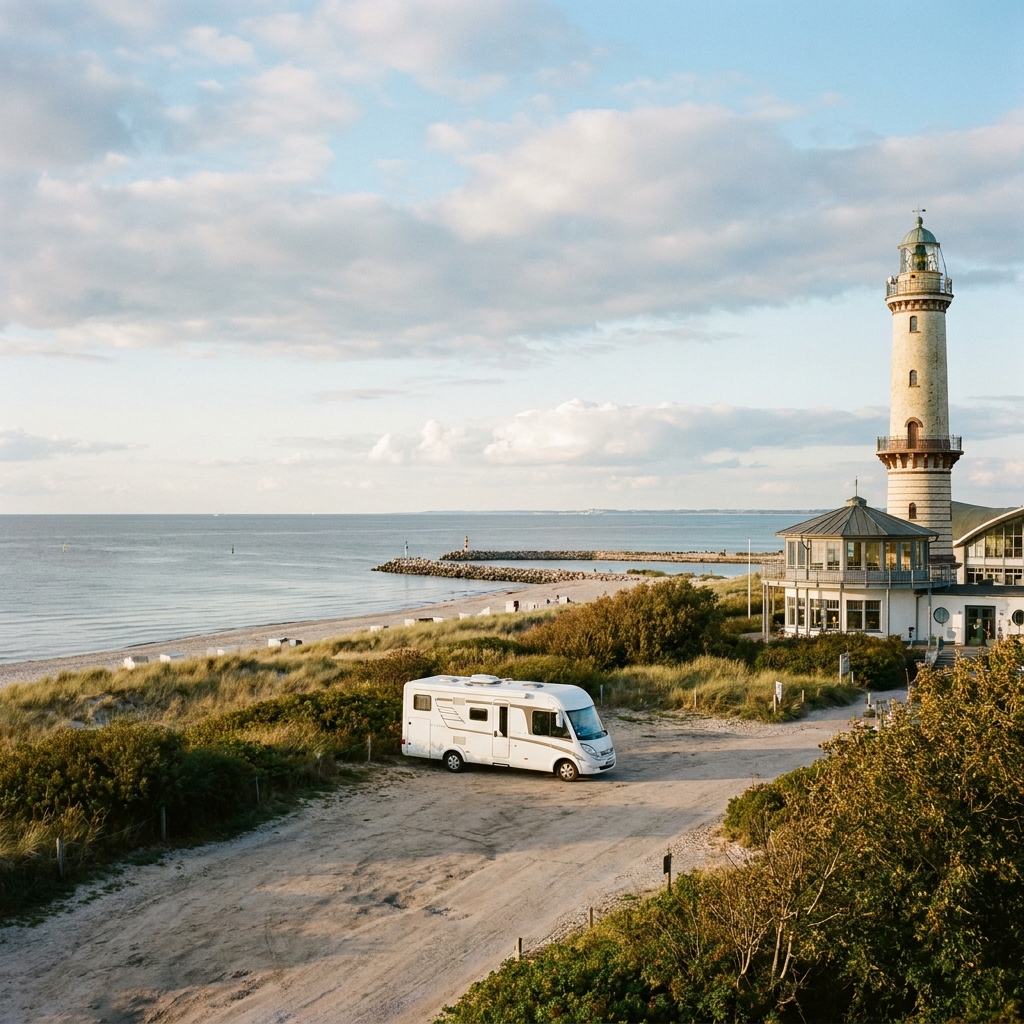
The maritime atmosphere of the Baltic Sea truly comes to life at the mouth of the Warnow River. Along the quay of the Alter Strom, colourful fishing boats and historic sailing ships lie side by side. The distinctive architecture of the Teepott and the adjacent Warnemünde Lighthouse form the recognisable face of this coastal town. A wide sandy beach is perfect for long walks, offering views of passing cruise ships. In nearby Rostock, the brick facades and old city gates bear witness to a rich Hanseatic past. The combination of a lively port city and a relaxed seaside resort makes this a diverse stop on the north coast. The sound of seagulls and the salty sea air here enhance the holiday atmosphere by the water.
Stop 5
Fischland-Darß-Zingst
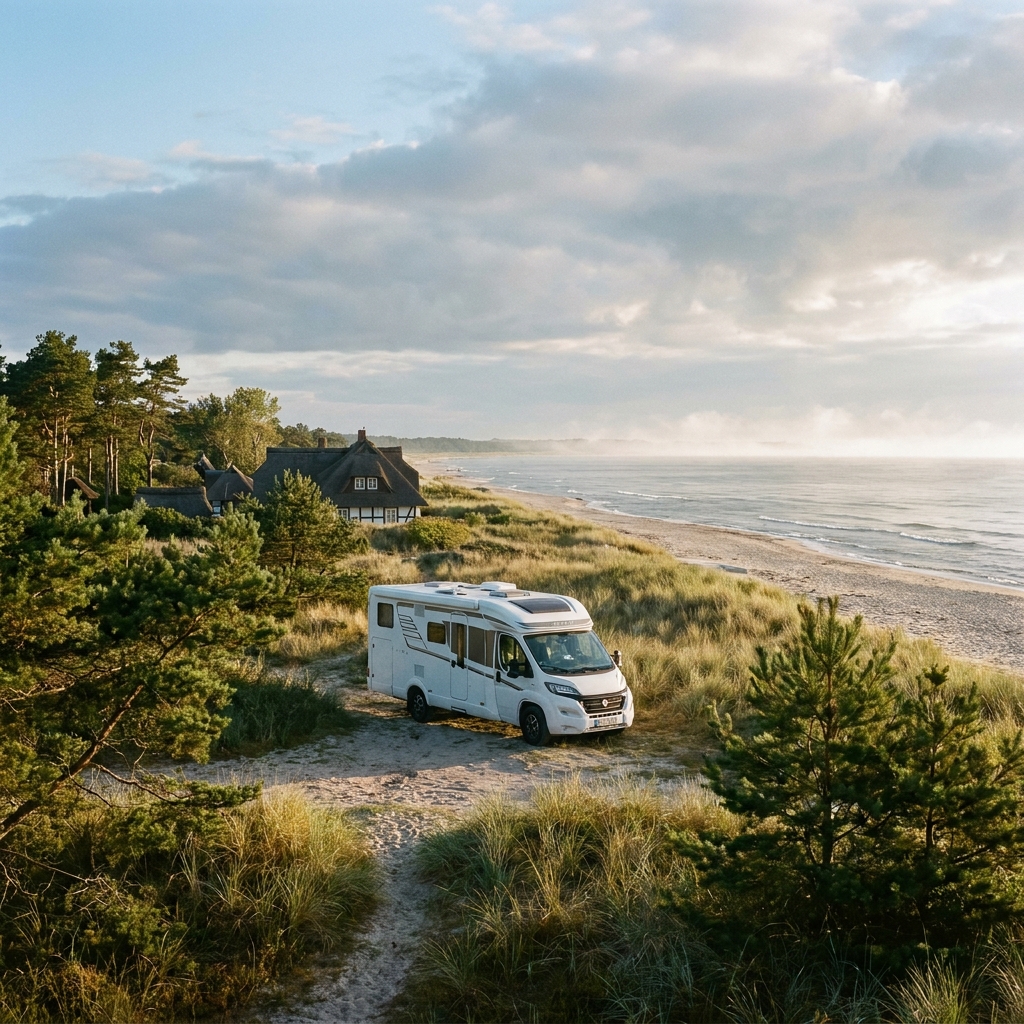
This peninsula on the Baltic Sea forms a unique transition between dense forests and vast sandy beaches. To the west lies the Darßer Weststrand, where uprooted trees and pristine dunes create a wild natural landscape. The Vorpommersche Boddenlandschaft National Park protects the shallow lagoons that offer a resting place for large groups of cranes. In the villages, thatched roofs adorn the traditional captains' houses with their colorful doors. Visitors often explore the region by bike on the car-free paths that wind through the coastal forest. Zingst pier offers expansive views of the sea and is a central point for a walk along the coastline. Here you experience the power of the elements as the wind continuously shapes the landscape.
Stop 6
Stralsund
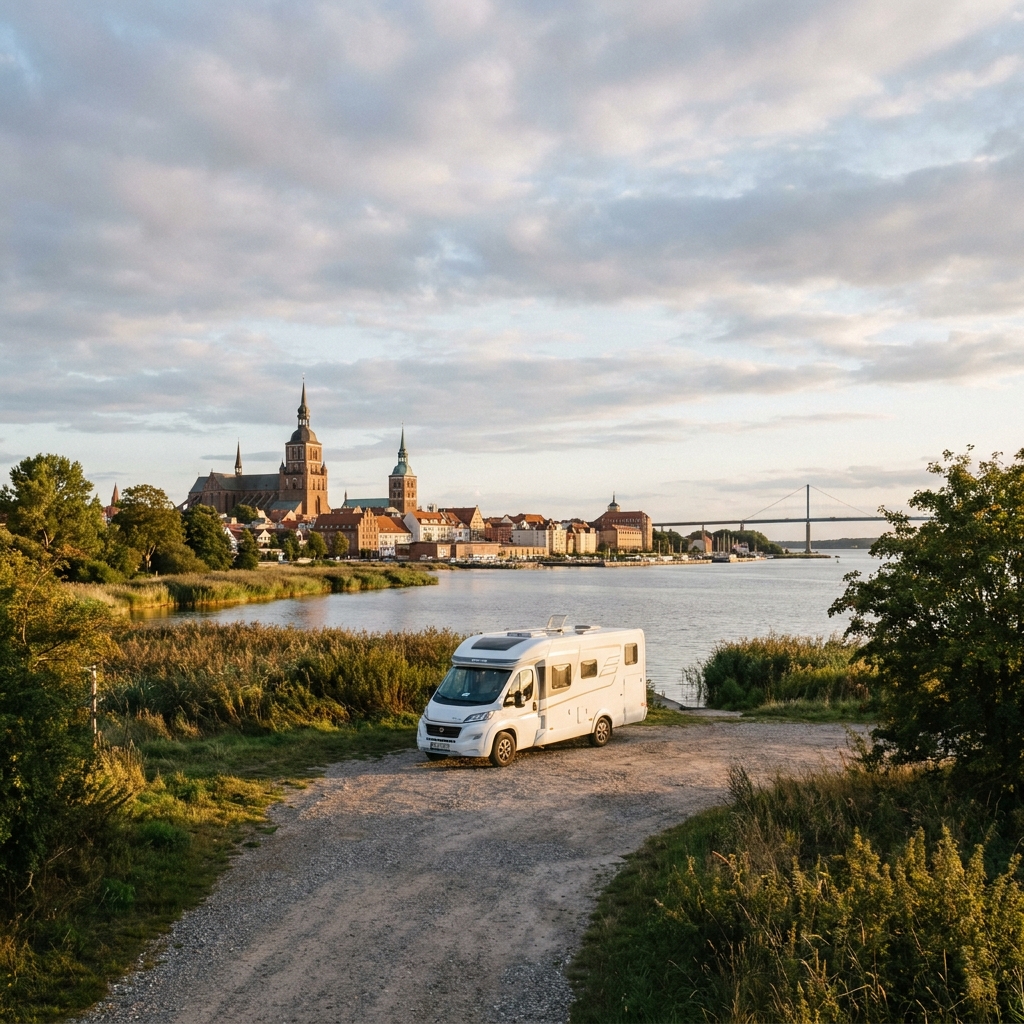
The Hanseatic city of Stralsund lies directly on the Strelasund and forms the historic gateway to the island of Rügen. The cityscape is characterized by the impressive Brick Gothic architecture of the Town Hall and the monumental St. Mary's Church. Along the lively harbour quay, the historic three-masted sailing ship Gorch Fock I is permanently moored. Right next to it, the modern Ozeaneum attracts visitors with its enormous aquariums and exhibitions about the northern seas. The car-free streets around the Alter Markt invite a leisurely stroll past colourful merchant houses. From the waterfront, you have a panoramic view of the impressive Rügen Bridge, which connects the mainland with the Baltic Sea islands. It is an atmospheric place where maritime history and contemporary culture seamlessly blend.
Want to actually take this trip?
We put together the complete package for you — motorhome, ferry, campsites — in one personal email.
Stop 7
Hiddensee
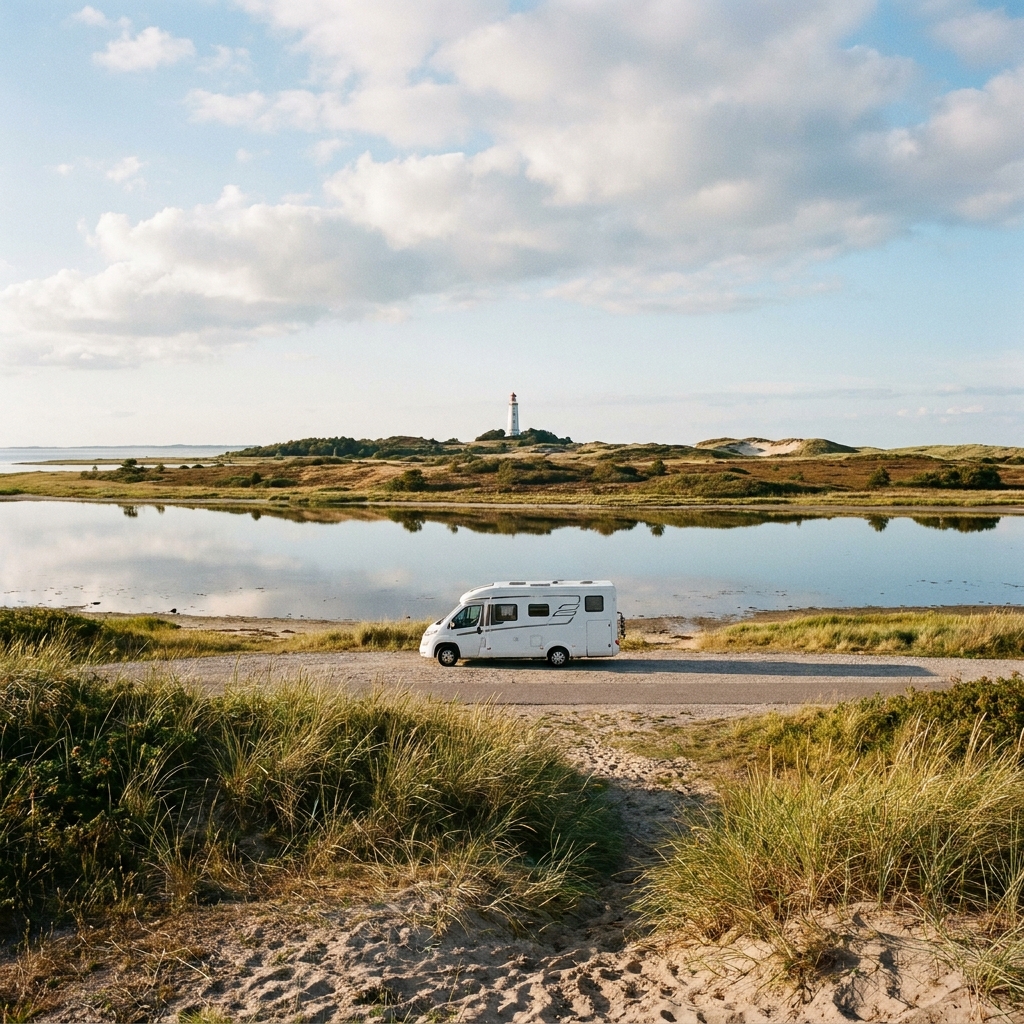
The car-free island of Hiddensee is tucked away in the Baltic Sea, offering a serene tranquility that is rare on the German coast. The distinctive Dornbusch Lighthouse towers high above the rolling hills, serving as a prominent beacon for hikers. In the village of Kloster, the Gerhart-Hauptmann-Haus commemorates the rich cultural past of this place. Large parts of the island belong to the Vorpommersche Boddenlandschaft National Park, where salt marshes and dunes define the landscape. Visitors get around here on foot, by bike, or by horse-drawn carriage along the unpaved paths. The sandy beaches on the west coast invite long walks along the surf. The contrast between the rugged cliffs in the north and the flat heathlands in the south makes the surroundings very diverse. A stay here is all about slowing down and experiencing the raw beauty of the Baltic nature.
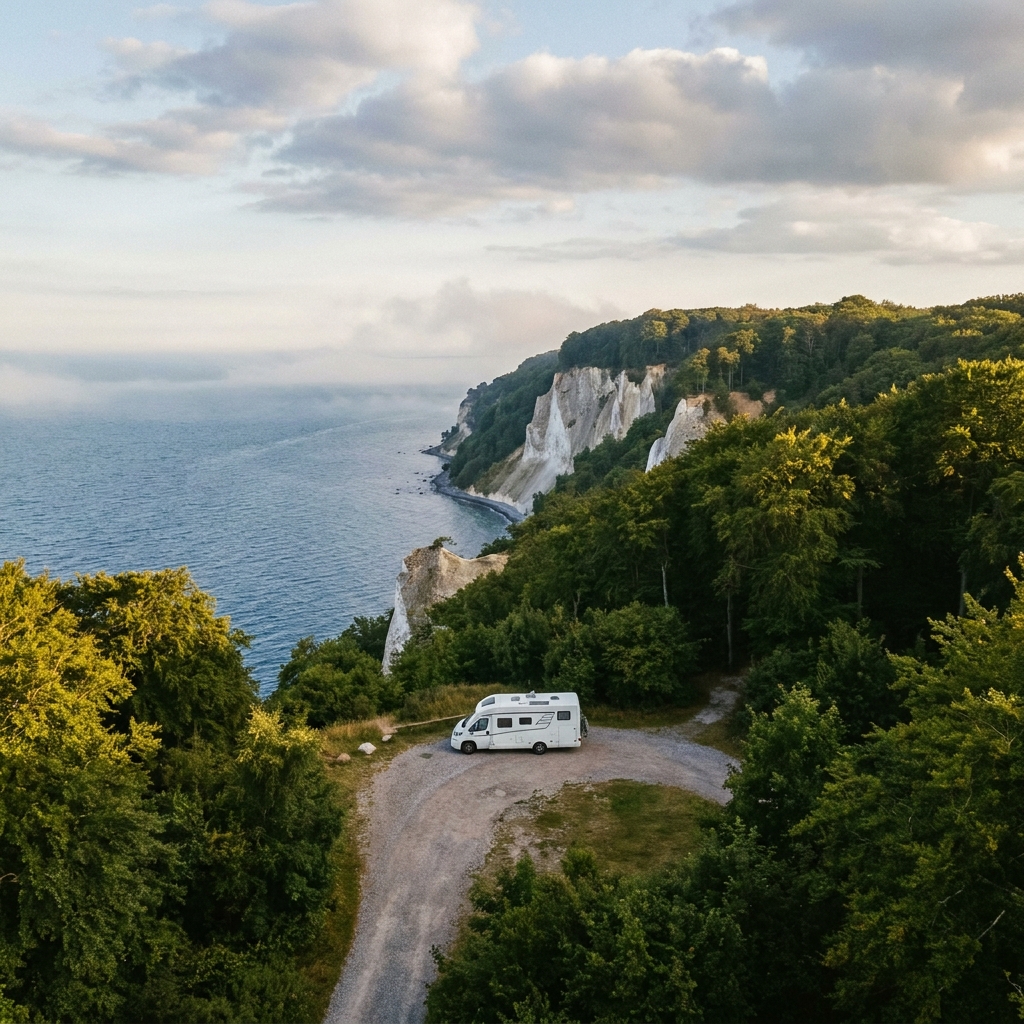
Stop 8
Rügen & Jasmund
Rügen Island is characterized by a highly varied coastal landscape with deep inlets and extensive sandy beaches. At its heart is Jasmund National Park, where the white chalk cliffs rise steeply from the turquoise Baltic Sea. Hikes here lead through ancient, World Heritage-listed beech forests. From the Königsstuhl viewpoint, you have sweeping views of the coastline and the horizon. In the nearby seaside resorts, historic piers and ornate villas adorn the boulevards. The combination of dense woodland and the rugged chalk coast creates a unique atmosphere. It is a place where the natural forces of wind and water are evident throughout the landscape.
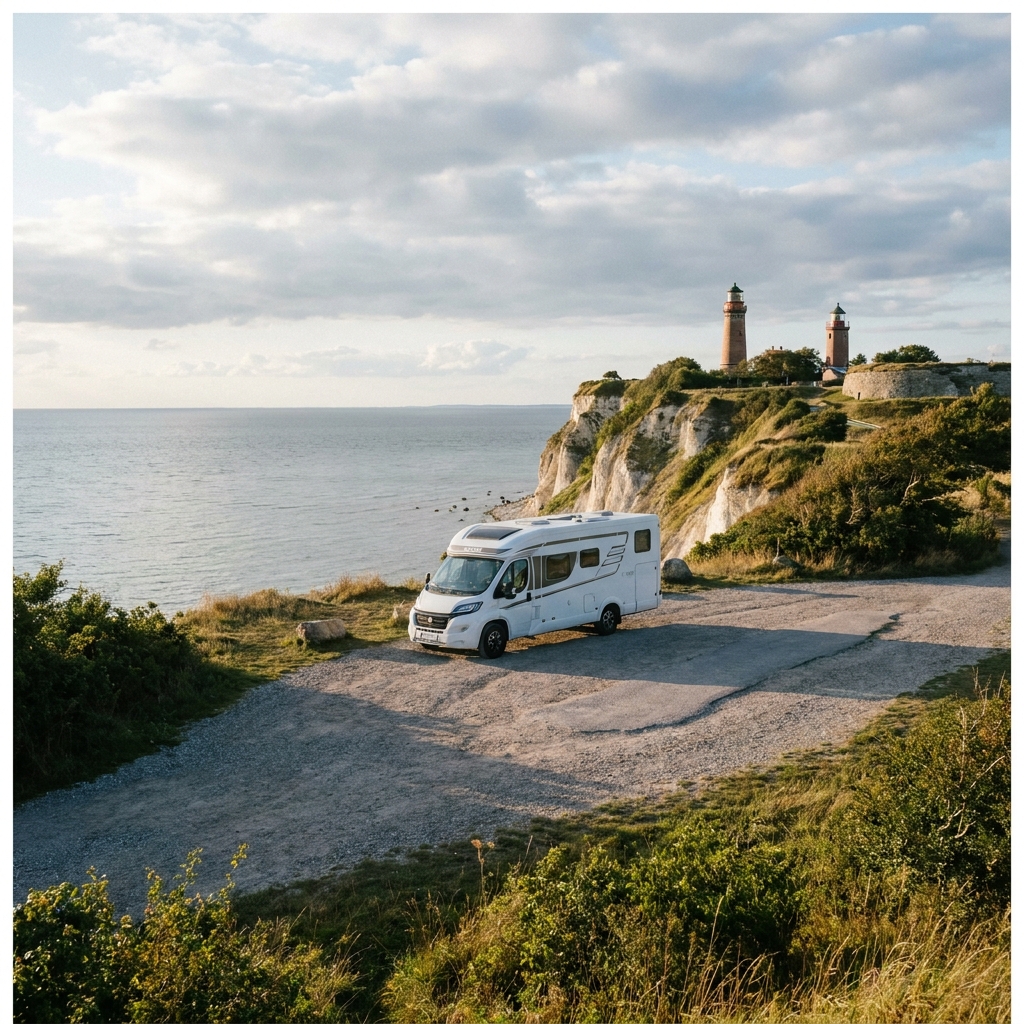
Stop 9
Cape Arkona
The steep chalk cliffs of Cape Arkona form the northernmost point of the island of Rügen. Three prominent towers dominate the horizon above the Baltic Sea, including the historic Schinkelturm and the modern lighthouse. A walk along the cliffs offers expansive views over the open sea and the surrounding coastline. In the nearby fishing village of Vitt, characteristic houses with thatched roofs are in a ravine. Visitors can reach the cape on foot, by bike, or with a shuttle train from the central car park in Putgarten. The remains of the Slavic Jaromarsburg tell the story of early settlement in this strategic location. The combination of maritime history and rugged nature makes this a distinctive stop on the north coast.
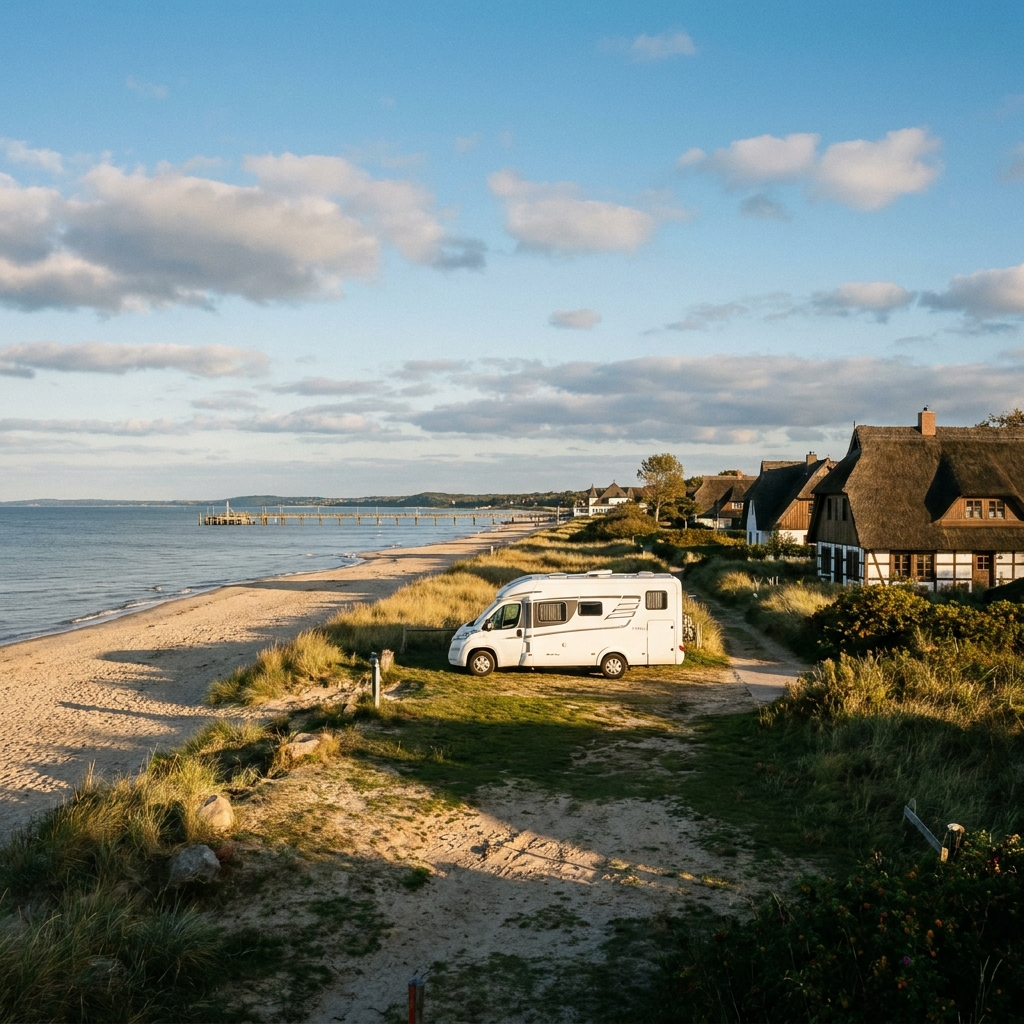
Stop 10
Usedom
Usedom lies in the far northeast of Germany and is known as the sunniest island in the country. The coastline is graced by the famous Kaiserbäder, where stately white villas in the style of spa architecture recall bygone eras. Stroll across the historic Ahlbeck Pier, Germany's oldest pier, for expansive views of the Baltic Sea. The island offers a diverse landscape of expansive sandy beaches, dense forests, and tranquil inland lakes. In the north, the Peenemünde Museum provides a historical contrast to the natural surroundings with its 20th-century technical relics. The coastal bike paths seamlessly connect the lively seaside resorts. It's a place where seaside relaxation and cultural history naturally converge. The easy accessibility of the coastal resorts makes exploring the island's various resorts highly accessible.
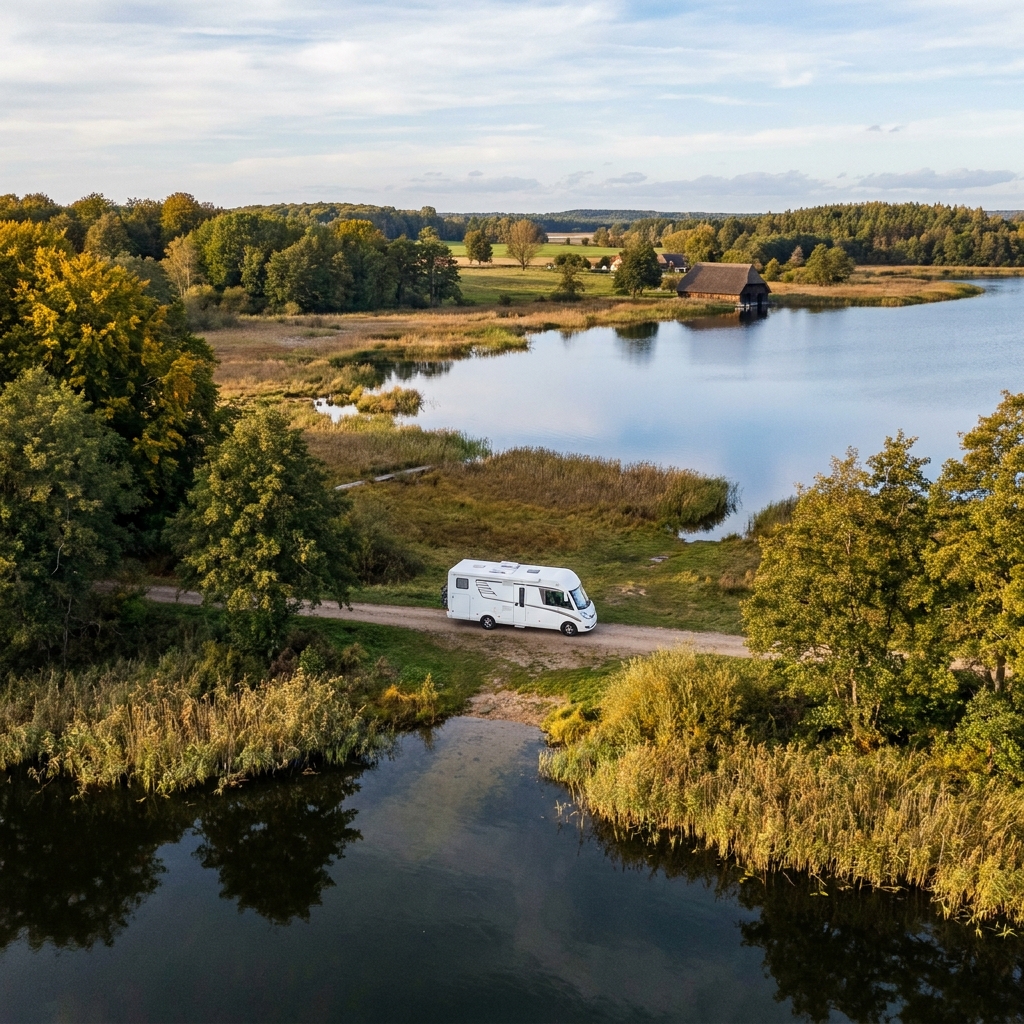
Stop 11
Müritz National Park
Müritz National Park forms the beating heart of the Mecklenburg Lake District, offering an extensive network of pristine forests and waterways. From the Käflingsbergturm, you can enjoy panoramic views of the undulating canopy and the countless blue lakes that adorn the landscape. The Serrahner Beech Forests are renowned for their ancient beech trees and, as part of the UNESCO World Heritage, are a paradise for hikers. On the shores of Lake Feisneck, you'll find tranquil spots where the silence is only broken by the call of the osprey. The area is ideally suited for cycling, with many marked paths winding through dense forests and along reed beds. In the early morning, there's a good chance of spotting red deer or cranes in the expansive marshlands. The combination of crystal-clear water and profound tranquility makes this an ideal place for an extended stay in the heart of nature.
Stop 12
Waren an der Müritz
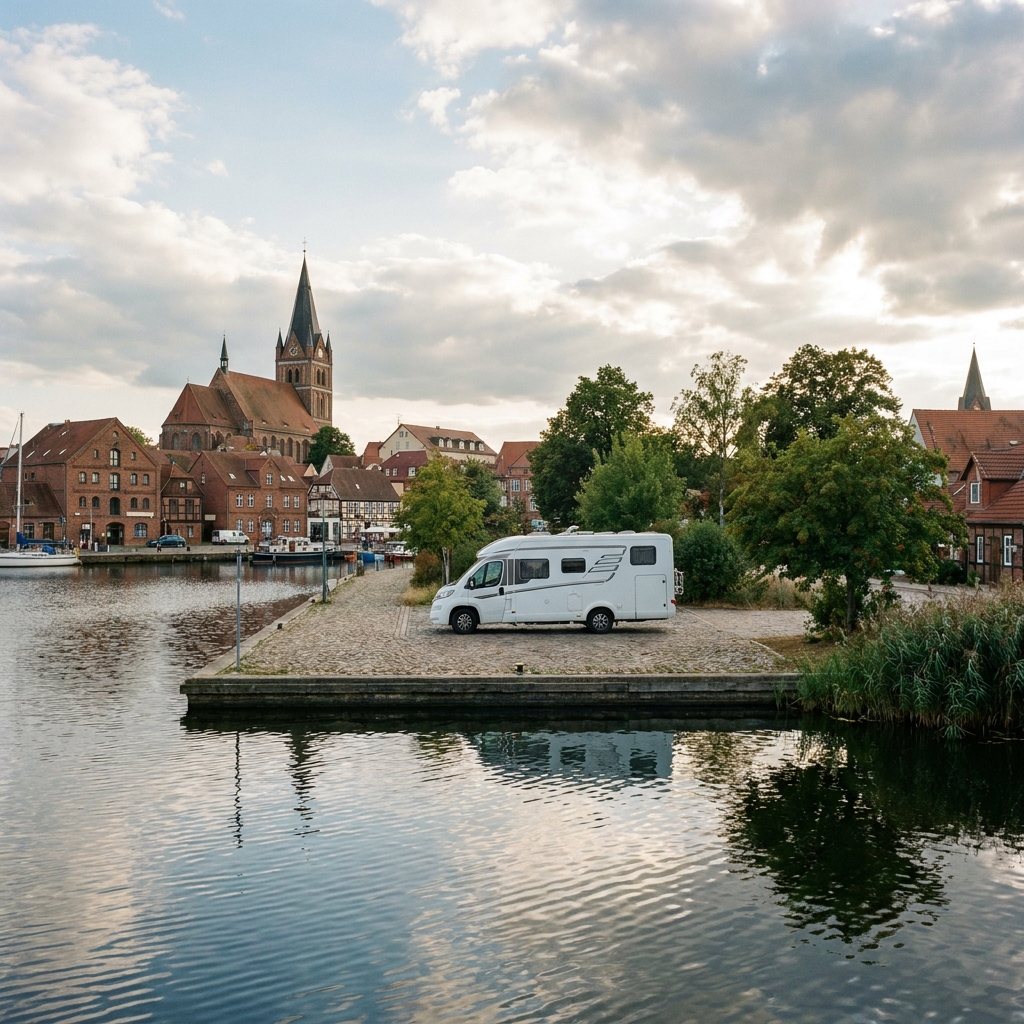
Waren an der Müritz is located on the northern shore of Germany's largest inland lake and forms the lively heart of the lake district. The marina at Stadthafen Waren is a central spot where boats come and go, and terraces overlook the lapping water. In the modern Müritzeum, you can discover the underwater world and the rich nature of the surrounding region through interactive exhibitions. The transition from the historic streets to the unspoiled nature of the Müritz National Park is almost seamless here. Cycling and walking paths lead directly from the built-up area along reed beds and through dense beech forests. It is an ideal place for those who want to combine the tranquility of the expansive lakes with the amenities of a charming town. Sunsets at the quay offer expansive views over the shimmering water surface.
Stop 13
Schwerin
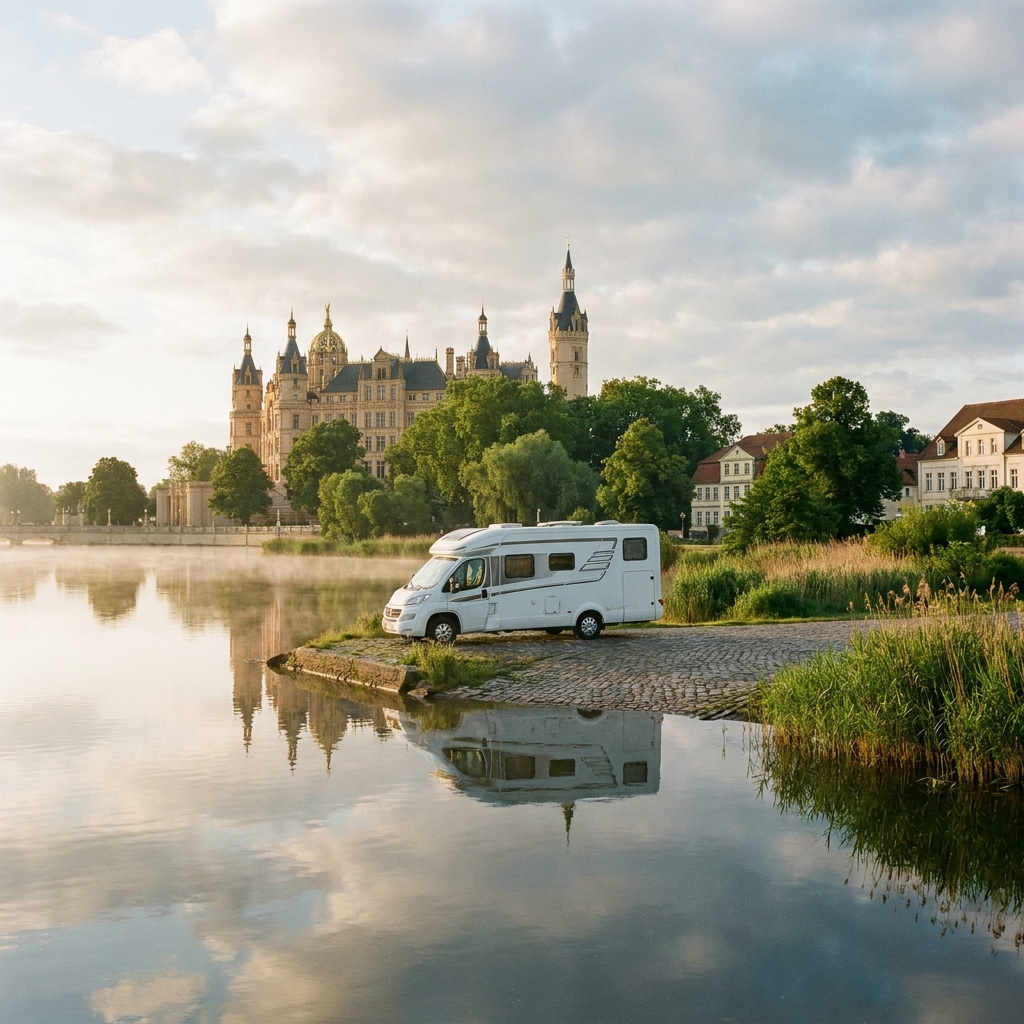
Schwerin is beautifully nestled among seven lakes and is dominated by the impressive Schwerin Castle on its own island. This fairytale castle with its golden domes is the heart of the city and is surrounded by expansive gardens. In the historic old town, you can stroll through narrow streets past half-timbered houses and stately buildings. The Schwerin Cathedral towers high above the rooftops and offers panoramic views of the surrounding area. Water is a constant presence here, inviting a relaxing boat trip on Lake Schwerin. The combination of regal architecture and its natural lakeside setting gives the city a unique, serene atmosphere. It is an ideal place to soak up culture while the tranquility of the lake landscape is never far away.
Ready to hit the road?
We'll email you a personal travel proposal within 24 hours — motorhome, route and full cost overview included. Save €400–€800 on average vs. a travel agency.
No packages, no middlemen. Learn how it works
Camproads gave me a lot of inspiration for our campervan trip. The routes are beautiful, with a good balance of nature and city life, and the route generator made planning super easy. It's also really handy that there are so many good camping options at the locations, and that you can easily find the campervan that suits your needs and compare prices. This way, we can plan everything ourselves and book the campervan directly with the rental company. That's much cheaper than an organized trip!
Michiel van de Bunt
February 2026
What a difference from how I used to plan trips. Through Camproads, I put together a complete campervan trip in just a few minutes. It's so easy to use, and you can customize everything to your liking. The ability to choose your travel pace makes it even more enjoyable, especially now that we're traveling with a baby for the first time.
Alieke Zelhorst
February 2026