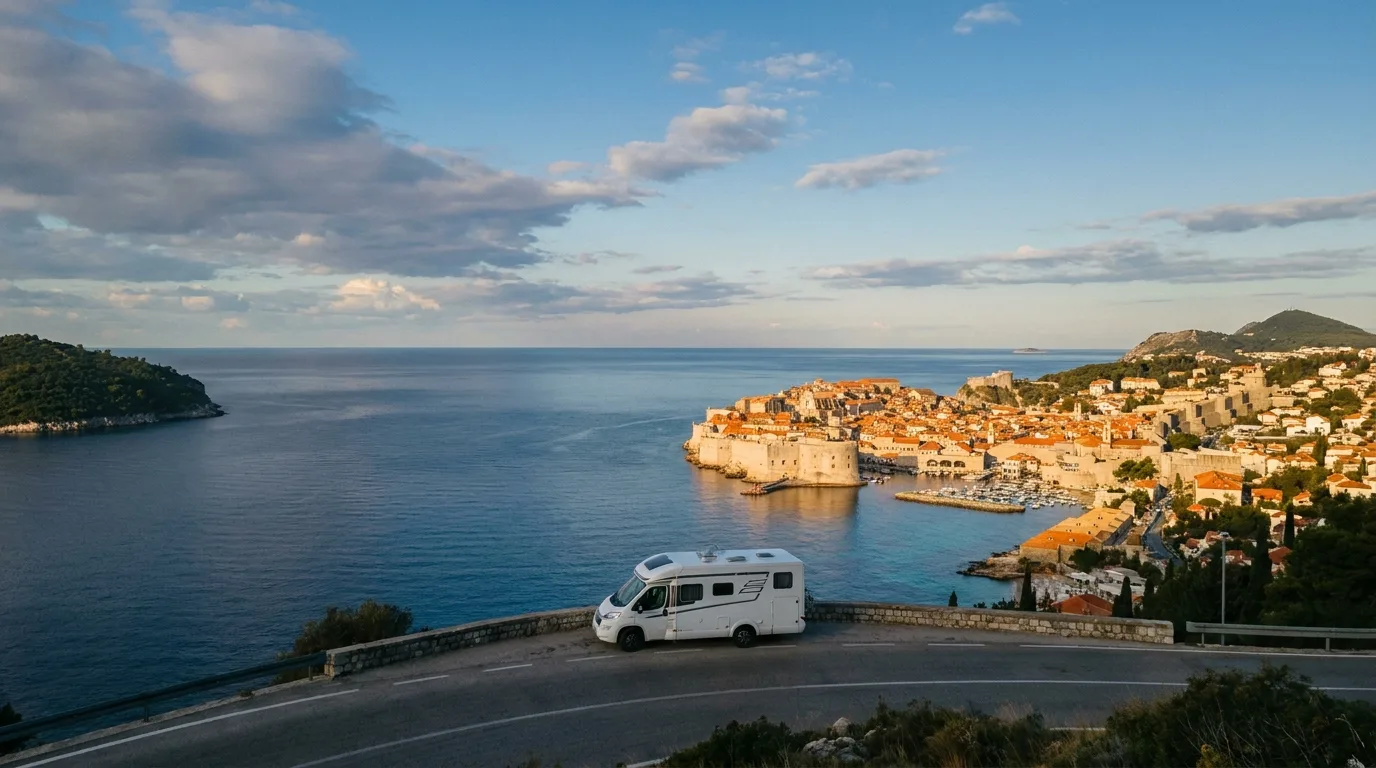
Take this trip by motorhome
Save €400–€800 on average vs. a travel agency
Duration
x daysDistance
0 km
stops
0
Choose a date and duration that fits your preferences
About this route
Highlights
- ✦Verken de smalle straatjes van Rovinj en de Sint-Eufemiakerk
- ✦Bezoek de Romeinse Arena van Pula
- ✦Wandel over de Lungomare promenade in Opatija
- ✦Rijd over de imposante Krčki most naar het eiland Krk
- ✦Luister naar het Zeeorgel en bekijk de Zonnegroet in Zadar
- ✦Ontdek het Paleis van Diocletianus in Split
- ✦Bewonder de Muren van Ston op het schiereiland Pelješac
The route
Stop 1
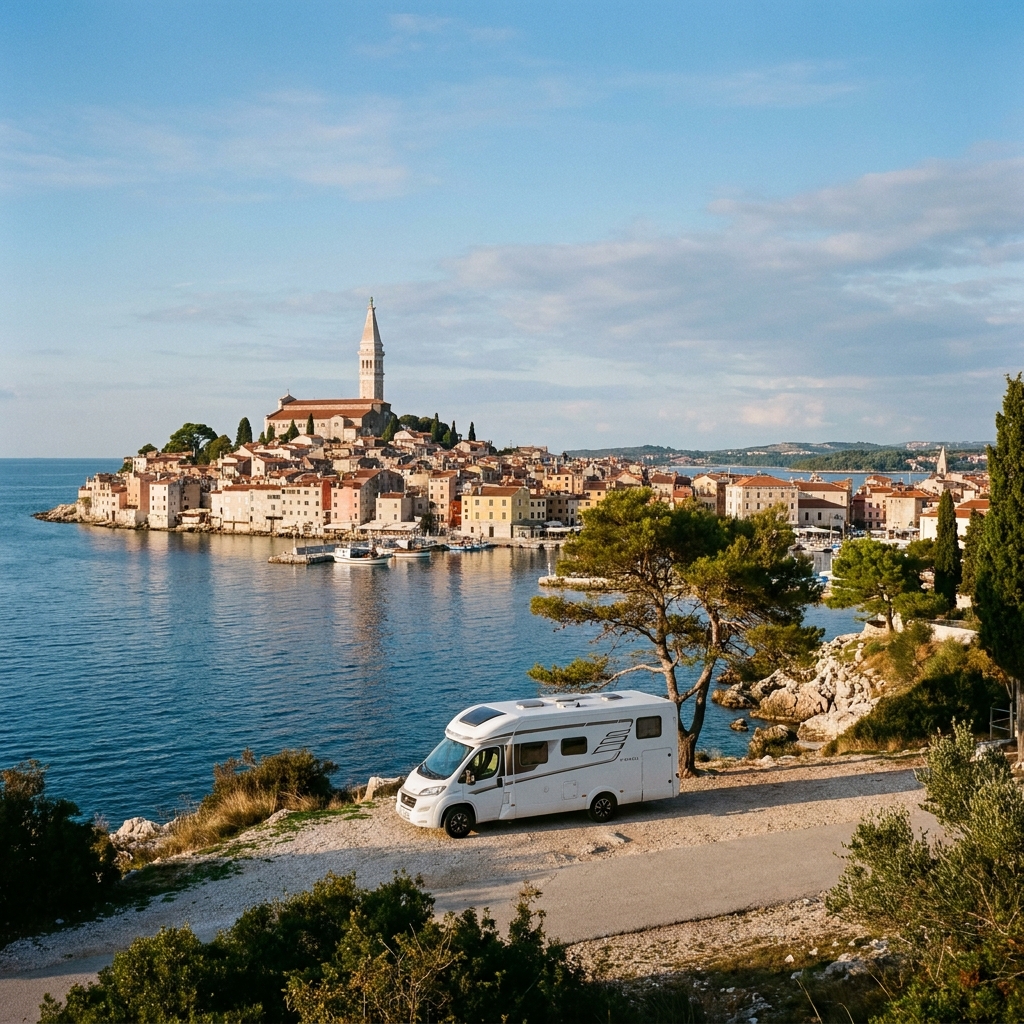
Rovinj
The picturesque town on the west coast of Istria is characterized by narrow, cobbled streets that climb steeply to the top of the hill. Here, the striking St. Euphemia Church, with its slender bell tower, proudly rises above the red roofs. The pastel-coloured facades of the houses in the old town reflect in the clear waters of the Adriatic Sea. Along the waterfront, fishing boats and pleasure yachts lie side by side in the small harbour. The Balbi Arch marks the entrance to the historic heart, where art galleries and small studios fill Grisia Street. In the immediate vicinity, wooded parks and rocky coves offer ample opportunity for coastal relaxation. The atmosphere here is a mix of Venetian history and a relaxed Mediterranean rhythm.
Stop 2
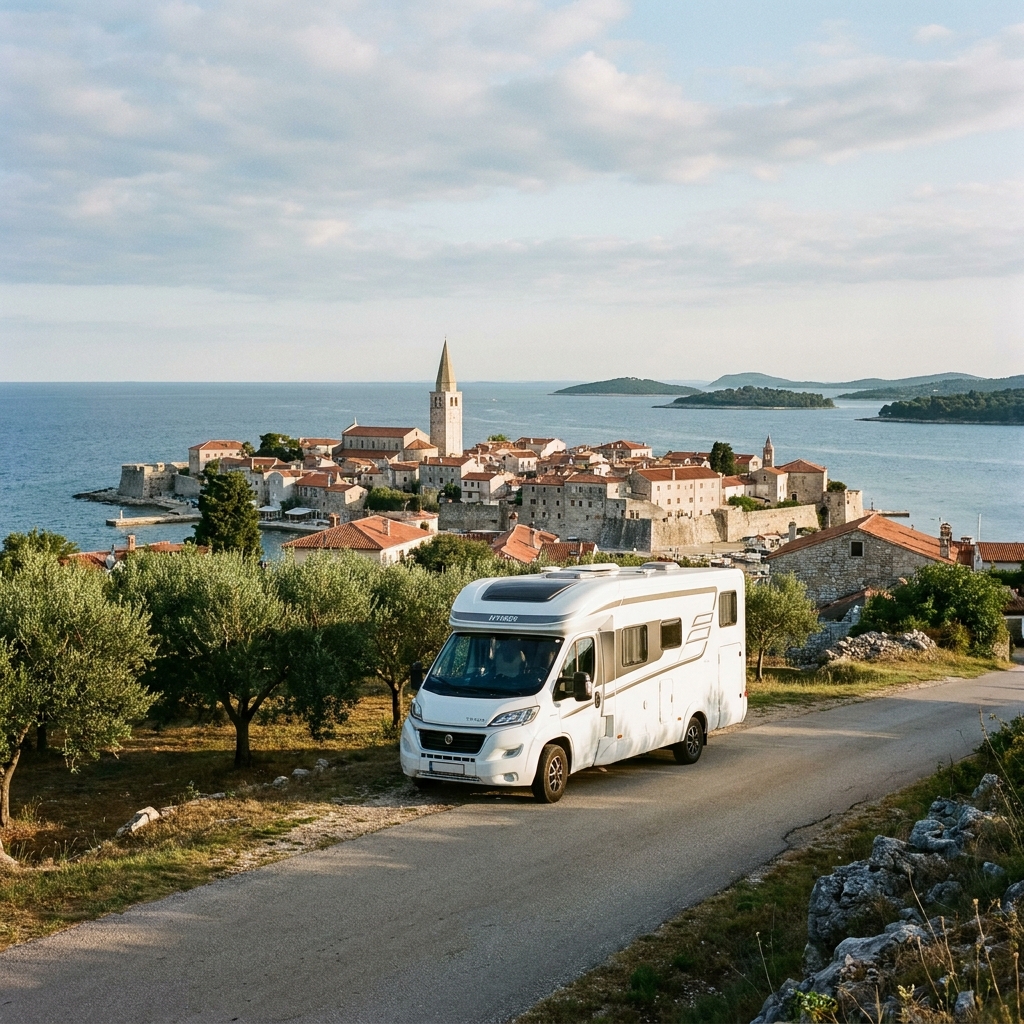
Poreč
The port city of Poreč lies on a peninsula on the west coast of Istria and bears traces of two thousand years of history. Its street plan still follows the original Roman layout, with Decumanus ulica as its central axis. In the heart of the old town stands the Euphrasian Basilica, known for its Byzantine mosaics. On Marafor Square, the foundations of ancient temples are visible among the medieval buildings. The city's waterfront offers a vibrant view of the Adriatic Sea and the nearby islets. Visitors stroll here past Venetian palaces and thick city walls that reflect its trading history. The surrounding coastline features shady pine forests and crystal-clear water.
Stop 3
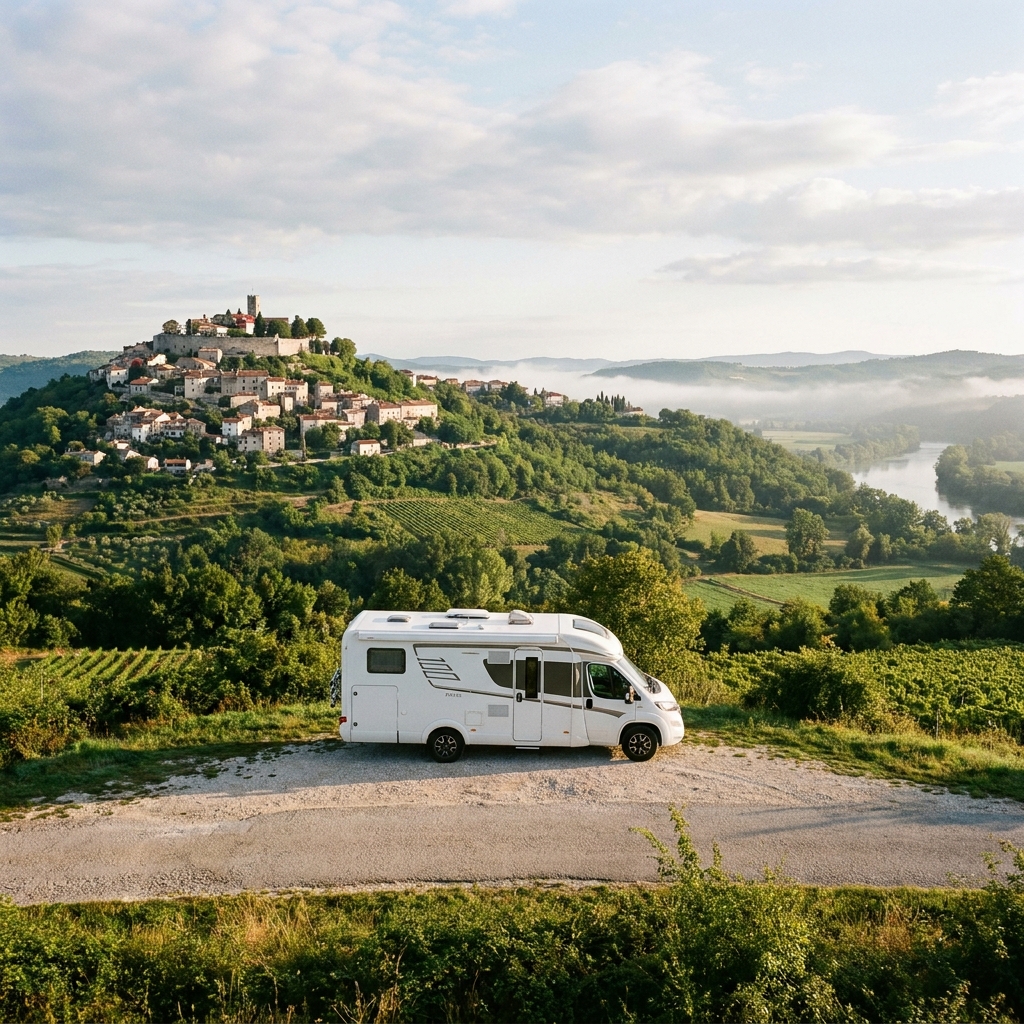
Motovun & Istrian Inland
Perched on a steep hilltop, the medieval town of Motovun towers high above the green landscape of Central Istria. A walk along the ancient city walls offers panoramic views of the surrounding vineyards and dense forests. In the lower-lying Mirna Valley, everything revolves around culinary traditions, with the search for white and black truffles taking center stage. The narrow, cobblestone streets exude a tranquil atmosphere that strongly contrasts with the bustling coastal towns. In the immediate vicinity, rolling roads invite exploration of smaller villages and local olive groves. The landscape is reminiscent of Tuscany, but retains its own, rawer Istrian character. Here, you experience the tranquility of the interior while the Adriatic Sea is never far away.
Stop 4
Pula
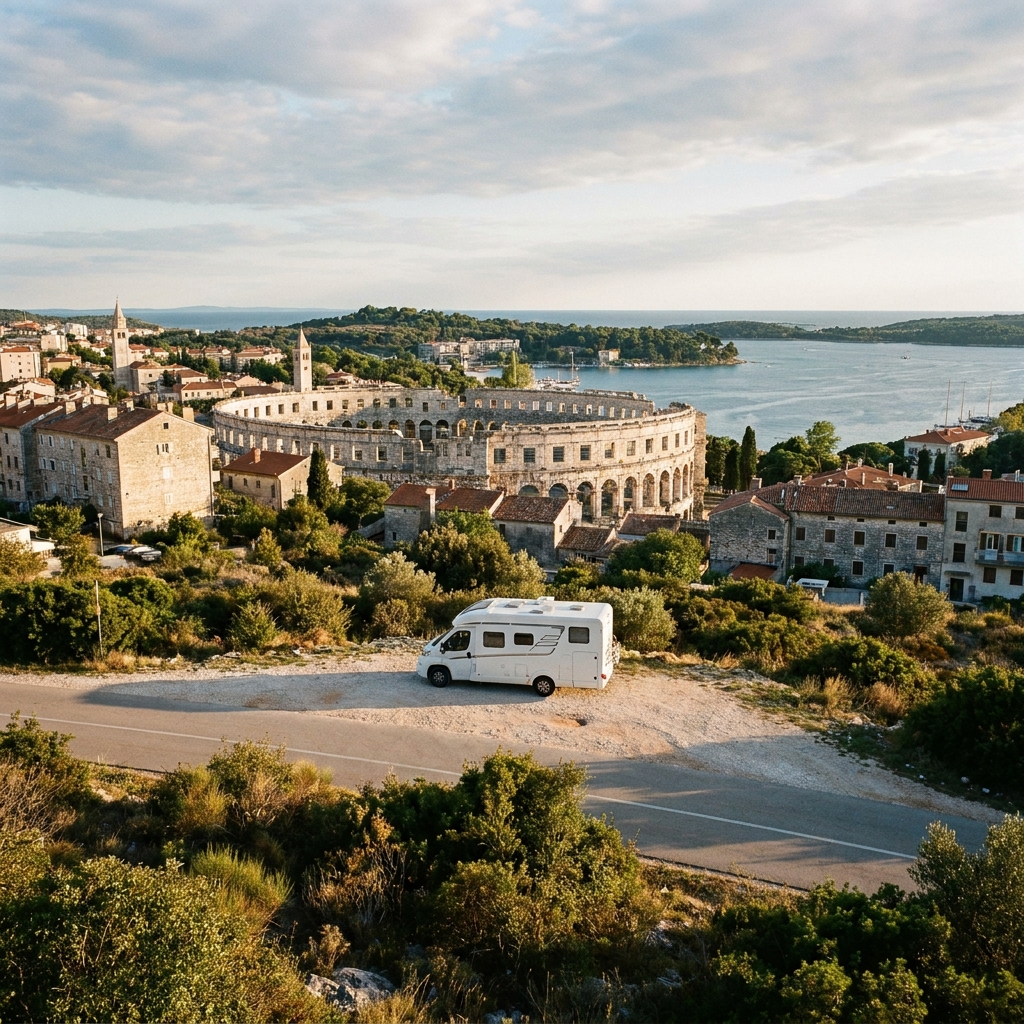
The coastal city of Pula is at the heart of the Istrian peninsula and is known for its impressive Roman architecture. The city's centerpiece is the Pula Arena, one of the best-preserved amphitheatres in the world, which still hosts regular events. Walking through the old town, you will encounter the Temple of Augustus and the richly decorated Arch of the Sergii. In addition to its archaeological treasures, the area surrounding the city offers countless rocky coves and crystal-clear swimming waters. Its proximity to Cape Kamenjak makes it an excellent destination for travelers looking to combine culture with rugged nature and cliff diving. Local markets and charming squares create an authentic atmosphere where you can enjoy Istrian specialties. The harbor provides a lively backdrop as the sun slowly sets behind the Adriatic Sea. A stay in this region offers a versatile experience where history and relaxation seamlessly blend.
Stop 5
Opatija
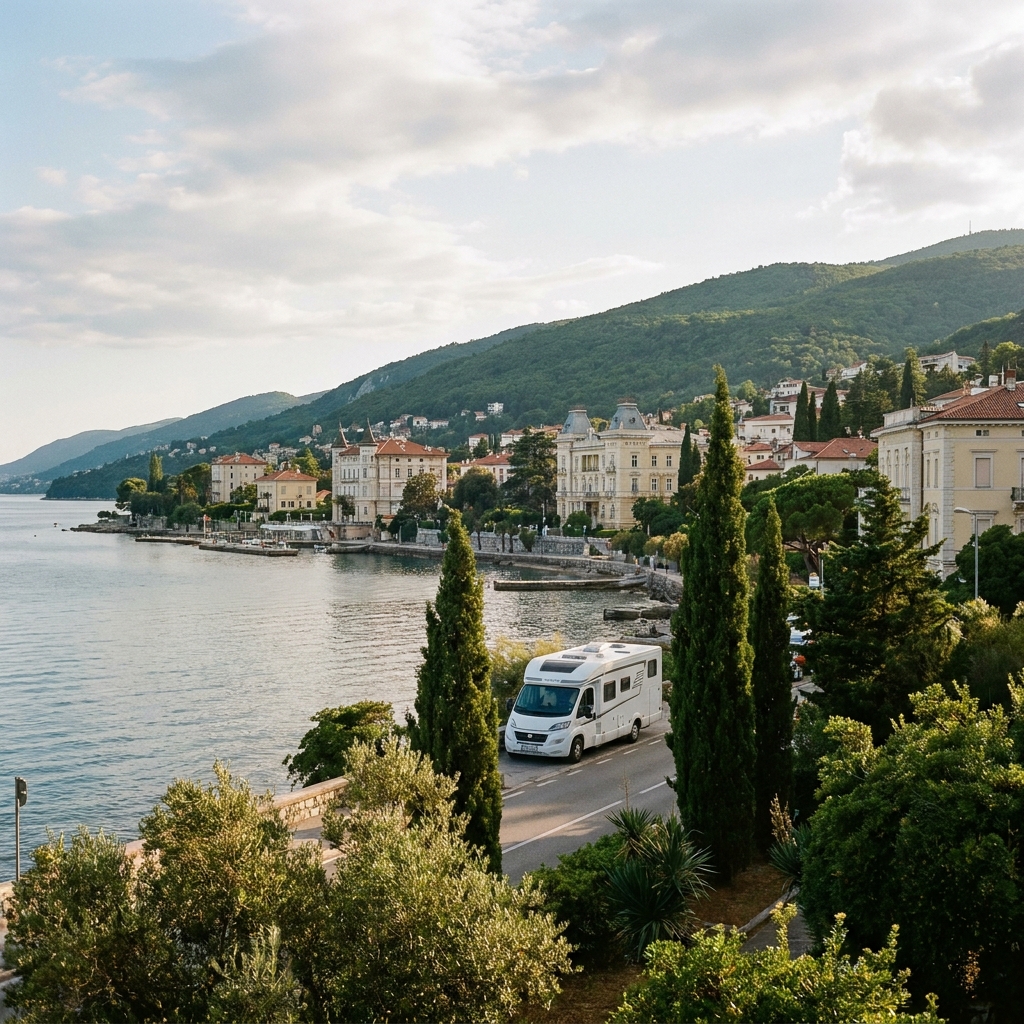
Opatija exudes the grandeur of the nineteenth century with its stately architecture and lush parks. Winding along the coastline is the twelve-kilometer-long Lungomare promenade, offering spectacular views over the Kvarner Bay. In the heart of the city lies Villa Angiolina, surrounded by exotic plants in a botanical garden. The iconic statue of the Girl with the Seagull adorns the rocks by the surf. Its sheltered location at the foot of Mount Učka ensures a mild climate and lush vegetation. Walkers enjoy the combination of salty sea air and the shade of ancient trees. The historic hotels and villas reflect the era when this was the nobility's favorite destination. It is an excellent place to break a journey along the Adriatic coast for a relaxing afternoon by the sea.
Stop 6
Krk
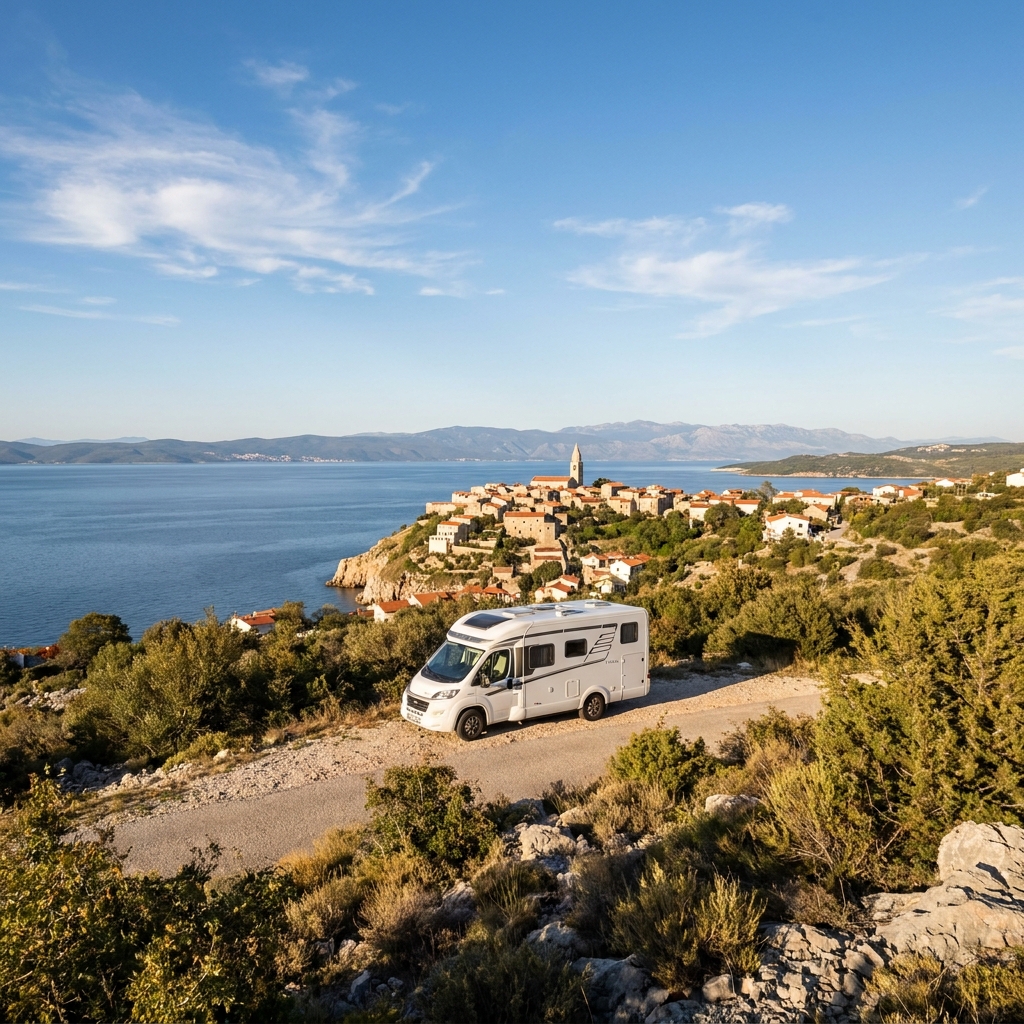
Krk is connected to the mainland by an impressive arch bridge, making access to this diverse island very easy. In the south lies the expansive Bay of Baška, where a long pebble beach is surrounded by bare, white limestone cliffs. The eponymous capital, Krk, breathes history with its medieval city walls and the robust Frankopan Castle on the quay. Hikers find their way through the rugged lunar landscapes on the plateaus or through fertile valleys full of olive groves. In the charming village of Vrbnik, perched high on a cliff, you can taste the local white wine while overlooking the Adriatic Sea. The coastline offers numerous coves with crystal-clear water that invite you for a refreshing swim. Thanks to its mix of historic architecture and rugged nature, the island is a versatile destination for every traveler.
Stop 7
Rab
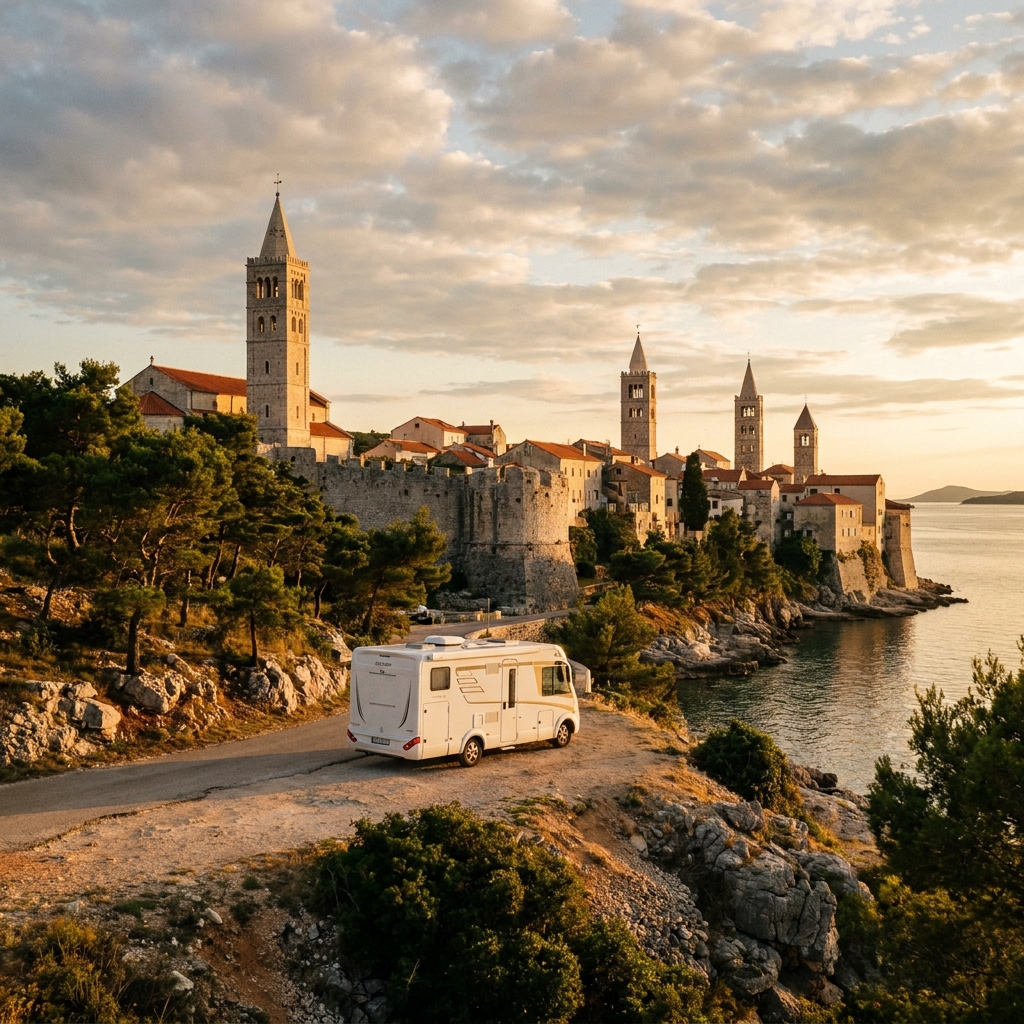
The island of Rab stands out for its surprisingly green landscape and a medieval capital with a recognizable silhouette. The four prominent bell towers of Rab town tower high above the red roofs and the Adriatic Sea. Stroll through the narrow stone streets of the old town where history and a Mediterranean atmosphere converge. On the north side of the island, the expansive sandy beaches of Lopar stretch along the shallow bays. The forested Kalifront peninsula offers shady paths through one of the region's best-preserved holm oak forests. From the quay, you can look out over the bobbing fishing boats and the crystal-clear water that surrounds the bay. The combination of the town's cultural heritage and the natural tranquility of the forests makes a stay here incredibly diverse.
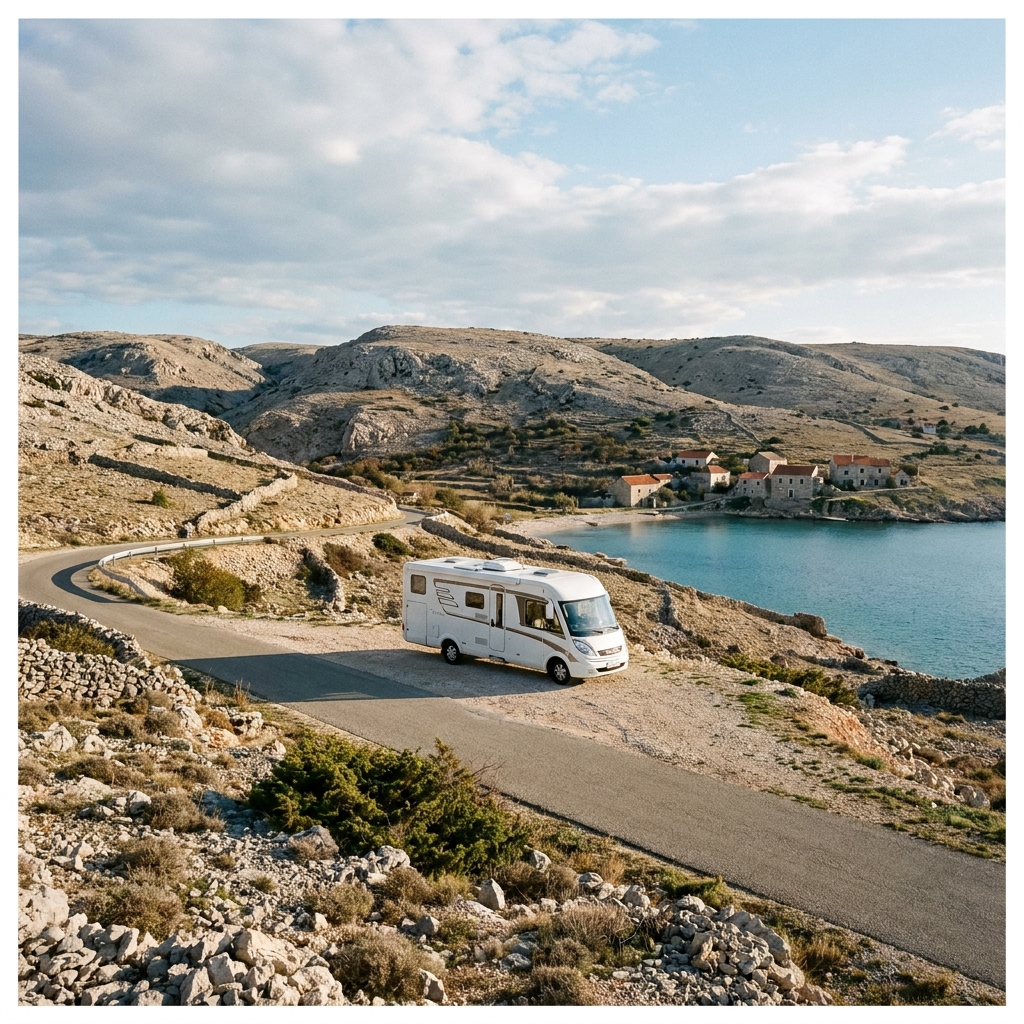
Stop 8
Page
Pag island is immediately striking for its barren, white limestone landscape that strongly resembles a lunar landscape. In the north of the island lie the ancient olive groves of Lun, home to trees that are over a thousand years old. The town of Pag itself is known for its exquisite tradition of bobbin lace-making, which can still be admired in the streetscape and local museums. Gastronomy plays a major role on the island, with the renowned sheep's cheese Paški sir as a local export. The coastline features countless sheltered bays and salt pans that punctuate the white landscape with deep blue hues. Travelers will find a unique combination of rugged nature and deeply rooted cultural traditions here. A drive over the bridge connecting the island to the mainland offers sweeping views of the Velebit mountain range across the water. The atmosphere on the island is serene and completely unlike the green coastal regions of Croatia.
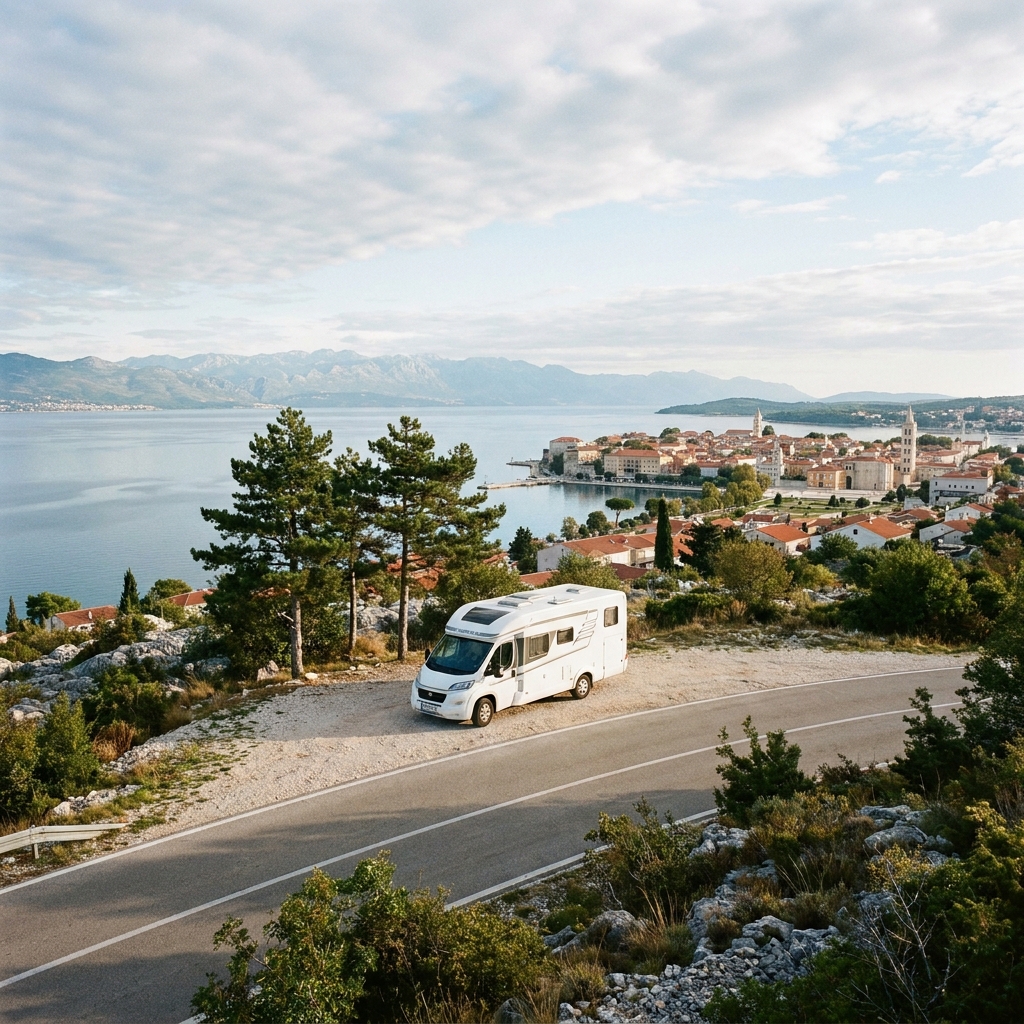
Stop 9
Zadar
Zadar combines ancient history with modern artworks directly on the Adriatic coast. In the pedestrianized center, visitors stroll along gleaming marble streets past Roman remains and medieval churches. Along the waterfront, the Sea Organ creates a constant symphony of natural sounds powered by the movement of the waves. Just beside it, the Greeting to the Sun lights up as evening falls, creating a unique spectacle during sunset. The city offers a relaxed atmosphere with numerous terraces and views of the nearby island archipelago. The proximity to the sea and its rich culture make this a valuable location on the Dalmatian coastline. The combination of maritime tranquility and urban dynamism creates a unique experience.
Want to actually take this trip?
We put together the complete package for you — motorhome, ferry, campsites — in one personal email.
Stop 10
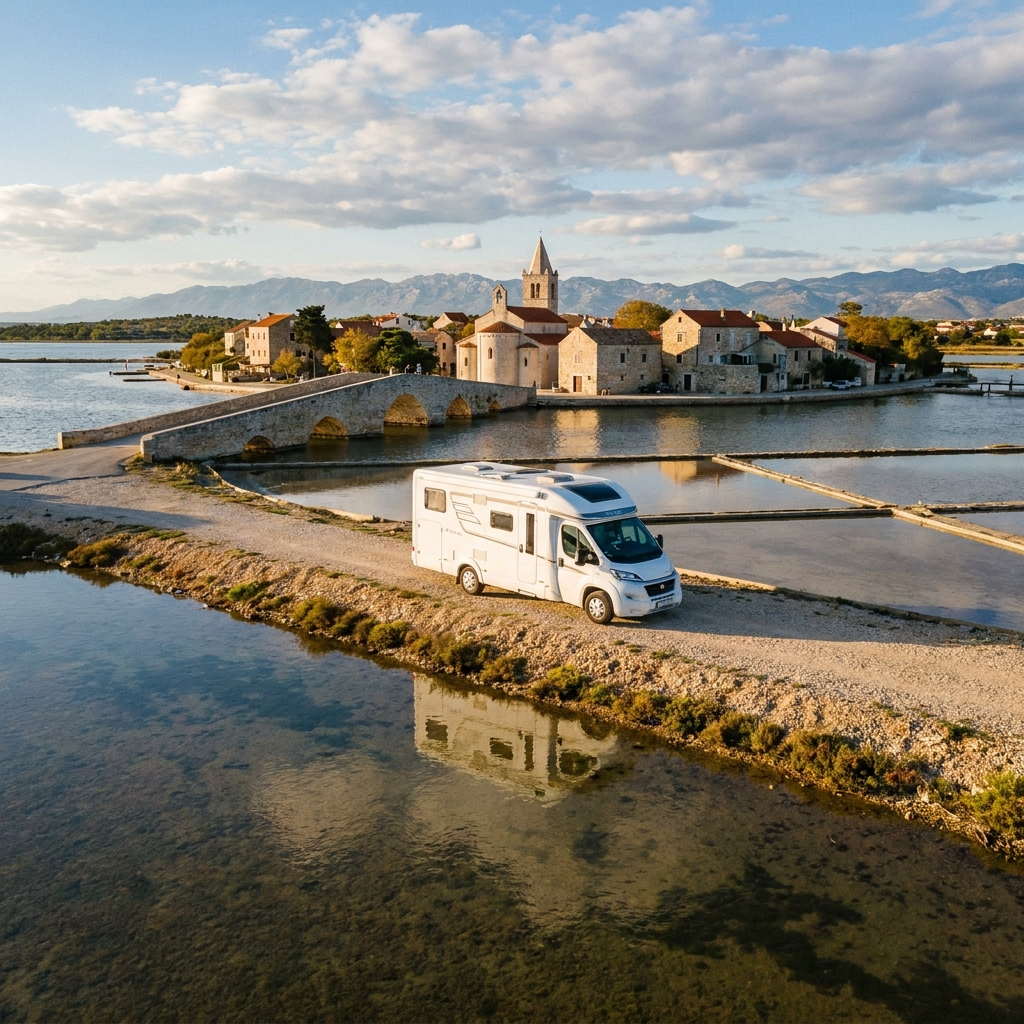
Nin
Nin is situated on a small island in a shallow lagoon and is connected to the mainland by two stone bridges. The settlement is known as the country's oldest royal city and is home to the Church of the Holy Cross, one of the smallest cathedrals in the world. Visitors can wander through the narrow streets to the Roman temple ruins and the statue of Gregory of Nin. Just outside the town center are the vast salt pans where salt is still traditionally harvested from the Adriatic Sea. Sun and water lovers can head to the long sandy beach of Kraljičina plaža, known for its healing mud. The shallow waters of the lagoon warm up quickly and provide a sheltered spot for relaxation. The combination of early medieval history and natural riches makes a visit to this location multifaceted.
Stop 11
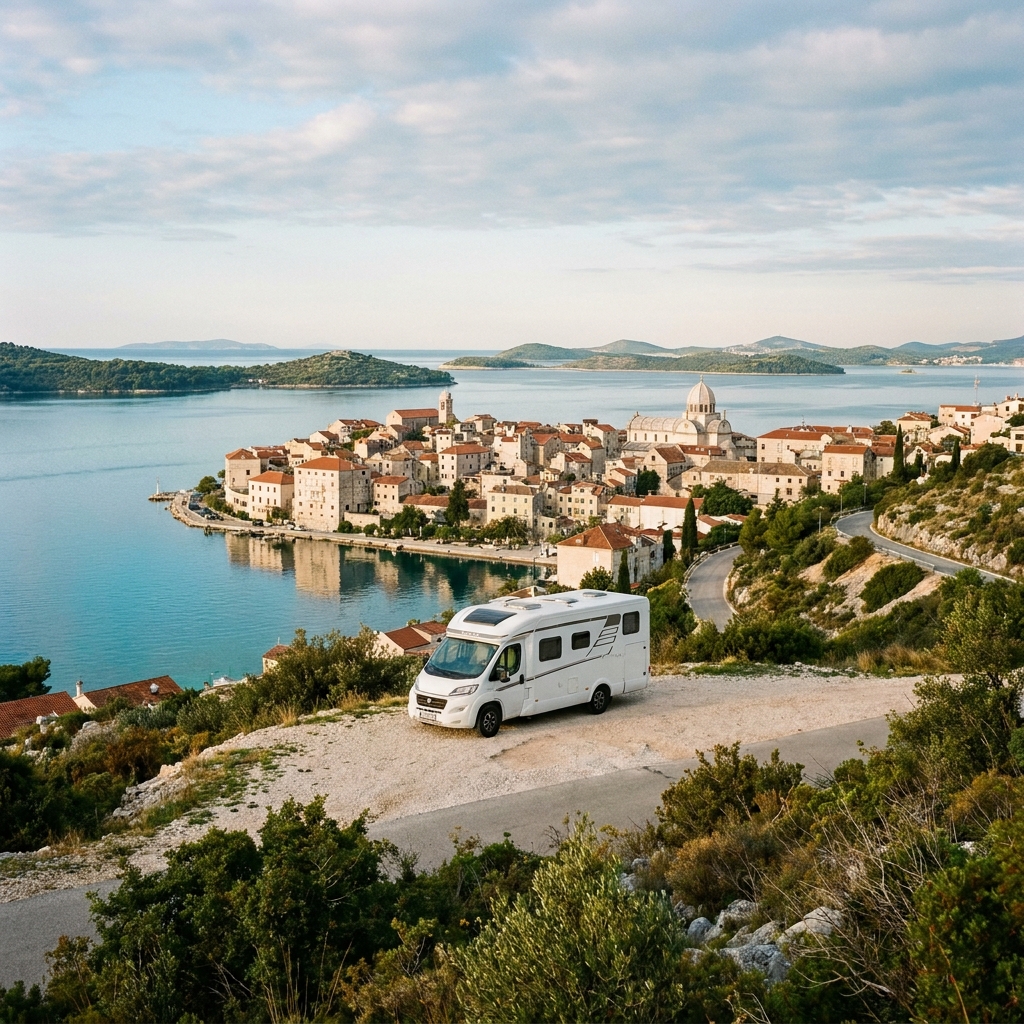
Šibenik
Šibenik is situated on a deep bay where the Krka river meets the Adriatic Sea. The city is distinguished by the impressive Cathedral of St. James, a masterpiece constructed entirely of stone. Narrow stone staircases and squares form a labyrinth in the car-free historic heart. From St. Michael's Fortress, you can enjoy a panoramic view of the archipelago and the surrounding islands. At the entrance to the canal, the imposing St. Nicholas Fortress guards the access to the port. Its proximity to the waterfront makes it a pleasant place to wander along the quays. Here, you experience an authentic Dalmatian atmosphere that feels less polished than other coastal cities.
Stop 12
Trogir
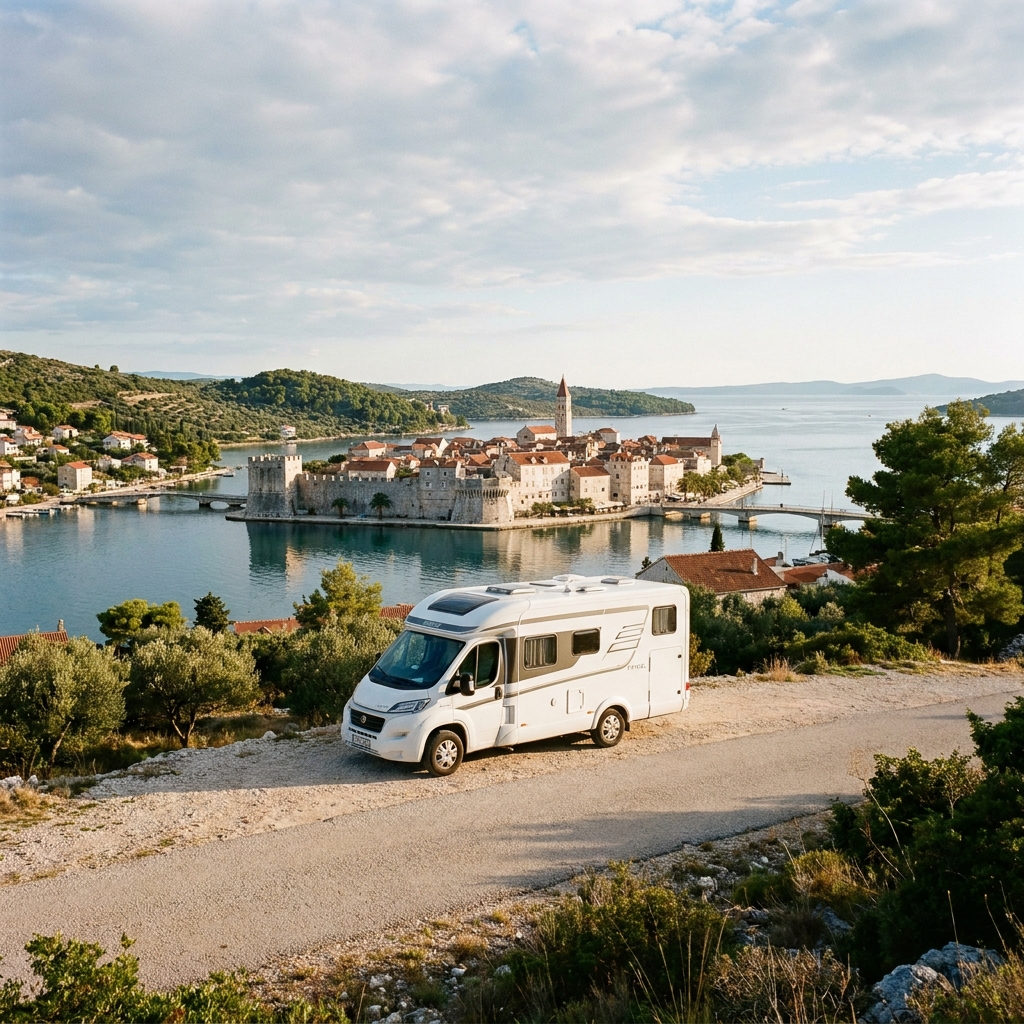
Trogir is located on a small island connected by bridges to the mainland and Čiovo island. The city's historic heart is a UNESCO World Heritage site in its entirety, due to its exceptional Romanesque and Gothic architecture. The Katedrala svetog Lovre dominates the central square with an impressive portal by Master Radovan. Walking through the narrow, cobbled alleys, you pass richly decorated palaces and courtyards. Along the waterfront, the wide promenade offers views of the masts of moored ships and the robust Kamerlengo Fortress. The local monasteries preserve ancient treasures, including the rare marble Kairos relief. The combination of maritime atmosphere and medieval stone grandeur makes a stay here a journey through time. The proximity of the Adriatic Sea provides a pleasant breeze in the shaded streets.
Stop 13
Split
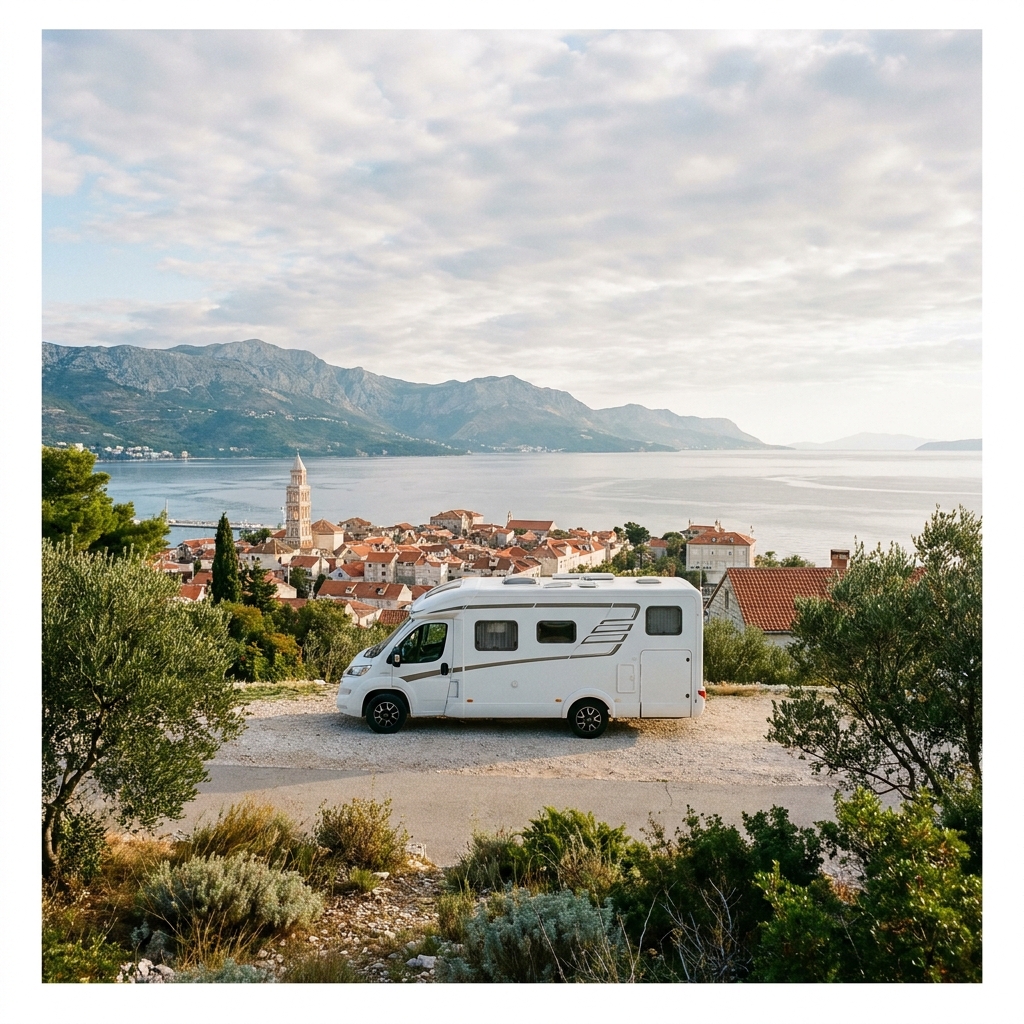
Split is a port city on the Adriatic coast where Roman history and modern life converge. The heart of the city is formed by the expansive Diocletian's Palace, a complex full of narrow alleyways. Here stands the Cathedral of Saint Domnius with a distinctive bell tower that rises above the rooftops. Along the waterfront, the wide Riva promenade stretches out, offering views of the ferries passing to the islands. For a panoramic overview of the surroundings, the forested Marjan Hill offers various walking trails. The city serves as a central hub for travelers exploring the Dalmatian coastline. In the neighborhoods surrounding the center, fresh produce and fish are traded daily at local markets. The combination of ancient architecture and a maritime atmosphere makes the location a versatile place to stay.
Stop 14
Brač & Zlatni Rat
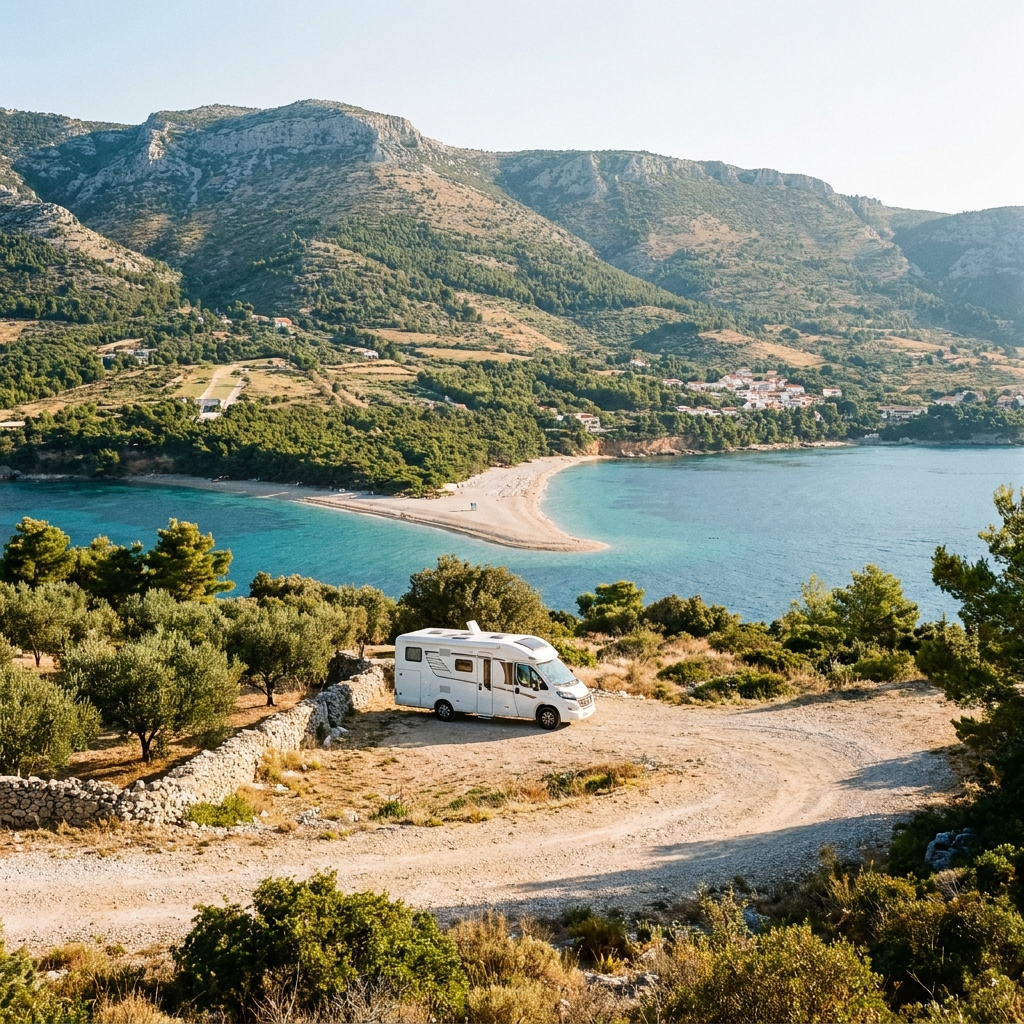
The island of Brač is known for its white limestone and offers a rugged, authentic atmosphere. A highlight is the iconic pebble beach Zlatni Rat near Bol, whose tip constantly changes shape due to currents and wind. For panoramic views of the Adriatic archipelago, a trip to the top of Vidova Gora is highly recommended. In the interior, you'll find abandoned quarries and the remote Blaca Monastery, built into the cliffs. The coastline invites relaxation in sheltered coves with crystal-clear water. Small fishing villages like Milna and Postira exude a tranquil pace where local olive oil and wine take center stage. The ferry crossing completes the island visit experience and offers a different perspective on the coast. Hikers and nature lovers will find a diverse landscape of pine forests and karst mountains here.
Stop 15
Hvar
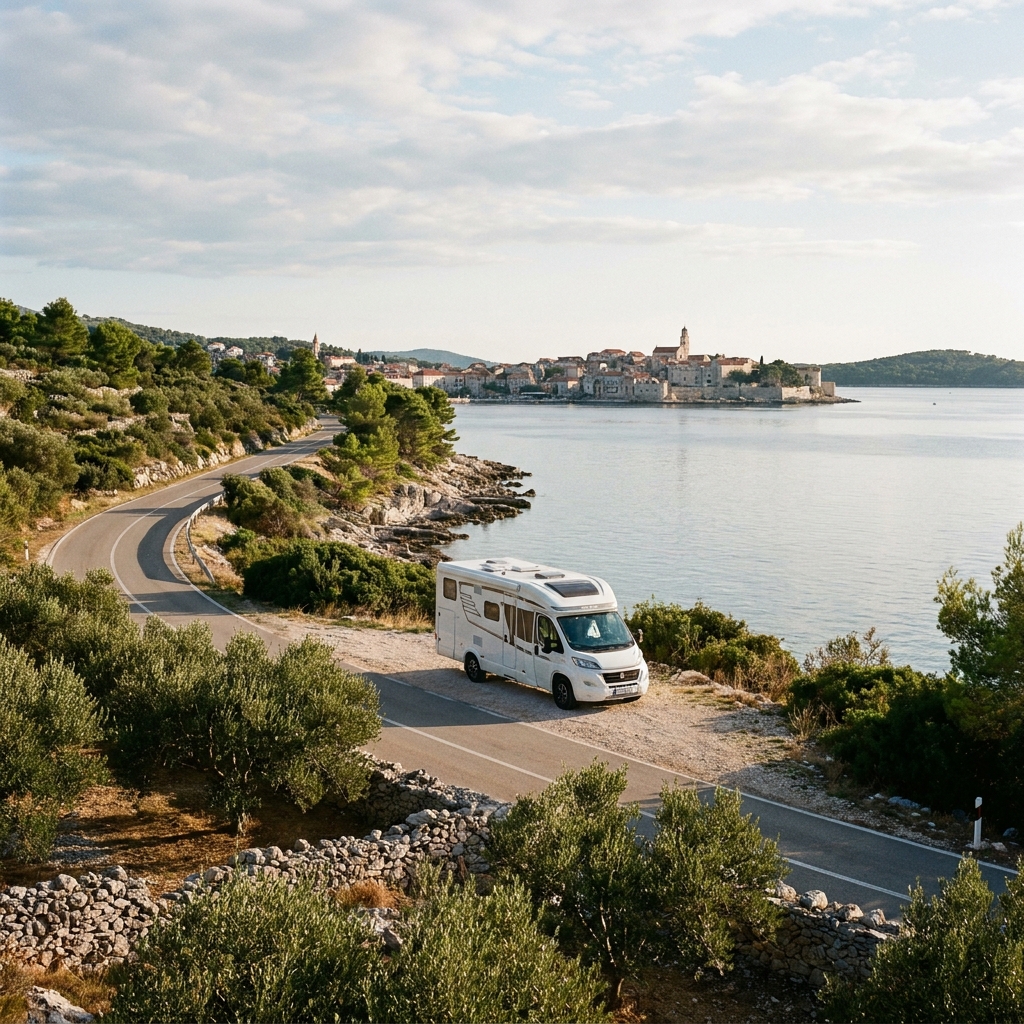
Hvar is characterized by a combination of Venetian architecture and extensive lavender fields. From the elevated Tvrdjava Fortica fortress, you have a panoramic view over the city's red rooftops and the Adriatic Sea. In the heart of the old town lies the spacious square, with the Katedrala svetog Stjepana serving as its prominent centerpiece. Off the coast lie the wooded Pakleni Otoci islands, accessible by boat for a day of tranquility and crystal-clear waters. The winding roads across the island lead past centuries-old olive groves and stone walls that divide the landscape. In the harbor, fishing boats bob alongside modern yachts, highlighting the place's maritime history. Strolls through the narrow stone streets reveal courtyards and local markets offering Mediterranean produce. The mild climate and the scent of rosemary make a stay on this island a truly sensory experience.
Stop 16
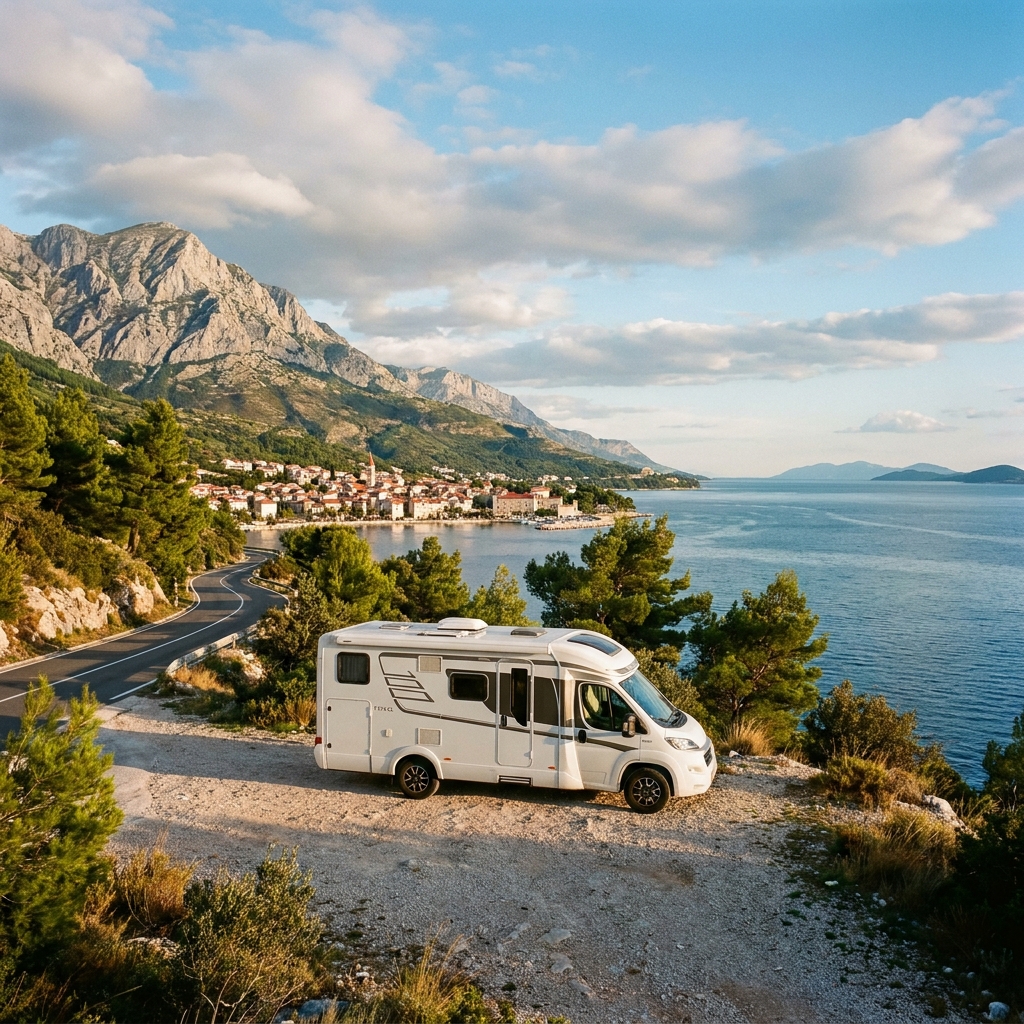
Makarska Riviera
The Makarska Riviera stretches along a narrow coastal strip at the foot of the Biokovo mountains. Here, steep limestone cliffs meet the azure Adriatic Sea, creating a dramatic backdrop when driving along the coastal road. Punta Rata beach in Brela is known for its fine pebbles and the distinctive rock formation that juts out of the water just off the coast. For expansive views of the surrounding islands, the Biokovo Skywalk offers a glass platform above the abyss. Hikers will find numerous trails that wind their way up through pine forests to the rugged mountain peaks of the nature park. In the harbor towns along the coast, there are quayside terraces and sheltered moorings for boats. The combination of mountain sports and relaxation by the water makes this region a versatile stop in Dalmatia.
Stop 17
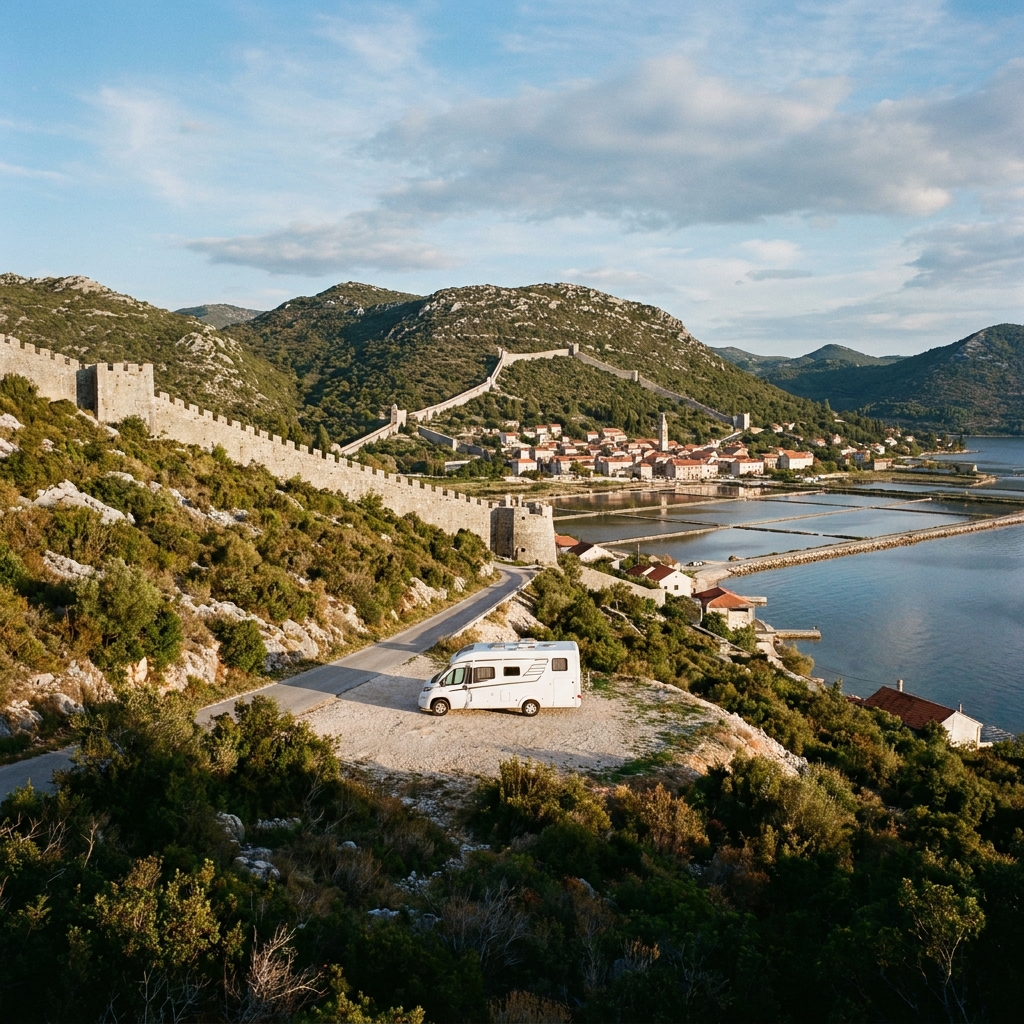
Ston & Pelješac
The Pelješac peninsula forms a narrow spit of land that juts deep into the Adriatic Sea. At the entrance to the peninsula lie the impressive Walls of Ston, a fortification that connects the villages of Ston and Mali Ston. In the shallow waters of Mali Ston Bay, oysters and mussels have been traditionally cultivated for centuries. The steep slopes of the interior are covered with expansive Dingač vineyards, where local red wines develop their characteristic flavour. Here, travellers find a quieter alternative to the busy coastal towns, surrounded by rugged hills and azure coves. Along the coastline lie small fishing villages and secluded pebble beaches that invite a relaxing stay by the water. The panoramic roads along the spine of the peninsula offer constant views of the nearby islands and the Dalmatian coastline. A visit to the salt pans of Ston provides insight into the historical salt production that once brought great wealth to this region.
Stop 18
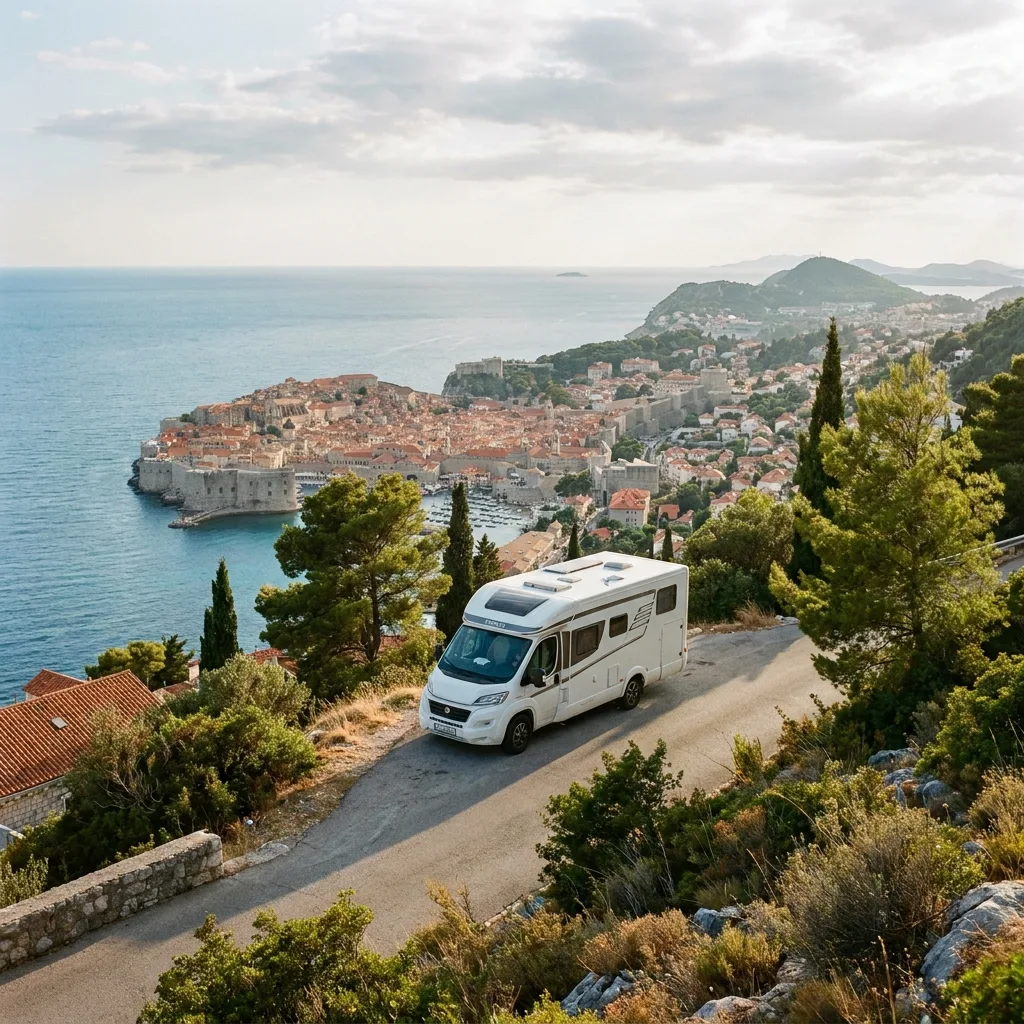
Dubrovnik
The walled city of Dubrovnik lies on the Adriatic coast and is known for its well-preserved historic architecture. The wide main street, Stradun, forms the heart of the old town, where polished stones gleam in the sun. From the impressive City Walls of Dubrovnik, you have a panoramic view of the red roofs and the azure sea. Lovrijenac Fortress stands guard on a steep rock overlooking the city's western entrance. Walkers explore the narrow staircases and alleys that crisscross the car-free center. The nearby coastline offers various spots for a refreshing dip in the clear water. Local markets and squares create a lively atmosphere among the ancient monuments.
Ready to hit the road?
We'll email you a personal travel proposal within 24 hours — motorhome, route and full cost overview included. Save €400–€800 on average vs. a travel agency.
No packages, no middlemen. Learn how it works
Camproads gave me a lot of inspiration for our campervan trip. The routes are beautiful, with a good balance of nature and city life, and the route generator made planning super easy. It's also really handy that there are so many good camping options at the locations, and that you can easily find the campervan that suits your needs and compare prices. This way, we can plan everything ourselves and book the campervan directly with the rental company. That's much cheaper than an organized trip!
Michiel van de Bunt
February 2026
What a difference from how I used to plan trips. Through Camproads, I put together a complete campervan trip in just a few minutes. It's so easy to use, and you can customize everything to your liking. The ability to choose your travel pace makes it even more enjoyable, especially now that we're traveling with a baby for the first time.
Alieke Zelhorst
February 2026