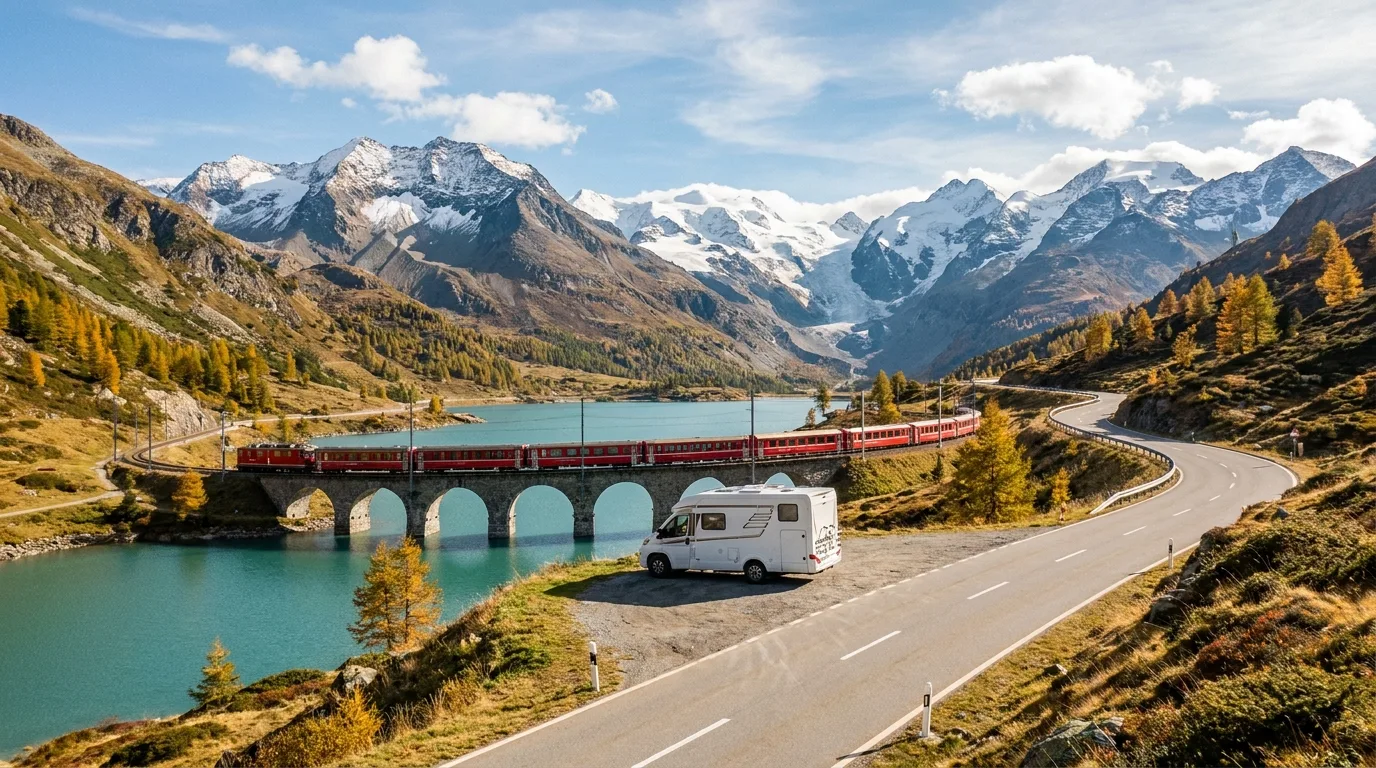
Take this trip by motorhome
Save €400–€800 on average vs. a travel agency
Duration
x daysDistance
0 km
stops
0
Choose a date and duration that fits your preferences
About this route
Highlights
- ✦Verken de oudste stad van Zwitserland en de Kathedrale Sankt Maria in Chur
- ✦Geniet van het uitzicht op de witte kliffen van Rheinschlucht Ruinaulta vanaf Il Spir
- ✦Wandel door Val Trupchun in het ongerepte Zwitsers Nationaal Park
- ✦Rijd over de Berninapas langs het turkooizen Lago Bianco
- ✦Ontdek de charmante stenen huizen van Soglio in Val Bregaglia
- ✦Wandel ontspannen door Parco Ciani aan het meer van Lugano
- ✦Bezoek het imposante middeleeuwse Castelgrande in Bellinzona
The route
Stop 1
Locarno & Ascona
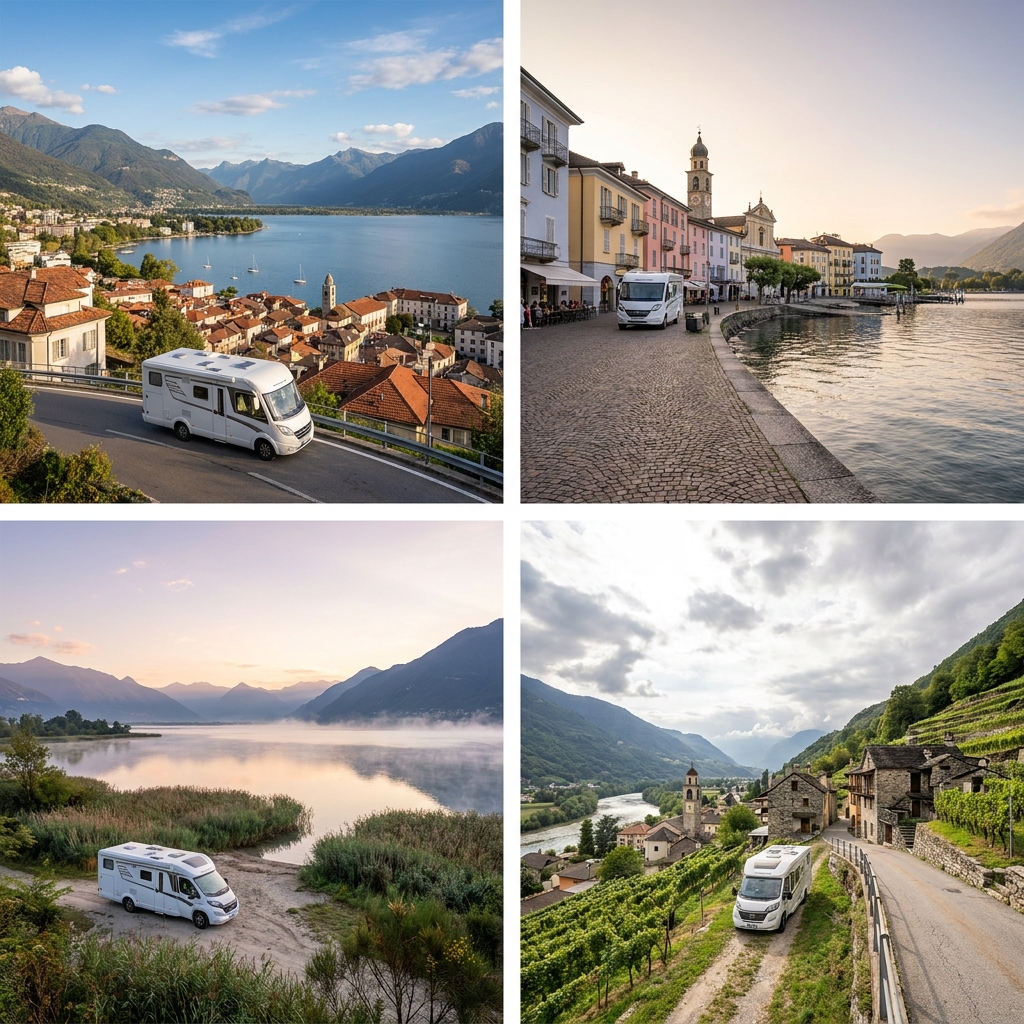
Locarno and Ascona are located on the northern shores of Lake Maggiore, where a Mediterranean climate merges with the Swiss Alps. Piazza Grande in Locarno is the region's central square, surrounded by characteristic arcades. A short distance away, the Lungolago di Ascona offers a promenade with colourful facades directly bordering the water. Visitors can explore the narrow alleys of the historic centres or take a boat trip to the botanical gardens on the Brissago Islands. For expansive views of the surroundings, a cable car ascends to the pilgrimage church of Madonna del Sasso. Falconeria Locarno offers daily demonstrations with various birds of prey. This sunny corner of Switzerland combines Italian influences with Alpine scenery. The nearby mountains are accessible via various hiking trails that depart directly from the shores.
Stop 2
Lugano
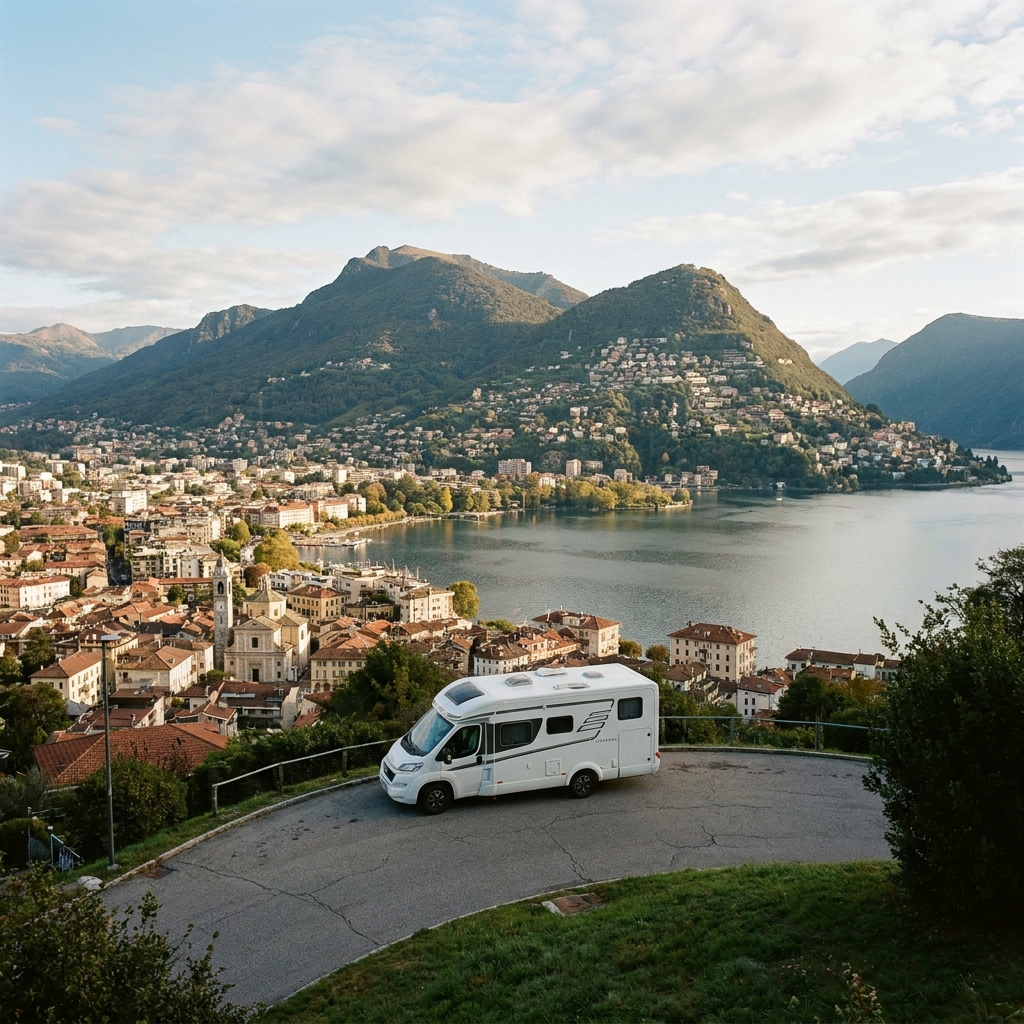
Lugano, situated on the sun-drenched shores of its namesake lake, exudes a Mediterranean atmosphere. The city is surrounded by distinctive mountains like Monte Brè and Monte San Salvatore. Walkers enjoy the views from the mountaintops, while the promenade invites leisurely strolls along the water. In the lush Parco Ciani, subtropical plants and flowers adorn the walking paths. The historic city center boasts beautiful churches and squares with Italian flair. The clear waters of Lago di Lugano offer ample opportunities for boat trips to surrounding fishing villages. Thanks to its mild climate, a stay here feels like a vacation in Southern Europe.
Stop 3
Monte Generoso
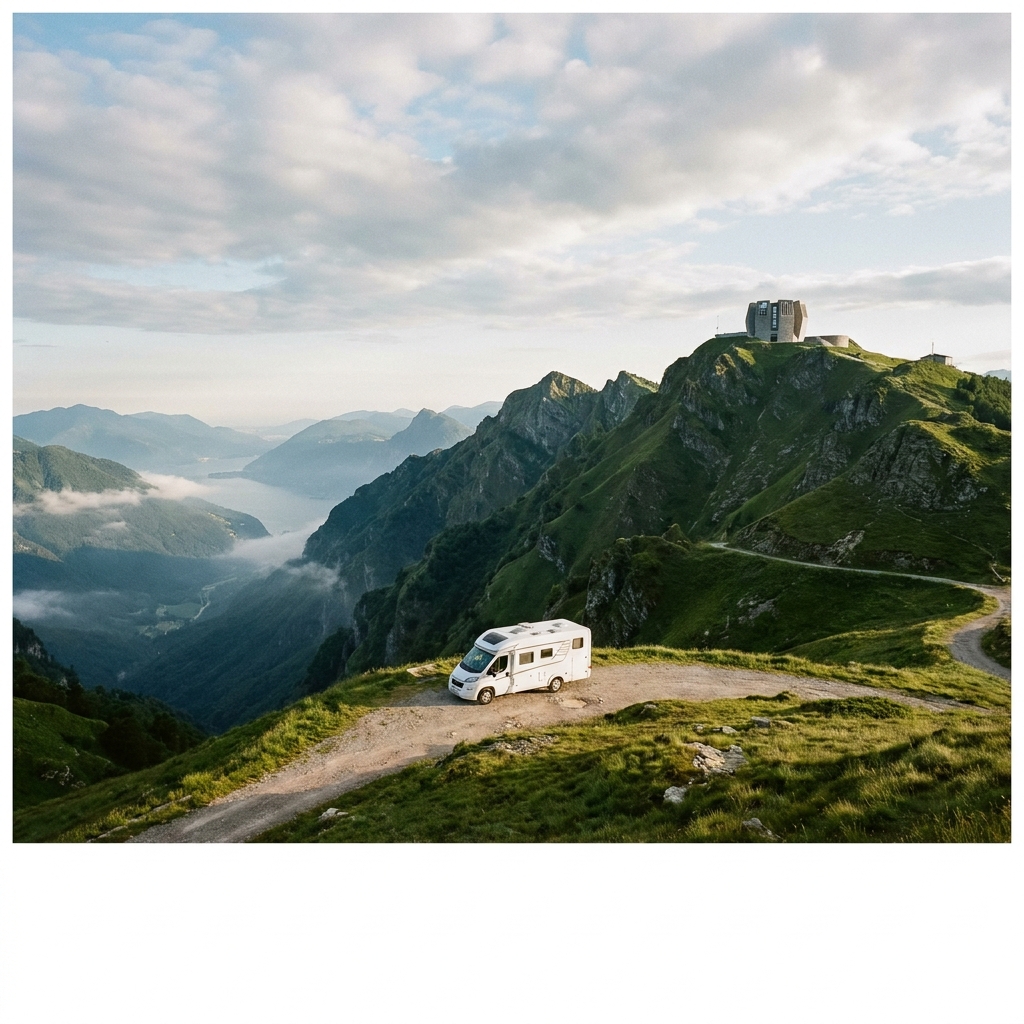
On the border between Switzerland and Italy, Monte Generoso towers high above Lake Lugano. The summit is reached by a historic cogwheel railway departing from Capolago. Once at the top, the striking Fiore di pietra building immediately catches the eye with its modern architecture. From the panoramic terrace, you can enjoy a sweeping view stretching from the Apennines to the snow-capped Alpine peaks. Hikers will find an extensive network of trails leading through limestone landscapes and past deep ravines. In the nearby valleys, such as the Muggio Valley, you can experience the authentic atmosphere of traditional stone villages. For those wishing to escape the hustle and bustle of the lakes, this mountain offers a serene environment full of natural contrasts.
Stop 4
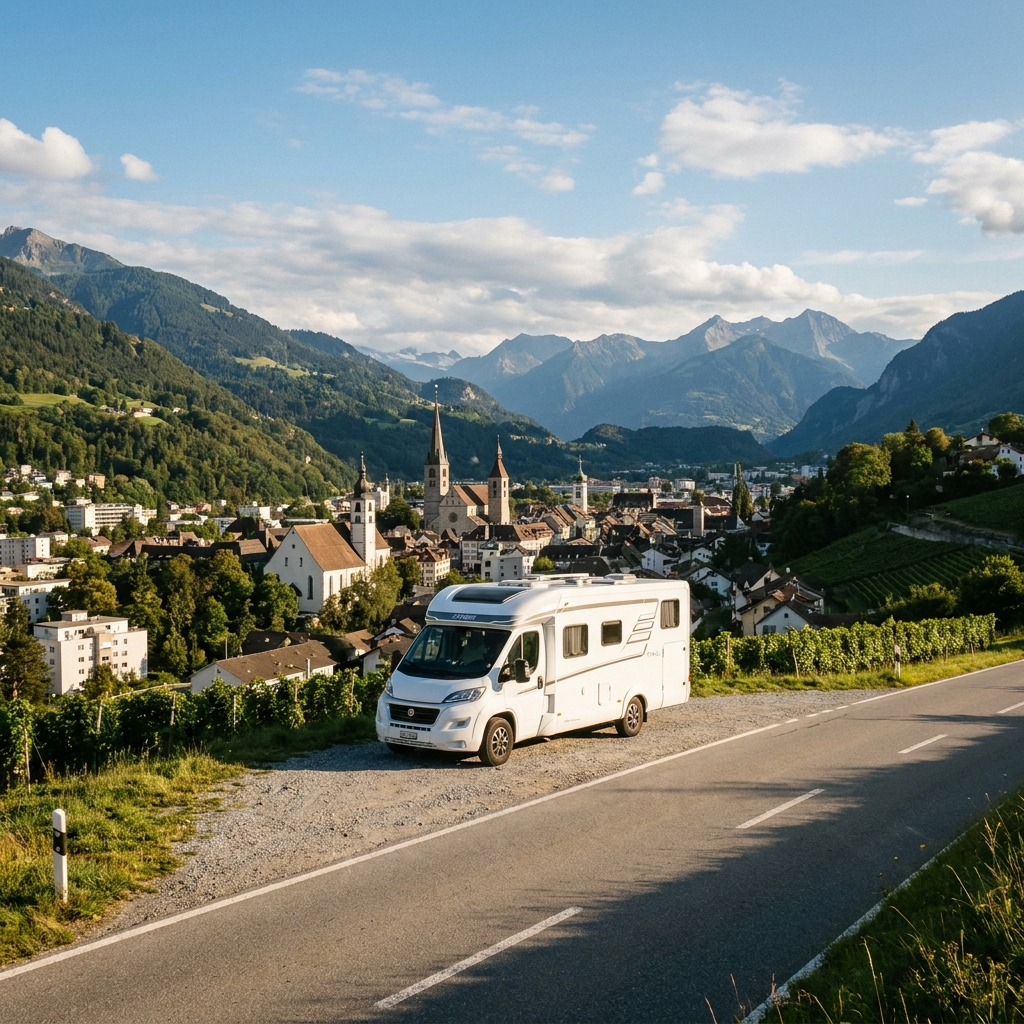
Chur
Nestled deep in the Rhine Valley, Chur welcomes visitors as Switzerland's oldest city. The pedestrianized streets in the old town lead to the impressive St. Mary's Cathedral, towering high above the rooftops. Directly from the city center, a cable car takes travelers to the alpine meadows of Brambrüesch, offering panoramic views of the Alps. The city serves as a vital hub where the famous red trains of the Bernina Express begin their journey south. Along the banks of the Plessur River, the tranquility of the mountains blends with vibrant urban life. In the local wine bars, one can sample specialties from the nearby Bündner Herrschaft region. The surrounding mountain peaks provide a dramatic backdrop for a stroll through the centuries-old alleys.
Stop 5
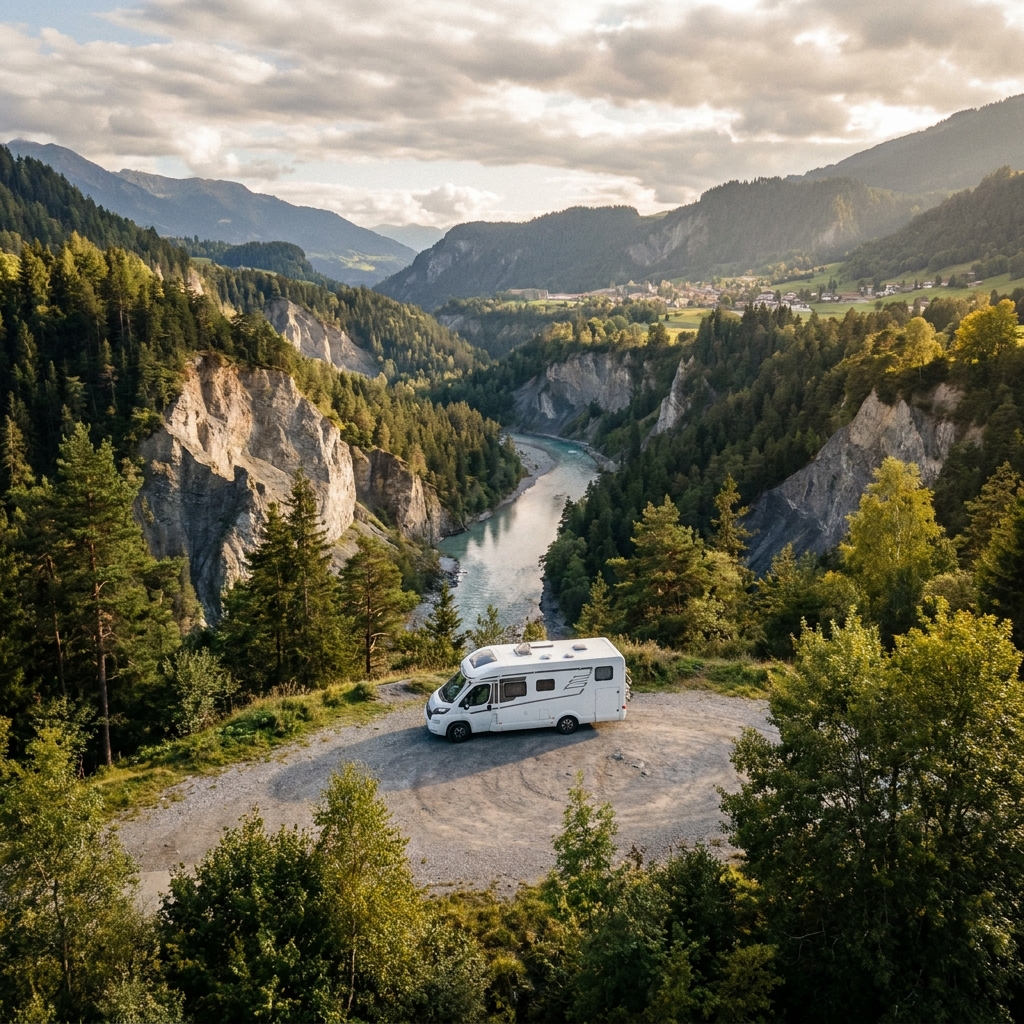
Rhine Gorge Ruinaulta
The Rhine Gorge Ruinaulta in Graubünden displays an impressive landscape of white limestone cliffs and turquoise water. Hiking trails wind along the steep edges, offering views of the river flowing deep in the valley. The Il Spir viewing platform offers a panoramic perspective of the striking horseshoe bend in the Rhine. Nearby lies Lake Cauma, known for its clear water and wooded shores. The area feels rugged due to the visible traces of a prehistoric landslide. Visitors can explore the gorge via the Rhaetian Railway or by hiking through the dense forests. The natural monuments in this area form a sharp contrast with the surrounding high Alpine peaks. It is a tranquil place where the power of water and geology are visible everywhere.
Stop 6
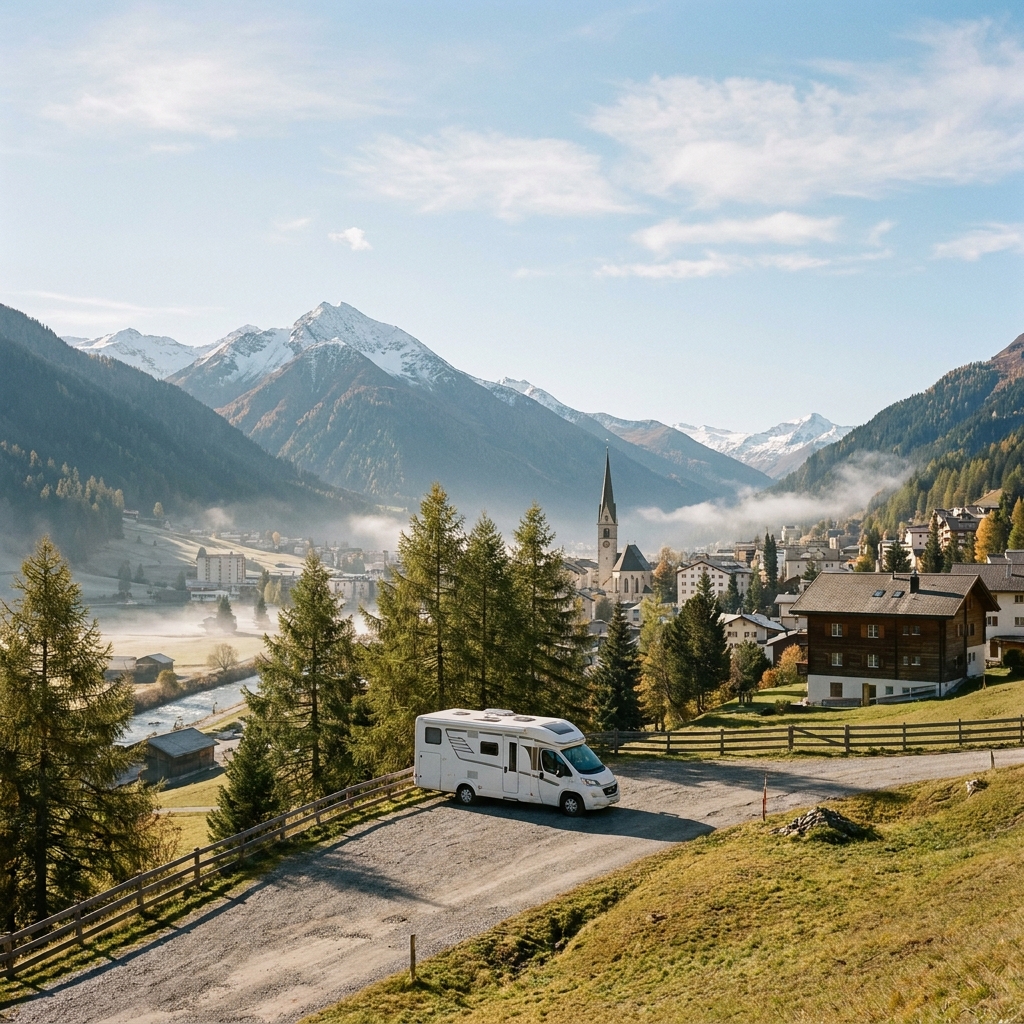
Davos
Davos is situated at an impressive altitude and is surrounded by the steep peaks of the Rhaetian Alps. In the valley, Lake Davos forms a natural focal point where water sports and relaxation converge along its shores. Art lovers visit the Kirchner Museum Davos for a deeper dive into Expressionism. The Schatzalp is easily accessible by cable car, where the botanical Alpine garden and panoramic hiking trails await. The surroundings invite active explorations through side valleys such as the Sertigtal or Dischmatal. The village itself combines urban infrastructure with the immediate proximity of pristine mountain slopes. Due to its central location in Graubünden, it is an excellent place for longer stays to explore the surrounding passes.
Stop 7
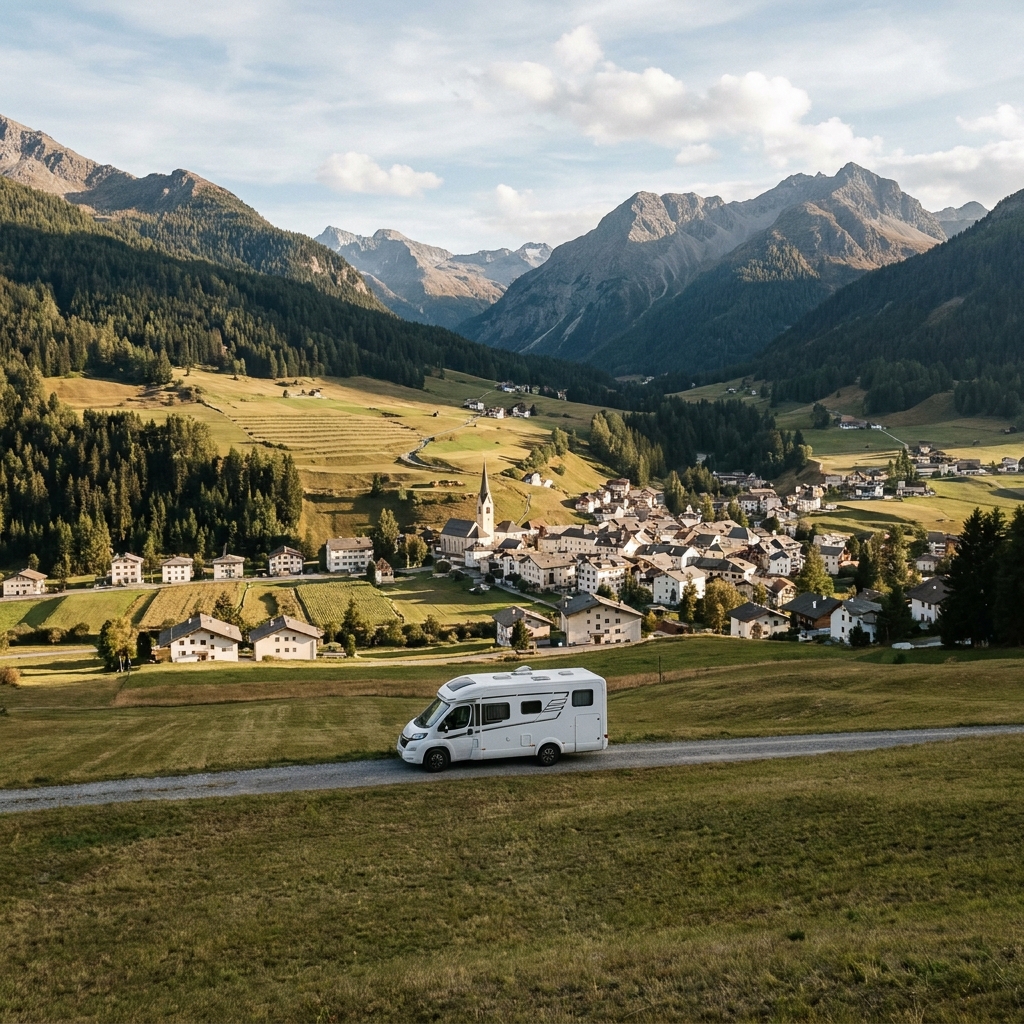
Scuol & Unterengadin
Scuol is located deep in the Lower Engadine and is surrounded by the rugged mountain peaks of the Silvretta Group and the Engadine Dolomites. The region is known for its Romansh culture, which is immediately visible in the charming village centers with richly painted houses. Relaxation can be found in the thermal baths of Bogn Engiadina Scuol, where mineral-rich water flows from local springs. Just outside the village, the imposing Tarasp Castle towers over the landscape on a striking rocky outcrop. For those who want to explore nature, Val S-charl forms an unspoiled gateway to the edge of the Swiss National Park. The area offers numerous hiking trails along the Inn River and through dense larch forests. It is a quieter alternative to the sophisticated Upper Engadine, offering a very authentic alpine atmosphere. The combination of wellness, history, and wilderness makes this corner of Graubünden a versatile destination.
Want to actually take this trip?
We put together the complete package for you — motorhome, ferry, campsites — in one personal email.
Stop 8
Swiss National Park
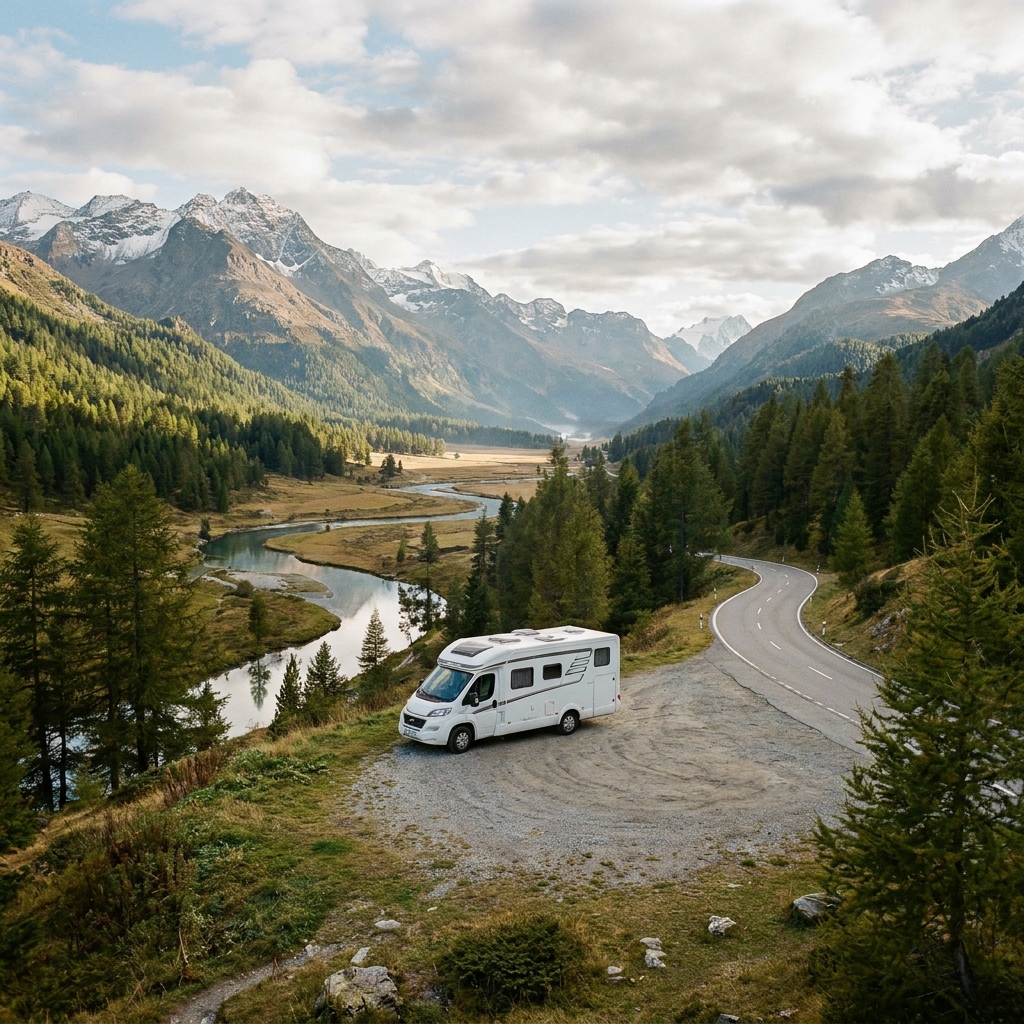
The Swiss National Park in the far east of Graubünden is a strictly protected nature reserve where wilderness is left entirely to itself. In this rugged high-mountain region, you hike through extensive larch forests and across alpine meadows where human intervention is prohibited. From the gateway village of Zernez, you can explore an extensive network of marked trails that lead deep into the pristine valleys. In the early morning hours, in Val Trupchun, there's a great chance to observe red deer, chamois, and ibex in their natural habitat. The ascent of Munt La Schera offers sweeping views of the surrounding peaks and the deep blue Livigno reservoir. The landscape here feels noticeably wilder and quieter than in the rest of the Alps. Respect for the strict park rules ensures that the tranquility and fragile flora and fauna are preserved for all visitors.
Stop 9
St. Moritz & Engadin
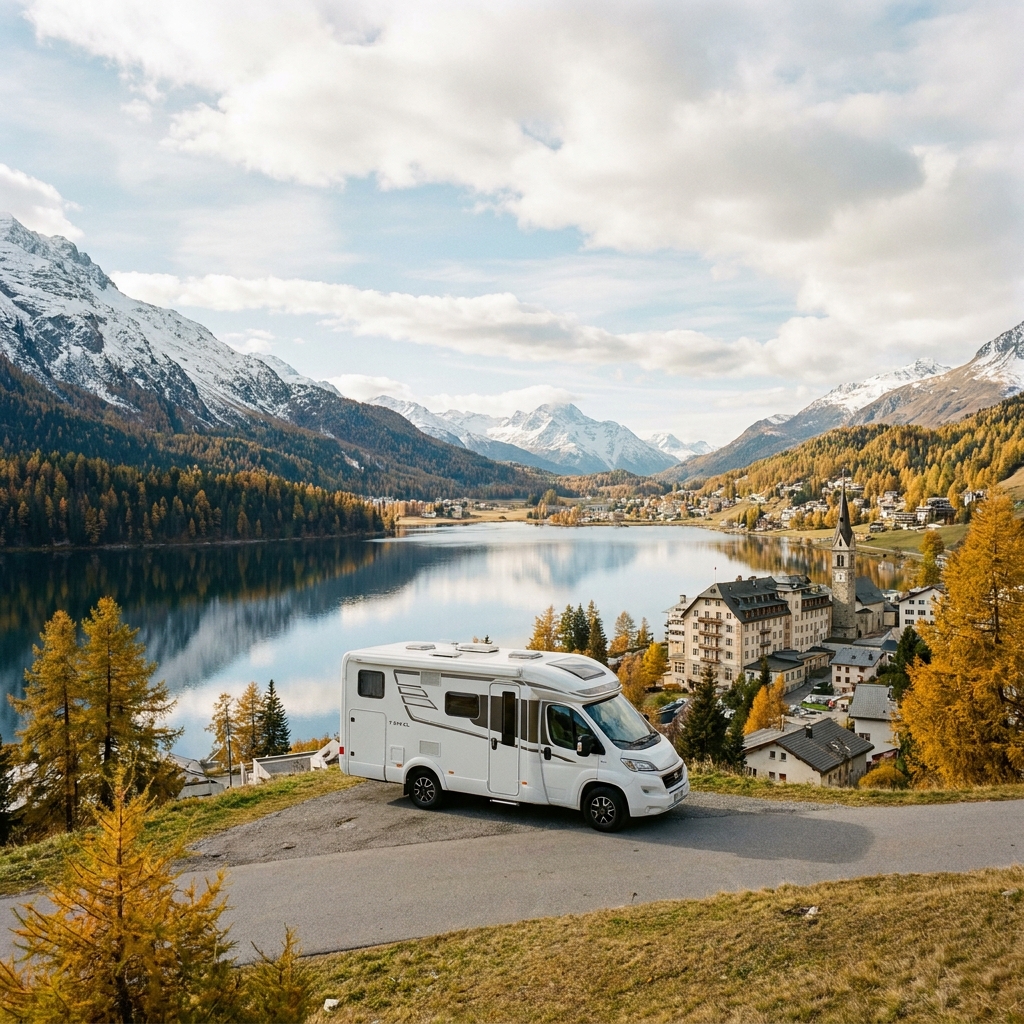
The location of St. Moritz in the Upper Engadin valley is characterized by a chain of deep blue lakes surrounded by three-thousander peaks. The crystal-clear light in this high-altitude region attracts visitors who explore the vast mountain landscapes on foot or by cable car. From the shore of Lake St. Moritz, various paths lead to panoramic views of the Bernina Massif. Piz Nair offers a sweeping view of the surrounding glaciers and granite peaks. In nearby villages such as Silvaplana and Sils Maria, the traditional Engadin architecture with sgraffito decorations has been well preserved. The combination of alpine sports opportunities and the tranquil lakeside ensures a varied stay in this part of Graubünden. The area is known for the constant Maloja wind, which is favorable for water sports enthusiasts on the lakes.
Stop 10
Julier Pass
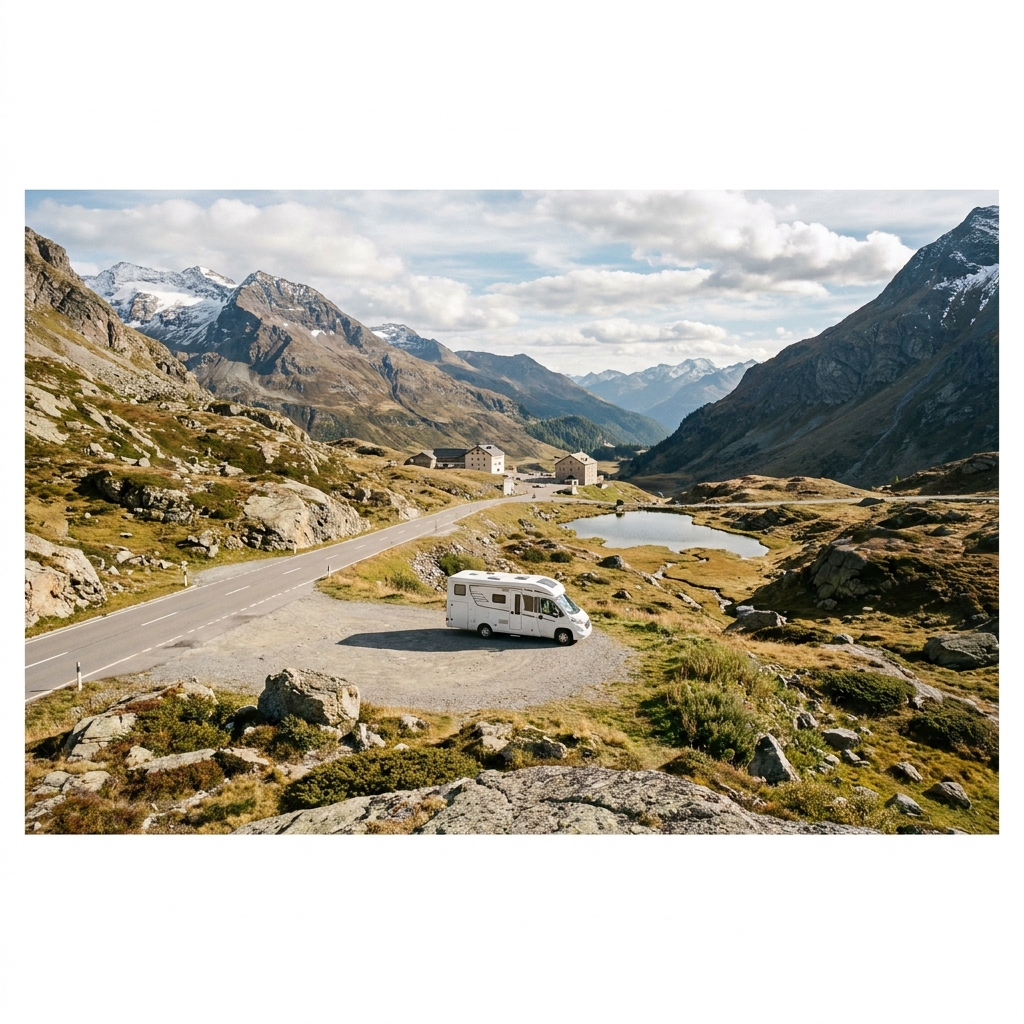
The Julier Pass is a crucial north-south connection through the Graubünden Alps and is known for its wide, easily navigable hairpin bends. At the top of the pass, the striking red Julier Theatre immediately draws attention as a modern contrast to the rugged mountain landscape. The surrounding mountain peaks and rocky terrain give the area an almost otherworldly character. During the descent towards the Engadin Valley, an impressive panorama unfolds over the deep blue Lake Silvaplana. There are various parking areas along the route where travelers can stop to experience the fresh mountain air and expansive views. The pass is open year-round and offers relatively easy access to the higher mountain regions. Hikers will find starting points here for routes to surrounding mountain lakes and peaks. The route over the pass is a functional connection between the Central Swiss lowlands and the high-altitude Engadin.
Stop 11
Bernina Pass
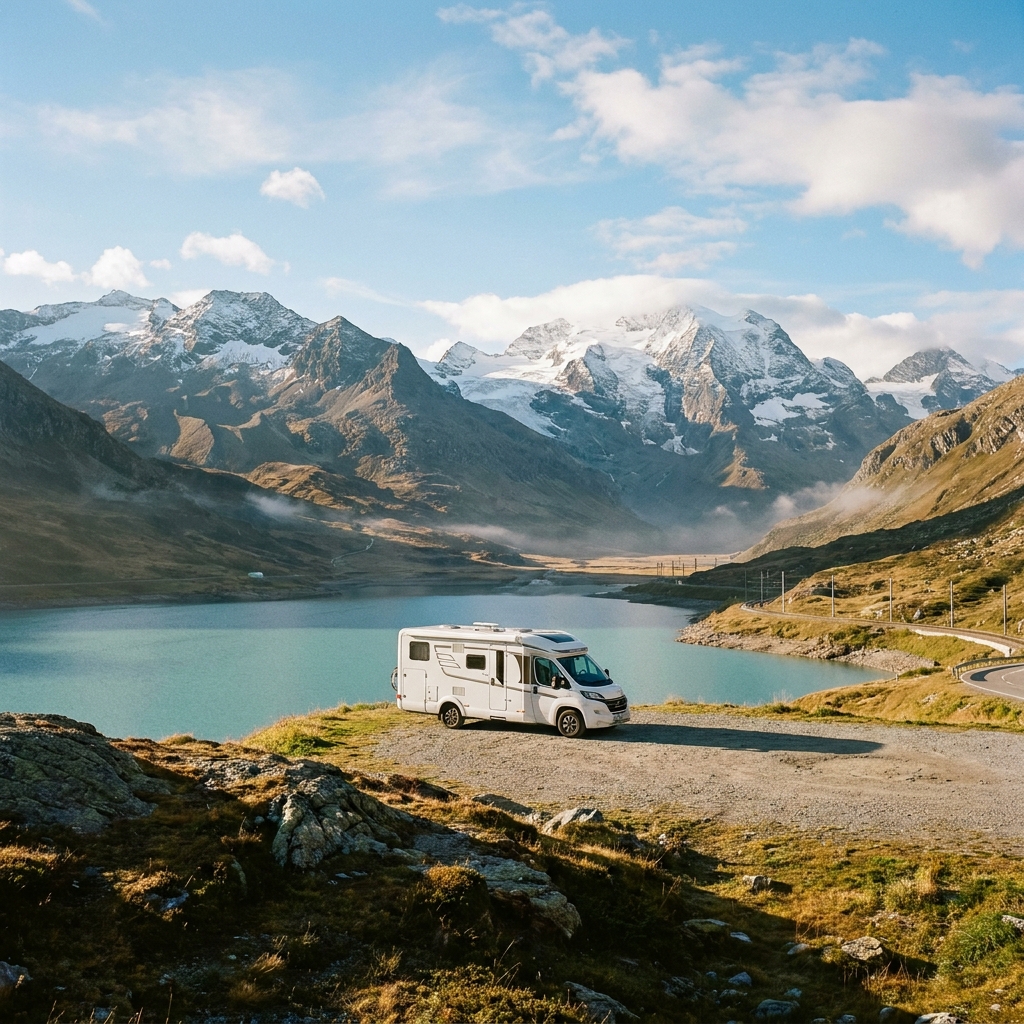
The Bernina Pass forms an impressive connection between the German-speaking Engadin and the Italian-speaking Val Poschiavo. At the highest point of the pass lies the milky-white Lago Bianco, which owes its colour to the glacial water from the surrounding peaks. From its shores, you have a direct view of the Cambrena Glacier and the rugged mountain world of the Bernina Massif. Hikers will find numerous paths here that wind along the railway line of the Bernina Express. The nearby Ospizio Bernina station is the highest-altitude station on this route. The surroundings are characterized by a barren, high-alpine landscape where the wind often has free rein. In the early morning, the snow-capped mountain peaks reflect beautifully in the still waters of the mountain lakes. It is a place where the rugged natural forces of the Alps are tangibly present.
Stop 12
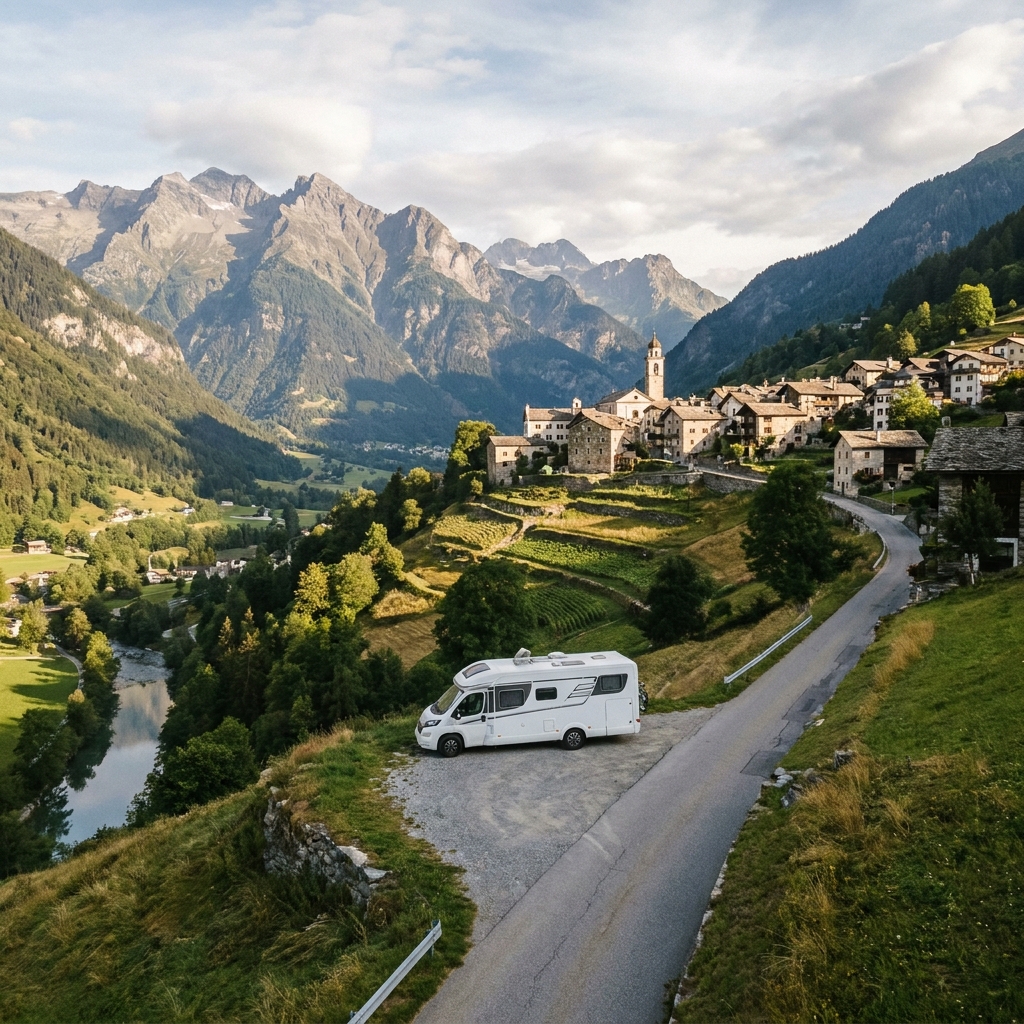
Val Bregaglia & Soglio
Val Bregaglia forms a spectacular transition from the high-alpine Engadin region to the Mediterranean atmosphere towards the Italian border. The terraced village of Soglio offers a panoramic view over the rugged granite peaks of the Sciora Group. Hikers explore vast chestnut forests here that grace the valley slopes. In the heart of the car-free village stands the historic Palazzo Salis with its characteristic gardens. The imposing north face of Piz Badile dominates the horizon and attracts mountaineers from all over the world. Narrow streets and stone houses give the settlements in this valley a timeless character. The contrast between the snow-capped mountain peaks and the lush flora makes a stay here a sensory experience.
Stop 13
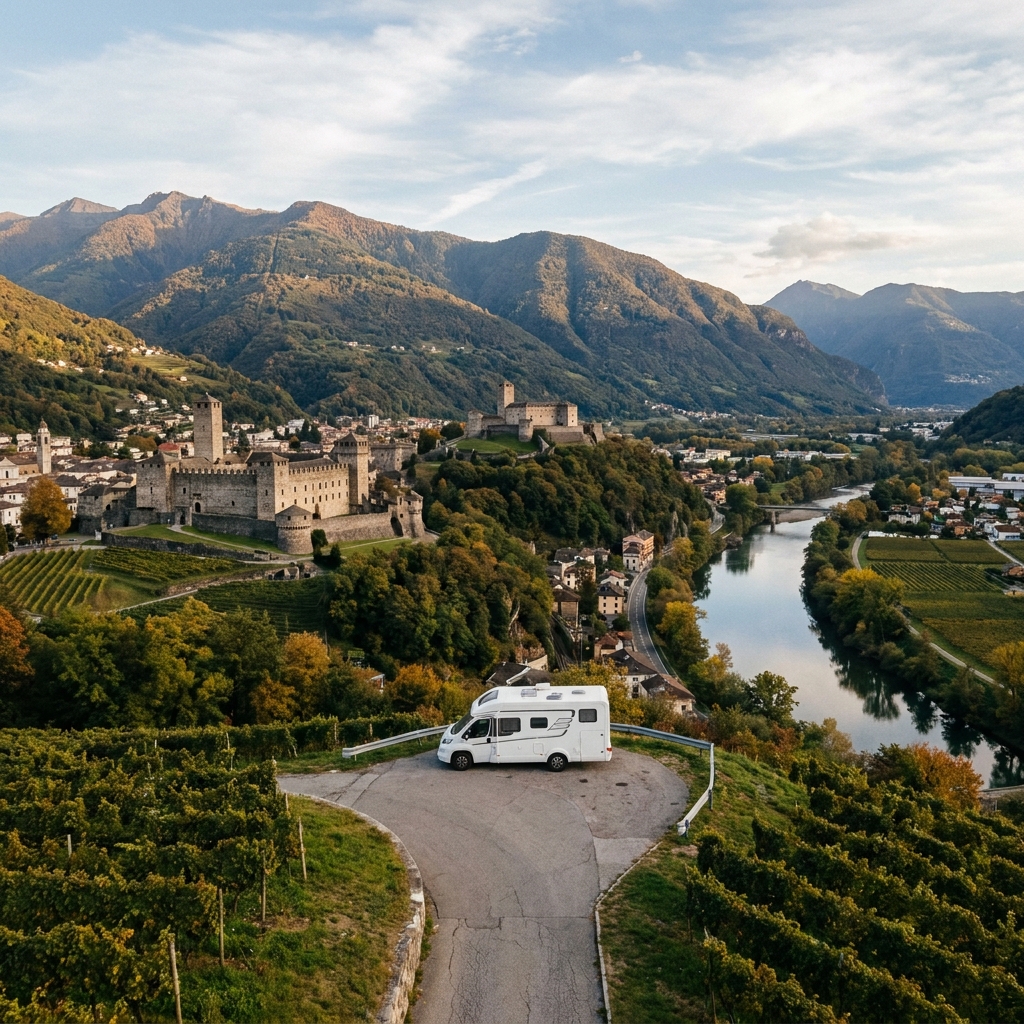
Bellinzona
Bellinzona serves as the striking gateway to the southern canton of Ticino. The three medieval castles that dominate the city are UNESCO World Heritage Sites and shape its impressive urban landscape. Walks along the ancient ramparts of Castelgrande offer panoramic views over the surrounding mountain peaks and the valley. In the compact centre, an unmistakable Italian atmosphere prevails, with charming squares and weekly markets. Its location at the foot of the Alpine passes makes it a strategic point for a rest stop. Narrow alleyways lead to terraces where local specialities are served. The combination of military architecture and the warm hospitality of the south creates a unique experience.
Stop 14
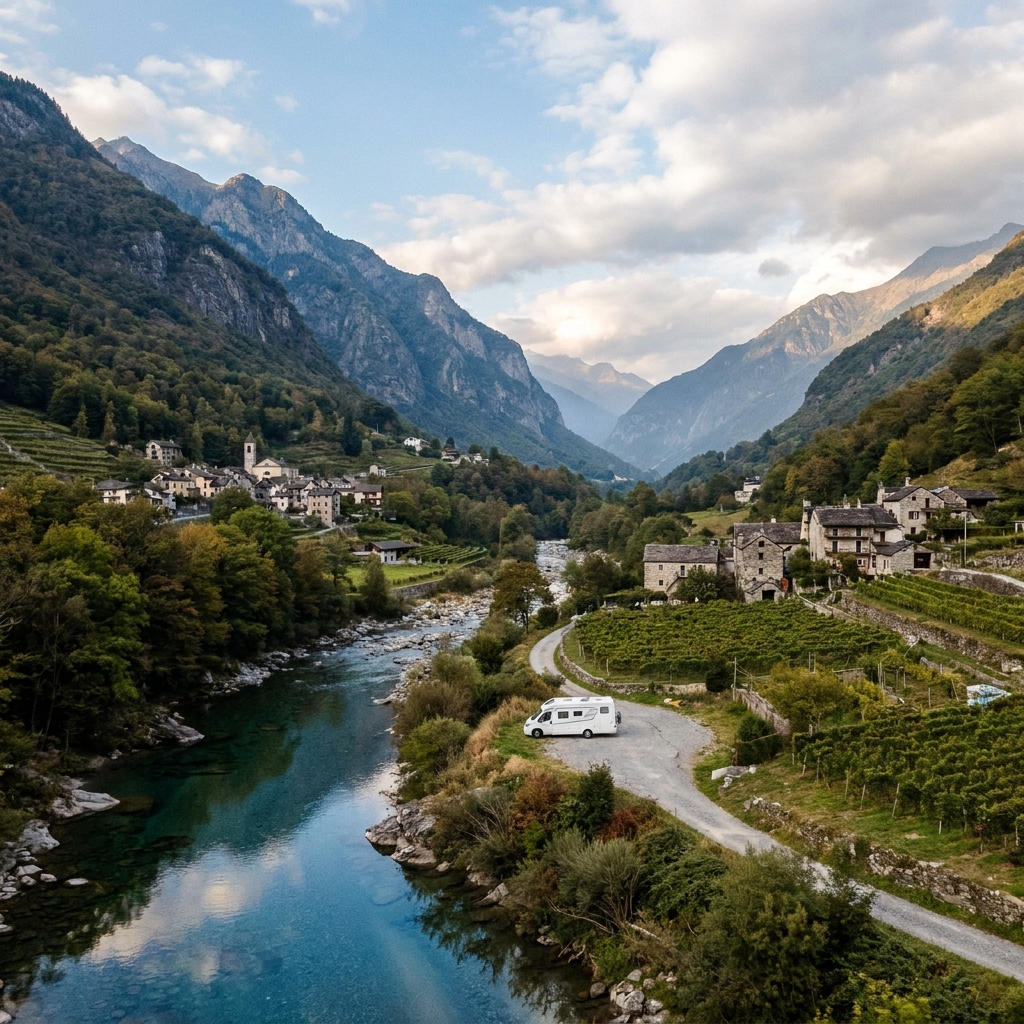
Maggia Valley
In the heart of Ticino, the crystal-clear Maggia River cuts through an impressive landscape of granite rocks and dense forests. The valley is known for its authentic stone houses, known as rustici, which are scattered in villages like Cevio and Maggia. Near Foroglio, a spectacular waterfall plunges from a great height, right next to a historic hamlet. The riverbed offers numerous spots with smoothly polished rocks and natural swimming pools for a refreshing dip. Hikers will find an extensive network of trails here that lead deep into the side valleys to remote mountain lakes. Local grottoes serve traditional dishes on shaded terraces under old chestnut trees. The tranquil atmosphere in this wide valley offers a pleasant contrast to the hustle and bustle at the nearby lakes.
Ready to hit the road?
We'll email you a personal travel proposal within 24 hours — motorhome, route and full cost overview included. Save €400–€800 on average vs. a travel agency.
No packages, no middlemen. Learn how it works
Camproads gave me a lot of inspiration for our campervan trip. The routes are beautiful, with a good balance of nature and city life, and the route generator made planning super easy. It's also really handy that there are so many good camping options at the locations, and that you can easily find the campervan that suits your needs and compare prices. This way, we can plan everything ourselves and book the campervan directly with the rental company. That's much cheaper than an organized trip!
Michiel van de Bunt
February 2026
What a difference from how I used to plan trips. Through Camproads, I put together a complete campervan trip in just a few minutes. It's so easy to use, and you can customize everything to your liking. The ability to choose your travel pace makes it even more enjoyable, especially now that we're traveling with a baby for the first time.
Alieke Zelhorst
February 2026